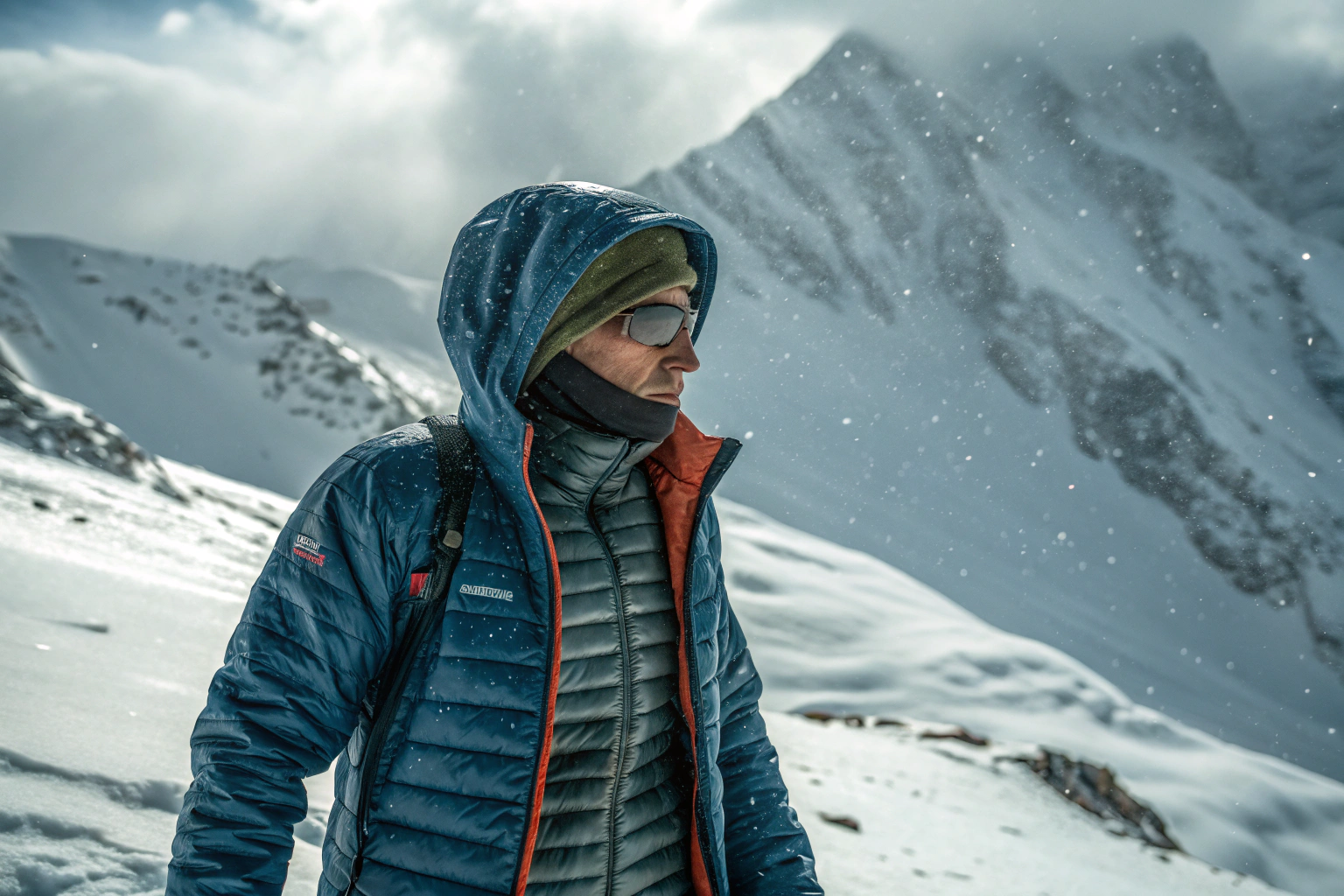
Last winter, I got a frantic email from a buyer in Denver. His client, an outdoor gear startup, had just received their first bulk order of "expedition-grade" jackets from another Chinese supplier. They sent them to a lab for testing before shipping them to their customers. The results were a nightmare. The waterproof rating was half of what was promised, and the insulation turned into a wet, clumpy mess after just 20 minutes in a simulated snowstorm. The supplier had cut corners on the membrane and used a substandard down blend. The startup was facing thousands of dollars in losses and a ruined reputation before they even launched. They needed a solution, and fast.
In my 20 years in Keqiao, working with everyone from massive brands to these passionate startups, I’ve learned one thing for sure: for high-altitude and extreme cold, the best fabrics aren’t just about keeping warm. It’s about survival. The best approach is a strategic layering system using specific textiles for each job. You absolutely need a moisture-wicking base layer (like Merino wool or specialized synthetics) to keep sweat off your skin. Next, you need an insulating mid-layer (like PrimaLoft or high-quality down) to trap body heat. Finally, your outer shell must be a waterproof, windproof, and breathable fabric (like Gore-Tex or a high-quality eVent equivalent). These three layers work together to keep you dry, warm, and alive when the weather tries to kill you.
I’ve seen too many buyers focus solely on the "fill power" of the down or the thickness of the fabric, ignoring the other critical components. They treat the garment as one piece, not a system. That Denver startup’s problem wasn’t just one bad fabric; it was a failure to understand how the layers interact. Getting this right isn’t just smart business; it’s how you build trust with customers who are literally trusting your product with their lives. So, let’s strip this down layer by layer, from your skin to the summit.
Base Layer: What Fabric Keeps You Dry When It’s -20°F?
One of the biggest mistakes I see new outdoor brands make is thinking a cotton t-shirt will work as a base layer. "It’s just for a quick hike," they say. But at high altitude, there is no "quick hike" when the weather turns. Cotton is what we in the industry call "death cloth." It holds moisture against your skin, and when you stop moving, that moisture turns into a sheet of ice.
For a base layer in extreme cold, you have two kingpins: Merino wool and high-tech synthetics like polyester or nylon blends. Merino is nature’s miracle fiber—it regulates temperature, resists odor, and wicks moisture incredibly well. But it can be pricey and less durable. Synthetics, on the other hand, are workhorses. They dry fast, are very durable, and are generally cheaper. At Shanghai Fumao, we produce both, but for true high-altitude, I often steer clients toward a Merino-synthetic blend. You get the best of both worlds: the natural performance of wool with the strength and quick-dry of synthetics.
Choosing between them depends on the mission and the budget.
- Merino Wool (17.5 – 19.5 microns): This is for multi-day expeditions where you can’t wash your clothes. It naturally fights the bacteria that cause odor. (Here’s a guide on how to choose the right Merino wool micron count for your climate from a trusted gear review site). The downside? It’s a protein fiber, so it’s not as abrasion-resistant. A friend of mine who climbed Denali swore by a 100% Merino base layer for its comfort, but he went through two shirts on one climb because his backpack straps wore through the shoulders.
- Synthetics (Polyester, Nylon, Polypropylene): These are your go-to for high-exertion activities like ice climbing or ski touring. They wick sweat away from your body faster than almost anything else. But, they can get stinky after a day or two. We developed a special fabric for a European ski touring brand last year that uses a hollow-core polyester fiber. It increased warmth by 15% without adding weight, and we incorporated a silver-ion treatment to knock down the odor. It’s a great option if you need performance base layers that won’t break the bank.
How do fabric blends improve base layer performance for extreme cold?
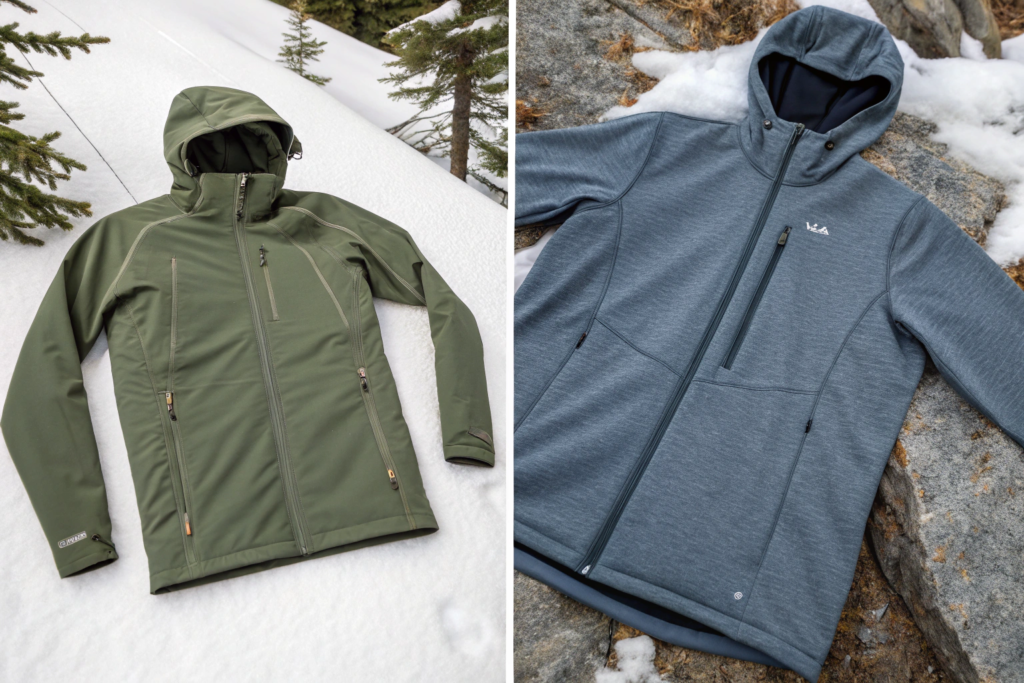
We rarely make a base layer from 100% of one fiber anymore. The magic is in the blend. For example, a 50% Merino / 50% Polyester blend is a fantastic all-rounder. The Merino next to your skin provides comfort and odor control, while the polyester provides structure, durability, and rapid drying. You get the warmth without the fragility. We also see Nylon added for extreme durability—like in a 53% Merino, 43% Nylon, 4% Spandex blend, which gives you four-way stretch for full mobility.
What fabric weight (GSM) is essential for a high-altitude base layer?
GSM, or grams per square meter, tells you the fabric’s weight. For high-altitude, you’re looking at mid-to-heavy weight. A 150-200 GSM weight is your standard for most cold-weather activities. But for true extreme cold, like a winter ascent of Everest, you’d move into a 200+ GSM "expedition weight" fabric. This is often a heavily brushed fleece-backed fabric that traps more dead air space for insulation. We just shipped a 250 GSM double-face knit fabric to a client in Norway that feels like a soft, warm cloud but wicks moisture like a champ.
Mid-Layer: Down or Synthetic – Which Insulation Wins at Altitude?
I had a client call me once, almost in tears. He had 5,000 jackets ready to ship, but his quality control guy noticed a few tiny feathers poking through the face fabric. He panicked, thinking it was a massive defect. It wasn’t. It’s a common occurrence with down, especially at seams. But it highlighted his lack of experience with high-performance insulation.
The choice between down and synthetic insulation for your mid-layer at high altitude is a classic battle. Down (usually goose or duck) offers the best warmth-to-weight ratio on the planet. It’s incredibly compressible and, when dry, it’s unbeatable. But the moment it gets wet, it clumps together and loses almost all its insulating power. Synthetic insulation (like PrimaLoft, Thinsulate, or our in-house developed hollow-fiber fills) is designed to mimic down’s structure but with polyester fibers. It’s heavier and less compressible, but it retains its warmth even when wet and dries much faster.
This isn’t a one-or-the-other decision. The best choice depends entirely on the conditions of the climb and the activity level.
- Down (Fill Power 700+): For dry, frigid conditions like the Karakoram in winter, high-fill-power down (800-900) is king. Fill power measures the loft, or the cubic inches one ounce of down occupies. Higher loft equals more trapped air and more warmth. But you must protect it with a highly water-resistant shell fabric. We often recommend using a DWR (Durable Water Repellent) treated down, which adds a microscopic water-resistant coating to each cluster. It’s not waterproof, but it buys you precious minutes in a sudden snow flurry.
- Synthetic (PrimaLoft Gold, etc.): This is your go-to for wetter, maritime climates like Patagonia or the Scottish Highlands, or for high-output activities where you’ll be sweating a lot. Synthetics are also easier to care for and generally cheaper. We manufacture a fabric that uses a blend of hollow and solid fibers. The hollow fibers trap air for warmth, while the solid fibers provide structure and durability. Here’s a detailed comparison of PrimaLoft insulation types from the manufacturer itself.
How does a down-proof fabric prevent feather leakage?
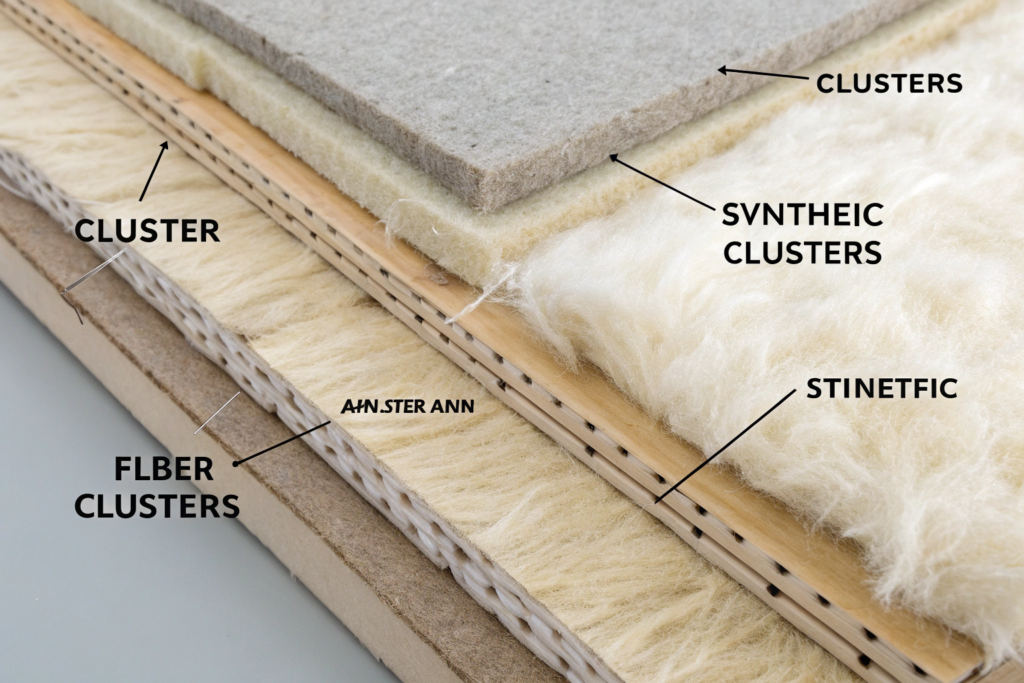
This is where fabric construction comes in. To stop those tiny feathers from poking out, you need a "down-proof" fabric. This isn’t a coating; it’s a very tight weave using fine yarns. The spaces between the warp and weft threads are smaller than the diameter of the down clusters. We use a special calendering process after weaving, where the fabric is passed through heated rollers to flatten the surface yarns, further closing any gaps. It’s a delicate balance—make it too tight, and you lose breathability.
What is the role of a fleece or pile mid-layer in the system?
Before you jump into a big puffy jacket, don’t overlook a good fleece or pile mid-layer. A 100-weight to 300-weight fleece, often made from polyester, is fantastic for active insulation. It traps air in its "pile" but is highly breathable, allowing vapor from your base layer to escape. For a client in Canada last year, we developed a high-pile, textured fleece that mimicked the look of shearling but was 100% recycled polyester. It became their best-selling mid-layer for resort skiing and cold-weather urban wear because it offered style, warmth, and eco-credentials. It’s a great sustainable and stylish option for cold weather layering.
Outer Shell: What Fabric Technology Stops Wind and Snow?
We get a lot of requests for "waterproof" fabrics. But when I ask a client, "What’s your required hydrostatic head?" I often get a blank stare. They think waterproof is just a yes or no. In reality, it’s a spectrum. A light rain jacket for city use is a world away from a fabric that needs to withstand hurricane-force winds and sideways snow on a 8,000-meter peak.
The outer shell’s job is to be a fortress. It must be 100% windproof, 100% waterproof, and highly breathable. This seemingly impossible combination is achieved through laminated membranes and advanced coatings. The industry gold standard is an ePTFE membrane (like Gore-Tex), which is a micro-porous film. The pores are big enough for water vapor (sweat) to pass through, but too small for liquid water droplets to enter. Other high-performance options include polyurethane (PU) membranes and hydrophilic non-porous coatings, which use a different chemical process to move vapor to the outside.
Choosing the right shell technology is critical, and the specs don’t lie.
- Waterproof Rating (mm): This is measured by a hydrostatic head test. A rating of 1,500mm is the minimum for being called waterproof. For high-altitude, you need at least 10,000mm, and ideally 20,000mm to 30,000mm. This means a column of water that high can sit on the fabric before it leaks through. We test every batch of our shell fabrics in our CNAS-accredited lab to ensure they meet these rigorous standards.
- Breathability (g/m²/24hrs): This measures how much moisture vapor can pass through a square meter of fabric in 24 hours. You want a number in the tens of thousands. If breathability is too low, you’ll be soaked in your own sweat from the inside, which can lead to chilling. It’s a constant trade-off. A more waterproof membrane often means less breathability. Here’s a great explanation of how to read waterproof and breathability ratings from a long-distance hiker’s perspective.
What is the function of a DWR coating on a shell fabric?
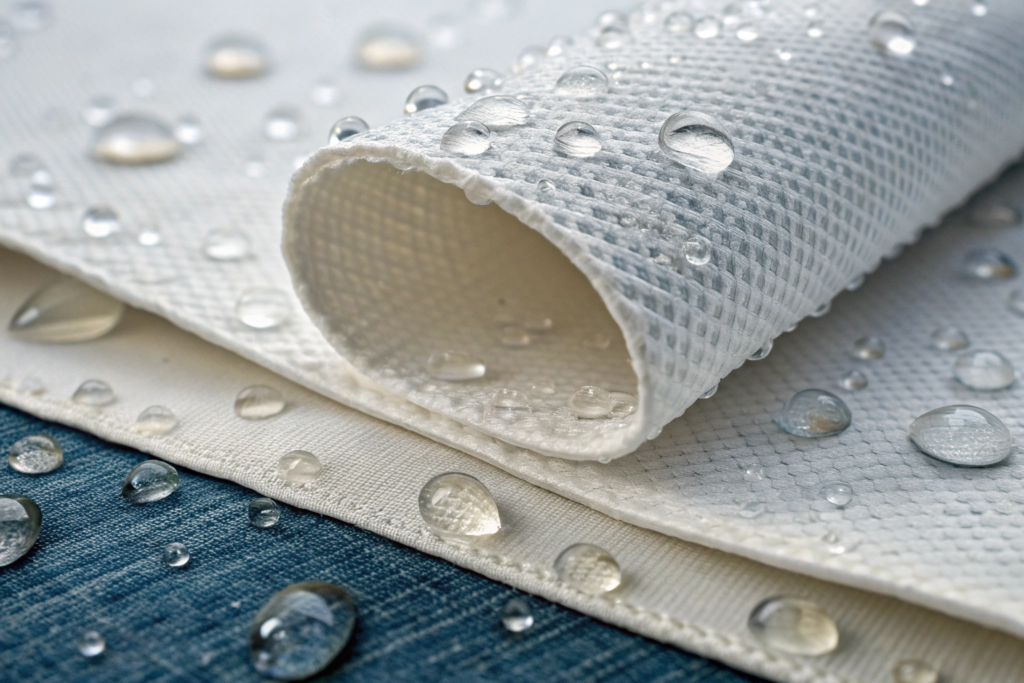
You’ll see water bead up and roll off a new jacket. That’s not the membrane; that’s the DWR (Durable Water Repellent) coating on the face fabric. The DWR causes the outer fabric to repel water, preventing the outer layer from getting saturated (what we call "wetting out"). If the face fabric wets out, the membrane can’t breathe effectively because the air is blocked by a layer of water. Maintaining the DWR is key to a jacket’s long-term performance. We now primarily use C0 DWRs, which are fluorine-free and more environmentally friendly, a shift many of our European clients demand.
How does fabric lamination differ from simple coating for extreme weather?
This is a big one. A coating is essentially a layer of polymer (like PU) painted onto the back of the fabric. It’s cheaper and can be effective for basic rainwear, but it’s not as durable or consistently breathable. A lamination, however, involves bonding a pre-formed membrane (like ePTFE) to the face fabric using heat, pressure, and special adhesives. This creates a much stronger, more durable, and higher-performance bond. It’s more expensive, but for extreme cold, it’s non-negotiable. At Shanghai Fumao, we partner with top laminators to ensure the bond is perfect, preventing delamination, which is a common failure point for cheap shells.
Fit and Finish: Why Fabric Performance Isn’t Just About the Textile
I remember a client who sourced incredible 3-layer shell fabric from us. The technical specs were perfect. But when they sent us their finished sample jacket for a final check, we spotted the problem immediately. They had used a standard, cheap nylon thread for all their seams and a simple zipper. At altitude, that thread would shrink at a different rate than the face fabric in the cold, creating micro-holes. And that zipper? It would freeze solid in minutes.
The best fabric in the world is useless if the garment’s construction fails. For high-altitude gear, the "fit and finish" are as critical as the textile. This means everything from the seam sealing tape and zipper quality to the design of the hood, cuffs, and hem drawcords. A failure in any of these points is a breach in your armor. Cold air and moisture will find the smallest weakness.
Here are the non-fabric details that can make or break a high-altitude garment.
- Seam Sealing: Every needle hole from sewing is a potential leak point. In high-performance shells, all seams must be sealed, usually with a heat-activated waterproof tape. We insist on using wide, high-quality tapes that bond perfectly to the fabric’s interior.
- Zippers: A standard coil zipper will freeze and fail. You need water-resistant zippers, often with a plastic coating on the teeth, or heavy-duty molded teeth. And they must be backed by a storm flap behind them for an extra layer of protection.
- Facial Protection: The collar needs to be made of a soft, warm fabric like microfleece to prevent windburn and ice buildup from your breath. The hood must be helmet-compatible and have multiple adjustment points so it moves with your head, not against it. These are all small details that require a deep understanding of the end-user’s experience. For a deep dive into the science of garment construction for extreme environments, check out this article from the UK Climbing technical forum on layering systems.
Conclusion
So, what are the best fabrics for high-altitude and extreme cold? The answer is never just one fabric. It’s a carefully engineered system. It starts with a high-performance base layer that manages moisture, moves to an insulating mid-layer that traps heat, and is finally protected by a rugged, waterproof, and breathable outer shell. Each layer has a specific job, and the choice of materials—from Merino wool blends to high-fill-power down to ePTFE membranes—must be tailored to the specific mission, budget, and environmental conditions.
We’ve been doing this for over two decades at Shanghai Fumao. We know the difference between a fabric that looks good in a catalog and one that performs when the wind is screaming and the temperature is dropping. We’ve helped startups fix critical production errors and partnered with global brands to develop new, innovative textiles. If you’re developing a line of performance outerwear and need a partner who understands the technical demands of extreme environments, get in touch. Let’s co-create value. Contact our Business Director, Elaine, directly at elaine@fumaoclothing.com to discuss your project and how our end-to-end solutions can bring it to life. We can handle everything from yarn sourcing and fabric development to lab dips, production, and global shipping, ensuring your gear is ready for the world’s toughest conditions.