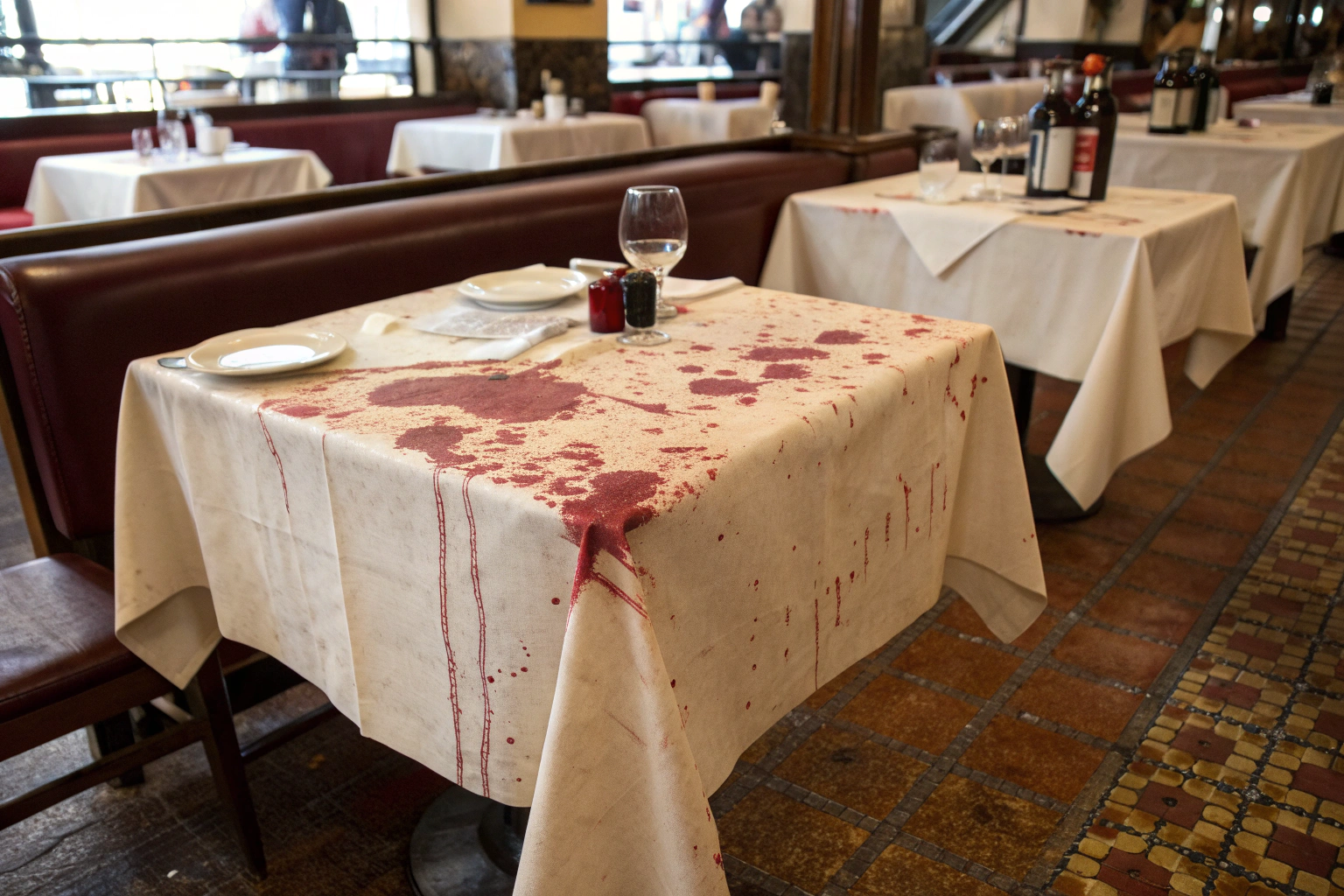
I’ll never forget the call from a restaurateur in Chicago. He had spent $50,000 on custom table linens for his new steakhouse. After three months of daily use, they were gray, stained, and fraying. The laundry service was destroying them. He asked me, "Why didn’t anyone tell me restaurant fabric needs to be bulletproof?"
He was right. I should have been the one to tell him. Restaurant fabrics live a hard life. They’re washed constantly—sometimes daily. They’re stained with red wine, coffee, and grease. They’re dragged across tables, stepped on, and bleached within an inch of their life. Regular fabric doesn’t stand a chance.
At Shanghai Fumao, we’ve been supplying the hospitality industry for over 15 years. We make the tablecloths for hotel chains, the uniforms for cruise ships, and the napkins for Michelin-starred restaurants. We know what works and what doesn’t. In this post, I’m going to share exactly how to source fabric that survives the restaurant environment.
What Makes Fabric "Restaurant-Ready"?
Restaurant fabric needs three things: stain resistance, durability, and washability. If it fails any of these, it’s a liability. You’ll be replacing it constantly.
Let’s break down the key properties.
What is the difference between stain-resistant and stain-proof?
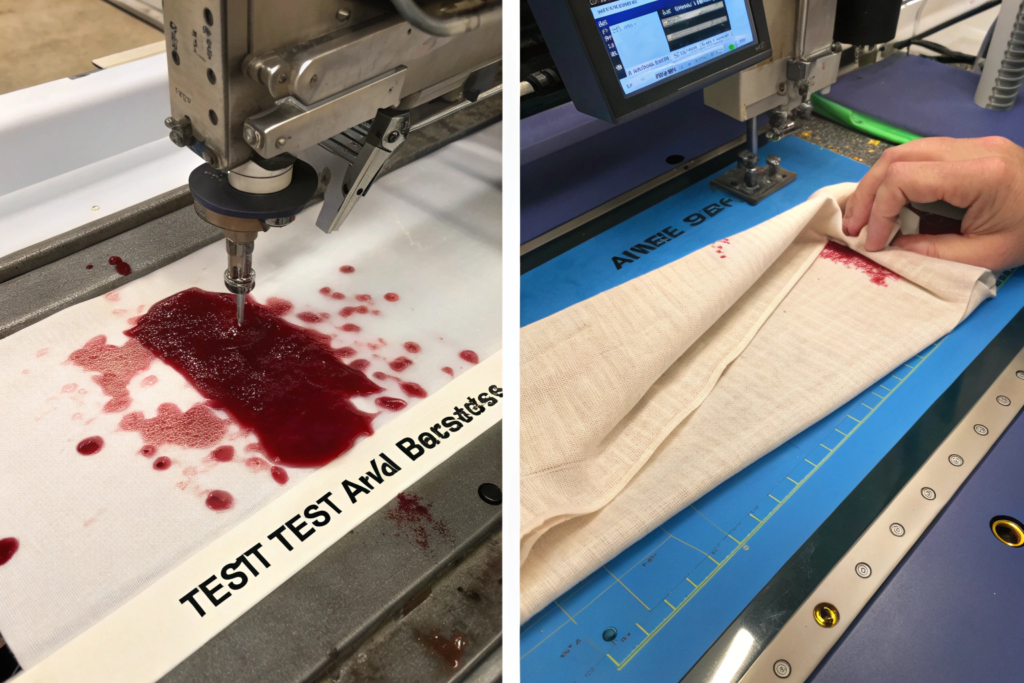
Nothing is truly stain-proof. But some fabrics are stain-resistant. That means they’ve been treated with a finish that repels liquids. The liquid beads up and can be wiped away before it soaks in. The industry standard is a fluorocarbon finish (like Teflon). It works, but it’s not environmentally friendly. Newer options are bio-based or silicone-based.
For a vegan restaurant in Portland, we used a silicone-based stain-resistant finish on their organic cotton napkins. It worked almost as well as the fluorocarbon, and it fit their eco-brand. The key is that the finish has to be reapplied over time. It washes off after about 20-30 commercial launderings. So you either retreat the linens or accept that they’ll eventually stain. The ASTM D6544 standard covers the testing of textile finishes for laundering.
What fabric weight is right for tablecloths?
Heavier is not always better. Tablecloths need to drape nicely, not stand up like cardboard. But they also need to stay put and not blow away in a draft. For most restaurants, we recommend a mid-weight fabric: around 180-220 GSM for woven fabrics.
For a steakhouse in Texas, we supplied a 240 GSM cotton-polyester blend. It was heavy enough to feel luxurious but not so heavy that it was hard to launder. For a bistro in Paris, they wanted a lighter, more casual look—we used a 160 GSM linen blend. The weight affects the laundry cost too. Heavier fabrics cost more to wash and take longer to dry. So there’s an operational trade-off. The International Association of Lighting Designers has resources on how fabric weight affects light absorption and reflection in dining spaces.
What Are the Best Fiber Blends for Restaurant Use?
The fiber choice is the most important decision. Natural fibers look great but wear out fast. Synthetics last forever but can look cheap. The right blend balances both.
Here’s what we’ve learned from thousands of restaurant orders.
Why is a cotton-polyester blend often the best choice?
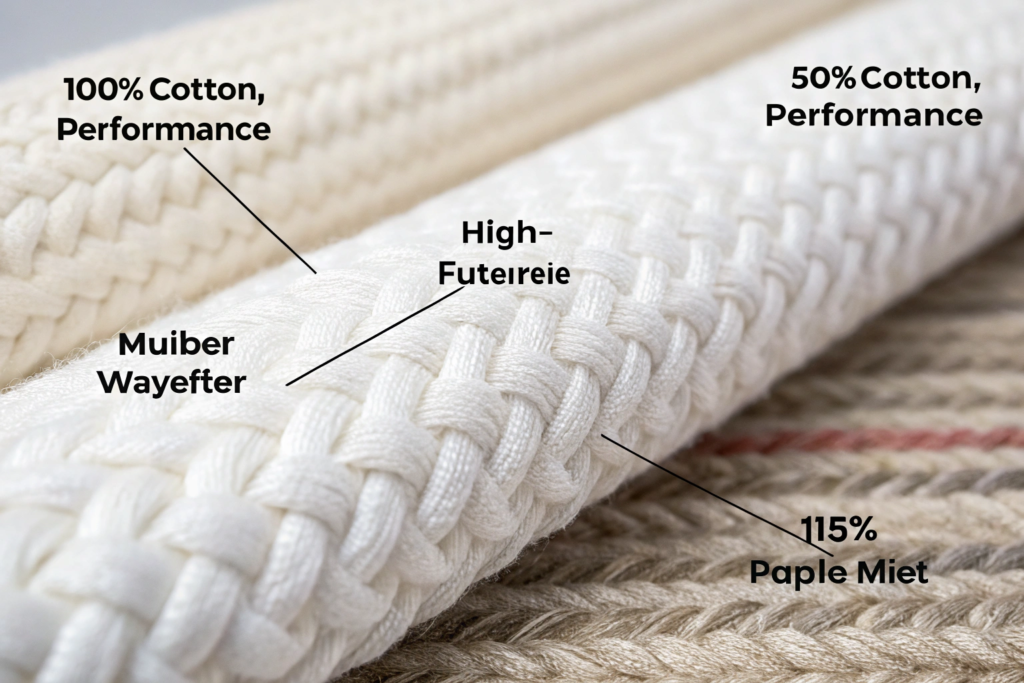
A 50/50 or 60/40 cotton-polyester blend is the workhorse of the hospitality industry. The cotton gives you the natural look and feel. The polyester adds durability and wrinkle resistance. It also helps with stain release because polyester doesn’t absorb stains the way cotton does.
For a hotel chain in Florida, we supply their poolside restaurant with 65% polyester, 35% cotton tablecloths. They’re washed daily, sometimes twice a day. They’ve lasted three years and counting. The same fabric in 100% cotton would have been rags in six months. The polyester content also means less ironing. They come out of the dryer nearly wrinkle-free. For more on fabric blends for hospitality, Hospitality Net has case studies from major chains.
What about 100% linen for high-end restaurants?
Linen is beautiful. It has texture, it breathes, and it says "luxury." But it’s a nightmare to maintain. Linen wrinkles instantly. It stains easily. It wears out faster than cotton. If you want linen, you need to accept higher laundry costs and more frequent replacement.
We supply linen to a few Michelin-starred restaurants. They know the cost. They factor it in. For a three-star restaurant in New York, we provide custom-dyed linen tablecloths that are replaced every six months. The look is worth it to them. But for most restaurants, linen is too high-maintenance. If you want the look without the hassle, consider a linen-cotton blend. It’s easier to care for but still has that natural texture. The Masters of Linen site has care instructions and properties for pure linen.
Are there fabrics that resist bleach damage?
Yes, and this is critical. Commercial laundries use bleach. Lots of it. They don’t ask permission. They just bleach everything. Standard cotton turns yellow and weakens over time from bleach exposure. Polyester is more resistant, but it can yellow too.
For clients who know their linens will be bleached, we recommend fabrics made from "bleach-cleanable" polyester. These are specially formulated to resist chlorine and high temperatures. They’re often used in the medical industry, but they work great for restaurants too. A client in Las Vegas switched to bleach-cleanable polyester for their banquet linens. They went from replacing them every year to every three years. The American Laundry News has articles on bleach-resistant textiles.
How Do You Choose the Right Fabric for Uniforms?
Uniforms have different demands than table linens. They need to move with the body, breathe in a hot kitchen, and still look professional at the end of a 12-hour shift.
We’ve made thousands of uniforms. Here’s what matters.
What fabric works best for chef coats?
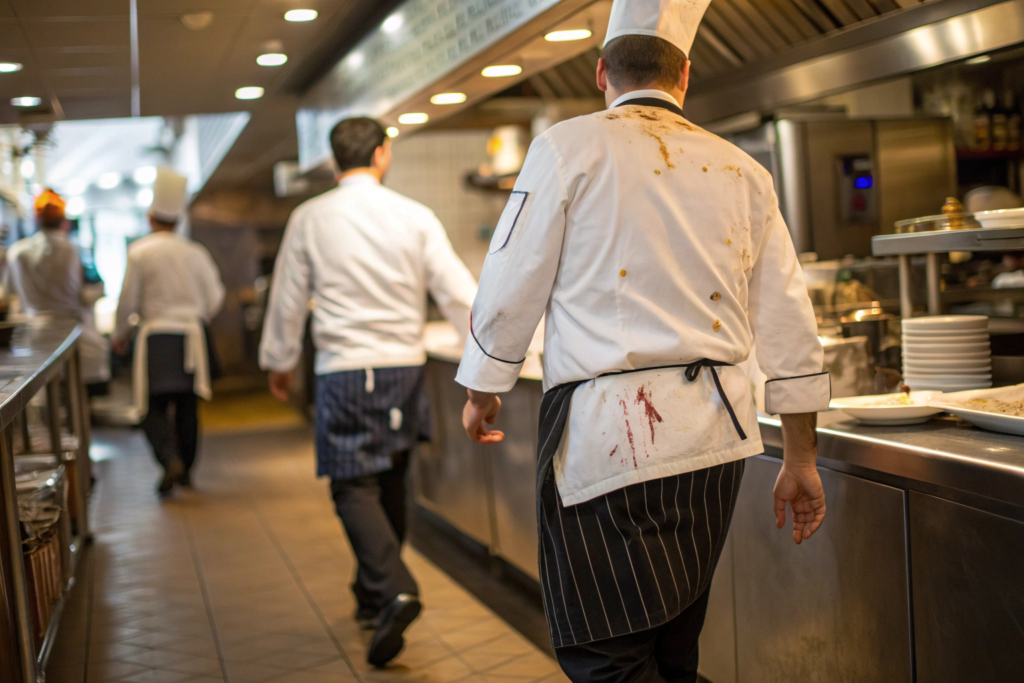
Chef coats take a beating. Heat, steam, flour, grease, and constant washing. The classic chef coat is 100% cotton, usually a heavy twill. It’s durable and breathable. But it wrinkles and stains. Modern chef coats often use a cotton-poly blend with a stain-resistant finish. Some even have moisture-wicking properties for hot kitchens.
For a culinary school in Chicago, we made chef coats from a 65% polyester, 35% cotton blend with a moisture-wicking finish. The students stayed cooler, and the coats lasted through years of training. The only downside? They didn’t have that crisp, starched look of traditional cotton. But the school prioritized comfort and durability. The American Culinary Federation has uniform guidelines for professional kitchens.
What about server aprons and front-of-house uniforms?
Front-of-house uniforms are about appearance first. They need to look sharp. But they also need to survive spills and constant movement. For aprons, a heavy cotton or cotton-poly twill is standard. For server dresses or shirts, we often use a poly-viscose blend. It drapes well, doesn’t wrinkle, and is easy to clean.
For a high-volume restaurant in London, we supplied server aprons in a 100% cotton denim. They looked great, but they were heavy and took forever to dry. We switched to a cotton-poly denim look-alike. Same appearance, half the drying time. The staff loved them. For more on uniform fabric performance, uniform suppliers have detailed guides.
What About Custom Colors and Branding?
Restaurants want their linens and uniforms to match their brand. That means custom colors. But custom colors come with minimums and lead times.
Here’s how we manage it.
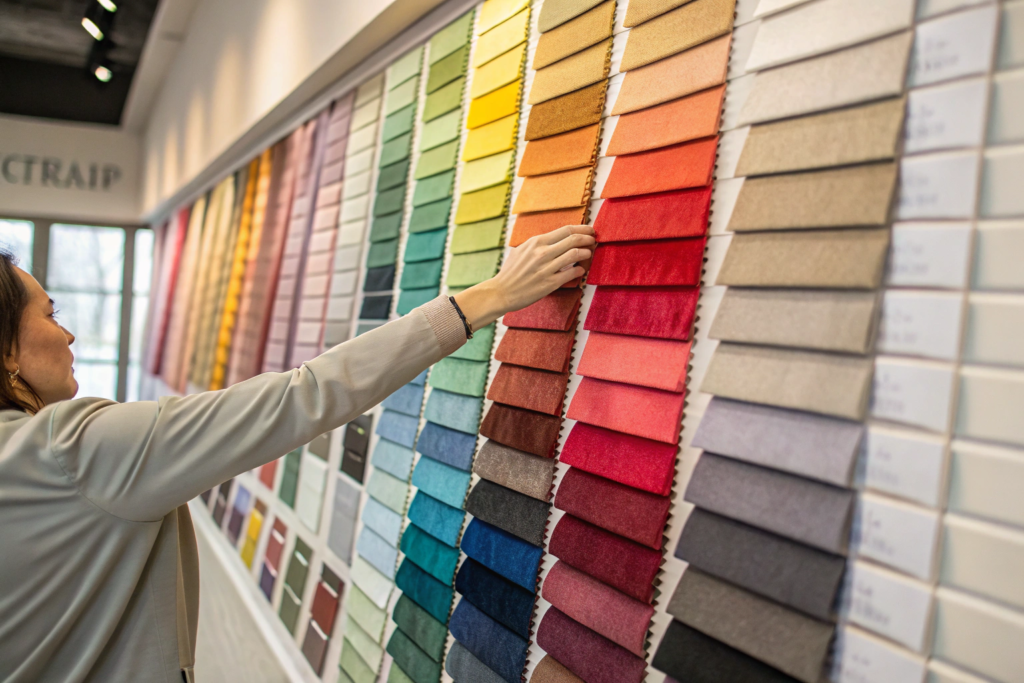
What are the minimums for custom-dyed restaurant linens?
For a standard fabric like cotton-poly twill, we can custom dye as little as 300 meters per color. That’s enough for about 50-60 tablecloths, depending on the size. For more specialized fabrics, the minimums might be higher—500 or 1,000 meters.
For a boutique hotel in Miami, we did a custom coral color for their poolside cabana linens. The minimum was 400 meters. They used it all and even reordered. The key is to plan ahead. Custom dyeing adds 3-4 weeks to the lead time. You can’t wait until the last minute. The Pantone Fashion, Home + Interiors system is what we use for color matching.
Can you embroider logos on napkins and tablecloths?
Yes, but placement matters. Embroidery adds thickness. If you embroider a logo in the middle of a napkin, it creates a bump that can be annoying to wipe your mouth on. For tablecloths, embroidery on the corners or borders works well. For napkins, we often recommend a woven label sewn into the hem instead of direct embroidery.
For a steakhouse chain, we did embroidered logos on the corner of every tablecloth. We used a fine, dense embroidery so it wouldn’t snag on dishes. It looked classy and held up through hundreds of washes. The thread was polyester, so it didn’t fade. For more on commercial embroidery techniques, Embroidery.com has resources.
Conclusion
Sourcing fabric for restaurants and hospitality is a specialized skill. It’s not like buying fabric for a dress. You have to think about industrial laundry, constant staining, and the need for durability without sacrificing appearance. The right fabric saves money in the long run by lasting longer and looking better.
At Shanghai Fumao, we’ve been doing this for over 20 years. We know the blends that work, the finishes that last, and the pitfalls to avoid. We supply table linens, napkins, aprons, and uniforms to restaurants, hotels, and catering companies around the world.
If you’re opening a restaurant or upgrading your current operation, let’s talk. We can help you choose the right fabrics, match your brand colors, and produce everything to commercial standards. We’ll even advise you on care instructions to give to your laundry service.
Contact our Business Director, Elaine. She’s managed hospitality projects from small bistros to five-star hotel chains. Her email is elaine@fumaoclothing.com. Let’s make your restaurant look its best, shift after shift.