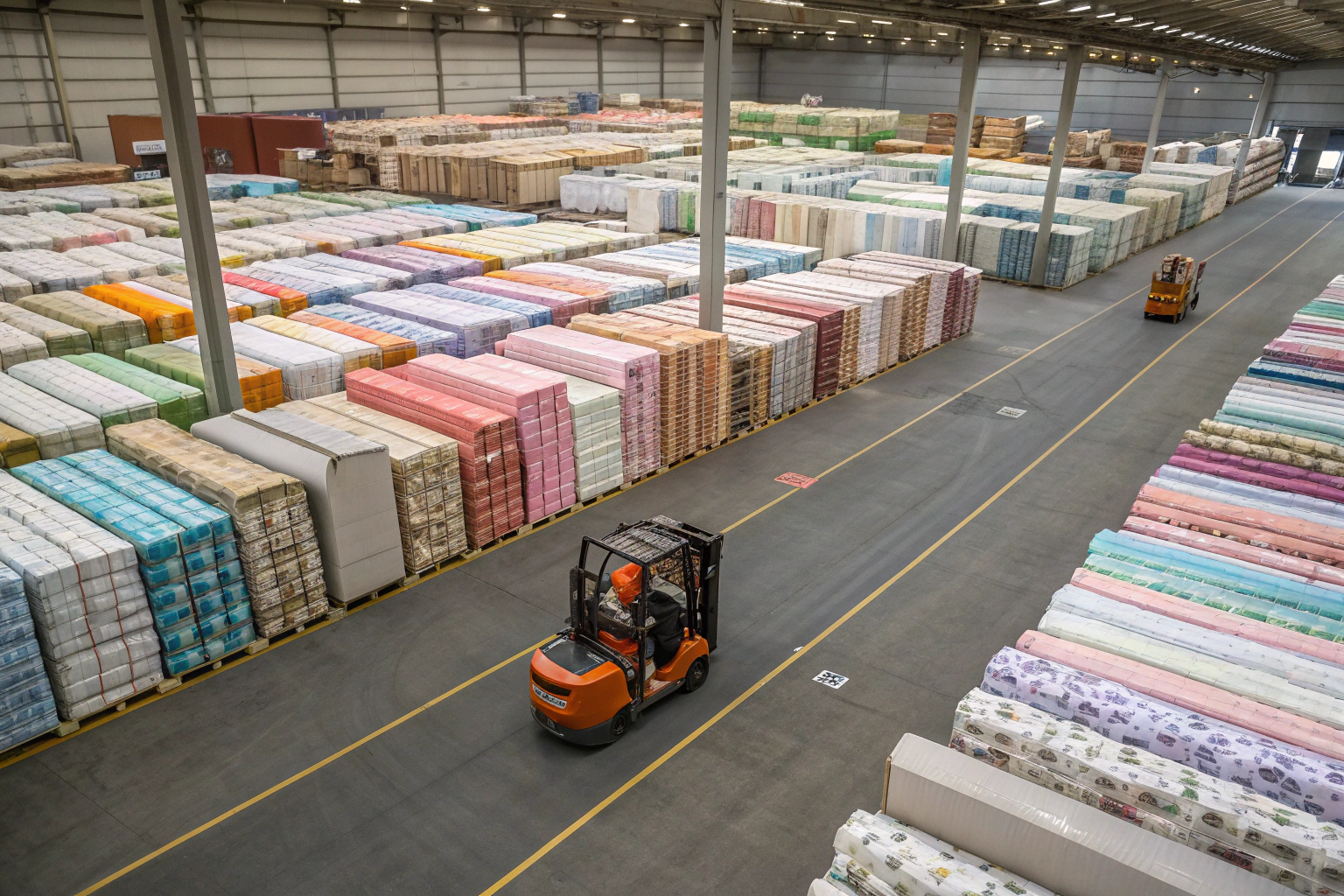
I remember a call in 2021 that still makes me wince. A client from London—a mid-sized women’s wear brand—had a disaster. Their best-selling summer dress was made from a specific viscose crepe. They waited until April to place their reorder. Our dyeing partner had already switched their production lines to autumn colors. The lead time for that crepe jumped from 4 weeks to 12 weeks. They missed the summer selling season completely. The owner told me, "I’ve been doing this for 15 years. I should have known better."
He should have. But honestly, the textile industry’s seasonality is brutal if you don’t plan for it. We have peak periods (March-May and August-October) where every mill in Keqiao is running at 110% capacity. Then we have slower periods (June-July and November-December) where you can get your fabric faster and sometimes even negotiate better prices.
At Shanghai Fumao, we’ve been navigating these cycles for over 20 years. We’ve learned to predict them, prepare for them, and help our clients avoid the panic. In this post, I’m going to share exactly how the seasonal calendar works, the hidden bottlenecks you need to know, and the strategies that keep our smartest clients ahead of the curve.
When Are the Peak and Off-Peak Seasons in China?
The rhythm of our industry follows two things: the weather and the holidays. Brands in the Northern Hemisphere want spring/summer fabrics in winter, and autumn/winter fabrics in summer. That means we’re always working about six months ahead of the actual season. But on top of that, we have China’s own holiday schedule, which shuts the whole country down.
Let me break it down simply. Our busiest months are March to May and August to October. In March, everyone is rushing to get fabrics for summer production. In August, it’s the scramble for winter goods. During these peaks, you add 1-2 weeks to every timeline just because everyone is in line.

Why does Chinese New Year add 3-4 weeks to lead times?
Chinese New Year isn’t a one-day holiday. It’s a national migration. Millions of workers leave the coastal factories to go home to their villages. Factories shut down for 2-4 weeks. But the real killer is the ramp-up. When workers come back, it takes another week to get lines running smoothly again. New workers need training. Machines need maintenance. So effectively, for 4-6 weeks, production is at a standstill or running slow.
I always tell my clients: treat Chinese New Year like a wall. You need to be on the other side of it before it hits. That means completing your pre-production—yarn ordering, sample approval, lab dips—at least 6 weeks before the holiday starts. The lunar date changes every year, but it’s always in late January or February. We send out reminders to all our clients in October. "Plan now," we say. "Or wait until March."
We had a Canadian client in 2023 who listened. They do loungewear. They finished all their development by mid-December. Their fabric was in our warehouse, ready to ship, the day before the factory closed. When everyone else was scrambling in March, they were already receiving their goods. The China Briefing site has good articles every year on the business impact and timing.
What about Golden Week in October?
Golden Week is the first week of October. It’s a national holiday for the founding of the PRC. Factories shut down for 7 days. It’s not as disruptive as CNY, because it’s shorter and workers usually don’t travel as far. But it still adds a week to your timeline. The week before, everyone rushes to ship. The week after, everyone is catching up. So if you need fabric in October, you better have your order in by mid-August. A client from Australia learned this in 2022. They ordered in late September, thinking "it’s just a week." The factory was closed. Their order sat for 7 days. Then the backlog hit. They got their fabric in November, not October, and missed their production slot.
How Can You Use Slow Periods to Your Advantage?
Here’s the secret the big brands know: the slow periods are your friend. June-July and November-December are when the pressure is off. The factories are quieter. The dyers have capacity. The QC teams can spend more time on your order. You can often get faster delivery and better service.
I love it when a client places an order in June. We can breathe. We can run their fabric without rushing, check it twice, and still ship on time. During peaks, we’re firefighting. During valleys, we’re perfecting.

Can you negotiate better prices during off-peak months?
Sometimes, yes. Factories hate having idle machines. A machine that’s not running makes no money. So in July, if a client comes with a 10,000-yard order, a mill might be willing to shave a few cents off the meter just to keep the lights on and the workers busy. But don’t expect huge discounts. The raw material costs are the same. The labor costs are the same. The margin for negotiation is usually in the "rush fee" or the "small order premium." Those disappear in the valleys. We had a German client who always placed their basic black poplin orders in December. They never paid a rush fee. They got their fabric in 4 weeks instead of 6. They saved money and time, just by timing it right. For more on textile pricing dynamics, Just Style has some analysis on how seasonality affects cost.
What about developing new products and samples in the valleys?
This is the smartest move you can make. Sampling and development take time. They require back-and-forth, lab dips, strike-offs. During peak season, our sample room is overwhelmed. We’re rushing to get bulk orders out. Samples get delayed. But in July or November? We have capacity. We can run your lab dips three times to get the color perfect. We can send you multiple hand feel options. We can work with you on the development without the stress. A Swedish brand figured this out years ago. They do all their new collection development in June and July. By August, when the peak hits, their samples are approved, and they’re ready to place bulk orders. They’re not competing for sample slot time; they’re already in the production queue. It’s a huge advantage.
What Specific Steps Should You Take Before Chinese New Year?
Okay, let’s get practical. If Chinese New Year is coming, and you need fabric in the first quarter, here’s exactly what you need to do. I’ve seen too many brands panic because they left it too late. Don’t be that brand.
Count backward from the holiday date. You need about 6-8 weeks of lead time before the shutdown to ensure your goods are finished and out the door.

What does "pre-production complete" actually mean?
It means every decision is made. The yarn is sourced. The color is approved. The finish is specified. The order quantity is final. There are no "maybes." Once the factory closes, you can’t ask questions. You can’t change a color. You’re locked out. So 6 weeks before CNY, you should have zero open questions. For a US activewear client in 2024, we set a hard deadline of January 15th (CNY was February 10th). They had to have all their lab dips signed by December 20th. That gave us time to order the yarn, knit the fabric, dye it, finish it, and ship it by January 30th. It was tight, but we made it. They had fabric in their LA warehouse while their competitors were still waiting for samples. The US Fashion Industry Association often publishes guides on navigating Chinese production schedules.
How do you handle shipping and logistics around the holiday?
This is a trap. Even if your fabric is finished, if it’s not on a ship before CNY, it might sit at the port for weeks. Freight forwarders also shut down. Trucking companies stop running. The whole logistics chain slows to a crawl. Our rule: if the fabric is ready, get it out of China before the holiday. Don’t wait. Pay for the freight. Ship it. The cost of storage and the risk of delay are worse than the shipping bill.
In 2020, a client from Spain had their fabric ready on the last day before CNY. They decided to wait until after the holiday to ship, to save a few hundred dollars on storage. Then COVID hit. The fabric sat in our warehouse for three months. They lost the season entirely. Now, they ship everything before the break, no exceptions. For logistics planning, the International Federation of Freight Forwarders Associations (FIATA) has resources on holiday impacts on global shipping.
How Do You Manage Inventory for Different Seasonal Collections?
The smartest brands don’t just react to seasons; they build inventory buffers. They know that if they wait until they need the fabric to order it, they’re too late. They forecast, they commit, and they store.
We have clients who keep 3-6 months of their core fabrics in our warehouse. We hold it for them, and they call it off as needed. It’s a service we offer—inventory management. It protects them from the peaks.

What is "safety stock" and how much should you keep?
Safety stock is extra fabric beyond your immediate production needs. It’s insurance. If a reorder comes in, you don’t have to wait for the next production slot. You just pull from stock. For basics—black cotton twill, white poplin, beige linen—we recommend keeping at least a 3-month buffer. The cost of holding the fabric is usually less than the cost of missing a sale.
A Japanese client we work with does this perfectly. They order their core denim twice a year: once in June (off-peak) and once in December (off-peak). They buy enough for 6 months of production. They never pay rush fees. They never wait. And because they order in the valleys, they sometimes get better prices. For calculating safety stock, there are formulas based on lead time variability and demand variability. The Inventory Management Review has good articles on safety stock calculations.
How do you forecast for "fast fashion" vs. "basic programs"?
Fast fashion is unpredictable by definition. You can’t stockpile pink tie-dye hoodies. For these, you need suppliers who can react fast—like us. We keep greige goods (grey fabric) in stock. When a fast fashion client needs a trendy color, we take the grey fabric and dye it immediately. This bypasses the weaving lead time, cutting 4 weeks off the schedule. For basics, you forecast based on history. Look at last year’s sales. Add a percentage for growth. Place your order in the off-peak. It’s boring, but it works. A client from the Netherlands does this with their organic cotton jersey. They order in November for the whole next year. The fabric sits in our warehouse. They call off 5,000 meters every month. We ship within 3 days. They never stress.
Conclusion
The textile industry runs on a rhythm. Peaks and valleys are predictable. Chinese New Year and Golden Week are coming every year, like clockwork. The difference between a stressed-out buyer and a relaxed one is planning.
At Shanghai Fumao, we’ve seen it all. We’ve rescued clients who ordered too late. We’ve helped smart clients plan ahead and save money. We offer inventory holding, we keep greige stock, and we send out reminders like crazy. We want you to succeed, because when you succeed, you order again.
If you’re tired of the last-minute panic, let’s talk. We can help you map out your year, identify the risk points, and build a sourcing calendar that works. Whether you need help forecasting, holding stock, or just understanding the timing, we’re here.
Reach out to our Business Director, Elaine. She’s helped dozens of brands smooth out their production cycles. Her email is elaine@fumaoclothing.com. Let’s get you ahead of the curve.