
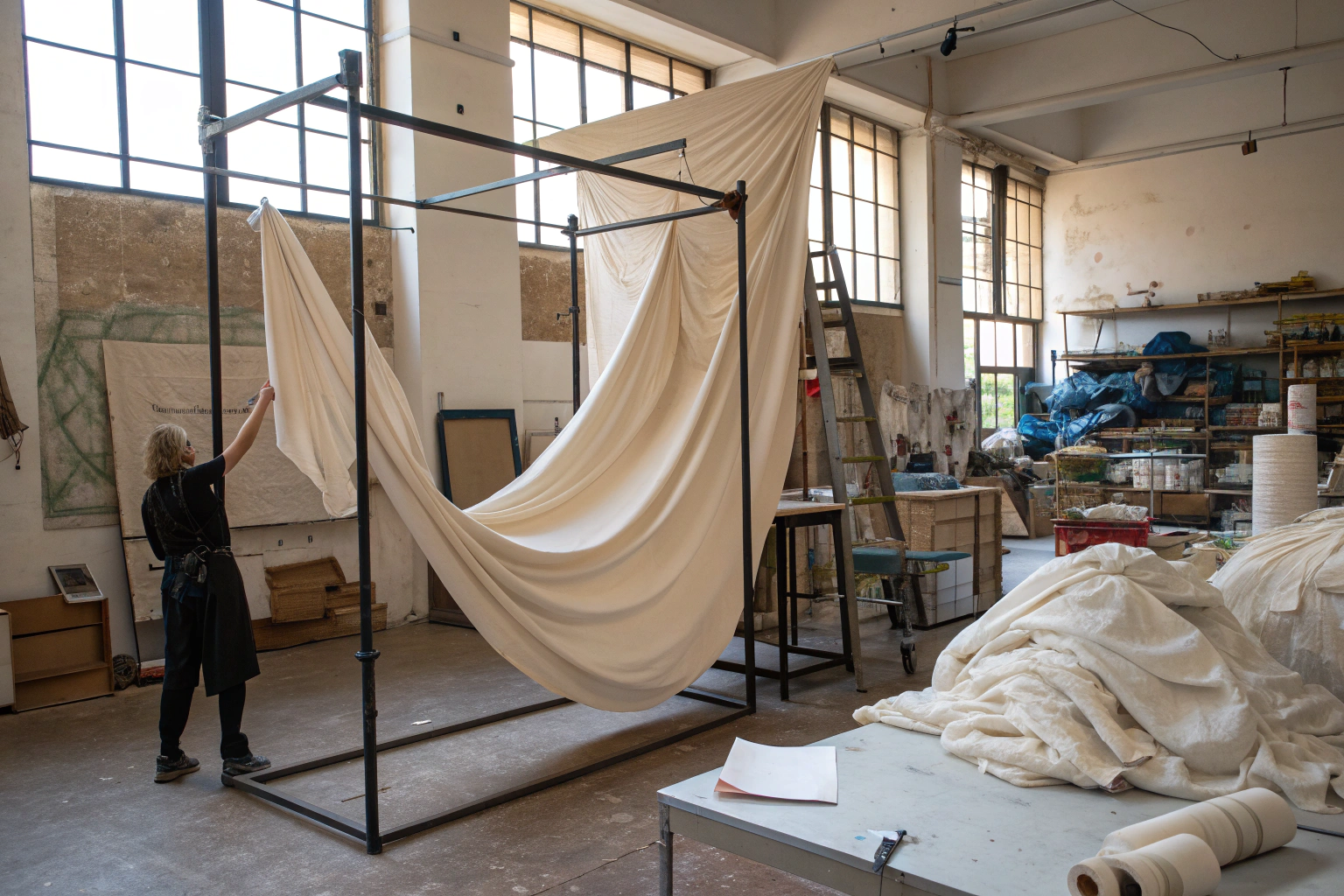
A few years ago, I got a call that was completely different from my usual orders. It wasn’t a buyer from Zara or a sourcing agent from H&M. It was an artist from Berlin. She was preparing for a major installation at a museum and needed 500 meters of white muslin. But not just any muslin. It had to be "unbleached, with natural neps, and it had to burn in a specific way." Burn? I asked. Yes, she was going to set part of it on fire for a performance piece. I realized then that fabric for art is a whole different animal.
Fabric for sculpture and installation isn’t about drape or hand feel in the traditional sense. It’s about structure, light transmission, texture, and sometimes, how it interacts with fire, water, or resin. Artists ask questions that fashion buyers never do: "Will this hold its shape if I starch it stiff?" "Can I weld this synthetic with a heat gun?" "How will this react to being buried in the ground for three months?"
At Shanghai Fumao, we’ve supplied fabric to artists, set designers, and sculpture studios for years. We’re not just a mill; we’re a resource for creative problem-solving. We’ve sourced rare silks for a Japanese textile artist, provided industrial felt for a sound installation in London, and shipped miles of chiffon for a massive floating sculpture in Dubai.
In this post, I’m going to share what I’ve learned about sourcing fabric for art. It’s different from sourcing for apparel. The rules change. And if you’re an artist or a designer working on a large-scale piece, knowing what to ask for can save your project.
What Fabric Properties Matter Most for Sculpture?
When a fashion designer asks for fabric, they care about weight, drape, and color. When an artist asks, the list is different. They want to know: Can I paint on it? Can I glue it? Will it hold a fold? How does it transmit light? These aren’t standard textile tests, but we’ve learned to answer them.
I always start by asking the artist one question: "What are you going to do to this fabric?" The answer tells me everything. If they’re going to soak it in plaster, I recommend a coarse jute or hemp—the fibers grip the plaster. If they’re going to suspend it in the air, I recommend a lightweight nylon with high tear strength.
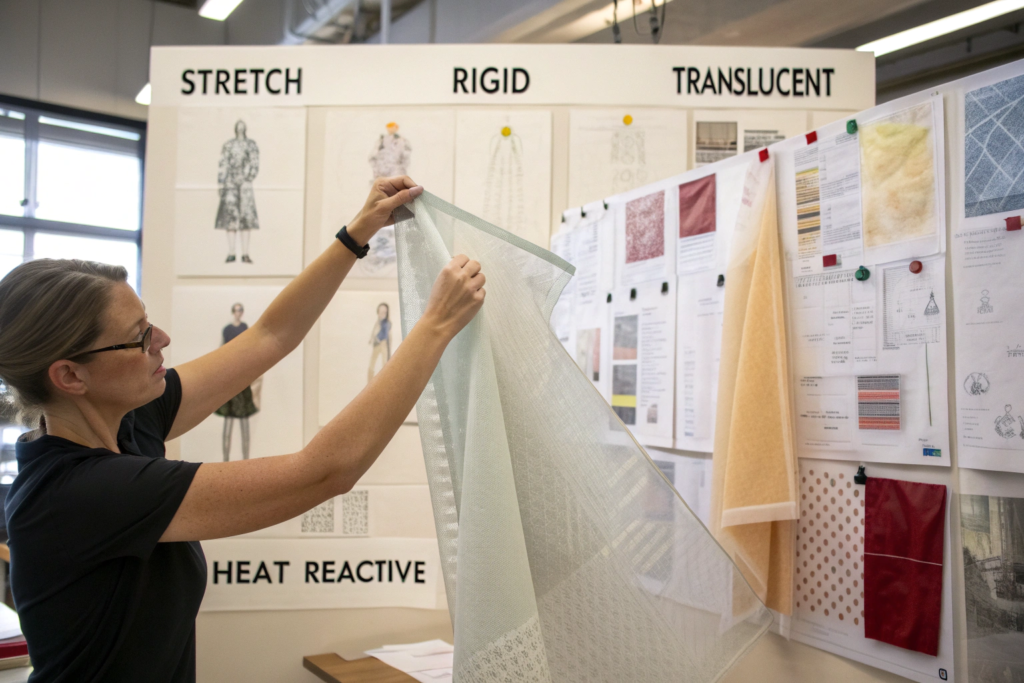
How do you choose fabric for rigid structures vs. soft draping?
For rigid structures—things that need to stand up or hold a shape—you want fabric with "body" and "memory." A heavy cotton duck canvas (like 20 oz) is a classic choice. It’s stiff, it takes paint well, and it can be stapled or nailed to armatures. For soft draping that needs to flow, you want something with fluidity, like rayon challis or silk habutai. But here’s the trick: you can make almost any fabric rigid with the right treatment. We had an artist from Chicago who needed fabric that could be folded into sharp origami-like pleats and hold them permanently. We sent her a polyester/cotton blend with a high thermoplastic content. She used a heat press to set the pleats, and they stayed. The polyester melted slightly and locked the shape. For natural fibers that don’t melt, you need resins or starches. There’s a great resource on fabric stiffening techniques for artists from Jacquard Products that covers different mediums.
What about light transmission and opacity?
Art installations often play with light. A fabric that looks opaque on a roll might become translucent when stretched thin over a frame. We always send artists a "light box" sample. We take the fabric and put it over a bright LED panel. You see things you can’t see in normal light: the unevenness of the weave, the slubs in the yarn, the actual transparency. For a light installation in a cathedral in France, we supplied a silk organza. It’s crisp, almost transparent, and it catches the light beautifully. For a project that needed to block light completely, we sent a blackout coated polyester. It has a black acrylic coating on the back that stops 99% of light. We learned that museum lighting standards from the Getty Institute are a good reference for how fabrics react under different gallery lights.
Where Do You Find Large Quantities of Rare or Natural Fabrics?
Artists often want something you can’t find at Joann Fabrics. They want hand-spun linen, or untreated hemp, or silk noil with all the imperfections left in. These aren’t commodities. You have to know the right suppliers—often small mills in Italy, Japan, or India—and you have to be willing to wait.
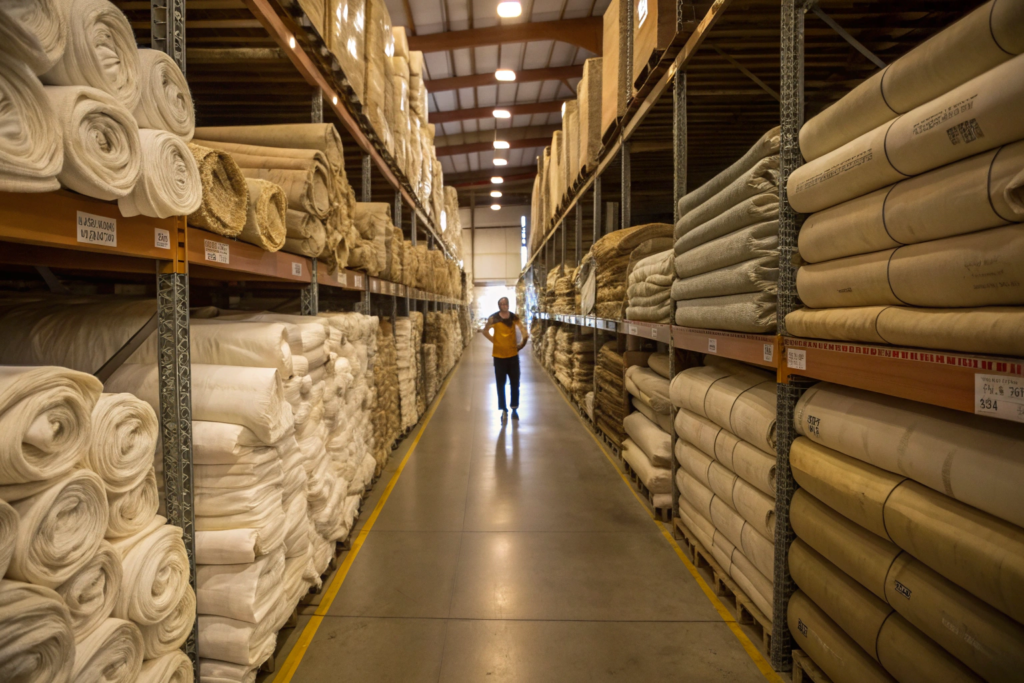
We keep a stock of "artist favorites" in our warehouse. Things like unbleached muslin, heavy linen canvas, and natural hemp. But when an artist needs something truly unique, we go hunting.
Can you source "raw" or unfinished fabric directly from the mill?
Yes, and this is often what artists want. "Unfinished" means it hasn’t been through the final finishing processes—no singeing, no calendaring, no chemical softeners. The fabric is straight off the loom, often called "greige goods." It has a natural, slightly rough hand feel and may still have natural impurities like seed coat fragments. We love supplying this because it’s the most authentic version of the fiber. For a Korean artist working with natural dyes, we sourced a raw hemp fabric directly from a mill in Northeast China. It was stiff, uneven, and perfect for her process. She wanted the fabric to "speak" of its origins. The only catch is that raw fabric can have up to 5% shrinkage when washed, and it might have weaving defects. We always warn artists about this and suggest they buy 10% extra. For more on greige goods specifications, Swicofil has a good technical explanation.
How do you source organic or naturally colored cotton in bulk?
Naturally colored cotton—browns, greens, rusts—is grown that way, not dyed. It’s rare and expensive. There’s a project in Arizona called "The Cotton Project" that works with heritage seeds. We’ve sourced from similar small-scale growers in Peru and India. The fibers are usually shorter than white cotton, so the fabric feels different—more like a rustic linen. For a Dutch artist weaving large-scale tapestries, we found a supplier of organic brown cotton grown in the Mekong Delta. The color variation between batches was noticeable, but she loved that. It added depth. If you need consistency, though, this is tough. Nature doesn’t grow the same shade every year. The International Year of Natural Fibres website has archives of growers and associations that still exist.
How Do You Test Fabric for Extreme Conditions (Fire, Weather, Stress)?
Art doesn’t live in a controlled environment. It hangs in humid museums, it sits in freezing public squares, it gets touched by thousands of hands. If you’re an artist, you need to know: will my fabric rot? Will it fade? Will it catch fire if someone puts a cigarette near it?
We run tests that go beyond standard textile specifications. We’ll take a sample and put it in our Xenon arc weatherometer for 500 hours to simulate years of sunlight. We’ll soak it in salt water to see if it mildews. We’ll even freeze it and then bend it to see if it cracks.
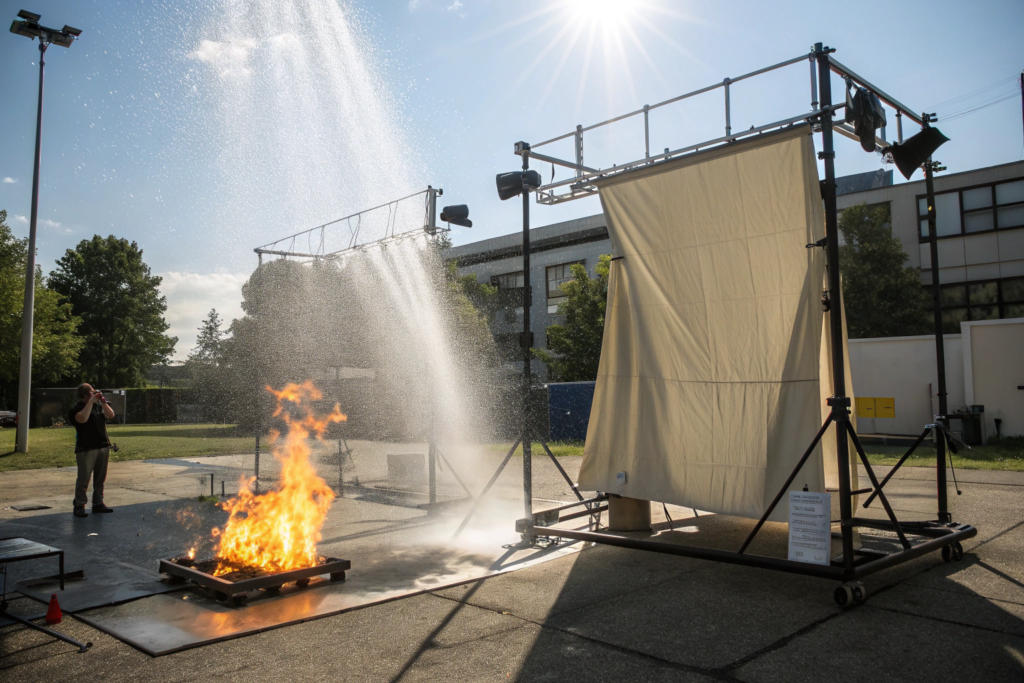
What are the fire safety standards for gallery installations?
This is non-negotiable. If your work goes into a public space, it usually has to pass a fire safety test. In the US, that’s often NFPA 701 (Test for Flame Propagation of Textiles). In Europe, it’s often DIN 4102 B1. We can treat most natural fabrics with a flame-retardant finish to help them pass. But here’s the catch: the treatment can change the color and the hand feel. It can make white fabrics slightly yellow. For a British artist creating a massive fabric ceiling installation, we had to find a balance. We used an inherently flame-resistant polyester (Trevira CS) instead of treating natural fiber. It passed the test with no chemicals, and the color stayed pure white. But it didn’t have the same soft drape as cotton. It’s always a trade-off. The NFPA’s page on textile flammability has the details of the testing protocol.
How do you protect outdoor fabric installations from UV and mold?
The sun is brutal. UV radiation breaks down fibers. Cotton loses strength. Polyesters can become brittle. For outdoor art, we recommend solution-dyed acrylics (like Sunbrella®) or polyesters with UV inhibitors. The color is added when the fiber is made, not after, so it’s part of the fiber. It won’t wash out or fade as fast. For a sculpture park in Texas, we supplied a bright yellow solution-dyed acrylic. After three years in the sun, it was still recognizable as yellow, while a piece of standard dyed cotton next to it had turned beige. For mold and mildew, the enemy is moisture. In humid climates, natural fibers will eventually mildew if they stay wet. A fungicidal finish can help, but the best solution is to design the piece so water drains and air circulates. We had a client in Miami whose beautiful linen installation grew black spots after one rainy season. We replaced it with a solution-dyed polyester that had an anti-microbial finish. No more spots. For more on outdoor fabric performance, Sunbrella’s technical data is a gold standard.
Can You Print Custom Patterns on Fabric for Installations?
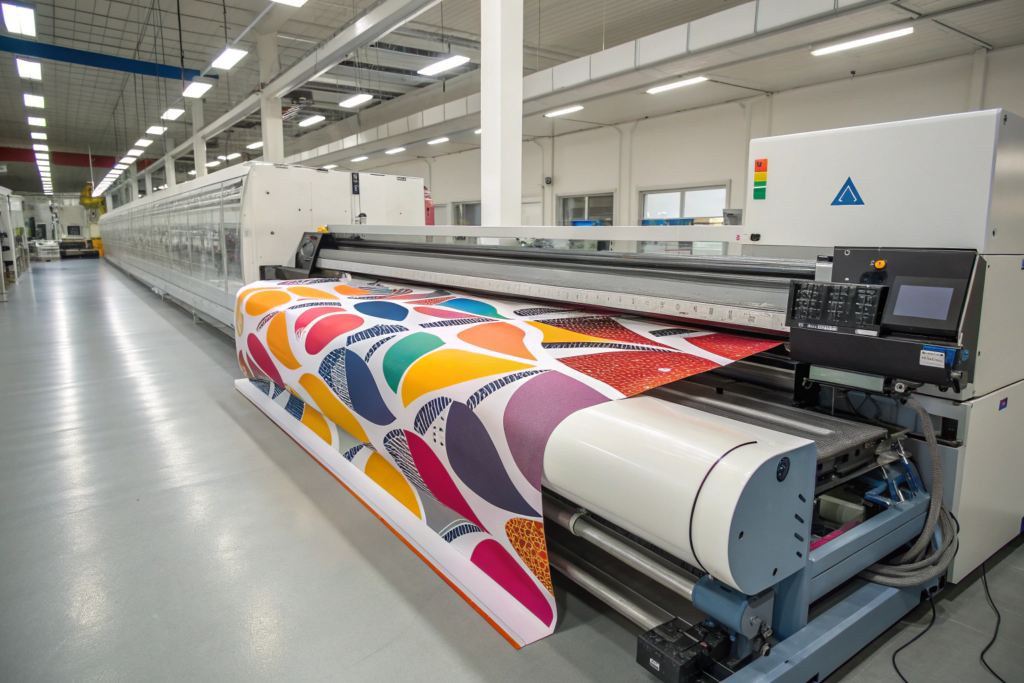
Sometimes, the fabric itself needs to be the canvas for an image. Maybe you need a giant photograph printed on silk. Maybe you need a repeating pattern that covers 100 feet of wall space. Digital printing has changed the game for artists. You’re not limited to 60-yard minimums anymore.
We have partners with wide-format digital printers that can handle fabric up to 120 inches wide. We can print photographic images, abstract art, or solid colors with no repeat. The minimums are low—sometimes just a few yards.
What’s the difference between pigment and reactive printing for art?
Reactive printing is for cellulosic fibers like cotton and linen. The dye actually bonds with the fiber. It’s permanent, soft, and vibrant. But it requires steaming and washing after printing. Pigment printing is like painting on the surface. It works on any fiber, but it can sit on top and make the fabric slightly stiff. For an artist in LA printing large-scale photographs on cotton canvas, we used reactive printing. The colors were deep and the hand feel was soft—important because the piece was meant to be touched. For a temporary installation where longevity wasn’t an issue, pigment printing was faster and cheaper. The difference between reactive and pigment inks is explained well on Digital Textile Network.
How do you ensure color consistency across huge batches?
If your installation needs 500 meters of printed fabric, and it all has to match perfectly, you need to control the dye lots. Digital printing is actually great for this because it’s consistent. The machine lays down the same amount of ink every time. The challenge is the base fabric. If the white base varies slightly in shade, the printed color will vary. We always recommend buying the base fabric from a single dye lot for large installations. For a Chinese artist creating a 200-meter-long printed silk scroll, we bought all the silk from one batch, and we printed it in one continuous run overnight. There was no variation. For projects that require multiple print runs, we print extra and ask the artist to "marry" the rolls in sequence. For more on color management in textile printing, FESPA has excellent technical guides.
Conclusion
Sourcing fabric for art installation and sculpture is a different kind of challenge. It’s not about meeting a mass-market spec; it’s about fulfilling a unique vision. The questions are different. The materials are different. And the stakes are different—because this isn’t a piece of clothing that will be worn for a season. This is a piece of art that might hang in a gallery for decades.
At Shanghai Fumao, we love these projects. They push us to think differently about what fabric can do. We’ve helped artists find impossible materials. We’ve tested fabrics for conditions they were never designed for. We’ve printed images on silks and canvases that became centerpieces of major exhibitions.
If you’re an artist, a curator, or a set designer working on a project, let’s talk. We can help you source the base fabric, treat it for safety or durability, print your designs, and ship it anywhere in the world. We understand that your fabric isn’t just material—it’s your medium.
Reach out to our Business Director, Elaine. She’s worked with artists from Tokyo to Toronto and can help you navigate the technical details. Her email is elaine@fumaoclothing.com. Let’s make something that stops people in their tracks.








