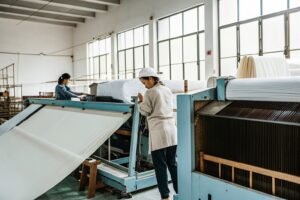
Let me tell you about a conversation that changed how I think about pricing. A European client came to me five years ago wanting to switch their entire bedding line to Organic Linen . Their current product was conventional linen. Nice quality. Sold well. But they were stuck in a price war. Every season a competitor undercut them by fifty cents. They were racing to the bottom.
I quoted them the price for GOTS certified organic linen. It was 40% higher than their conventional cost. I thought they’d laugh me out of the room. Instead they said "Perfect. We can raise our retail price by 60%."
I was confused. "Why would your customer pay more for the same fabric?"
They said "Because it’s Not the Same Fabric . It’s a Story . It’s a Promise . And it’s a Limited Resource ."
They made the switch. Their revenue per unit went up. Their return rate went down. And they were no longer competing with the discounters on Amazon. They had carved out a Premium Niche .
That’s when I realized the economics of organic linen are completely counter-intuitive. The higher cost is not a liability. It’s a Moat . It keeps the low-cost competitors out. It attracts a customer who values quality and ethics over price. And in the long run it generates Higher Gross Margin Dollars even with lower unit volume.
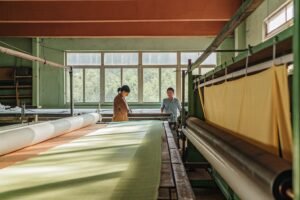
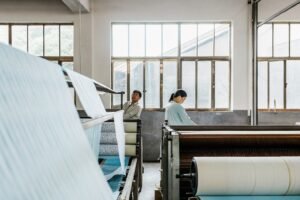
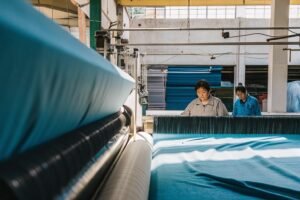
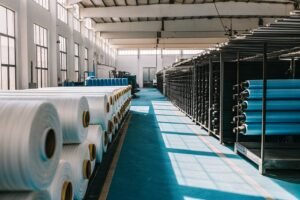
At Shanghai Fumao we’ve been scaling our organic linen production specifically for this reason. In this article I’m going to break down exactly why that 40% cost premium exists and more importantly why it translates into Greater Profitability for the brands that understand how to market it.
What Makes the Cultivation of Organic Flax More Costly
The price difference starts in the soil. And for linen it starts in a very specific place: Normandy France and Belgium . This narrow coastal strip has the perfect climate for flax cool damp and temperate. 75% of the world’s premium flax comes from here.
Organic Flax Cultivation is radically different from conventional.
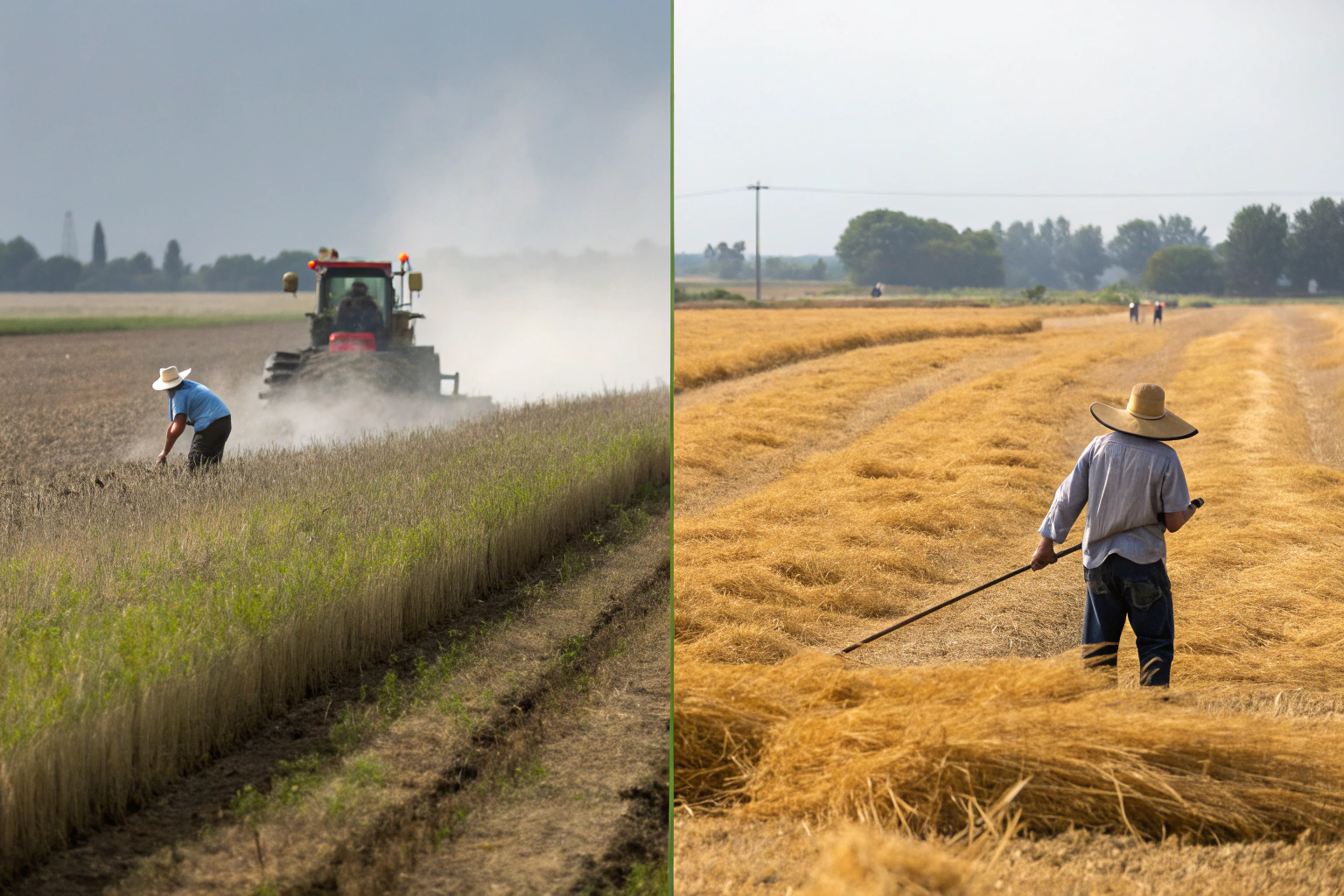
Conventional Flax is a heavy feeder. It requires Synthetic Nitrogen Fertilizers to boost yield. It’s susceptible to fungal diseases in the damp climate so farmers spray Fungicides . Weeds compete with the young flax so they use Herbicides . And to ensure the stalks ripen uniformly they often use Desiccants (like Glyphosate) to kill the plant just before harvest. This is standard industrial agriculture.
Organic Flax forbids all of these inputs. This has three massive cost implications.
First Lower Yield . Without synthetic nitrogen an organic flax field yields about 20-30% Less Fiber per acre than a conventional field. The farmer needs more land to produce the same amount of linen.
Second Weed Control Labor . You can’t spray Roundup. You have to Mechanically Weed the fields using specialized tine weeders pulled by tractors. This uses more diesel and more labor hours. It’s slower and less effective. Some weeds survive and compete with the flax.
Third Natural Retting . After harvest the flax stalks must be left in the field to Ret (rot). This is where microbes break down the pectin that glues the fiber to the woody core. Conventional farmers can use Chemical Retting to speed this up. Organic farmers rely entirely on Dew Retting . They spread the stalks and let the rain and dew do the work. This takes 2-3 Weeks Longer and is entirely Weather Dependent . If it’s too dry the retting fails. If it’s too wet the fiber rots completely.
This labor-intensive weather-dependent process is why organic flax fiber costs significantly more at the farm gate.

How Does Dew Retting Impact the Final Color of Organic Linen
This is a specific aesthetic detail that actually adds value. Dew Retting gives organic linen its signature Natural Blonde and Silver-Grey Tones .
Because the stalks lie in the field exposed to sun and rain the fiber absorbs natural tannins and minerals from the soil. This creates a Subtle Color Variation that is impossible to replicate with chemical retting.
Conventional linen is often Over-Scoured with harsh chemicals to make it Uniformly White . It loses its natural character.
Organic linen retains a Slubby Textured Appearance and a Heathered Color . This is a Feature Not a Bug . The market perceives this as "Authentic Linen." It’s the visual cue that tells the customer "This is the real stuff not a cheap imitation."
At Shanghai Fumao we offer organic linen in its Natural Undyed State . It’s a beautiful oatmealy beige. It’s one of our best sellers for the eco-luxury market.
Why Is Organic Flax Certification So Rigorous and Expensive
You can’t just say "It’s organic." You have to prove it. And proving it for linen is harder than for cotton.
Linen is a Bast Fiber . It comes from the stem of the plant. The processing steps are more complex than cotton (which is just a seed hair). The Chain of Custody involves:
- Farm: Must be certified to EU Organic or NOP standards.
- Scutching Mill: Where the stalks are broken and the fiber is separated. This mill must be GOTS Certified .
- Spinning Mill: Must be GOTS Certified.
- Weaving/Knitting Mill: Must be GOTS Certified.
Every step requires an Annual Audit by a third-party certifier (Control Union Ecocert). These audits cost thousands of dollars. The mills also have to implement Segregation Protocols to ensure organic fiber never mixes with conventional. This means dedicated storage areas dedicated machinery cleaning protocols and detailed Transaction Certificates (TCs) .
This Paperwork Burden adds overhead cost that gets amortized into the price per yard. But it’s this paperwork that gives the fabric its Legal Integrity .
How Does Organic Linen Justify a Higher Retail Price Point
We’ve established it costs more to make. But why does the Consumer pay more? It’s not just because the hang tag says "Organic." It’s because organic linen delivers a Tangible and Visible Difference in performance and aesthetics.
Point 1: The Wrinkle. Conventional linen is often treated with a Cross-Linking Resin (like Formaldehyde) to make it "Easy Care" and "Wrinkle-Resistant." This chemical coating stiffens the fiber and reduces its Breathability .
Organic linen is Unfinished . It is not coated with resin. This means it Wrinkles Beautifully . It forms soft relaxed creases that are the hallmark of effortless European style. The consumer who buys organic linen wants the wrinkle. They see it as proof of authenticity.
Point 2: The Softening. Conventional linen with a resin finish stays Stiff for the life of the garment. The resin prevents the fiber from absorbing moisture and softening.
Organic linen has a Living Finish . Every time you wash it the water swells the fiber and relaxes the pectin bonds. It gets Softer and Softer over time. A five-year-old organic linen sheet feels like velvet. A five-year-old conventional linen sheet feels like sandpaper.
Point 3: The Health Halo. The consumer who buys organic linen is often a Sensitive Skin Consumer . They are avoiding synthetic fertilizers and pesticide residues. They perceive organic linen as Hypoallergenic and Safer for themselves and their children.
This combination of Authentic Aesthetics and Performance Longevity justifies the premium price. It’s not a commodity. It’s an heirloom.

What Is the Consumer Perception of Undyed Natural Flax Colors
This is a market trend that has legs. The Beige Renaissance .
Undyed organic linen comes in shades of Oatmeal Flax and Greige . These are not "boring neutrals." They are Sophisticated Biophilic Colors .
They connect the consumer to nature. They evoke a sense of calm and simplicity. They are incredibly Versatile . They layer beautifully with other textures like wool knits and raw silk.
From a branding perspective using undyed fabric is a powerful sustainability statement. You can say "No Dyes. No Bleach. Just Flax." This resonates deeply with the conscious consumer. It also eliminates the Environmental Impact of Dyeing which is a significant part of linen’s carbon footprint.
Why Does the Patina of Organic Linen Increase Over Time
This is the secret to customer retention. Most fabrics degrade over time. Organic Linen Improves.
Patina is the surface change that occurs from use and age. With organic linen this includes:
- Softening: As mentioned the handfeel gets better.
- Color Evolution: Undyed linen deepens slightly to a warm honey tone with exposure to light and air.
- Surface Luster: The fiber ends wear down creating a subtle Natural Sheen .
This means the customer’s relationship with the product Deepens over time. They love it more in year three than they did in year one. This creates Brand Loyalty . When it’s time to buy another set of sheets or another summer shirt they come back to you. They trust that your product will age well.
How to Market the Breathability and Durability of Organic Linen
If you want to command a premium price you can’t just sell "fabric." You have to sell Performance . And organic linen outperforms almost every other fabric in two key areas: Thermal Regulation and Longevity .
Breathability: Linen is the most breathable fabric in existence. It’s not just marketing. It’s physics. Linen fibers are Hollow . Air moves through the center of the fiber. Linen can absorb up to 20% of its weight in moisture before it feels damp. Cotton feels damp at 8%.
This means organic linen sheets keep you Cooler in Summer and Warmer in Winter . They are the ultimate Thermoregulator .
Durability: Linen is the Strongest Natural Fiber . It has a tensile strength 2-3 times higher than cotton. It is 30% Stronger Wet Than Dry . This means it can withstand decades of washing and use. While a cotton t-shirt might last 3-5 years a linen shirt can last 20-30 years .
This durability is a key part of the Sustainability Story . The most sustainable garment is the one you never have to replace. Organic linen is a Buy It For Life product.

How to Use "Thermoregulation" as a Key Selling Point
Stop saying "Breathable." It’s a generic term that’s been abused by polyester brands. Use "Thermoregulating" .
Here is the copy I give to my brand clients:
"Unlike synthetic fabrics that trap heat and moisture against the skin Organic Linen actively manages your microclimate. The hollow fibers wick perspiration away instantly and allow passive airflow to cool the body. You’ll sleep deeper and wake up fresher."
This positions the product as a Performance Wellness Tool not just a sheet. It justifies the higher price because it promises a Better Night’s Sleep . That’s a high-value promise.
What Are the Long-Term Cost-Per-Wear Benefits of Organic Linen
This is the math you need to teach your customer.
Cheap Conventional Linen Shirt: $60. Lasts 2 summers (50 washes). Begins to fray and fade. Cost per wear: $0.60 .
Organic Linen Shirt: $120. Lasts 10 summers (250 washes). Looks better with age. Cost per wear: $0.24 .
The organic linen shirt is Half the Cost Per Wear . It’s the smarter financial decision over the long term. This is a compelling argument for the rational luxury buyer. They are not spending more. They are Investing Better .
What Are the Supply Chain Challenges with Organic Linen
I’ve painted a rosy picture of profitability. Now let me tell you the hard part. Getting the fabric in the first place is a constant struggle.
Organic linen represents less than 1% of the global linen supply . The supply chain is Fragile and Opaque .
Challenge 1: Raw Material Scarcity. As I mentioned the ideal growing region is tiny. A bad weather year in Normandy a drought or a heavy rain during retting can wipe out a significant portion of the global organic flax supply. When this happens prices Spike and lead times Double .
Challenge 2: Spinning Bottlenecks. There are only a handful of spinning mills in Europe (and increasingly in China) that are certified to spin organic long-line flax. These mills have Long-Term Contracts with the giant home textile brands. If you are a small brand trying to buy 500 yards of fabric you are at the Bottom of the Priority List .
Challenge 3: Minimum Order Quantities (MOQs). Because the yarn is scarce and the spinning runs are long many mills enforce High MOQs . You can’t just buy 100 yards of custom-dyed organic linen. You have to buy 1,500-3,000 yards .
At Shanghai Fumao we’ve addressed this by building a Stock Program for Organic Linen . We buy the yarn in volume we weave the greige fabric and we hold it in inventory. We then offer Small Batch Dyeing with an MOQ of 300 Yards . This is how we make organic linen accessible to independent designers and boutique brands.

Why Is Traceability So Difficult in the Flax Fiber Trade
Flax is a Commodity . It’s traded globally. A spinner in China might buy flax fiber from a trader who bought it from a co-op in France who mixed organic and conventional bales.
This Co-Mingling is the biggest threat to organic integrity. It’s very easy for a "GOTS Certified" fabric to contain Uncertified Fiber if the supply chain controls are weak.
This is why you must demand Transaction Certificates (TCs) that trace the fiber back to the Scutching Mill . The TC should state the Country of Origin of the flax. Ideally "Flax cultivated in France."
If the TC just says "Origin: China" you need to ask more questions. While organic flax is grown in China the premium market currently favors European Flax for its long-staple quality.
How to Vet a Supplier’s Organic Linen Credentials
Don’t just accept a GOTS certificate at face value. Do a Deep Dive .
- Ask for the Fiber TC: Trace it back to the farm level if possible.
- Request a Fiber Sample: Burn a thread. It should smell like burning hair. Crush the ash. It should be soft and black.
- Look for the "Masters of Linen" Certification: This is a specific European certification for traceable high-quality European flax.
- Visit the Mill (or Video Call): Ask to see the Segregated Organic Storage Area .
These steps separate the legitimate organic suppliers from the greenwashers.
Conclusion
Organic linen is more expensive because its cultivation is a labor of love dependent on skilled farmers favorable weather and rigorous certification. It’s a niche product with a fragile supply chain. But for the brands that can navigate these challenges it is also remarkably more profitable.
The higher cost creates a barrier to entry that protects margins. The unique aesthetics of slubs and natural tones appeal to a discerning high-value customer. And the incredible performance characteristics breathability and extreme durability generate customer loyalty and repeat purchases.
The key is to shift the conversation from "Price Per Yard" to "Value Over Time." When you market organic linen as an heirloom-quality thermoregulating wellness investment the retail price becomes a secondary concern. The customer is buying a better experience and a better story.
At Shanghai Fumao we are committed to making this remarkable fiber accessible to brands of all sizes. Through our stock program and small-batch dyeing capabilities we lower the barriers to entry while maintaining the strictest standards of organic integrity.
If you are curious about incorporating organic linen into your next collection and want to understand the current market pricing and availability I invite you to reach out to our Business Director Elaine. She can provide swatches of our natural undyed linen and walk you through the custom color development process.
Contact Elaine at: elaine@fumaoclothing.com