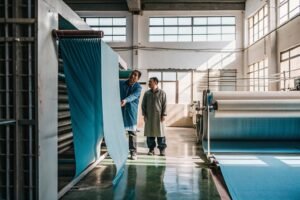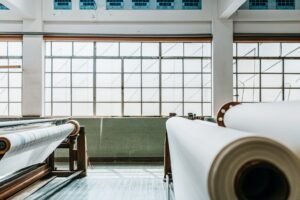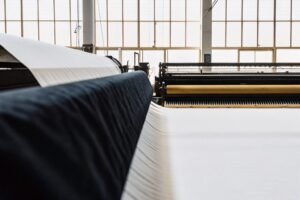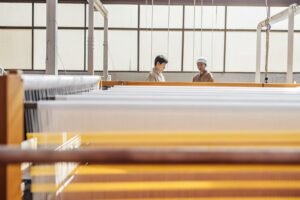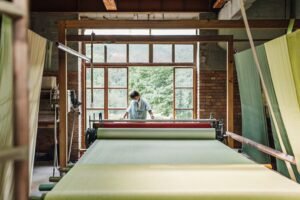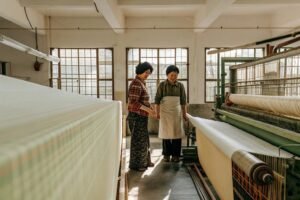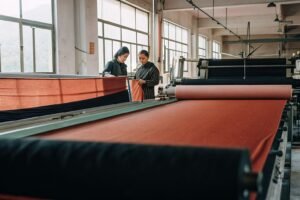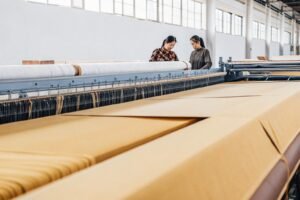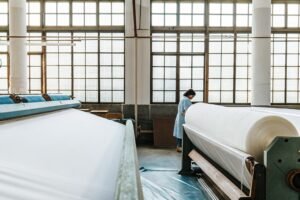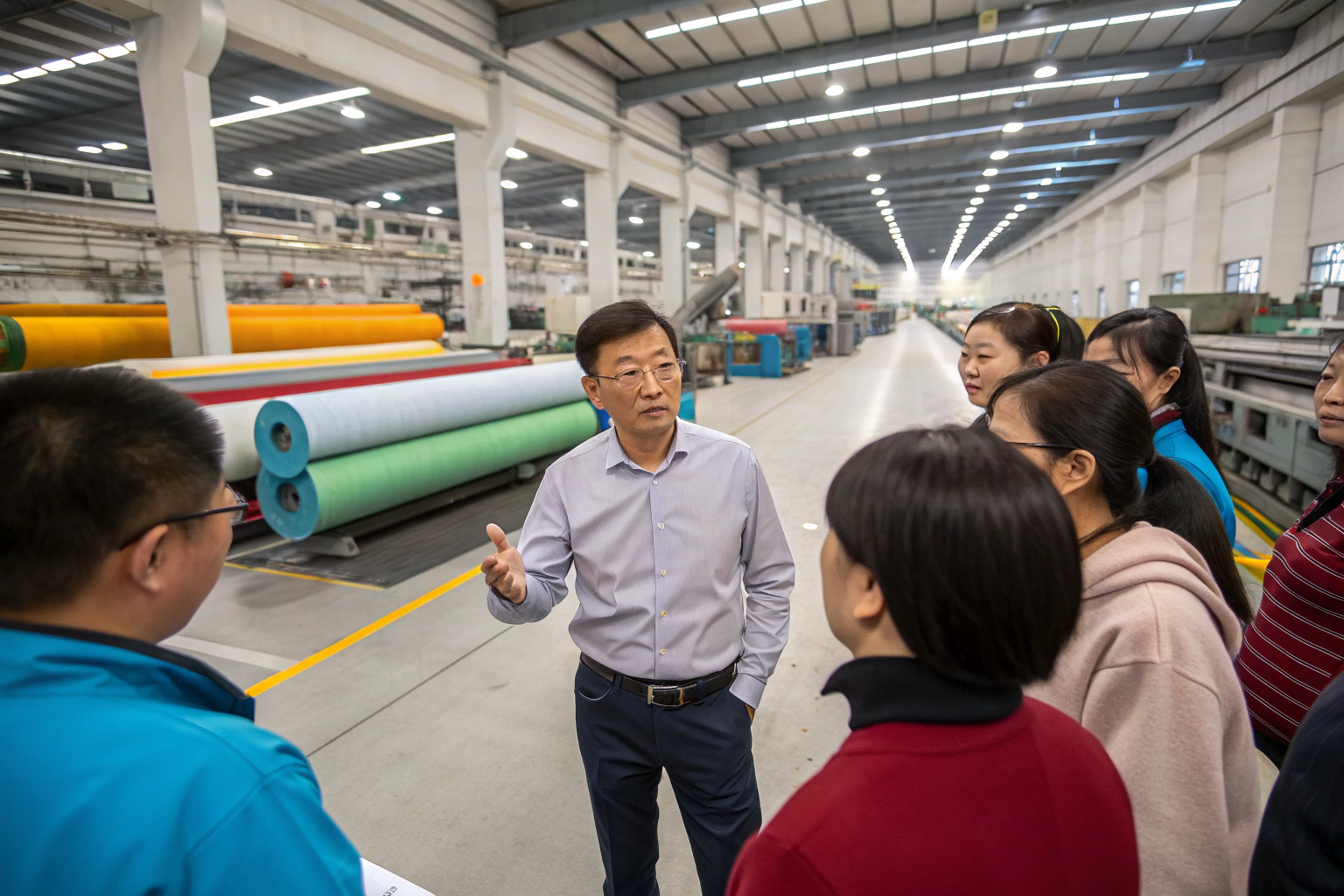
You’re looking at a piece of wool felt, and it looks simple, right? Just a solid, non-woven sheet of fabric. But let me tell you, getting from a sheep’s back to a roll of felt that meets the strict quality standards of an American brand like yours is a journey. It’s a process that combines ancient techniques with modern, high-tech machinery. And if you’re sourcing from China, understanding that journey is the difference between a shipment that arrives on time and a logistical nightmare.
So, what exactly is the process of creating wool felt fabric? In simple terms, it’s the matting, condensing, and pressing of wool fibers together. Unlike woven fabrics where threads are interlaced, or knits where they are looped, felt is created by interlocking the wool fibers themselves using heat, moisture, agitation, or needles. For us at Shanghai Fumao, the process is a science. It starts with selecting the right raw wool and ends with a rigorously inspected product ready for export. We’re not just making fabric; we’re engineering a material for your specific needs, whether it’s for high-end fashion accessories or industrial applications.
To really get a grip on how we make wool felt, you have to look at the entire chain. It’s not just one step; it’s a series of critical decisions and actions. From the moment raw fiber enters our facility in Keqiao to the minute it’s packed into a container for Los Angeles or New York, we control the variables. We’ve spent over 20 years perfecting this. Let me walk you through the exact process we use, so next time you’re placing an order, you’ll know exactly what questions to ask.
How do you source raw wool for felt production in China?
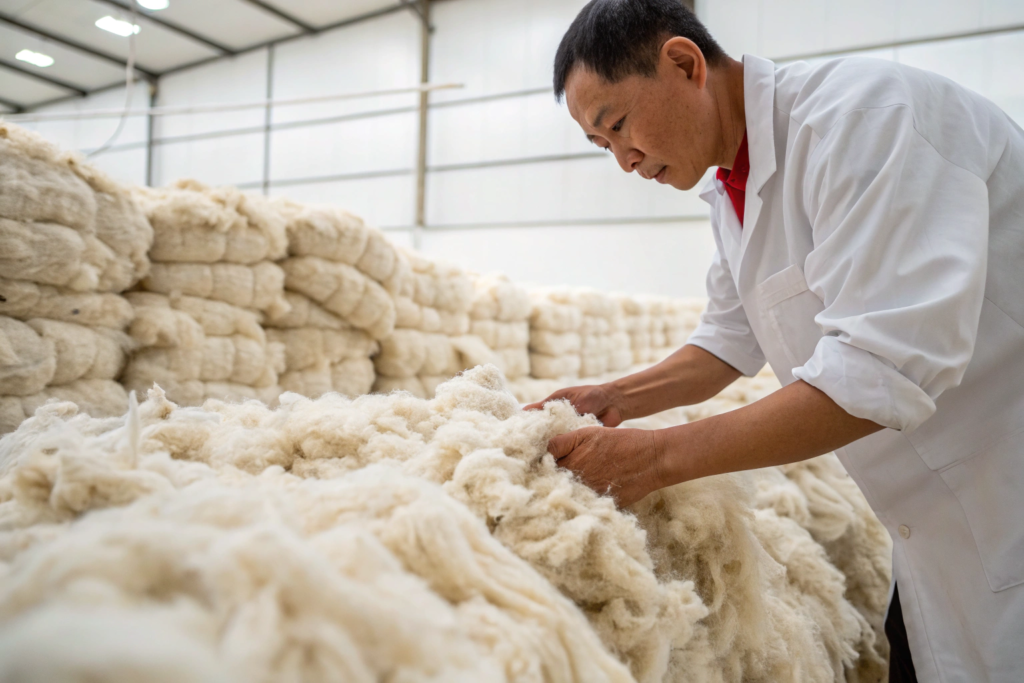
It all begins here, and this is where many suppliers cut corners. We don’t. The quality of your felt is 100% dependent on the quality of the raw fiber. We source our wool primarily from domestic farms in northern China, like Inner Mongolia and Xinjiang, which produce fibers comparable to the best in the world. But we also import specific types, like superfine merino from Australia, for clients who need that ultra-soft hand feel for baby products or luxury apparel. In 2023, a buyer from a German automotive interior company came to us. They needed a very specific flame-retardant wool felt. We didn’t just pull something off a shelf. We worked back from their spec, sourced a specific 28-micron wool blend, and then treated it during the process to meet their DIN standards. The result? A contract that’s now in its third year.
What specific wool grades are best for durable industrial felt?
If you need felt that’s going to withstand abrasion, like for polishing pads or gaskets, you can’t just use any wool. The fiber diameter, measured in microns, is crucial. For industrial applications, we typically use coarser fibers, anywhere from 30 to 40 microns. These fibers have larger scales, which interlock more aggressively during the felting process, creating a denser, stronger fabric. A common mistake new buyers make is asking for the "softest" wool for an industrial part. Soft wool (under 20 microns) has less scale structure and won’t create the same mechanical bond. It would wear out in days. We always advise clients on how to select the right wool fiber micron for your specific project, because using the wrong grade leads to product failure and wasted money. We also have to consider the staple length; for needle-punched felt, we need longer fibers, typically over 2 inches, to ensure they anchor properly in the base web.
How do we ensure ethical and sustainable wool sourcing?
This is a huge topic, especially for our European and US clients. They don’t just want the fabric; they want the story behind it. And frankly, so do we. Mulesing is a big concern. We’ve taken a firm stance: we do not source wool from farms that practice mulesing. We require our suppliers to provide certifications and, for our top-tier partners, we do on-the-ground audits. For instance, a Scandinavian fashion brand we work with required full traceability for their "Regenerated Wool" collection. We set up a dedicated supply chain where we could track the wool from a specific cooperative in Inner Mongolia, through the scouring process, and into our production line. This transparency is now a huge part of our value proposition. We can help you navigate the complex world of sustainable wool certifications from China, ensuring your supply chain is clean and your marketing claims are backed by real data.
Why is the pre-felting stage critical for fabric consistency?
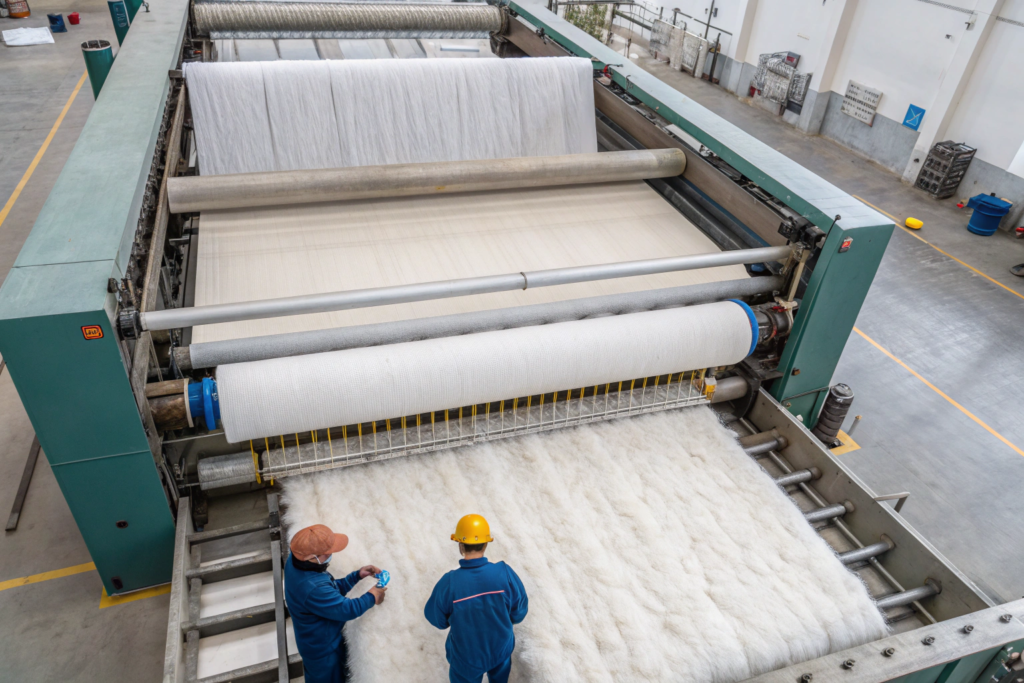
This is where the magic of engineering meets the art of textiles. You’ve got these fluffy, chaotic wool fibers, and you need to turn them into a uniform sheet. This is the blending and carding stage. We mix different batches of wool to ensure consistent color and performance across the entire roll. Then, the fibers go through the carding machine, which has thousands of fine wire teeth. These teeth comb the fibers, disentangling them and laying them all in the same general direction to create a thin, continuous web called a "batt." Think of it like making a perfect, even layer of cotton candy. If this batt is uneven, your final felt will have thin spots and weak areas. It’s non-negotiable. We have a strict protocol here: every 100 meters of batt produced is weighed and measured for density variance. We keep it under a 2% tolerance.
What machinery is used to create the initial fiber web?
We use state-of-the-art, high-production carding machines from German and Italian manufacturers, alongside top-tier domestic equipment we’ve customized ourselves. These aren’t your grandfather’s carding machines. They have computer-controlled settings that allow us to adjust the fiber alignment. For a standard felt, we want a cross-lapped web, where layers of the carded batt are placed on top of each other at angles. This creates a felt that is strong in all directions. For specialty applications, like certain acoustic panels, we might create a parallel-laid web for specific tensile properties. I remember in 2022, a Japanese buyer was having issues with their felt tearing along the length. They were buying from a cheaper supplier who wasn’t controlling their web formation. We showed them our cross-lapping process, and they immediately understood the difference. The felt we produce can handle stress from any angle. It’s a classic example of why the machinery in a non-woven fabric factory determines product quality. You can’t cut corners here.
How do we blend different colored wools for custom shades?
We don’t always dye the finished fabric. Sometimes, especially for heathers and heathered effects, we blend different colored fibers before carding. This is a more complex process, but it yields a much richer, more integrated color. The fibers are interlocked, so the color is "through and through." It won’t fade or abrade the same way a surface-dyed fabric might. We use a bale opener and a multi-layer blending machine that meticulously layers different colored wools. For example, to get a perfect charcoal heather, we might blend 70% black wool with 30% white wool. But the exact ratio is fine-tuned by our experts. They take small samples from the blend, card it by hand, and check the color against a light source. Only when it’s perfect does the full batch go into production. This attention to detail is why our heather felts are some of our best-selling products. It’s about understanding the technique of wool color blending for unique textures. (Here’s a pro tip: always order lab dips or small blend samples first. What looks good on paper can look different in a full batt.)
What are the main techniques used to felt the wool fibers?
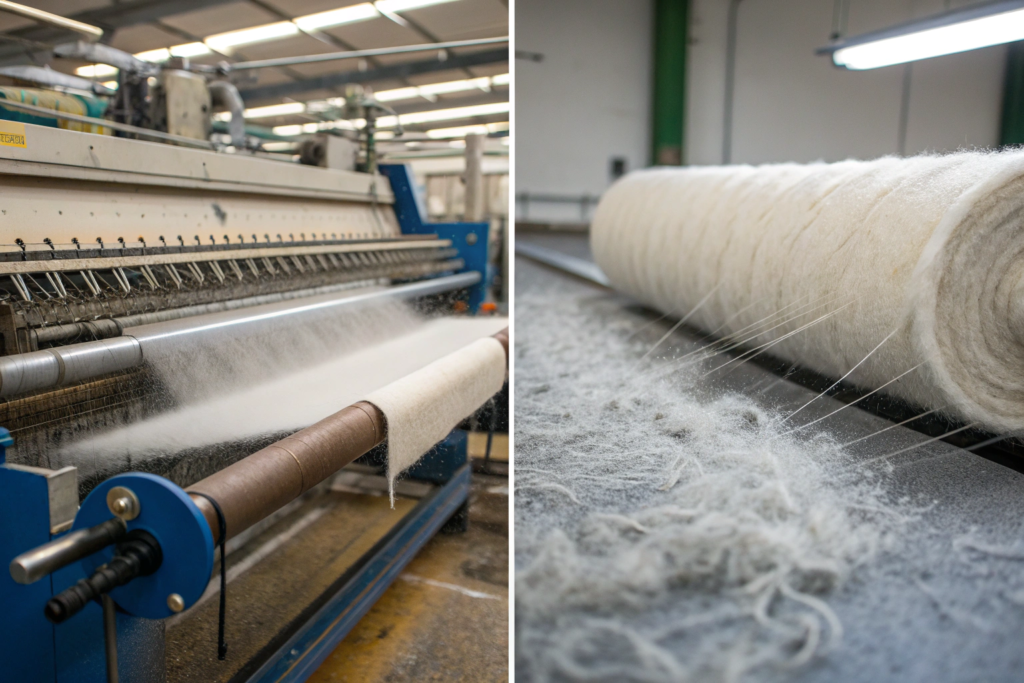
Now we have our beautiful, consistent batt. But it’s still just a pile of loose fibers. We need to lock them together. This is the actual felting process, and there are two main roads we can take: wet felting or needle felting. The choice depends entirely on what you want the final fabric to do. Wet felting, the ancient method, uses hot water, soap, and agitation to make the wool scales open up and then lock together as it cools and dries. It creates a denser, smoother fabric. Needle felting is a mechanical process where thousands of barbed needles punch into the batt, physically entangling the fibers. This creates a felt that can be thicker and more porous. We have dedicated production lines for both because a one-size-fits-all approach just doesn’t work in this business.
How does the wet felting process work in a modern factory?
We’ve industrialized a very old craft. Our wet felting line starts with saturating the batt in a hot, soapy solution. The soap acts as a lubricant, allowing the fibers to move. Then, it passes through a series of heavy rollers that apply pressure and vibration. This is the "agitation" part. The combination of heat, moisture, and pressure causes the scales on the wool fibers to open and then irreversibly interlock as the fabric is gradually cooled. The key here is control. We have to precisely manage the temperature (usually starting around 70°C and gradually cooling), the pressure, and the speed. Too much agitation too fast, and the felt will shrink unevenly and warp. Too little, and it won’t bond. A few years back, a hat maker from the UK came to us with a problem. Their felt hoods were inconsistent, some shrinking more than others during their own blocking process. We analyzed their process and ours, and adjusted the final stages of our wet felting to "pre-shrink" the fabric more completely. We now provide them with a felt that holds its shape perfectly during their hat-making. It’s a partnership in engineering. We often share how to control shrinkage in industrial wet felting with our clients so they understand the science behind it.
When is needle-punching the preferred method for felt?
Needle-punching, or needle felting, is our go-to for thicker, more technical felts. Imagine a board with thousands of barbed needles, punching up and down into the batt at high speed. As they go in, the barbs catch fibers from the surface and pull them down through the layers, tangling them. On the way out, the barbs release the fibers, leaving them locked in place. We use different needle types and punch densities for different results. For a dense, stiff felt for automotive interiors, we use a high punch density with finer needles. For a soft, lofty felt for crafts, we use fewer punches and coarser needles. We have a line of needling looms that can produce felt up to 3 meters wide. In 2021, a US company needed a highly absorbent, thick felt for oil-spill cleanup. Woven fabrics wouldn’t work. Wet felt would be too dense. We developed a needle-punched felt using a blend of wool and polypropylene, which is both absorbent and oleophilic (attracts oil). We’re constantly experimenting with the latest advancements in needle-punching technology for industrial fabrics. It’s a field where small changes in the process create huge changes in performance.
How do we finish and inspect wool felt before shipping?
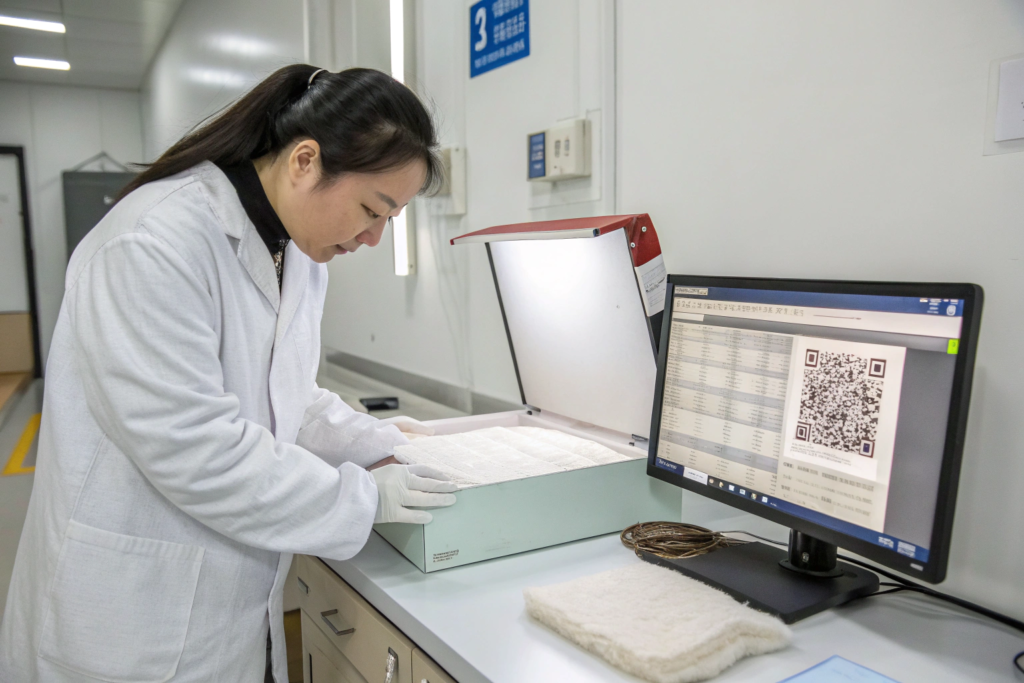
The felt is made, but the job is only half done. Now we have to make it yours. This is the finishing stage, and it’s where we add the final value. It could be anything from simply hot-pressing the felt to a precise thickness, to applying a special coating, to cutting it into exact shapes. After that, and I can’t stress this enough, comes inspection. We don’t just eyeball it. Our in-house, CNAS-accredited lab is where we put every batch through its paces. We check thickness, density, tensile strength, and colorfastness. We use a 4-point system for visual inspection, just like the big brands do. If a roll doesn’t meet our 98% client pass rate standard, it doesn’t get on the boat. Period.
What customization options are available for wool felt?
This is where our "one-stop shop" model really shines. You need the felt to be flame retardant? We run it through our coating line. You need it to be water-repellent? We have a finish for that. Need it cut into circles for drink coasters or die-cut into complex gaskets? We have a fully equipped cutting department. We even do custom packaging. For a major Russian retailer who ordered holiday decorations, we not only produced the red and green wool felt but also laser-cut the shapes and packaged them in sets with custom hang tags. They received one box, not 20 different shipments. Our ability to offer one-stop customization for wool felt products from fabric to finished goods simplifies their supply chain dramatically. We handle everything from the raw fiber to the final packaged product.
How does your QR code tracking system guarantee quality?
Trust is good, but verification is better. Every single roll of fabric we ship has a unique QR code. When you scan it, you get the complete test report from our lab. We’re talking real-time data on composition, shrinkage, colorfastness, and tear strength. It’s all there. I had a buyer from a major US fashion label once. He was on the factory floor in Bangladesh, and his team was questioning the quality of a felt shipment. He scanned the QR code on the remaining roll, saw the lab report from our side, cross-referenced it with the batch number, and was able to prove the fabric met spec within minutes. That’s the power of transparency. It’s not just a marketing gimmick; it’s a tool we use to build confidence. We believe in using digital traceability to ensure fabric quality and supply chain trust. It cuts through the arguments and gets straight to the facts.
Conclusion
So, that’s the process. It’s a long road from a sheep’s back to a finished roll of felt, with countless opportunities for things to go right—or wrong. The sourcing of the raw fiber dictates the base quality. The carding and web formation determine its strength. The felting method defines its physical properties. And the finishing and inspection ensure it’s exactly what you ordered. When you understand these steps, you understand why felt from one supplier can feel and perform so differently from another. It’s not magic; it’s meticulous control.
At Shanghai Fumao, we’ve spent over 20 years building a system that controls every single one of these variables. We’re not just a fabric supplier; we’re an extension of your production team. Whether you need a specific certification, a custom blend, or just a reliable partner who understands the intricacies of US tariffs and logistics, we are here to help. Don’t leave your supply chain to chance. Let’s build it together, from the fiber up. If you have a project in mind, or just want to talk through your needs, reach out to our Business Director, Elaine, at elaine@fumaoclothing.com. Tell her about your vision, and we’ll take it from there.