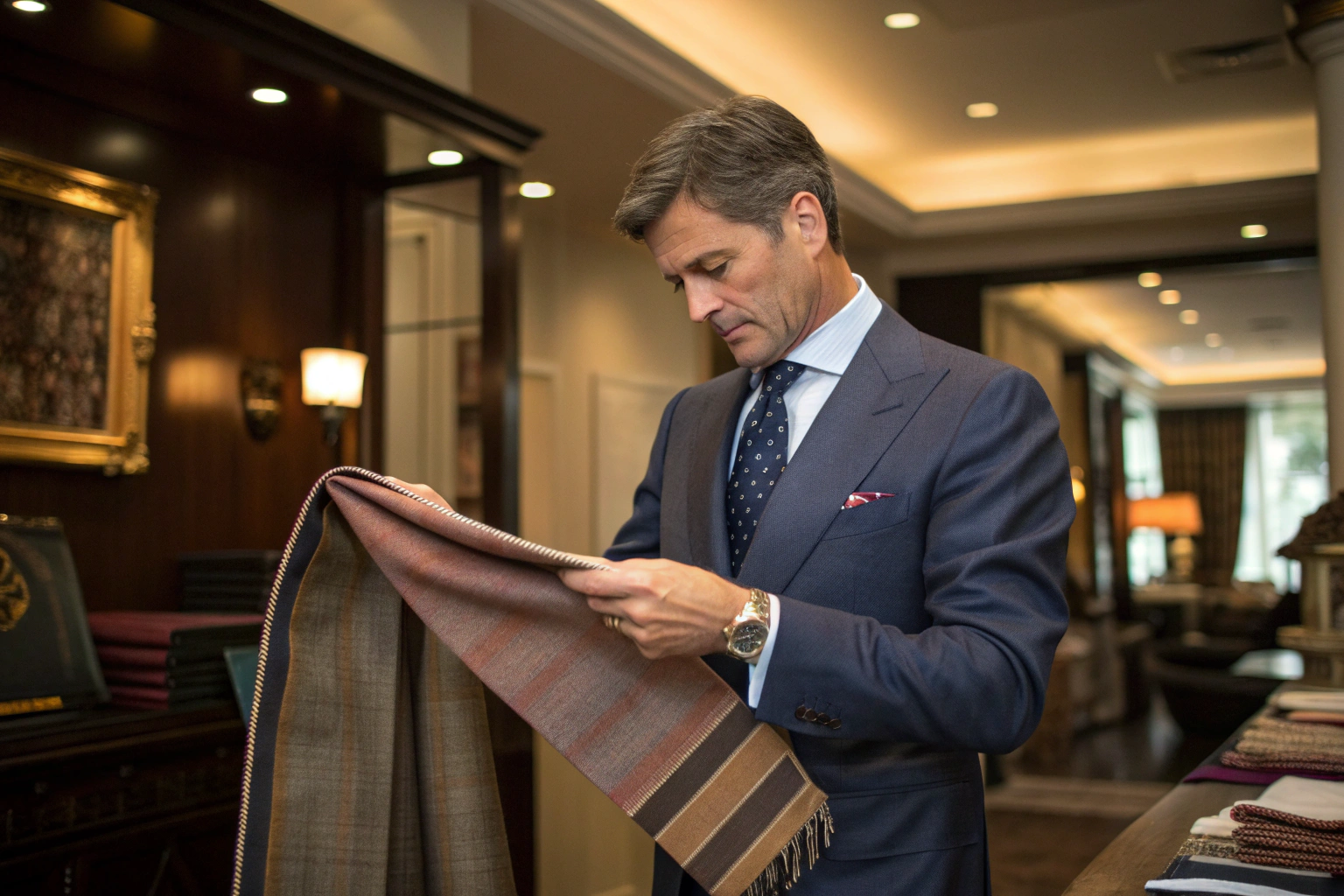
I remember a meeting with a buyer named Robert a few years ago. He was launching a new menswear accessories brand. He had the designs, the logo, and the marketing plan. But when it came to the actual product, he was lost. He said, "I know I want silk ties and cashmere scarves. But how do I find the right silk? What weight should the cashmere be? How do I know I am getting real quality and not just a cheap imitation?" Robert’s questions were exactly the right ones. Sourcing for accessories is different from sourcing for apparel. The details matter more because the product is smaller and the quality is more noticeable.
To source fabric for custom ties, scarves, and accessories, you need to focus on fiber quality, fabric weight, and the specialized mills that produce these goods. For ties, you need high-density silk like jacquard or grenadine. For scarves, you need the right weight and hand feel, from airy silk twill for summer to heavy cashmere for winter. For other accessories like pocket squares or hair accessories, smaller quantities and unique weaves matter. At Shanghai Fumao Clothing, we have long-standing relationships with specialized accessory fabric mills that allow us to source these premium materials for our clients.
You might think sourcing fabric for a small accessory is easier than for a whole garment. In some ways, it is. But the standards are higher. A flaw in a tie is much more visible than a flaw in a pair of pants. Let me walk you through how to find the perfect materials for your accessory line.
What Are the Best Fabrics for Custom Ties?
A tie is a small item, but it makes a big statement. The fabric is everything. A cheap tie looks and feels cheap. A quality tie has a rich texture, a perfect knot, and a beautiful luster. The difference is in the fiber and the weave. For Robert, this was the starting point.
The best fabrics for custom ties are silk, wool, and linen, with silk being the most traditional and popular. For silk, you need a high-density fabric like silk jacquard for woven patterns, silk twill for printed designs, or grenadine for a unique, textured look. Wool ties, often made from fine merino or cashmere, are perfect for fall and winter. Linen ties offer a casual, textured option for spring and summer. Each fabric has a different weight and drape, which affects how the tie knots and hangs. At Shanghai Fumao Clothing, we help clients select the right tie fabric based on their brand’s aesthetic and price point.
The construction of the fabric is just as important as the fiber. For silk ties, the "momme" weight is a key metric. Momme (mm) is the unit of weight for silk, similar to GSM for other fabrics. A good quality silk tie is usually around 22-24 momme. Lower than that, and the tie might be too flimsy to knot well. Higher than that, and it might be too stiff. The weave also matters. A grenadine tie has a distinctive, porous weave that adds texture and depth. A jacquard tie has a raised, woven pattern. Understanding these nuances is what separates a basic supplier from a true partner.
What Is the Difference Between Silk Twill and Silk Jacquard?
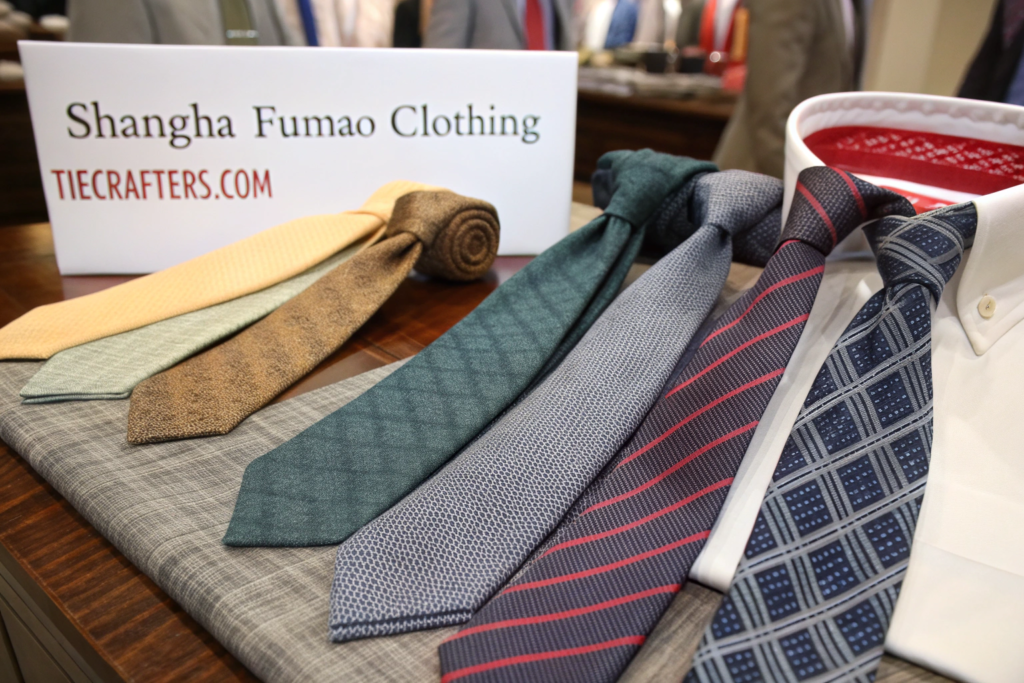
Silk twill and silk jacquard are two different weaves, each with its own character. Silk twill is characterized by its diagonal ribbed texture. It is a strong, durable weave that takes printed patterns exceptionally well. The slight diagonal lines add a subtle texture and help the fabric hold its shape. This is why it is the most common fabric for printed silk ties and scarves. Silk jacquard, on the other hand, is a woven-in pattern. The design is created during the weaving process by lifting different warp threads. This creates a textured, often slightly raised pattern. Jacquard ties have a more formal, luxurious feel. The pattern is part of the fabric, not printed on top. This makes it more durable and gives it a richer appearance.
Why Is Grenadine Silk So Special for Ties?
Grenadine silk is not a pattern or a color. It is a specific, open weave that creates a textured, almost mesh-like appearance. It is made by twisting two silk yarns together in a way that leaves small, deliberate gaps in the fabric. This creates a unique, granular texture that has a beautiful depth and matte luster. Grenadine ties are prized for their versatility. They are formal enough for a business suit but have enough texture to be interesting. They also knot beautifully, creating a dimple that is the mark of a quality tie. Because of the complex weaving process, grenadine silk is more expensive and harder to find than standard twill, but it is a hallmark of a truly fine necktie.
What Are the Best Fabrics for Custom Scarves?
Scarves are incredibly versatile accessories. They can be a pop of color, a source of warmth, or a statement piece. The fabric you choose defines their purpose. A heavy wool scarf is useless on a hot summer night. A light silk scarf offers no warmth in winter. You have to match the fabric to the season and the use.
The best fabrics for custom scarves vary by season and desired effect. For year-round elegance, silk scarves in twill or charmeuse are perfect. They are lightweight, have a beautiful sheen, and can feature vibrant prints. For fall and winter, cashmere and merino wool scarves offer unmatched softness and warmth. For a more casual, textured look, linen, cotton, or modal scarves are excellent choices for spring and summer. Each fiber has its own weight, usually measured in GSM, which dictates the scarf’s warmth and drape.
For silk scarves, the momme weight is again important. A light, airy summer scarf might be 8-10 momme. A standard, good-quality square scarf is usually 12-16 momme. A heavier, more substantial scarf might be 19-22 momme. For cashmere, the ply and the micron count matter. A 2-ply cashmere is stronger and softer than a single-ply. A lower micron count means finer, softer fibers. For wool, "merino" refers to the breed of sheep, known for its fine, soft fibers. The construction, whether it is a jersey knit, a woven twill, or a loose weave, also affects the final look and feel of the custom scarf.
What Is the Best Weight for a Winter Scarf?
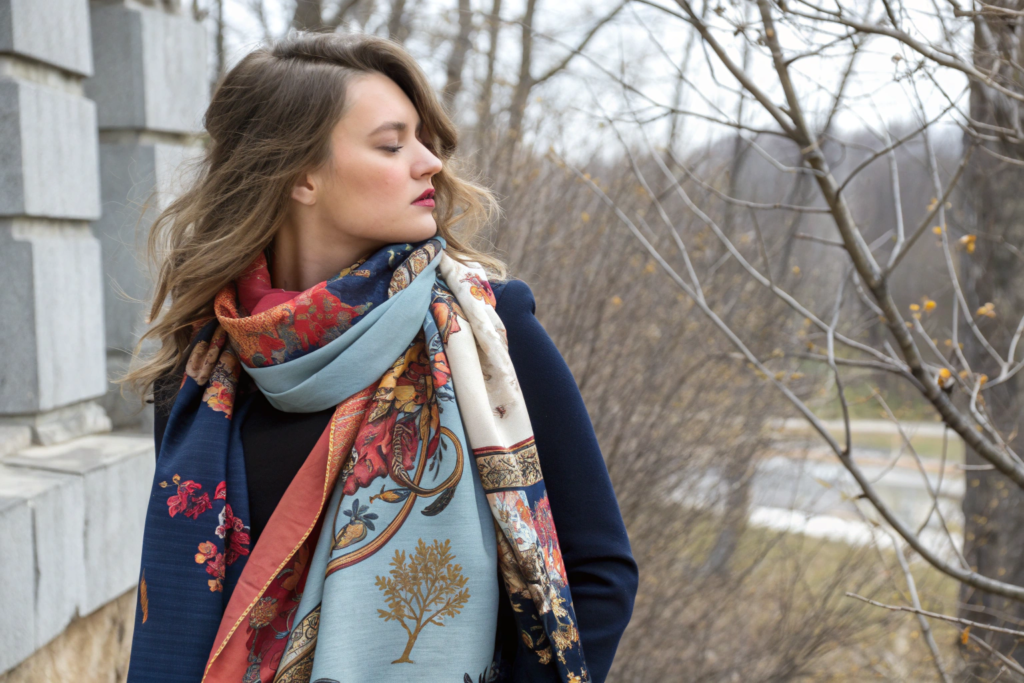
For a winter scarf that provides real warmth, you want a heavier fabric. For wool or cashmere, look for a GSM of around 250 to 350. This weight is substantial enough to trap heat and block the wind, but not so heavy that it feels like a blanket around your neck. A 2-ply cashmere in this weight range is the gold standard for luxury winter scarves. For a knitted scarf, the yarn thickness and stitch density matter more than GSM, but the principle is the same. You want a dense, substantial fabric that will keep the cold out. A flimsy, lightweight knit will not do the job.
Can You Use the Same Fabric for Ties and Scarves?
Sometimes, yes, but it is not common. The same silk twill fabric can be used for both a tie and a matching pocket square. This is a classic combination for a formal look. However, a scarf requires much more fabric than a tie. A standard tie uses about 0.7 meters of fabric. A large square scarf might use 1 meter of 54" wide fabric. The weight also differs. A tie needs a heavier, more structured fabric to knot well. A scarf can be lighter and more fluid. While you can source similar-looking fabrics for a coordinated set, they are often produced on different rolls with slightly different specifications for their intended use.
Where Do You Find Specialized Accessory Fabric Mills?
Finding fabric for accessories is not the same as finding fabric for t-shirts. The big, commodity fabric mills are not usually the best source for high-end tie silk or cashmere. You need specialized mills that focus on these niche products. These mills are often smaller, more experienced, and located in specific regions known for their expertise.
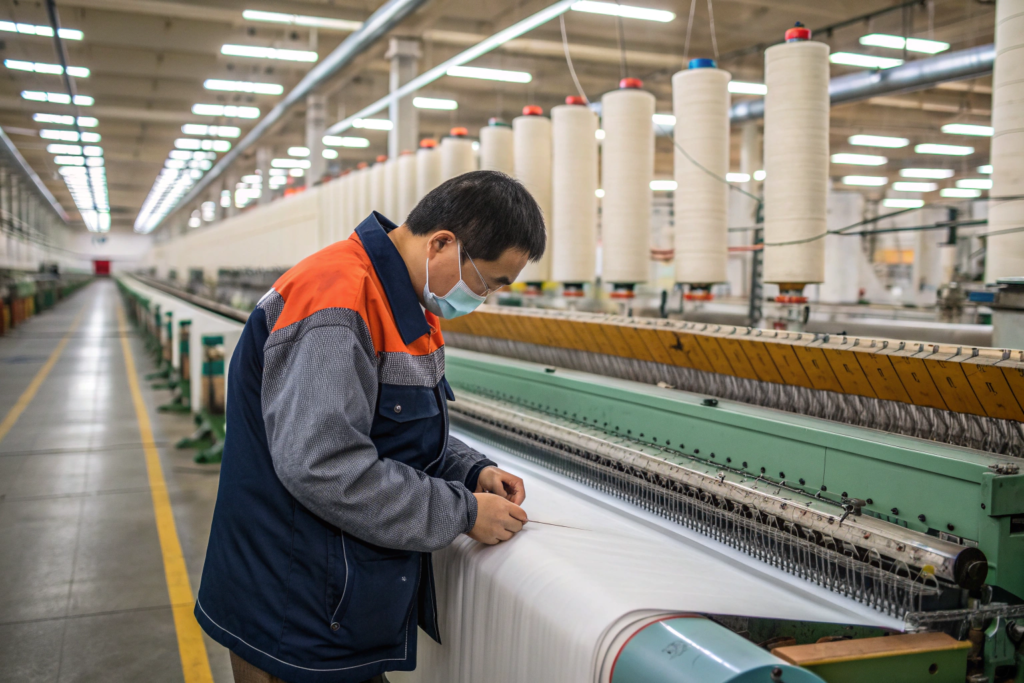
You can find specialized accessory fabric mills in Italy (for high-end silk and wool), England (for traditional woolens), China (for a wide range of silks and cashmeres), and India (for unique handwoven textiles). Italy, especially the Como region, is world-famous for its silk printing and weaving. English mills are renowned for their heritage woolens and tweeds. Chinese mills, particularly in Zhejiang and Jiangsu provinces, are global leaders in silk production and cashmere processing. At Shanghai Fumao Clothing, located in Zhejiang, we work directly with these specialized local mills to source the finest materials for our clients’ accessory lines.
Attending specialized trade shows is another excellent way to find these mills. Shows like Pitti Immagine Uomo in Florence focus on menswear and accessories and are a gathering place for the world’s best accessory fabric makers. Première Vision also has dedicated sections for high-end accessories. For online sourcing, platforms like Alibaba can work, but you need to be very specific in your search terms (e.g., "silk jacquard tie fabric 100% mulberry silk") and absolutely must order samples before committing to any bulk order. The risk of misrepresentation is higher online, so verification is key.
What Are the Advantages of Sourcing from Italian Mills?
Italian mills, particularly those around Lake Como, have a centuries-old reputation for silk excellence. The advantages are unparalleled design, quality, and prestige. They offer incredibly sophisticated prints, innovative weaves, and a level of craftsmanship that is hard to match. They are also leaders in sustainability and often hold the most rigorous certifications. If your brand is positioned at the very top of the luxury market and you need the absolute best, Italian mills are the gold standard. However, this prestige comes with a high price tag and often requires higher minimum order quantities. The lead times can also be longer.
What Are the Advantages of Sourcing from Chinese Mills?
Chinese mills, especially those in the traditional silk-producing regions, offer an exceptional balance of quality, scale, and value. China is the world’s largest producer of silk and a major processor of cashmere. The advantages are deep technical expertise, massive production capacity, and competitive pricing. You can find mills that produce everything from basic silk twill to incredibly complex jacquards. The minimum order quantities are often more flexible than in Italy, especially when working with a manufacturer like Shanghai Fumao Clothing who can consolidate orders. For many successful mid-range to high-end accessory brands, sourcing from China is the smartest business decision, offering the best value without sacrificing quality.
What Minimum Order Quantities (MOQs) Should You Expect?
This is often the biggest shock for new designers. They want to start with 50 meters of a custom-printed silk. But the mill might require 1,000 meters. The MOQ is a reality of the fabric industry, and understanding it is crucial for planning your budget and your collection. Robert, my client, was stunned when he first heard these numbers.
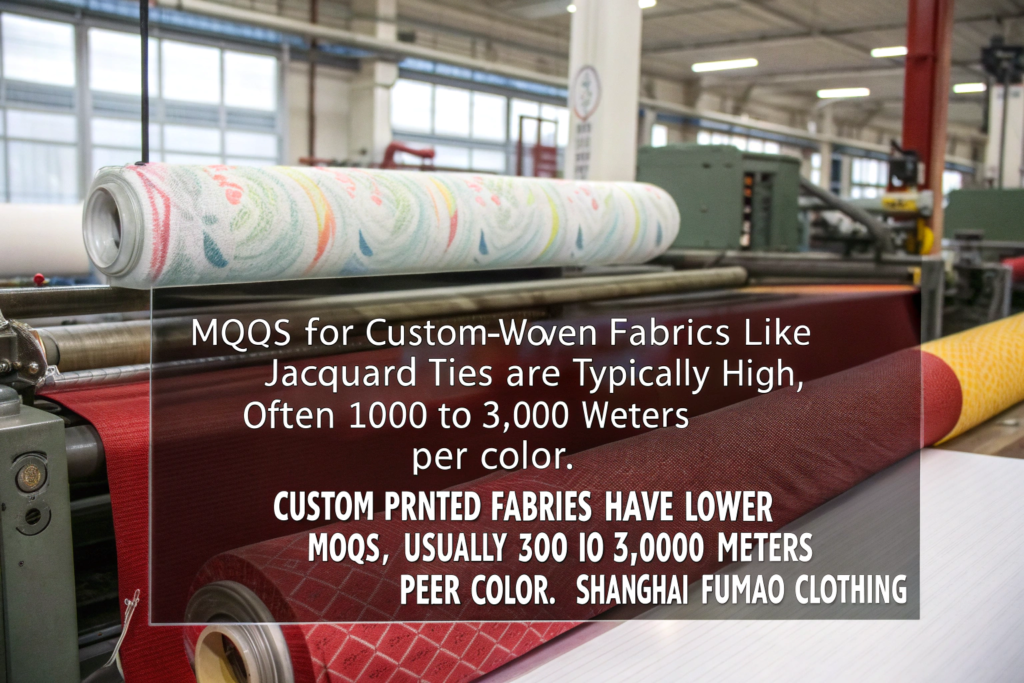
For custom-woven fabrics like jacquard ties, MOQs are typically high, often 1,000 to 3,000 meters per color. This is because the mill has to set up a complex loom, which takes time and labor. For custom-printed fabrics, MOQs are usually lower, often 300 to 500 meters per design, because digital printing technology has made short runs more feasible. For stock fabrics (fabrics the mill already weaves and holds in greige), MOQs for dyeing can be as low as 100 to 300 meters per color. At Shanghai Fumao Clothing, we help our clients navigate these MOQs, often by combining orders or suggesting stock options that meet their needs.
If the standard MOQs are too high for your startup budget, do not despair. There are ways to work around them. One is to work with a converter. A converter is a company that buys greige goods from large mills and then has them dyed and finished in smaller quantities. They act as a middleman, offering lower MOQs at a slightly higher price. Another option is to use deadstock or surplus fabrics. These are leftover rolls from other brands’ orders. The selection is limited and unpredictable, but you can find incredible fabrics at a fraction of the cost. Finally, a good manufacturing partner can help you find mills that are willing to be flexible for new, promising clients.
What Is the Difference Between Woven and Printed MOQs?
Woven MOQs are about the fabric itself. You are asking the mill to create a specific weave structure, like a jacquard pattern with your logo. This requires setting up the loom with a specific pattern of warp threads, which is a time-consuming and costly process. The mill needs to produce a large quantity to make that setup worthwhile. Printed MOQs are about the design on the fabric. The fabric itself is already woven (usually a standard base like silk twill). You are just printing your design onto it. Digital printing has lowered these MOQs significantly because there is no physical setup like a screen. The machine simply reads your digital file and prints. This makes printed accessories a much more accessible starting point for new brands.
How Can You Reduce MOQs for Your First Collection?
Start with printed fabrics instead of woven ones. This is the single biggest piece of advice. Printed silk twill scarves and ties can be produced in relatively small quantities. You can also limit your color palette. If you are dyeing a stock fabric, ordering three colors at 100 meters each might be more acceptable to a mill than ordering 300 meters of one color. Another strategy is to work with a manufacturer who has existing relationships and buys fabric in bulk for multiple clients. They might have stock fabrics in their library that you can use for your first run, avoiding mill MOQs entirely. At Shanghai Fumao Clothing, we offer this service to help new designers get started without the burden of huge minimums.
How Do You Ensure Color Consistency Across Different Accessories?
Imagine this: you order a line of silk ties and matching pocket squares. The ties are perfect. But the pocket squares, made from the same fabric, are a slightly different shade of blue. This is a disaster. Color consistency across different accessory types is a common challenge, but it can be managed with the right process.
To ensure color consistency, you must dye all components of a coordinated set in the same dye lot. Fabric can vary slightly from one dye batch to another. If your ties are dyed in one lot and your pocket squares in another, even a week later, you risk a color mismatch. The solution is to order all the fabric you need for a specific project at the same time, from the same dye lot. This is why accurate forecasting and ordering are so important. At Shanghai Fumao Clothing, we manage this process for our clients, ensuring that every piece of a collection comes from a single, consistent dye lot.
Even within the same dye lot, different fabric constructions can take dye slightly differently. A smooth silk satin might appear a slightly different shade than a textured silk twill, even if they are dyed with the exact same formula. This is a physical reality of how light interacts with different surfaces. When designing coordinated sets, it is wise to test this. Dye samples of both constructions together and compare them under different lighting conditions before committing to a full production run. Sometimes, the slight difference is acceptable or even adds interest. Other times, it is a deal-breaker. Knowing this in advance prevents costly surprises.
What Is a Dye Lot and Why Does It Matter?
A dye lot is a batch of fabric dyed together in the same machine at the same time. Even with computerized processes, there can be minute variations in temperature, chemical concentration, or dye absorption between different batches. These variations can lead to slight, but noticeable, color differences. If you order 500 meters of fabric for ties, and then three months later order another 200 meters for pocket squares, there is a high probability the colors will not match perfectly. This is why buying all your fabric for a specific style or collection in one go, from a single dye lot, is essential for color consistency. It is a fundamental rule of textile sourcing.
How Do You Match Colors Across Different Materials?
Matching a silk tie to a wool scarf, for example, is even more challenging because the fibers are different. They absorb dye differently. To do this successfully, you need a very skilled dye house. They will often create a "strike-off" or a small sample of each fabric type dyed to the target color. They will then adjust the dye formulas for each fiber to achieve a visual match. This is a skilled, iterative process. It takes time and costs money for sampling, but it is the only way to ensure a coordinated look across a mixed-material collection. It is a mark of a professional, quality-focused brand.
Conclusion
Sourcing fabric for custom ties, scarves, and accessories is a specialized skill. It requires knowledge of specific fibers like silk and cashmere, understanding of weaves like jacquard and grenadine, and awareness of weights like momme and GSM. It means finding the right mills, whether in Italy for prestige or China for value. It demands navigating MOQs and managing dye lots for color consistency. When you get it right, the result is an accessory that feels luxurious, looks beautiful, and builds a loyal following for your brand.
If you are ready to create a custom accessory line, we are here to help. We have the experience, the mill relationships, and the production expertise to turn your vision into reality. Please contact our Business Director, Elaine, at strong>elaine@fumaoclothing.com. Let’s source the perfect fabrics for your next collection.