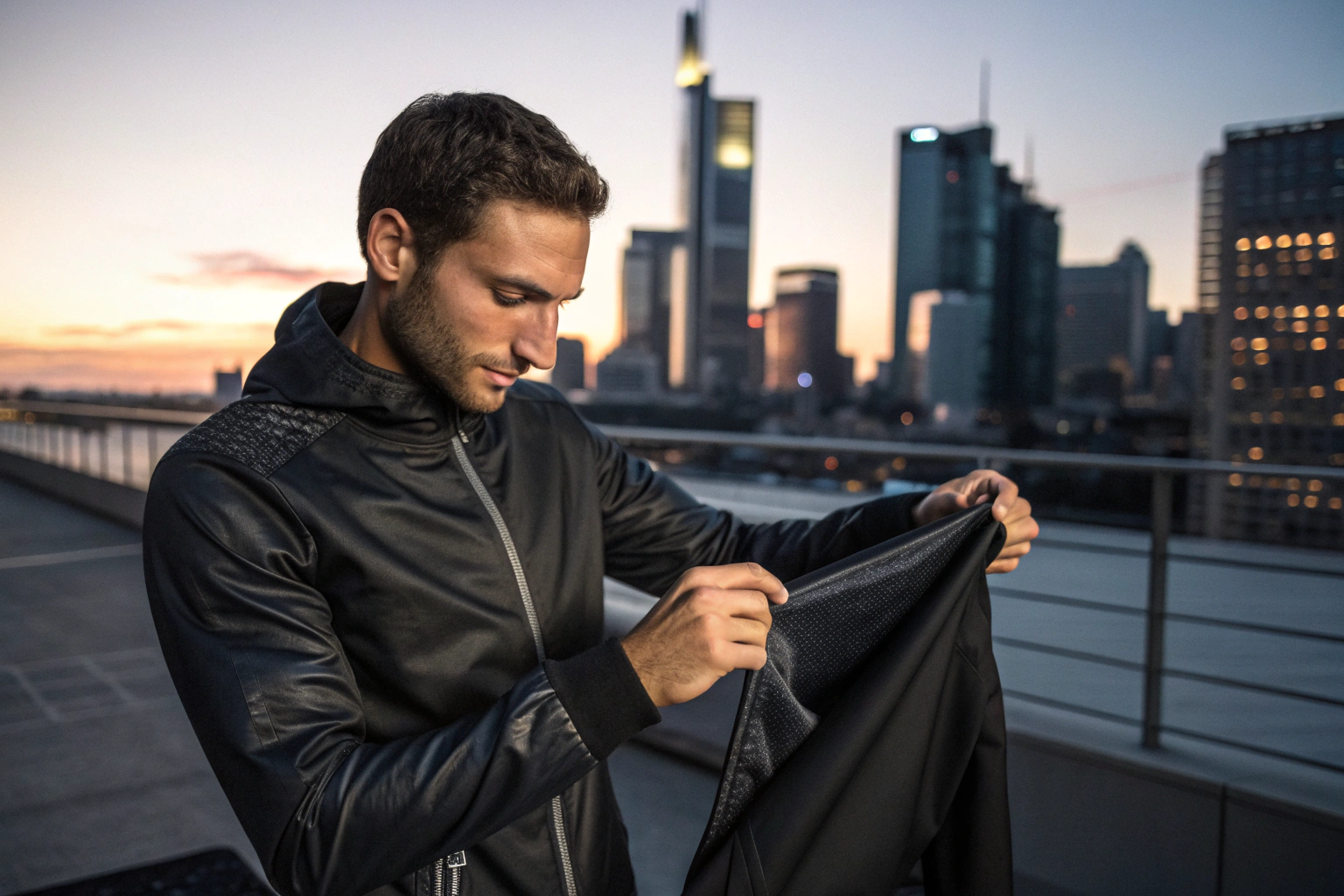
I had a fascinating call last month with a young designer named Marcus. He is launching his own urban utility brand. He sent me sketches of jackets with multiple pockets, modular straps, and a sharp, futuristic look. The designs were amazing. But he was stuck. He said, "I know what I want it to look like, but I have no idea what fabric to use. I need it to be waterproof, but breathable. Tough, but not heavy. How do I even start?" I understood his problem completely. Techwear is not like regular fashion. The fabric is the technology.
To source fabric for techwear and urban utility clothing, you need to prioritize performance characteristics over aesthetics, then find fabrics that deliver both. You are looking for materials with specific properties: water resistance, breathability, mechanical stretch, durability (like ripstop), and sometimes thermal regulation. This means moving beyond standard cotton or polyester and exploring technical blends, laminated fabrics, and fabrics with special finishes. At Shanghai Fumao Clothing, we have spent years building relationships with specialized mills to source these exact materials for our clients.
You might think sourcing techwear fabric is just about finding something "waterproof." But it is much more complex. The best techwear uses a system of fabrics, each chosen for a specific job. Let me break down what you need to know to find the right materials for your urban utility line.
What Are the Must-Have Properties of Techwear Fabric?
Before you start looking for fabric, you have to define what "tech" means for your garment. Is it for a commuter in a rainy city? Is it for a cyclist who needs breathability? Is it for someone who wants a sharp, futuristic look with everyday comfort? Each use case demands a different set of properties. You cannot have everything in one fabric. You have to prioritize.
The must-have properties for most techwear are water resistance, breathability, durability, and mechanical stretch. Water resistance keeps the wearer dry in light rain. Breathability allows sweat vapor to escape, preventing that clammy feeling. Durability, often achieved with a ripstop weave, prevents small tears from spreading. Mechanical stretch, usually from elastane or special weaving techniques, allows the fabric to move with the body. These four properties form the foundation of most urban utility garments.
Beyond these basics, you might also consider wind resistance, thermal insulation, or even antimicrobial finishes. A softshell fabric is a great example of a techwear staple. It combines a durable face, a water-resistant treatment, and a brushed inner layer for warmth, all in one. For more extreme conditions, you might look at membranes like Gore-Tex, which are laminated to a face fabric to provide guaranteed waterproofing and high breathability. The key is to match the fabric’s property profile to the garment’s intended use and the end customer’s lifestyle.
What Is the Difference Between Water-Resistant and Waterproof?
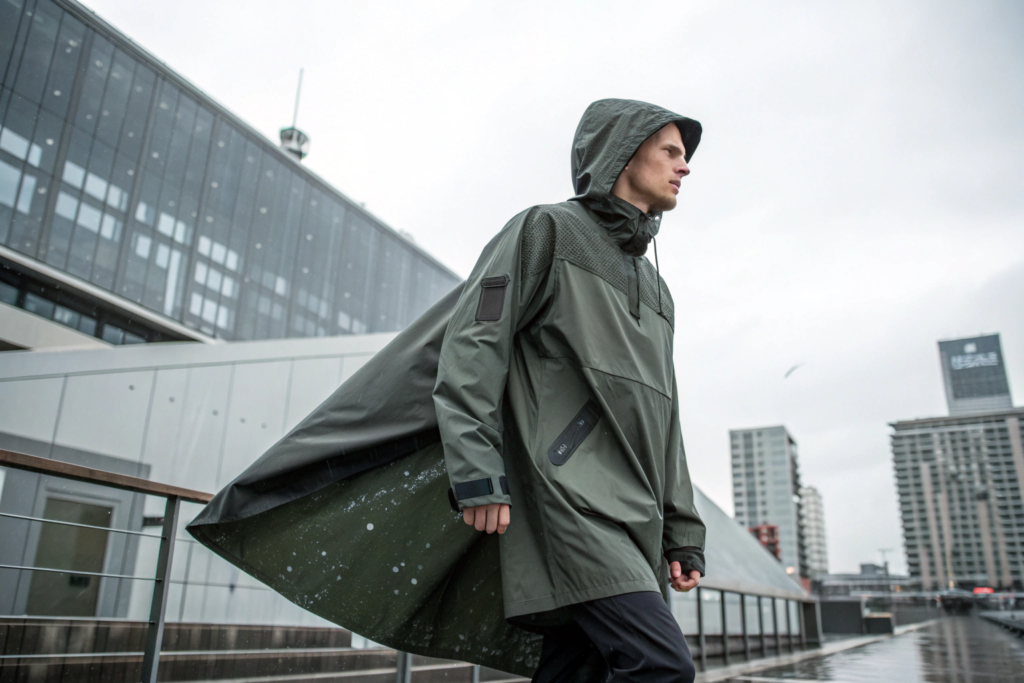
This is a critical distinction. Water-resistant fabrics are treated with a durable water repellent (DWR) coating. This makes water bead up and roll off the surface. They are great for light rain and splashes. However, under sustained pressure, like sitting on a wet surface or in a heavy downpour, water will eventually soak through. Waterproof fabrics have a physical barrier, usually a membrane or a coating, that stops liquid water from passing through at all. They also have taped seams to seal the needle holes. For urban utility, water-resistant is often sufficient for jackets and pants used by commuters. For serious outdoor or motorcycle gear, you need true waterproofing. Knowing the difference helps you choose the right fabric for your jacket.
Why Is Breathability So Important for Comfort?
Imagine wearing a plastic bag on a mild day. You would be drenched in sweat within minutes. That is what happens with non-breathable waterproof fabrics. Breathability is the fabric’s ability to allow water vapor (your sweat) to escape to the outside. It is measured in grams of water vapor that can pass through a square meter of fabric in 24 hours (g/m²/24h). For urban wear, a breathability rating of 5,000g to 10,000g is usually comfortable. For high-exertion activities like cycling, you need 15,000g or more. If you ignore breathability, your customer will end up wet on the inside from sweat, even if they are dry on the outside from the rain. This is a common complaint with cheap "rain jackets."
What Are the Best Fabric Types for Techwear?
Once you know the properties you need, you can look at specific fabric types. The market for technical fabrics has exploded in recent years. There are now hundreds of options, from classic nylon ripstop to futuristic graphene-infused materials. But for most urban utility brands, a few core types will cover 90% of your needs.
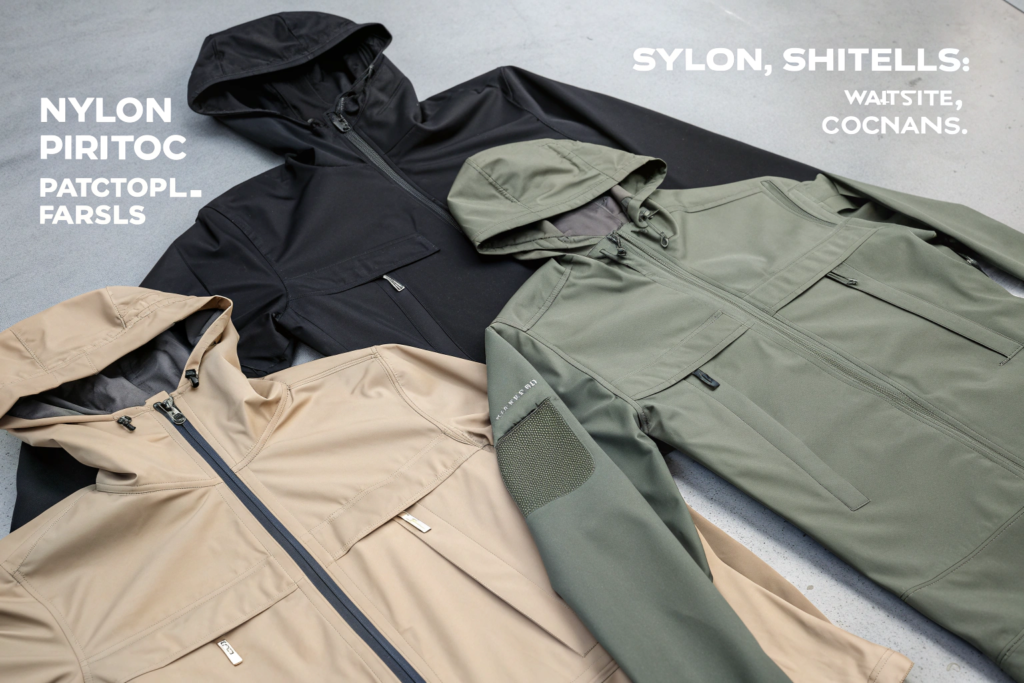
The best fabric types for techwear are nylon ripstop, polyester softshell, and cotton-nylon blends with technical finishes. Nylon ripstop is incredibly strong for its weight and resists tearing. It is perfect for shells and pants. Polyester softshell offers a great balance of weather resistance, breathability, and a soft, comfortable hand feel. It is ideal for jackets and hoodies. Cotton-nylon blends, often treated with a DWR, give a more natural, matte look while adding durability and quick-drying properties. They are popular for cargo pants and utility vests.
You also have the category of "smart" or "performance" fabrics. These include materials like Schoeller, which offers fabrics with phase-change materials for temperature regulation, or 3XDRY, which speeds up drying time. There are also fabrics that use recycled materials, which is increasingly important for the eco-conscious urban consumer. At Shanghai Fumao Clothing, we can source a wide range of these fabrics. The choice depends on your brand’s price point and the specific story you want to tell.
What Is Ripstop Fabric and Why Is It Used?
Ripstop fabric is woven with a special reinforcing technique. Thicker, stronger yarns are inserted at regular intervals, usually every 5 to 8 millimeters, in a grid pattern. This grid acts as a stop. If the fabric gets torn or punctured, the tear will only travel as far as the next reinforcing yarn. This prevents small rips from becoming big, irreparable holes. It is incredibly durable for its weight. Nylon ripstop is the classic choice for military and outdoor gear because it is tough, lightweight, and packs down small. For urban utility pants and jackets, it provides that rugged, technical look and genuine durability.
How Does Softshell Differ from Hardshell?
This is a common question in the outdoor and techwear world. Hardshell fabrics are your dedicated rain jackets. They are typically a thin, waterproof and breathable membrane laminated to a face fabric. They are very weatherproof but can be stiff and less breathable for high activity. Softshell fabrics are a different philosophy. They are thicker, stretchy, and designed to be more comfortable and breathable. They usually have a water-resistant face and a warm, fleecy backer. They are perfect for active pursuits in cold, windy, but not pouring rain, conditions. For urban utility, a softshell jacket is often more versatile. It can be worn as an outer layer on chilly days and is comfortable enough to wear all day at the office or on the commute.
Where Do You Find Specialized Techwear Mills?
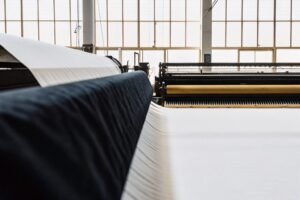
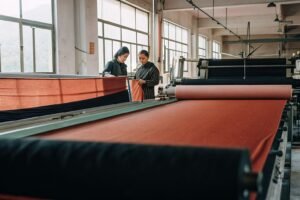
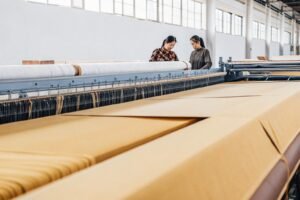
Finding the right mill is harder than finding the right fabric. Regular fabric markets are full of basic cotton and polyester. Techwear fabrics are a niche. They are made by specialized mills, often in Japan, Korea, Taiwan, and Italy. These mills have the advanced machinery and chemical expertise to create these high-performance materials.
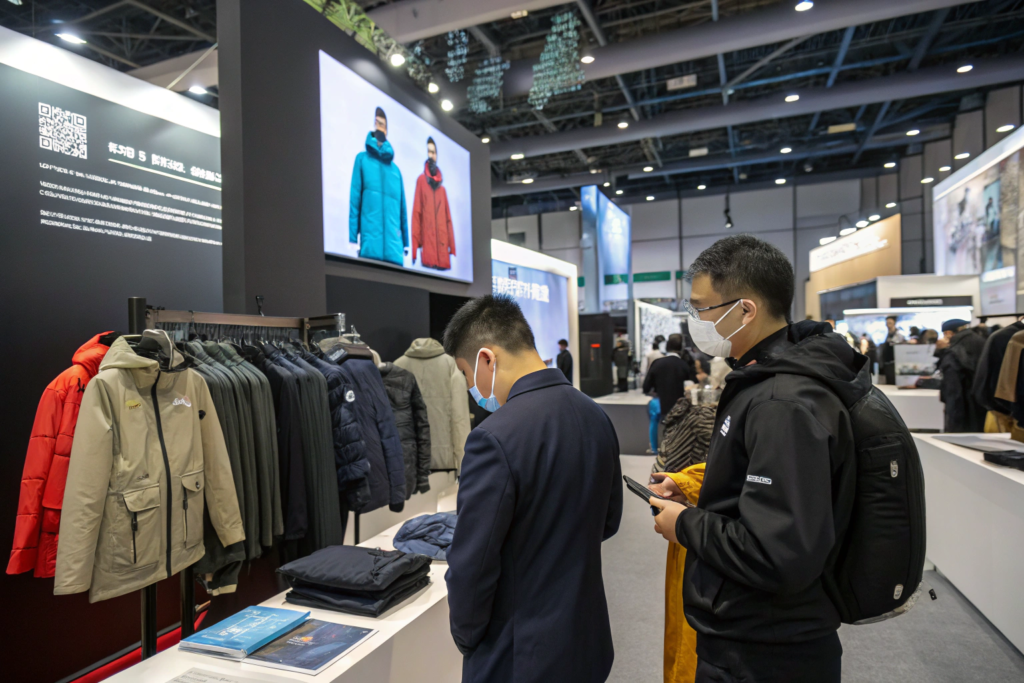
You can find specialized techwear mills through industry trade shows like Première Vision and Performance Days. These shows are dedicated to innovative and functional fabrics. Online B2B platforms like Alibaba can also yield results, but you need to be very specific in your search terms and request samples to verify quality. Another excellent way is to work with an experienced manufacturer like us. We have already vetted and built relationships with reliable mills in Korea and Taiwan that specialize in the nylon and polyester blends perfect for techwear.
Building a relationship with a techwear mill is different from buying from a commodity fabric supplier. These mills often have minimum order quantities (MOQs) that can be high. They are used to working with larger brands. However, many are now becoming more flexible, offering "stock service" programs where they hold popular fabrics in greige and then dye them to order for smaller quantities. This is a great option for startups and smaller brands like Marcus’s. The key is communication. You need to clearly explain your needs and be prepared to commit to a partnership, not just a one-time purchase.
What Are the Leading Countries for Techwear Fabric?
Japan and Korea are the undisputed leaders in innovative, high-quality techwear fabrics. Japanese mills are legendary for their obsession with quality, their unique finishing techniques, and their development of materials like Toray (their version of Gore-Tex). Korean mills are incredibly fast and innovative, often leading the way in fashion-forward technical fabrics and finishes. Taiwan is also a major powerhouse, particularly in functional synthetics and recycled materials. Europe, especially Italy and Germany, produces excellent high-end technical wools and softshells. Knowing where to look helps you target your sourcing efforts.
How Do You Verify a Mill’s Claims?
You cannot just trust a data sheet. You have to verify. The first step is to request physical samples, not just photos. Feel the fabric. Test its stretch. Hold it up to the light. The next step is to request test reports. Ask for the results of standardized tests for water resistance (hydrostatic head), breathability (MVTR), and abrasion resistance (Martindale). A reputable mill will have these reports readily available. Finally, consider doing your own small-scale tests. Spray water on the sample. Wear it for a day. The more you test, the more confident you can be that the fabric will perform as promised for your urban utility line.
How Do You Balance Cost and Performance?
This is always the hardest part. High-performance fabrics cost more money. Sometimes a lot more money. You have to decide where to invest your budget for the biggest impact on your customer. You cannot make everything perfect. You have to make smart trade-offs.
To balance cost and performance, you should prioritize the properties that are most visible and tangible to your customer. For a techwear jacket, the water resistance and the hand feel are immediately noticeable. Invest there. For a lining fabric, you can choose a more standard, less expensive option. Also, consider using high-performance fabrics only for key panels that see the most stress, like the shoulders and seat of a pair of utility pants. This "zoned" approach gives you performance where it matters without blowing your budget on the entire garment.
Another strategy is to work with your manufacturer to find "close enough" alternatives. A mill in Korea might have a fabric that is 90% as good as a premium European option but costs 50% less. For many urban consumers, that 90% performance is more than enough. They will never notice the difference. It is about understanding the real-world needs of your customer versus the theoretical "best" on the market. At Shanghai Fumao Clothing, we often help clients navigate these choices, presenting options at different price points so they can make an informed decision for their brand.
What Is the Minimum Order Quantity for Techwear Fabrics?
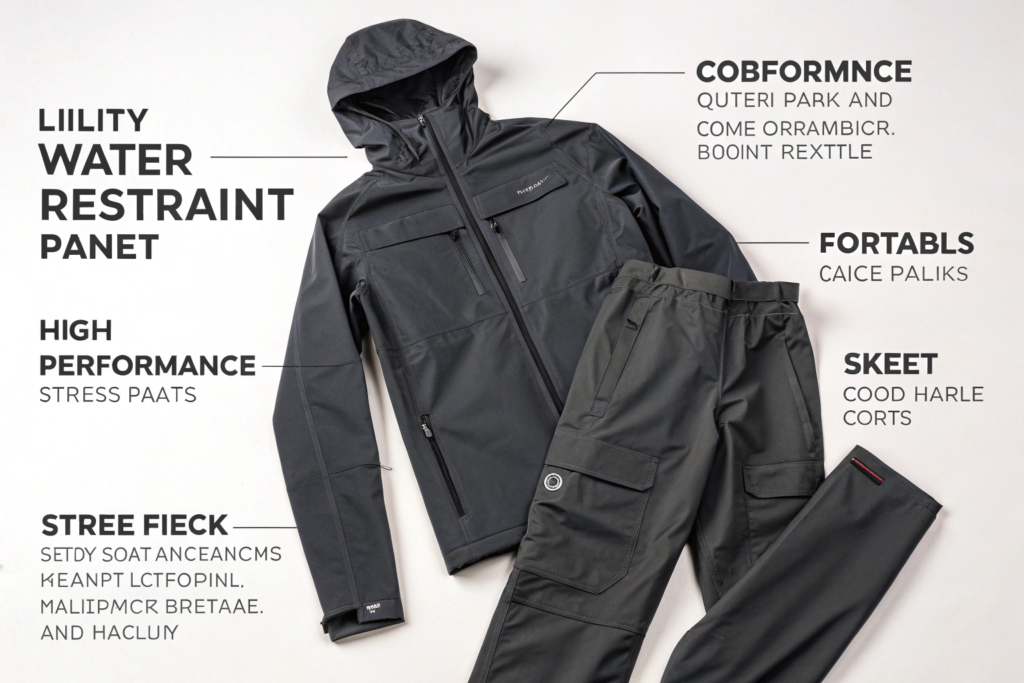
MOQs for specialized technical fabrics can be high, often 2,000 to 5,000 meters per color. This is because the mills produce these fabrics in large batches to control quality and cost. However, the market is changing. Many mills now offer "stock support" programs for their core fabrics. They will hold a certain amount of greige goods (undyed fabric) in stock, and you can order smaller quantities, sometimes as low as 500 meters, to be dyed in your color. This is a game-changer for smaller brands. It allows them to access high-quality materials without a massive upfront investment. Always ask the mill or your manufacturer about these programs.
How Important Is Sampling Before a Bulk Order?
It is absolutely essential. You must order samples of the fabric itself, and you must order samples of the finished garment made from that fabric. A fabric can look great on a roll but behave terribly when cut and sewn. It might pucker at the seams. It might not have enough stretch for your design. The color might change when the DWR finish is applied. Never skip this step. Order 5 to 10 meters of fabric, have a sample garment made, test it, wear it, wash it. Only when you are 100% happy with the sample should you proceed to a bulk order. This is the only way to avoid costly mistakes.
Conclusion
Sourcing fabric for techwear and urban utility clothing is a journey. It requires you to think like an engineer as much as a designer. You need to understand the properties of water resistance, breathability, and durability. You need to know the best fabric types like nylon ripstop and softshell. You need to find the right mills in Japan, Korea, or Taiwan. And you need to balance the cost of these high-performance materials against your brand’s budget and your customer’s expectations. It is complex, but when you get it right, the result is a garment that truly performs and delights your customer.
If you are ready to develop a techwear line and need a partner who understands these materials, let’s talk. We have the connections and the experience to source the right fabrics and produce your designs with quality. Please reach out to our Business Director, Elaine, at elaine@fumaoclothing.com. Let’s build something functional and futuristic together.