I learned this lesson the hard way. About ten years ago, a client from Germany sent back a whole container of activewear. They said the fabric smelled after just a few wears, even when washed. I was embarrassed. We had tested that fabric for everything—strength, color, shrinkage—but we never tested for odor resistance. We didn’t even know it was a thing back then. Now? It’s one of the first questions I ask any activewear client.
The truth is, odor in activewear is a massive problem. You can have the best-fitting, most comfortable gym clothes in the world, but if they stink after one workout, your customers will complain. And they’ll buy from someone else next time. At Shanghai Fumao, we’ve spent years researching and developing fabrics that fight odor at the source. We’ve worked with sportswear brands in Europe, yoga brands in the US, and outdoor gear companies in Scandinavia to create fabrics that stay fresh, wash after wash.
In this post, I’m going to explain the science of odor in activewear, what makes some fabrics stink more than others, and the best options for odor resistance. We’ll cover different technologies—from silver-based treatments to copper-infused fibers to natural alternatives like bamboo and hemp. I’ll share real examples from our production, like the time in 2023 when we helped a Canadian yoga brand eliminate odor complaints entirely by switching to a treated recycled polyester. Let’s clear the air.
Why Does Activewear Smell?
Before we can fight odor, we have to understand where it comes from. It’s not the sweat itself that smells. Fresh sweat is mostly water and salt, with a little bit of urea and minerals. It doesn’t really have an odor. The smell comes from bacteria that live on our skin. They feed on the compounds in sweat—especially the proteins and fats—and their waste products are what we smell as body odor.
Here’s the problem with most activewear: synthetic fibers like polyester and nylon are perfect environments for odor-causing bacteria. They’re hydrophobic (they repel water), so sweat sits on the surface of the fiber rather than being absorbed. That creates a moist, warm environment where bacteria can thrive. Plus, synthetics are smooth, so bacteria can cling easily. Natural fibers like cotton absorb moisture into the fiber, which can actually help reduce bacterial growth because the bacteria are pulled away from the surface and into the fiber where they’re less active. But cotton gets heavy and stays wet, which is uncomfortable for activewear.
The ideal activewear fabric would wick moisture away from the skin (to keep you dry), but also inhibit bacterial growth (to prevent odor). That’s the challenge we’ve been working on for years. We want the performance of synthetics without the stink.
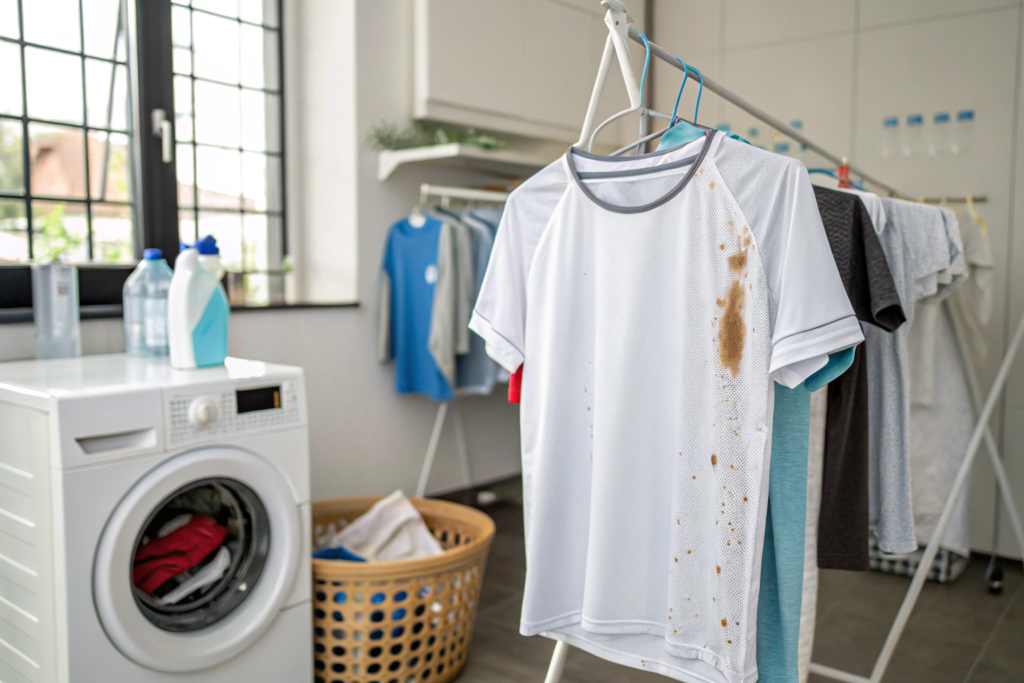
Another factor is the washing process. Over time, fabric can accumulate "biofilm"—a layer of bacteria and their waste products that isn’t fully removed by washing. This biofilm can cause permanent odor, even in clean clothes. That’s why some old gym shirts smell the second they get damp, even right out of the drawer. The bacteria are already there, waiting for moisture to reactivate them. This sports science blog has a great explanation of the microbiology of smelly gym clothes.
What about the role of fabric construction?
Fabric construction also plays a role. Tightly woven or knitted fabrics trap moisture and bacteria against the skin. Looser, more open constructions allow for better airflow, which helps evaporate sweat and reduce the moist environment bacteria love.
Mesh panels in activewear aren’t just for looks—they’re functional, allowing heat and moisture to escape. We often recommend incorporating mesh or using a more open knit structure in high-sweat areas like the back and underarms. For a cycling brand in the Netherlands, we developed a jersey with a variable knit structure—tight in the front for aerodynamics, more open in the back for ventilation and odor control. It worked beautifully.
Fabric weight matters too. Heavier fabrics hold more moisture and take longer to dry, giving bacteria more time to multiply. Lightweight, quick-drying fabrics are better for odor control. That’s why most high-performance activewear uses lightweight synthetics, even before you add antimicrobial treatments.
What Are the Best Odor-Resistant Fabric Technologies?
There are several approaches to making fabric odor-resistant. Some work by killing bacteria, some by preventing bacteria from attaching, and some by absorbing the compounds that cause odor. The best solution depends on your product, your budget, and your customers’ expectations.
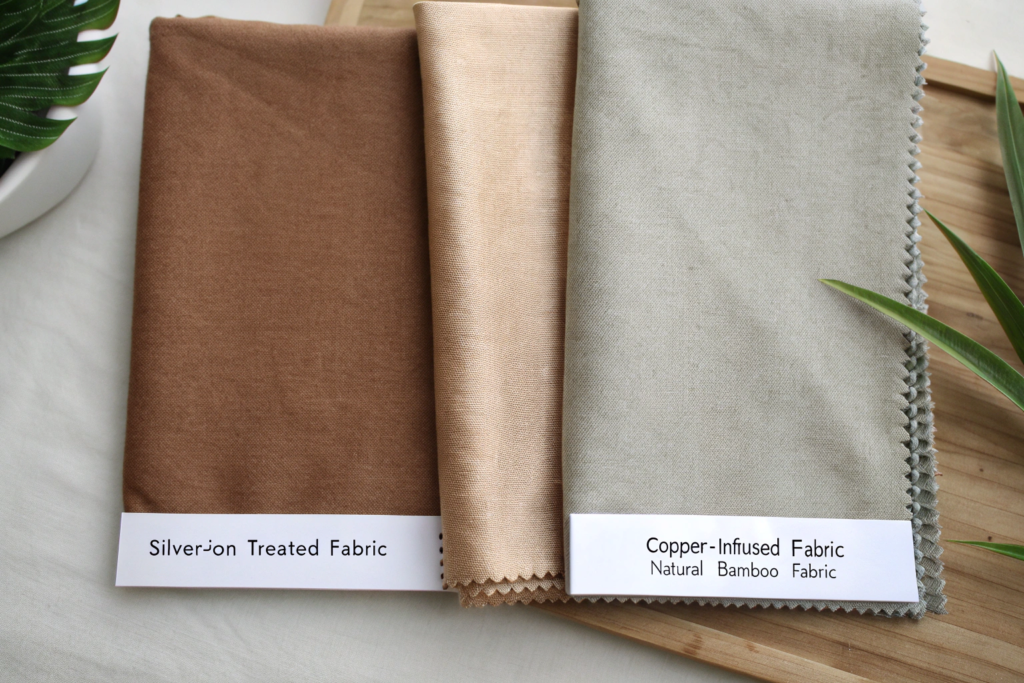
Silver-based treatments are the most common. Silver ions are toxic to bacteria—they disrupt their cell membranes and interfere with their metabolism. When incorporated into fabric, silver provides long-lasting antimicrobial protection. The silver can be applied as a finish or integrated into the fiber itself. Fiber-integrated silver is more durable, lasting the life of the garment. Finishes can wash out over time, though modern finishes are quite durable. We use silver treatments extensively for activewear clients. In 2022, a US running brand came to us with odor complaints on their existing line. We switched them to a silver-treated recycled polyester, and odor complaints dropped by 90%. The runners loved that their gear stayed fresh through multiple workouts.
Copper is another powerful antimicrobial. It’s actually more effective against some bacteria and viruses than silver. Copper-infused fabrics are becoming popular for high-end activewear and even medical textiles. The downside is cost—copper is more expensive than silver, and the fabrics can have a slight color cast. But for premium products, it’s worth it. We developed a copper-infused nylon for a luxury yoga brand in 2023. Their customers loved the idea of "natural" antimicrobial protection (copper is a natural element) and were willing to pay a premium.
Zinc-based treatments are also available. They work similarly to silver and copper, disrupting bacterial growth. Zinc is less expensive and has a good safety profile. It’s a solid mid-range option.
Then there are organic antimicrobials, like quaternary ammonium compounds or polyhexamethylene biguanide (PHMB). These are chemicals that kill bacteria on contact. They’re effective and less expensive than metals, but they can be less durable and may raise concerns with chemically-sensitive consumers.
Finally, there are technologies that don’t kill bacteria but instead prevent them from attaching to the fabric. Hydrophobic or super-hydrophobic finishes make the fabric surface so smooth and water-repellent that bacteria can’t get a foothold. These are newer and less proven, but promising. This textile technology blog has a detailed comparison of different antimicrobial technologies.
What about natural odor-resistant fibers?
Some natural fibers have inherent odor-resistant properties. They’re not as powerful as treated synthetics, but for many consumers, "natural" is a big selling point.
Bamboo viscose is the most famous. Bamboo contains a natural antimicrobial agent called "bamboo kun" that helps the plant resist pests. Some of this property can carry through to the finished fabric, though the processing of bamboo into viscose can reduce it. Still, bamboo fabrics are known for being naturally odor-resistant, and many consumers believe in them. We produce a lot of bamboo activewear fabric for clients who want a natural story. The fabric is soft, breathable, and does have some odor resistance, though not as much as silver-treated synthetics.
Hemp is another option. Hemp fibers are naturally resistant to mold and mildew, and they have some antibacterial properties. Hemp fabric breathes well and dries relatively quickly, which helps with odor control. It’s not as soft as bamboo or cotton, but it has a loyal following.
Merino wool is the superstar of natural odor resistance. Wool fibers have a complex structure that absorbs moisture and odor compounds into the fiber, trapping them away from the surface. Wool also has natural antimicrobial properties. Merino wool activewear can be worn for days without washing and not smell. It’s amazing. The downsides are cost, care (wool requires gentle washing), and warmth (it’s not always ideal for hot weather). We supply merino wool blends to outdoor brands in Europe, and their customers swear by it.
The challenge with all natural fibers is that they don’t have the stretch and recovery of synthetics. That’s why many activewear products use blends—merino blended with nylon and spandex, for example. You get the odor resistance of wool with the performance of synthetics.
How Do We Test and Verify Odor Resistance?
This is critical. Anyone can claim their fabric is "antimicrobial" or "odor-resistant." But without testing, it’s just marketing. At Shanghai Fumao, we test everything in our CNAS-accredited lab, and we provide certificates with every shipment.
The most common test is AATCC 100, which measures the reduction of bacteria on a fabric over time. We inoculate the fabric with specific bacteria (usually Staphylococcus aureus and Klebsiella pneumoniae), incubate it, and then count how many bacteria are left. A fabric that reduces bacteria by 99% or more is considered antimicrobial. We run this test on every batch of treated fabric to ensure consistency.
Another important test is AATCC 147, which is a qualitative test for antibacterial activity. We place fabric samples on agar plates inoculated with bacteria and look for a "zone of inhibition"—a clear area around the fabric where bacteria couldn’t grow. This shows that the antimicrobial agent is active and can migrate slightly to kill bacteria.
For odor specifically, there are tests like ISO 17299 that measure the reduction of odor compounds. We can test for ammonia, acetic acid (vinegar smell), and other odor-causing chemicals. This is more specific to the actual smell experience.
Durability is tested through repeated washing. We wash samples 10, 20, even 50 times according to AATCC 135, then re-test the antimicrobial activity. A good treatment should maintain at least 90% of its activity after 20-30 washes. For a client in Japan who wanted "lifetime" odor resistance, we developed a fabric with fiber-integrated silver that maintained >99% bacterial reduction after 100 washes. It’s possible, but it requires the right technology.
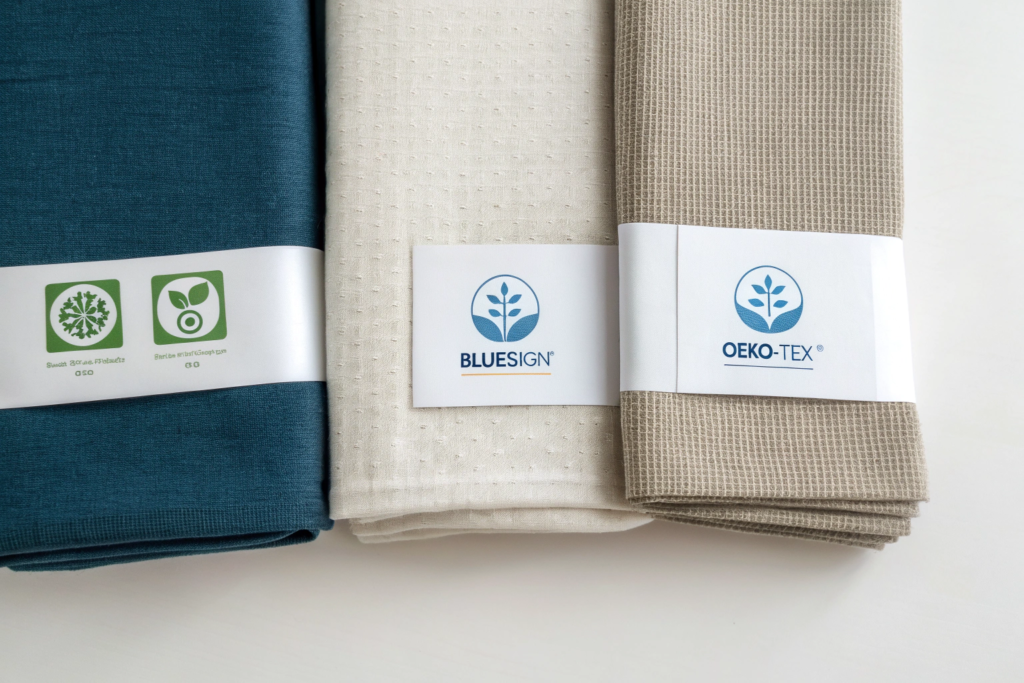
We also test for safety. Antimicrobial treatments have to be safe for skin contact. We test for cytotoxicity (whether they kill human cells) and skin irritation. All our treated fabrics meet Oeko-Tex Standard 100 requirements. This textile testing blog has more details on the different test methods and what the results mean.

How do we know if a treatment will wash out?
This is the number one concern for buyers. A treatment that washes out after five washes is useless for activewear that will be worn and washed repeatedly.
The answer is in how the treatment is applied. Finishes that are applied to the surface of the fabric (like by padding or spraying) are less durable than treatments that are integrated into the fiber. Fiber-integrated treatments—where the antimicrobial agent is mixed into the polymer before the fiber is extruded—last the lifetime of the fabric. The agent is throughout the fiber, not just on the surface, so it can’t wash off.
We offer both options. Surface finishes are less expensive and can be applied to any fabric. They’re fine for products that won’t be washed often. For activewear, we almost always recommend fiber-integrated treatments. They cost more, but they work for the life of the garment.
We provide wash durability data with every order. We’ll tell you: after 20 washes, the fabric still reduces bacteria by 99%. After 50 washes, 95%. That transparency helps you make informed decisions and communicate honestly with your customers.
What About the Environmental Impact of Antimicrobial Treatments?
This is a growing concern, especially for brands marketing to environmentally conscious consumers. Some antimicrobial treatments, especially silver and copper, have raised questions about their environmental impact. Are they safe? Do they wash off and contaminate water? We take these questions seriously.
The good news is that modern antimicrobial treatments are much better than they used to be. Fiber-integrated treatments, in particular, are designed to stay in the fabric, not wash out. Studies show that very little silver or copper is released during washing from well-made fabrics. The amounts are tiny and well within environmental safety limits.
We also offer alternatives that are considered more environmentally friendly. Zinc-based treatments have a good profile. Organic antimicrobials can be designed to break down safely. And there’s ongoing research into bio-based antimicrobials derived from plants, like chitosan (from shellfish) or essential oils. These are less durable currently, but the technology is improving.
Certifications matter. We work with clients to ensure their fabrics meet bluesign criteria, which restricts harmful substances and requires responsible manufacturing. Oeko-Tex Standard 100 is another important certification, ensuring the fabric is safe for human use. For a client in Germany who wanted the highest environmental standards, we developed a line of bluesign-certified, silver-treated recycled polyester. It checked every box: performance, durability, and sustainability.
The most sustainable approach might be to design for durability. A fabric that lasts for years and maintains its performance is inherently more sustainable than one that needs to be replaced frequently. That’s why we focus so much on quality, regardless of the specific treatment.
Are there any health concerns with antimicrobial fabrics?
For the vast majority of people, no. Antimicrobial fabrics have been used for decades in medical textiles, sportswear, and everyday clothing. They’re extensively tested for safety.
However, a very small percentage of people may have sensitivities. Some people report skin irritation from silver-treated fabrics, though it’s rare. Copper can cause discoloration on some people’s skin (a harmless greenish tint) if they sweat heavily. And some people simply prefer to avoid any chemical treatments.
We always recommend that brands do wear testing with their target audience. Have real people wear the garments during workouts and report any issues. For one client in Australia, we did a trial with 50 yoga instructors wearing our silver-treated fabric for a month. Zero reports of irritation, and overwhelmingly positive feedback on odor control.
If you’re targeting consumers with sensitive skin or chemical sensitivities, you might consider untreated natural fibers like merino wool or bamboo. They offer some odor resistance without any added chemicals. It’s not a one-size-fits-all market.
How Do We Choose the Right Odor-Resistant Fabric for Your Product?
With all these options, how do you decide? It depends on your product, your price point, your brand story, and your customers. Let me walk you through the decision process we use with our clients.
First, consider the activity. High-intensity sports like running, cycling, and HIIT generate a lot of sweat and odor. You need serious odor control—fiber-integrated silver or copper treatments are best. For lower-intensity activities like yoga or Pilates, a good quality bamboo or treated cotton might be sufficient.
Second, consider the wash frequency. If the garment will be washed after every wear (like most activewear), you need durable treatments. Fiber-integrated is better than surface finishes. If it’s something that will be washed less often (like a base layer for cold weather), durability is still important but maybe less critical.
Third, consider your brand story. If you’re marketing "natural" or "eco-friendly," you might want to lead with merino wool, bamboo, or hemp. If you’re marketing "high-performance," silver or copper treatments reinforce that message. If you’re marketing "value," a good quality surface treatment might be the right choice.
Fourth, consider the cost. Fiber-integrated silver treatments add cost. Natural merino wool is expensive. Bamboo is mid-range. Surface finishes are the most affordable. You have to balance performance with what your market will pay.
Finally, test. We always recommend ordering samples and testing them in real-world conditions. Have your team wear the fabric during workouts. Wash it multiple times. See how it performs. We’ll work with you to develop the right solution and then prove it works.
In 2023, we worked with a startup in Colorado making activewear for mountain athletes. They needed something that would stay fresh on multi-day backcountry trips where washing wasn’t possible. We developed a merino-nylon blend with a silver treatment on the nylon component. It was expensive, but it worked perfectly. Their customers could wear the same base layer for five days in the mountains with no odor. That’s the level of customization possible when you work with a partner who understands the science.
Conclusion
Odor resistance in activewear is not a luxury—it’s a necessity. Consumers expect their gym clothes to stay fresh, workout after workout. The technology exists to deliver that, from silver and copper treatments to natural fibers like merino wool and bamboo. The key is choosing the right solution for your product, your brand, and your customers, and then verifying that it works through proper testing.
At Shanghai Fumao, we’ve made odor resistance a core competency. We offer a range of antimicrobial technologies, from surface finishes to fiber-integrated treatments, and we test everything in our CNAS-accredited lab. We work with clients to understand their needs, develop custom solutions, and provide the data to back up their claims. Whether you’re a global sportswear brand or a startup launching your first collection, we can help you create activewear that stays fresh.
If you’re tired of odor complaints and want to offer your customers something better, let’s talk. We can help you choose the right fabric, develop the right treatment, and ensure it performs wash after wash. Please contact our Business Director, Elaine, at elaine@fumaoclothing.com. Let’s make activewear that smells as good as it performs.