I’ll never forget the call I got in 2019 from a choreographer in New York. She was desperate. Her dancers’ costumes for an upcoming show had been delivered just days before opening night, but the fabric was all wrong. It didn’t stretch enough for the lifts, it didn’t breathe during the intense routines, and under the stage lights, the color looked completely different—muddy instead of vibrant. They had to scramble to alter everything, and she swore she’d never trust another fabric supplier who didn’t understand dance.
That call stuck with me. Dance and performance costumes are not like regular clothing. They have to move, stretch, breathe, catch the light, and survive sweat and repeated wear—all while looking spectacular from 100 feet away. The fabric has to be a partner in the performance, not a hindrance. At Shanghai Fumao, we’ve spent years learning what dancers and costume designers actually need. We’ve supplied fabrics for ballet companies in Europe, Broadway-style productions in the US, competitive dance studios in Australia, and even circus performers in Macau.
In this post, I’m going to walk you through everything you need to know to source fabric for dance and performance costumes. We’ll cover the essential properties—stretch, recovery, durability, breathability—and the best fabric types for different dance styles. We’ll talk about color, light, and how to make sure your costumes look amazing on stage. And I’ll share stories from our production, like the time in 2023 when we helped a London theater company develop custom stretch velvet for a new production of a classic ballet. Let’s raise the curtain on performance fabrics.
What Makes Dance Fabric Different from Regular Apparel Fabric?
Dance puts fabrics through hell. A dancer might stretch, twist, sweat, and wash a costume dozens of times. The fabric has to survive all of that while still looking good and performing well. Regular apparel fabric just isn’t designed for that level of abuse. Understanding the unique demands of dance is the first step to sourcing the right material.
The most critical property is stretch and recovery. Dancers need to move through full ranges of motion—splits, lifts, leaps—without the fabric restricting them or losing its shape. A fabric with good recovery snaps back after being stretched. One with poor recovery will bag out at the knees or sag in the seat after a few minutes of dancing. We test for stretch percentage and recovery using standardized methods. For most dance applications, we look for fabrics with at least 50-100% stretch and recovery of 90% or better.
Breathability and moisture management are next. Dance is athletic. Dancers sweat—a lot. If the fabric traps heat and moisture, they’ll overheat and be uncomfortable. It can also lead to costume damage from sweat. We look for fabrics that wick moisture away from the skin and allow air to flow. Perforated mesh fabrics, moisture-wicking polyester blends, and natural fibers like cotton in appropriate constructions all help.
Durability is non-negotiable. Costumes get worn, washed, and worn again. Seams have to hold under tension. Fabrics can’t pill or fade. We test for abrasion resistance, seam slippage, and colorfastness to washing and perspiration. For a client in Canada who makes costumes for competitive dance studios, we developed a line of stretch fabrics that survive 50+ washes without significant degradation. The parents loved it because the costumes lasted through multiple competitions and even got handed down to younger siblings.
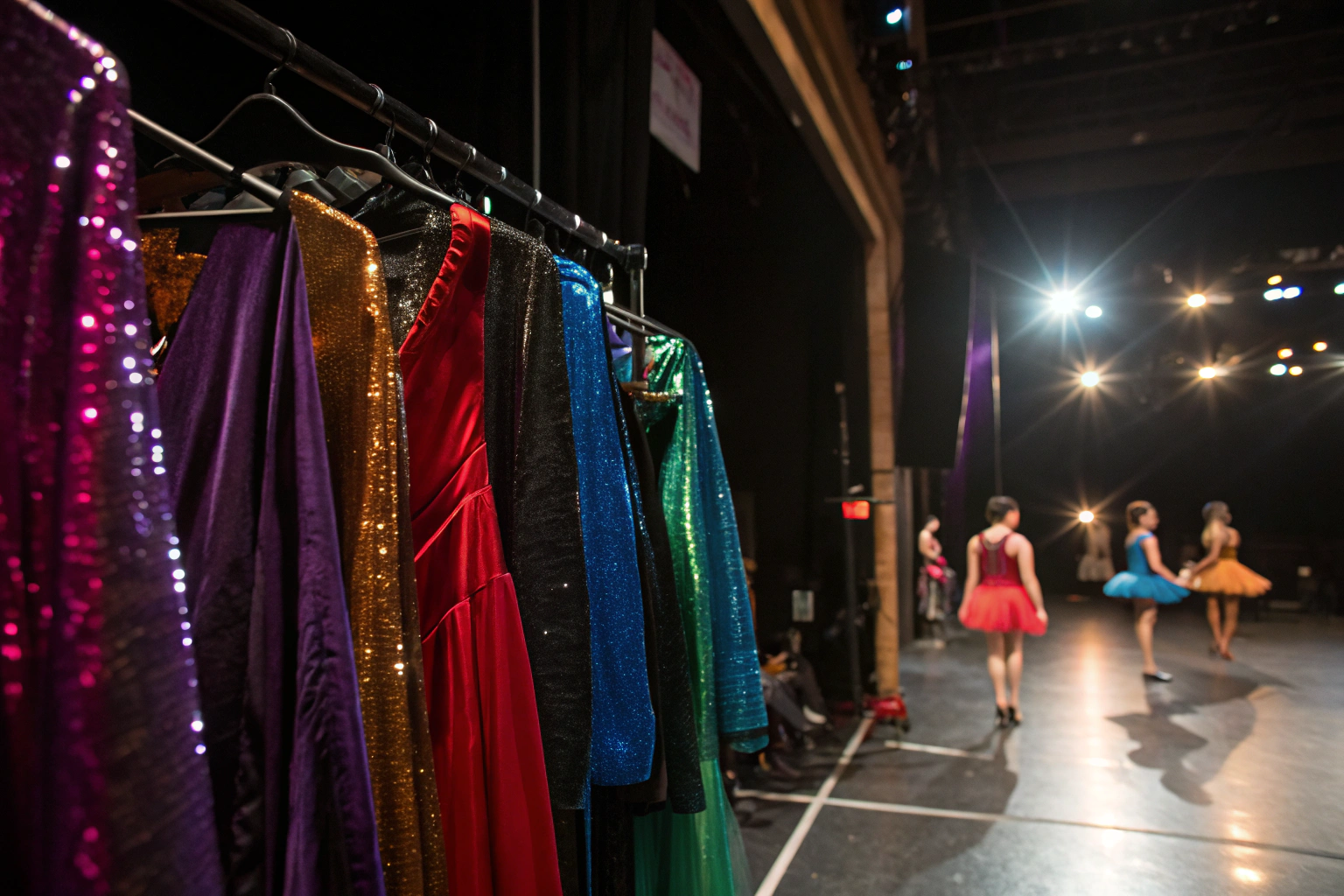
Then there’s the visual factor. Stage lights are hot and bright. Colors that look perfect in a studio can look washed out or completely different under theatrical lighting. Fabrics with sheen or sparkle catch the light and read better from a distance. We work with clients to choose colors and finishes that will pop on stage. This performance apparel blog has a great overview of the technical requirements for dancewear.
What about fabric weight for different dance styles?
Fabric weight matters enormously, and it varies by dance style and garment type.
For ballet, leotards and tights need lightweight fabrics that move with the body and don’t add bulk. We typically use 180-220 GSM for leotards in nylon/spandex or cotton/spandex blends. Tutus are a whole different story—they need stiff tulle or netting in specific weights to hold their shape. The classic romantic tutu uses multiple layers of lightweight, stiff tulle, while a pancake tutu needs heavier, more structured netting.
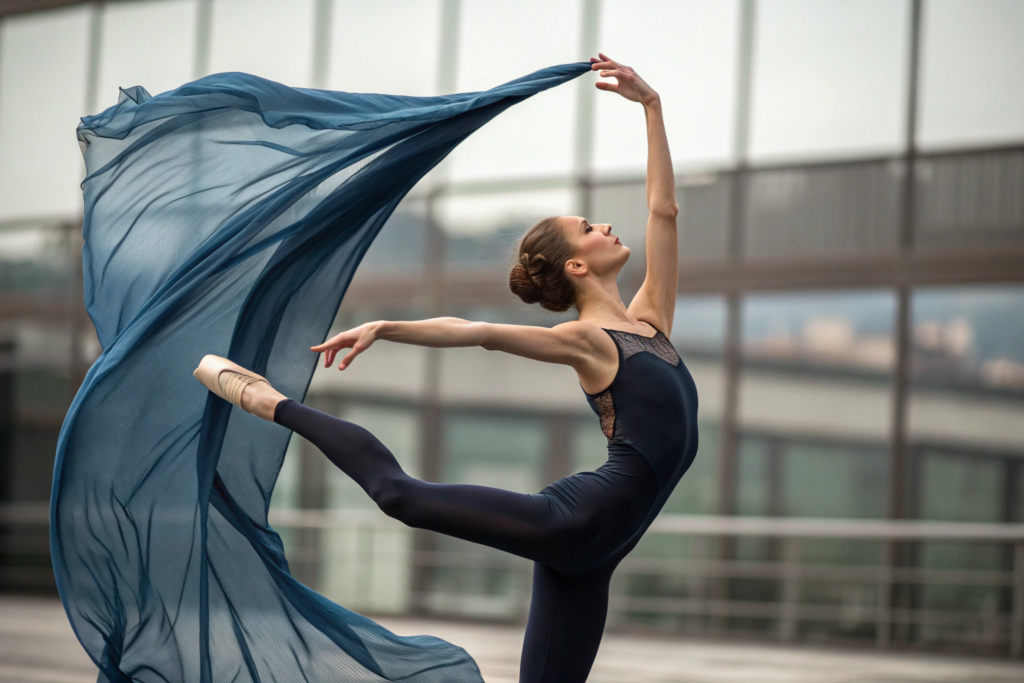
For contemporary and modern dance, the range is wider. Flowing dresses and skirts need lightweight, drapey fabrics like polyester chiffon or rayon challis, often around 60-100 GSM. Tops and pants might use mid-weight stretch fabrics, 200-260 GSM, that provide some coverage and structure while still allowing movement.
For hip-hop and street dance, you often want heavier fabrics that hang well and have some weight to them. Sweatshirt fleece, heavy jersey, and even denim with stretch are common. These fabrics might be 280-350 GSM or more. They need to move but also have presence.
For character costumes and themed performances, anything goes. We’ve made costumes from everything from heavy brocade for Renaissance fair dancers to lightweight metallic mesh for futuristic productions. The key is matching the fabric weight to the movement required. A dancer can’t do a backflip in a heavy velvet cape unless it’s engineered properly.
What Are the Best Fabric Types for Dance Costumes?
There’s no single "best" fabric for dance. It depends on the dance style, the garment, and the desired look. But there are some workhorses that we produce over and over for our dance clients. Let me break down the most popular categories.
Stretch fabrics are the foundation of most dancewear. Nylon/spandex blends (often called Lycra or spandex) are everywhere. They offer excellent stretch, good recovery, and a smooth, comfortable feel. They take dye beautifully and can be made in any color. We produce nylon/spandex in various weights and finishes—matte, shiny, even with a slight texture. For a client in Australia who makes competition costumes, we developed a special matte finish nylon/spandex that doesn’t reflect stage lights harshly but still reads as rich color.
Cotton/spandex blends are popular for warmer styles and for dancers with sensitive skin. They’re softer and more breathable than nylon, but they don’t have quite the same recovery or durability. We recommend them for rehearsals, warm-ups, and lower-impact performances. For a children’s dance school in Texas, we supply cotton/spandex leotard fabric that parents love because it’s comfortable and easy to care for.
Mesh and power mesh are essential for overlays, sleeves, and design details. They add visual interest and allow for skin to show through while still providing coverage. We make mesh in nylon and polyester, with different hole sizes and stretch levels. Power mesh has more structure and is used for shaping and support in costumes.
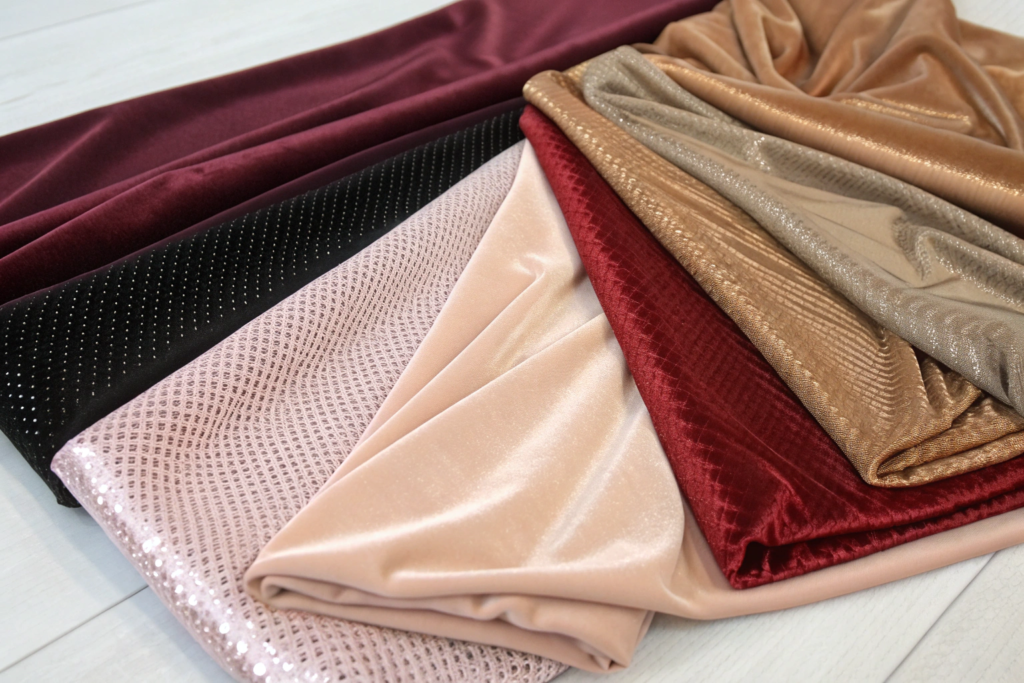
Velvet and stretch velvet are huge for dramatic performances. Traditional velvet has no stretch and is heavy. Stretch velvet, usually made with a spandex base and a velvet pile, moves with the dancer and drapes beautifully. We did a special run of stretch velvet for a production of "Swan Lake" in Germany in 2022. The dancers needed the luxurious look of velvet but had to lift their arms and move freely. Stretch velvet was the answer.
Chiffon and georgette are for ethereal, flowing elements. They’re lightweight, sheer, and drape beautifully. Polyester chiffon is the most common because it’s durable and holds color well. Silk chiffon is the luxury option—more expensive, harder to care for, but unmatched in drape and feel. For a Cirque du Soleil-style production in Macau, we supplied hundreds of meters of flame-retardant polyester chiffon in custom colors for their aerial silk acts. This costume fabric blog has a more comprehensive list of fabric types and their applications.
What about specialty fabrics for unique effects?
Sometimes a production needs something beyond the basics. That’s when we get to have fun with specialty fabrics.
Metallic and foil fabrics add shine and drama. They’re made by bonding a metallic layer to a base fabric, or by weaving metallic threads into the fabric. They catch light beautifully but can be stiff and less breathable. We use them sparingly, for accents or for costumes where the dancer’s movement is limited.
Sequined and beaded fabrics are another option. They can be incredibly heavy, so we have to engineer the garment carefully to ensure the dancer can move. Sometimes we use appliqué—adding sequins or beads to a finished garment rather than using a fully sequined fabric—to control weight and placement.
Printed fabrics allow for unlimited design possibilities. We can digitally print any pattern, photo, or design onto dance fabrics. This is huge for themed performances and character costumes. In 2023, we digitally printed custom animal print patterns on stretch fabric for a children’s production of "The Lion King." The dancers looked amazing, and the prints were sharp and vibrant even under stage lights.
Glow-in-the-dark and UV-reactive fabrics are popular for certain performances. We can incorporate phosphorescent pigments into the fabric or print with UV-reactive inks. For a client in Japan who does night performances, we developed a line of UV-reactive stretch fabrics that glowed under black light. The effect was stunning.
How Do Stage Lights Affect Fabric Choice?
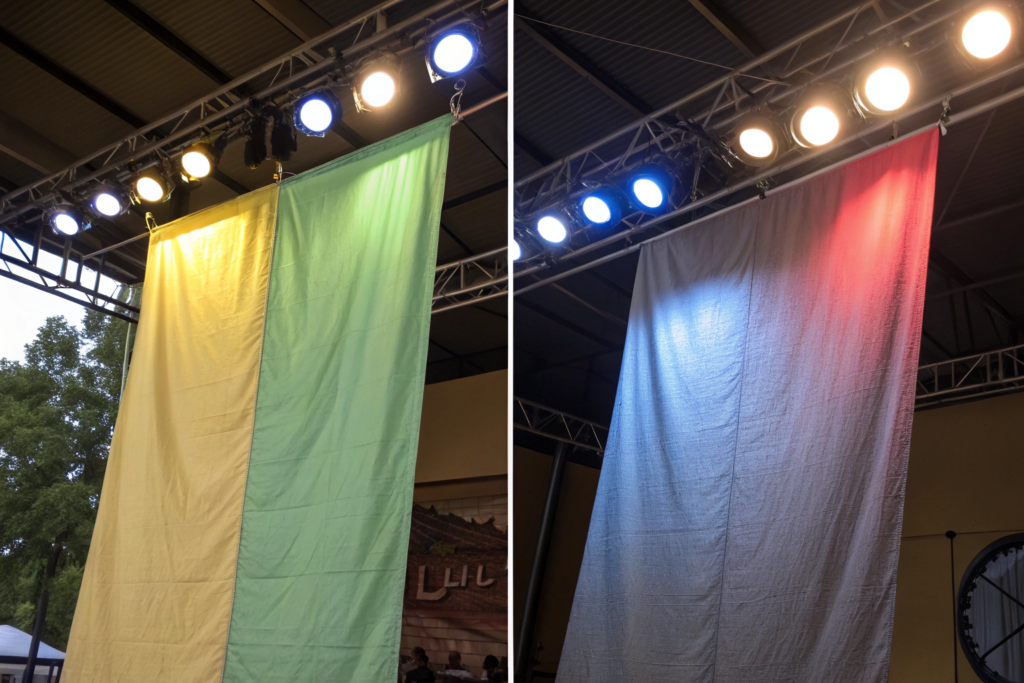
This is something many first-time costume designers overlook. The lights on stage are nothing like the lights in your studio or office. They’re hot, they’re bright, and they have specific color temperatures. What looks good in your hand can look terrible under a spotlight. At Shanghai Fumao, we’ve learned to always consider the lighting environment.
First, color. Stage lights can wash out colors or change them entirely. A pastel pink can look white under bright white light. A deep blue can look black. Red is notorious for looking different under different lights. We always advise clients to view their fabric samples under lighting similar to what will be used on stage. Better yet, we can provide larger samples so they can test them in the actual venue.
Second, sheen. Matte fabrics absorb light and can look flat from a distance. Satin, shiny, or metallic fabrics reflect light and catch the eye. For most performances, you want some sheen so the costumes read well from the back of the house. But too much sheen can create hot spots or glare. The right balance depends on the production.
Third, heat. Stage lights get hot. If a dancer is standing under a hot light for minutes at a time, the fabric has to handle that. Synthetic fabrics can melt or degrade with prolonged heat exposure. Natural fibers are more heat-resistant but might not have the stretch needed. We test fabrics for heat resistance and recommend appropriate constructions. For a production in Las Vegas with intense lighting, we used a special heat-resistant polyester for the costumes.
Fourth, sweat. Hot lights plus intense dancing equals a lot of sweat. Moisture-wicking fabrics help keep dancers comfortable and prevent the costumes from becoming soaked and heavy. We also test for colorfastness to perspiration—you don’t want the dye running or fading from sweat.
How do you match colors across different fabric types in one costume?
This is a common challenge. A costume might combine stretch fabric for the body, mesh for sleeves, and chiffon for an overlay. Getting all three fabrics to match perfectly in color is tricky because different fibers and constructions absorb dye differently.
The solution is careful planning and communication. We work with clients to dye all the fabric components for a costume at the same time, in the same dye batch, whenever possible. If that’s not possible, we create "shade bands"—physical standards—and match each fabric to that standard.
Sometimes slight variations are acceptable or even desirable. A mesh overlay that’s slightly lighter than the base fabric can create a beautiful dimensional effect. But if you need a perfect match, we can achieve it. It just takes more development time and testing.
In 2022, a client from France needed a perfect color match between a nylon/spandex leotard and a polyester chiffon skirt for a ballet production. The two fibers required different dye classes, so we couldn’t dye them together. We developed custom dye formulas for each, tested strike-offs, and adjusted until they matched perfectly under all lighting conditions. The final costumes were flawless.
How Do We Ensure Durability for Heavy Use and Washing?
Dance costumes take a beating. They’re stretched, sweated in, and washed repeatedly. For professional companies, costumes might be used for years. For competitive dance, they might be worn for a single season but washed dozens of times. Durability is not optional.
We start with fiber and yarn selection. For stretch fabrics, we use high-quality spandex (often from top suppliers like Invista’s Lycra brand) because cheap spandex loses its stretch quickly. We use long-staple cotton for cotton blends because it’s stronger and pills less. For synthetics, we choose yarns with high tenacity and abrasion resistance.
Construction is next. The knit or weave has to be stable. For knits, we use tight, consistent stitches to ensure the fabric doesn’t run or ladder. For wovens, we use appropriate thread counts and weaves to balance strength with drape. We test for seam slippage—if you pull a seam, does the fabric tear or does the seam hold? For dance fabrics, we need high seam strength.
Finishing adds another layer of durability. We use anti-pilling finishes for fabrics prone to pilling. We apply wrinkle-resistant finishes for easy care. We test colorfastness to washing and light. For a client in the UK who supplies costumes to professional ballet companies, we developed a line of fabrics that withstand 100 industrial launderings without significant degradation. That’s the level of durability professionals need.
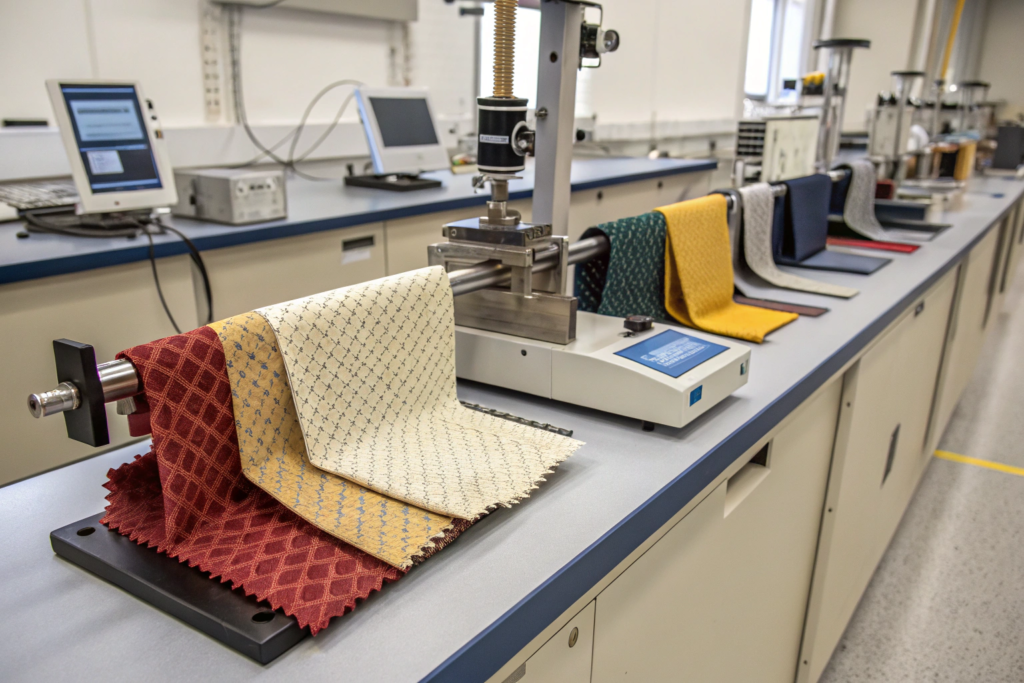
We also test for real-world conditions. We simulate the stresses of dance by stretching fabrics repeatedly and measuring recovery. We test for chlorine resistance for swimwear used in aquatic performances. We test for UV resistance for outdoor performances. Every performance environment has its own challenges, and we try to anticipate them.
What about repairs and alterations?
Dance costumes often need alterations or repairs during their lifetime. The fabric has to accommodate that. It should hold stitches well without tearing. It should be possible to let out seams or add panels if a dancer’s measurements change.
Stretch fabrics can be tricky to alter because they can pucker or lose their stretch at the seams. We recommend using ballpoint needles and stretch stitches for alterations. For major alterations, it’s often better to replace a panel than to try to alter a complex seam.
We provide detailed care and handling instructions with every fabric order. We tell clients what needles to use, what thread types work best, and how to press the fabric without damaging it. For a client in South Africa who makes competition costumes, we even did a video training session for their sewing staff on how to work with our stretch velvet. The costumes came out beautifully, and they’ve reordered every year since.
What About Sustainability in Performance Fabrics?
Sustainability is becoming more important in every industry, and dance is no exception. Dancers and audiences care about the environmental impact of costumes. At the same time, performance fabrics have technical requirements that can make sustainability challenging. We’re working hard to bridge that gap.
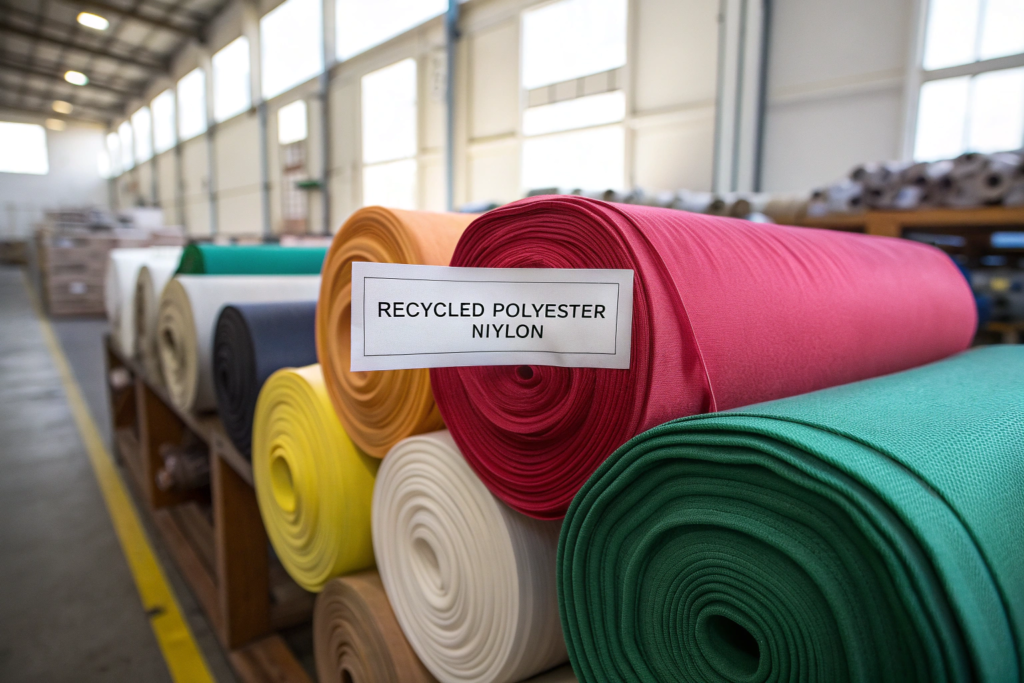
Recycled synthetics are a big part of the solution. We offer recycled nylon and recycled polyester options for many of our dance fabrics. These are made from post-industrial waste or recycled plastic bottles, and they perform nearly identically to virgin materials. For a client in Sweden who makes sustainable activewear for dancers, we developed a line of recycled nylon/spandex fabrics that meet all their performance requirements.
Natural fibers are another option, but they have limitations for dance. Organic cotton, hemp, and Tencel can work for certain applications, but they don’t have the stretch and recovery of synthetics. We’re exploring blends that combine natural fibers with a small percentage of spandex to get the best of both worlds.
Dyeing and finishing have environmental impacts too. We use low-impact reactive dyes and water-saving dyeing processes. We’re working towards bluesign certification for our dance fabric lines. For a client in California who wanted the most sustainable option, we developed a line of undyed, natural-colored dance fabrics. They weren’t bright, but they had a beautiful, organic look that worked for their productions.
Durability itself is a form of sustainability. A costume that lasts for years is more sustainable than one that falls apart after one season. That’s why we focus so much on quality—it’s not just about performance; it’s about reducing waste. This sustainable costume blog has more ideas for environmentally responsible performance wear.
Can we use deadstock or overstock fabrics for dance costumes?
Absolutely. Using deadstock fabrics—fabrics that were produced for other projects but never used—is a great way to reduce waste and save money. We have a large inventory of overstock fabrics from past projects, and we’re happy to show them to clients.
The challenge with deadstock is consistency. If you need 500 yards of the exact same fabric for a large production, deadstock might not work. But for smaller productions, for sample-making, or for costumes where slight variations are acceptable, it’s a fantastic option.
We had a client in Chicago who makes costumes for a community theater. They’re always on a tight budget. We let them browse our deadstock inventory, and they found beautiful stretch velvet in a color that was perfect for their production of "Chicago." They paid a fraction of the usual price, and the costumes looked amazing. Everyone won.
Conclusion
Sourcing fabric for dance and performance costumes is a specialized art. It requires understanding the unique demands of movement, light, sweat, and repeated wear. The fabric has to stretch and recover, breathe and wick, catch the light and hold its color, and survive the physical intensity of dance. It’s a lot to ask from a piece of cloth.
At Shanghai Fumao, we’ve made it our mission to understand these demands and meet them. We work with dancers, costume designers, and production companies around the world to develop fabrics that perform as hard as the artists wearing them. Whether you need stretch velvet for a ballet, metallic mesh for a Broadway show, or custom-printed lycra for a competition team, we have the expertise and the production capability to deliver.
If you’re working on a performance and need fabrics you can trust, let’s talk. We can help you choose the right materials, develop custom colors and finishes, and ensure your costumes look spectacular and perform flawlessly. Please contact our Business Director, Elaine, at elaine@fumaoclothing.com. Let’s create something worthy of the spotlight.