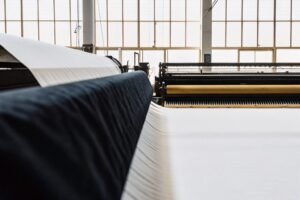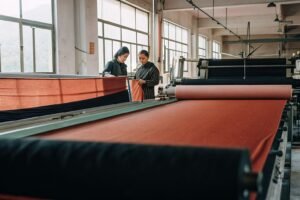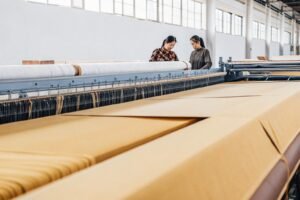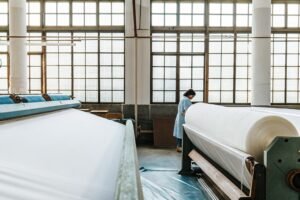
I learned about healthcare uniform requirements the hard way in 2017. A large hospital group in Chicago ordered 50,000 meters of our poly-cotton twill for their nursing staff. Six months later, they called furious—uniforms were pilling after a few washes, colors were fading, and staff complained about discomfort during long shifts. We’d sent them the same fabric we’d sold to corporate clients for years. But healthcare is different. The demands are unique, and we hadn’t understood them. We replaced the entire order at our cost and spent the next year learning everything we could about medical textiles.
Sourcing fabric for healthcare and medical uniforms requires specialized knowledge of durability standards, infection control requirements, comfort for extended wear, and specific color fastness needs. Medical uniforms face challenges that corporate wear doesn’t—frequent high-temperature washing, exposure to harsh disinfectants, long shifts in demanding environments, and strict appearance standards for professionalism and hygiene.
Let me share what those Chicago nurses taught us. Healthcare uniforms aren’t just clothing. They’re protective equipment, professional identity markers, and comfort essentials for people working 12-hour shifts under extreme stress. The fabric has to perform on multiple levels simultaneously. Understanding these requirements helps you source fabrics that keep medical staff safe, comfortable, and professional-looking.
What durability standards matter for healthcare uniforms?
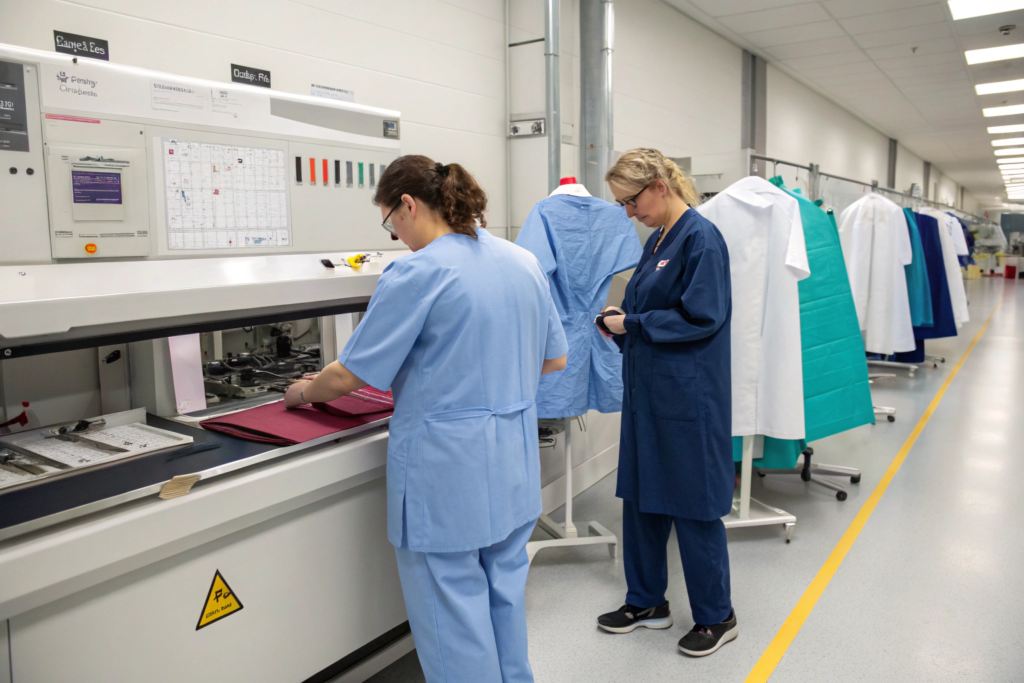
Healthcare uniforms face the most demanding wash cycles of any professional apparel. Industrial laundries use high temperatures, strong chemicals, and mechanical agitation to ensure sterilization. Fabrics that survive corporate laundry fail quickly in these conditions. Understanding the specific durability requirements prevents premature replacement and unhappy customers.
The key specification is industrial laundry durability. Medical uniforms typically undergo 50-100 wash cycles per year, often at 75°C or higher with bleach and other harsh chemicals. Standard office wear might see 20-30 gentle cycles annually. This difference compounds over garment life—a three-year healthcare uniform endures 150-300 industrial wash cycles, equivalent to 5-10 years of office wear.
What specific tests indicate healthcare-grade durability?
Request test reports for several key properties. Dimensional stability (shrinkage) after multiple washes—healthcare uniforms must maintain fit through dozens of industrial cycles. Look for less than 3% shrinkage after 50 washes. Color fastness to washing and chlorine bleach—colors must not fade or transfer. Abrasion resistance (Martindale or Taber)—fabric must withstand rubbing against surfaces without thinning or pilling.
Tensile and tear strength matter too. Healthcare workers move constantly, reach, bend, lift. Weak fabrics tear at seams or develop holes in stress areas. Minimum tear strength of 15-20 Newtons in both directions is typical for quality healthcare fabrics.
In 2019, a British healthcare supplier asked us to develop fabric specifically for NHS uniforms. Their existing poly-cotton failed after 40 washes—pilling, fading, shrinkage beyond tolerance. We formulated a 65/35 polyester-cotton blend with high-tenacity polyester and a specialized weave structure. After healthcare uniform fabric durability standards 100 industrial wash cycles in our lab, shrinkage was under 2%, color remained within spec, and abrasion loss was minimal. The NHS contract required 18-month minimum garment life; our fabric delivered 36 months.
How does fabric construction affect durability beyond fiber content?
Fiber content matters, but construction determines how those fibers perform. High thread count (more threads per inch) creates denser, more durable fabric. Tight twist yarns resist fraying and pilling. Weave type affects tear strength—plain weave is stable but can tear more easily than twill, which distributes stress.
For healthcare, we typically recommend twill weaves for outerwear (scrubs, uniforms) because they combine durability with good drape and comfort. Ripstop constructions add reinforcement grids that prevent tear propagation—valuable for applications where snagging risks exist.
The balance is always between durability and comfort. Heavier, denser fabrics last longer but can feel stiff and hot. Lighter fabrics feel better but may wear faster. The sweet spot for most healthcare applications is 180-220 GSM with balanced construction—durable enough for 50+ industrial washes, comfortable enough for 12-hour shifts.
In 2020, we worked with a Canadian healthcare brand to optimize this balance. Their existing fabric at 240 GSM was durable but received comfort complaints. We developed a 200 GSM version with higher twist yarns and denser construction—same durability at 40 grams lighter per square meter. The fabric construction impact on healthcare uniform performance new fabric passed all durability tests while significantly improving comfort scores in wear trials.
What infection control properties should healthcare uniforms have?
Infection control has become paramount in healthcare textiles. The COVID-19 pandemic elevated awareness of how uniforms can transmit pathogens. Today’s healthcare fabrics need properties that support hygiene without compromising comfort or durability.
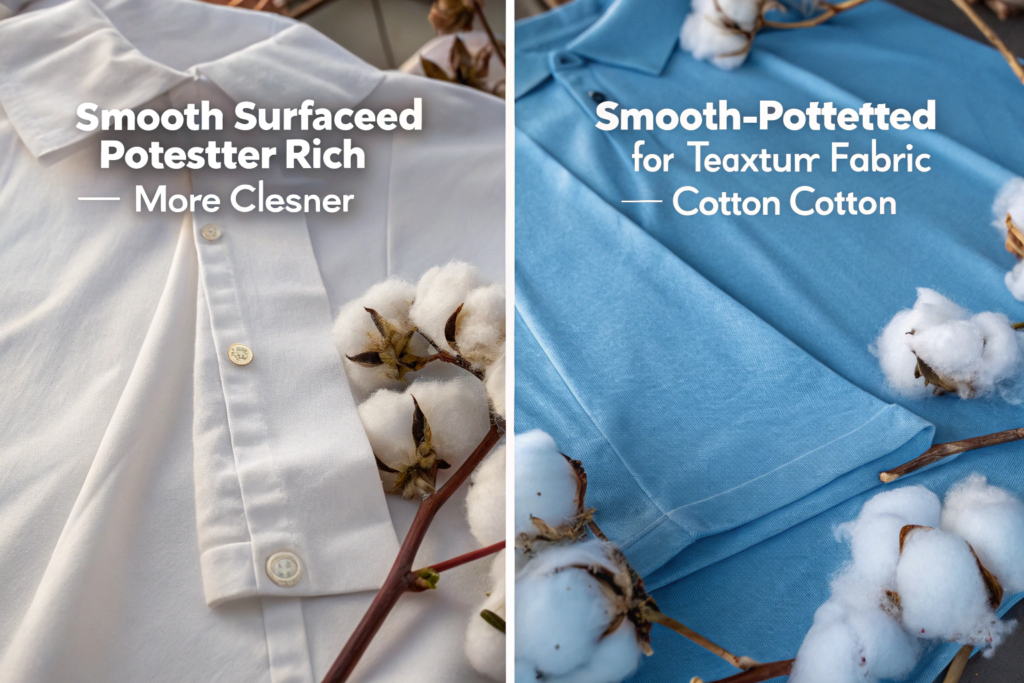
The primary consideration is cleanability—how effectively can the fabric be sterilized? Smooth-surfaced fabrics with low absorbency clean more thoroughly than textured or highly absorbent fabrics. This is why many healthcare uniforms use polyester-rich blends rather than high-cotton content. Polyester doesn’t absorb moisture the way cotton does, so contaminants stay on the surface where cleaning reaches them.
Do healthcare uniforms need antimicrobial treatments?
This depends on the application and your customers’ requirements. Antimicrobial treatments add a layer of protection by inhibiting bacterial growth on fabric surfaces between washes. They’re valuable for uniforms worn through full shifts where bacteria can multiply in sweat and skin cells.
However, antimicrobial treatments must withstand industrial laundering. Many topical treatments wash out after 10-20 cycles, becoming ineffective. For healthcare, you need treatments bonded at fiber level or with exceptional durability. Silver-based antimicrobials integrated during fiber production last the garment’s life. Copper and zinc alternatives offer similar durability with different properties.
The efficacy standard to look for is AATCC 100 or ISO 20743, showing percentage reduction in bacterial populations. 99% reduction is typical for quality antimicrobial fabrics. Some applications may require higher standards.
In 2021, a French hospital group specified antimicrobial uniforms with minimum 95% reduction after 50 washes. Several suppliers claimed compliance but couldn’t provide test data. Our fabric, using silver-based antimicrobial polyester, showed 99.2% reduction after 50 industrial wash cycles in independent lab testing. We antimicrobial fabric requirements for healthcare uniforms won the contract based on verifiable performance, not marketing claims.
What about fluid resistance for higher-risk applications?
For certain healthcare roles—surgery, emergency, infectious disease—fluid resistance becomes critical. These applications require fabrics that resist penetration by blood, bodily fluids, and other potentially infectious materials. This moves beyond standard uniform fabrics into protective textile territory.
Fluid resistance typically requires either dense construction that physically blocks penetration or specialized finishes that cause fluids to bead and roll off. Dense constructions can be uncomfortable for full-shift wear. Finishes may affect breathability and hand feel.
The relevant standard is AATCC 42 (water resistance: impact penetration) or AATCC 127 (hydrostatic pressure). For surgical gowns and high-risk applications, requirements are stringent—often requiring barrier performance equivalent to 50-100 cm hydrostatic head combined with viral penetration resistance.
For a German medical supply company in 2022, we developed a three-layer laminate for reusable isolation gowns: durable face fabric, breathable barrier membrane, and soft inner layer. The fluid resistance standards for medical uniforms fabric passed ASTM F1670 (blood penetration resistance) and F1671 (viral penetration resistance) while maintaining comfort for extended wear. The gowns cost more than disposables but paid for themselves within 50 uses.
What comfort factors matter for 12-hour healthcare shifts?
Healthcare workers spend their entire shifts in uniform. Comfort isn’t a luxury—it’s a necessity for focus, performance, and well-being. Fabrics that cause discomfort, overheating, or skin irritation affect patient care. Understanding comfort requirements helps you select fabrics that workers actually want to wear.
Breathability is the primary comfort factor. Healthcare environments are often warm, and workers are active. Fabrics that trap heat and moisture lead to discomfort, fatigue, and skin issues. Moisture vapor transmission rate (MVTR) measures how quickly fabric allows sweat vapor to escape. Higher numbers mean better breathability.

How do you balance durability with breathability?
This is the central tension in healthcare textiles. Durable fabrics tend to be denser, which reduces breathability. Breathable fabrics tend to be lighter, which reduces durability. The solution lies in fiber engineering and construction.
Moisture-wicking polyester fabrics can achieve good breathability while maintaining durability through fiber cross-section engineering. Fibers with channels or lobes create surface area for moisture movement while the core provides strength. Blends with small percentages of natural fibers (cotton, Tencel) improve comfort without sacrificing durability significantly.
Construction matters too. Open weaves breathe better but may not meet durability requirements. The optimal approach is often a compromise—dense enough for durability, open enough for breathability, with fiber properties that enhance moisture management.
In 2022, a Texas-based healthcare system complained that their current uniforms caused overheating in non-air-conditioned areas. We developed a fabric using 50/50 polyester-cotton with channeled polyester fibers and an open twill weave. The breathability vs durability in healthcare uniforms fabric achieved 15 CFM air permeability (significantly higher than their previous 8 CFM) while maintaining required durability through 75 industrial washes. Staff comfort scores improved dramatically.
What about stretch and mobility for active healthcare roles?
Healthcare work involves constant movement—bending, reaching, lifting, walking. Rigid fabrics restrict movement and cause fatigue. Stretch fabrics improve mobility and comfort, but stretch components must withstand industrial laundering.
Spandex (elastane) provides excellent stretch but can degrade with high-temperature washing and chlorine bleach. For healthcare, look for elastane specifically engineered for industrial laundry—Lycra T400 or similar products designed for durability. Alternatively, mechanical stretch through weave construction provides mobility without elastane vulnerability.
The amount of stretch needed varies by role. Surgical staff need significant stretch for fine motor control and positioning. Administrative staff need less. General nursing typically benefits from 15-25% stretch in both directions.
For a Swiss healthcare brand in 2023, we developed fabric with 20% stretch using high-durability elastane and a special knit construction. The stretch fabric requirements for healthcare uniforms fabric maintained 95% of its stretch after 50 industrial washes in our tests—significantly better than standard elastane fabrics. Nurses reported noticeably less fatigue during long shifts.
What color fastness requirements matter for medical uniforms?
Color in healthcare isn’t just aesthetic. It’s often functional—department identification, role differentiation, professional appearance. Fading, bleeding, or inconsistent color undermines these functions and creates unprofessional appearance. Healthcare uniforms face color challenges beyond other apparel.
The biggest challenge is chlorine bleach. Many healthcare facilities use chlorine-based disinfectants in laundry. Chlorine attacks many dyes, causing rapid fading and color change. Fabrics that look fine after home washing may fade dramatically after a few industrial cycles with bleach.
What dyes resist chlorine bleaching?
Certain dye classes resist chlorine better than others. Vat dyes (commonly used for indigo and some colors) have excellent chlorine resistance but limited color range. Fiber-reactive dyes (common for cotton) vary widely in chlorine resistance. Disperse dyes (for polyester) generally resist chlorine well but require high-temperature application.
For healthcare, the safest approach is using polyester or polyester-rich blends with disperse dyes. These provide excellent chlorine resistance and color fastness. For natural fiber blends requiring specific shades, pre-treatment and dye selection become critical. Our lab maintains a database of dye-fiber combinations with proven chlorine resistance.
The relevant test is AATCC 162 (color fastness to chlorine bleach). Look for ratings of 4 or 5 (on a 5-point scale) after specified bleach concentrations and exposure times. Lower ratings mean noticeable fading within garment life.
In 2020, a California hospital group switched uniform suppliers after their navy blue scrubs faded to gray within months. Our fabric, using chlorine-resistant disperse dyes on polyester-cotton blend, maintained color fastness to chlorine bleach for medical uniforms color through 100 industrial washes with bleach. The contrast with their previous uniforms was visible side-by-side, and they’ve standardized on our fabric across their system.
How do you maintain color consistency across multiple orders?
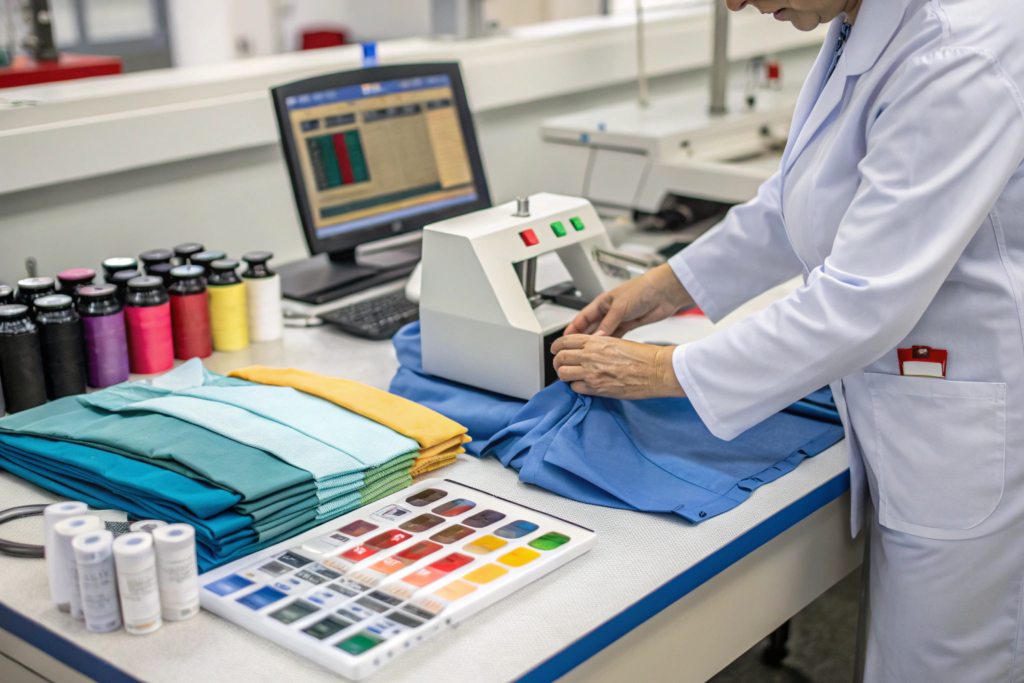
Healthcare systems often order uniforms over years, needing new garments to match existing inventory. This requires color consistency across production batches. We maintain digital color standards and spectrophotometric measurement for every healthcare color we produce.
Each production batch is measured against the standard, with tolerance limits tighter than typical apparel. ΔE (color difference) under 1.0 ensures new garments match existing ones visually. Batches exceeding tolerance are reworked or rejected.
For a UK National Health Service supplier, we maintain color standards for 12 uniform colors, some dating back to 2018. Every production run is measured against the original standard, not previous batches. This color consistency across healthcare uniform orders ensures that uniforms ordered today match those ordered five years ago. The NHS trust values this consistency for professional appearance and staff satisfaction.
Conclusion
Sourcing fabric for healthcare and medical uniforms requires specialized knowledge that goes far beyond standard apparel textiles. Durability for industrial laundering, infection control properties, comfort for extended wear, and color fastness to harsh chemicals all must be considered and verified. Fabrics that work perfectly for corporate uniforms fail in healthcare environments. Getting it right requires partnership with suppliers who understand these unique requirements.
At Shanghai Fumao, we’ve spent years developing expertise in healthcare textiles. Our fabrics are tested for industrial laundry durability, chlorine bleach resistance, antimicrobial efficacy where required, and comfort for long shifts. We maintain color standards for healthcare systems across multiple countries. And we’ve learned from projects with hospitals, healthcare suppliers, and uniform programs worldwide.
If you’re sourcing uniforms for healthcare applications, reach out to our Business Director, Elaine. She can discuss your specific requirements—durability targets, infection control needs, comfort priorities, color programs—and recommend fabric options that meet your needs. Whether you’re outfitting a single clinic or a national health system, we have the expertise and capacity to deliver. Contact Elaine at [elaine@fumaoclothing.com]() to start a conversation about your healthcare uniform project. Let’s create uniforms that perform for the people who perform for all of us.