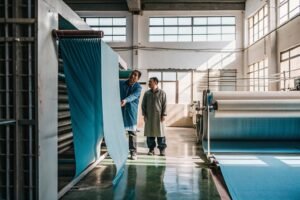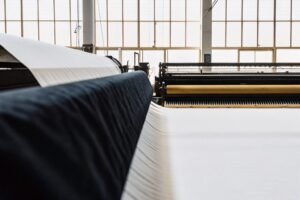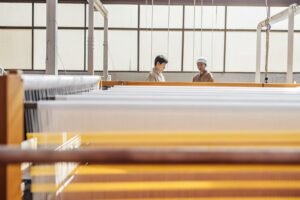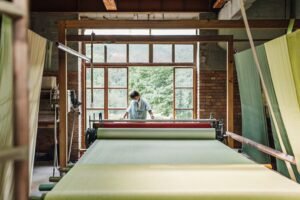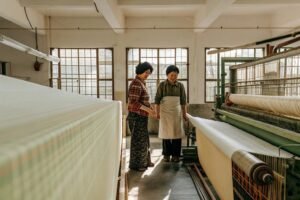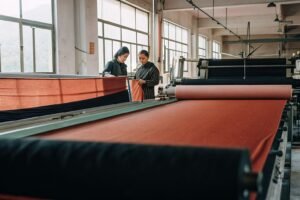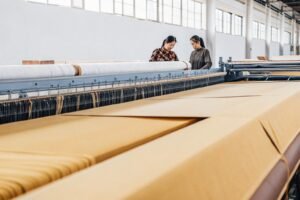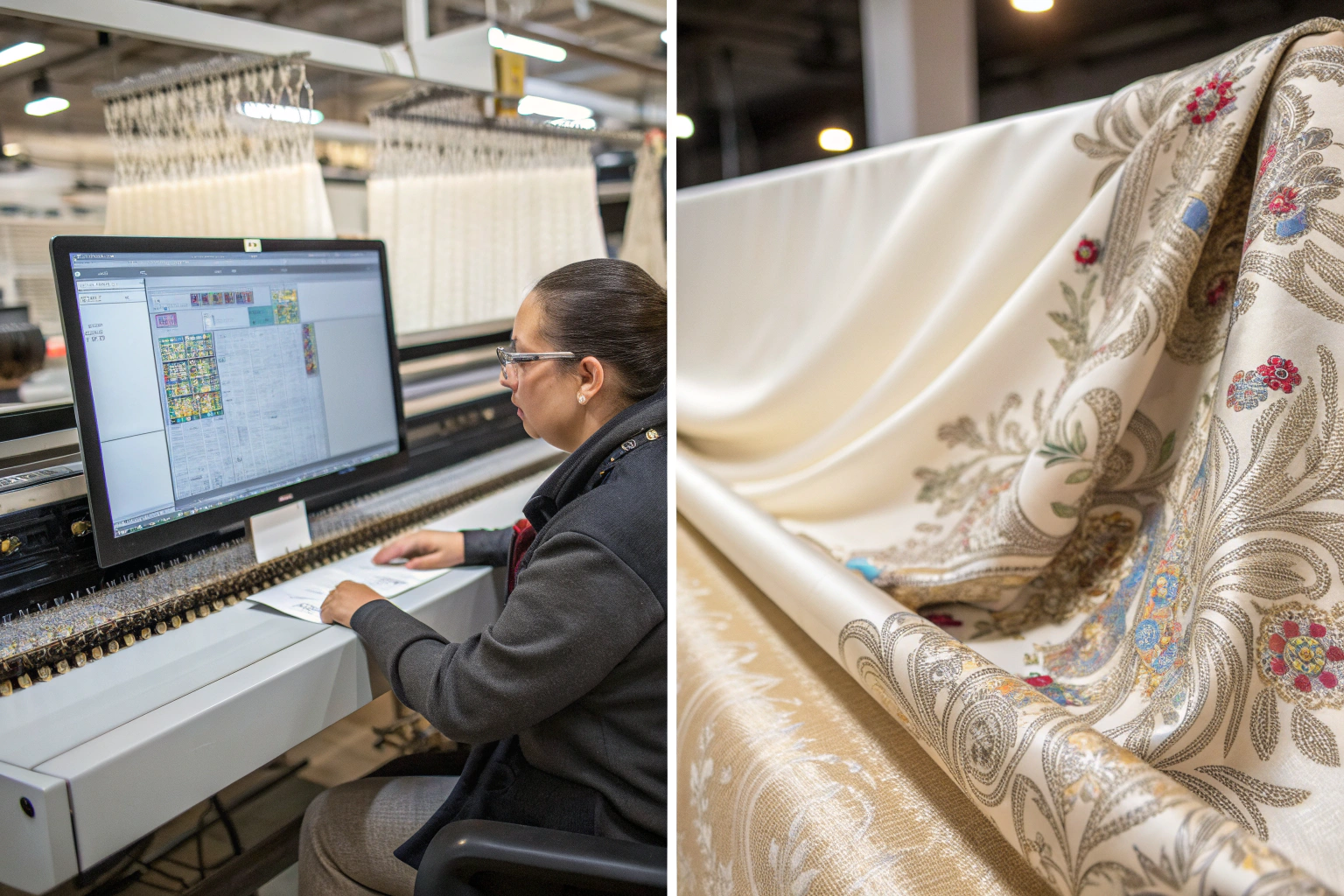
I still remember the first time I watched a jacquard loom run a custom design for a major European fashion house. It was 2015, and the designer had flown in personally with her sketchbook. She stood transfixed as thousands of individual warp threads rose and fell, controlled by a computer reading her artwork, building her vision row by row. When the first few inches emerged from the loom, she actually cried. That moment taught me something I’ve never forgotten—jacquard isn’t just fabric. It’s woven art.
Creating custom jacquard woven fabric involves a multi-stage process: design conceptualization and artwork preparation, digital file conversion for loom programming, yarn selection and preparation, warping and looming, sample weaving for approval, production weaving, and finally finishing and quality inspection. Each stage requires specialized expertise and equipment to transform a designer’s vision into tangible, wearable textile art.
Let me walk you through this process the way I explain it to clients who visit our facility. Jacquard weaving is fundamentally different from printing or embroidery. The pattern is built into the fabric’s structure, not applied to the surface. This means the design lasts as long as the fabric itself—it won’t wash out, fade, or abrade away. But it also means the process is more complex, more time-consuming, and more dependent on getting every detail right from the beginning. Understanding each step helps you collaborate effectively with your weaving partner and avoid costly mistakes.
How do you prepare a design for jacquard weaving?
The journey from concept to fabric starts long before any yarn touches a loom. Design preparation is where most projects succeed or fail, and it’s the stage where close collaboration between designer and weaver matters most. I’ve seen beautiful artwork that simply cannot be woven, and I’ve seen simple sketches transform into breathtaking textiles because the designer understood what the loom could do.
The first step is translating your artistic vision into a format the loom can understand. Traditional jacquard used punched cards—thousands of them for a single design. Today, we use specialized CAD software that converts your artwork into a "lift plan" telling each warp thread when to rise and fall for every single weft insertion. A complex jacquard might have 10,000 or more individual warp ends, each controlled independently. The software calculates which colors appear where, how threads interlace, and how the structure will behave when woven.
What resolution and format do jacquard mills need for artwork?
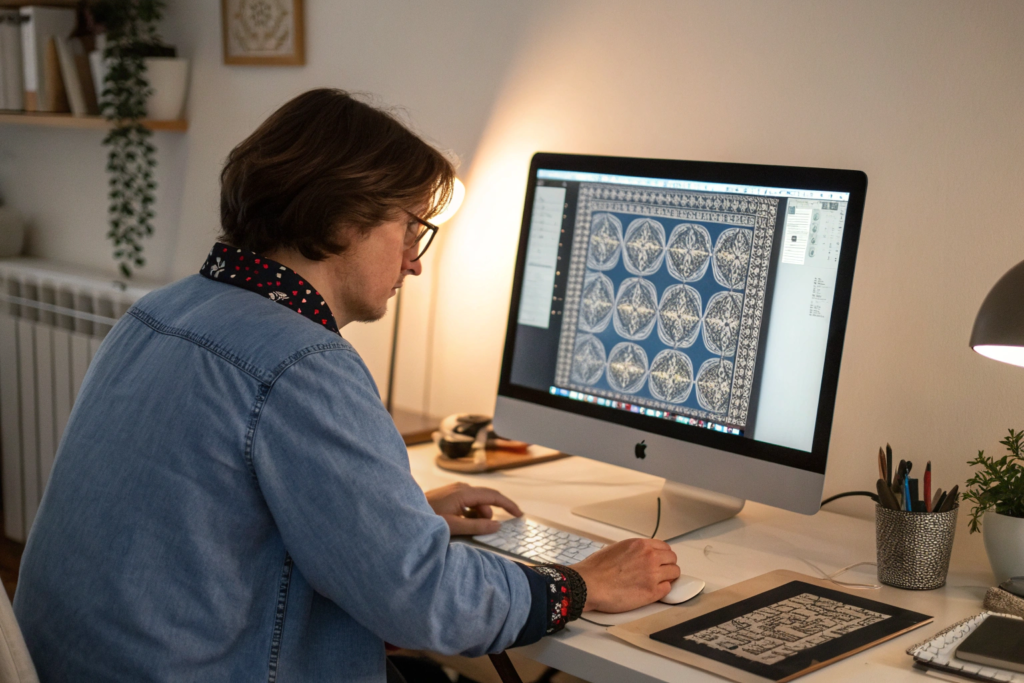
This is where designers often stumble. You can’t just send a standard JPEG or PNG and expect the mill to figure it out. Jacquard weaving requires vector artwork or extremely high-resolution raster images—minimum 300 DPI at final fabric size, often higher for intricate patterns. The file must clearly define each color area because different colors often require different weave structures.
Ideally, send Adobe Illustrator or Photoshop files with separate layers for each color. Better still, work with your mill’s preferred CAD format. We use several different software systems depending on the loom type, and we can accept files in most standard formats. But the cleaner your artwork, the better the final result.
In 2021, a London-based designer sent us a beautiful watercolor painting for a custom jacquard. It was gorgeous—and completely unweavable as provided. The watercolor had thousands of subtle color gradations that would require more weave structures than physically possible. We worked together to simplify the design into 12 distinct color areas while preserving the artistic feel. The jacquard fabric design file requirements final fabric captured the essence of her painting, but only because she was willing to adapt her artwork to the medium. That collaboration produced fabric that later appeared in Vogue.
How do you choose weave structures for different design elements?
This is the artistry of jacquard. Different areas of your design need different weave structures to achieve the desired effect. A satin weave creates smooth, lustrous surfaces perfect for large color areas. Twill weaves add subtle texture and visual interest. Plain weave provides stability and definition for fine details. Complex structures like double cloth can create raised effects or even pockets within the fabric.
Our designers work with clients to map weave structures to design elements. A floral motif might use satin for petals to capture light beautifully, twill for leaves to suggest texture, and plain weave for stems to provide definition. Each structure affects not just appearance but also hand feel, drape, and durability.
For a New York bridalwear client in 2022, we developed a custom jacquard with three distinct zones—a lustrous satin ground, matte twill geometric patterns, and raised velvet-like areas created through special weaves that lifted certain threads higher. The choosing weave structures for jacquard design bride who wore it said guests couldn’t stop touching her dress, trying to understand how the textures were created. That’s the magic of well-designed jacquard—it engages both eye and hand.
What yarn selection decisions affect jacquard quality?
Yarn choice dramatically impacts how your jacquard looks, feels, and performs. The same design woven in different yarns can produce completely different results. Understanding these relationships helps you make informed decisions that balance aesthetics, cost, and functionality.
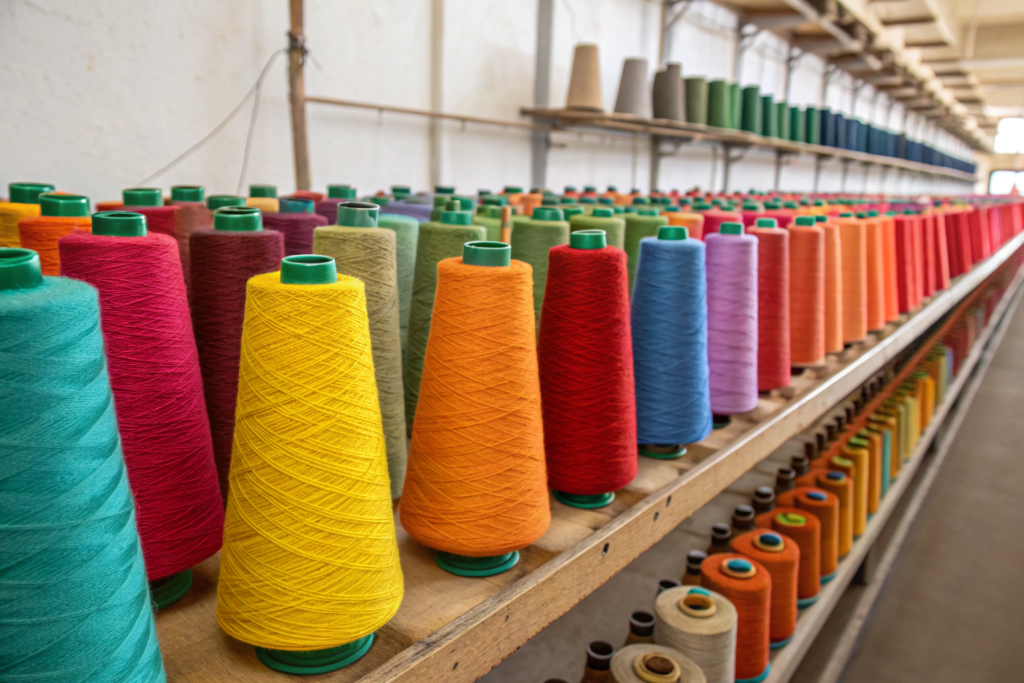
The fundamental decision is fiber content. Cotton creates crisp, matte fabrics ideal for upholstery and casual apparel. Silk produces unmatched luster and drape for luxury evening wear. Wool adds warmth and texture for suiting and outerwear. Synthetics and blends offer durability, stretch, and easier care. At Shanghai Fumao, we maintain extensive yarn inventories so clients can sample different options without waiting for special orders.
How does yarn count affect the detail possible in jacquard?
Yarn count—the thickness of individual threads—directly determines how much detail your jacquard can achieve. Finer yarns allow more threads per inch, which means more pixels in your woven image. A coarse yarn might limit you to relatively simple patterns. Fine yarns can reproduce photographic detail, though at much higher cost.
The relationship is straightforward: if you double the threads per inch, you quadruple the potential detail because both warp and weft density increase. But finer yarns are more expensive, slower to weave, and more delicate in finished fabric. A typical apparel jacquard might use 60/2 cotton (medium fine) achieving around 100-120 threads per inch. A luxury necktie jacquard might use 120/2 silk achieving 200+ threads per inch with exquisite detail.
In 2020, a Japanese kimono maker approached us about reproducing antique family patterns. The originals, woven decades ago, used extremely fine silk yarns no longer commonly available. We sourced specialty yarns and adjusted our looms to achieve the yarn count impact on jacquard pattern detail required thread density. The finished fabric matched the originals so closely that family elders couldn’t tell the difference. That project taught me that with the right yarns, almost anything is possible.
Why do warp and weft yarns often differ in jacquard weaving?
In most jacquard fabrics, warp and weft yarns serve different purposes. The warp runs lengthwise through the fabric, under constant tension during weaving. It needs to be strong and consistent. The weft runs crosswise, interlacing with warp threads to create the pattern. It can be more varied—different colors, different fibers, even different thicknesses.
This asymmetry gives designers tremendous flexibility. You might use a strong, neutral warp yarn throughout, then introduce multiple colored weft yarns to build the pattern. Some jacquard looms can handle up to eight or more different weft colors, changing between them as the design requires. Each weft insertion can be a different color or fiber type, creating rich, multi-dimensional fabrics.
For a Milan-based furniture brand in 2023, we developed upholstery jacquard using a strong cotton warp for durability and multiple weft yarns—wool for softness, linen for texture, and a touch of Lurex for subtle sparkle. The warp and weft yarn selection for jacquard combination created fabric that was both beautiful and incredibly durable, surviving their abrasion tests with ease. The designer told us she’d never have imagined mixing those fibers, but the result was stunning.
How does the sampling process work for custom jacquard?
Sampling is where your design becomes real—or where problems become visible. This stage requires patience and collaboration because the first attempt rarely matches the vision perfectly. Understanding what happens during sampling helps you provide useful feedback and achieve the result you want.
Once your design is programmed and yarns selected, we weave a small sample—typically 1-2 meters, sometimes less for very complex designs. This sample reveals how the weave structures actually look in yarn, how colors interact, and how the fabric handles. We examine it under multiple light sources, measure key properties, and compare to your specifications. Then we send it to you for review.
What should you look for when reviewing jacquard samples?
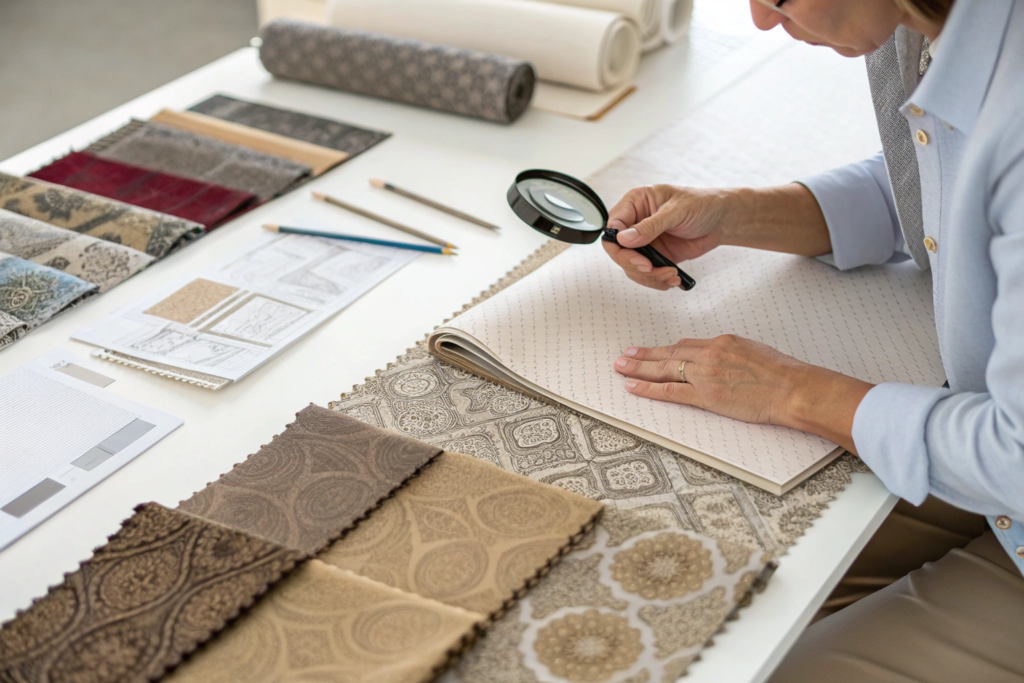
Look at everything. Check pattern accuracy—does every element appear where it should? Examine color—are the hues what you expected? Sometimes colors shift when woven because of how light reflects from yarn surfaces versus flat artwork. Check hand feel—is the fabric soft enough? Firm enough? Does it drape as you imagined?
Pay special attention to pattern registration—how different color areas meet. In jacquard, color boundaries can be sharp or slightly blended depending on weave structures. Some designers love the subtle blending possible with certain weaves. Others want crisp, precise edges. The sample reveals what your design actually produces.
Also examine the back of the fabric. Jacquard has a reverse side that may show floats—long threads that skip across the back. Long floats can snag during garment construction or wear. If you see floats longer than about 3-4mm, discuss with your weaver whether the design can be adjusted to reduce them.
In 2022, a Scandinavian client reviewed a sample and noticed subtle color shifts we hadn’t caught—one area appeared slightly greener than her artwork. We traced it to a yarn lot variation and jacquard fabric sampling quality control checklist replaced the affected yarns before production. The issue would have been invisible to most eyes, but she had the trained eye of a true textile professional. That’s why sampling matters—it catches problems before they become expensive.
How many sampling rounds are typical for custom jacquard?
Most projects require 2-3 sampling rounds. The first sample establishes basic feasibility and reveals major issues. The second incorporates your feedback and refines details. The third, if needed, fine-tunes final elements before production.
Some simple designs might be right first time. Complex projects—particularly those with unusual yarns, multiple colors, or novel weave structures—may need more iterations. We had a project in 2021 involving a double-cloth jacquard with pockets that required seven sampling rounds before the designer was satisfied. Each round taught us something new about how the yarns and structures interacted. The typical sampling process for custom jacquard final fabric was extraordinary, and the designer now considers that project a highlight of her career. Rushing sampling would have produced something merely good instead of truly exceptional.
Be prepared to pay for samples, especially multiple rounds. Sampling consumes loom time, yarn, and skilled labor. Serious mills don’t provide unlimited free sampling because the costs are real. But good mills also don’t charge excessive amounts—sampling fees should reflect actual costs, not profit centers.
What production considerations affect timing and cost?
Once sampling is approved, production begins. This stage involves scaling from small samples to full rolls, with all the challenges that scaling introduces. Understanding production realities helps you plan realistically and avoid surprises.
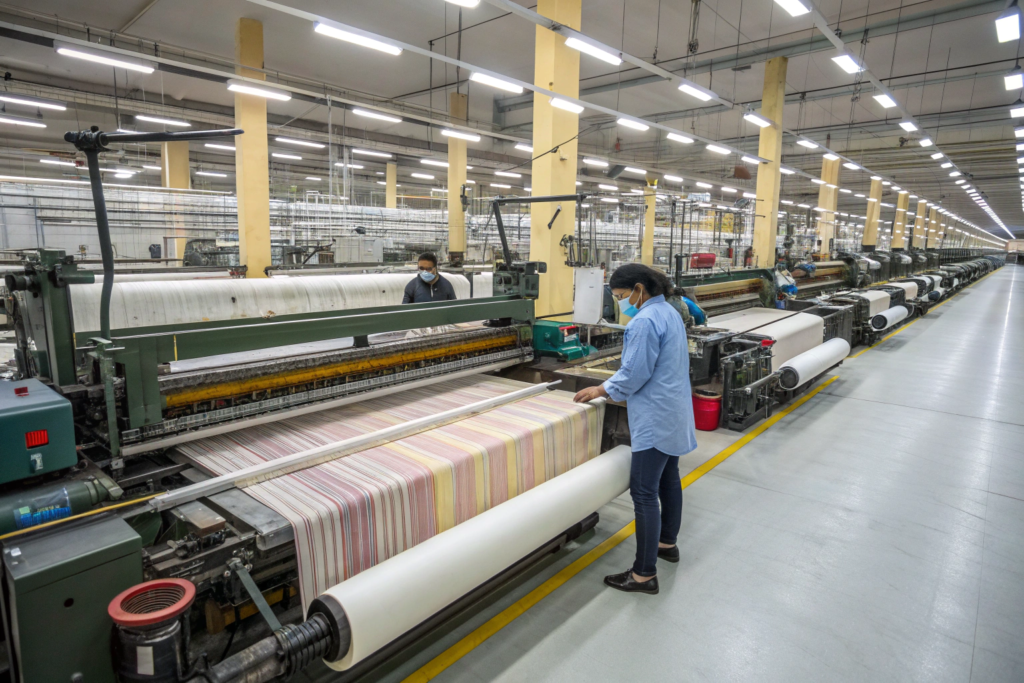
Jacquard weaving is slower than standard weaving because each pick (weft insertion) requires individual thread selection. A simple plain weave might run at 500-800 picks per minute. A complex jacquard might run at 100-200 picks per minute. Production time depends directly on design complexity, fabric width, and total meters ordered.
How do minimum order quantities work for custom jacquard?
Minimums vary widely based on design complexity and yarn availability. A relatively simple single-color jacquard using common yarns might have minimums of 500-1,000 meters. Complex multi-color designs requiring special yarn orders might require 3,000-5,000 meters to justify setup costs.
The reason for minimums is setup time. Programming the loom, threading the warp (which can take days), and tuning the machine for your specific design are fixed costs regardless of production volume. Those costs must be spread across your order. Shorter runs mean higher per-meter costs.
For designers needing smaller quantities, we offer several options. Stock service jacquards can be ordered in as little as 100 meters. Sampling quantities can be woven at higher per-meter rates. And we sometimes combine multiple small orders using similar yarn bases to share setup costs. In 2023, we helped three different designers coordinate orders using the same warp setup but different weft colors, minimum order quantities for custom jacquard fabric reducing each designer’s minimum by 60%. Creative scheduling solves many MOQ challenges.
What factors cause jacquard pricing variations?
Price depends on several variables: yarn quality and fiber content, design complexity (more weave changes means slower weaving), number of colors (more weft changes means slower production), total meters (spreading setup costs), and finishing requirements.
A basic cotton jacquard with simple geometric pattern might cost $8-12 per meter in moderate quantities. A luxury silk jacquard with complex photographic imagery and multiple colors might reach $50-80 per meter or more. The range is enormous because the product possibilities are enormous.
Finishing adds another cost layer. Some jacquards need only basic cleaning and heat setting. Others require specialized finishing—brushing for softness, coating for performance, washing for shrinkage control. Each finishing step adds time and cost.
For a Parisian couture client in 2022, we produced a jacquard using custom-dyed silk yarns, 12 colors, and a complex double-cloth structure. The fabric cost over $100 per meter, but each garment retailed for $15,000. The factors affecting custom jacquard fabric pricing client understood that exceptional fabric justified exceptional pricing. For her customers, the fabric was part of the value proposition, not just a cost to minimize.
How do you ensure quality in custom jacquard production?
Quality control for jacquard requires attention to both technical specifications and aesthetic consistency. Unlike plain fabrics where defects might be hidden, jacquard patterns make every flaw visible. Rigorous QC throughout production protects your investment.
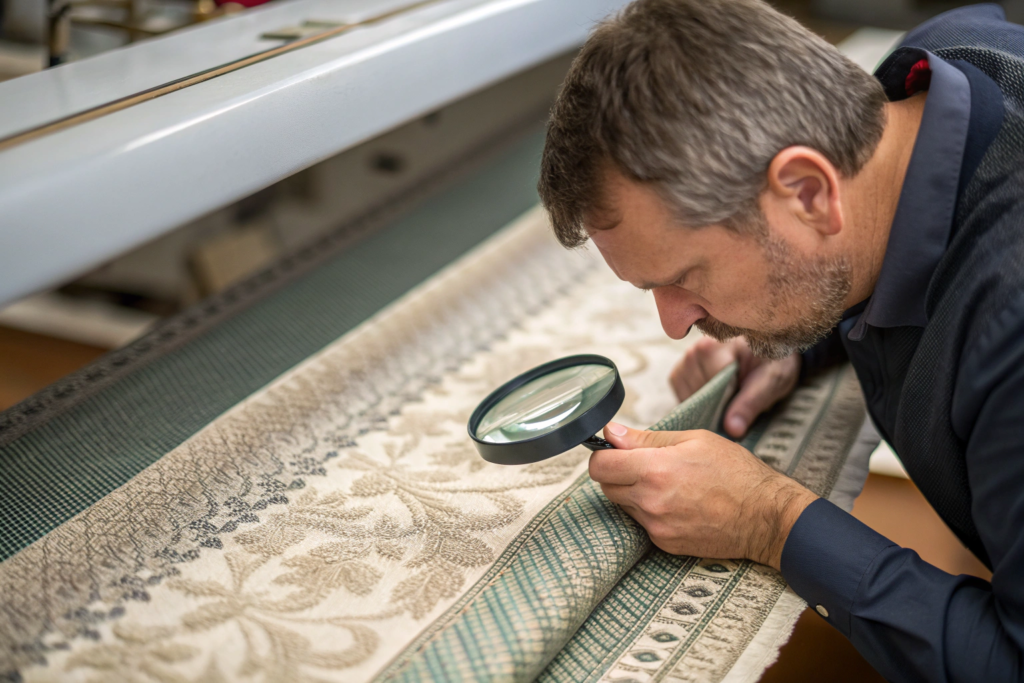
At Shanghai Fumao, every production meter passes through multiple inspection points. During weaving, operators monitor for broken threads, pattern errors, and tension variations. After weaving, fabric moves to our CNAS-accredited lab for testing—dimensional stability, color fastness, strength, and appearance. Finally, each roll is inspected on lighted tables, with every defect flagged and graded.
What defects are specific to jacquard weaving?
Jacquard introduces defect types not seen in simpler fabrics. Pattern misregistration happens when warp and weft alignment shifts, distorting the design. Float errors occur when threads don’t interlace correctly, creating long loose threads. Color bleeding can happen at pattern boundaries if weft changes aren’t clean.
We also check for "stop marks"—visible lines where the loom stopped and restarted, slightly changing tension. Modern looms minimize these, but they can still appear in sensitive areas. Our inspectors know exactly where to look.
For a German automotive client requiring jacquard for luxury car interiors, we implemented 100% inspection with automated optical scanning. The system photographed every meter and compared patterns to the digital master, flagging any deviation larger than 0.5mm. The jacquard fabric quality control standards automotive industry demands perfection, and this system delivered. That project taught us that different markets have different quality expectations—and we adapt our processes accordingly.
How do you handle defects when they occur?
Despite best efforts, defects happen. The question is how they’re handled. Good suppliers have clear grading systems and will never ship first-quality fabric with significant defects. Instead, defects are flagged, graded, and either removed or sold as seconds with full disclosure.
We maintain "defect maps" for every production roll—a diagram showing exactly where each flaw appears. Clients cutting garments can plan layouts to avoid defective areas. This transparency builds trust even when problems occur.
In 2021, a production run for a major US brand developed unexpected color variation across rolls. Our lab traced it to a dye lot inconsistency from our yarn supplier. We quarantined all affected fabric, notified the client immediately, and reproduced the entire order at our expense. The handling defects in custom fabric production client later told us our honesty saved the relationship—they’d had other suppliers hide problems, leading to garment failures. We lost money on that order but kept a client who now orders over $2 million annually.
Conclusion
Creating custom jacquard woven fabric is one of the most rewarding processes in textiles. It transforms artistic vision into physical reality, builds beauty into the very structure of cloth, and produces fabrics that can last for generations. But it requires partnership between designer and mill, patience through sampling, and attention to details that simpler fabrics ignore.
At Shanghai Fumao, we’ve spent over 20 years mastering jacquard production. Our R&D team works with designers to translate artwork into weavable structures. Our yarn department sources the finest materials from around the world. Our weavers operate modern electronic jacquard looms with precision and care. And our quality team ensures every meter meets the highest standards. We’ve produced jacquard for fashion weeks, for luxury hotels, for automotive interiors, and for family heirlooms. Each project taught us something new.
If you’re ready to explore what custom jacquard can do for your collection, reach out to our Business Director, Elaine. She can walk you through our capabilities, discuss your design ideas, and help you understand the timeline and investment required. Whether you need a few hundred meters for a capsule collection or thousands for global distribution, we have the expertise and capacity to deliver. Contact Elaine at [elaine@fumaoclothing.com]() to start your jacquard journey. Let’s weave something extraordinary together.