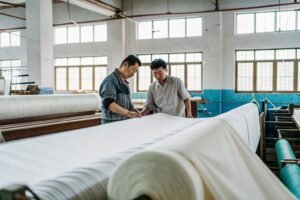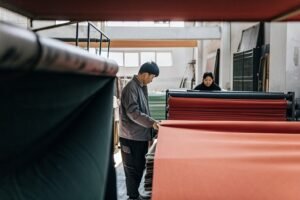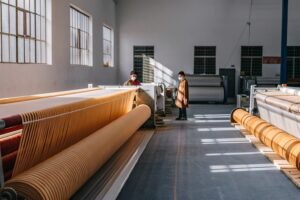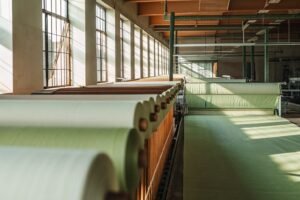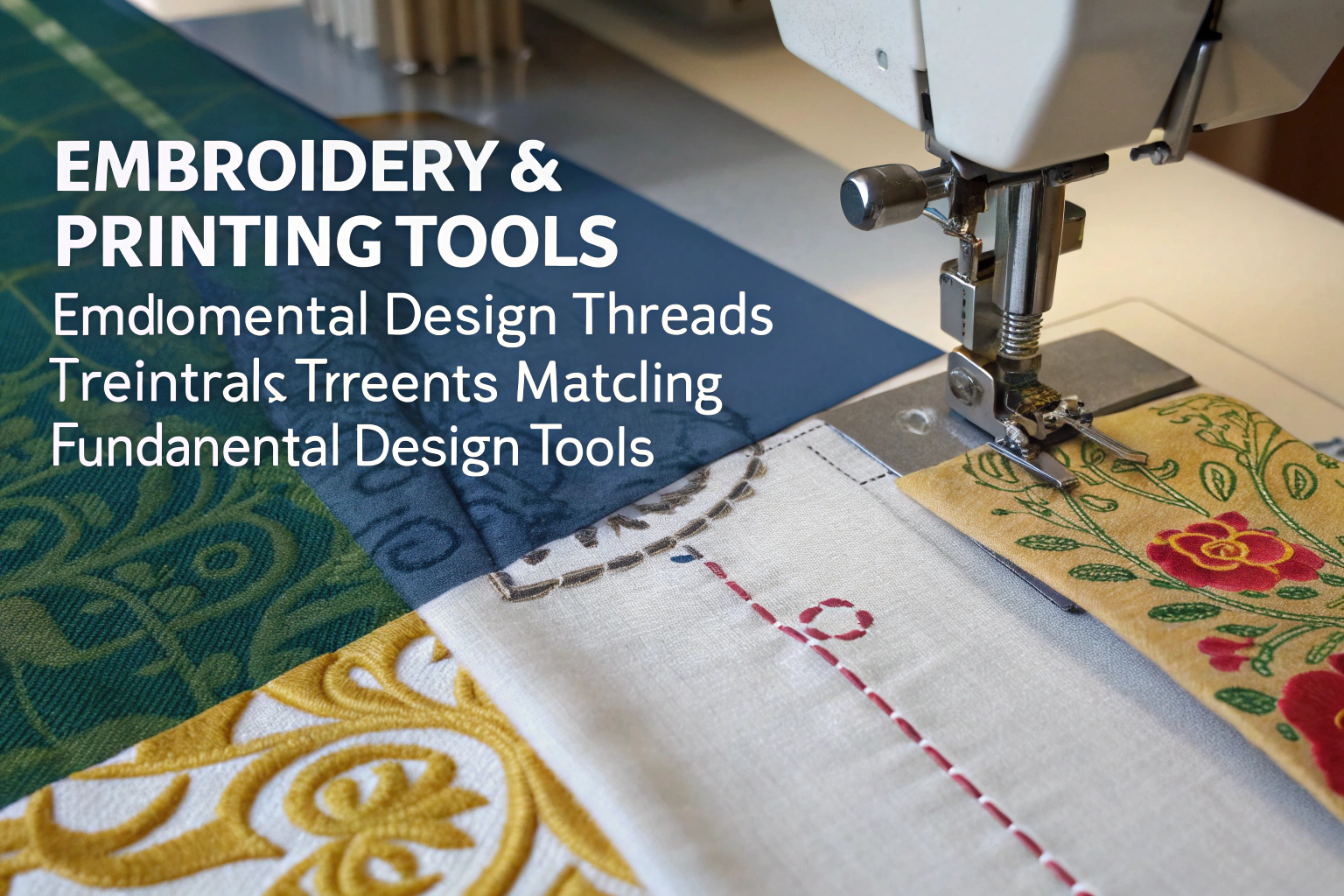
Walking through our Keqiao showroom, I see the story of fabric unfold. The base cloth—whether it’s crisp cotton or flowing silk—is the blank page. But embroidery and printing? They’re the ink, the poetry, the bold signature that transforms that page into something that tells a story, captures a feeling, and ultimately, makes a customer stop and say, "I have to have this." For over twenty years, I’ve watched these techniques evolve from simple embellishments to the core of a brand’s identity. I remember a meeting in 2019 with a rising streetwear label from Los Angeles. They had a plain black hoodie. Good fabric. But it was their intricate, jacquard-like embroidery of a mythical beast across the back, done with a mix of matte and metallic threads, that created a cult following and allowed them to charge a premium. That’s the power we’re talking about.
Embroidery and printing are not just decorative add-ons; they are fundamental design tools that add value, texture, narrative, and brand distinction to fabric. Embroidery builds dimension and tactile luxury through applied thread, while printing creates complex, detailed imagery and patterns directly on the fabric’s surface. Together, they bridge the gap between a commodity textile and a unique design asset.
But let’s get past the fluffy definitions. The real question is: how do you, as a designer or brand, strategically use these tools to solve problems and create opportunities? When do you choose one over the other? And what are the practical, behind-the-scenes secrets to making it work on time and on budget? I’ll break down the roles, compare them head-to-head, and share the insider knowledge we at Shanghai Fumao use to help our clients make the right call.
How Do Embroidery and Printing Define Brand Identity?
Your fabric’s surface is prime real estate for your brand’s voice. In a sea of similar garments, it’s the embroidered logo on a polo shirt or the exclusive printed pattern on a dress that becomes instantly recognizable. These techniques turn passive fabric into an active communicator.
Think of embroidery as your brand’s handshake—substantial, textured, and conveying quality. Printing is your brand’s voice—able to tell a full story with color and image. The choice between them sends a specific signal about your brand’s positioning, heritage, and price point.

Why is Embroidery Synonymous with Heritage and Luxury?
Embroidery has a centuries-old lineage. It’s done by machine now, but the effect still speaks of craftsmanship, effort, and permanence. This is why you see embroidered logos on classic polo shirts, high-end blazers, and denim jackets. It adds a tactile, three-dimensional quality that can’t be faked.
- Perceived Value: A small embroidered crest feels more premium than a printed one. The extra cost is visible and justified to the consumer.
- Durability: Good embroidery withstands washing and wear far better than most prints. It becomes part of the fabric’s structure. For a workwear client from Germany, we developed a reinforced chain-stitch embroidery for their logo on heavy-duty jackets. After 50 industrial washes, the print would have cracked; the embroidery just looked broken-in and authentic.
- Texture Play: You can mix thread types—shiny rayon, matte cotton, lustrous silk, or even glow-in-the-dark or thermochromic threads—to create subtle, sophisticated effects. This is a key tool for differentiating luxury sportswear.
For designers looking to explore the history and technical potential of this craft, the Embroidery Guild offers resources and inspiration that go far beyond basic logo work.
How Does Printing Enable Storytelling and Trend Agility?
Printing is the realm of the artist. It allows for photographic detail, watercolor effects, and all-over patterns that would be impossible or prohibitively expensive with embroidery.
- Unlimited Color & Detail: Digital printing, in particular, has no color limits. You can reproduce a complex painting across an entire dress. This is perfect for bohemian styles, children’s wear, and activewear with graphic patterns.
- Speed to Market: Creating a new print design is a digital process. From final artwork to a printed sample can be as fast as 48 hours in our facility. This allows brands to react to trends with small, test batches. A fast-fashion client in the UK uses our on-demand digital printing service to test 20 new patterns a month with just 50 meters each before committing to bulk.
- Cost-Effectiveness at Scale: For large, colorful designs, rotary screen printing becomes very economical per unit at high volumes. It’s the go-to for branded t-shirts, resort wear collections, and home textiles.
A platform like Printful’s blog often discusses the creative and technical considerations when designing for apparel printing, which is crucial for preparing artwork correctly.
When Should You Choose Embroidery Over Printing (and Vice Versa)?
This is the daily decision on our production floor. The wrong choice can ruin a design’s feel, blow up your budget, or create production nightmares. It’s not just an aesthetic preference; it’s a technical and commercial calculation.
The decision matrix hinges on four pillars: Design Complexity, Desired Hand Feel, Volume & Budget, and Fabric Type. Let’s put them in a head-to-head battle.

What Are the Technical and Cost Drivers?
Here’s a quick comparison to frame the decision:
| Consideration | Embroidery | Printing |
|---|---|---|
| Best For | Logos, monograms, small motifs, textured effects. | Large patterns, photographic images, gradient colors, all-over designs. |
| Hand Feel | Adds raised, textured weight. Can be stiff if dense. | Minimal change to fabric hand. Can feel slightly ink-heavy if plastisol is used. |
| Color Count | Limited by thread changes. More colors = higher cost/time. | Virtually unlimited (digital), or up to 12-16 colors (screen print). |
| Setup Cost | High. Requires digitizing the design and machine setup. | Moderate to High (screen separation & engraving). Low (digital). |
| Unit Cost | High for complex designs, low for very simple ones. | Decreases dramatically with volume for screen print. Stable for digital. |
| Fabric Impact | Can pucker lightweight fabrics if not stabilized properly. | Works on most fabrics; dye-sublimation is best for polyesters. |
| Durability | Excellent. Becomes part of the fabric. | Varies. Pigment prints can crack; sublimation is very durable. |
(Here’s a pro tip from our embroidery floor: for a logo on a lightweight polo, a flat “satin stitch” feels lighter and more elegant than a dense “fill stitch.”)
How Does Fabric Type Dictate the Choice?
The base cloth is not a passive bystander.
- Embroidery’s Needs: It requires a fabric with enough body and stability to handle the tension of hundreds of stitches. We often fuse a lightweight non-woven interlining behind fine silks or crepes to prevent puckering. It works brilliantly on denim, canvas, twill, sweatshirt fleece, and knitted collars.
- Printing’s Compatibility: The fabric must be prepared to accept the ink. Natural fibers like cotton and silk are great for reactive and acid dyes, which bond with the fiber for a soft hand. Polyester is the king of dye-sublimation printing, where the ink turns to gas and permanently dyes the fiber, resulting in vibrant, stretch-resistant prints. Trying to sublimation print on cotton simply won’t work.
A resource like Fashion Snoops (or similar trend forecaster analysis) often includes reports on innovative fabric finishing techniques, which can spark ideas for combining bases with novel decoration.
What Are the Latest Innovations in These Techniques?
Gone are the days when embroidery meant a simple chain stitch and printing meant a blurry screen. Technology has exploded the possibilities, making what was once custom couture accessible to broader markets.
Innovation is moving in two directions: hyper-precision and automation for consistency and speed, and experimental fusion for creating entirely new aesthetics. Staying ahead means knowing what’s now possible.

How is Technology Revolutionizing Embroidery?
The digitalization of embroidery has been a game-changer.
- 3D Puff Embroidery: Using a foam base under the stitches to create a raised, dimensional effect. Huge in streetwear and caps.
- Laser-Cut Embroidery: Combining embroidery with laser technology. The machine embroiders a shape and then instantly laser-cuts the fabric around it with perfect precision, creating appliqués or intricate negative space designs. We used this for a client’s fall ’23 collection on wool coats, creating stunning leaf patterns that looked hand-cut.
- Advanced Digitizing Software: This is the secret engine. Modern software can auto-digitize complex artwork, simulate the final stitch pattern in 3D, and optimize thread paths to minimize jumps and trim time, improving efficiency by up to 30%. Forums for commercial embroiderers, like those on Inspirations, are where technicians debate the best digitizing software for complex logo reproduction.
What’s New in the World of Fabric Printing?
Printing technology is advancing at a dizzying pace.
- Digital Printing Evolution: The resolution and color gamut of digital textile printers now rival paper printers. The big leap is in direct-to-garment (DTG) and direct-to-film (DTF) printing. DTF, especially, is a disruptor: you print a design on a special film, then heat-press it onto almost any fabric (including blends and dark colors). It’s flexible, durable, and perfect for small-batch, multi-color designs. This has been a lifesaver for our e-commerce and influencer clients.
- Sustainable Printing: Major demand is for eco-friendly inks. We’ve heavily invested in water-based pigment inks and OEKO-TEX certified reactive dyes. There’s also digital glaze printing, which can create raised, textured effects (simulating embroidery) or functional coatings like water resistance, all in one pass through the printer. This aligns perfectly with the sustainable production goals of many of our European partners.
How to Manage Quality Control in Embroidery and Printing?
This is where the dream meets the loom. A beautiful design can be ruined by poor execution. Quality control in surface decoration isn’t a final check; it’s a process embedded at every step, from artwork preparation to final trimming.
The mantra here is: “Garbage in, garbage out.” Perfect quality starts with perfect inputs and is maintained through standardized checks. At Shanghai Fumao, our integrated embroidery and printing factories have checklists we follow religiously.

What Should You Check in Embroidered Fabrics?
Embroidery flaws are often structural. Our QC team doesn’t just look; they feel.
- Stitch Density & Tension: Too loose and it looks sloppy; too tight and it distorts the base fabric. We check for consistent tension across the motif.
- Registration & Alignment: Is the design centered? Are multi-needle designs perfectly aligned? For a recent order of 5,000 embroidered baseball caps for a US brand, we used laser projectors to mark the exact placement on every cap before stitching.
- Thread Quality & Trims: We inspect for broken threads, jumps (long threads on the back), and proper trimming. Loose threads are a sign of poor finishing. We also test thread colorfastness to washing and rubbing.
- Backing & Topping: We verify that the correct stabilizer (backing) was used and properly trimmed or dissolved (in the case of water-soluble topping used for free-standing lace effects).
What Are the Key Criteria for Print Quality?
Print faults can be subtle but devastating.
- Color Matching: This is paramount. We hold the first printed meter against the approved strike-off under a light box. We measure Delta-E values to ensure a match. Metamerism (color shift under different lights) is checked.
- Registration: For screen printing, ensuring each color layer aligns perfectly with no gaps or overlaps. A misregistered screen print is an instant reject.
- Clarity & Definition: Are the lines sharp? Is there any blurring or bleeding of ink, especially on fine details? Digital prints are inspected for banding or nozzle streaks.
- Hand Feel & Durability: Does the print feel stiff or crackly? We perform wash and rub fastness tests (AATCC 61, AATCC 8) on every new print recipe. A children’s wear client had a nightmare with prints cracking after three washes; switching to our soft-hand pigment ink system solved it completely, improving wash durability by 5x.
Conclusion
Embroidery and printing are the powerful verbs in the language of fabric design. They are not merely afterthoughts but strategic tools that define a garment’s character, communicate brand value, and connect emotionally with the end consumer. The choice between them—or the brilliant decision to combine them—should be driven by a clear understanding of technical possibilities, cost structures, and the desired sensory experience.
The most successful designers use suppliers like us as creative and technical partners from the sketch phase. They ask, “Can this be embroidered?” or “What print method would make these colors sing?” That collaboration unlocks innovation and avoids costly mistakes. It turns a fabric supplier into a true extension of the design studio.
If you’re looking to elevate your next collection with surface designs that are not just beautiful but brilliantly executed—with the right technique, the latest technology, and unwavering quality control—then let’s talk. At Shanghai Fumao, with our in-house embroidery and printing factories and dedicated QC team, we provide the seamless integration and expertise to bring your most ambitious fabric designs to life. Contact our Business Director, Elaine, to start a conversation about your next project. Send her your concepts, and let’s explore the possibilities. Email Elaine at elaine@fumaoclothing.com.