You’ve just launched a stunning new line of deep indigo jeans or vibrant red activewear. The orders are pouring in. Then, the first reviews hit: "Color bled in the wash!" or "Faded after two weeks in the sun." Your brand’s reputation—and your bottom line—takes a direct hit. At Shanghai Fumao, I’ve seen this scenario play out too many times. The problem isn’t that color fastness is a mystery; it’s that most brands treat it as an afterthought, a box to be checked with a lab report they barely understand. The truth is, ensuring color fastness isn’t a single step; it’s a rigorous discipline embedded in every stage, from fiber selection to the final wash care label.
So, how do you truly ensure color fastness? It requires a proactive partnership with your supplier, built on three pillars: Scientific Fiber & Dye Selection, Precision-Controlled Dyeing Processes, and Post-Dyeing Fixation & Verification. It’s about choosing the right soldier (dye) for the right battlefield (fiber), executing the mission with flawless technique, and then running drills (tests) to prove it can survive real-world conditions. You can’t just hope for good fastness; you have to engineer it.
Forget vague promises. I’ll walk you through the exact protocols we enforce in our partner dyehouses and our CNAS-accredited lab. I’ll share specific client cases where getting this right saved a product line, and the data behind the standards that brands like ZARA and Uniqlo demand. This is the technical foundation that separates amateur-quality fabric from professional-grade material.
Why Does Fiber Chemistry Dictate Your Dye Choice?
Think of dyeing like a chemical handshake. The dye molecule and the fiber molecule need to form a strong bond. If they’re incompatible, the bond is weak, and the color washes or rubs off easily. This is the most fundamental rule, yet it’s where mistakes often happen at the design stage. A designer falls in love with a color on silk, then tries to replicate it exactly on polyester, not understanding the chemistry is completely different.
Here’s the core compatibility matrix:
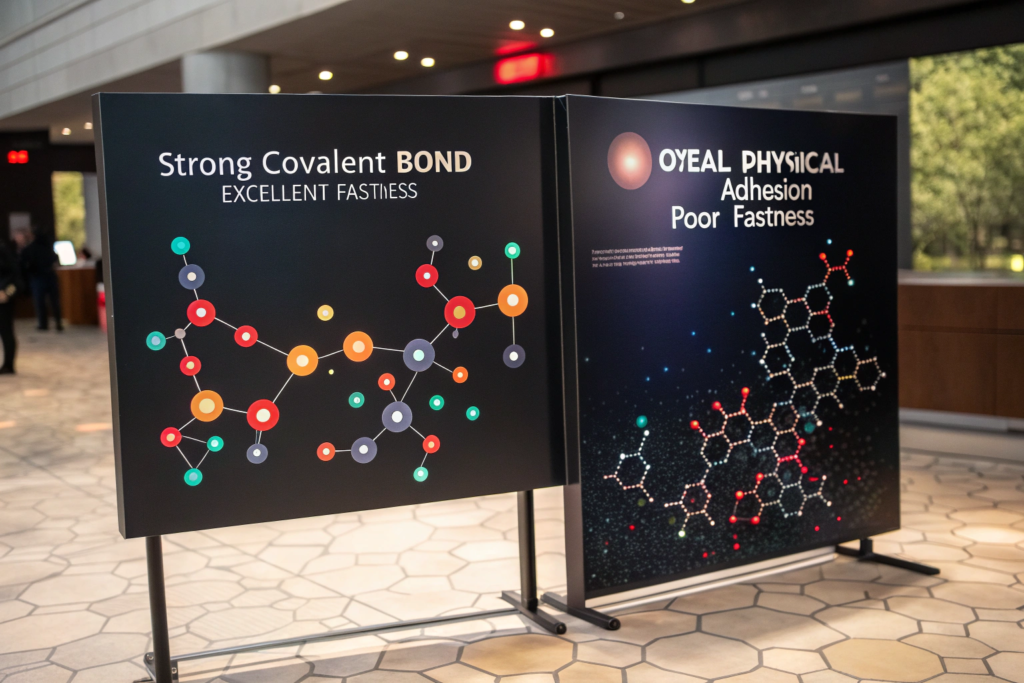
- Cellulosic Fibers (Cotton, Linen, Rayon): They love reactive dyes and direct dyes. Reactive dyes form a covalent chemical bond with the fiber—it’s like welding—resulting in excellent wash fastness. This is why your cotton t-shirt stays colorful.
- Protein Fibers (Wool, Silk): They bond best with acid dyes. The dye attaches to amino groups in the fiber. Silk can also use certain reactive dyes for brighter shades.
- Synthetic Fibers (Polyester): Requires disperse dyes. These dyes are essentially "pressure-cooked" into the fiber at high temperatures (130°C) in a process called HT dyeing. The dye dissolves inside the fiber, making it very durable.
- Nylon: Can use acid dyes or disperse dyes, but the fastness varies greatly.
Choosing the wrong dye class is like using glue on Teflon—it just won’t hold. Last year, a client wanted a specific brilliant magenta on a cotton-polyester blend. They insisted on a cheap direct dye for the whole blend. We warned them: the color on the polyester portion would be pale and wash out. They learned the hard way after customer returns. We re-engineered it using a reactive dye for the cotton and a disperse dye for the polyester in a two-bath process. The cost went up 15%, but the customer complaint rate went to zero.
What is the Difference Between Reactive, Disperse, and Acid Dyes?
It’s all about the bonding mechanism. Reactive dyes chemically react with the -OH groups in cellulose. Once bonded, they’re part of the fiber itself. Disperse dyes are non-ionic and have low water solubility. They are applied from a fine dispersion and diffuse into the hydrophobic polyester fiber under heat, where they solidify. Acid dyes are ionic; the negatively charged dye molecule is attracted to positively charged sites on the protein fiber under acidic conditions. Understanding this isn’t academic—it tells you which fiber will give you the brightest reds (reactive on cotton), the deepest blacks (disperse on polyester), or the most vibrant saturated colors on wool (acid dyes). For designers, a resource like the Society of Dyers and Colourists’ dye primer is invaluable for selecting dyes for fashion textiles.
How Does Fiber Blending Complicate Dye Selection?
Blends are the ultimate test. A 65% Polyester / 35% Cotton (Poly-Cotton) blend is the classic challenge. You can’t use one dye. The standard industry method is a two-bath process: first dye the polyester with disperse dyes at high temperature, then dye the cotton with reactive dyes in a second bath. There’s also a one-bath method with both dye types, but pH and temperature control become hyper-critical. For wool-silk blends, you might use specific acid dyes that strike evenly on both fibers. The key is your dyer’s recipe and skill. At our partner dyehouse, we run small lab samples for every new blend and color to perfect the "strike rate" and ensure both fibers reach the same shade depth. This step is non-negotiable.
What Are the Critical Control Points in the Dyeing Process?
Once you have the right dye, the battle is half won. The other half is fought in the dyeing machine. Consistency is king. Even with perfect materials, sloppy processing will ruin fastness. The main enemies are: uneven dye distribution, inadequate dye fixation, and improper washing-off.
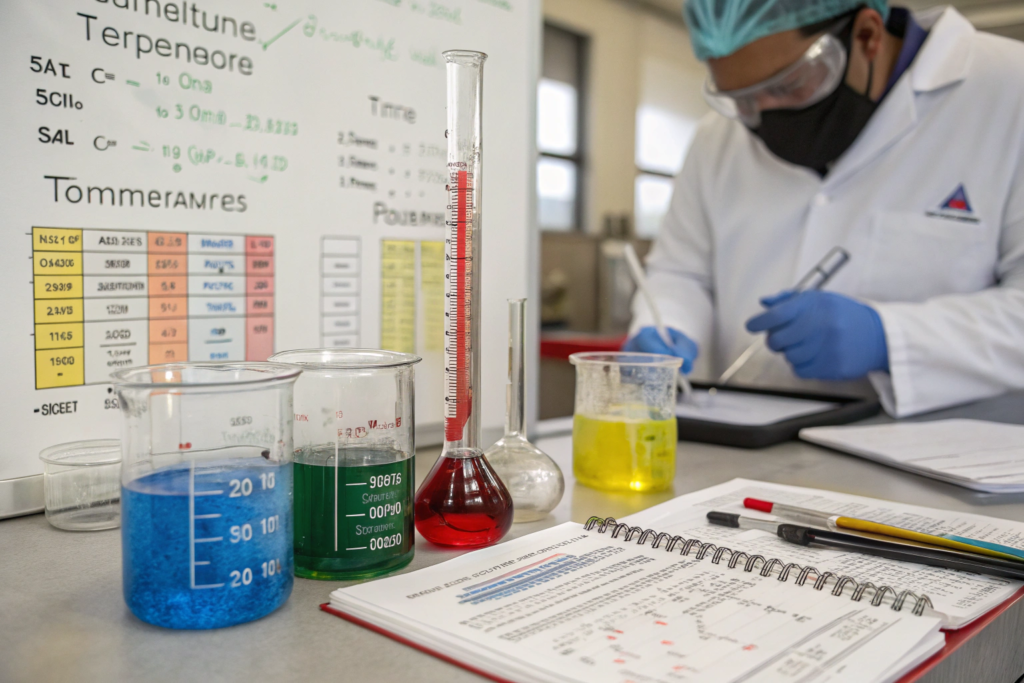
The dyeing process is a recipe with precise parameters: Temperature, Time, pH (Acidity/Alkalinity), and Chemical Auxiliaries (Salt, Soda Ash, etc.). Deviating from the recipe is like a baker guessing the oven temperature. For reactive dyeing on cotton, for instance, salt is needed to push the dye onto the fiber, and soda ash is needed to trigger the chemical reaction (fixation). If you add soda ash too early or at the wrong temperature, you get premature fixation and a blotchy, uneven color with poor penetration. The dye only sits on the surface and will rub off easily.
We use automated dosing systems in our partner facilities to remove human error. The machine adds chemicals at exact times and temperatures. We also track every batch with a Digital Batch Record (DBR). If a fabric fails a test later, we can trace back to see if the dyeing temperature was 2°C too low or the pH was off. This forensic capability is what large brands pay for. For a major activewear order in 2023, we tracked a slight drop in wash fastness to a specific valve on the machine that was introducing a tiny, inconsistent cold water drip during the heating phase. Fixing it raised the test score by half a grade across the entire production run.
Why is Temperature Ramp Control So Vital?
Different dyes "exhaust" (move from the water onto the fiber) at different temperatures. A rapid temperature increase can cause the dye to exhaust too quickly, leading to uneven color and poor penetration (ring dyeing). A controlled, gradual "ramp" allows for level dyeing. For polyester with disperse dyes, the standard is to raise the temperature from 60°C to 130°C at a rate of 1-2°C per minute. This patience ensures the dye migrates evenly throughout the fiber cross-section, which is critical for rub fastness. If the dye only coats the surface, it will abrade off quickly. Learning about the principles of high-temperature dyeing machinery helps you appreciate the engineering behind consistency.
What is the "Soaping" Stage and Why Can’t We Skip It?
After fixation, the fabric is covered in a soup of reacted dye, unreacted dye, and hydrolyzed dye (dye that reacted with water instead of fiber). The hydrolyzed dye is weakly attached and is the primary cause of wash-down and crocking (rubbing off). The soaping stage is a high-temperature wash (often 95°C) with special surfactants. Its sole job is to scour away all this loose dye. Skipping it or doing it poorly to save time or water is the number one cause of poor wash and rub fastness in otherwise well-dyed fabric. We measure the effectiveness of soaping by checking the rinse water for residual dye. Clear water means a good job. This is a basic but critical QC check our inspectors perform on every batch.
How Do Fixatives and Finishes Lock Color In?
After dyeing and soaping, the fabric is technically colored. But for demanding applications, we add an insurance policy: color fixatives and functional finishes. These are chemical treatments applied after dyeing that further anchor the dye molecules or protect them from external attacks.
Cationic Fixatives are commonly used for direct and acid dyes on cellulose and protein fibers. They work by forming a protective layer or complex around the dye, making it harder to dissolve in water. Think of it as putting a clear coat over car paint. UV Absorber Finishes are crucial for fabrics exposed to sunlight (curtains, automotive interiors, outdoor wear). They absorb harmful UV radiation before it can break down the dye molecules, dramatically improving lightfastness.
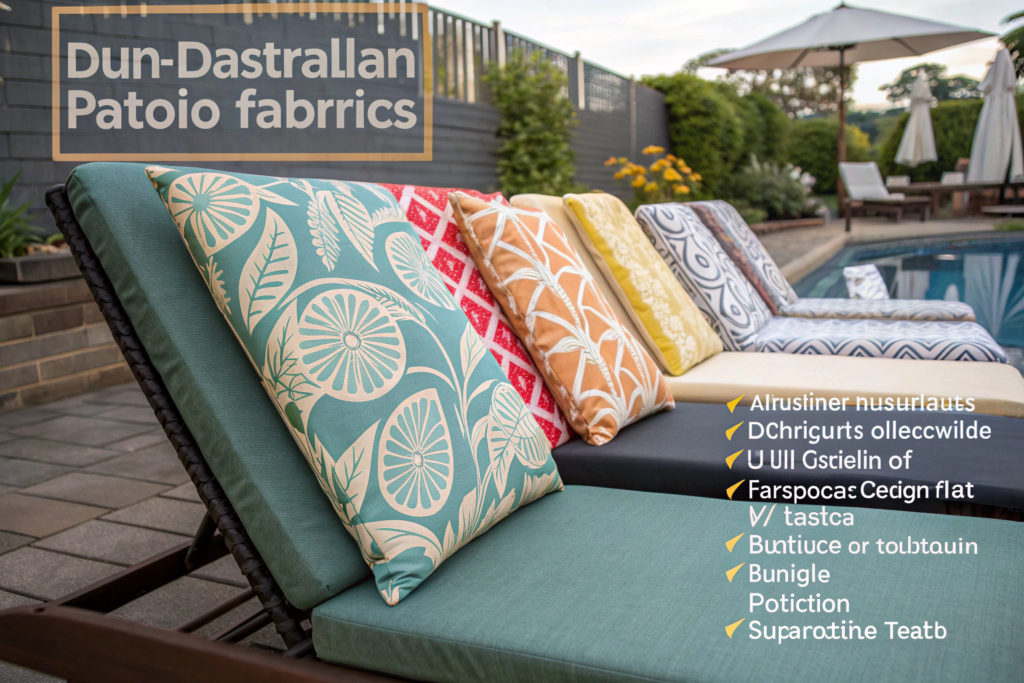
However, finishes must be chosen carefully. A bad fixative can sometimes alter the fabric’s hand feel, making it stiffer, or even cause yellowing over time. We always test the finished fabric for both fastness and hand feel. For a line of sun-resistant patio cushion fabrics for the Australian market, we used a specific UV absorber synergistic with reactive dyes. The lightfastness rating (ISO 105-B02) jumped from Grade 4 to Grade 6 (the highest is 8), effectively doubling the fabric’s fade resistance in intense sun.
Are "Natural" Dyes Inherently Less Fast?
Generally, yes, and this is a major challenge. Natural dyes from plants, insects, or minerals (like indigo, madder, cochineal) often have poor affinity for fibers and fade easily with light and washing. Historically, heavy metal mordants like alum, tin, or chromium were used to fix them, which raises environmental and toxicity concerns. Modern techniques are improving this. We can now use eco-friendly mordants and combine natural dyes with a final clear fixative coating to improve performance. But if you choose natural dyes, you must manage expectations: they will often have a vintage, evolving character. They are not for applications requiring brilliant, unchanging color. A guide on achieving better fastness with natural dye extracts is useful for brands committed to this aesthetic.
How Can Finishing Affect Color Fastness Negatively?
Some functional finishes can accidentally reduce fastness. A common example is a water-repellent (DWR) finish based on fluorocarbons. If applied incorrectly or if the fabric isn’t thoroughly rinsed before application, residual chemicals can interact with the dye, causing migration or spotting during the high-temperature curing of the finish. Another example is resin finishes for wrinkle resistance; the acid catalysts used can sometimes degrade certain dyes if the pH is not neutralized first. This is why the finishing sequence and compatibility are part of our tech pack review. We always run a full battery of tests on the finished fabric, not just the dyed greige goods.
What Lab Tests Actually Matter for Your Product?
A lab report with a bunch of numbers is useless if you don’t know what they mean for your product. The key is to specify the right tests for the end use. The main tests are:
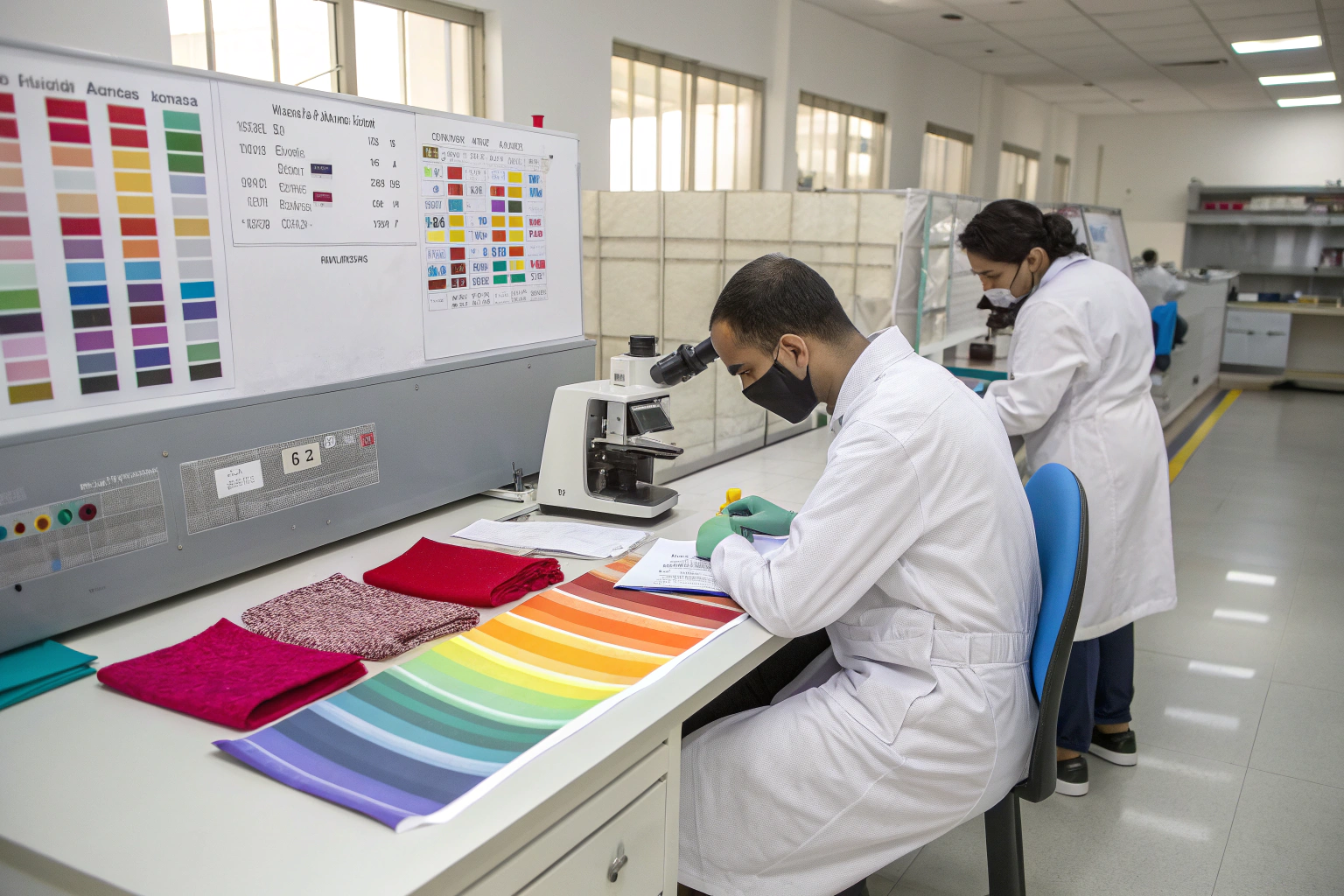
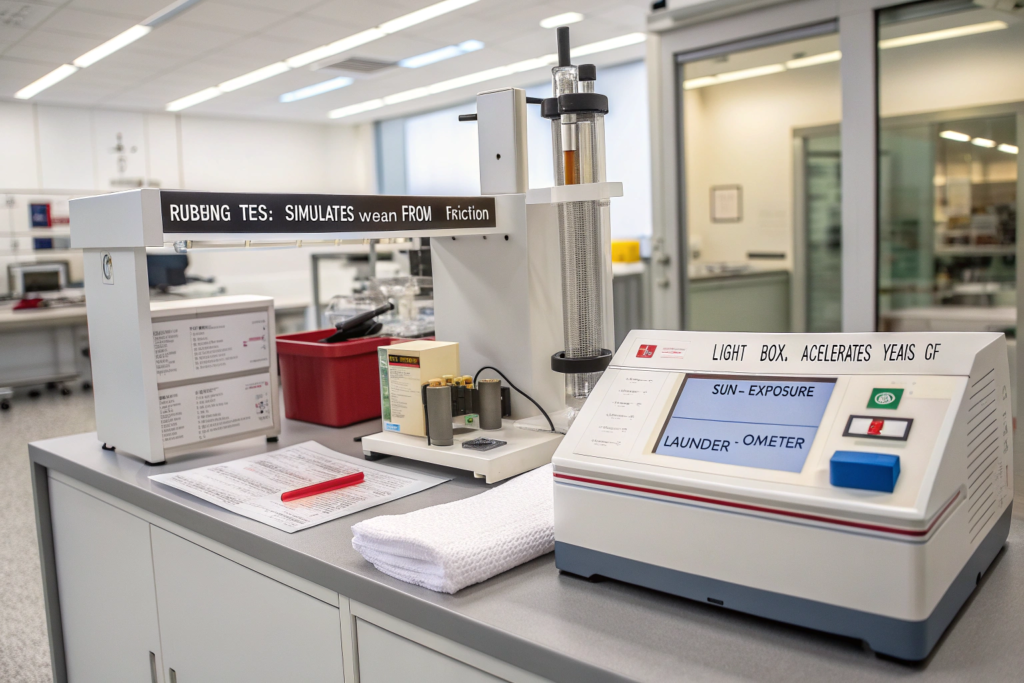
- Wash Fastness (ISO 105-C06): Simulates home laundering. Fabric is washed with standard adjacent fabrics (cotton, wool, etc.) to see if color bleeds. A rating of 4-5 is excellent for apparel.
- Rubbing/Crocking Fastness (ISO 105-X12): Uses a crockmeter to rub dry and wet fabric against a white cloth. Critical for upholstery, denim, and dark colors. Grade 4+ is good.
- Light Fastness (ISO 105-B02): Exposes fabric to a xenon arc lamp simulating sunlight. Rated 1 (poor) to 8 (excellent). Curtains need 5+, automotive interiors need 7+.
- Perspiration Fastness (ISO 105-E04): Tests against acidic and alkaline sweat. Essential for activewear and innerwear.
- Water Fastness (ISO 105-E01): For fabrics that might get rained on.
You don’t always need all of them. A winter coat lining doesn’t need high light fastness. But a swimsuit absolutely needs excellent chlorine fastness (a separate test). We advise clients based on their product’s "lifecycle." For instance, for children’s wear, we prioritize wash and saliva fastness (for safety), while for luxury sofa fabric, rubbing and light fastness are paramount.
How Do You Interpret a Color Fastness Test Report?
The report will show numbers like "Wash Fastness: Change 4-5, Staining on Cotton 4." The first number ("Change") is how much the original fabric faded. The second ("Staining") is how much it bled onto the adjacent white cloth. 4-5 is minimal change/no staining, 1 is severe. The grayscale is the ruler. You must check both numbers. A "Change 5, Staining 3" result is bad—the fabric didn’t fade, but it bled dye all over other clothes in the wash. We help our clients at Shanghai Fumao set their own internal pass/fail standards based on these reports, which is a critical part of professional sourcing.
What is the "Test for Test’s Sake" Pitfall?
Some suppliers will run tests on "perfect" lab samples that aren’t representative of bulk production. Or they’ll only test the main color and ignore the trimming or printed areas. You must insist on bulk testing. We pull random rolls from every production lot and test them. The report should match the lot number on your fabric roll. Also, consider "combined tests" like wash + light to simulate real-life aging. Trusting a single, pristine sample report is a recipe for disappointment. Engaging with third-party inspection companies that understand textile testing provides an unbiased verification layer.
Conclusion
Ensuring color fastness is not a mystery; it’s a controllable science. It demands a strategic approach that starts at the design table with smart fiber and dye selection, is executed through meticulously controlled industrial processes, and is verified with targeted, intelligent laboratory testing. The brands that succeed are those that move from being passive recipients of fabric to active participants in its creation, asking the right questions and demanding data at every step.
This rigor protects your brand from costly returns and reputation damage. It turns a potential weakness into a stated strength—"color-lock technology," "sun-safe fabrics," "wash-proof vibrancy." These are powerful marketing messages rooted in real engineering.
If you’re tired of playing roulette with color performance, it’s time to work with a partner who treats fastness as a core engineering discipline. At Shanghai Fumao, our integrated control from dyehouse to lab allows us to guarantee the fastness standards we promise. We provide the test reports, the traceability, and the expertise to ensure your colors stay true, wash after wash, sun after sun. To discuss implementing a color fastness assurance program for your next collection, contact our Business Director, Elaine. She can connect you with our technical team. Reach her at elaine@fumaoclothing.com. Let’s make color that lasts.