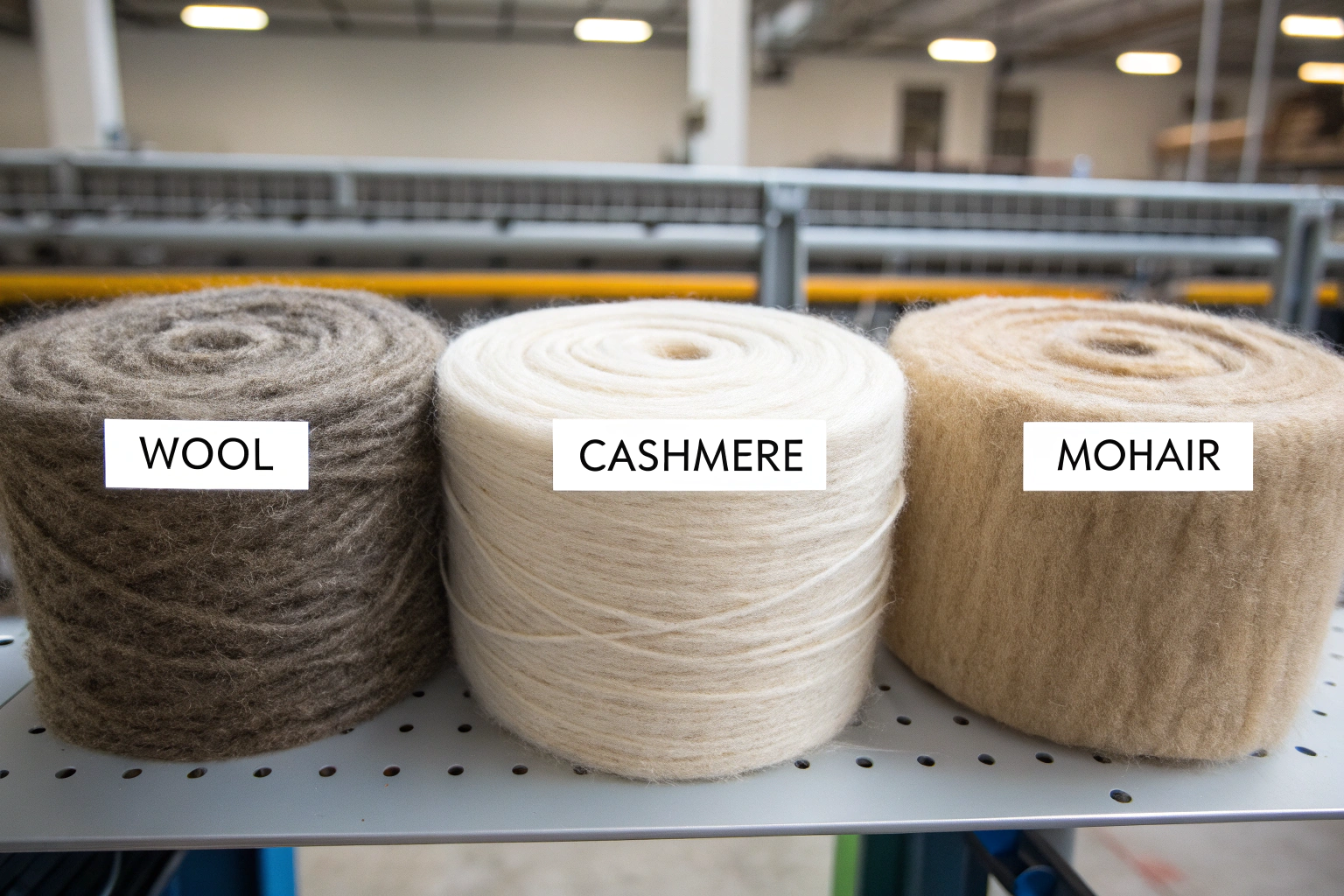
You’re designing a luxury winter collection. You want that exquisite touch, the kind that makes a garment feel like an investment. You hear "cashmere," "fine wool," and "mohair" thrown around, but when you get the quotes, your budget gasps. Cashmere is five times the price of a good merino wool. Is it worth it? Or is a luxurious mohair blend the secret sweet spot? I’ve worked with fibers for over twenty years at Shanghai Fumao, and I can tell you that the difference isn’t just about price or a vague sense of "softness." It’s about the specific biology of the animal, the unique structure of the fiber, and the ultimate performance you need from your final product. Choosing wrong can mean a sweater that pills terribly, a coat that’s too heavy, or a scarf that irritates sensitive skin.
So, what truly sets them apart? The core differences lie in their origin, fiber micron (thickness), scale structure, and resulting characteristics like warmth-to-weight ratio, durability, and luster. Think of it like choosing an engine: wool is the reliable all-rounder, cashmere is the high-performance luxury sports car, and mohair is the durable, shiny workhorse with incredible texture. Understanding these details is what separates an amateur selection from a professional one that justifies the cost to your customers.
Let’s cut through the marketing fluff. I’ll break down each fiber from the inside out, share real data from our lab, and give you the hard facts you need to make the right call for your next luxury knitwear or outerwear line. This knowledge is power, especially when you’re sourcing directly from specialists like us at the source.
How Do the Fiber Sources and Scales Affect Feel?
The journey of each fiber starts with the animal. Wool typically comes from sheep (like Merino, Shetland). Cashmere comes from the soft undercoat of the Cashmere goat, primarily in regions like Inner Mongolia and Mongolia. Mohair comes from the Angora goat. This origin dictates the first major difference: the fiber’s diameter and surface scale structure, which directly cause that "itchy" or "soft" feeling.
Under a microscope, wool fibers have pronounced, overlapping scales. These scales are like rough shingles on a roof. They help the fiber repel water and bind together during felting, but they can also catch and prick against sensitive skin, causing that scratchy sensation. Cashmere fibers have fewer, smoother, and more spaced-out scales. This makes the surface much smoother, which is why high-grade cashmere feels luxuriously soft against the neck. Mohair fibers have large, smooth, and barely overlapping scales. This gives mohair its signature smooth feel and, crucially, its incredible shine or luster, as light reflects evenly off the sleek surface.
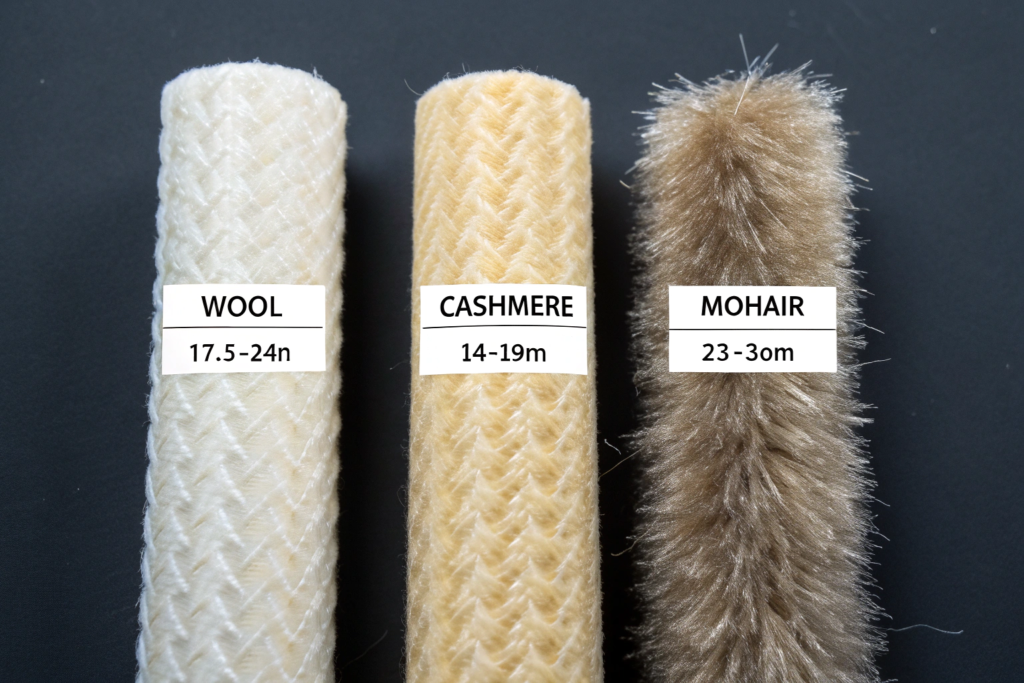
The micron count—the diameter of the fiber in microns (one-thousandth of a millimeter)—is the king of softness. Generally:
- Superfine Merino Wool: 17.5 – 19.5 microns (feels very soft)
- Cashmere: 14 – 19 microns (the finest, softest end)
- Adult Mohair: 23 – 30+ microns (can be softer in kid mohair, which is under 23μ)
A client once insisted on a "super soft" 100% wool for baby clothes. We recommended and sourced a 19-micron Superfine Merino wool, which worked perfectly. Using a standard 22-micron wool would have been a disaster for that sensitive application. The key is knowing not just the fiber type, but the specific micron count within that category.
Why Does Cashmere Feel Softer Than Most Wools?
It boils down to physics: finer fibers bend more easily. A cashmere fiber at 16 microns is significantly more flexible than a wool fiber at 21 microns. When thousands of these flexible fibers press against your skin, they conform and feel softer. The smoother scale structure of cashmere also reduces friction. Think of running your hand over sanded wood (cashmere) versus rough brick (coarse wool). However, not all cashmere is equal. The best, softest cashmere comes from the winter undercoat of goats in extreme cold, where the fibers are finest for insulation. This is why sourcing region matters. For a deep dive into fiber grading, the Cashmere and Camel Hair Manufacturers Institute provides excellent technical resources on cashmere fiber classification.
How Does Mohair’s Structure Create Its Signature Shine and Strength?
Mohair’s scales are so smooth and flat that the fiber is almost cylindrical. This cylindrical shape acts like a tiny prism, reflecting light uniformly along its length, which creates its renowned luminous sheen. This smooth structure also means the fibers have fewer points to catch and abrade against each other. Less abrasion means less pilling and more strength. In fact, mohair is one of the strongest natural fibers. We often blend a percentage of mohair (e.g., 20-30%) into wool sweaters. It adds a subtle halo of light, improves durability, and reduces pilling without drastically increasing cost. Understanding how to incorporate mohair for durability in knitwear is a classic technique for elevating a mid-range garment.
Which Fiber is Warmer and More Durable?
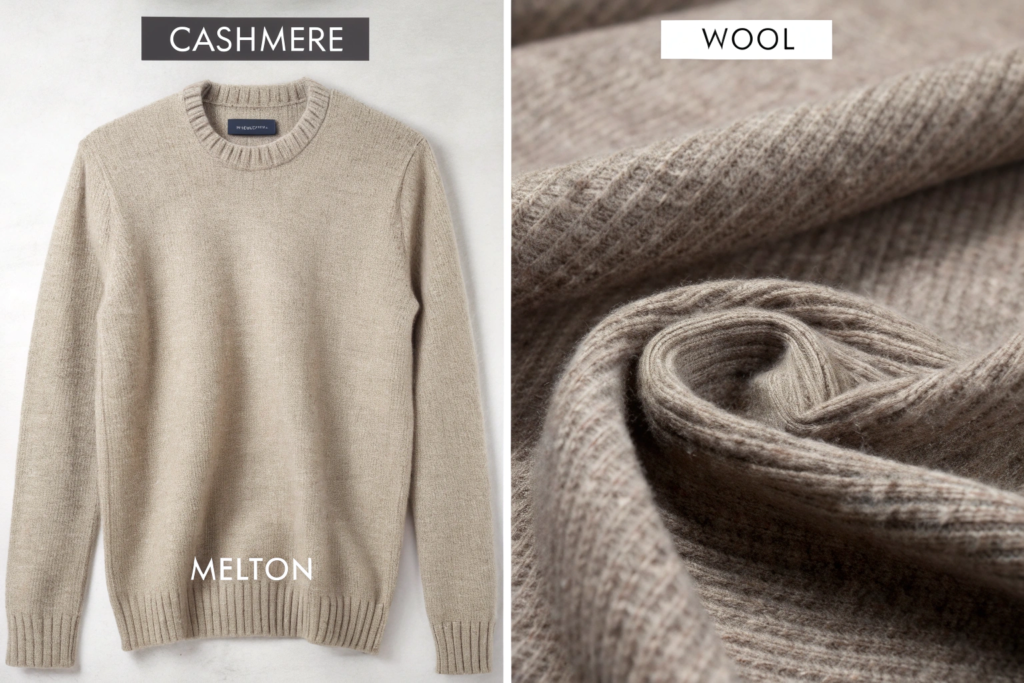
Warmth and durability seem straightforward, but with these fibers, there are trade-offs. The common belief is that cashmere is the warmest. This is both true and misleading. Cashmere provides the highest warmth-to-weight ratio. It has excellent insulating properties because the fibers are fine and can trap more still air per gram. A cashmere sweater can be lighter than a wool one but feel just as warm. However, for absolute, rugged warmth in a dense, wind-resistant fabric, a tightly woven heavyweight wool (like melton) can be superior.
Durability is where perceptions flip. Cashmere, being so fine, is more delicate. It is prone to pilling, especially in high-friction areas like underarms. Wool, with its scaly structure, is more resilient and can withstand more abrasion. Mohair, as mentioned, is the durability champion among the three. Its long, smooth, strong fibers resist wear and tear exceptionally well.
Here’s a quick performance snapshot from our experience:
| Feature | Wool (e.g., Merino) | Cashmere | Mohair |
|---|---|---|---|
| Warmth-to-Weight | High | Exceptional | Moderate (less air trapping) |
| Moisture Wicking | Excellent | Good | Good |
| Durability/Pilling Resistance | Good | Lower | Excellent |
| Elasticity/Recovery | Excellent | Good | Fair (can stretch out) |
This table is why blends are so powerful. A 70% wool / 30% cashmere blend offers better durability than pure cashmere with most of the softness and warmth. A 80% wool / 20% mohair blend adds luster and strength. (Here’s a tip from our knitting factory partners: a small percentage of nylon or polyester blended in can dramatically improve the durability of pure cashmere without affecting hand feel much.)
Is Cashmere’s Warmth Worth Its Delicate Nature?
It depends on the garment’s purpose. For a luxurious, lightweight scarf or a delicate sweater meant for elegant occasions, 100% cashmere is unbeatable. Its warmth without bulk is its superpower. For a daily-wear sweater or cardigan that needs to withstand bags, seatbelts, and frequent washing, a cashmere blend or a high-quality wool is a smarter choice. In 2023, we developed a 55% Cashmere / 45% Fine Wool yarn for a French boutique brand. Their feedback was that it hit the perfect balance: it felt luxurious enough to command a premium price, but was durable enough for their customers’ lifestyles, reducing returns. The brand’s product lifecycle analysis showed a 30% lower rate of pilling-related complaints compared to their previous pure cashmere line.
Why is Wool Often Considered the Most Versatile Performance Fiber?
Merino wool, in particular, is a marvel of natural engineering. Its scales and natural crimp allow it to wick moisture (sweat) away from the body better than cashmere or mohair. It’s also naturally odor-resistant and has excellent elasticity—it stretches and springs back beautifully, which is why it’s a favorite for socks and active base layers. This combination of warmth, breathability, and resilience is hard to beat. For brands looking for a true all-rounder that performs across seasons, investing in understanding the different grades of Merino wool for apparel is essential. It’s the reliable foundation of any serious outerwear or knitwear line.
How Do Care, Cost, and Ethical Sourcing Compare?
This is where business reality hits. You might want the softest cashmere, but your cost per unit and your customer’s care routine are critical factors. Cashmere requires gentle, often hand-washing or dry cleaning. Aggressive washing can lead to severe felting and shrinkage due to those fine scales migrating. Wool also requires care but is generally more forgiving, especially with modern superwash treatments that prevent felting. Mohair is relatively easy to care for due to its smooth surface, but its long fibers can "shed" initially.
Cost is the most dramatic differentiator. The scarcity of the raw material drives this. One Cashmere goat produces only about 150-200 grams of usable undercoat per year. It takes the hair of about 4-6 goats to make one sweater. In contrast, a sheep can produce 3-5 kg of fleece annually. Mohair goats produce more than cashmere goats but less than sheep. This supply constraint, combined with high demand, places cashmere at the top of the price pyramid.
Ethical sourcing is now non-negotiable. The conversation has moved beyond just fiber quality to animal welfare and environmental impact. Responsible cashmere sourcing involves supporting practices that prevent overgrazing and ensure humane shearing. The Good Cashmere Standard (GCS) and similar certifications are becoming important. For wool, the Responsible Wool Standard (RWS) is key. Mohair has its own ethical initiatives. At Shanghai Fumao, we trace our premium fibers back to certified farms because our brand partners, especially in the EU, demand it. This traceability does add cost, but it’s the cost of doing business in 2024 and beyond.
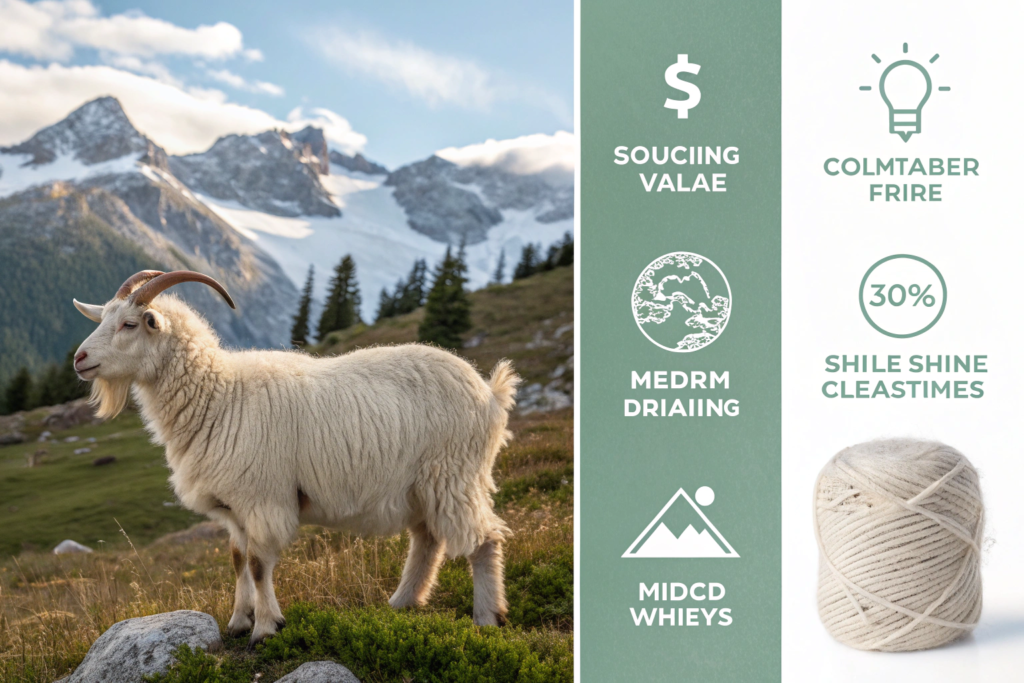
What Drives the High Cost of Cashmere?
The cost is a pyramid:
- Scarcity: Limited annual global production compared to wool.
- Labor: The process of de-hairing—separating the coarse guard hairs from the fine undercoat—is still largely manual and skilled work.
- Length & Grade: Longer staple lengths (over 36mm) and finer micron counts (closer to 14μ) command extreme premiums. Shorter, coarser cashmere is cheaper but will pill more and feel less soft.
- Certification: Ethically sourced, certified cashmere adds a premium but mitigates brand risk.
When a price seems too good to be true for "100% cashmere," it usually is. It might be blended with wool, rabbit hair, or even synthetic fibers, or be made from very short, low-grade cashmere that will not perform well. We advise clients to always request a detailed fiber analysis report from an independent lab like SGS before committing to large orders of any luxury fiber.
What Are the Key Ethical Certifications to Look For?
For cashmere, the Good Cashmere Standard (GCS) is a leading benchmark for animal welfare and environmental practices. For wool, the Responsible Wool Standard (RWS) and ZQ Merino are well-respected. For mohair, the Responsible Mohair Standard (RMS) is gaining traction. These standards ensure traceability from farm to yarn. They address the "Five Freedoms" of animal welfare and promote land management. Sourcing without these certificates is becoming a reputational and commercial risk for brands targeting conscious consumers. Industry resources like the Textile Exchange’s Materials Hub are great for staying updated on these evolving standards.
What Are the Best Applications and Blends for Each?
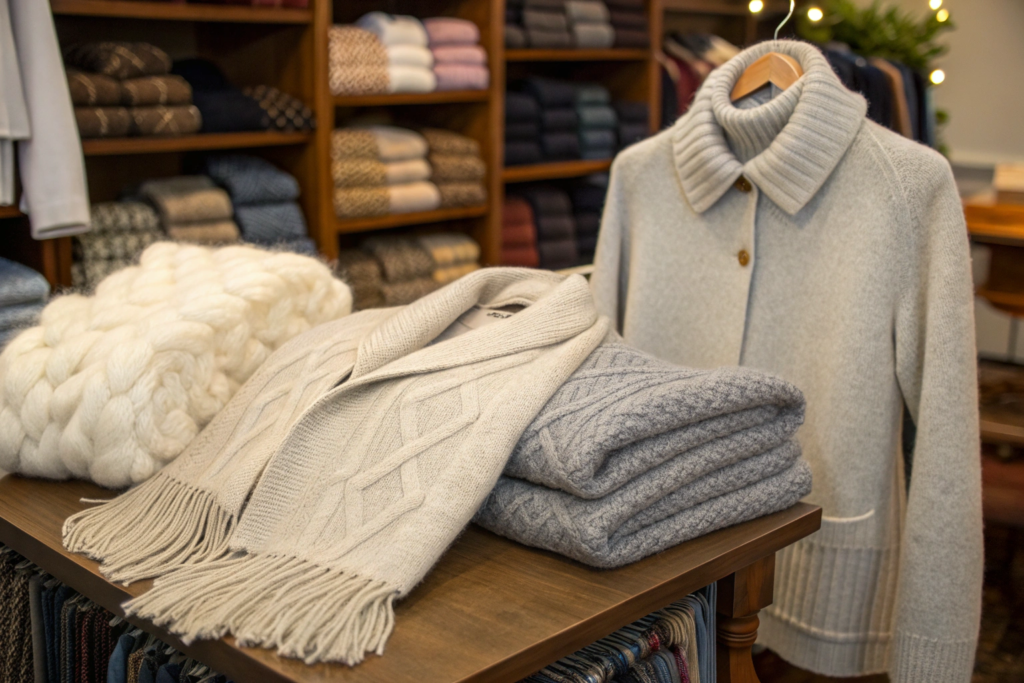
You wouldn’t use a racing engine in a pickup truck. Similarly, each fiber shines in specific applications. Pure cashmere is ideal for lightweight, ultra-soft layers where ultimate luxury is the selling point: fine-gauge sweaters, scarves, shawls, and luxury loungewear. Wool is your workhorse: suited for everything from suits and coats (worsted wool) to chunky knitwear and socks (woolen-spun). Mohair excels in adding texture and brilliance: it’s famous in fluffy "mohair" sweaters (often blended), in elegant suitings for a subtle sheen, and in plush toys or faux fur fabrics due to its long, smooth fiber.
The magic, however, happens in blending. Blending optimizes performance, cost, and aesthetics. Here are some winning formulas we see with our clients:
- Cashmere/Wool (e.g., 30/70): The classic. Wool adds durability and structure, cashmere adds softness and loft. Cost-effective luxury.
- Cashmere/Silk (e.g., 80/20): For an ultra-luxurious, lightweight, and draping fabric with a beautiful sheen. Perfect for high-end scarves and eveningwear.
- Wool/Mohair (e.g., 80/20): For knitwear and coatings. Mohair adds strength, a luminous halo, and reduces pilling. Gives a classic "tweed" jacket more life.
- Wool/Nylon (e.g., 95/5): For socks and activewear. The small synthetic percentage dramatically increases abrasion resistance without compromising natural feel.
A Scandinavian brand we work with mastered this. They use a 55% Merino Wool, 30% Mohair, 15% Silk blend for their signature winter sweaters. The wool provides warmth and bounce, the mohair gives a stunning frosty halo and strength, and the silk adds a delicate sheen and drape. It’s unique, performs beautifully, and tells a compelling story.
When Should You Choose a Pure Fiber vs. a Blend?
Choose pure cashmere when the product is the flagship luxury item, price is less sensitive, and you can communicate the care requirements (e.g., a luxury gift box item). Choose a blend when you need to balance luxury with practicality for everyday wear, or when you need to hit a specific price point without sacrificing too much on feel. For outerwear fabrics where wind resistance and structure are key, a tightly woven pure wool or wool-rich blend is often technically superior to cashmere. The decision should be driven by your customer’s lifestyle, not just the fiber’s prestige.
How Can Blending Solve Common Performance Issues?
Blending is our most powerful tool in the R&D lab. It’s how we solve real problems:
- Problem: Pure cashmere sweaters pilling too quickly.
- Solution: Blend in 10-15% extra-fine nylon or 30% fine wool. The stronger fibers anchor the cashmere, reducing fiber migration and pilling.
- Problem: Wool sweater feeling too heavy for its warmth.
- Solution: Blend in 20-30% cashmere. You reduce weight, increase softness, and maintain warmth.
- Problem: Mohair fabric being too itchy or stiff.
- Solution: Use "Kid Mohair" (from the first shearing) which is under 23 microns, and blend it with merino wool or silk. This retains the shine but drastically improves softness.
This practical, problem-solving approach to fibers is what our partners at Shanghai Fumao value. We don’t just sell yarns; we co-develop material solutions.
Conclusion
Choosing between cashmere, wool, and mohair isn’t about finding the "best" fiber in a vacuum. It’s about matching the right fiber’s inherent properties to your product’s specific purpose, price point, and customer expectations. Cashmere is the undisputed champion of luxurious softness and warmth without weight, but it commands a high price and requires careful handling. Wool, particularly fine Merino, is the versatile all-rounder, offering an unbeatable balance of warmth, breathability, durability, and value. Mohair brings unmatched strength, a dazzling luster, and beautiful texture to blends.
The most successful brands in the luxury space don’t just use these fibers—they understand them intimately and use them strategically, often in innovative blends, to create unique products with compelling stories. They know that the true value lies in the perfect alignment of fiber science with design intent.
Ready to move beyond generic choices and engineer the perfect fabric for your next collection? At Shanghai Fumao, we specialize in sourcing and developing premium natural fibers and intelligent blends. Our team can guide you through the nuances of micron counts, ethical certifications, and blend ratios to create a material that performs beautifully and aligns with your brand values. For a consultation on integrating cashmere, wool, or mohair into your line, contact our Business Director, Elaine. She can connect you with our fiber experts. Reach her at elaine@fumaoclothing.com. Let’s craft something exceptional, from the fiber up.