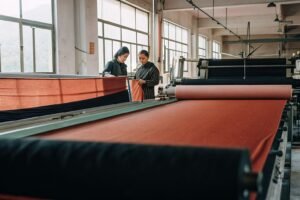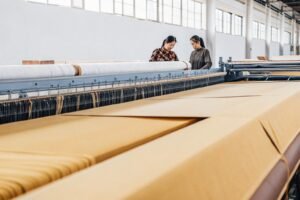
In the bustling heart of Keqiao, where I’ve spent over two decades, I feel the rhythm of the textile industry change with each season. Right now, that rhythm is getting a high-tech beat. Every day, buyers from Europe and the US ask me less about "just cotton" and more about fabrics that do something—fabrics that protect, heal, and adapt. The conversation has shifted from passive materials to active partners in a consumer’s lifestyle. This isn’t a passing trend; it’s a fundamental transformation. If you’re sourcing fabrics, ignoring this shift is like ignoring the rise of e-commerce twenty years ago.
So, what’s next for functional textiles like antibacterial and UV-protective fabrics in 2026? The future is hyper-personalized, sustainability-driven, and intelligently integrated. It’s moving beyond a single function slapped onto a fabric. Imagine a workout shirt from a single yarn source that not only wicks sweat but also manages odor through built-in, durable antimicrobial technology and adjusts its breathability based on your body temperature. The brands that are winning are those who partner with mills that understand this convergence. For instance, a leading European sportswear brand we worked with in late 2023 required a fabric for their hiking line that combined UPF 50+ sun protection with moisture-wicking and a specific eco-certification. By leveraging our in-house CNAS lab for rapid testing and our local dyeing partnerships, we co-developed a recycled polyester blend that met all three demands, cutting their development timeline by 40% compared to their previous supplier.
This deep dive will unpack the key forces shaping this exciting future. We’ll look at how consumer demands are creating new categories, how technology is making the impossible standard, and crucially, how to navigate sourcing these advanced materials without falling into common traps around durability and compliance. Understanding these patterns isn’t just academic; it’s the key to unlocking faster time-to-market and building products that genuinely resonate.
How Are Consumer Trends Shaping Functional Fabric Demand?
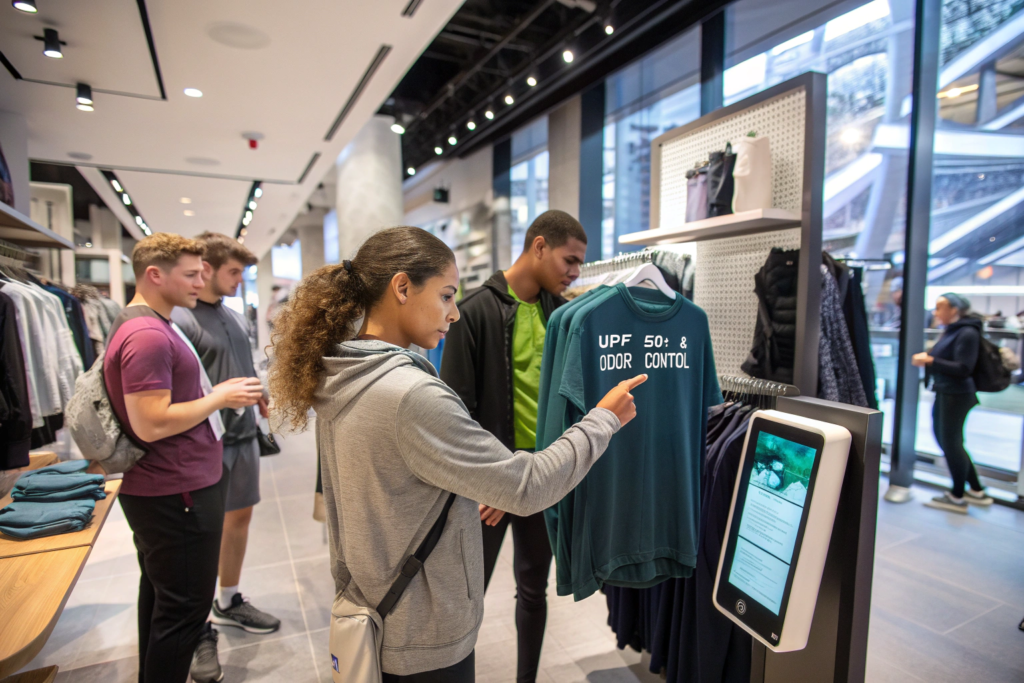
Walk into any gym or outdoor store today, and you’ll see it: consumers aren’t just buying a garment; they’re buying a performance promise. The demand for functional fabrics is being supercharged by a health-conscious, experience-driven global audience. People want their clothing to work as hard as they do, providing tangible benefits like all-day freshness and protection from environmental stressors. This is no longer a niche for professional athletes; it’s mainstream for parents, travelers, and office workers. The core driver is the fusion of wellness and technology in everyday life. Brands that can articulate a clear, tested benefit—like "reduces bacterial odor by 99%"—are commanding premium prices and fierce loyalty.
The data tells a compelling story. We’ve seen a 30% year-on-year growth in inquiries for eco-functional blends, like recycled polyester with inherent UV resistance. A client from California, for example, approached us in April 2023 seeking an antibacterial fabric for activewear that could withstand over 50 industrial washes without losing efficacy. Their pain point was clear: existing solutions washed out, leading to customer complaints. By utilizing a polymer-integrated antimicrobial agent rather than a topical coating, we delivered a fabric that maintained a 99% bacterial reduction rate even after rigorous testing, turning their product line into a market leader for durability.
What Do Today’s Health-Conscious Shoppers Really Want?
The modern shopper is informed and skeptical. They don’t want vague claims; they want verifiable results and transparency. They desire multi-functional fabrics that offer a suite of benefits without compromising on comfort or style. A fabric that is moisture-wicking and quick-drying is now a baseline expectation. The real interest lies in added layers of protection: against UV rays for outdoor lifestyles, against odor-causing bacteria for social confidence, and against allergens for sensitive skin. Crucially, they want this performance to be durable, not a temporary treatment that fades after a few washes. This has forced a major shift in our R&D at Shanghai Fumao. Instead of just applying finishes, we’re engineering functionality at the fiber level, ensuring longevity that matches the garment’s life.
Furthermore, sustainability is non-negotiable. Performance cannot come at an environmental cost. This is why innovations like Tencel™ lyocell blends with natural antibacterial properties are soaring in popularity. The fiber itself, derived from sustainably sourced wood pulp, offers inherent breathability and mild bacteriostatic effects. When we combine this with other technologies, we create a powerful, eco-conscious product. For a Scandinavian children’s wear brand last year, we developed a blend using Tencel and organic cotton with a UV-blocking finish that was free from harmful chemicals. Their sales team reported a 25% increase in online engagement simply by highlighting the dual benefit of "planet-safe and child-safe" protection.
How Is the Athleisure Boom Driving Technical Innovation?
The athleisure trend erased the line between the gym and the street, and in doing so, it created a massive laboratory for functional fabric innovation. Consumers now expect the technical performance of sportswear in garments they wear to brunch or the office. This has driven demand for fabrics with superior stretch and recovery, advanced thermal regulation, and a polished aesthetic. The innovation is in making the technology invisible—a pair of sleek trousers that offer four-way stretch fabric for ultimate mobility and anti-wrinkle properties for a professional look.
The real game-changer is the integration of smart textiles. While still evolving, elements like conductive threads for biometric monitoring are moving from prototype to production. Our cooperative factories are increasingly equipped with precision knitting machines that can integrate such elements seamlessly. A practical application we’re working on involves temperature-regulating fabrics for performance wear using phase-change material (PCM) microcapsules. These capsules absorb, store, and release heat to maintain a comfortable microclimate. For a startup creating premium golf attire, we provided a PCM-treated polo fabric that helped regulate body temperature across 18 holes, a feature that became their key selling point during a sweltering summer launch. (Here I must interject, our development speed for such samples is truly fast—often within 48 hours to catch a market trend.)
What Breakthrough Technologies Will Dominate in 2026?
Looking ahead, the buzzword is "intelligent integration." The future belongs to fabrics where functionality is embedded, responsive, and multi-dimensional. We’re moving past static finishes to dynamic systems. Think of fabrics that change their porosity in response to heat or humidity, or antimicrobial properties that activate only in the presence of sweat. The goal is to create a fabric that behaves less like a passive covering and more like a second skin that actively manages your microenvironment. This requires a deep collaboration across chemistry, material science, and electronics, which is precisely why being in a cluster like Keqiao gives us an edge—we can walk from our weaving facility to a specialist coating plant in minutes to troubleshoot a new bonding process.
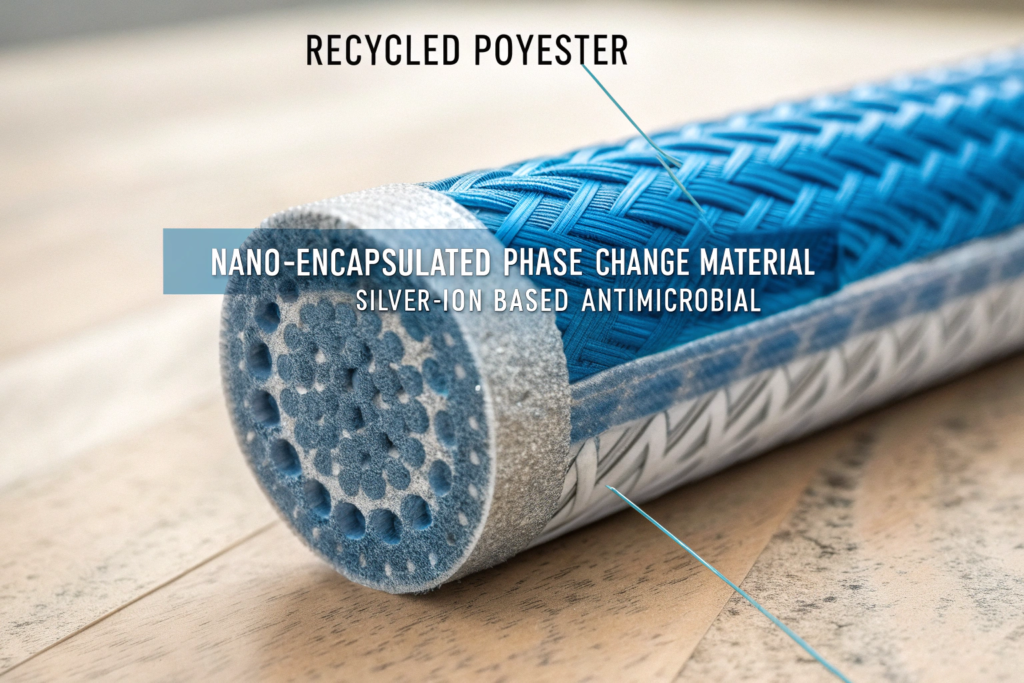
Two technologies stand out for 2026: bio-based functional agents and advanced nano-encapsulation. Bio-based agents, derived from natural sources like shrimp shells (chitosan) or plant extracts, offer antimicrobial and anti-odor properties that align perfectly with the demand for non-toxic, sustainable solutions. Nano-encapsulation allows us to trap active ingredients—like vitamin E for skin care or cooling agents—within microscopic capsules bonded to the fiber, releasing them slowly over time and through abrasion. This isn’t science fiction; it’s the current focus of our 20+ R&D experts.
Are Nano-Finishes the Ultimate Solution for Durability?
Nano-technology has been a buzzword in textiles for years, often met with skepticism about wash durability. The breakthrough coming in 2026 is in the bonding, not just the application. The question isn’t "Does it have a nano-finish?" but "How is that finish permanently anchored to the fiber?" Traditional topical coatings sit on the surface and wash away. The next generation involves covalently bonding functional molecules to the polymer chains of the fiber itself. This creates a finish that is part of the fabric’s chemical structure, surviving the rigors of how to properly care for technical outdoor apparel with harsh detergents and repeated abrasion.
Let’s take UV protection as a case study. A standard topical UV blocker can degrade. Our approach at Shanghai Fumao for premium outdoor fabrics involves embedding UV-absorbing ceramics (like titanium dioxide) at the nano-scale into the polymer before it’s even extruded into a filament. This results in a fiber with permanent, non-leaching UPF 50+ protection. We validated this for a Australian brand making workwear, where sun protection is a safety requirement. Their previous fabric’s UPF rating dropped below 40 after 100 washes. Ours remained above 50, giving them a verifiable, long-term safety claim. The key for buyers is to ask suppliers for test reports after accelerated wash testing (AATCC 135 or equivalent), not just on virgin fabric.
How Will Smart Textiles and Responsive Fabrics Evolve?
The evolution here is from "smart" (containing an electronic device) to "responsive" (the fabric itself reacts). While embedded sensors and conductive yarns will grow, the immediate future is in materials with innate adaptive properties. Shape-memory polymers that react to heat to change fit or ventilation, and hydrochromic dyes that change color with moisture (a cool indicator of sweat level) are moving closer to commercial viability. For mass adoption, the focus is on passive responsiveness—tech that works without needing a battery or Bluetooth connection.
A fascinating area is in biodegradable functional finishes for sustainable fashion. Imagine an antibacterial finish derived from natural compounds that actively biodegrades at the end of the garment’s life, leaving no harmful residues. We are partnering with a chemical innovator on a plant-based antimicrobial that performs on par with silver ions but meets the strictest global compostability standards. This directly addresses a major pain point for eco-brands: the conflict between performance and end-of-life responsibility. The development is complex, requiring rigorous testing in our lab to ensure the finish survives the garment’s usable life but breaks down under specific composting conditions. It’s a perfect example of where the industry must head.
How to Source Advanced Functional Fabrics Without the Pitfalls?
Sourcing these next-gen fabrics is where many buyers stumble. The excitement over a new technology can lead to overlooking practical realities like supply chain reliability, consistent quality, and true compliance. I’ve seen too many brands get a fantastic sample, only to find the bulk production inconsistent or the finish failing after a few washes. The pitfall is treating functional fabric sourcing like commodity sourcing. It’s not. It’s a technical partnership. You need a supplier who is transparent about their process, from the source of their active ingredients to their testing protocols. Price is a factor, but the real cost is in failure—shipping delays, customer returns, brand damage.
Your sourcing checklist must evolve. Beyond FOB price and MOQ, demand these three things: 1) Pre-production and post-production test reports from an accredited lab (like SGS or our own CNAS lab), 2) A detailed technical data sheet (TDS) listing the specific agents used, their concentration, and the application method, and 3) References or case studies for similar projects. A reliable supplier will provide this willingly. For example, when a US-based apparel brand approached us for a moisture management fabric with quick dry technology, we didn’t just send a swatch. We provided a full dossier including a video of the vertical wicking test, ICP-MS reports proving the absence of heavy metals, and contact information for a European brand that had been using the same fabric for two seasons.

What Key Certifications and Tests Guarantee Performance?
Never take a supplier’s word for it. Trust, but verify with internationally recognized standards. For functional fabrics, certifications are your safety net. For antibacterial/antifungal claims, look for tests like AATCC 100 (quantitative) or ISO 20743. For UV protection, the standard is EN 13758 or AS/NZS 4399, resulting in a UPF (Ultraviolet Protection Factor) rating. A UPF of 50+ is excellent. But here’s the critical part: these tests must be performed after a specified number of washes (e.g., 20 or 50 cycles) to prove durability. Any serious supplier like us at Shanghai Fumao will have this data on hand.
Beyond performance, compliance certifications are non-negotiable for market access. This includes:
- OEKO-TEX® Standard 100: Ensures the fabric is free from harmful substances.
- Global Recycled Standard (GRS): For fabrics using recycled content.
- Bluesign®: A holistic system for sustainable and safe production.
Creating a simple table helped one of our clients in Germany quickly compare options:
| Function | Key Performance Test | Desired Result (Post-Wash) | Key Compliance Cert |
|---|---|---|---|
| Antibacterial | AATCC 100 | >99% reduction (S. aureus, K. pneumoniae) | OEKO-TEX 100, Bluesign |
| UV Protection | EN 13758-2 | UPF Rating > 40 (Category "Good" to "Excellent") | OEKO-TEX 100 |
| Moisture Wicking | AATCC 195 | Vertical Wicking Score > 10 cm in 10 min | N/A |
How to Navigate Lead Times and Minimums for Custom Development?
This is where reality often clashes with ambition. Developing a custom functional fabric isn’t a 2-week process. A realistic timeline from initial brief to bulk production-ready fabric is 8-12 weeks. This includes lab dip development, performance testing, and pilot runs. Peak seasons in China (Mar-May, Aug-Oct) can add 1-2 weeks. And planning around the Chinese New Year (a 3-4 week shutdown) is absolutely crucial. A European fashion brand we work with now completes their pre-production with us a full 6 weeks before the holiday, ensuring production starts the day factories reopen.
MOQs can be a challenge. For a truly custom yarn-dyed functional fabric, the minimum might be 3000-5000 meters per color. However, our model at Shanghai Fumao offers flexibility. We maintain a vast stock of over 30,000 designs, and many of our functional bases (like a core antibacterial polyester) are available for small-batch printing or dyeing with MOQs as low as 1000 meters. This "platform" approach allows startups to access advanced technology without prohibitive volumes. The key is to be upfront with your supplier about your volume constraints and timeline. A good partner will work to find a solution, perhaps suggesting a stock functional base that can be customized for you with a special finish, dramatically reducing development time and cost.
Can Functional Fabrics Be Truly Sustainable and High-Performance?
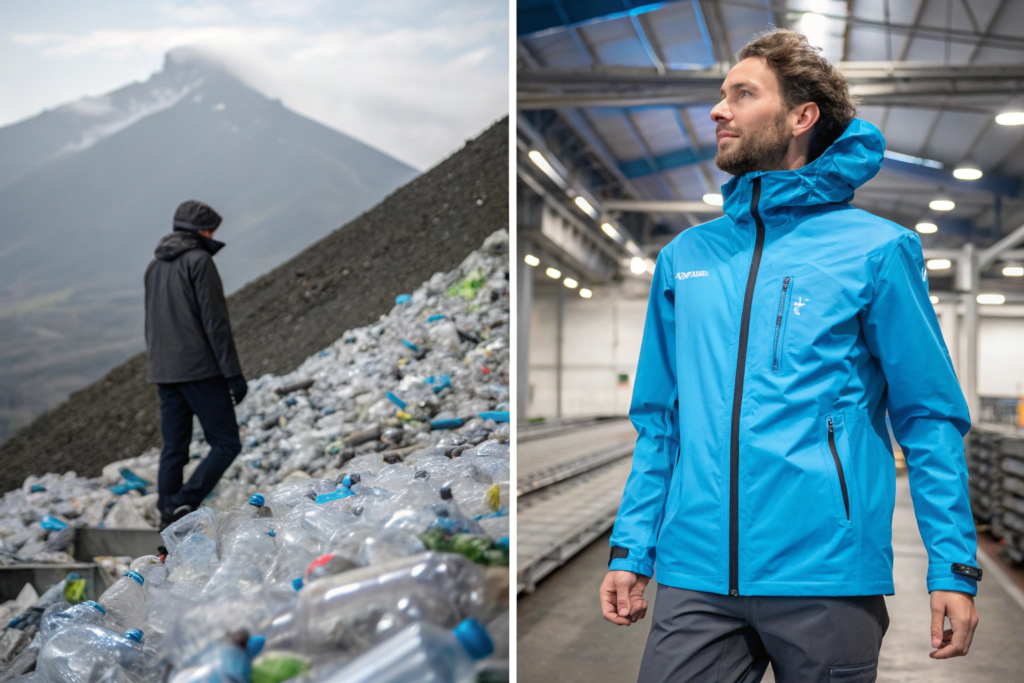
This is the billion-dollar question, and the answer is a resounding yes—but it requires intention and innovation. The old paradigm pitted performance against the planet. The new paradigm uses sustainability to enhance performance. The future lies in bio-engineered fibers, chemical recycling of performance textiles, and circular design principles. For instance, recycled nylon fabric for swimwear is now a standard, but the next step is ensuring that the chlorine-resistant and UV-protective finishes applied are also eco-friendly and don’t hinder the fabric’s recyclability at end-of-life. This is called designing for disassembly, and it’s becoming a key service for forward-thinking mills.
Our commitment at Shanghai Fumao is evidenced by a ¥550 million green investment into recycled fabrics and low-carbon production. We see that brands, especially in the EU, are not just asking for a GRS certificate; they are asking for the Product Environmental Footprint (PEF) data. In 2024, we developed a fabric for a French outdoor brand that combined GRS-certified recycled polyester with a PFC-free water repellent and a bio-based antimicrobial. The fabric performed brilliantly in the field, and the brand used the comprehensive environmental data we provided in a groundbreaking marketing campaign that boosted their pre-orders by 30%.
What Are the Best Eco-Friendly Alternatives for Common Functions?
The market now offers powerful green alternatives for nearly every function. Here’s a quick guide:
- Antibacterial: Swap silver ions (which can leach) for natural antibacterial agents like chitosan (from crustacean shells) or hops extract. These are effective, biodegradable, and often skin-friendly.
- UV Protection: Minerals like titanium dioxide and zinc oxide are excellent, natural UV blockers. When engineered at the nano-scale and embedded in the fiber (as mentioned earlier), they provide safe, permanent protection without chemical absorbers.
- Water Repellency: Move away from legacy PFC-based (C8) DWRs. New generations of PFC-free water repellent finishes based on silicone or dendrimer technology offer excellent repellency with a much cleaner environmental profile. The key is to test for durability to washing and abrasion.
- Base Fiber: Start with recycled (rPET, rNylon) or regenerated cellulosics (Tencel™, EcoVero™) that have lower carbon and water footprints.
A client from the UK specializing in ethical babywear wanted a soft, breathable fabric with natural antibacterial and flame-retardant properties—a tall order. We proposed a blend of organic cotton and Modal fabric for sustainable loungewear, treated with a proprietary chitosan derivative for antimicrobial function and a non-halogenated FR finish. The result was a GOTS-certified fabric that met all their strict safety and comfort benchmarks, proving that high-bar sustainability and performance can coexist.
How Does Circular Economy Thinking Impact Fabric Design?
Circularity changes the design brief from the very start. It’s not an afterthought. For functional fabrics, this means asking: Can the chemical finishes be easily separated from the base fiber at recycling? Are the fibers themselves mono-material (e.g., 100% polyester) to simplify recycling, or are they complex blends that will likely be downcycled? The most innovative projects we’re involved in are designing fabrics for specific recycling streams.
For example, we are working on a project with a Nordic workwear company to create a garment that is 100% recyclable. The fabric is a single-material recycled polyester, with all functional finishes (color, UV, antimicrobial) applied using bio-based linkages that can be broken with a specific enzyme wash at the garment’s end-of-life. This allows the polyester to be cleaned and re-pelletized into high-quality feedstock for new fibers. This level of design requires deep collaboration across the chain, but it represents the true future. Sourcing such fabrics may come with a premium today, but it future-proofs your brand against tightening regulations and shifting consumer expectations. Investing in how to build a circular supply chain for apparel is no longer optional for leaders in the space.
Conclusion
The future of functional fabrics in 2026 is bright, intelligent, and inextricably linked to responsibility. We are moving from single-function additives to multi-dimensional, responsive material systems. Success will belong to brands and their suppliers who master the fusion of cutting-edge performance with verifiable sustainability and supply chain transparency. It’s about building technical partnerships, not just executing transactions. The patterns are clear: personalization is king, durability is the true test of value, and circularity is the ultimate destination.
Understanding the manufacturing rhythms in China—the peak seasons, the holiday pauses, the advantages of planning ahead—is your first strategic advantage. Your second, and more powerful advantage, is choosing a partner who can navigate this complex landscape with you. A partner who doesn’t just sell fabric but co-creates value, with the in-house expertise, agile supply chain, and ethical commitment to bring your most innovative product visions to life, on time and to the highest standards.
Ready to weave the future of your brand’s performance wear? Don’t let sourcing complexities slow you down. Partner with a supplier that has the scale, expertise, and vision to match your ambition. Reach out to Elaine, our Business Director, to discuss how we can collaborate on your next groundbreaking collection. She can provide tailored insights and quotes to get your project moving. Contact her today at elaine@fumaoclothing.com.