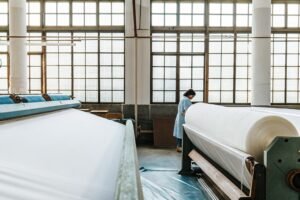
I’ve lost count of how many times a client has shown me a beautiful design sketch and asked, "Can you make this?" My first question is always: "Are you thinking woven or knitted?" That single decision, made before any yarn is sourced, determines the garment’s fit, function, feel, and ultimately, its success in the market. Choosing wrong can turn a promising design into an unwearable disappointment.
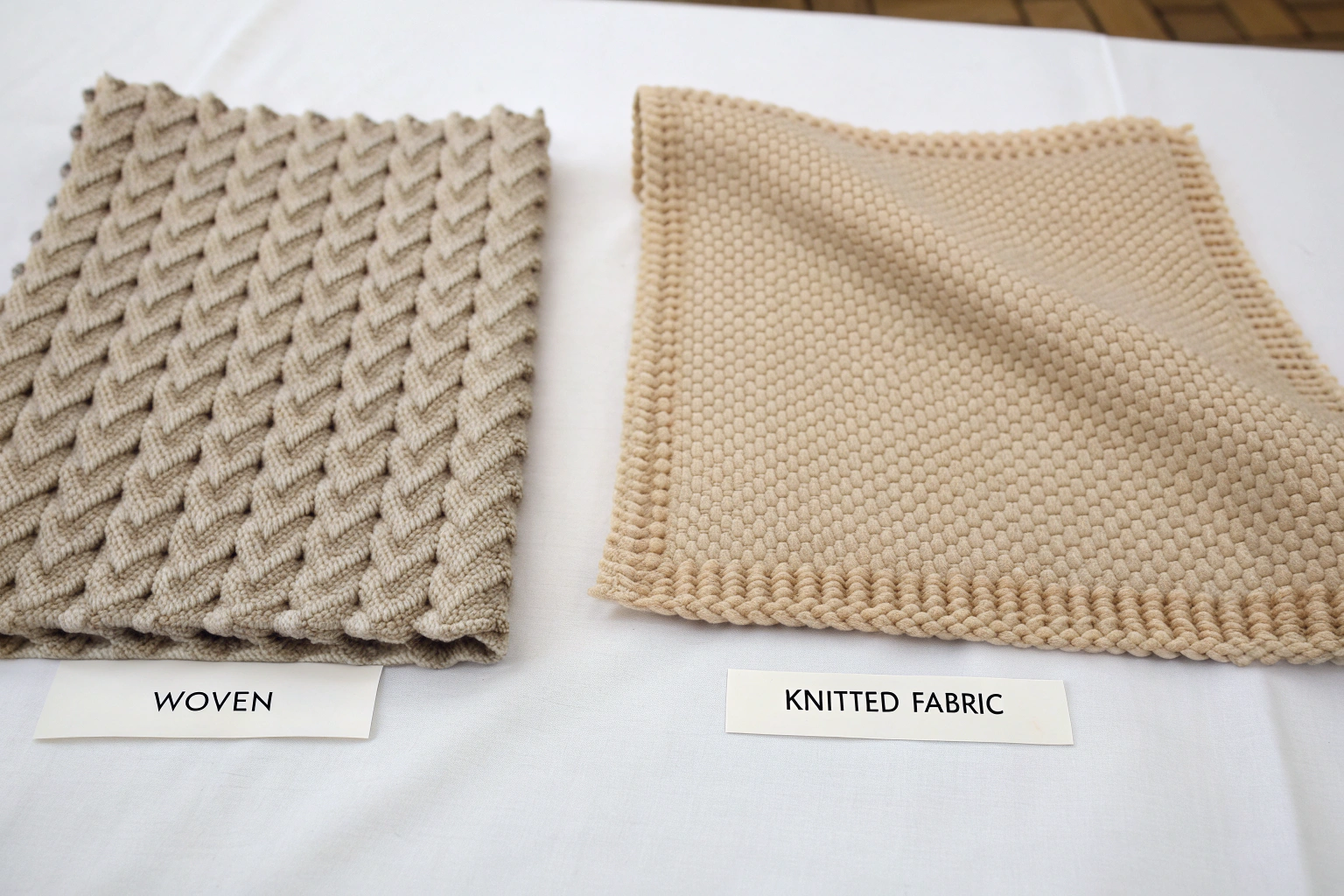
The choice between woven and knitted fabrics boils down to the fundamental difference in their construction: woven fabrics are created by interlacing two sets of yarns at right angles, making them generally more structured and stable, while knitted fabrics are formed by interlooping a single yarn, giving them inherent stretch and drape. You don’t just choose a fabric; you choose the skeleton of your garment. At Shanghai Fumao, we guide clients through this critical decision daily, because even the highest quality fabric is useless if it’s the wrong type for the application.
This isn’t just a theoretical textile lesson. It’s a practical guide rooted in 20 years of solving production problems. Whether you’re designing tailored suiting, activewear, or flowing dresses, understanding this core distinction will save you from costly sampling rounds, production errors, and unhappy customers. Let’s unravel the real-world implications of your choice.
What Are the Core Structural Differences and Performance Impacts?
Think of it like building a house. A woven fabric is like brick and mortar—the warp and weft yarns are tightly interlaced, creating a fixed, grid-like structure that resists distortion. A knitted fabric is like a chain-link fence—a series of interconnected loops that can flex, stretch, and move. This basic architectural difference dictates everything that follows.
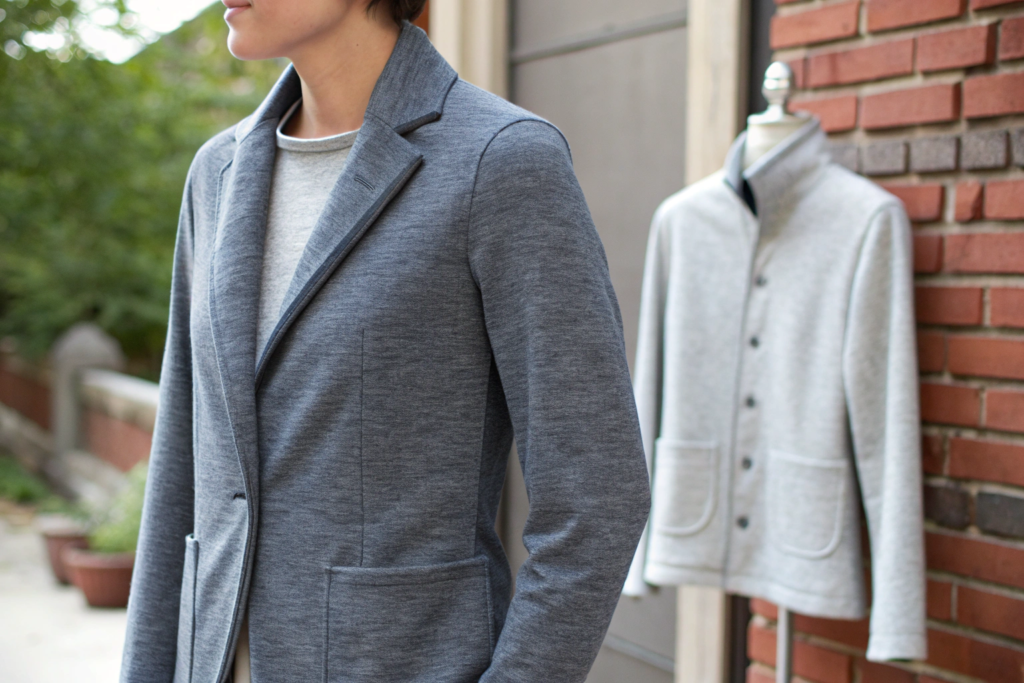
I remember a startup in 2023 that wanted to make structured blazers but loved the soft hand-feel of a French terry knit. They insisted on sampling. The result was a blazer that sagged at the elbows, lost its shoulder shape within an hour, and wrinkled horribly. The fabric was beautiful, but its knitted structure was fundamentally incompatible with the tailored silhouette they desired. We switched them to a lightweight wool-polyester twill weave, and the garment held its form perfectly.
How Does Construction Affect Stretch, Recovery, and Stability?
This is the most critical performance differentiator for the wearer.
- Woven Fabrics: Typically have little to no inherent stretch along the length (warp) and width (weft). Any stretch usually comes from adding elastic fibers like spandex (e.g., in "stretch denim"). They excel at holding shape, providing structure, and offering stability. This is why they are used for tailored jackets (poplin, twill), crisp shirts (oxford, chambray), and durable workwear (canvas).
- Knitted Fabrics: Have built-in, multi-directional stretch due to the looped structure. The stretch can be two-way (mostly horizontal) or four-way (both horizontal and vertical). More importantly, they have excellent recovery—the ability to bounce back to their original shape after stretching. This is the non-negotiable feature for comfort in activewear (jersey, scuba), loungewear (French terry), and fitted tees.
Key Test: Try the "grab and pull" test on a fabric swatch. A woven will resist and may wrinkle. A knit will stretch easily and should spring back smoothly when released.
Why Do Drape, Wrinkle Resistance, and Edge Behavior Differ So Much?
These factors directly impact manufacturing and the final look.
- Drape: Knits naturally drape and flow with the body, conforming to curves (think of a viscose jersey dress). Wovens tend to have a crisper, more architectural drape that stands away from the body (think of a taffeta ballgown skirt).
- Wrinkle Resistance: Knits are generally more wrinkle-resistant because the loops can absorb movement without creasing. Wovens, especially in natural fibers like linen or cotton, are more prone to wrinkling.
- Edge Behavior (Critical for Sewing): This is a huge one in the factory. Woven fabrics do not fray excessively when cut; they can be sewn with standard seams. Knitted fabrics, especially single jerseys, will curl at the edges when cut and can unravel (run) if a stitch is broken. They often require special sewing techniques, stitches, and equipment (like coverstitch machines) to prevent this.
For designers and product developers, a deep dive into resources like [Fashion-Incubator's archives on knit vs. woven seam construction](https://fashion-incubator.com) is invaluable for understanding these production implications before you even make your first sample.
When Should You Definitely Choose a Woven Fabric?
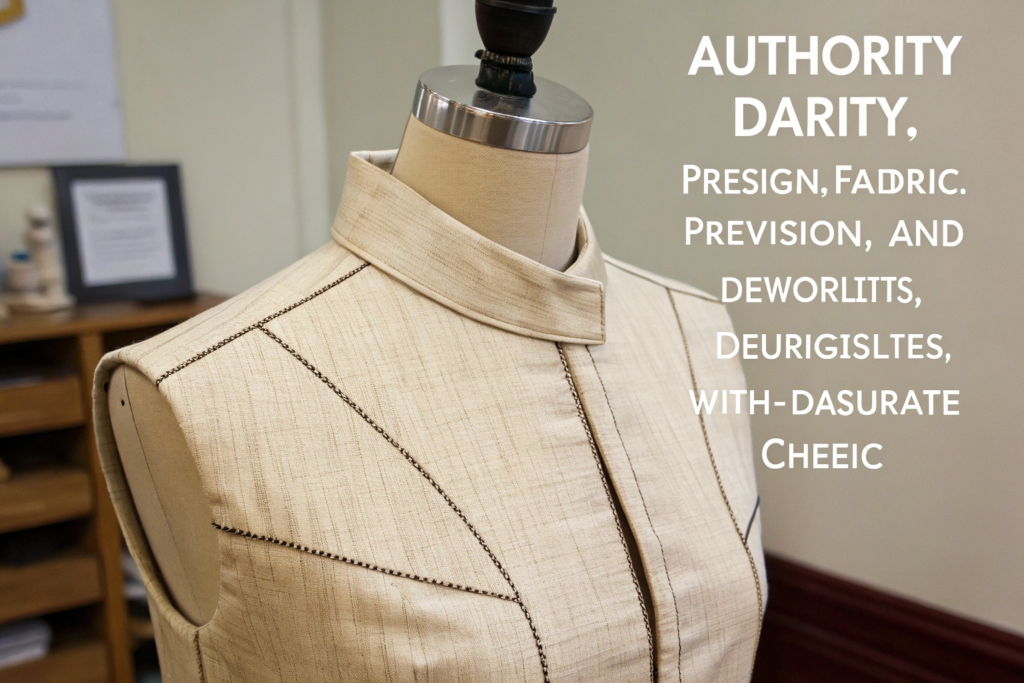
Choose woven when your design requires authority, precision, and durability. Wovens are the fabric of choice for garments that need to define a silhouette rather than follow it. If your sketch has sharp lines, defined pleats, structured collars, or needs to maintain a clean shape without sagging, you are in woven territory.
The most common mistake is trying to force a knit into a woven’s role to chase comfort, resulting in a garment that looks sloppy. A well-designed woven garment can be immensely comfortable through smart pattern cutting and the use of lightweight, breathable weaves.
For Which Garment Types are Wovens Non-Negotiable?
Certain categories are built on the inherent properties of woven fabrics:
- Tailored Clothing: Suits, blazers, tailored trousers, and overcoats. Fabrics like worsted wool, twill, and gabardine provide the necessary body and crisp pressing capabilities that define these garments. We recently developed a high-twist wool and elastane twill for an Italian menswear brand that needed summer suitings with minimal wrinkling and a hint of stretch for comfort—a perfect woven solution.
- Structured Shirting and Dresses: Crisp button-down shirts, A-line dresses, shift dresses, and anything with tucks or pleats. Fabrics like poplin, oxford, chambray, and shirting satin hold collars, cuffs, and plackets sharp.
- Outerwear and Durable Goods: Raincoats, windbreakers, jeans, work pants, and canvas bags. Here, the density and tightness of the weave (often combined with coatings) provide wind resistance, water repellency, and abrasion resistance. Our nylon taslan for functional jackets is a woven fabric that is then coated for waterproofing.
How Do Key Woven Properties Solve Specific Design Problems?
- Need Sharp, Clean Seams? Wovens handle pressing and edge stitching beautifully, allowing for flat-felled seams (like on denim) or crisp topstitching.
- Concerned About Fraying? While wovens can fray, the issue is far more manageable than knit curling. A simple serged or zigzag-finished edge is often sufficient.
- Want to Use Non-Stretch Trims? Woven fabrics seamlessly integrate with woven interfacings, zippers, and other rigid trims without creating tension or puckering.
If your project involves technical outerwear that requires laminated membranes, you are almost certainly looking at a tightly woven base fabric to which the membrane is adhered, a topic frequently detailed in specialist outdoor industry material forums.
When is a Knitted Fabric the Undisputed Best Choice?
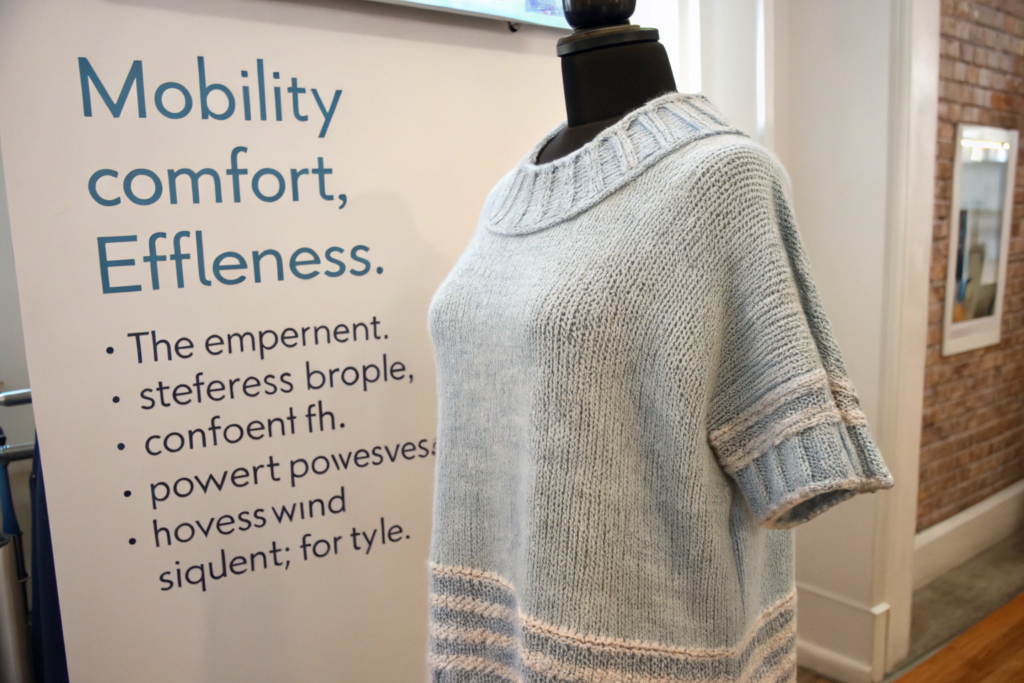
Choose knitted when your design prioritizes mobility, comfort, and effortless fit. Knits are the champions of garments that move with the body. They forgive sizing slight variations and are often associated with a soft, casual, or athletic aesthetic. The rise of remote work and athleisure has only amplified their dominance in everyday wear.
However, "knit" doesn’t mean simple. The range is vast, from the flimsy single jersey of a basic tee to the dense, stable ponte Roma used for fitted dresses and pants. The key is selecting the right type of knit for the structure you need.
Which Projects Inherently Demand the Qualities of Knits?
- Activewear and Sportswear: This is non-negotiable. Leggings, sports bras, performance tops, and joggers require four-way stretch, moisture-wicking capability, and superior recovery. Fabrics like supplex, scuba, and performance jerseys are engineered knits. In our lab, we develop knits with antibacterial and UV-protective finishes specifically for this market.
- T-Shirts, Tops, and Casual Dresses: The everyday comfort of a tee comes from a knit. Single jersey, rib knit, and interlock provide softness, breathability, and easy wear. For a US-based sustainable brand last year, we supplied a GOTS-certified organic cotton interlock for their premium tee line, prized for its stability and weight compared to lighter jersey.
- Loungewear and Underwear: Comfort is king. French terry, jersey, and modal knits offer warmth, softness, and stretch. The brushed interior of French terry provides insulation and a cozy feel.
- Fitted Garments Without Complex Closures: Knitted dresses, skirts, and tops that are pulled on (no zippers or buttons) rely on stretch to get on and off and then recover to hug the body smoothly.
What Are the Hidden Advantages of Knits for Production and Cost?
Beyond wearer comfort, knits offer some manufacturing benefits:
- Reduced Size Grading Complexity: Because of the stretch, a single knit style can often fit a wider range of body types comfortably, sometimes allowing for a simplified size run.
- Potential for Faster Production: With no buttons, zippers, or complex structured seams, simple knit garments (like a basic tee) can be sewn very quickly.
- Minimal Wastage from Fitting Issues: The forgiving nature of stretch means there are fewer returns due to "fit being too tight" in specific areas, as the fabric accommodates.
However, the challenges of sourcing consistent, high-quality knit fabric in bulk are real, as variations in tension during knitting can lead to issues like skewing or GSM variance, a common discussion point among sourcing professionals on business networks like LinkedIn.
How to Make the Final Decision: A Practical Checklist?
Don’t leave this choice to a gut feeling. Use a systematic checklist that aligns your design intent with fabric reality. At Shanghai Fumao, we run through these questions with every new client during our initial development call. It saves everyone time and money.
Ask Yourself These Questions:
-
What is the Desired Silhouette?
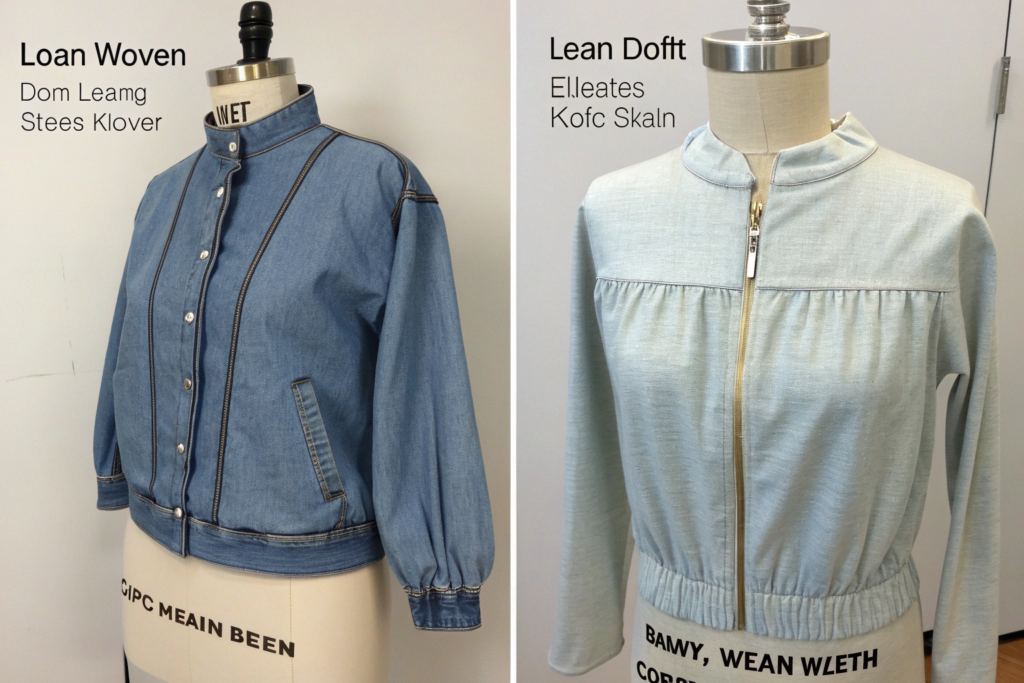
- Structured, Crisp, Architectural -> LEAN WOVEN
- Fluid, Draping, Body-Hugging, Relaxed -> LEAN KNIT
-
What is the Primary Function?
- Hold its shape, provide professional polish, offer durability -> LEAN WOVEN
- Allow for high mobility, provide all-day comfort, stretch for ease of movement -> LEAN KNIT
-
What is the Garment Construction?
- Has darts, pleats, collars, set-in sleeves, zippers/buttons -> LEAN WOVEN
- Pull-on style, has elasticated waists, uses binding/coverstitch finishes -> LEAN KNIT
-
What is the Target Fabric Weight/Feel?
- Crisp, breezy (voile), substantial (denim), smooth (satin) -> These are WOVEN textures.
- Soft, fuzzy (fleece), springy (rib), fluid and clingy (modal jersey) -> These are KNIT textures.
What If My Design Seems to Need Both Structure and Stretch?
This is the most common "in-between" scenario, and modern textiles have brilliant solutions. You are not limited to a pure binary choice.
- The Woven Solution: Stretch Wovens. These incorporate a small percentage (2-5%) of spandex (elastane) into the yarn blend. You get the clean, structured face of a woven with a slight mechanical give for comfort. Think of stretch cotton sateen for fitted trousers or stretch shirting.
- The Knit Solution: Stable Knits. These are knits engineered to mimic the stability of wovens. Ponte di Roma, double knits, and scuba are thicker, firmer knits with excellent recovery that hold a shape well. They are perfect for fitted sheaths, skirts, and structured knit blazers. We produce a poly-viscose-spandex ponte that a New York brand uses for their entire travelwear line—it offers the comfort of a knit with the wrinkle resistance and shape retention they need.
Why is Sampling Absolutely Critical Before Bulk Order?
Your checklist points you in a direction, but the final arbiter is the physical sample made into a prototype. Always, always make a first sample (proto sample) in your shortlisted fabrics. Test it for:
- Fit on a live model (not just a mannequin).
- How it moves (sit, bend, reach).
- How the seams behave (do they pucker or stretch out?).
- How it recovers after being worn for a few hours.
This step caught a major issue for a client designing a knitted jumpsuit. The fabric they initially chose had great vertical stretch but poor horizontal recovery, causing the seat to bag out. We sourced a knit with a different construction and fiber blend (adding more polyester for recovery), and the problem was solved before any bulk fabric was cut.
Conclusion
Choosing between woven and knitted fabrics is the foundational decision that sets the course for your entire project. It’s a choice between architecture and movement, between definition and embrace. There is no universally "better" option—only the right option for your specific design, function, and customer.
By understanding the core structural truths—that wovens offer stability and knits offer stretch—and by applying a practical checklist to your design goals, you move from guessing to knowing. Remember the hybrid solutions when you need the best of both worlds, and never underestimate the power of a thorough sampling phase to validate your choice in real-world conditions.
Still debating the right fabric foundation for your next collection? Let’s turn that debate into a decisive plan. At Shanghai Fumao, our expertise isn’t just in supplying fabric, but in being your strategic partner from concept to bulk. We’ll help you analyze your design, recommend the optimal woven or knit construction, and provide perfect samples to ensure your vision translates flawlessly into a wearable, market-ready garment. Contact our Head of Product Development, Elaine, to start the conversation: elaine@fumaoclothing.com.