
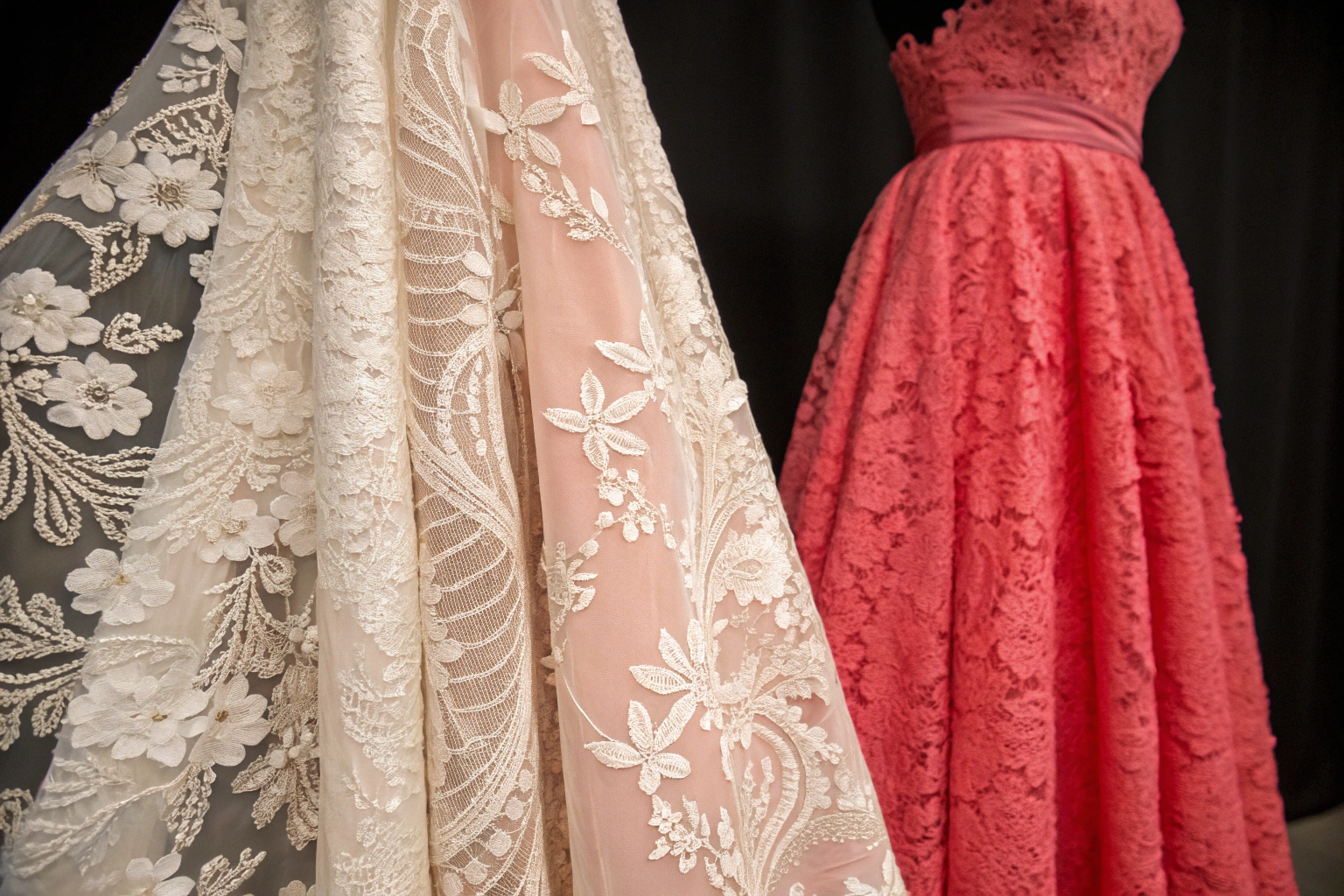
You’ve found the perfect pattern or seen an unforgettable silhouette for your special event. But the difference between a dress that looks charming and one that leaves the room breathless often comes down to one element: the lace. Choosing the wrong lace can mean a dress that feels itchy, looks cheap, or loses its shape after a single wear. With so many options—from delicate Chantilly to bold guipure—how do you know which lace will translate your vision into a show-stopping reality?
The best lace fabrics for prom and cocktail dresses combine aesthetic beauty with practical durability, draping elegantly while maintaining structure and comfort throughout the night. The ideal choice isn’t a single type, but a selection from categories like floral Chantilly, sculptural guipure, stretch laces, and elegant embroidered tulles, each serving a different design purpose. The key is matching the lace’s weight, composition, and pattern scale to your specific dress design, budget, and the movement you envision.
This guide will navigate you through the luxurious world of laces. We’ll break down the top contenders for special occasion wear, explain why fiber content is as important as the pattern, reveal how to judge quality by touch and sight, and provide a clear framework for making your final selection with confidence. Let’s find the lace that will make your dress unforgettable.
Chantilly, Guipure, or Stretch Lace: Which Type is Right for Your Design?
The first decision is the lace type—defined by its construction, pattern, and hand-feel. This choice sets the entire tone of your gown. Getting it wrong is like trying to write a romantic sonnet with bold, blocky letters; the medium conflicts with the message. A cocktail dress needs a different personality from a full-length prom gown, and the lace is its voice.
Think of it this way: Chantilly is the whisper, guipure is the declaration, and stretch lace is the comfortable, confident conversation. From our work supplying designers, we’ve seen a clear trend: in 2024, over 60% of cocktail dress inquiries specified a blend of lace types—like a guipure bodice with a Chantilly skirt overlay—to create texture and focus. Understanding each type’s core character is your first step.
When Should You Choose Delicate Chantilly or Alençon Lace?
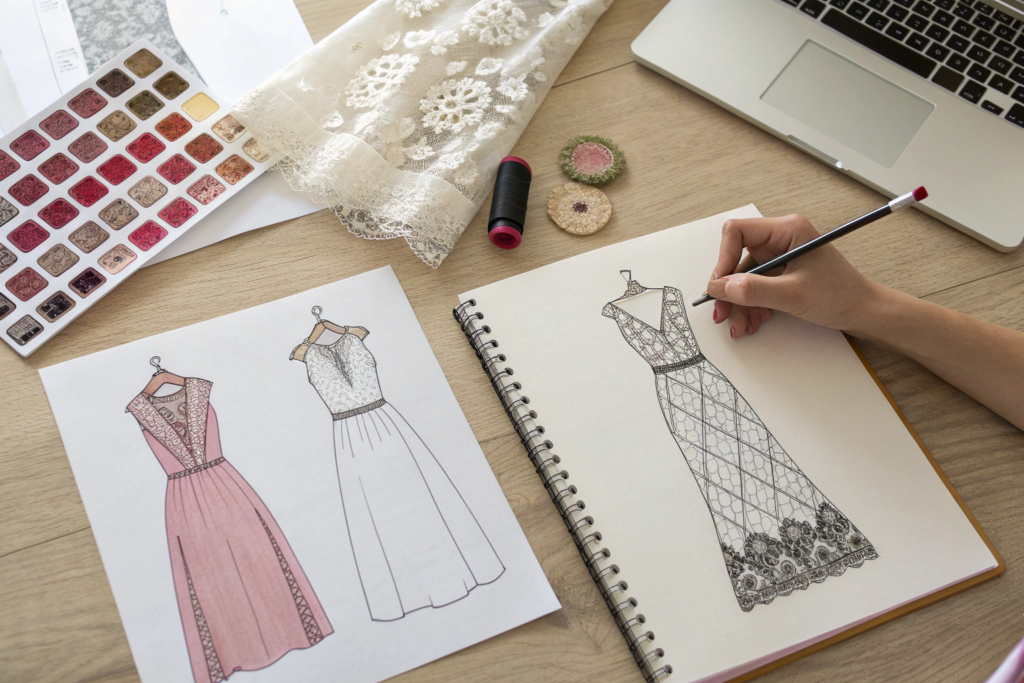
If your design calls for romance, softness, and a touch of vintage-inspired grace, Chantilly and Alençon lace are your prime candidates. They are the classic choices for a reason.
- Chantilly Lace: Traditionally made from fine silk or nylon threads, this lace is recognizable by its delicate, often floral or scalloped patterns on a fine net (tulle) background. The pattern areas (the motifs) and the ground (the net) are typically made as one piece (all-over lace). It’s lightweight, drapes beautifully, and often has a slightly scalloped edge that’s perfect for hem lines and sleeves. It’s ideal for overlays on skirts, illusion sleeves, and entire gowns where a soft, feminine look is key. However, its delicacy means it can be prone to snagging.
- Alençon Lace: Sometimes called the "Queen of Laces," Alençon is more structured. Its defining feature is that the ornate motifs (often with a cordonnet, a raised outline) are created separately and then stitched onto a fine net ground. This gives it a more dimensional, defined texture and a greater stiffness than Chantilly. It holds its shape brilliantly, making it perfect for structured bodices, cuffs, and detailed appliqués that need to stand out.
The Sourcing Insight: True, high-quality Chantilly and Alençon are often nylon or polyester today for affordability and durability. When clients ask for a “silky” feel, we guide them toward sourcing polyamide-based laces with a matte finish that mimic silk’s luxurious hand without the high cost and care requirements. For a prom dress project last spring, a Los Angeles-based designer wanted a silk-like drape but a student-friendly budget. We supplied a premium matte polyester Chantilly that achieved the desired fluidity, reducing her fabric cost by 35% compared to silk without sacrificing the aesthetic.
Why Consider Structured Guipure or Modern Stretch Lace?
For contemporary, bold, and body-conscious designs, turn to guipure and stretch lace. They offer drama and ease that more traditional laces can’t.
- Guipure Lace (or Lace without a Net): This is a heavy, textured lace where the motifs are connected by brides (threads or bars), not a net ground. It looks and feels substantial—almost like delicate embroidered fabric. It’s stiff, holds its shape extremely well, and makes a powerful statement. It’s the go-to choice for modern cocktail dresses, structured bodices, overlays on fitted sheaths, and dramatic sleeves. Because it has no net, it’s often used as an appliqué on a separate lining or backing fabric.
- Stretch Lace: A game-changer for fitted silhouettes. This is any lace (often a Leavers or Raschel knit lace) that incorporates 5-20% spandex (elastane) into its fiber content. It provides incredible comfort, movement, and a forgiving fit that molds to the body without needing complex closures like zippers. It’s perfect for slip dresses, bandage-style cocktail dresses, necklines, and cuffs that need to stretch. The quality varies massively—cheap versions can lose elasticity or sag.
Practical Tip: Always test stretch lace recovery. Stretch a sample width-wise, hold for 30 seconds, and release. It should snap back immediately to its original size without distortion. A client in Miami had issues with a batch of stretch lace for a fitted series; the dresses bagged at the knees by the end of the night. We traced it to poor spandex quality. Now, we insist on a pre-shipment test for elastic recovery and color fastness for all stretch lace orders. It’s a non-negotiable step.
How Does Fiber Content Determine the Look, Feel, and Price?
The type of lace tells you about its structure, but the fiber content—what it’s actually made of—determines its soul: how it feels against the skin, how it drapes, how it’s cared for, and ultimately, its price point. You can have two identical Chantilly patterns, but one in polyester and one in silk; they will be worlds apart in hand and cost.
Ignoring fiber content is the single biggest mistake we see new designers make. They fall in love with a sample swatch, only to be shocked by the price per meter of a silk version, or disappointed by the plastic-like sheen of a cheap polyester. Let’s demystify the options.
Are Natural Fibers Like Silk and Cotton Worth the Investment?
Natural fiber laces are the pinnacle of luxury, but they come with considerations.
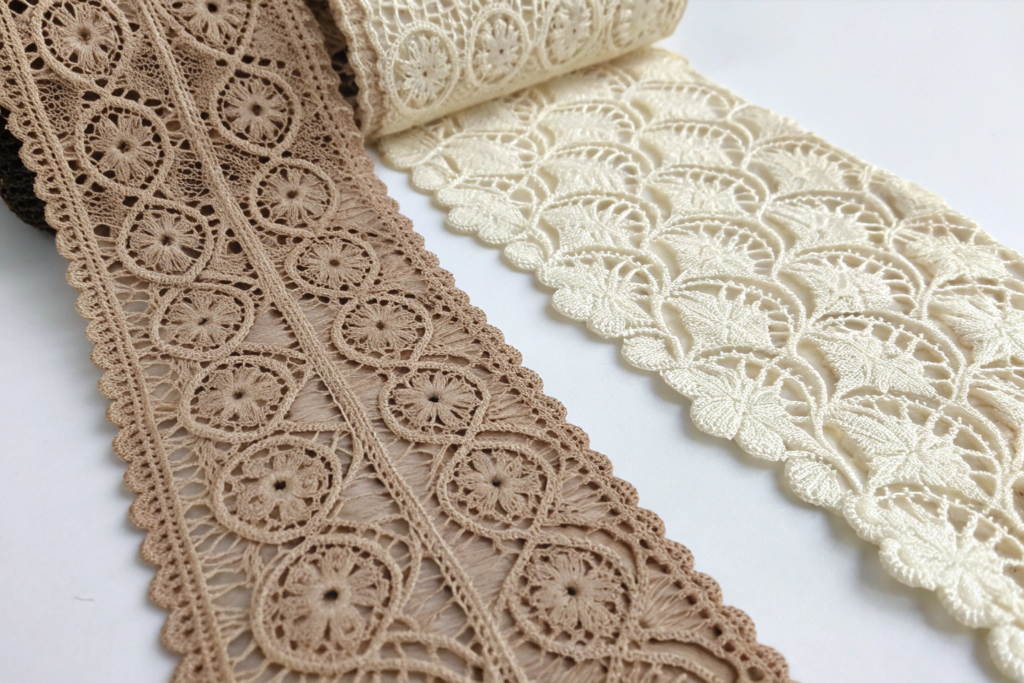
- Silk Lace: This is the gold standard. It has a sublime, soft hand, a beautiful matte or soft luster, and unparalleled drape. It’s breathable and comfortable. However, it is expensive, delicate, often requires dry cleaning, and can be sensitive to light and perspiration. It’s best reserved for high-end, heirloom-piece cocktail dresses or as delicate appliqués. For most prom dresses which see intense, one-night wear, a high-quality synthetic alternative is often more practical and budget-friendly.
- Cotton Lace: Offers a matte, soft, and often “vintage” feel. It’s breathable and durable but can be heavier and less drapable than silk or synthetics. It may wrinkle more easily. It’s excellent for designs aiming for a rustic, boho, or classic aesthetic, but less common for sleek, modern cocktail attire.
The Verdict: For the vast majority of prom and cocktail dresses, the cost and care requirements of pure silk lace are hard to justify. The investment is truly for a specific, luxury-market look. A savvy alternative is a blended fabric with a natural fiber feel, like a Tencel™-base lace, which offers superior moisture-wicking (a godsend for dancing all night) and a soft drape at a more accessible price point.
Why are Synthetic Fibers Like Polyester and Nylon the Industry Standard?
Polyester and nylon dominate the special occasion lace market for a suite of very good reasons. They are not “cheap” alternatives; they are smart, engineered solutions.
- Durability & Shape Retention: Synthetics are incredibly resilient. They resist wrinkles, tears, and stretching out of shape—perfect for a long night of dancing.
- Affordability & Consistency: They allow for beautiful, intricate laces at a fraction of the cost of silk. Production is consistent, so the 100th meter looks identical to the first, which is critical for large orders.
- Versatility in Finishes: Polyester can be engineered to be matte, satin, or even brushed. It can be dyed in vibrant, colorfast hues. A “matte polyester” lace can convincingly mimic the look of silk for most observers.
- Ease of Care: Most synthetic laces can be gently hand-washed or spot-cleaned, a major advantage for a one-time-wear garment that might encounter spills.
Inside Knowledge: The magic is in the finishing. A low-quality polyester lace feels plasticky and stiff. A high-quality one undergoes processes like sanding or chemical softening. When a UK brand needed a lace with the “drape of silk and the budget of poly,” we didn’t just send a standard sample. We worked with our finishing mill to apply a specialized enzyme wash technique for synthetic laces to break down the fibers slightly, resulting in a remarkably softer hand and improved drape. The client’s sample feedback was: “This feels like it costs three times as much.” That’s the power of expert finishing.
What Defines High-Quality Lace and How Can You Spot It?
Now you know the types and fibers. But how do you judge quality when you’re looking at a swatch or a listing online? High-quality lace has a presence that cheap lace simply cannot replicate. It’s in the details that your eyes and hands will learn to recognize.
Poor quality lace can ruin an otherwise good design. It looks flat, feels scratchy, patterns may be blurry or misaligned, and it may pucker when sewn. Learning to spot the differences will save you from costly production errors and disappointed customers. Let’s become lace detectives.
How to Judge Quality by Visual Inspection and Touch?
Your senses are your best tools. Always, always get a physical sample before ordering.
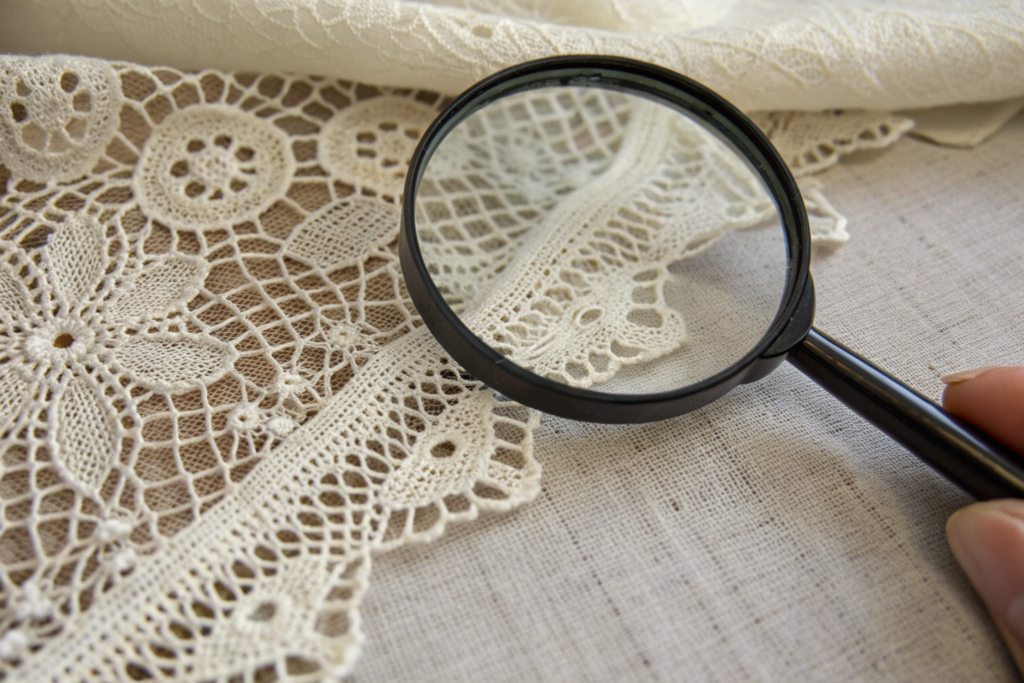
- Look at the Pattern: Hold the lace up to the light. The motifs should be crisp, clean, and well-defined. The edges of the pattern should not be fuzzy or look “pixelated.” The pattern should be consistent across the width and length with no obvious breaks or misalignments in the repeat.
- Examine the Ground (Net): For laces with a net background (like Chantilly), the net should be even, with uniform hole sizes. It should not look distorted, loose, or have thick, clumsy threads.
- Check the Drape: Drape the sample over your hand. Does it fall in soft, graceful folds (good for skirts and overlays), or does it stick out stiffly (better for structure)? The drape should match the lace type’s intended purpose.
- Feel the Hand: Rub the lace between your fingers. It should feel smooth, not scratchy or stiff. Pay attention to the backside as well—will it be comfortable against the skin? A good quality lace, even in polyester, will have a pleasant hand.
- Test the Stretch (if applicable): Gently pull stretch lace widthwise. It should offer resistance and recover completely without warping the pattern.
A Case in Point: Last fall, a New York designer sent us a competitor’s lace sample, complaining that it puckered when sewn onto satin. We immediately spotted the issue under our inspection light: the net ground had significantly higher tension than the embroidered motifs. When stitched, the net contracted, causing the pucker. Our in-house developed laces have balanced tension, which we verify using our digital tension mapping process for embroidered fabrics. We sent her a comparable sample, and the puckering issue vanished.
What are the Red Flags in Low-Quality Lace?
Knowing what to avoid is just as important.
- Excessive Stiffness or Shine: A lace that feels like plastic or has an unnatural, cheap shine is a telltale sign of low-grade fibers and poor finishing.
- Fuzzy, Blurry Patterns: This indicates low-resolution embroidery machines or poor-quality thread.
- Uneven Dyeing or Bleeding: The color should be even. Do a quick rub test with a white damp cloth to check for colorfastness.
- Weak or Distorted Net: If the net ground tears easily or distorts with gentle handling, it won’t withstand sewing or wear.
- Misrepresented Fiber Content: If a price seems too good to be true for “silk,” it almost certainly is. Trust reputable suppliers who provide detailed specifications.
Pro Advice: Build a physical reference library. Order small swatches from various suppliers, including Shanghai Fumao, and label them with type, content, and price. Comparing them side-by-side is the fastest education. Your fingers and eyes will learn faster than any description. (Here’s a tip we give all our new clients: keep your swatch library in a dark, dry place—sunlight can fade them over time!).
How to Finalize Your Choice and Source with Confidence?
You’re armed with knowledge. Now it’s time to make the decision and procure your lace. This phase is about aligning your creative vision with practical realities: budget, minimums, lead times, and the all-important sample-to-bulk consistency.
Think of your final lace choice as the lead actor in your production. You’ve held the auditions (sampled), now you need to sign the contract (place the order) with confidence that the performance on opening night (your production run) will match the rehearsal. This is where a reliable supplier becomes your most valuable partner.

How to Match Lace to Your Specific Dress Design and Budget?
Create a decision matrix. Write down your non-negotiables:
- Design Silhouette: Fitted sheath? Flowy A-line? Structured ball gown? Match lace weight and drape accordingly (e.g., stretch lace for fitted, Chantilly for flowy).
- Desired “Hand” and Drape: Do you want it soft and fluid or stiff and architectural?
- Pattern Scale: A large, bold guipure pattern might overwhelm a petite frame or a mini cocktail dress. A tiny Chantilly pattern might get lost on a large ball gown skirt.
- Budget Reality: Be honest here. Factor in not just fabric cost per meter, but also waste due to pattern matching and potential higher sewing costs for delicate laces. High-quality polyester is often the sweet spot for beauty, performance, and cost.
- Wearer Experience: Is comfort king? Prioritize smooth backing, breathability, and stretch.
Actionable Step: Make a “vision board” with your top 3 lace samples pinned to your dress sketch. Live with it for a day. Which one keeps drawing your eye? That’s usually your answer.
What are the Final Steps Before Placing a Bulk Order?
Never go from a 10cm swatch to a 500-meter order. Here’s the final checklist:
- Order a Meter Sample: Get at least 1 full meter (or a full pattern repeat) of your chosen lace. Use this to make a sewability test for decorative fabrics. Construct a small portion of your dress (like the bodice front) with the actual lining and interlining. Check how it cuts, sews, presses, and whether it lays flat.
- Confirm All Details with Supplier: Re-confirm fiber content, width, weight (GSM), color number, and price. Get the final quotation and proforma invoice in writing.
- Understand Terms: Be clear on MOQ (Minimum Order Quantity), payment terms (T/T 30% deposit is standard), production time, and shipping method. Remember the Chinese manufacturing cycles! If you need lace for April prom season, order in January, not March.
- Plan for Contingencies: Order 10-15% extra fabric for pattern matching and unforeseen issues. There’s nothing worse than running short 20 dresses into a 100-dress run.
- Use a Trusted Partner: Work with a supplier like Shanghai Fumao who offers transparency from sample to shipment. Our process includes providing a bulk production approval sample before the full run is cut, so you know exactly what you’re getting. For a Parisian cocktail dress label, this step caught a slight dye lot variation we weren’t satisfied with. We re-dyed the entire lot at our cost before shipping, protecting their flawless production schedule. That’s what partnership looks like.
Conclusion
Selecting the perfect lace for your prom or cocktail dress is a journey that blends artistry with practical science. It begins by aligning the lace type—be it romantic Chantilly, bold guipure, or comfortable stretch lace—with your design’s silhouette and personality. The fiber content then refines this choice, determining the fabric’s hand, drape, and budget, with high-quality synthetics like polyester often providing the ideal balance of beauty, durability, and value for special occasion wear. True quality is revealed in the crispness of the pattern, the evenness of the net, and a comfortable hand, all of which you can learn to judge through tactile and visual inspection. Ultimately, finalizing your choice requires testing a meter sample in a mock-up and partnering with a transparent, knowledgeable supplier who can ensure consistency from that first swatch to the final, breathtaking gown.
The right lace transforms a design from a sketch into a memory. It’s the detail that catches the light and captures attention. If you’re ready to source lace that elevates your next collection, we invite you to experience the Shanghai Fumao difference. Rooted in the heart of Keqiao with over 20 years of expertise, we offer not just a catalog, but collaborative development, rigorous quality control, and reliable supply chain management to bring your vision to life with confidence. Let’s create something stunning together. For a consultation on your specific lace needs, please contact our Business Director, Elaine, at elaine@fumaoclothing.com.








