Let’s be brutally honest: the single biggest, most predictable, and yet most frequently ignored disruption in global apparel sourcing comes from China’s holiday calendar. Every year, brands and importers watch in frustration as their carefully planned production timelines collapse because they didn’t account for the three-to-four-week standstill of Chinese New Year (CNY) or the ripple effects of other national holidays. The result? Missed delivery deadlines, air freight bills that erase your margin, and frantic calls to understand why your shipment is stuck. So, how do you turn this predictable challenge into a managed, strategic advantage?
Planning your fabric sourcing calendar to avoid holiday delays requires a proactive, backward-scheduling approach that treats major holidays as fixed, non-negotiable blackout periods. The core strategy is to align your critical milestones—fabric development, sampling, bulk order placement, and production—to complete key stages at least 6-8 weeks before a major holiday shutdown. This buffer absorbs pre-holiday congestion and ensures your order is first in line when factories reopen. Success hinges on understanding not just the holiday dates, but the surrounding periods of reduced productivity, logistical bottlenecks, and labor turnover.
This isn’t about a simple date adjustment; it’s about re-engineering your entire development cycle. By mastering this calendar, you transform from a victim of delays into a leader with a reliable, efficient supply chain. Let’s build your tactical holiday-proof sourcing plan.
What are the critical holiday periods and their real impact?
The Chinese holiday calendar features two major, multi-day national shutdowns and several shorter breaks that collectively shape the annual production rhythm. Understanding their true scope is step one.
Chinese New Year (Spring Festival): This is the most significant disruption, occurring between late January and mid-February. Factories typically close for 3-4 weeks. The impact, however, spans 6-8 weeks in total. Two weeks before closure, productivity drops as workers begin leaving. The week after reopening is slow as workers trickle back (with some not returning at all, causing labor shortages). During this period, all related services—dye houses, mills, freight forwarders, and customs—also slow down or stop.
National Day Golden Week: A one-week holiday around October 1st. The shutdown is shorter, but the principle is the same: plan for a 2-3 week total impact window due to pre- and post-holiday slowdowns. This period falls right in the middle of the peak autumn production season for Northern Hemisphere winter goods, making congestion particularly severe.
Other Holidays with Minor Impact:
- Qingming Festival (Tomb-Sweeping Day): 3-day break in early April.
- Labor Day (May 1st): Now often a 5-day break.
- Dragon Boat Festival: 3-day break in June.
- Mid-Autumn Festival: 3-day break in September/October.
While shorter, these can still cause 5-7 day delays in specific regions or factories if they fall during a critical production step.
How does the "pre-holiday crunch" affect lead times?
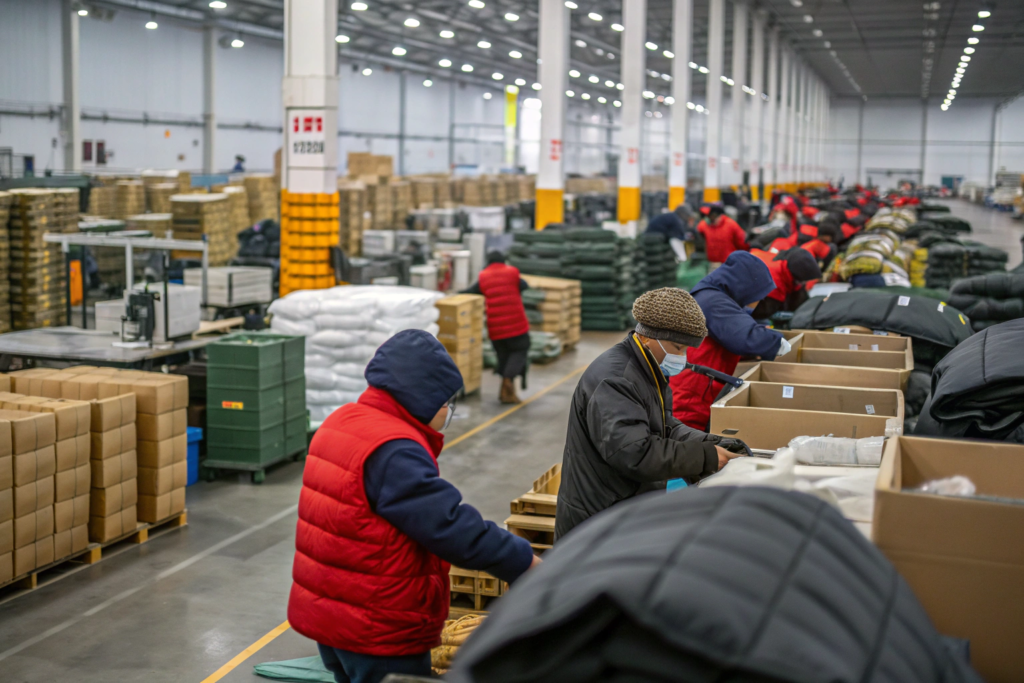
The 2-3 weeks before any major holiday are a frenzy. Every client is rushing to get their orders out the door before the shutdown. This creates a massive bottleneck at every stage: mill machine time becomes scarce, dyeing vats are overbooked, quality inspection backs up, and container trucking slots get fully reserved. During this period, standard lead times can easily double. A fabric that normally takes 25 days might take 45. If your order isn’t physically in production well before this crunch begins, it will be delayed. This is the most common mistake we see—buyers placing orders 4 weeks before CNY and expecting them to ship on time.
What are the post-holiday restart challenges?
Reopening is not a light switch. It’s a gradual process. Key challenges include:
- Labor Return Rate: Not all workers return, leading to understaffed production lines. It can take weeks to recruit and train new workers.
- Machine Recalibration: Dyeing and weaving machines need to be restarted and recalibrated, which can affect initial quality consistency.
- Priority Re-sorting: Factories work through the backlog of orders that were in process before the holiday. New orders submitted during the holiday wait in line.
A European contemporary brand we work with learned this the hard way. They placed a bulk fabric order for a spring collection on January 20th, expecting a 30-day lead time. The order wasn’t even scheduled until mid-March after the factory fully restabilized, causing a 7-week overall delay. They now work with us to place that same order by December 1st.
How to build a backward schedule from your in-store date?
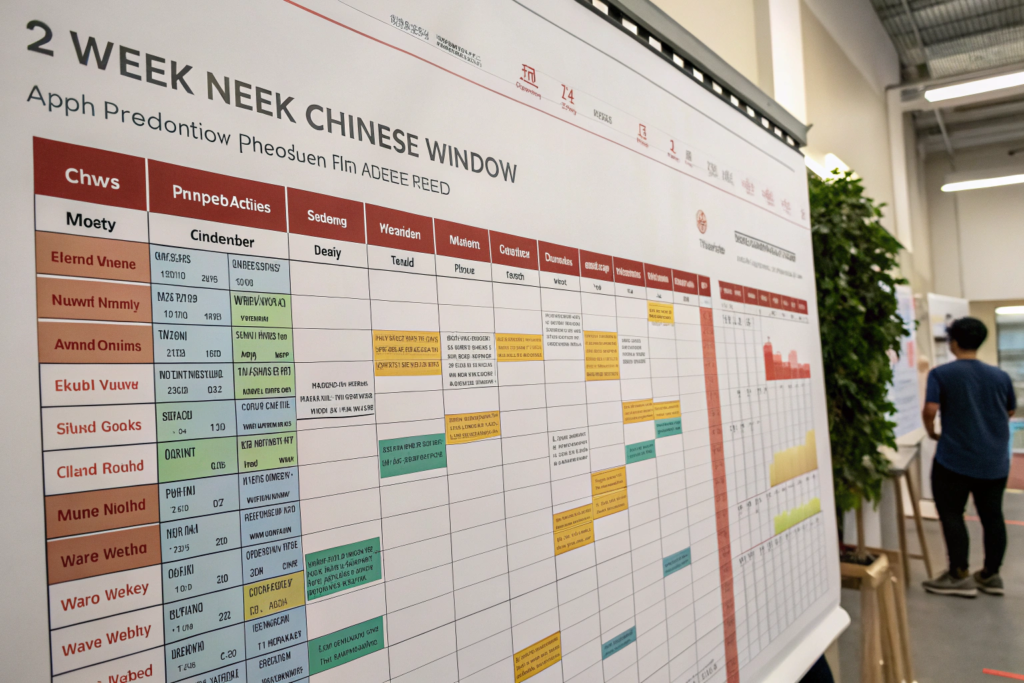
This is the core methodology. You start with your Final In-Store/DC Deadline and work backwards, adding buffer for every single step, explicitly placing holidays as immovable blocks.
Let’s construct a sample timeline for a Fall/Winter collection with a Target Port Arrival: September 1st. We’ll factor in Golden Week in October for the following year’s development, but focus on the production cycle.
Step 1: Work Backwards from Port Arrival
- Ocean Freight (China to US/EU): 4-5 weeks
- Customs Clearance & Domestic Trucking: 1-2 weeks
- => Latest Factory Exit Date (FOB): July 20th
Step 2: Factor in Garment Production
- Garment Sewing, Finishing, Final QC: 4-6 weeks
- => Fabric Must Arrive at Garment Factory: June 15th
Step 3: Factor in Fabric Production & Logistics
- Fabric Production (Weaving/Knitting, Dyeing, Finishing): 5-7 weeks (This is the variable you must protect).
- Inland Transportation to Garment Factory: 1 week
- => Latest Bulk Fabric Order Placement Date: April 25th
Step 4: The Critical Pre-Holiday Buffer & Development
- PRE-HOLIDAY BUFFER (for May 1st/Labor Day): Add 2 weeks of buffer before the early-May holiday to avoid the pre-crunch.
- => Adjusted Bulk Order Deadline: April 10th
- Fabric Sampling & Approval: 3-4 weeks
- => Start Sampling with Mill: March 10th
- Pre-Development (Lab Dips, Yarn Sourcing): 3-4 weeks
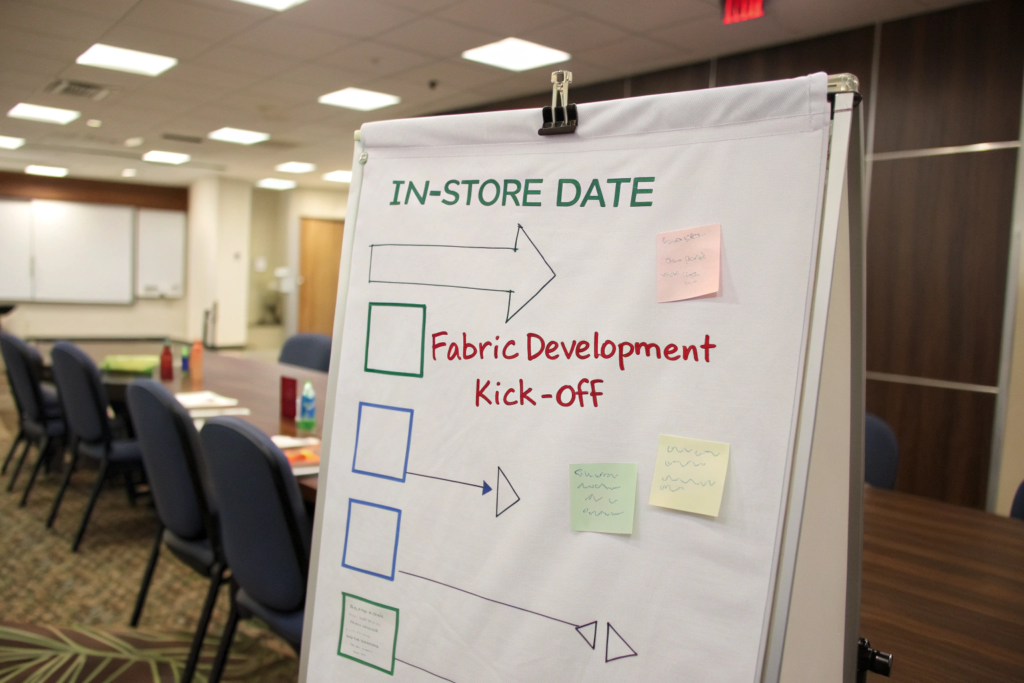
- => Kick-off with Fabric Supplier for Development: February 10th
Analysis: This timeline shows that to hit a September 1st port arrival, you need to be starting development with your fabric supplier immediately after Chinese New Year (which typically ends in mid-February). The bulk order must be placed in early April to sail through before the May holiday congestion.
What are the key buffer zones to institutionalize?
Build these buffers into your standard operating procedures:
- Pre-Holiday Order Buffer: +2 weeks before any major holiday closure.
- Post-Holiday Restart Buffer: +1-2 weeks after CNY; +1 week after Golden Week.
- Logistics Congestion Buffer: +1-2 weeks during global peak shipping seasons (Aug-Oct, Nov-Dec).
Treat these buffers as non-negotiable. If your internal team or design house misses a milestone by a week, the buffer absorbs it. Without it, the entire schedule collapses. A tool like the apparel industry sourcing calendar templates can help visualize this.
How does this schedule differ for Chinese New Year?
For CNY, the backward schedule is even more extreme. For a Late-Spring/Summer collection (May/June in-store), your bulk fabric order must be placed by early November to complete production before the CNY pre-crunch begins in January. Development and sampling must happen in September and October. This is why savvy brands are working on Summer 2025 in Q3 of 2024. The mantra is: "To ship before CNY, order before November. To ship after CNY, order before December."
What specific actions to take 3, 2, and 1 month before a major holiday?
Proactive communication and confirmed bookings are your weapons against the holiday chaos. Here is a month-by-month action plan, using Chinese New Year as the primary example.
3 Months Before Holiday (e.g., Early November for CNY):
- Finalize All Development: All lab dips, strike-offs, and fabric approvals should be 100% signed off. No changes after this point.
- Place Bulk Fabric Orders: This is your absolute deadline for bulk orders that need to ship before the holiday. Get a written production schedule from your supplier with clear cut-off dates.
- Confirm Raw Material (Yarn) Inventory: Ask your supplier to confirm their yarn and raw material stocks are booked for your order. This prevents post-holiday sourcing delays.
- Book Preliminary Freight: Notify your freight forwarder of your anticipated shipment volume and timeframe to secure space.
2 Months Before Holiday (e.g., Early December for CNY):
- Receive and Approve Bulk Swatches: Insist on pre-production bulk swatches. Approve them immediately to green-light full production.
- Make Stage Payments: Ensure any required deposits or stage payments are made on time to keep your order in the production queue.
- Conduct Pre-Production Meetings: Have a video call with the factory’s production manager. Review the tech pack and confirmed samples. Confirm the locked production schedule.
- Secure Fabric Testing: Send bulk fabric for third-party testing (if required) now, while labs are still operating at full capacity.
1 Month Before Holiday (e.g., Early January for CNY):
- Track Production Daily: Request frequent updates (photos, videos) from the production line. Be proactive.
- Finalize Shipping Instructions: Provide complete, accurate shipping instructions and commercial invoices to your forwarder.
- Book Final Container Space: Confirm your container booking with a specific pickup date (ETD).
- Plan for Post-Holiday Follow-up: Schedule a check-in call for the first or second day the factory reopens.
Why is pre-booking raw materials critical?
The entire supply chain tenses before CNY. Yarn spinners, dye chemical suppliers, and accessory makers also shut down. If your mill hasn’t secured the yarn for your order by early December, they may find their supplier sold out or closed, delaying your post-holiday start by weeks. In 2023, an Australian swimwear brand ordered a specialized recycled polyester fabric in mid-December for a post-CNY delivery. The mill had not pre-booked the recycled yarn. The yarn supplier’s plant closed on January 10th and didn’t reopen until February 20th, pushing the entire order back by 6 weeks. We now enforce a "yarn confirmation" step for all pre-CNY orders.
How to communicate effectively with factories during this period?
Be a clear, decisive, and respectful partner. Chinese factories are managing immense pressure from all clients. Provide clear, consolidated feedback. Avoid last-minute changes. Make payments promptly. This builds goodwill and can get your order prioritized. Sending a polite holiday greeting (and a small token like fruit for the production team) before the shutdown can also foster positive relations. Resources on managing supply chains during Chinese New Year often emphasize the human element of these relationships.
How to leverage slower periods for competitive advantage?
The flip side of the holiday calendar is the existence of predictable slower periods. Strategic brands use these windows to gain speed, better pricing, and more attention from suppliers.
Key Slower Periods:
- June – July: Between the Spring and Autumn production peaks. Factories have more available capacity.
- Late November – December: After the Golden Week rush and before the CNY pre-crunch begins (though this window is shrinking).
- The 4-6 Weeks Immediately After CNY Reopening: While restart is slow, this is a prime time for development and sampling for the following year. Factories are less busy with bulk production and their technical teams are more available.
What are the tangible benefits of sourcing in a slow period?
- Negotiating Power: With open capacity, factories are more willing to negotiate on price, especially for smaller MOQs or more complex developments.
- Faster Sampling: Development lead times can be 30-50% shorter. Instead of 4 weeks for a fabric sample, you might get it in 2.
- Higher Quality Attention: Technicians have more time to perfect lab dips and strike-offs without the pressure of a packed bulk production line.
- Reduced Logistics Cost: Freight rates are often lower outside of the peak Q3/Q4 global shipping season.
A concrete example from Shanghai Fumao: A US-based DTC brand approached us in late February (just post-CNY) to develop a new line of technical performance fabrics for their next Spring season. Because it was our development-focused period, we assigned a senior R&D engineer to their project. We iterated on 5 different moisture-wicking finishes within 3 weeks—a process that would have taken 6+ weeks during the September peak. They secured a superior fabric at a 10% lower cost due to the mill’s eagerness to fill capacity.
How to structure a "development-focused" order in a slow period?
Be explicit with your supplier. Frame the conversation as: "We are planning for our Spring+1 collection. We want to use the current period to deeply develop and perfect 3 new fabric constructions with you, with no immediate bulk order pressure. Our goal is to finalize and pre-book yarn for a bulk order to be placed in Q3." This aligns incentives. The supplier invests time for a future committed order, and you get undivided R&D attention. This is how true innovation partnerships are built. For insights into collaborative development, strategic supplier partnership models highlight this win-win approach.
Conclusion
Mastering the Chinese holiday calendar is not an administrative task—it’s a strategic supply chain competency. It requires shifting from a reactive stance to a proactive, calendar-driven command of your critical path. By implementing rigorous backward scheduling with built-in buffers, executing a disciplined pre-holiday action plan, and strategically utilizing slower periods for development, you transform potential delays into a reliable competitive rhythm.
This disciplined approach does more than ensure on-time delivery; it reduces stress, lowers emergency freight costs, improves product quality through unrushed development, and builds stronger, more transparent partnerships with your suppliers. In a world of constant disruption, mastering this predictable cycle is one of the highest-return investments you can make in your sourcing operation.
Stop letting the calendar happen to you. Start designing your year around it. At Shanghai Fumao, we act as our clients’ on-the-ground calendar sentinel. We provide clear, date-driven milestones for development and production, proactively flagging holiday impacts and recommending optimized timing based on real-time factory capacity. Let us help you build a predictable and efficient sourcing calendar. Contact our Business Director Elaine to map out your 2025 production timeline: elaine@fumaoclothing.com.