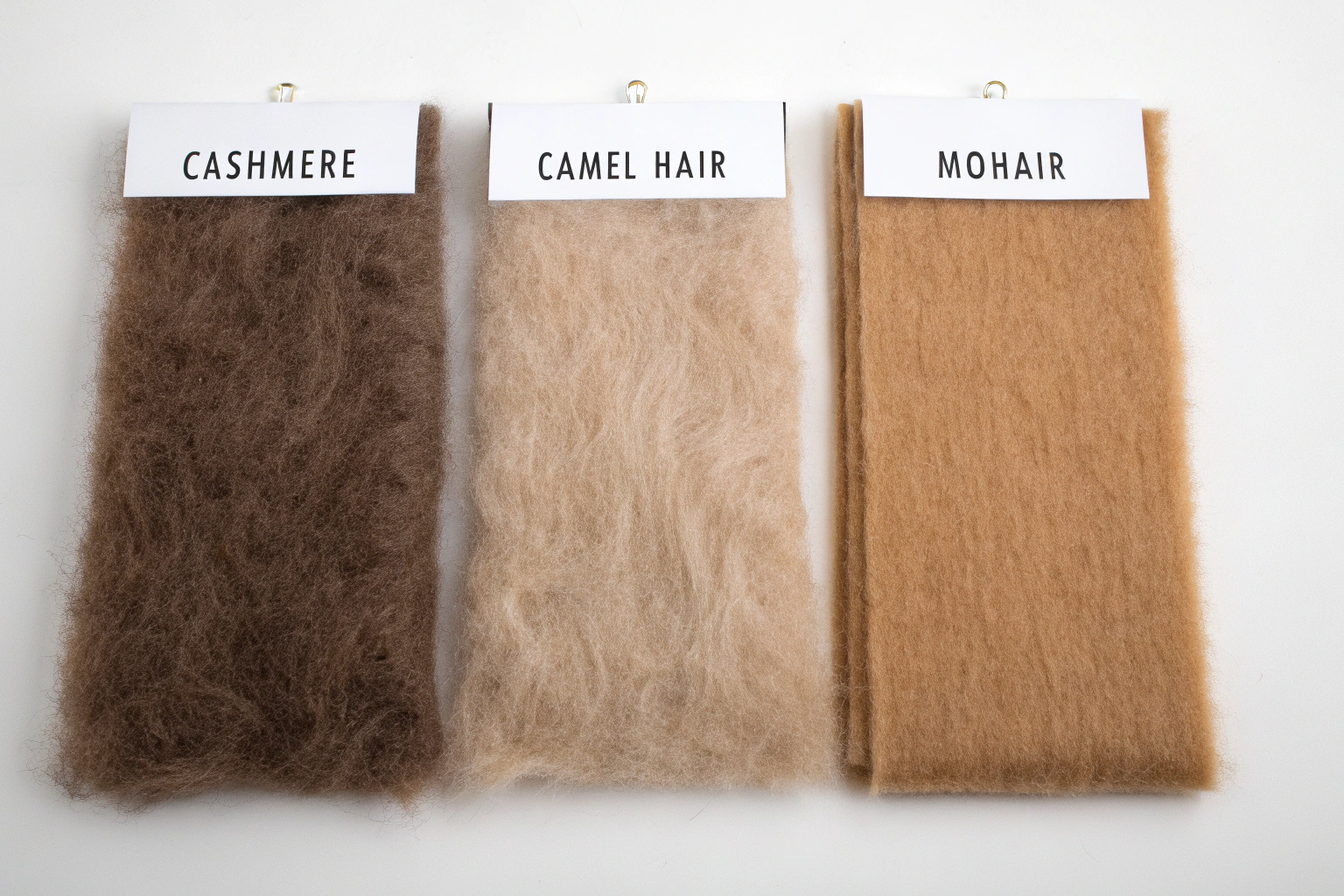
When it comes to luxury fibers, few materials evoke a sense of premium quality and comfort like cashmere, camel hair, and mohair. Yet, in the world of sourcing and product development, confusion abounds. A buyer might hear "soft camel hair" and imagine cashmere-level fineness, or see "mohair blend" and assume it’s a budget alternative. These assumptions can lead to costly mistakes in fabric selection, pricing, and final product positioning. So, what truly sets these noble animal fibers apart, and how do you choose the right one for your collection?
The fundamental differences between cashmere, camel hair, and mohair lie in their biological source, fiber structure, performance properties, and price point. Cashmere (from goats) is prized for its extreme fineness and cloud-like softness. Camel hair (from Bactrian camels) is celebrated for its exceptional warmth, natural color, and durability. Mohair (from Angora goats) is distinguished by its distinctive high luster, strength, and lofty, resilient character. While all three are luxury fibers, they serve different niches in the market due to these inherent traits.
Understanding these distinctions is not just academic—it’s essential for making informed decisions about garment quality, target customer, and brand value. Let’s dissect each fiber, from its origin to its final feel in a garment, to build a clear framework for sourcing and specification.
Where do these luxury fibers actually come from?
The journey of each fiber begins with a specific animal and a unique harvesting process, which directly influences its scarcity, cost, and fundamental character.
Cashmere comes from the soft undercoat of the Cashmere goat (Capra hircus laniger). These goats primarily live in the harsh, high-altitude climates of Mongolia, Inner Mongolia (China), Iran, and Afghanistan. To survive freezing winters, they grow a dual coat: a coarse, protective outer layer called guard hair, and a supremely fine, downy undercoat—the cashmere. This undercoat is shed naturally in spring and is collected through combing, not shearing, which is a labor-intensive process. A single goat yields only about 150-200 grams of usable cashmere per year, explaining its high cost.
Camel Hair is sourced from the Bactrian camel (the two-humped camel), native to the cold steppes of Central and East Asia, notably Mongolia and China’s Inner Mongolia. Like the cashmere goat, the camel grows a warm undercoat for winter insulation. The finest, softest fibers come from this undercoat, particularly from baby camels. The fiber is collected mostly during the natural molting season by gathering tufts that fall off or by combing. The most prized camel hair is a natural golden-tan color, though it can also be dyed.
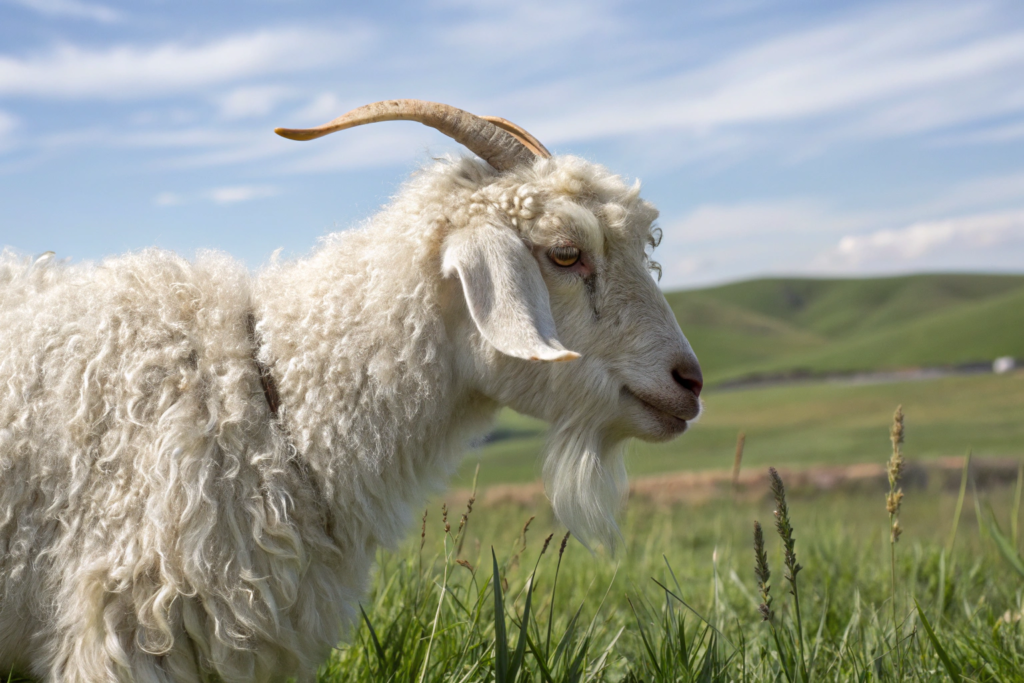
Mohair is the fleece of the Angora goat (not to be confused with the Angora rabbit, which produces angora wool). Originating from the Ankara region of Turkey (historically Angora), the best mohair now primarily comes from South Africa and the United States (Texas). Angora goats are shorn twice a year. Unlike cashmere and camel hair, mohair is a single coat; it does not have a separate coarse guard hair in the same way, though finer kid mohair (from the first or second shearing) is much more prized than adult mohair.
Why is geographic origin a key quality indicator?
The "terroir" matters immensely. Harsher climates typically force animals to produce finer, denser undercoats for better insulation. Mongolian cashmere is globally renowned for its exceptional length and fineness due to the extreme continental climate. Similarly, camel hair from specific regions of Inner Mongolia is considered premium. For mohair, the arid plateaus of South Africa produce fibers with excellent luster and staple length. When sourcing, always inquire about the origin of the raw fiber. A supplier who can trace the fiber back to its region is often more reliable. At Shanghai Fumao, for our high-end lines, we specify and track Inner Mongolian cashmere and camel hair, as consistent origin is the first step to consistent quality.
How does the harvesting method impact fiber quality and ethics?
- Combing (Cashmere/Camel Hair): This method selectively collects the downy undercoat, leaving the coarse guard hairs behind. It results in a cleaner, purer raw material with less contamination, but it is slow and skill-dependent.
- Shearing (Mohair): This is faster but collects everything at once. For adult mohair, this is standard. For kid mohair, great care is taken.
The method ties into ethical sourcing. Responsible sourcing looks for suppliers who adhere to animal welfare standards during collection. The industry is increasingly mindful of this, with initiatives tracking sustainable practices. Resources like the Cashmere and Camel Hair Manufacturers Institute’s guidelines provide a framework for best practices.
How do fiber fineness, structure, and hand feel compare?
This is where the tactile and performance differences become scientifically clear. The diameter (fineness) and surface scale structure of each fiber dictate how it feels, drapes, and performs.
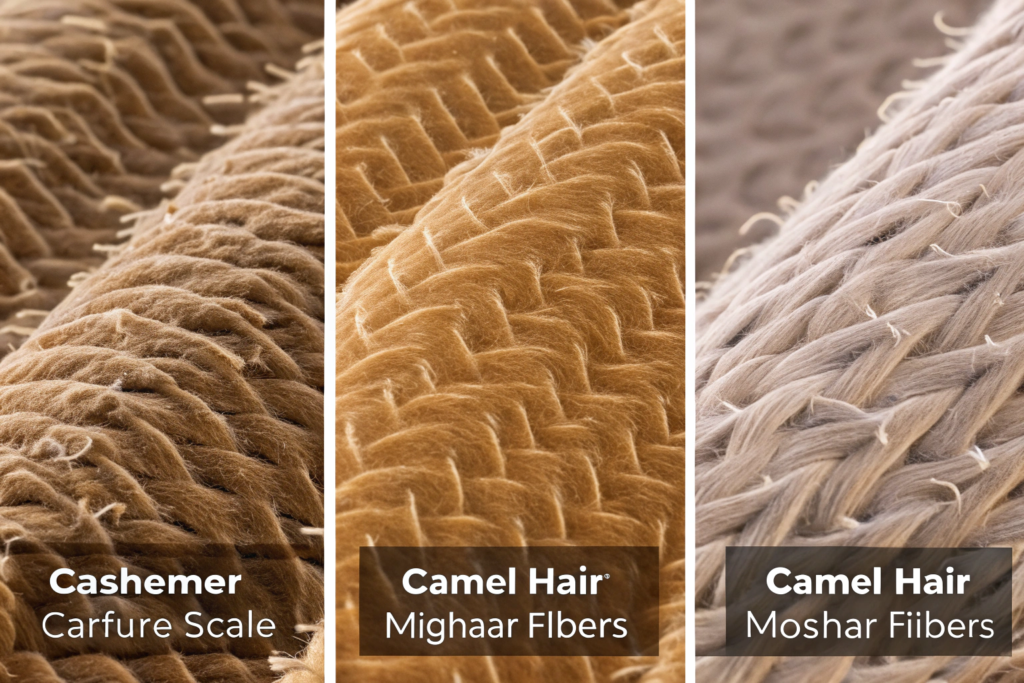
Cashmere is the finest of the three. Premium cashmere fibers average 14.5 to 16 microns in diameter (human hair is about 75 microns). They have a relatively smooth, scaled surface, which contributes to its legendary softness and lack of prickliness. The fibers are also hollow, which adds to their lightweight, insulating properties. The hand feel is uniformly soft, smooth, and almost weightless—the "cashmere feel" is a benchmark for luxury.
Camel Hair fibers are broader. The fine undercoat fibers range from 18 to 24 microns. They have a medullated (hollow) structure, often with multiple air pockets, making them one of the best natural insulators. The fiber surface has distinct scales, but they are less pronounced than in coarse wool. The natural golden color comes from pigment granules within the fiber. The hand feel is soft but with a more substantive, slightly bristly character compared to cashmere. It has a "dry" hand feel and excellent loft.
Mohair is the most distinct in structure. Kid mohair can be as fine as 23-27 microns, while adult mohair is much coarser (up to 40+ microns). The key characteristic is its smooth, almost scale-free surface. This gives mohair its signature high luster and silky sheen. The fibers are long, strong, and have a pronounced wavy crimp. The hand feel varies dramatically by grade: fine kid mohair is soft and silky, while standard mohair has a characteristic crisp, hairy, and resilient feel. It is known for its "halo" effect when spun into yarn.

What does "micron count" really mean for the end consumer?
Micron count is the single most important objective measure of softness and potential for itchiness. Lower microns = finer, softer fibers. This is why luxury brands heavily promote "14-micron cashmere." For camel hair, a blend using only the fine undercoat (under 20 microns) will feel significantly softer than a generic camel hair fabric that includes coarser fibers. For mohair, always specify kid mohair for apparel meant to be worn next to skin. A common pitfall is assuming all "mohair" is soft; adult mohair can be quite coarse and is better suited for upholstery, carpets, or outerwear coatings.
How do these structures translate to specific fabric behaviors?
| Fiber | Key Structural Trait | Resulting Fabric Behavior |
|---|---|---|
| Cashmere | Fine, hollow, smooth-scaled | Extremely soft, lightweight, excellent drape, prone to pilling (due to fine, short fibers). |
| Camel Hair | Hollow, medullated, thermally efficient | Exceptional warmth-to-weight ratio, durable, resilient, good shape retention, natural color. |
| Mohair | Smooth, lustrous, long, crimped | High sheen, dye brilliance, strength, resistance to crushing/creasing, creates a "fuzzy" halo. |
A practical example: For a client’s lightweight autumn/winter scarf line, we recommended a 70% fine kid mohair / 30% silk blend. The mohair provided warmth, loft, and a beautiful luminous depth of color, while the silk added drape and softness, mitigating any potential itchiness. The product retailed at a premium but found a dedicated market for its unique aesthetic.
What are the performance and care profiles in finished garments?
Choosing between these fibers isn’t just about initial softness; it’s about how the garment will wear, age, and need to be maintained. Their performance profiles are distinctly different.
Cashmere is the most delicate. Its fine fibers, while soft, are shorter and less durable. It is highly susceptible to pilling, especially in high-friction areas like underarms and cuffs. It provides excellent warmth but can lose its shape if not cared for properly—think stretched-out sweater necks. It requires gentle, cold hand washing or professional dry cleaning. With proper care, it develops a beautiful patina over time.
Camel Hair is the workhorse of the three. It is highly durable, resilient, and resistant to pilling compared to cashmere. Its natural insulation is superior, making it ideal for cold-weather outerwear like coats and jackets. It holds its shape well and is less prone to wrinkling. While it can be dry-cleaned, many camel hair fabrics (especially blends) are robust enough for careful professional wet cleaning. Its natural color is also more forgiving in terms of showing dirt.
Mohair is surprisingly strong due to its long staple length. It is highly resistant to wrinkling and crushing—a mohair-blend suit will travel well. Its smooth fibers shed dirt and stains more easily than wool or cashmere. However, its characteristic halo can mat if aggressively washed or brushed. It generally requires dry cleaning to maintain its luster and texture. Kid mohair garments are softer but still share these core performance traits.
Why does cashmere pill, and can it be prevented?
Pilling is inevitable with pure cashmere; it’s a function of its fineness and short staple. When fibers rub, they loosen, tangle, and form little balls on the surface. Prevention is about fabric engineering: Using longer-staple cashmere (like Mongolian) helps. Blending cashmere with a small percentage of a longer, stronger fiber (e.g., 10-15% fine wool or silk) significantly reduces pilling by anchoring the cashmere fibers. The twist of the yarn and the tightness of the knit or weave also matter. A reputable supplier will be transparent about their anti-pilling strategies. We once helped a Scandinavian brand reformulate their best-selling cashmere beanie by adding a 12% mulberry silk blend. Customer complaints about pilling dropped by over 60% without a perceivable loss of softness.
How should care labels differ for these luxury fibers?
Clear communication is key to customer satisfaction.
- Cashmere: "Dry clean recommended. For hand washing, use cold water with a dedicated wool/cashmere wash. Lay flat to dry in shape. Do not wring or tumble dry."
- Camel Hair (for coats): "Professional dry clean only." (For finer knitwear, similar to cashmere).
- Mohair: "Dry clean only to preserve luster and texture. Do not brush aggressively."
Providing detailed care instructions not only protects the garment but elevates the brand’s perception of expertise. For more on luxury fiber care, resources like specialist guides on caring for delicate animal fibers offer valuable consumer-level insights that can inform your labeling.
How to navigate sourcing, blending, and authenticity?
The luxury fiber market is ripe with adulteration and misleading labels. "100% Cashmere" can be blended with fine wool; "Camel Hair" can be mostly wool with a small percentage of camel. Your sourcing strategy must include verification.
Sourcing by Price Point: Be extremely wary of prices that seem too good to be true. Authentic, fine cashmere has a fundamental cost driven by scarcity. Establish a realistic cost floor with your supplier based on current market prices for raw fiber from a specific origin. For blends, the percentage of luxury fiber directly correlates to cost and performance. A 30% cashmere/70% wool blend will be significantly cheaper and more durable than a 100% cashmere fabric, but with a different hand feel.
The Power of Blending: Blending is not cheating; it’s smart engineering.
- Cashmere + Silk/Nylon: Adds strength, sheen, and reduces pilling.
- Camel Hair + Wool: A classic, cost-effective blend for overcoating that retains warmth and durability. (Here’s an industry note: many iconic "camel hair" coats are actually an 80/20 wool/camel hair blend).
- Mohair + Wool or Alpaca: Adds luster, strength, and loft to the base wool.
Always demand a detailed composition breakdown from the mill. For example, "50% Cashmere, 30% Merino Wool, 20% Mulberry Silk" is a credible and desirable blend.
What tests verify fiber composition and authenticity?
Do not rely on supplier affidavits alone. Insist on third-party testing for fiber composition. The standard test is microscopic analysis (ISO 17751 for cashmere/wool) and/or DNA testing. Microscopic analysis can distinguish between cashmere, wool, and camel hair based on scale patterns. For high-value orders or new suppliers, this is non-negotiable. At Shanghai Fumao, we provide pre-shipment composition test reports from our CNAS lab or partner third-party labs as part of our quality package for all luxury fiber orders. This builds trust and avoids disputes. Industry watchdogs like Ecotextile News often report on issues of adulteration in luxury fibers, underscoring the need for vigilance.
How to specify these fibers in a tech pack or RFQ?
Clarity prevents misunderstandings. For example:
- Bad: "Need cashmere fabric."
- Good: "Seeking a 2/1 twill weave fabric for sweaters. Composition: 100% Cashmere, fiber origin: Inner Mongolia, average micron: ≤16.5μm, yarn count: 2/26Nm. Submit pre-production sample with composition test report from CNAS or SGS."
This level of detail signals professionalism and ensures you receive comparable quotes and samples. It also allows the supplier to assess feasibility and cost accurately.
Conclusion
Cashmere, camel hair, and mohair are three pillars of the luxury fiber world, each offering a unique constellation of benefits: cashmere for peerless softness, camel hair for robust warmth, and mohair for luminous strength. The choice between them is not about which is "best," but about which is most fit for purpose—defined by your garment’s design intent, target price, performance requirements, and the story you wish to tell.
Successful sourcing hinges on moving beyond generic names to a detailed understanding of micron counts, origins, blend ratios, and the verification systems needed to guarantee authenticity. By applying this knowledge, you can specify with confidence, educate your customers with authority, and build a product line that truly delivers on the promise of luxury.
Ready to source authentic, high-quality luxury fibers with full traceability and technical support? Partner with a supplier that understands the nuances from the raw fiber up. At Shanghai Fumao, we specialize in sourcing and developing fabrics with premium cashmere, camel hair, and mohair, offering transparent composition reporting and expert guidance on blend optimization. Let’s craft something exceptional. Contact our Business Director Elaine to discuss your luxury fabric needs: elaine@fumaoclothing.com.