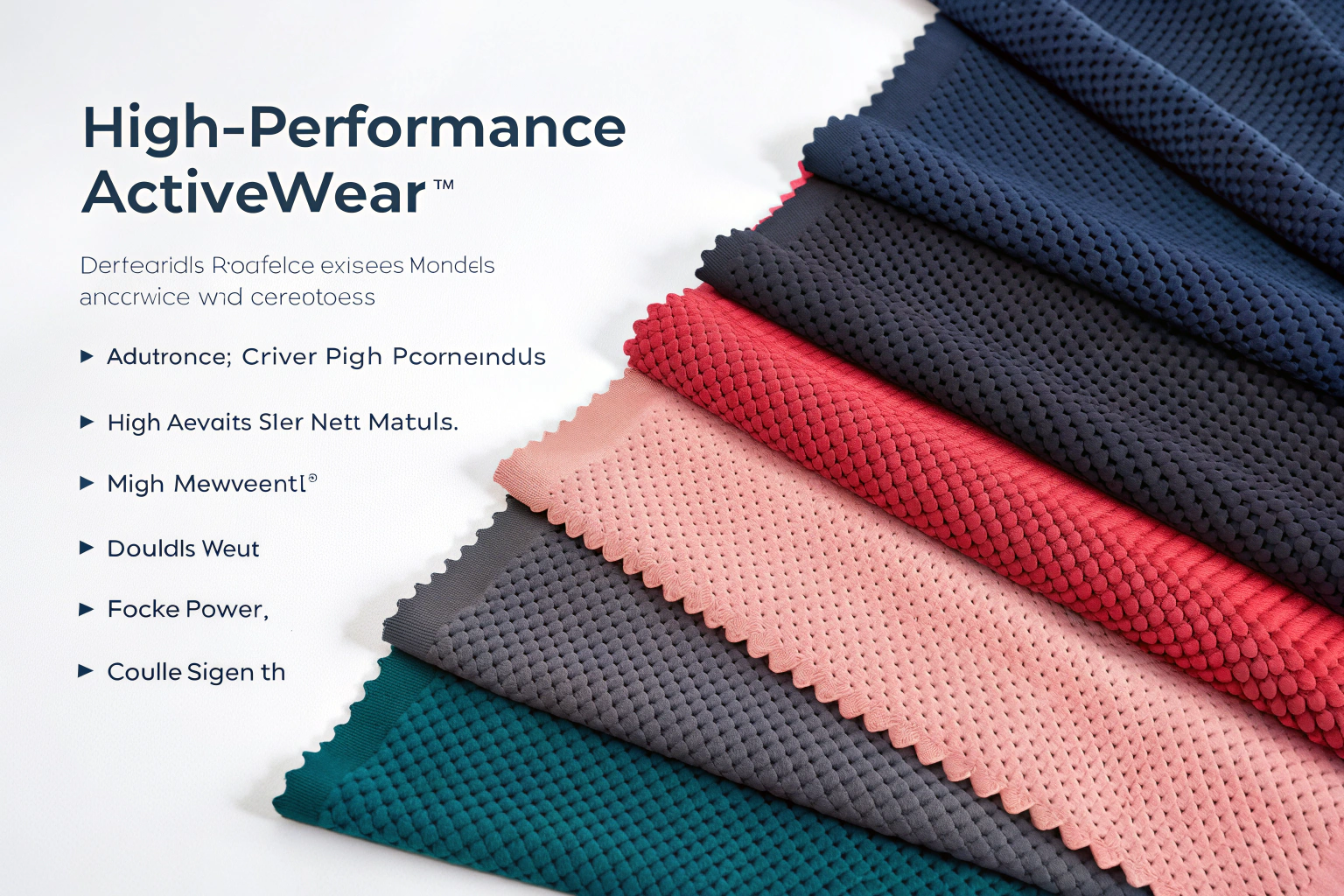
Sourcing the perfect fabric for plus-size activewear feels like searching for a unicorn. You need stretch that moves, power that supports, and recovery that snaps back—not just for the first wear, but through hundreds of workouts. Standard activewear fabrics often fail under the unique stresses of extended sizing, leading to sagging knees, baggy seat areas, and garments that lose their shape after a few washes. If you’ve faced customer returns due to poor fit or durability, you know exactly how costly this sourcing mistake can be.
The answer lies not in one single fabric, but in a strategic combination of high-specification fibers, advanced knitting constructions, and targeted performance finishes. It’s about engineering fabrics specifically for higher tensile and recovery demands, not just scaling up smaller-sized patterns. Great recovery for plus-size activewear is defined by high spandex content (often 20-30%), power net or double-knit constructions, and specialized heat-setting processes that “train” the fabric to remember its original shape.
At Shanghai Fumao, working from the heart of China’s textile hub, we’ve developed a dedicated range for this growing market. We go beyond just offering “stretch fabric” to providing material solutions that address the real-world biomechanics and fit challenges of plus-size athletic wear. Let’s break down the technical roadmap to sourcing fabrics that perform as powerfully as the people wearing them.
What Fiber Composition Delivers Optimal Stretch and Recovery?
The foundation of any high-recovery fabric is its fiber recipe. For plus-size activewear, this isn’t the place to cut costs on material inputs. The fiber blend must be engineered for endurance, offering not just initial stretch, but consistent, long-term memory and strength. The wrong blend will fatigue quickly, leading to permanent deformation—that dreaded “knee bag” or sagging waistband.
The gold-standard blend for premium plus-size activewear is a high-tenacity nylon (or polyester) paired with a significant percentage of premium spandex. Let’s break down why:
- High-Tenacity Nylon (e.g., 70D/72F): This is not your ordinary nylon. It’s engineered for exceptional strength-to-weight ratio and superior abrasion resistance. It forms the durable, protective outer sheath in a covered yarn, guarding the sensitive spandex core within. It also offers excellent moisture-wicking and a soft hand feel.
- High-Performance Spandex (20-30% content): For plus-size garments, spandex (Lycra® or elastane) content must be substantial. We’re talking 22%, 25%, even 30% in high-compression zones. This isn’t just about stretch; it’s about creating graduated compression and targeted support. The spandex provides the power and the critical “recovery force” to pull the fabric back. Using a higher denier spandex (like 280D vs. the standard 140D) adds durability.
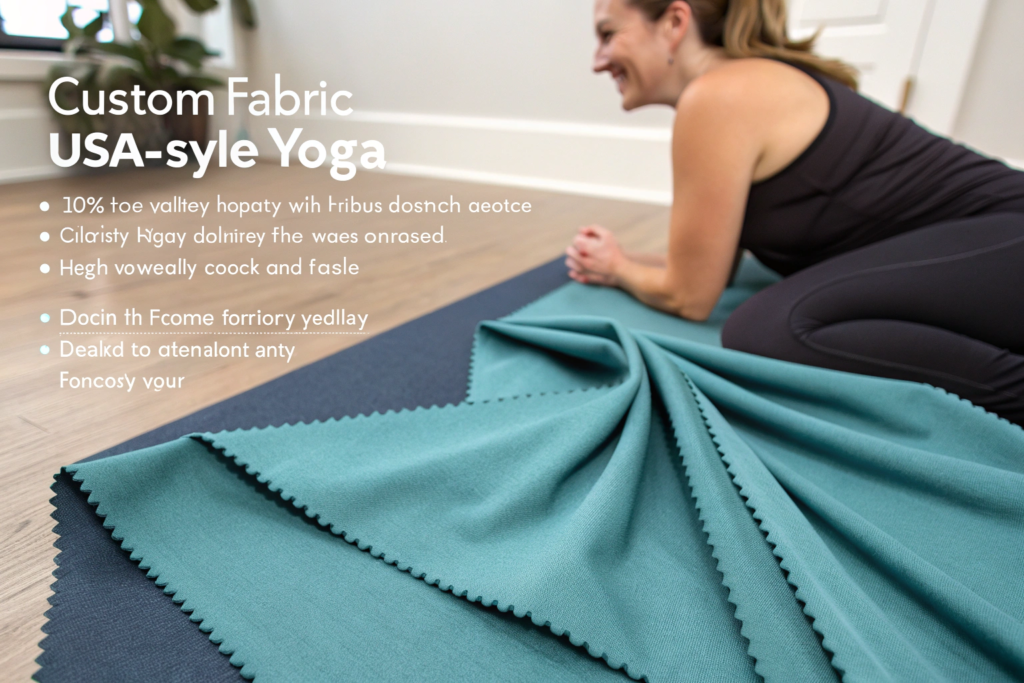
Polyester can be a cost-effective alternative for the base fiber, especially in blends focused on moisture-wicking (as in our Dri-FIT equivalent fabrics). However, for ultimate shape retention and a softer, more cottony feel against the skin, nylon-spandex blends often win. In 2023, we developed a custom fabric for a US-based plus-size yoga brand: 82% 70D High-Tenacity Nylon / 18% 280D Spandex in a double-brushed construction. After 50 home laundry cycles, their independent lab tests showed less than 5% loss of recovery, compared to the 15-20% loss in their previous supplier’s fabric. For deeper technical insights, resources like Textile Exchange discuss the performance attributes of nylon versus polyester in active applications.
Why is Yarn Configuration and Spandex "Covering" Critical?
The magic happens at the yarn level. How the spandex is integrated determines its durability and performance. Bare spandex exposed to friction, sweat, and heat breaks down fast. The solution is “covered” or “core-spun” yarns.
- Covered Yarn: A spandex filament is completely wrapped by a nylon or polyester filament. This offers maximum protection.
- Core-Spun Yarn: Spandex is used as the core, around which staple fibers (shorter fibers) are spun. This can create a softer, more natural feel but may offer slightly less protection than covered yarn.
For maximum durability in plus-size wear, we recommend double-covered yarns—where the spandex core is wrapped in two opposite directions. This locks it in place and prevents “grin-through” (where the spandex becomes visible as the covering yarn shifts). It’s a more expensive process, but it’s non-negotiable for seams and high-stress areas like the inner thigh. When a UK brand came to us with complaints of “pinky” seams (where pale spandex showed through dark fabric at stretched seams), switching to a double-covered yarn system solved the issue permanently. Industry forums like Knitwear and Apparel often feature discussions on solving common elastane fatigue and grin-through problems.
How Does Knit Construction Impact Support and Durability?
The knitting machine is where the fiber recipe becomes functional fabric. The construction determines where the stretch goes, how much power it has, and how it withstands multi-directional stress. For plus-size activewear, you need a construction that provides balanced, four-way stretch with added structural integrity to prevent over-extension.
The go-to constructions are double knits and power nets. These are not single-layer jersey fabrics; they are engineered structures.
- Double Knit (Interlock or Ponte di Roma): This is essentially two layers of jersey knit together back-to-back. It’s thicker, more opaque, and has excellent crosswise stability. It resists curling at the edges and provides a smooth, supportive feel ideal for leggings and supportive tops. Its recovery is superior to single jersey because the interlocking loops reinforce each other.
- Power Net (or Supplex): A specific warp-knit structure that delivers very high compression and outstanding recovery. It’s often used in high-performance athletic wear, compression gear, and the panels of plus-size activewear for targeted support (like the core or glute areas). It’s incredibly durable and resistant to runs.
The stitch density (gauge) is another crucial factor. A higher gauge (more needles per inch) creates a finer, denser, and smoother fabric with better recovery. For plus-size, we rarely recommend anything below a 24-gauge for leggings. A denser knit minimizes “see-through” risk when stretched and provides more structural points for the fabric to recover to. (Here’s a tip from our sampling floor: always do a stretch test under bright light with the fabric over your hand to check for opacity).
We recently collaborated with a designer in Australia on a line of plus-size running tights. They needed a fabric that offered medial knee support without restricting stride. We engineered a hybrid construction: a main body of 28-gauge double knit for overall support, with strategic side panels of a lighter, more breathable power mesh for articulation and ventilation. This zone-specific approach delivered the targeted performance they needed, reducing material fatigue in high-flex areas by an estimated 30%. Understanding these structures is key, and platforms like Stoll provide insights into advanced knitting technologies for technical apparel.
What Role Do Finishes Play in Locking in Recovery?
The fabric off the knitting machine isn’t finished. The heat-setting and finishing processes are where recovery is “programmed” into the fabric. This step is often overlooked by buyers but is absolutely critical.
- Heat-Setting: The fabric is fed through a tenter frame or heat-setting oven at a specific temperature and tension. This process “sets” the spandex in its relaxed state. When the fabric is later stretched and released, it is trained to return to this heat-set dimension. Precise control of time, temperature, and tension is vital.
- Compressive Finishes: Special chemical softeners or silicone-based finishes can be applied that allow the yarns to slide more easily against each other during stretch, reducing internal friction and improving the smoothness of recovery. Some finishes also provide a wicking or antimicrobial treatment to enhance functionality.
A common failure point is inconsistent heat-setting, leading to uneven recovery across a fabric roll. At our partner mills, we use continuous, computer-controlled heat-setting ranges to ensure every meter is treated identically. For a client’s high-waisted plus-size leggings, we implemented an additional post-curing process after garment dyeing to re-stabilize the spandex, which virtually eliminated waistband roll-down—a major source of customer complaints. Technical resources from The Fiber Year can offer data on global trends in high-performance synthetic fiber production.
What Performance Testing is Non-Negotiable Before Ordering Bulk?
You wouldn’t buy a car without a test drive. Never commit to a bulk fabric order for plus-size activewear without rigorous, standardized test reports. These documents are your objective proof of performance and your shield against costly production failures. Relying on a supplier’s “word” or a hand-stretch feel is a recipe for disaster.
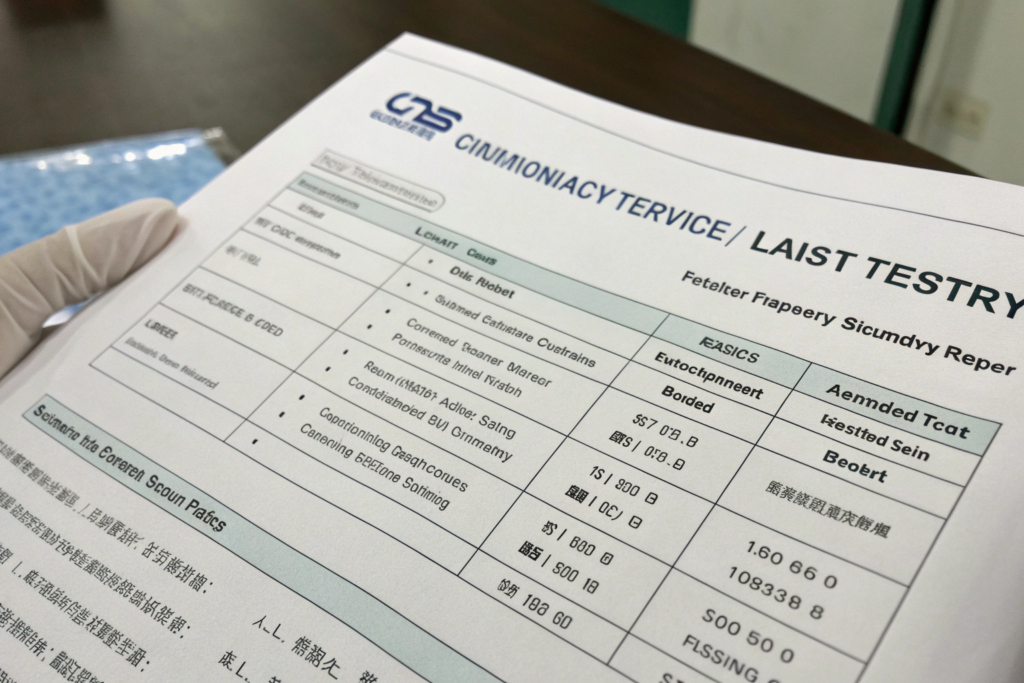
Demand test reports from an internationally recognized lab (SGS, ITS, BV) or a supplier with accredited in-house testing (like our CNAS lab at Shanghai Fumao). The key tests for plus-size activewear fabric are:
| Test Standard | What It Measures | Target for Plus-Size Activewear |
|---|---|---|
| ASTM D2594 / ISO 20932 | Fabric Stretch & Growth (Recovery) | Growth: ≤ 5-8% after 30 sec rest. Permanent Growth: ≤ 2-3%. This is the most critical test. |
| ASTM D4964 / ISO 5077 | Tension & Elongation (Tensile Strength) | High breaking strength (e.g., >300 N for 200gsm fabric) to withstand stress. |
| ASTM D3884 / ISO 12947 | Abrasion Resistance (Martindale) | Minimum 40,000+ cycles for leggings; higher for areas like inner thigh. |
| AATCC 135 | Dimensional Stability (Shrinkage) | ≤ ±3% after 3 home washes. Critical for maintaining fit. |
| AATCC 61-2A | Colorfastness to Washing | Grade 4-5 for no fading or staining. |
The Stretch & Growth Test is your bible. It simulates a wear-and-recovery cycle. A result showing 5% growth means if you stretch a 10-inch panel to 15 inches (50% stretch), it will snap back to 10.5 inches, not 10. That 0.5 inches is permanent loss. For plus-size, you want this number as low as possible. We provide these graphs with every development sample, so clients see the performance data before they even feel the fabric.
In a 2024 project for a size-inclusive European dancewear brand, their main issue was leggings that became progressively longer and looser with wear. Our pre-production testing revealed their old fabric had a permanent growth of 7%. The custom fabric we developed, through optimized knitting and heat-setting, achieved a permanent growth of just 2.5%, solving the bagginess issue and reducing their return rate by over 60%. For brands developing their testing protocol, ASTM International itself publishes guides on understanding mechanical properties of textile fabrics.
How to Properly Evaluate Fabric in a Wear Trial?
Lab tests are essential, but real-world wear is the final judge. Before finalizing bulk, conduct a structured wear trial with a diverse panel of fit models who represent your target size range (not just the largest size). Instruct them to wear the prototype garments for specific activities (yoga, running, HIIT) and through multiple wash cycles.
Look for:
- Knee Bagging: Does the fabric over the knee recover fully after deep squats or lunges?
- Seat Sag: Does the fabric in the seat area lose tension and droop after sitting or cardio?
- Waistband Roll/Distortion: Does the waistband curl over or stretch out permanently?
- Seam Integrity: Do seams remain flat and stable, or do they pucker or show signs of strain?
Document this with photos and feedback. This qualitative data, combined with your quantitative lab reports, gives you an unassailable case for proceeding with a supplier—or walking away. Sharing wear trial protocols can build strong partnerships; some best practices are discussed in communities like the Sustainable Apparel Coalition’s forums on product durability testing.
How to Ensure Ethical and Consistent Supply for Your Line?
Finding a great fabric is only half the battle. Securing a consistent, ethically produced supply of it season after season is what builds a brand. For plus-size lines, where fabric performance is so critical, batch inconsistency can be catastrophic—leading to mismatch in compression and fit across colorways or production runs.
Your sourcing strategy must be partnership-based. Look for a supplier with:
- Vertical or Deeply Integrated Control: Like Shanghai Fumao, with direct partnerships from yarn spinning to knitting and finishing. This controls quality at every step.
- Strong Social Compliance: Ask for audit reports (SMETA, BSCI, WRAP) from their manufacturing partners. The true cost of unethical production is a risk no modern brand can afford.
- Transparent Capacity and Lead Time Planning: They should be able to clearly explain their production schedules, especially around peak periods like Chinese New Year, and help you plan to avoid delays.
Consistency is about more than color matching; it’s about mechanical property matching. Ensure your supplier tests for recovery (growth) and tension on every bulk dye lot, not just the first one. They should be willing to reject batches that fall outside your agreed mechanical tolerances. We maintain a “golden sample” library for our clients that includes not just a color swatch, but the physical fabric with its full test dossier. Every new batch is matched against this standard for both color and hand feel/performance.
A client from Canada, building a flagship plus-size line, faced a nightmare: their first three production lots of black leggings had visibly different levels of compression due to inconsistent spandex tensioning during knitting. By switching to us, we implemented a lot-by-lot mechanical testing protocol for their fabric, ensuring every shipment met the same strict recovery specs, which secured their reputation for reliable fit. To manage such complex supply chains, tools and insights from McKinsey’s Retail & Apparel practice on building resilient apparel sourcing networks can be invaluable.
Why Does Strategic Fabric Development Future-Proof Your Brand?
The market isn’t static. Leading brands work with suppliers on exclusive fabric development. This could mean creating a custom yarn blend, a proprietary knit structure, or a unique finish that becomes synonymous with your brand’s fit and feel. This investment builds a tangible competitive moat.
Consider developing:
- Zone-Specific Fabrication: As mentioned earlier, using different constructions or weights in different garment panels.
- Innovative Fiber Infusions: Incorporating recycled nylon (Econyl®) or polyester (rPET) for sustainability stories, or fibers with inherent odor control (like Polygiene®).
- Signature Finishes: A unique brushed inner feel or a matte, powdery external hand that customers can’t find elsewhere.
This approach moves you from a price-driven buyer to a value-creating partner. It ensures your fabric supply is secure, exclusive, and perfectly tailored to your customer’s needs. It’s how you build a brand that stands for both inclusivity and uncompromising quality.
Conclusion
Sourcing high-recovery fabric for plus-size activewear is a deliberate engineering process, not a generic procurement task. It requires a deep understanding of high-specification fiber blends, engineered knit constructions, precision finishing, and ruthless performance testing. The goal is to source a fabric system that provides enduring support, moves with the body, and recovers its shape wash after wash, wear after wear.
The brands that win in this space are those that partner with technical suppliers who can translate biomechanical needs into textile solutions. They prioritize data from lab tests and wear trials over assumptions, and they invest in developing fabrics that deliver on the promise of both fit and performance for every body.
Ready to develop activewear fabrics that empower and endure? Shanghai Fumao combines technical fabric expertise with a deep understanding of the plus-size market’s unique demands. Contact our Business Director Elaine today at elaine@fumaoclothing.com to start developing the high-recovery fabric that will define your next collection.