Let’s cut through the hype. When you hear "wool blend," your mind might jump to that scratchy, old-school sweater you never wear. But here’s the reality: pure, high-quality wool is exceptional, but it’s also expensive and has specific care needs. Wool blended fabric isn’t a cheap compromise; it’s a strategic engineering solution. It’s about taking the unparalleled natural benefits of wool and systematically combining them with other fibers to solve its weaknesses—creating a fabric that’s not just warm, but also durable, easy-care, accessible, and perfectly suited for modern life. If you’re designing winter apparel and only thinking about pure wool or synthetic fills, you’re missing a massive opportunity in the sweet spot where performance meets practicality.
So, what exactly is wool blended fabric? It’s a textile where wool fibers are intimately mixed—during spinning—with one or more other fibers, be they natural (like cotton), synthetic (like polyester or nylon), or other specialty fibers (like Tencel). This isn’t layering; it’s a molecular-level partnership. The blend ratio (e.g., 70% wool / 30% nylon) dictates the fabric’s character. The magic happens in how each fiber contributes its superpower: wool brings temperature regulation, moisture management, and odor resistance; the partner fiber might bring strength, elasticity, cost stability, or a softer hand feel. This creates a material greater than the sum of its parts.
In winter apparel, this engineering is critical. A 100% wool coat might be warm but heavy and prone to shrinking. A 100% polyester puffer is light but can feel clammy. A well-designed wool blend strikes the perfect balance: warmth without weight, breathability without bulk, and luxury without fragility. Let’s unravel exactly how these blends work and how leading brands are deploying them to win in the competitive winter market.
Why Blend Wool? The Science Behind Superior Performance.
Blending is a deliberate act of textile alchemy. Pure wool (especially Merino) is a marvel of nature: its fibers have a natural crimp that creates insulating air pockets, and they can absorb up to 30% of their weight in moisture vapor (sweat) without feeling wet, releasing it slowly. This is the core of its temperature regulation. However, wool can be weak when wet, prone to felting/shrinking with agitation, and expensive.
Enter the blending partner. Each one addresses a specific challenge:
- Wool + Nylon/Polyester (The Workhorse): Adds tremendous tensile strength and abrasion resistance. This is critical for high-wear areas like elbows, shoulders, and seat panels in trousers or coats. It also improves pill resistance and dimensional stability, making the garment more durable and easier to care for. A 80% wool / 20% nylon blend is a classic for durable suiting and winter uniforms.
- Wool + Acrylic (The Accessible Performer): Acrylic is often called "synthetic wool." Blending it in (commonly 50/50 or 70/30) lowers cost significantly while retaining a wool-like loft and warmth. It increases color vibrancy and makes the fabric more machine-washable. This is the backbone of many affordable, colorful knitwear lines.
- Wool + Cotton (The Transitional Comfort): Cotton softens the hand feel dramatically, making the fabric less "itchy" for those sensitive to wool. It creates a softer, more casual fabric ideal for lighter-weight fall/winter shirts, cardigans, and beanies. However, it reduces the inherent warmth and moisture-wicking of wool, so it’s best for milder climates.
- Wool + Tencel™/Modal (The Luxury Upgrade): This is a game-changer for high-end knitwear. The cellulosic fiber adds a beautiful, smooth drape and a silky luster, elevating the fabric’s luxury feel. It enhances moisture-wicking and improves the fabric’s breathability, creating a lightweight yet warm performance knit. We’re seeing this in premium base layers and luxury sweaters.

How Does Blending Affect the Core Warmth and Breathability of Wool?
This is the most common concern: "Does blending dilute wool’s magic?" The answer is: it depends on the partner and the blend ratio.
With synthetic partners (Nylon, Polyester), the core insulating structure—the wool crimp creating air pockets—remains intact if the wool percentage is high enough (typically >50%). The synthetics, which don’t absorb moisture, sit alongside the wool fibers. The fabric retains excellent dry warmth (insulation) but can slightly alter the dynamic moisture management. Wool’s genius is absorbing vapor; synthetics do not. In a blend, the wool component still performs this function, but the overall vapor absorption capacity is proportionally reduced. For most winter outerwear where the primary need is static insulation and wind resistance, this is an excellent trade-off for gained durability.
With natural absorbers like cotton, the effect is different. Cotton also absorbs moisture but holds it, losing its insulating power when wet. In a wool-cotton blend, the cotton can actually compromise the "warm when wet" advantage of wool. Therefore, these blends are favored for their softness and style in less demanding, dry-cold conditions rather than for high-performance thermal regulation.
What Are the Practical Advantages in Manufacturing and Care?
For brands, wool blends offer critical supply chain and customer experience benefits:
- Cost and Yield Stability: Wool prices can fluctuate wildly due to weather, disease (like sheep bluetongue), and global demand. Blending with a stable, commodity fiber like acrylic or polyester buffers these fluctuations, allowing for more predictable costing and pricing.
- Improved Production Efficiency: Wool can be tricky to spin and knit at high speeds due to fiber slippage. Adding a small percentage of synthetic (even 5-10%) increases the yarn’s strength, reducing breakages in spinning and knitting, which boosts mill throughput and reduces waste.
- Consumer-Friendly Care Labels: "Machine Washable" is a non-negotiable for most modern consumers. Pure wool often requires hand-wash or dry-clean. The right synthetic blend (with proper anti-felt finishing) can make a fabric truly machine-washable on a gentle cycle without catastrophic shrinkage. This dramatically expands the market for wool-containing products.
A concrete example: In 2023, a mid-market US coat brand wanted to upgrade from 100% polyester fleece to a more natural-feeling mid-layer. A 60% wool / 40% recycled polyester blend gave them the warm, natural aesthetic they wanted, with enough polyester to allow for machine washing and to meet a $45 retail price point. It became their best-selling winter layer.
How are Leading Brands Deploying Wool Blends in Specific Winter Categories?
The application dictates the blend. Smart brands don’t use a one-blend-fits-all approach.
1. Technical Outerwear & Performance Insulation:
- Use: For insulated jackets, ski wear, and high-activity winter gear.
- Blend of Choice: Wool (Merino) + Nylon + Elastane (Spandex).
- Why: Merino provides superior warmth and odor control for multi-day wear. Nylon adds extreme durability and wind resistance for the outer face fabric or as a reinforcing yarn in knits. A small amount (2-5%) of elastane provides critical stretch for mobility. The blend is often used in warp-knit constructions for base layers or as a fleece-backed woven for soft-shell jackets.
- Brand Example: Brands like Smartwool and Icebreaker use high-merino blends (e.g., 85% Merino / 10% Nylon / 5% Elastane) for their legendary base layers, combining natural performance with durability.
2. Luxury Knitwear & Sweaters:
- Use: For premium sweaters, cardigans, and beanies.
- Blend of Choice: Wool (Cashmere, Lambswool) + Silk, Tencel, or Fine Cotton.
- Why: Here, the goal is to elevate hand feel, drape, and luster. Blending cashmere with silk creates an unbelievably soft, lightweight, and luminous fabric. Blending fine wool with Tencel adds strength and a beautiful drape that resists bagging. These blends justify a luxury price point with tangible enhancements.
- Case Study: We developed a 70% Fine Australian Merino / 30% Tencel™ knit for a French luxury brand in 2024. The Tencel eliminated the slight prickliness of the pure Merino, gave the sweater a beautiful fluid drape, and improved its resistance to pilling. The sell-through at retail was 40% higher than their previous pure Merino style.

What is the Role of Wool Blends in Tailored Winter Coats and Suiting?
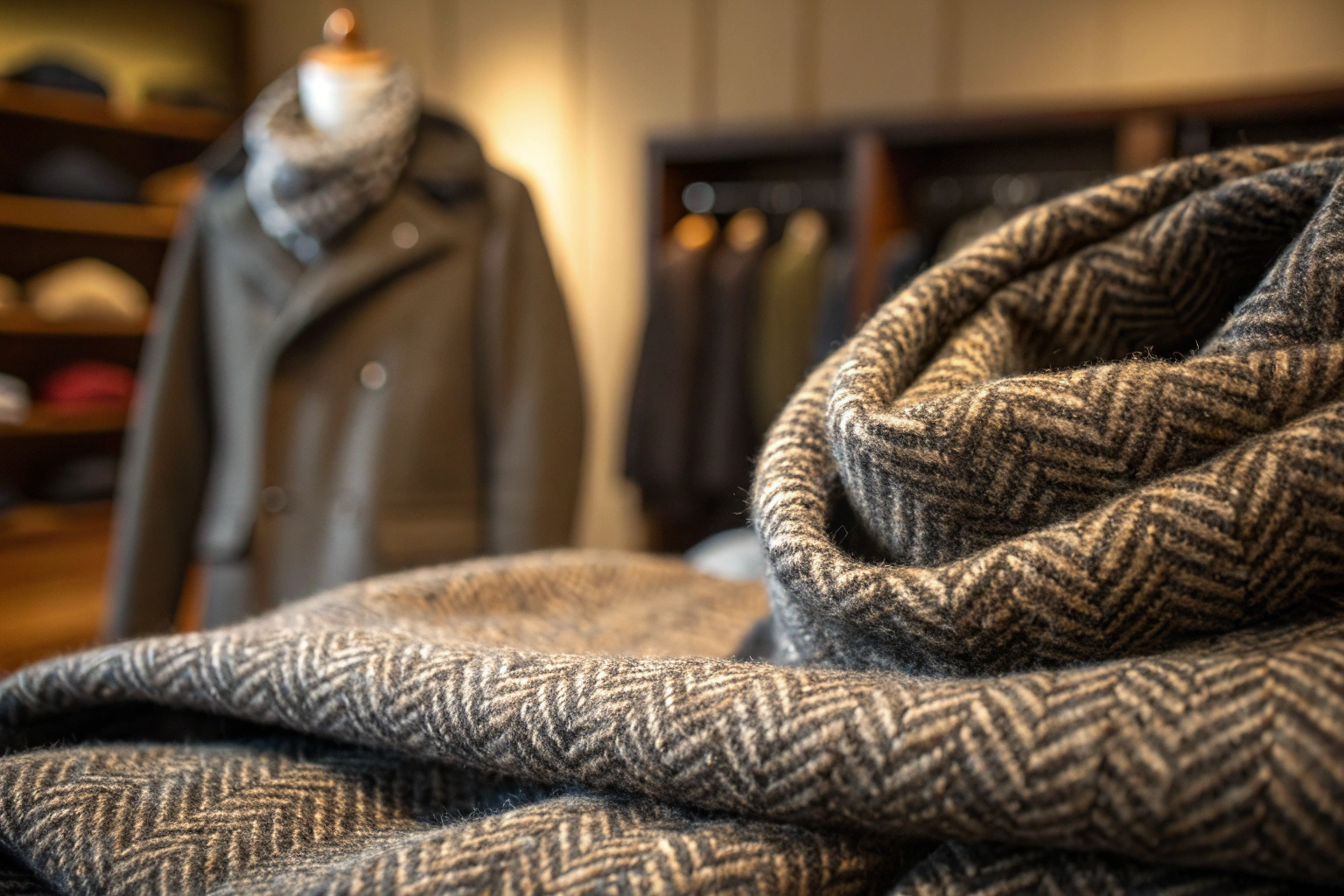
This is where tradition meets innovation. The classic winter suiting or overcoat fabric has always been a blend—think of the iconic wool/mohair blend for a crisp, durable finish. Today’s blends are even more performance-driven.
- For Overcoats: A 70-80% Wool / 20-30% Nylon blend is standard for a durable, shape-holding, and weather-resistant coat. The nylon adds tear strength and reduces wrinkling.
- For Winter Suiting: Blends with Polyester (15-20%) are common for business attire, offering improved crease recovery and durability for travel. For a more luxurious option, blending wool with alpaca or camel hair increases loft and warmth without significant weight addition.
- The Sustainability Angle: Leading brands are now blending virgin wool with recycled wool (post-consumer) or recycled polyester. This creates a fabric with a compelling eco-story while maintaining performance. Sourcing such materials requires verification of GRS (Global Recycled Standard) or RWS (Responsible Wool Standard) certifications.
How are Blends Innovating in the Accessories Market?
Accessories like scarves, gloves, and hats benefit immensely from blending.
- Touchscreen-Compatible Gloves: A blend of fine wool, acrylic, and conductive yarns (like silver-coated nylon) provides warmth, dexterity, and smartphone functionality.
- Super-Soft Scarves: Blending Merino wool with a microfiber polyester creates an incredibly soft, lightweight, and drapey scarf that feels luxurious against the neck and is less prone to snagging than pure cashmere.
- Durable Beanies: A wool/acrylic blend is the industry standard, offering warmth, elasticity to fit various head sizes, and the ability to hold vibrant colors through repeated washing.
What Should You Look for When Sourcing Wool Blended Fabrics?
Navigating wool blends requires a discerning eye. Here’s your sourcing checklist:
- Demand Full Transparency on Composition: The label must be precise. "Wool Blend" is meaningless. Insist on a breakdown like "55% Wool, 30% Acrylic, 15% Nylon."
- Understand the Wool Grade: Not all wool is equal. Is it Merino (fine, soft, 17-24 micron)? Lambswool (first shear, soft)? Or a coarser wool for carpets and heavy felts? The grade determines the hand feel and price. For apparel, aim for 27 microns or finer.
- Ask for Certifications: For ethical and quality assurance, look for:
- RWS (Responsible Wool Standard): Ensures animal welfare and land management.
- Woolmark (Pure Wool or Wool Blend): The Woolmark logo on a blend certifies it contains a minimum of 50% wool and has passed stringent performance tests for durability, colorfastness, etc.
- OEKO-TEX Standard 100: Crucial to ensure the dyes and auxiliaries used are safe, especially for items close to skin.
- Request Performance Data: Ask the supplier for test reports on:
- Pilling Resistance (Martindale test)
- Dimensional Stability (Shrinkage after washing)
- Colorfastness (to washing and light)
- Evaluate the Supplier’s Expertise: Do they understand spinning technology? Can they explain why they chose a particular blend ratio and yarn structure? A good partner, like Shanghai Fumao, will not just sell you a fabric but will consult on the optimal blend for your specific end-use, price point, and performance requirements.

How Do You Test the Quality of a Wool Blend Fabric Before Bulk Order?
Never commit based on a small hand sample alone. Implement a three-stage approval process:
- Lab Dip & Hand-Feel Approval: Approve the color and basic feel on a small swatch.
- Strike-Off Approval: Order a 10-20 meter mini-run (a "strike-off") of the exact blend and construction. Use this to make a prototype garment. Wash it, wear it, test it. Does it pill? How does it recover from wrinkles? Does it shrink?
- Pre-Production Sample (PP Sample): Before the full bulk run, the supplier should produce a sample from the beginning of the production lot. This confirms the bulk will match your approved strike-off.
In 2022, a client skipped the strike-off stage for a 60/40 wool-acrylic knit for sweaters. The hand sample was perfect. The bulk fabric, however, had a much higher pilling rate. The cause? The mill had used a shorter staple acrylic fiber in the bulk to save cost, which wasn’t visible in the hand sample. A proper strike-off and subsequent garment test would have caught this immediately. The lesson? Test at volume before you buy at volume. For a framework on textile testing standards, ASTM provides the benchmark methods.
What Are the Common Pitfalls and Red Flags?
- "Skin-Irritation-Free Wool Blend": This is often a sign of very low wool content (<30%) or the use of coarse wool. True non-itchiness comes from fine wool (Merino) or effective blending with soft fibers.
- Extreme Price Variance: If a quote is significantly lower than the market for a stated blend, they are likely using inferior wool (recycled/unidentified origin) or a different composition.
- Lack of Technical Data: A supplier who cannot provide basic test reports is not controlling their supply chain.
- Vague Care Instructions: If the suggested care is ambiguous, it indicates the mill hasn’t validated the fabric’s wash performance.
Conclusion
Wool blended fabric represents the intelligent future of winter textiles—a fusion of nature’s best performance with human ingenuity. It allows designers and brands to precisely engineer warmth, durability, care, and cost, creating products that meet the nuanced demands of today’s consumers. From high-performance baselayers to luxurious knitwear and durable outerwear, the strategic use of wool blends is a key differentiator for brands that value both function and commercial savvy.
The journey to a perfect wool blend starts with a clear understanding of your end product’s requirements and partnering with a fabric supplier who possesses the technical depth to translate those needs into the right fiber marriage. It’s a collaborative process of specification, testing, and refinement.
Ready to engineer your perfect winter fabric? At Shanghai Fumao, we specialize in developing and sourcing sophisticated wool blends, from RWS-certified bases to innovative blends with Tencel and recycled fibers. We provide the transparency, certifications, and performance data you need to build a superior winter collection. Contact our Business Director, Elaine, to begin the conversation. Let’s blend science with nature for your next winter success. Reach her at: elaine@fumaoclothing.com.