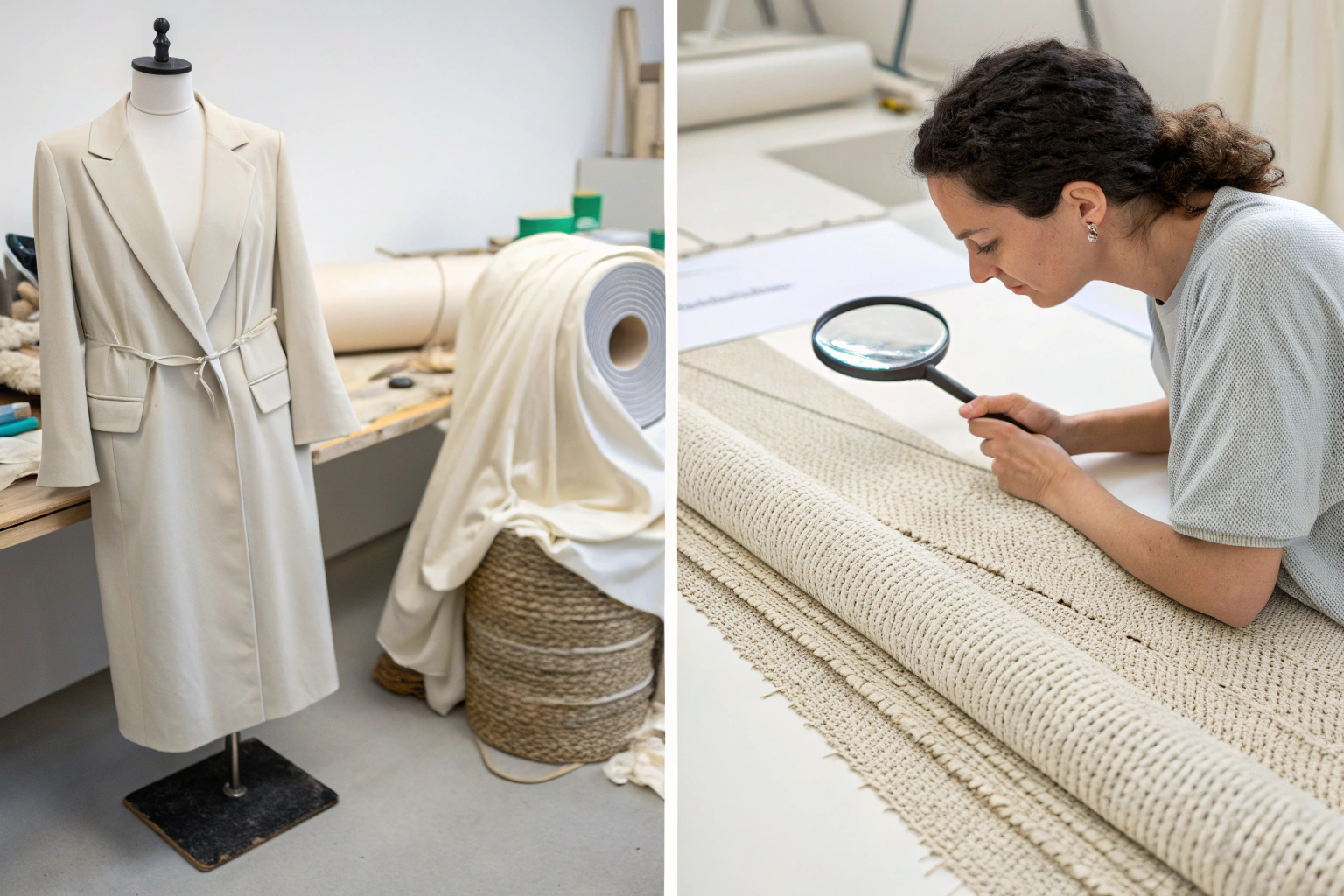
You’re sketching your next collection, imagining the perfect silhouette, the ideal drape, the way the garment should move with the body. Then reality hits: should this be made from a woven or a knitted fabric? This single decision impacts everything—from the final fit and feel to production cost and even your marketing story. Getting it wrong means a beautiful design that’s uncomfortable to wear, or a stretchy concept that loses its shape after one wash. But how do you make the right call when the options seem endless?
Choosing between woven and knitted fabrics depends on three core design requirements: desired structure versus stretch, targeted comfort and drape, and production complexity with cost. Woven fabrics offer crisp structure and durability with minimal stretch, ideal for tailored garments. Knitted fabrics provide inherent stretch, superior comfort, and conforming drape, perfect for body-conscious and casual wear. The choice fundamentally dictates your pattern-making, sizing strategy, and end-user experience.
As a fabric supplier who has worked with designers from Paris runways to Silicon Valley techwear startups, I’ve seen brilliant designs fail and simple ones soar—all based on this foundational choice. The secret isn’t just about fiber content; it’s about understanding the mechanical DNA of the fabric construction. Let’s unravel the practical differences to guide your next, and best, design decision.
What Are the Core Structural Differences?
At the most basic level, woven and knitted fabrics are built differently, and this construction defines their entire character. Imagine building a wall: weaving is like laying bricks in an interlocking grid—strong and stable, but rigid. Knitting is like creating a chain-link fence with interconnected loops—flexible and yielding, but less dimensionally fixed.
Woven fabrics are created by interlacing two sets of yarns (warp and weft) at right angles, typically on a loom. This crisscross structure creates a fabric that is generally stable, with little to no inherent stretch along the grain (unless elastic fibers like spandex are added). The edges, called selvages, are tightly bound and won’t fray. Common examples include denim, poplin, satin, and canvas. Their stability makes them ideal for tailored, structured designs where you want the fabric to hold a specific shape.
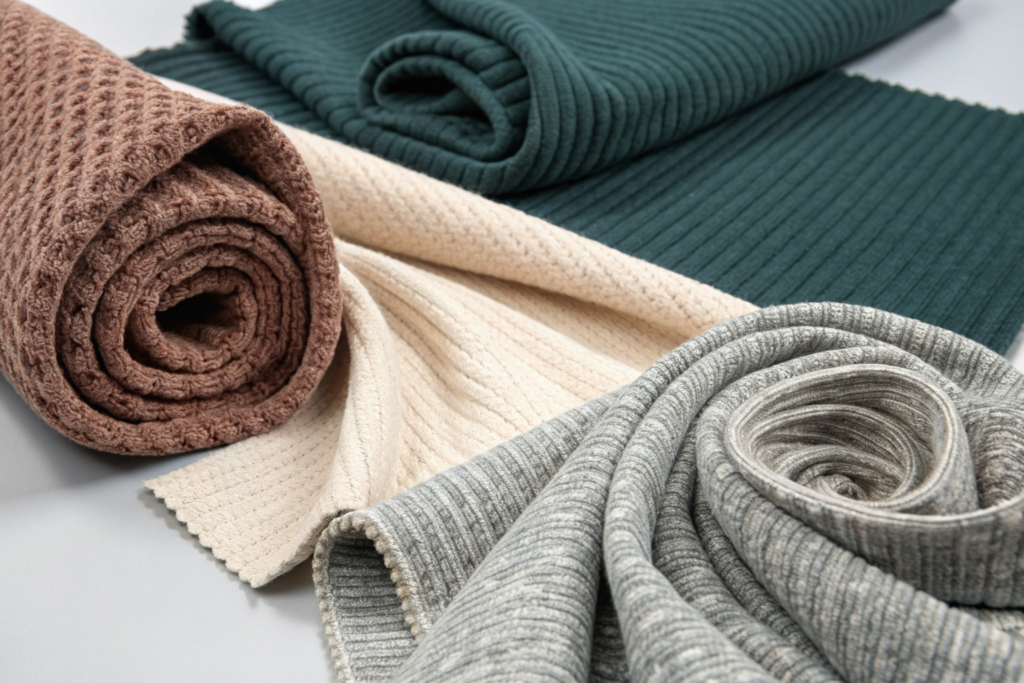
Knitted fabrics are made from one continuous yarn (or set of yarns) looped together, either by hand or machine. Think of it like making a sweater with knitting needles. This looped structure creates natural elasticity and stretch in multiple directions (especially in weft knits like jersey). The edges are prone to curling and fraying if not finished. Common examples include jersey, rib knit, sweatshirt fleece, and ponte roma. Their stretch makes them perfect for comfort, ease of movement, and body-hugging silhouettes. For a deeper dive into the science, resources like The Textile Institute’s fabric construction guides explain this well.
How Does Construction Dictate Stretch and Recovery?
This is the most critical performance difference. A woven fabric’s stretch is usually minimal and comes primarily from the mechanical "give" between the yarns or from added elastic fibers. A 100% cotton twill might have 2-3% stretch on the bias (diagonal). Recovery—its ability to bounce back to its original shape after stretching—is often poor unless engineered with spandex.
A knitted fabric stretches because the loops can expand and contract. A single knit jersey can easily have 20-30% crosswise stretch without any spandex. Recovery is better because the loops want to return to their original shape, but excessive stretching can permanently deform the fabric (think of a stretched-out sweater neckline).
For a client creating high-performance yoga wear, we recommended a specific nylon-Lycra circular knit for its four-way stretch and excellent recovery, crucial for intense movement. For their structured yoga bag, we suggested a coated woven polyester for shape retention. Choosing correctly meant their entire product line performed as intended.
Which Construction is More Durable and Stable?
For sheer durability against abrasion and tearing, woven fabrics generally win. The tight interlocking of yarns makes them resistant to snags and more dimensionally stable—they hold their shape well over time and during washing. A denim jacket or canvas workwear pant is a testament to this.
Knitted fabrics are more susceptible to snagging (a single pulled loop can create a "ladder"), and they can lose shape more easily if not cared for properly (e.g., a heavy knit sweater stretching under its own weight). However, not all knits are delicate. A tightly knitted ponte de roma or a double-knit can be remarkably stable and durable for structured knit garments like skirts or blazers.
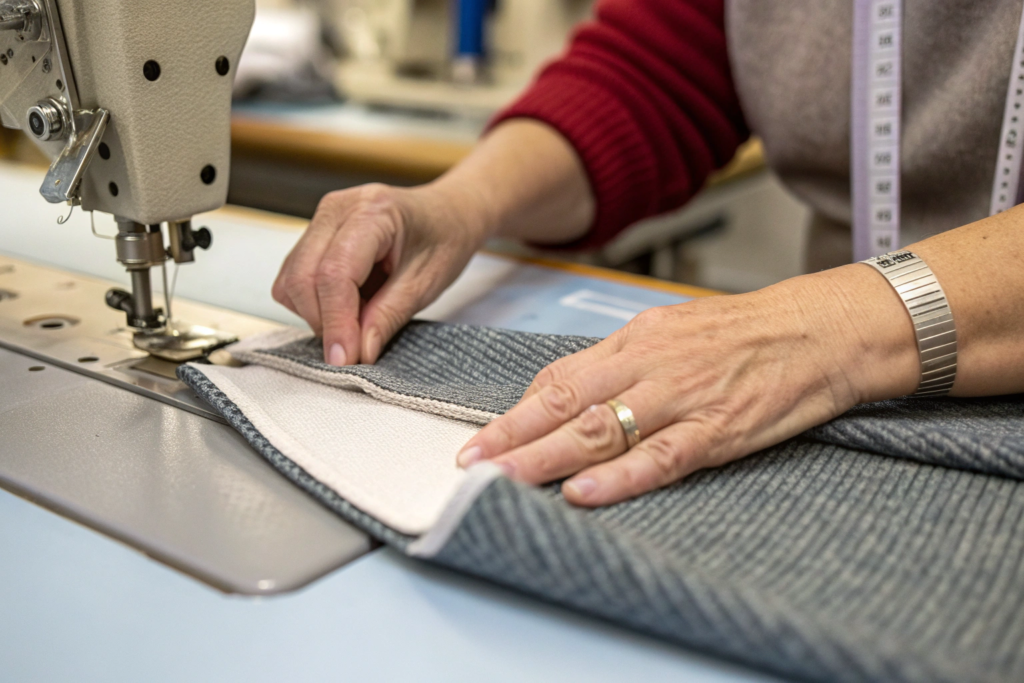
Stability during cutting and sewing is another key factor. Woven fabrics lie flat and are easier for automated cutting. Knits can curl at the edges, requiring specialized handling, feed systems, and stitches (like a serger/overlock) to prevent seam puckering. This directly impacts your manufacturing cost and complexity. A great resource for sewers facing this is online communities for knit fabric sewing techniques.
How Do Drape, Comfort, and Fit Compare?
Beyond structure, the choice between woven and knit defines how a garment feels on the body and how it complements the wearer’s form. This is where design intuition meets textile engineering.
Drape refers to how fabric falls or hangs under its own weight. Wovens offer a wide range: a stiff taffeta stands away from the body, while a fluid silk charmeuse cascades beautifully. You select the drape by choosing the fiber, weave, and weight. Knits tend to have a softer, more conforming drape that clings to the body’s contours, especially in lighter weights. A knit jersey dress will skim the body, while a woven silk dress of the same weight might have a more floating, architectural drape.
Comfort is heavily influenced by breathability and elasticity. Knits are generally more breathable due to the air pockets in the looped structure and move effortlessly with the body, offering superior comfort for active or casual wear. Wovens can be less forgiving; a tightly woven shirt might feel restrictive if not cut with enough ease. However, wovens made from natural fibers like linen or loose-weave cotton can be extremely breathable for hot climates.
Fit and Sizing Implications are massive. Woven garments require precise patterning and often need darts, seams, and closures (zips, buttons) to fit the body’s curves. Sizing is more critical. Knit garments, due to their stretch, are more forgiving and can accommodate a range of body shapes with fewer structural elements—think of a simple T-shirt vs. a tailored shirt. This can simplify pattern making and reduce size breaks.
What Are the Best Uses for Woven Fabrics?
Choose wovens when your design calls for:
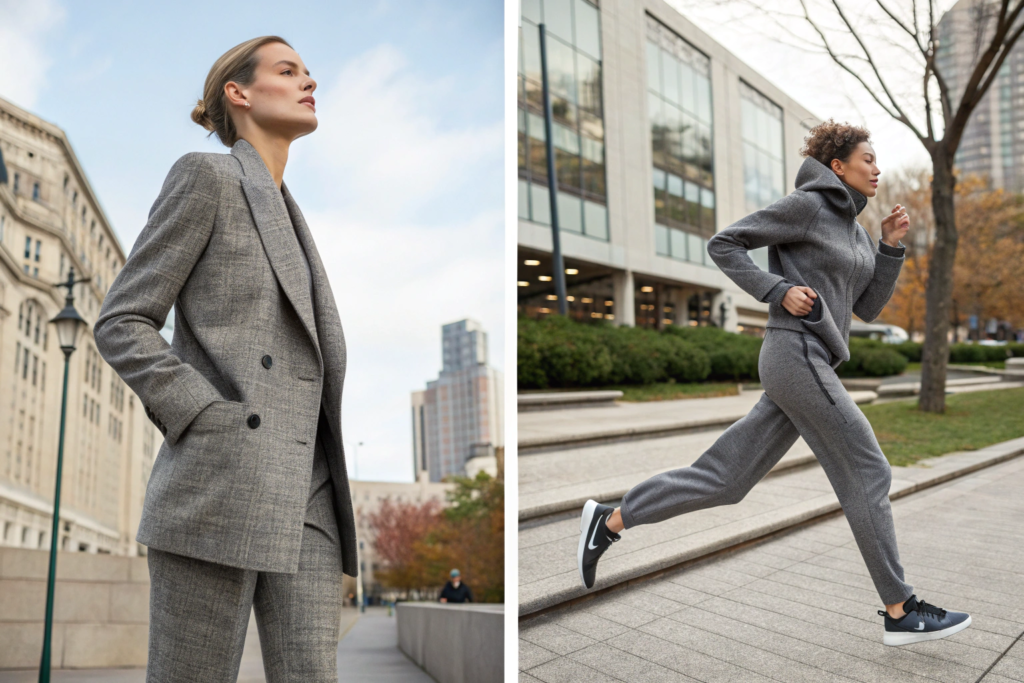
- Sharp Tailoring: Blazers, suit trousers, structured coats, and shirt dresses.
- Crisp Shape: A-line skirts, pleated trousers, corsets, and collared shirts.
- Durability Requirements: Workwear, upholstery, bags, and outer shells for technical gear.
- Specific Drape or Sheen: Flowing evening gowns (in satin or chiffon), voluminous sleeves, and garments where a luxurious, non-stretch hand-feel is key.
- Print Fidelity: Woven fabrics provide a stable, smooth surface for detailed, high-resolution prints.
A recent project with a Milan-based brand illustrates this perfectly. They wanted a "paper bag" waist trouser with sharp, defined pleats that would hold their shape all day. We developed a custom high-twist wool-polyester blend in a tight plain weave. The woven structure provided the necessary "memory" and crispness that a knit simply could not achieve.
What Are the Best Uses for Knitted Fabrics?
Choose knits when your design prioritizes:
- Ease and Movement: Activewear, loungewear, sportswear, and children’s clothing.
- Body-Conscious Silhouettes: Dresses, tops, leggings, and swimwear (with appropriate blends).
- Comfort and Softness: T-shirts, hoodies, undergarments, and sleepwear.
- Minimalist Construction: Garments designed with fewer seams for a clean, modern look.
- Wrinkle Resistance: Many knits are naturally less prone to wrinkling than wovens, ideal for travel.
For a direct-to-consumer brand in Los Angeles focusing on "all-day comfort," we developed a proprietary brushed modal and cotton rib knit. Its two-way stretch and ultra-soft hand-feel became the foundation for their best-selling capsule wardrobe of tops and dresses that could transition from home to casual outings.
What Are the Cost and Production Implications?
This decision ripples through your entire supply chain and bottom line. The cost per meter is just the starting point; you must consider waste, manufacturing complexity, and required skill.
Fabric Cost: There’s no blanket rule that one is always cheaper. A basic cotton jersey knit can be very economical, while a complex jacquard knit or a fine-gauge merino wool knit is expensive. Similarly, a standard cotton poplin is affordable, but a silk satin or technical waterproof woven is not. Often, for a similar look and feel, knits can have a lower entry cost for casual applications.
Fabric Yield and Waste: Knit fabrics, especially tubular knits, can sometimes offer higher yield with less waste because they require fewer seam allowances due to their stretch and can be cut in a single layer without worrying about grain alignment in the same way as wovens. However, their tendency to curl can lead to cutting errors if not handled by experienced workers.
Manufacturing Costs & Lead Times: Sewing with knits requires different machinery (overlock/serger, coverstitch) and operator skills. While seams are faster to construct (fewer finishing steps like pressing open), the risk of defects (seam puckering, stretching) can be higher if the factory isn’t specialized. Woven garment construction is more traditional but can be more labor-intensive due to precise fitting, interfacing, and closures. For a small brand, finding a factory skilled in knits might be easier than one specializing in tailored wovens.
How Do MOQ and Development Compare?
Minimum Order Quantities (MOQs) for custom development can differ. For basic constructions, knitting can have lower MOQs because setting up a circular knitting machine is faster than threading a loom for a woven. However, for highly complex patterns, a custom jacquard knit may have a similar or even higher MOQ than a woven due to the programming and setup of electronic knitting machines.
Sampling and Development Speed also varies. Producing a knit sample can be quicker if the yarn is in stock, as a small sample length can be knit directly. A woven sample often requires a minimum sample warp to be set up, which can be more time-consuming and costly. This is a crucial factor for fast-paced design cycles. At Shanghai Fumao, our quick-turn 48-hour sampling service is more frequently used for knit developments due to this inherent speed advantage in the sampling phase.
Table: Quick-Reference Decision Guide
| Design Goal | Recommended Fabric Type | Key Reasons |
|---|---|---|
| Structured Blazer | Woven (e.g., Wool Crepe, Twill) | Holds shape, sharp edges, durable. |
| Everyday T-Shirt | Knitted (Jersey, Piqué) | Soft, stretchy, breathable, comfortable. |
| Flowing Evening Gown | Woven (Chiffon, Satin) or Knit (Jersey) | Depends on desired drape: architectural (woven) vs. body-skimming (knit). |
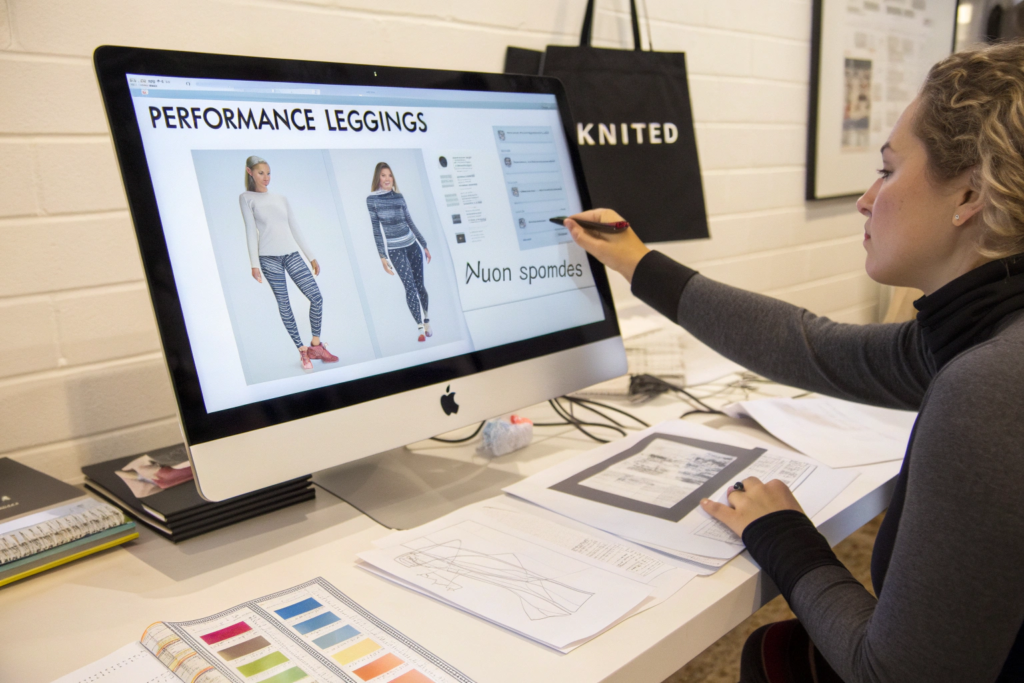
| Performance Leggings | Knitted (Nylon-Spandex, Polyester-Spandex) | Four-way stretch, moisture-wicking, recovery. |
| Casual Button-Down Shirt | Woven (Poplin, Oxford, Linen) | Crisp collar, structured look, prints well. |
| Cozy Sweatshirt | Knitted (French Terry, Fleece) | Soft, insulating, stretchy for ease. |
| Durable Work Pants | Woven (Canvas, Denim) | Abrasion-resistant, holds shape under stress. |
How Do You Make the Final Choice for Your Specific Design?
Armed with the technical knowledge, the final step is to apply it to your unique vision. Start by listing the non-negotiable attributes of your garment. Is stretch absolutely required? Is a crisp silhouette the defining feature? Then, consider the user experience. Who is wearing this and what are they doing in it? Finally, be honest about your production capabilities and budget.
Prototype in Both. When in doubt, especially for hybrid designs, make a prototype (a "toile" or sample) in both a woven and a knit of similar weight and hand-feel. You will learn more from seeing and feeling the garment on a body than from any spec sheet. A designer of minimalist womenswear once insisted a certain dress design be in woven linen. We persuaded them to also sample it in a linen-cotton knit. The knit version became their flagship product because of its unexpected wrinkle resistance and comfort.
Consult Early with Your Supplier. Don’t finalize your tech pack before this conversation. A good supplier can often suggest a fabric you haven’t considered. For example, if you want the look of a woven but need a bit of stretch, we might suggest a stretch poplin (woven with spandex) or a ponte di roma (a stable double knit). These hybrid solutions can offer the best of both worlds. Engaging in industry forums for fabric sourcing dilemmas can also provide peer insights.
What Hybrid or Alternative Constructions Exist?
The binary choice isn’t absolute. Smart fabric engineering creates solutions in the middle:
- Stretch Wovens: By incorporating a small percentage (2-5%) of spandex into the yarn or weave, you add comfort and recovery to a structured fabric. Think stretch denim or stretch wool suiting.
- Stable Knits: Double knits (like ponte), scuba knits, and bonded knits are designed to mimic the stability and crisp drape of wovens while retaining some stretch and comfort.
- Non-Wovens: For specific applications like interfacing, felts, or some technical components, non-woven fabrics (fibers bonded together) are an entirely different third option.
At Shanghai Fumao, we helped an eco-friendly shoe brand solve a major problem. They needed a durable, shape-holding upper material that was also seamless and lightweight for a sock-like fit. We engineered a solution using a technically advanced non-woven base with a knitted outer layer, creating a proprietary material that checked all their boxes. This kind of innovation happens when you move beyond the basic choice.
When Should You Break the "Rules"?
Fashion is about creativity. Sometimes, using a fabric against its traditional purpose creates magic. Using a delicate woven chiffon for a deconstructed, slouchy knit-style top. Or using a heavy, stable knit to create a structured, architectural piece. The key to breaking the rules successfully is to understand them first and to partner with a factory that can handle the unconventional techniques required. Be prepared for higher costs and potential sampling iterations.
Conclusion
Choosing between woven and knitted fabrics is one of the most consequential decisions in apparel design. It’s a choice that balances aesthetics, function, and commercial reality. By understanding the fundamental structural differences—how they dictate stretch, drape, durability, and cost—you move from guessing to strategic selecting. Remember, the best choice always serves the garment’s purpose, the wearer’s experience, and the viability of your production.
Let this knowledge empower you, not limit you. Some of the most innovative designs come from creatively challenging the traditional applications of these fabric families.
If you’re at the crossroads of this decision for your next collection and need expert guidance to navigate the trade-offs, we’re here to help. At Shanghai Fumao, with our deep library of both woven and knitted fabrics and our integrated development team, we can provide side-by-side swatches, cost analyses, and production advice to ensure your vision is realized in the perfect material. Contact our Business Director, Elaine, to start a conversation about your specific design challenges and opportunities.
You can contact Elaine at: elaine@fumaoclothing.com.