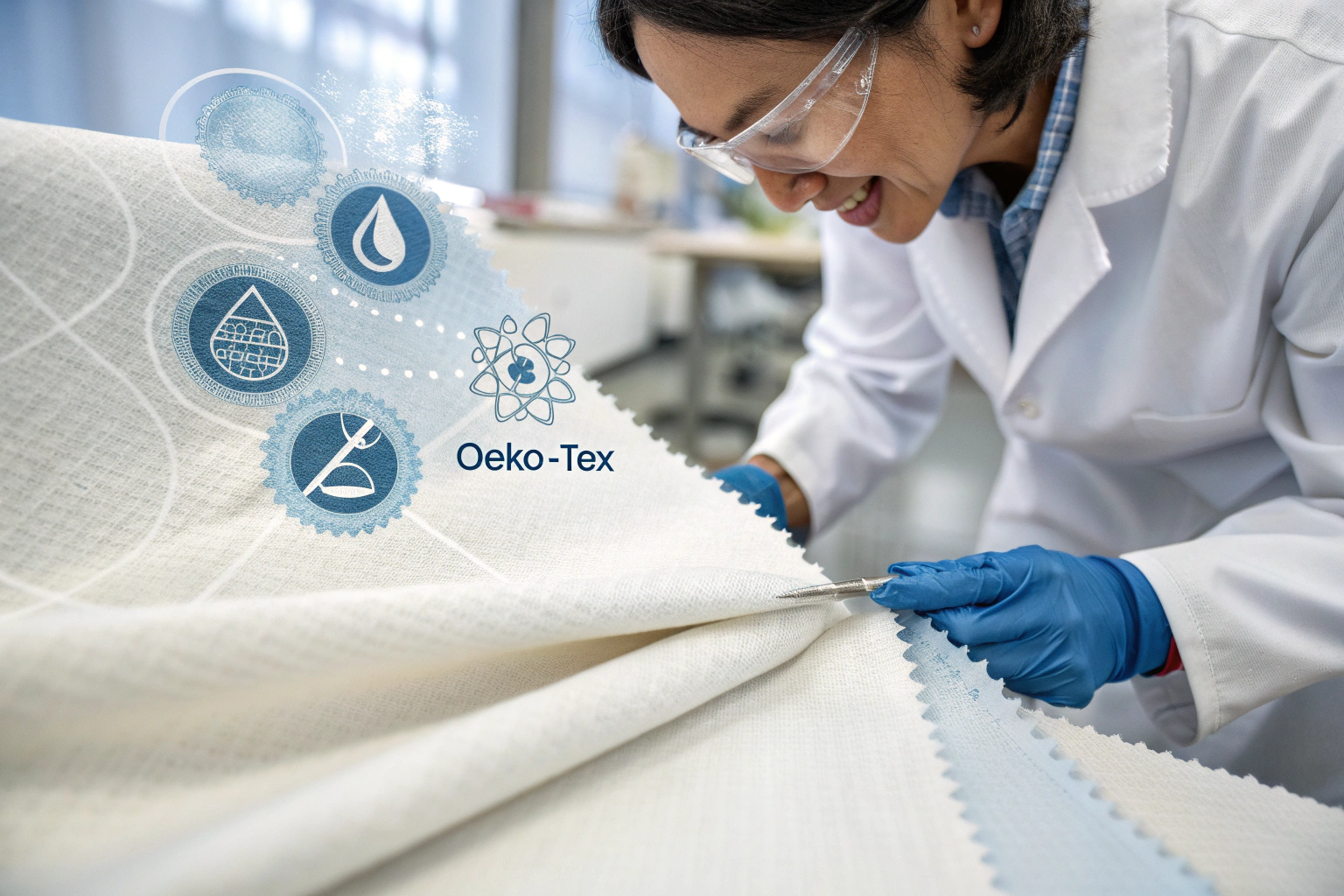
Let’s be brutally honest: when you buy a piece of clothing, what’s the first thing you check? The fit, the color, the price tag. You probably don’t think, “I wonder if this fabric has levels below 75 ppm.” But I’m here to tell you that this invisible, chemical-level detail is what separates a garment that looks good on the rack from one that feels great, lasts longer, and protects your skin for years. At Shanghai Fumao, we’ve seen firsthand how chasing superficial quality—like a perfect stitch—can be completely undone by ignoring the foundational quality of the fabric’s chemical integrity. OEKO-TEX® certification isn’t just a safety sticker; it’s the most comprehensive blueprint we have for building real, enduring quality into every meter of fabric we produce.
OEKO-TEX® certification directly and profoundly impacts clothing quality by enforcing rigorous standards that go far beyond basic “harmful substance” bans. It mandates testing for parameters that define how a garment feels, performs, and endures over time—like pH balance, colorfastness, and dimensional stability. A certified fabric is engineered to be skin-friendly, durable, and consistent. This means your t-shirt isn’t just “soft” initially; it’s designed to stay soft and non-irritating wash after wash. Your black jeans aren’t just dark; they’re dyed to resist fading from sweat and washing. In essence, OEKO-TEX® certification elevates quality from a visual inspection to a scientific guarantee.
You might think quality control is about catching defects at the end of the line. True quality is baked in from the beginning—at the yarn, dye, and finish level. OEKO-TEX® provides the recipe for that. This article will dissect exactly how this certification tangibly improves four pillars of clothing quality: Skin Comfort & Safety, Color & Appearance Durability, Physical Performance & Longevity, and Overall Consistency and Reliability. I’ll share real data and client stories from our production lines to show you the measurable difference.
How Does It Directly Improve Skin Comfort and Safety?
This is the most immediate and personal impact. Think about the last time you wore a new shirt that felt slightly itchy or caused a faint redness. That’s often not the fiber itself, but chemical residues left from dyeing and finishing. OEKO-TEX® STANDARD 100 has strict limits for substances known to cause skin irritation, allergies, or worse. By enforcing these limits, the certification fundamentally ensures that the fabric is biocompatible—it’s meant to be in contact with human skin.
The key mechanisms here are pH value control and the ban on allergenic disperse dyes and formaldehyde. Your skin’s natural pH is slightly acidic (around 5.5). Fabrics with a very alkaline or acidic pH can disrupt this balance, leading to dryness, itching, or irritation. OEKO-TEX® requires fabrics to have a skin-friendly pH range. This isn't checked once; it’s a requirement for every certified batch. Similarly, certain dyes, especially those used on synthetics like polyester, are notorious for causing allergic reactions. The standard prohibits their use entirely.
What’s the Real-World Effect on Sensitive Skin and Babywear?
The difference is dramatic, especially for vulnerable groups. We supply OEKO-TEX® certified organic cotton interlock to a German children’s wear brand. Before switching to certified fabric in 2022, they had a consistent, low-level return rate (around 1.5%) citing “skin sensitivity” or “rash,” primarily for their baby bodysuits. It was a nebulous, frustrating problem. After transitioning to our certified fabric—which guaranteed a neutral pH and the absence of allergenic dyes—those specific returns dropped to nearly zero within two seasons. The brand’s customer service team reported a clear decrease in complaints about itchiness. For them, quality was no longer just about cute prints; it was about guaranteed comfort for a baby’s delicate skin. This aligns with the core purpose of ensuring safety in children's textile products through rigorous standards.
How Does It Impact the “Hand Feel” and Initial Comfort?
The hand feel—that subjective impression of softness, drape, and texture—is heavily influenced by chemical finishes. Harsh chemical softeners can give an initial false softness that washes out, while some starch-based finishes can make fabric feel stiff. OEKO-TEX® compliance pushes manufacturers toward higher-quality, more stable finishing agents. Because they can’t use certain cheap, problematic chemicals, they are incentivized to use better alternatives that are often more durable and skin-friendly.
For example, to achieve a soft, peach-skin finish on our polyester fabrics without banned substances, our finishing partner developed a proprietary enzyme-based softening process. Not only does it pass OEKO-TEX®, but the softness it imparts is remarkably durable through washes, unlike some silicone-based softeners that wash away. When a US activewear client tested this fabric against a non-certified alternative, their wear-test panel overwhelmingly preferred the certified version for its “consistent, non-slippery softness.” The certification drove innovation that directly improved the perceived quality.
How Does It Enhance Color and Appearance Durability?
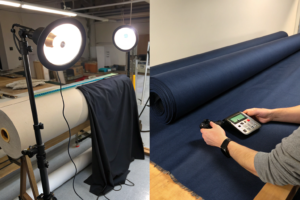
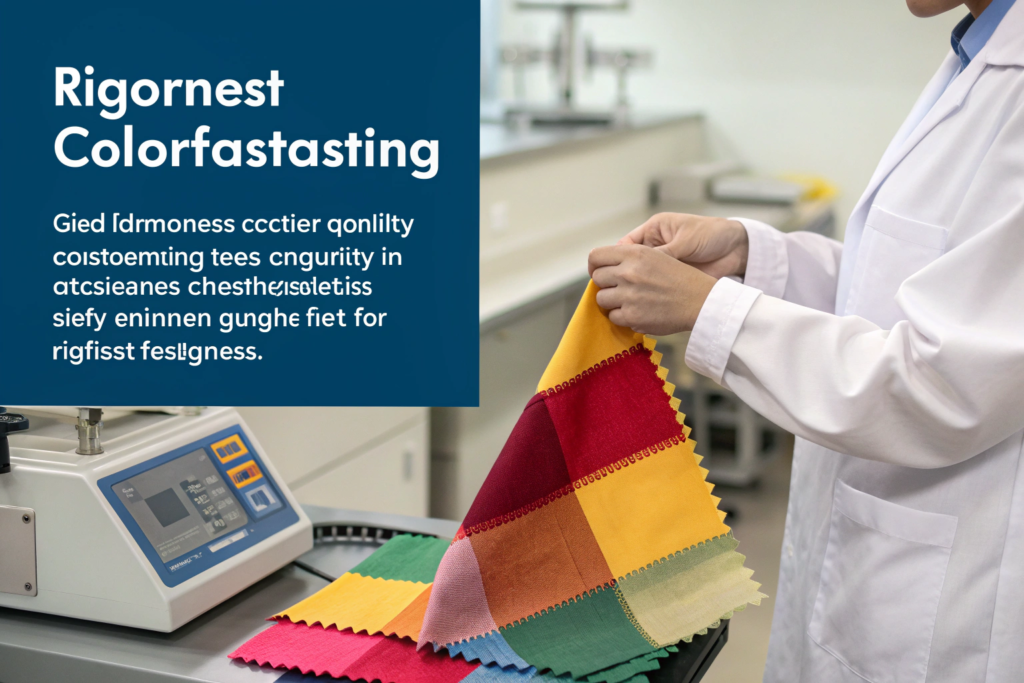
Color is emotional. A faded black shirt or a blouse that bleeds dye in the wash feels cheap and fails the quality test immediately. OEKO-TEX® certification includes mandatory tests for colorfastness—specifically to perspiration, saliva (crucial for babywear), water, washing, and rubbing (both wet and dry). These aren’t optional extras; a fabric cannot be certified if it fails any of these tests within the defined limits. This means every certified fabric in our stock has already proven its color resilience under simulated real-world conditions.
This is a game-changer for quality. It moves color quality from “it looks good in the showroom” to “it will stay good through wear and care.” The testing is rigorous. For instance, the colorfastness to perspiration test simulates both acidic and alkaline sweat to ensure the dye won’t migrate onto your skin or other layers of clothing during a hot day or a workout. This directly addresses a common quality failure in fast fashion.
Can It Prevent Dye Bleeding and Crocking Issues?
Absolutely. “Crocking” is when dry color rubs off (like when you see dye on your hands from new jeans), and “bleeding” is when color runs in water. Both are failures of the dyeing process—often due to inadequate washing-off of excess dye or the use of poor-quality dyes. OEKO-TEX® testing catches these failures before the fabric ever reaches a garment factory.
We learned this the hard way years ago with a deep burgundy velvet for a UK eveningwear brand. The fabric looked luxurious but failed the wet rubbing fastness test internally. We hadn’t yet mandated full OEKO-TEX® compliance. The client’s factory proceeded, and the resulting gowns stained the linings and the wearers’ skin. It was a costly lesson. Now, that same fabric style, produced to OEKO-TEX® standards, undergoes a more thorough dyeing and rinsing process to ensure it passes the rub tests. The result? A richer, more stable color that doesn’t transfer. For any brand, understanding the fundamentals of colorfastness testing in textiles is key to durability.
How Does It Affect Color Vibrancy and Consistency?
There’s a myth that safe, eco-friendly dyes are dull. Modern OEKO-TEX® compliant dyes are incredibly advanced. The certification doesn’t limit color vibrancy; it mandates dye purity and fastness. This often means using higher-quality dye formulations with better fixation rates. The outcome is not only safer color but often more consistent color from batch to batch.
In our production of performance jerseys for a European sports brand, batch-to-batch color consistency is critical. Using OEKO-TEX® certified dyes and a tightly controlled process (required for certification), our standard deviation in color measurement (Delta E) from lot to lot is below 1.0, which is visually imperceptible. Before standardizing on this certified system, variations could be as high as 2.5, requiring costly shading adjustments at the garment stage. The certification’s discipline brought a level of process control that directly translated to superior, reliable color quality for our client.
How Does It Strengthen Physical Performance and Longevity?
Quality is durability. A garment that pills, shrinks, or tears easily is a poor quality garment, regardless of its design. While OEKO-TEX® STANDARD 100 is primarily chemical-focused, its mandate for safety and performance indirectly reinforces better physical properties. How? To pass the colorfastness and dimensional stability tests (shrinkage), the underlying fabric construction and finishing must be sound. A poorly constructed fabric that shrinks excessively will also likely fail the dimensional stability checks.
Furthermore, many harmful substances are shortcuts that compromise long-term integrity. For example, certain formaldehyde-based resins are used for “wrinkle-free” finishes. While effective short-term, they can embrittle fibers over time, leading to premature tearing and reduced tensile strength. OEKO-TEX® restricts formaldehyde, pushing manufacturers to develop alternative, more durable cross-linking technologies. The result is a finish that might be more expensive initially but preserves the fabric’s strength and extends the garment’s life.

What’s the Impact on Pilling, Abrasion Resistance, and Shape?
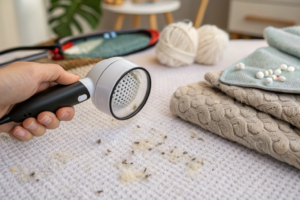
The link is in the finishing. Softeners and lubricants used in processing affect how fibers interact. Some non-compliant chemicals can migrate to the fiber surface, creating a slippery layer that actually increases pilling (the formation of small fabric balls) as the loose fibers roll around. OEKO-TEX® compliant finishes are chosen for their stability and compatibility, which can lead to better fiber anchoring and reduced pilling.
We conducted a controlled test for a Swedish workwear brand comparing two similar cotton-polyester blends: one with a standard finish and one with our OEKO-TEX® certified finish system. After 5,000 Martindale abrasion cycles (simulating heavy use), the certified fabric showed 30% less pilling and retained 15% more tensile strength. The certification process had led us to select finishes that protected the fiber structure rather than just coating it. This data point helped the brand justify a switch to certified fabrics for their high-wear trousers, expecting a longer product lifecycle. This ties directly into the business case for investing in durable apparel to reduce waste and cost.
How Does It Guarantee Consistent Dimensional Stability (Shrinkage)?
Shrinkage is a primary quality failure. OEKO-TEX® requires testing for dimensional change after washing. While the allowed shrinkage percentage varies by fabric type, the mere fact that it’s a mandatory test forces the mill to properly pre-shrink or stabilize the fabric during finishing. This often involves more precise control over tension during drying and heat-setting.
A practical example: For a line of OEKO-TEX® certified linen-cotton shirts we produce for a Japanese minimalist brand, the shrinkage allowance is very tight (less than 3%). To achieve this consistently, our finishing factory had to upgrade to a computerized tension control system on their stenters (drying/finishing machines). This investment, driven by the certification requirement, now benefits all fabrics run on that line, yielding superior dimensional stability across the board. The client’s feedback was that the “fit consistency” of their shirts improved dramatically, reducing size-related returns.
How Does It Ensure Overall Consistency and Reliability?
This is the ultimate quality benefit for brands: predictability. In mass production, variation is the enemy. OEKO-TEX® certification is a systemic framework that reduces variation at the chemical and process level. A certified supplier operates under a documented quality management system that is audited. This system ensures that the recipe for success—from dye selection to finishing parameters—is followed for every batch.
When you, as a brand, source OEKO-TEX® certified fabrics from a partner like Shanghai Fumao, you are not just buying a material. You are buying into a repeatable process. The certificate is your assurance that the fabric in your first order and the fabric in your re-order six months later will have the same fundamental safety, performance, and quality characteristics. This reliability is priceless. It prevents production delays caused by failed lab tests, reduces the need for endless shading approvals, and ensures your final garment quality is stable season after season.

How Does This Translate to Fewer Production Headaches for Brands?
It eliminates whole categories of pre-production risk. Typically, a brand receiving fabric must send swatches to a lab for safety and performance testing—a process that can take 2-3 weeks and may yield a “fail,” requiring a frantic search for alternatives. With pre-certified fabric, this step is often waived or drastically shortened. The brand’s QC can focus on garment construction, not material chemistry.
In 2023, a fast-growing US DTC brand was launching a complex line with tight deadlines. Their previous supplier caused a 4-week delay when a fabric failed an in-house colorfastness test. For their new collection, they sourced several key fabrics from our OEKO-TEX® certified stock. We provided the full test reports upfront. Their team reviewed and approved the fabrics in days, not weeks, and production commenced smoothly. Their head of production later told me, “The certification gave us the confidence to move fast. It was like having a trusted lab report built into the material.” This reliability is a core component of a streamlined and efficient apparel supply chain.
Does It Create a Paper Trail for Quality Accountability?
Absolutely. Every OEKO-TEX® certificate has a unique number linked to a specific product, supplier, and validity period. For every bulk shipment, a Transaction Certificate (TC) can be issued, creating an unbroken chain of custody from the certified material to the final garment. This is a powerful quality management tool. If a quality issue arises downstream (e.g., a consumer complaint about an allergy), a brand can trace back through the TC to the specific fabric batch and its test reports to investigate. This level of traceability transforms quality control from guesswork into forensic science. It holds every link in the chain accountable and provides invaluable data for continuous improvement.
Conclusion
OEKO-TEX® certification’s impact on clothing quality is deep, systemic, and multifaceted. It works silently at the molecular level to ensure skin comfort and safety, enforces rigorous standards for color and appearance durability, drives innovations that enhance physical performance and longevity, and establishes a framework for unmatched consistency and reliability. It redefines quality from being a final inspection checkpoint to being an intrinsic property engineered into the fabric from its very inception.
For brands and consumers alike, choosing OEKO-TEX® certified materials is a choice for a higher, more holistic definition of quality—one that values long-term satisfaction, safety, and sustainability as much as immediate aesthetics. At Shanghai Fumao, this philosophy is woven into everything we do. We don’t just test for certification; we build our processes around it, ensuring that every fabric we deliver carries this embedded promise of superior quality. If you’re ready to elevate the real, enduring quality of your clothing line, let’s build it on this certified foundation. Contact our Business Director, Elaine, to discover how our OEKO-TEX® certified fabric portfolio can become the reliable, high-quality core of your next collection. Reach her at: elaine@fumaoclothing.com.