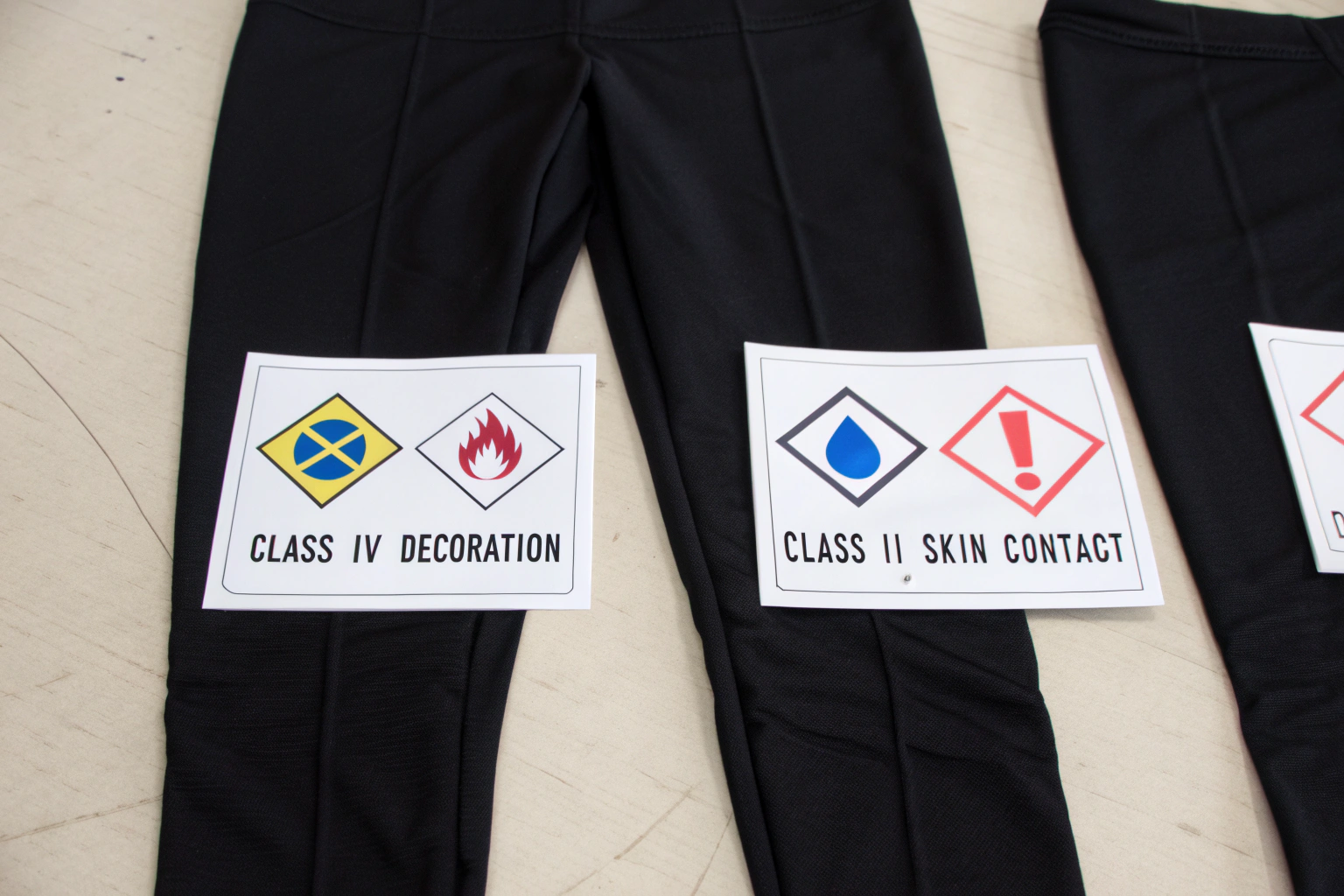
I need to tell you about a conversation I had last week that chilled me to the bone. A startup activewear brand founder from Austin was proudly showing me their new leggings line. The fabric felt amazing, the colors were vibrant, the marketing photos were stunning. When I asked about OEKO-TEX® certification for skin contact, he looked confused. "Our manufacturer said all their fabrics are safe," he told me. "They gave us this certificate." He showed me a PDF – it was an OEKO-TEX® STANDARD 100 certificate, yes. But it was for Product Class IV: Decoration materials. The exact same certificate they’d use for curtains or upholstery. His skin-tight activewear – worn directly against sweat glands for hours during workouts – was certified to decoration material standards. This isn’t just negligence; it’s dangerous misunderstanding that puts consumers at risk every day.
Here’s the hard truth most brands discover too late: "OEKO-TEX® certified" means absolutely nothing unless it specifies the correct product class for your garment’s intended use. A manufacturer can be certified for one class while producing fabrics for another – legally, but unethically. The critical question isn’t "Are they certified?" It’s "Are they certified for the specific skin-contact classification your products require?" This distinction separates manufacturers who understand textile safety from those who merely sell compliance paperwork.
Think about what skin contact really means. Your t-shirt isn’t just touching skin – it’s absorbing sweat, transferring dyes through friction, releasing fibers that can be inhaled, and potentially leaching chemicals into your largest organ. OEKO-TEX® Product Class II (for direct skin contact) is specifically designed to test for these realities. It has different pH requirements, different formaldehyde limits, different colorfastness tests, and different chemical restrictions than Class III (no skin contact) or Class IV (decoration). If your skin-contact garments are made with anything less than Class II certification, you’re gambling with consumer safety and your brand’s future. This article will give you the exact questions to ask, documents to verify, and red flags to spot when evaluating whether your manufacturer truly understands skin-contact safety.
What exactly does "skin contact certification" test for?
OEKO-TEX® Product Class II isn’t just a stricter version of other classes – it’s a fundamentally different testing protocol designed around the biology of human skin. Let me walk you through what our Class II certification at Fumao Clothing actually verifies:
Skin-Specific Chemical Limits:
- pH Value: Must be between 4.0-8.5 (skin’s natural pH range is 4.5-5.5). Fabrics outside this range can disrupt skin’s acid mantle, leading to irritation or microbial imbalance.
- Formaldehyde: Maximum 75 mg/kg (vs 300 mg/kg for Class III). Formaldehyde can cause contact dermatitis, especially in moist conditions (like sweat).
- Extractable heavy metals: Stricter limits for nickel, lead, cadmium, etc. that can be absorbed through sweat.
- Colorfastness to perspiration: Both acidic and alkaline sweat simulations. Dyes that bleed in sweat can cause skin staining and potential sensitization.
Skin Exposure Pathway Testing:
Class II certification tests for risks unique to skin contact:
- Perspiration extraction: What chemicals leach out when fabric gets sweaty?
- Saliva simulation: For clothing that might touch the mouth (collar areas, etc.)
- Rubbing colorfastness: Will dyes transfer to skin through friction?
- Wet rubbing tests: Specifically for fabrics that get wet during wear
Real-World Scenario Testing:
Our certification includes testing that simulates actual wear conditions:
- Multiple wash cycles: Safety after repeated laundering
- Heat and humidity exposure: Simulating storage and wearing conditions
- Light exposure testing: For fabrics that might be worn outdoors
Here’s a real example from our testing last month. A client wanted a vibrant royal blue for yoga leggings. The dye formula that worked beautifully failed Class II testing because under acidic perspiration simulation, it released trace amounts of aniline. While legally permissible for decorative fabrics (Class IV), this could potentially cause skin sensitization with prolonged, sweaty contact. We reformulated with a more stable dye system – slightly more expensive, but truly safe for skin contact.

How do skin contact requirements differ by garment type?
Not all skin contact is equal. Our certification approach varies based on the garment:
High-Contact Areas (Most Stringent):
- Underwear & lingerie: Full Class II plus additional testing for elastic areas
- Activewear: Enhanced perspiration testing with extended duration
- Sleepwear: Loose fiber testing (to prevent skin irritation from pilling)
- Baby clothing: Actually Class I, even stricter than Class II
Medium-Contact Areas:
- T-shirts & blouses: Standard Class II testing
- Dresses & skirts: Varies by design (lining vs outer fabric)
- Socks: Additional abrasion and moisture testing
Low-Contact Areas (May Qualify for Class III):
- Jacket shells: Only if lining provides complete barrier
- Outerwear: Depending on lining materials
- Accessories: Bags, hats with minimal direct contact
The dangerous assumption many brands make is treating everything as "apparel" with one standard. We recently audited a competitor’s facility and found they were using the same Class III fabric for both jacket shells and shirt linings – a clear violation of safety principles when the lining touches skin directly.
What about blended fabrics and their certification?
Modern fabrics often blend natural and synthetic fibers. Certification must account for each component’s chemical profile. Our process:
- Fiber-specific testing: Cotton tested for pesticide residues, polyester for residual monomers, elastane for catalyst residues
- Blend interaction testing: Chemicals from one fiber can migrate to another during processing
- Finish compatibility: Treatments must be safe on all fiber types in the blend
A performance fabric with 85% polyester, 10% cotton, 5% elastane requires testing for all three fiber types plus their interactions. Many manufacturers cut corners by testing only the dominant fiber. We don’t.
How can you verify your manufacturer’s skin contact certification?
Verification isn’t a simple yes/no question. It’s a forensic process. Here’s your step-by-step verification checklist:
Step 1: Certificate Authentication
Don’t accept a PDF at face value. Go to the OEKO-TEX® certification database (certificate.oeko-tex.com) and:
- Enter the certificate number
- Verify the company name exactly matches your manufacturer
- Check the product class says "II" (or "I" for babywear)
- Confirm the product description matches what you’re ordering
Step 2: Scope Verification
The certificate should specify exactly what’s covered. Look for:
- Fabric types: "Knitted polyester fabrics" vs "All fabrics produced"
- Treatment limitations: "Excluding water-repellent finishes" if such finishes are used
- Component coverage: Does it include sewing thread, elastics, labels?
Step 3: Batch Testing Evidence
Ask for the batch-specific test reports for recent production. These should:
- Reference the master certificate number
- Show recent testing dates (within last 3-6 months)
- Include actual test results, not just pass/fail
- Match the fabric you’re being sold
Step 4: Facility Audit
If possible, visit or virtually tour the facility. Look for:
- Separate storage for Class II materials
- Documented procedures for preventing cross-contamination
- Trained personnel who understand skin contact requirements
- Testing equipment for in-process checks
Last quarter, a Canadian brand asked us to verify a competitor’s certification. The certificate was valid, but the batch reports showed the fabric tested was a simple cotton jersey, while they were selling the brand a complex polyester-Lycra blend with moisture-wicking finish. The certificate didn’t cover the actual product being sold – a classic bait-and-switch we see too often.

What questions should you ask that reveal true compliance?
Beyond documents, ask these operational questions:
-
"How do you prevent cross-contamination between Class II and other classes?"
- Good answer: Dedicated equipment, separate storage, documented cleaning procedures
- Red flag: "We clean the machines between runs"
-
"What’s your process when a new chemical arrives for skin-contact fabrics?"
- Good answer: SDS review, RSL check, trial batch testing before full production
- Red flag: "Our chemical supplier says it’s safe"
-
"Can I speak with your compliance officer about skin-contact testing protocols?"
- Good answer: Immediate introduction to qualified technical staff
- Red flag: Salesperson handles all compliance questions
-
"Show me your last non-conformance report for Class II fabrics."
- Good answer: Documented issues, corrective actions, preventive measures
- Red flag: "We’ve never had any issues" (statistically impossible)
When a UK retailer asked us these questions last month, we spent 90 minutes walking them through our systems. They told us we were the first of eight suppliers who could answer all questions satisfactorily.
What are the most common certification "shortcuts" to watch for?
Shortcut 1: Certificate Sharing
One certificate used for multiple unrelated factories. Verify the company name matches exactly.
Shortcut 2: Class Upgrading
Using a Class III or IV certificate but claiming it covers Class II. The database shows the true class.
Shortcut 3: Component Exclusion
Certifying only the main fabric while ignoring threads, elastics, labels that also touch skin.
Shortcut 4: Batch Generalization
Testing one batch annually but applying results to all production.
Shortcut 5: Treatment Omission
Not including special finishes (moisture-wicking, anti-odor, etc.) in certification scope.
We audited a sportswear brand’s supply chain and found their "certified" fabric manufacturer was using non-certified silicone softener on the final finish because "it’s just a tiny amount." That "tiny amount" was in direct contact with sweat glands.
What happens when skin-contact certification is missing or wrong?
The consequences cascade through your business:
Immediate Risks:
- Customs rejections: Shipments held for testing, delayed weeks or months
- Retailer rejections: Major retailers test incoming goods; failures mean chargebacks
- Customer returns: Skin irritation complaints, negative reviews, brand damage
Long-Term Liabilities:
- Product recalls: Average cost $8-12M plus brand destruction
- Legal liability: Lawsuits from chemical sensitization or allergic reactions
- Regulatory penalties: Fines for misleading safety claims
- Investor abandonment: ESG-focused investors flee safety-compromised brands
Let me share a case that still haunts me. A Los Angeles-based fashion brand used a "certified" fabric from a Turkish mill for their summer dress collection. The dresses sold well initially, but within weeks, social media exploded with photos of rashes and complaints. Investigation revealed: the fabric was certified Class III (no skin contact) but used for sleeveless dresses. The mill had provided the certificate without explaining the limitation. The brand recalled 15,000 units, paid $2.3M in settlements, and lost their prime retail placements. They’re now rebuilding from scratch – with us, insisting on Class II certification for everything.

How does this affect different market segments?
Premium Brands: Reputation destruction outweighs financial loss. One incident can destroy decades of brand equity.
Fast Fashion: High volume means massive recall costs. Legal exposure multiplies with each unit sold.
Sustainable Brands: Hypocrisy exposure – claiming sustainability while compromising safety destroys credibility.
Startups: Often fatal – insufficient capital to survive recalls or rebuild trust.
Private Label/Retail Brands: Retailer relationships destroyed, shelf space lost permanently.
A Scandinavian sustainable brand learned this painfully. Their "eco-friendly" leggings caused rashes. Investigation found the recycled polyester contained chemical residues from its previous life. While recycled (good for environment), it wasn’t properly cleaned for skin contact (bad for people). Their "circular economy" story became "toxic clothes" story overnight.
What’s the actual cost difference between certified and uncertified?
Let’s break down real numbers:
| Cost Component | Class II Certified | Non-Certified | Notes |
|---|---|---|---|
| Fabric Cost | $4.50-$6.00/meter | $3.00-$4.50/meter | 30-50% premium for certification |
| Testing Costs | $500-$800/batch | $0 | Built into fabric cost |
| Compliance Labor | $2,000-$5,000/month | $0 | Dedicated staff |
| Risk Costs | Minimal | $500,000-$5,000,000+ | Potential recalls, lawsuits |
| Market Access | All markets | Limited | Many retailers require certification |
The key insight: the 30-50% fabric premium buys you risk transfer. You’re paying the manufacturer to assume chemical safety liability through their certification system.
How should you structure contracts for skin-contact certification?
Your contractual language is your last line of defense. Here’s what should be in every agreement:
1. Specific Certification Warranty:
"Manufacturer warrants that all fabrics supplied under this agreement meet OEKO-TEX® STANDARD 100 Product Class II requirements for direct skin contact, and that all certificates provided are valid, authentic, and specifically applicable to the products supplied."
2. Batch Documentation Requirement:
"Manufacturer shall provide batch-specific test reports from an OEKO-TEX accredited laboratory for each production lot prior to shipment. Reports must be less than 30 days old from test date."
3. Right to Verify:
"Buyer reserves the right to conduct independent testing of products at Buyer’s designated laboratory. If products fail to meet warranted specifications, Manufacturer shall bear all testing costs and replace non-conforming products at Manufacturer’s expense."
4. Consequence of Breach:
"In the event of certification falsification or failure to meet warranted standards, Manufacturer shall be liable for all resulting costs including but not limited to: product recall costs, legal liabilities, brand damage compensation, and full refund of purchase price."
5. Indemnification Clause:
"Manufacturer shall indemnify, defend, and hold harmless Buyer from any claims, damages, or losses arising from certification non-compliance or product safety issues."
We include similar language in our contracts because we have the systems to back it up. A manufacturer who resists these terms is telling you they can’t stand behind their certification claims.

What about multi-component garments?
Garments often combine different materials. Your contract should specify:
- Main fabric: Class II certified
- Lining fabric: Class II if touching skin, Class III if separated
- Threads & elastics: Must be certified or proven compliant
- Trims & accessories: Testing requirements based on skin contact
- Labels: Ink and adhesive safety requirements
We provide Component Compliance Dossiers for complex garments, documenting each element’s certification status. This transparency gives brands complete confidence in their products’ safety.
How do payment terms relate to certification verification?
Structure payments to maintain leverage:
- 30% deposit with order confirmation
- 40% against production completion but before shipment, after receiving batch test reports
- 30% after shipment but within 60 days, allowing time for independent verification if desired
Never pay 100% before verifying certification documentation. The leverage of unpaid balances ensures cooperation if issues arise.
What makes Fumao Clothing’s approach different?
After 20 years specializing in skin-contact fabrics, we’ve built systems most manufacturers don’t even understand are necessary:
1. Skin Biology Integration
We consult with dermatologists to understand:
- Sweat gland distribution and chemical interactions
- Skin pH variations by body area
- Friction points and abrasion risks
- Thermal regulation impacts on chemical release
This knowledge informs our testing protocols beyond standard requirements.
2. Real-World Simulation Lab
Our testing includes:
- Wear simulation machines that mimic actual movement and friction
- Microclimate chambers simulating different wearing environments
- Long-term exposure testing for chronic wear items
- Sensory evaluation panels for subjective comfort assessments
3. Proactive Chemical Management
We don’t just test final products; we:
- Maintain a Skin-Safe Chemical Library of pre-approved formulations
- Conduct compatibility testing for chemical combinations
- Monitor emerging research on skin sensitizers
- Reformulate proactively based on new scientific findings
4. Transparency Infrastructure
Our digital system provides:
- Real-time access to all test results
- QR code traceability from fiber to finished garment
- Automated alerts for certificate renewals or standard changes
- Supplier compliance dashboards for brand visibility
A German medical textile company chose us specifically because we could provide documentation showing our fabrics were tested against both OEKO-TEX standards and medical device skin-contact guidelines – a level of diligence few manufacturers even understand, let alone provide.

How do we handle emerging skin safety concerns?
The science of skin safety evolves. Our system includes:
- Monthly literature reviews of dermatology and toxicology journals
- Participation in OEKO-TEX working groups helping shape future standards
- Collaboration with academic institutions on skin-textile interaction research
- Early adoption of precautionary restrictions before they become requirements
When studies suggested certain silicone softeners might facilitate allergen penetration in 2023, we reformulated our finishes six months before any regulatory discussion began.
What’s our track record with skin-contact sensitive applications?
We supply fabrics for:
- Eczema and psoriasis clothing with documented low-irritation claims
- Post-surgical garments for sensitive healing skin
- Athletic wear for professional athletes with extreme sweat exposure
- Intimate apparel with the highest sensitivity requirements
- Hospital patient garments meeting medical device skin-contact standards
Our quality manager reviews every customer complaint related to skin issues (we average 0.03% complaint rate on skin-contact items). Each is investigated, root cause determined, and system improvements implemented if needed.
Conclusion
Asking "Is your clothing manufacturer OEKO-TEX® certified for skin contact?" isn’t a routine compliance question – it’s a fundamental inquiry about their understanding of textile safety, their commitment to consumer protection, and their operational integrity. The difference between true skin-contact certification and mere paperwork is the difference between responsible manufacturing and reckless risk-taking.
At Fumao Clothing, we’ve built our entire skin-contact fabric business on a simple principle: if it touches skin, it must be certified and tested as if skin contact is its primary function. This means dedicated systems, specialized knowledge, and unwavering commitment to safety science. It’s why brands trust us with their most sensitive applications and why retailers accept our certifications without question.
In an industry where shortcuts are tempting and consumers can’t see chemical safety, the burden falls on brands to verify what their manufacturers claim. The verification process I’ve outlined isn’t just due diligence – it’s brand protection, consumer protection, and business survival strategy rolled into one.
Ready to verify your manufacturer’s skin-contact certification or find one who truly understands it? At Fumao Clothing, we welcome the toughest certification questions because our systems are built to answer them. Contact our Skin Safety Specialist, Elaine, at elaine@fumaoclothing.com for a comprehensive assessment of your current fabrics or to develop truly skin-safe new collections.
Skin Safety Audit: We offer brands a complimentary skin-contact certification assessment of their current fabrics, including database verification, batch report review, and gap analysis against OEKO-TEX Class II requirements. Limited slots available monthly.