You’re sourcing certified fabrics—OEKO-TEX®, GOTS, maybe even recycled standards. You’ve done the hard work of finding a supplier with the right certificates. So, why does it still feel so complicated? Why are lead times unpredictable, why do sample-to-bulk variations happen, and why is communicating your certification story to customers such a struggle? The gap isn’t in finding a certified supplier; it’s in finding a B2B manufacturing partner who embeds those certifications into the very DNA of your supply chain. A trader with a certificate is not the same as a manufacturer who lives the standard every day. The difference determines your product’s integrity, your timeline’s reliability, and ultimately, your brand’s credibility.
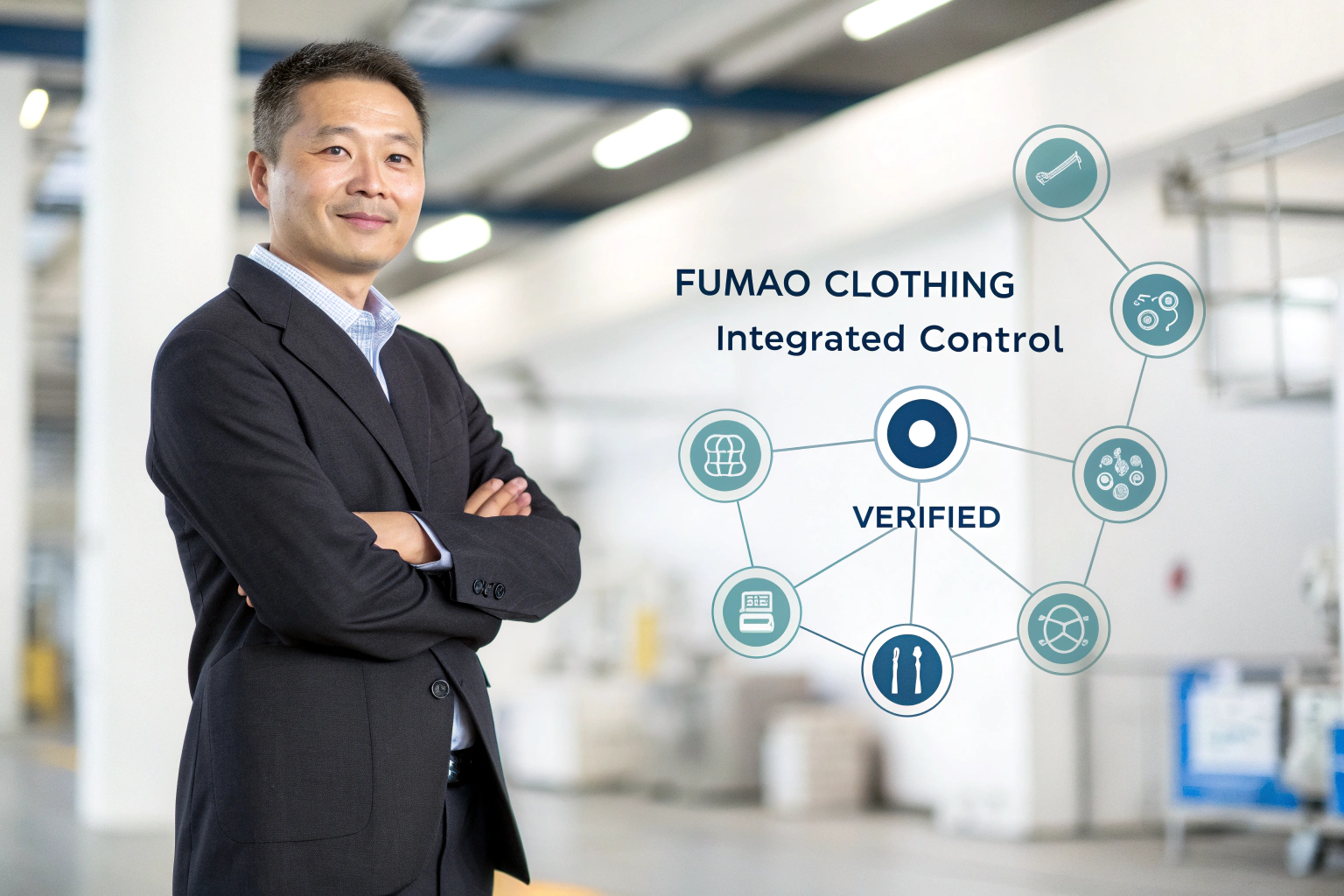
Partnering with a B2B manufacturer like Fumao Clothing for certified goods consolidates risk, cost, and complexity into a single, accountable source of truth. We don’t just sell you certified fabric; we operate a certified production ecosystem. This means your certification is not a final-stage stamp but a controlled process from fiber to finished fabric, guaranteeing consistency, simplifying compliance, and providing the technical depth needed to market your products with authentic confidence. In a market where “green” claims are scrutinized, this integrated control is your ultimate defense.
Think of it this way: buying certified fabric from a general supplier is like buying a pre-packaged meal—you trust the label. Partnering with a B2B manufacturer like us is like having a personal chef in a certified kitchen—we control every ingredient, process, and output, and we can explain exactly how each dish was made. For brands building a reputation on trust, this distinction is everything. Let me break down the concrete advantages this partnership delivers across your entire operation.
How Does Vertical Integration Reduce Risk in Certified Sourcing?
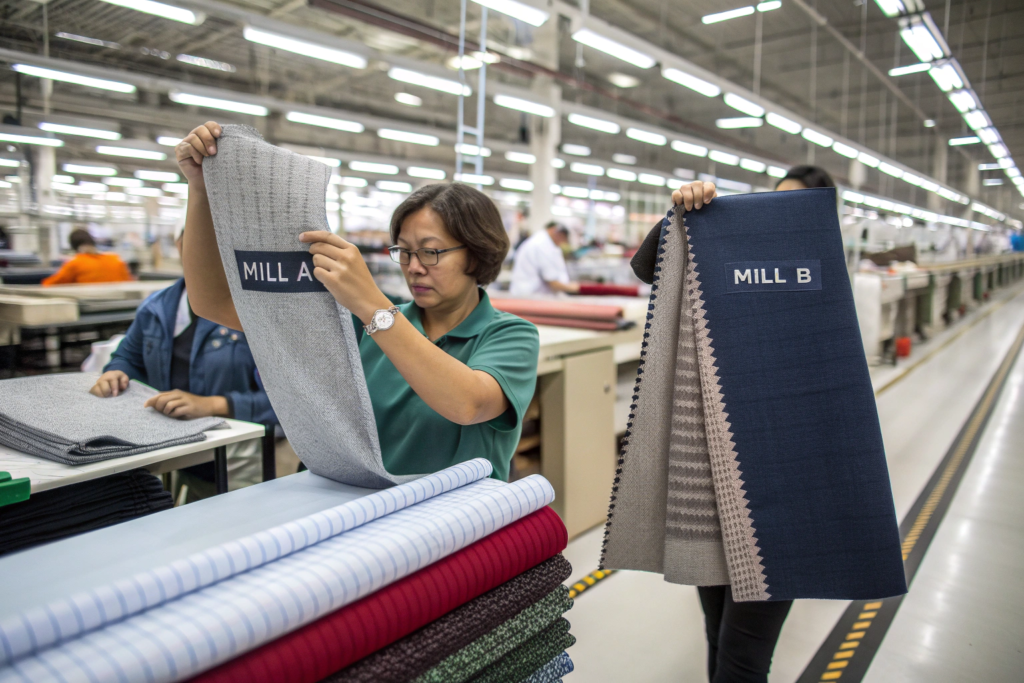
Risk in certified sourcing isn’t just about having a piece of paper; it’s about the consistency behind it. A non-integrated trader buys fabric from various mills, each with its own chemical management and quality fluctuations. Your “certified” order from them might be from Mill A in March, but from Mill B in June—same certificate number, potentially different chemical batches and performance. The risk of a failed test or a non-compliant batch slips in through these cracks. Vertical integration, or deep vertical partnership as we practice it, eliminates these cracks.
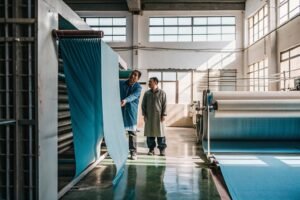
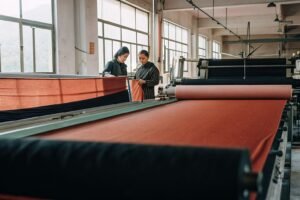
At Fumao Clothing, our model is built on controlled collaboration. We own large-scale weaving and have equity-level partnerships with dyeing, printing, and finishing facilities that we audit as if they were our own floors. This means we enforce a single, unified chemical management protocol across the chain. For OEKO-TEX® production, we maintain a group-wide Approved Chemical List. Every dye, softener, and auxiliary used by any partner comes from our vetted, certified chemical suppliers. A single non-compliant chemical never enters the process. This control is why, in 2023, we achieved a 98.7% first-pass rate on our clients’ third-party lab tests for items like our recycled polyester functional fabrics—a statistic almost unheard of with a multi-trader model.
What specific supply chain risks are mitigated?
- Chemical Contamination Risk: Controlled from source. We had a case where a European brand’s previous supplier had a fabric batch fail for pentachlorophenol (PCP), a banned fungicide. The issue was traced to a contaminated batch of grey fabric from an uncertified sub-supplier. In our system, all incoming grey fabric is tested before it even enters our certified dyeing partner’s facility.
- Certificate Authenticity Risk: The certificate holder is us, the manufacturer, or our directly controlled partner. You verify it once with us. No more back-checking multiple sub-supplier certificates from unknown entities.
- Batch-to-Batch Variance Risk: With controlled processes, parameters like dye bath temperature, fixation time, and wash pH are locked. The navy cotton twill we produce in Keqiao in January will be chemically and performatively identical to the one produced in October. This is critical for brands doing seasonal color drops or replenishing bestsellers. For deeper insights, industry analyses on mitigating supply chain risk in textile production often highlight vertical control as a key strategy.
How does this affect problem-solving when issues arise?
Speed and accuracy. When a US activewear brand reported a slight color variance in their latest shipment of our moisture-wicking fabric last year, our response was immediate. Because we control the dyeing, we pulled the production records for that batch within an hour—checking the dye lot numbers, water quality logs, and machine settings. We identified the issue (a minor calibration drift in one dyeing machine) and not only corrected it for the next batch but were able to provide the client with a full technical report. With a trader, this would have meant weeks of emails between the brand, the trader, and the anonymous mill. For technical troubleshooting, resources like The Journal of the Textile Institute publish case studies on dyeing process control.
What Cost Efficiencies Does a Manufacturing Partner Unlock?
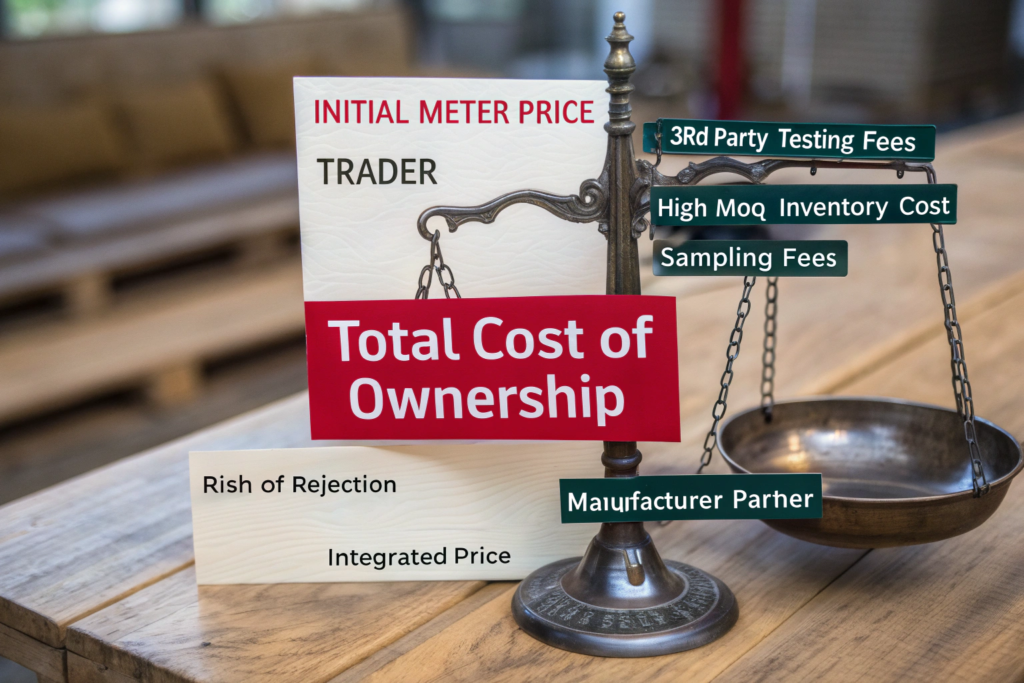
The sticker price per meter from a manufacturer might sometimes be comparable to a trader, but the Total Cost of Ownership (TCO) is where you win massively. The efficiencies are hidden in avoided costs, not just upfront price.
- Elimination of Redundant Testing: When you source certified fabric from a trader, your due diligence (or your retailer’s requirement) might still force you to conduct your own third-party lab tests—a cost you bear. With us as the manufacturing source, we provide full, batch-specific test reports from our CNAS-accredited lab, which are often accepted by major brands and retailers, saving you thousands per season in external testing fees.
- Reduced Minimum Order Quantities (MOQs): Traders often aggregate demand to meet high mill MOQs. As a manufacturer with our own production planning, we can offer more flexible MOQs, especially on stock fabrics or for developmental runs. This allows smaller, innovative brands to access certified materials without crippling inventory risk.
- Development Cost Absorption: Our sampling is part of our production process. When you develop a custom certified fabric with us, the sampling cost is integrated into the bulk order. Traders often charge exorbitant, non-refundable sampling fees for certified development because they have to pay the mill upfront.
- Avoidance of Catastrophic Failure Costs: This is the biggest one. The cost of a rejected container—due to failed safety tests, color mismatches, or performance issues—can bankrupt a small brand. Our integrated control makes such catastrophic failures extraordinarily rare, protecting your largest capital outlays.
Can you provide a real-case cost comparison?
Let’s take a real, anonymized example from a client who switched from a trader to us for 10,000 meters of OEKO-TEX® Class II organic cotton jersey:
| Cost Factor | Sourcing via Trader (Previous) | Sourcing via Fumao (Manufacturer Partner) |
|---|---|---|
| Fabric Price per Meter | $3.80 | $4.00 |
| Development/Sampling Fee | $1,500 (non-refundable) | $0 (included in project) |
| 3rd Party Lab Test (Client paid) | $800 (for due diligence) | $0 (our reports accepted) |
| MOQ | 5,000 meters per color | 2,000 meters per color |
| Hidden Risk Cost | High (unknown mill, variance risk) | Very Low (controlled process) |
| Total Project Cost | ~$41,300 + High Risk | ~$40,000 + Lower Risk |
Net Result: While our meter price was $0.20 higher, the client saved over $1,300 in direct costs and gained immense flexibility and risk reduction. They ordered two test colors at lower MOQ before committing to bulk, a strategy the trader couldn’t support. Discussions on calculating true cost in ethical sourcing often miss these operational efficiencies a partner provides.
How does this model support smaller or startup brands?
It democratizes access. A startup can’t afford a $10,000 testing mistake. By partnering with us, they leverage our established, audited system. They can start with a low-MQO order of a stock certified fabric (we have thousands), build market proof, and then scale into custom development with a partner who already knows their brand. This is how we’ve helped numerous DTC brands launch successfully. Their certification story is rock-solid from day one because it’s built on our manufacturing integrity, not just a purchased certificate.
How Does a Partner Enhance Your Marketing and Brand Story?
A certificate is a claim. The story behind the certificate is what customers connect with. A trading company can’t give you that story. A manufacturing partner like Fumao Clothing provides the narrative depth that transforms a label into a legend. We give you the “why” and the “how” that makes your marketing authentic and defensible.
We provide our partners with marketable assets:
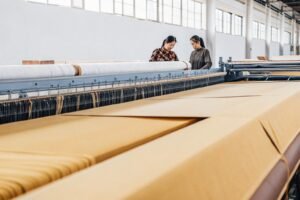
- Behind-the-Scenes Content: With permission, we can provide video/photos of our production and testing processes—the dyeing vats using safe chemicals, the lab technicians conducting pH tests, the weaving looms running. This is gold for social media and “About Us” pages.
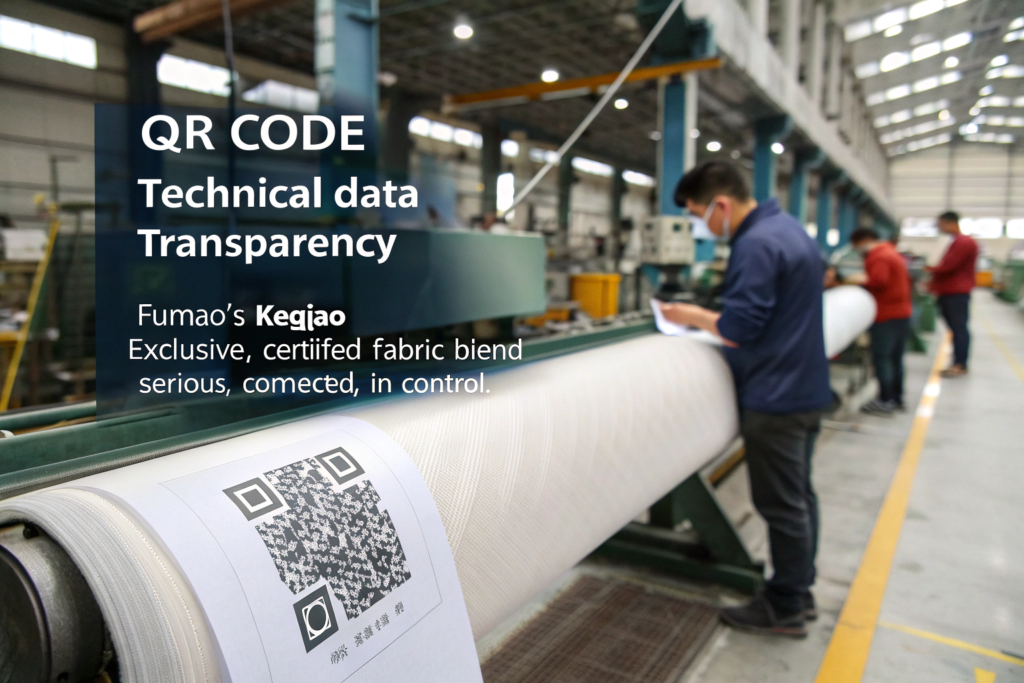
- Technical Data & Transparency: We offer QR code tracking for bulk orders. Scanning the code on the fabric roll can show its journey, test reports for that specific batch, and composition details. This level of traceability is a powerful marketing tool for transparency.
- Co-Branded Storytelling: We can work with you on content that explains the partnership: “We worked directly with Fumao’s engineers in Keqiao to develop this exclusive, certified fabric blend…” This positions your brand as serious, connected, and in control.
A UK sustainable menswear brand used this to great effect. They created a video series called “From Our Partner’s Mill,” featuring our dyeing facility and our QC lab. They didn’t just say “OEKO-TEX® certified”; they showed the science and the people behind it. Their customer surveys showed a 40% increase in perceived brand trustworthiness after the campaign launched. For inspiration on brand storytelling, look at how leading brands utilize transparent supply chain narratives on their websites.
What’s the difference between a generic and a partner-backed claim?
- Generic Claim (via Trader): “Our products are OEKO-TEX® certified for your safety.” (Can feel hollow, used by everyone.)
- Partner-Backed Claim (via Fumao): “We source our fabrics from Fumao Clothing, a manufacturer whose on-site lab tests every batch against the strict OEKO-TEX® Standard 100. This means from the yarn to your door, your garment’s safety is controlled and verified.” (Specific, credible, and tells a story of diligence.)
How does this partnership help with retailer and distributor requests?
Major retailers and distributors are savvy. They ask tough questions: “Who is the actual manufacturer? Can we audit them? Can we see the factory’s chemical management system?” With a trader, these questions often lead to delays and obfuscation. With us as your declared manufacturing partner, you have clear, auditable answers. We can provide all necessary documentation and are open to virtual or scheduled audits from your key accounts. This smoothens onboarding with premium stockists.
What Strategic Advantages Does a Long-Term Partnership Offer?
Sourcing is transactional; partnership is strategic. A long-term relationship with a B2B manufacturer evolves into a competitive moat for your brand.
- R&D Collaboration: We don’t just execute your specs; we help invent them. Our 20+ R&D experts work with clients on next-generation materials. For instance, we are currently co-developing with a Scandinavian brand on a biodegradable blend for outerwear that will meet both OEKO-TEX® and composting standards. This is not a service a trader can offer.
- Predictive Planning & Capacity Reservation: Knowing your growth trajectory allows us to reserve production capacity and raw material (like certified organic cotton yarn) for you during peak seasons (March-May, Aug-Oct). This protects you from the “+2 week” timeline extensions that plague the industry during rush periods.
- Continuous Improvement: We share insights back with you. If we discover a new, more sustainable softening agent that meets the standard, we proactively suggest it for your next order, improving your product over time.
- Supply Chain Resilience: Our diversified base in Keqiao (the world’s largest textile cluster) and our own financial stability mean we are a resilient partner. During raw material shortages or logistics crises, our local networks and scale give us—and you—alternatives and priority.
How does this partnership navigate challenges like Chinese New Year?
This is a perfect example of strategic versus transactional. A trader will simply tell you, “The factory is closed for 4 weeks.” As a partner, we create a plan with you 6-8 weeks in advance. We calculate your pre-holiday fabric requirements, schedule production to complete your order before the shutdown, and often arrange for warehousing and staged shipping. For one of our major EU clients, we complete their pre-production and fabric bulk 6 weeks before Chinese New Year, so the moment factories reopen, their garment production can start immediately with materials already on-site. This level of integrated scheduling is a massive competitive advantage. General advice on managing production around global holidays is useful, but a true partner executes the plan for you.
What is the role of technology in this partnership?
We invest in digital tools that benefit our partners. Our clients get live inventory access to stock fabrics, can track order progress in real-time, and use virtual showrooms. This isn’t just convenience; it reduces lead times and miscommunication. When you can see that the “Eco-Jersey Fabric Code FK203” has 5,000 meters in stock and is already certified, you can make a sourcing decision in minutes, not weeks.
Conclusion
Partnering with a B2B manufacturer like Fumao Clothing for certified goods is a fundamental shift from buying a product to investing in a capability. It moves certification from a static document in your file to a dynamic, living process that we manage on your behalf. This partnership reduces your financial and compliance risk, unlocks hidden efficiencies, provides the authentic storytelling assets that modern consumers demand, and builds a strategic foundation for innovation and growth. In a world where trust is the ultimate currency, your supply chain partner is your most critical business decision.
You deserve a partner who sees your brand’s success as their own, who provides not just fabric, but certainty, clarity, and a credible story. Let’s build that certainty together. Contact our Business Director, Elaine, to begin a partnership that goes beyond sourcing: elaine@fumaoclothing.com.