For savvy apparel buyers like you, navigating the complex world of textile sourcing is about more than just price and delivery. It’s about trust, safety, and building a brand that stands for something more. You’re likely flooded with claims about "eco-friendly" and "non-toxic" fabrics, but how can you be sure? Certifications get thrown around a lot, and it’s hard to know which ones deliver real business value. The reality is, in today’s market, offering safe and responsibly made products isn’t just a nice-to-have—it’s a baseline expectation from consumers and a critical factor for your own supply chain security. So, how do you cut through the noise and make sourcing decisions that protect your customers, your brand, and your bottom line?
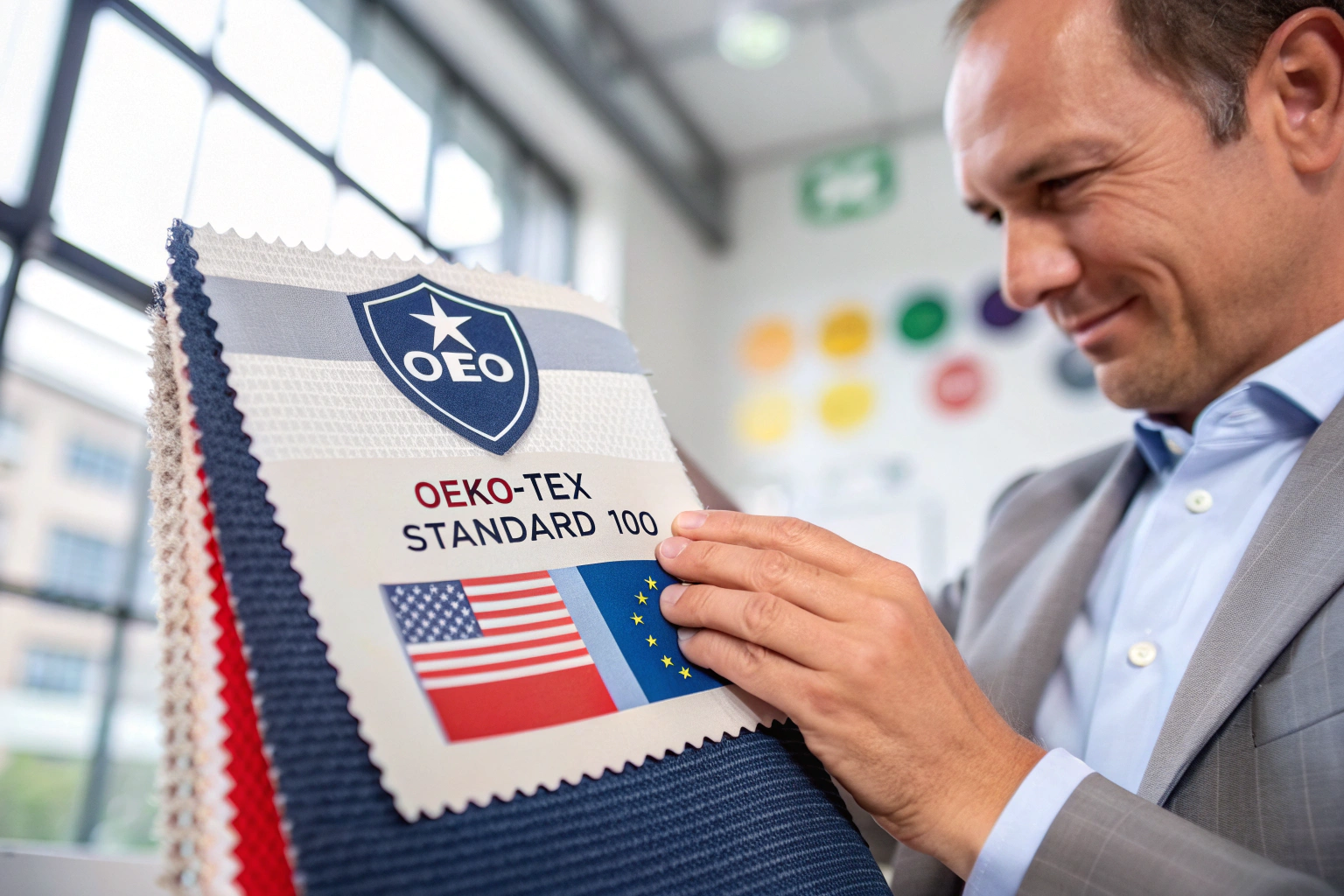
Sourcing OEKO-TEX® certified clothing provides concrete business benefits by de-risking your supply chain, building powerful consumer trust, and ensuring legal compliance. It’s a tangible proof point that your products are free from harmful levels of over 100 regulated substances, which directly translates to fewer product recalls, stronger brand reputation, and smoother entry into strict markets like the EU. Think of it as a pre-emptive quality control shield for your entire product line, one that you can communicate directly to your end customers.
But understanding that it’s beneficial is only half the story. To truly leverage a certification like OEKO-TEX® STANDARD 100, you need to understand how it integrates into your production workflow, from the yarn stage to the finished garment. It’s not just a sticker at the end; it’s a process that influences your choice of supplier, your timelines, and your marketing messaging. Let’s break down exactly how investing in this certification pays off across different areas of your business.
Why is OEKO-TEX certification a non-negotiable for US apparel importers?
The American market is becoming intensely conscious of product safety and sustainability. While the US has its own regulations, the OEKO-TEX® STANDARD 100 certification is often seen as a gold standard that goes above and beyond, addressing concerns that US consumers are increasingly researching online. For an importer, this isn’t just about being "green"; it’s a fundamental risk management tool. A single batch of fabrics with excessive levels of allergenic dyes or heavy metals can lead to a nightmare scenario: halted shipments at customs, costly recalls, and devastating brand damage that takes years to repair. Sourcing certified materials is your first and most effective line of defense.
From a pure business standpoint, it simplifies compliance. Instead of you, the buyer, needing to become an expert in chemical regulations across different regions, you rely on the OEKO-TEX® system’s rigorous, independent testing. This is crucial because regulations are a moving target. For example, we had a client from California in late 2023 who was preparing a line of children’s sleepwear. They were initially focused on US CPSC flammability standards. However, our team advised that to future-proof their line for potential online sales in Europe and to meet higher consumer expectations, they should source fabrics with OEKO-TEX® certification. We provided them with GOTS certified organic cotton blends that also carried the STANDARD 100 label. This not only ensured safety but became a key marketing point, helping their Kickstarter campaign exceed its goal by 30%. The certification gave backers immediate, recognizable trust.
What specific risks does OEKO-TEX certification mitigate in my supply chain?
The risks it mitigates are both tangible and reputational. First, it directly addresses chemical compliance risk. The OEKO-TEX® test criteria and limit values often exceed national requirements, covering substances that might not yet be regulated in the US but are on the radar of consumer advocacy groups. By sourcing certified fabrics, you’re staying ahead of the curve. Second, it reduces supplier verification risk. When you work with a mill that holds OEKO-TEX® certification for its production process, you’re not just taking their word for it. You’re leveraging an audited system. For instance, our dyeing and finishing partners are certified, which means their chemical inventory, process water, and workplace safety are part of the assessment. This gives us, and by extension our clients at Shanghai Fumao, a much higher degree of confidence in the consistency of every batch. If you’re wondering how to verify a potential supplier’s certifications, resources like the OEKO-TEX® Buying Guide and Supplier Finder are invaluable tools for initial checks.
Another critical risk is consumer trust risk. In the age of social media, a single viral post accusing a brand of using "toxic" materials can be catastrophic. The OEKO-TEX® label is a globally recognized symbol you can put on your hangtag. It’s a direct communication to the end-user that an independent institute has verified the product’s human-ecological safety. This transforms a potential liability into a marketing asset. For a deep dive into building a transparent and responsible supply chain from the ground up, industry platforms like Just-Style often publish analyses on sustainable sourcing strategies that align with these certification frameworks.
How does certification impact pricing and lead times with Chinese suppliers?
This is a practical concern we address daily. Yes, OEKO-TEX® certified fabrics typically come at a premium—anywhere from 5% to 15% depending on the complexity. This covers the cost of the specialized dyes and auxiliaries, the internal quality management, and the certification fees for the factory. However, you must view this as an investment, not just a cost. The premium is often offset by the reduced risk of batch rejection. Imagine the cost of air-freighting a replacement order because a standard fabric failed a client’s own lab test—that single event would wipe out the savings from dozens of orders.
Regarding lead times, you need to plan for the testing itself. If you are certifying a new article, the laboratory testing can add 2-4 weeks to your development timeline. The smart approach is to work with suppliers who have a wide range of already-certified base fabrics. For example, at Shanghai Fumao, we maintain a large stock of certified staple fabrics like organic cotton knits, recycled polyester fleece, and Tencel™ blends. This means for many standard items, the certification is already in place, and no additional lead time is needed. We guide our clients on how to design their tech packs around these pre-certified materials to speed up development. For truly custom developments, we factor the testing window into the project plan from day one. Discussions on platforms like Alibaba’s Supplier Insights blog about managing production timelines often highlight the importance of building certification steps into the critical path.
Can OEKO-TEX certification give my brand a competitive edge in the EU market?
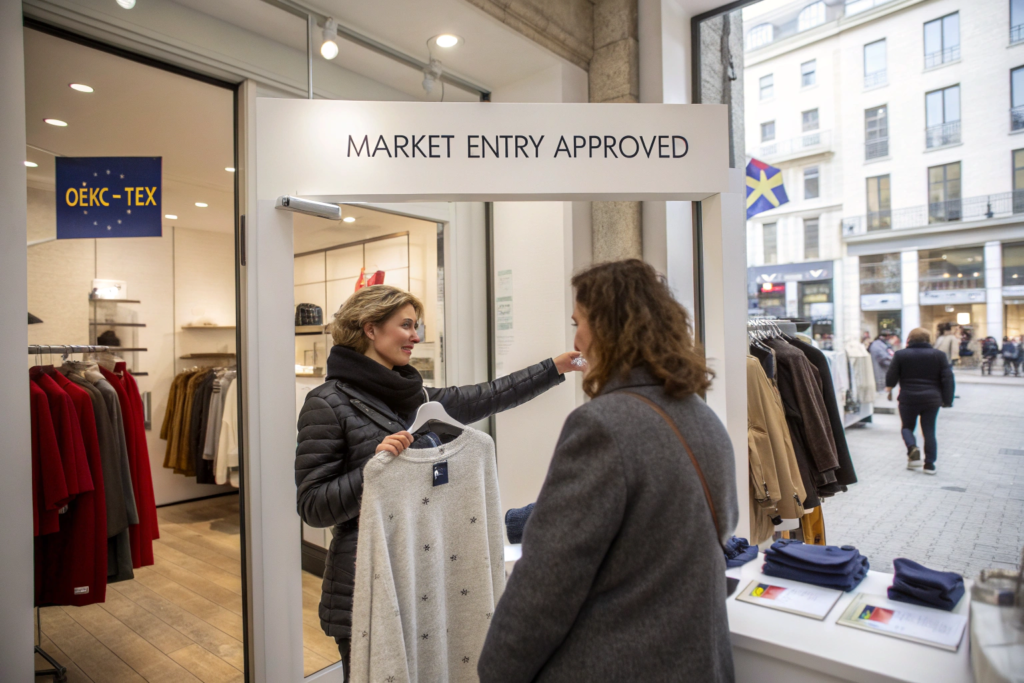
Absolutely, and it can be a decisive one. The European Union has some of the world’s most stringent chemical regulations, such as REACH. For a brand outside the EU, navigating this landscape is daunting. An OEKO-TEX® STANDARD 100 certificate is like a passport that demonstrates proactive compliance with these high standards. It shows distributors and retailers that you have done your due diligence, making them far more likely to take on your product. In many European marketplaces, both online and physical, having this certification is becoming a prerequisite, not a differentiator.
We’ve seen this firsthand with our European clients. A Swedish sportswear startup approached us in early 2024 to develop a line of functional baselayers. Their primary market was Scandinavia and Germany. They were clear that OEKO-TEX® certification was non-negotiable for their distribution talks. We developed a fabric blend of recycled polyester and elastane with moisture-wicking and antibacterial finishes. Crucially, we sourced all dyes and finishing agents from our certified chemical partners to ensure the final fabric would pass the strict OEKO-TEX® criteria for skin contact. The successful certification allowed our client to secure shelf space in three prominent Nordic outdoor retailers. The label gave the retailers the confidence they needed.
How does OEKO-TEX certification interact with EU regulations like REACH?
Think of it as a complementary, specialized layer. REACH (Registration, Evaluation, Authorisation and Restriction of Chemicals) is a broad EU regulation that restricts specific substances. OEKO-TEX® STANDARD 100 incorporates these REACH requirements and then adds many more of its own, often with stricter limit values. It also tests for substances that are not yet legally regulated but are of scientific and public concern, such as pesticide residues or chlorinated phenols. Furthermore, OEKO-TEX® tests the final product in its ready-to-sell state. This is critical because harmful substances can be introduced during cutting, sewing, or through trims like prints and labels. A fabric might be REACH-compliant when it leaves the mill, but a non-compliant print paste used later could render the final garment non-compliant. The OEKO-TEX® certification of the final garment catches this.
Therefore, for EU market entry, certification is one of the most robust ways to demonstrate "presumption of conformity" with the EU’s General Product Safety Directive. It significantly reduces your liability. It’s wise to consult resources that break down these complex interactions, such as articles on how to ensure textile compliance for the European market. This external guidance, combined with a certified supply chain partner, forms a solid strategy.
What are the marketing and storytelling advantages for my brand?
The advantage is a clear, credible, and emotionally resonant story. "Safe for you and the planet" is a powerful message, especially for categories like children’s wear, sportswear (which has intense skin contact), and home textiles. The OEKO-TEX® label provides the proof behind that claim. You can use it across all customer touchpoints:
- Packaging & Hangtags: The label itself is a visual cue of safety.
- Website Product Pages: Detail what the certification means for your customer.
- Social Media: Create content explaining why you chose certified materials, perhaps comparing it to the non-certified alternative. This educates and builds trust.
- Press Releases & Retailer Pitches: It’s a concrete achievement to highlight.
For example, you can craft a story around "From Skin to Soul: Why Every Layer Matters." You’re not just selling a shirt; you’re selling peace of mind. This builds brand loyalty that transcends price. Customers who value safety and transparency are often more loyal and willing to pay a premium. Engaging with community discussions on platforms like The Fashion Retailer’s sustainability forum can provide insights into how other brands are successfully communicating these values.
What should I look for when verifying a supplier’s OEKO-TEX claims?
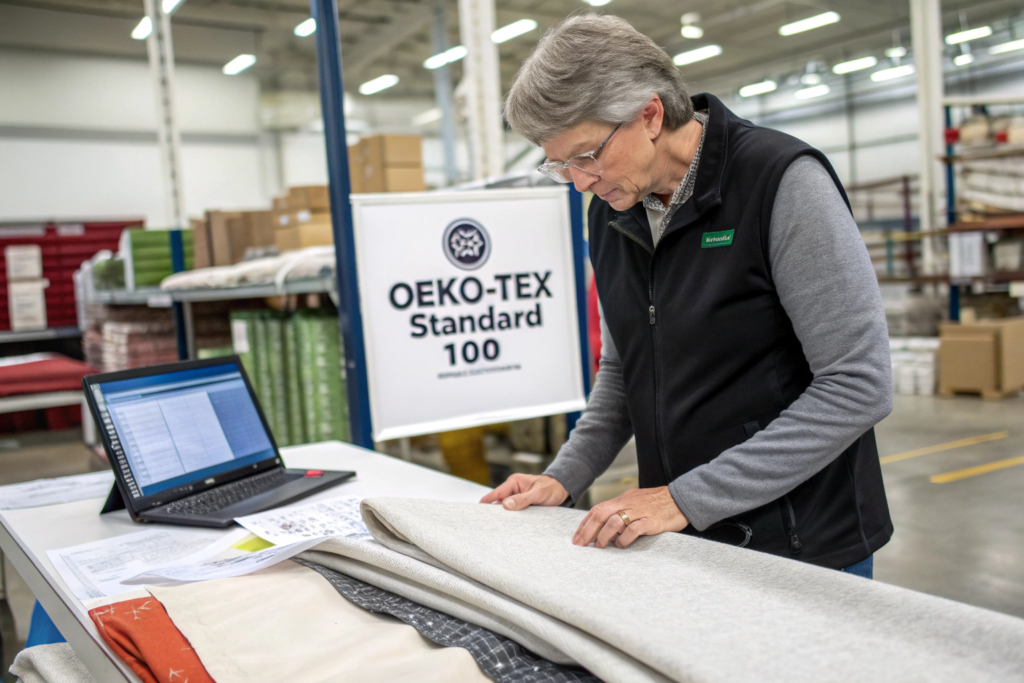
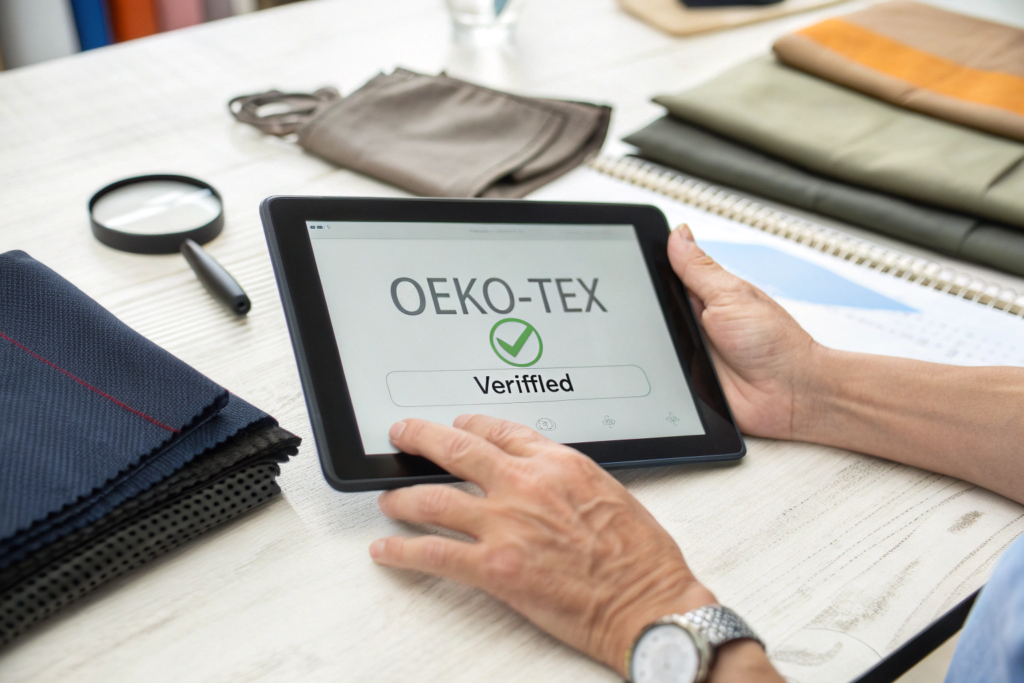
Verification is key. The first and most important step is to ask for the official OEKO-TEX® Certificate and its number. Don’t just accept a supplier’s word that their "fabrics are OEKO-TEX standard." Every certified article or production site has a unique certificate number. You can and should verify this number in the free, public OEKO-TEX® Certificate Check database. This will tell you:
- The Certificate Holder: Is it the trading company or the actual mill?
- The Certified Product Article: Does it match the fabric you are buying?
- The Validity Period: Certificates are valid for one year. Is it current?
- The Certification Institute: Which of the independent member institutes issued it?
- The Product Class: I, II, III, or IV? (Class I for babywear is the strictest).
Here is a quick checklist table for verifying supplier claims:
| Verification Step | What to Ask For | What to Check in the Database |
|---|---|---|
| Certificate Authenticity | Official PDF certificate with unique number. | Enter the number at oeko-tex.com/certificatecheck. Confirm all details match. |
| Scope of Certification | Clarify if the certificate covers the fabric or the final garment. | The "Article Description" field specifies what is certified (e.g., "Knitted Fabric, 95% Cotton, 5% Spandex"). |
| Supply Chain Coverage | Ask if their dyeing and finishing partners are also certified. | The certificate holder should be the production unit. For a trader, they should provide mill certificates. |
| Product Class Relevance | Confirm the class is appropriate for your product’s use (e.g., Class II for garments with direct skin contact). | The "Product Class" is listed clearly (I, II, III, or IV). |
How do I ensure the certification covers my specific finished product?
This is the most common pitfall. A certificate for a fabric does not automatically certify the finished garment. If you apply a print, embroidery, or any other treatment, or if you attach non-fabric components (like buttons or zippers), you must have the final, assembled product certified. There are two ways to handle this:
- Source all components certified: Work with a supplier like Shanghai Fumao who can provide certified base fabrics and connect you with certified trim suppliers. Then, you or your garment factory can apply for a certification for the final product, which is often streamlined if all inputs are certified.
- Apply for a new certification for the final product: This involves submitting samples of your complete garment to an OEKO-TEX® testing institute. Your fabric supplier should support you by providing their fabric certificate and information on the dyes and finishes used.
The key is to discuss this with your supplier at the sampling stage, not after bulk production has begun. A transparent supplier will guide you through this process. For complex supply chains, consulting a guide on managing multi-tier supplier compliance for apparel brands can be extremely helpful in setting up the right systems.
What are the red flags in a supplier’s certification claims?
Be extremely cautious if a supplier:
- Is reluctant to provide a certificate number or a copy of the certificate.
- Offers a "generic" certificate that doesn’t list a specific article matching your product.
- Claims their "factory is certified" but cannot show certificates for the specific materials you are buying.
- Offers a price that seems too good to be true for a certified fabric. (Remember the cost of compliant chemicals and testing.)
- Says certification "is not a problem" but cannot explain the product class or testing process.
Always perform your own independent check using the official database. Trust, but verify. Engaging with other buyers’ experiences on industry forums, like threads discussing red flags when sourcing certified textiles from Asia, can provide real-world cautionary tales and checklists.
How does partnering with a certified supplier streamline my production process?
Partnering with a vertically integrated or deeply networked certified supplier is the ultimate efficiency hack. It centralizes risk management and simplifies your workflow. Instead of you managing certificates from multiple vendors for fabric, dyeing, printing, and trims, you have a single point of responsibility. A strong partner will have a pre-vetted ecosystem of certified sub-suppliers and a quality control team that understands the certification’s requirements at every stage.
This streamlines production in several concrete ways:
- Faster Sampling: They will start with certified base materials, reducing the risk that a prototype fails your compliance criteria.
- Reduced QC Failures: Their in-house or partner QC will check for issues (like colorfastness or pH value) that are aligned with OEKO-TEX® parameters during production, not after.
- Simplified Logistics: They can often consolidate the testing and certification process for the final product, handling the communication with the testing institute on your behalf.
- Predictable Timelines: Because they work within the certified system daily, they can accurately forecast the extra time needed for testing and avoid surprises.
(Here’s a real example from our floor: Last August, a US client needed a rush order of certified baby romper fabric before the Chinese National Day holiday. Because our printing factory partner is also certified, we could move from lab dip to printed bulk fabric within 3 weeks, including the necessary testing checks. The client got their fabric on time because the entire chain was aligned on the same standard.)
What internal QC measures should a certified partner have?
A reliable certified partner doesn’t just rely on the annual OEKO-TEX® audit. They have daily internal controls. You should ask about:
- Incoming Material Inspection: Do they test incoming grey fabric or yarns for banned substances? They should have records.
- Approved Chemical List: Do they maintain a list of dyes and auxiliaries from certified chemical suppliers? This is a core OEKO-TEX® requirement for certified production sites.
- In-Process Testing: Do they perform routine tests on parameters like pH, formaldehyde, and colorfastness during production? For example, we run pH checks on every batch of fabric after washing, before it goes to finishing.
- Management System: Is their quality management system (like ISO 9001) integrated with their certification compliance? This ensures procedures are documented and followed.
A partner who can clearly explain these measures demonstrates a true commitment to the standard, not just a checkbox mentality. Reading case studies about how leading sourcing agencies implement QC for sustainable production can give you a benchmark for these expectations.
How does this partnership affect communication and problem-solving?
It transforms it from transactional to strategic. When both parties operate with the same certified framework, problem-solving has a common language and reference point. If a color shade is off, the discussion is about which certified dye alternatives can achieve it. If a finish isn’t performing, the solution is searched for within the palette of approved chemicals. This eliminates a huge amount of back-and-forth and guesswork.
For instance, a common issue is achieving a specific bright color that is traditionally made with heavy metals. A certified partner will immediately know this is a constraint and will propose alternative dyeing techniques or blends that can achieve a similar effect within the safety parameters. This proactive, solution-oriented communication saves weeks of development time. It aligns your goals with the supplier’s capabilities from the outset. Exploring partnerships through networks featured on global textile manufacturing platforms like ours at Fumao Fabric that emphasize integrated compliance can be a direct path to finding such aligned partners.
Conclusion
Sourcing OEKO-TEX® certified clothing is far more than an ethical choice; it’s a sharp business strategy with measurable ROI. It systematically de-risks your supply chain against chemical, compliance, and reputational hazards. It builds a fortress of consumer trust that allows your brand to command loyalty and potentially a price premium. In markets like the EU, it functions as a critical entry ticket, smoothing the path to retailers and end consumers. The key to unlocking these benefits lies in choosing the right partner—a supplier who treats the certification as an integral part of their production DNA, not just a marketing accessory. By verifying certificates meticulously, understanding the scope of coverage for your final product, and aligning with a partner who has robust internal controls, you transform a complex challenge into a streamlined, competitive advantage. Your products become not just items for sale, but promises of safety and quality that you can stand behind with confidence.
Ready to simplify your journey toward OEKO-TEX® certified apparel and harness these benefits for your brand? Partner with a supplier built on transparency and integrated compliance. At Shanghai Fumao, we weave certification into our process from the yarn up, offering you a seamless, worry-free path to market. Let’s discuss how we can bring your next safe, sustainable, and successful collection to life. Contact our Business Director Elaine today to start the conversation: elaine@fumaoclothing.com.