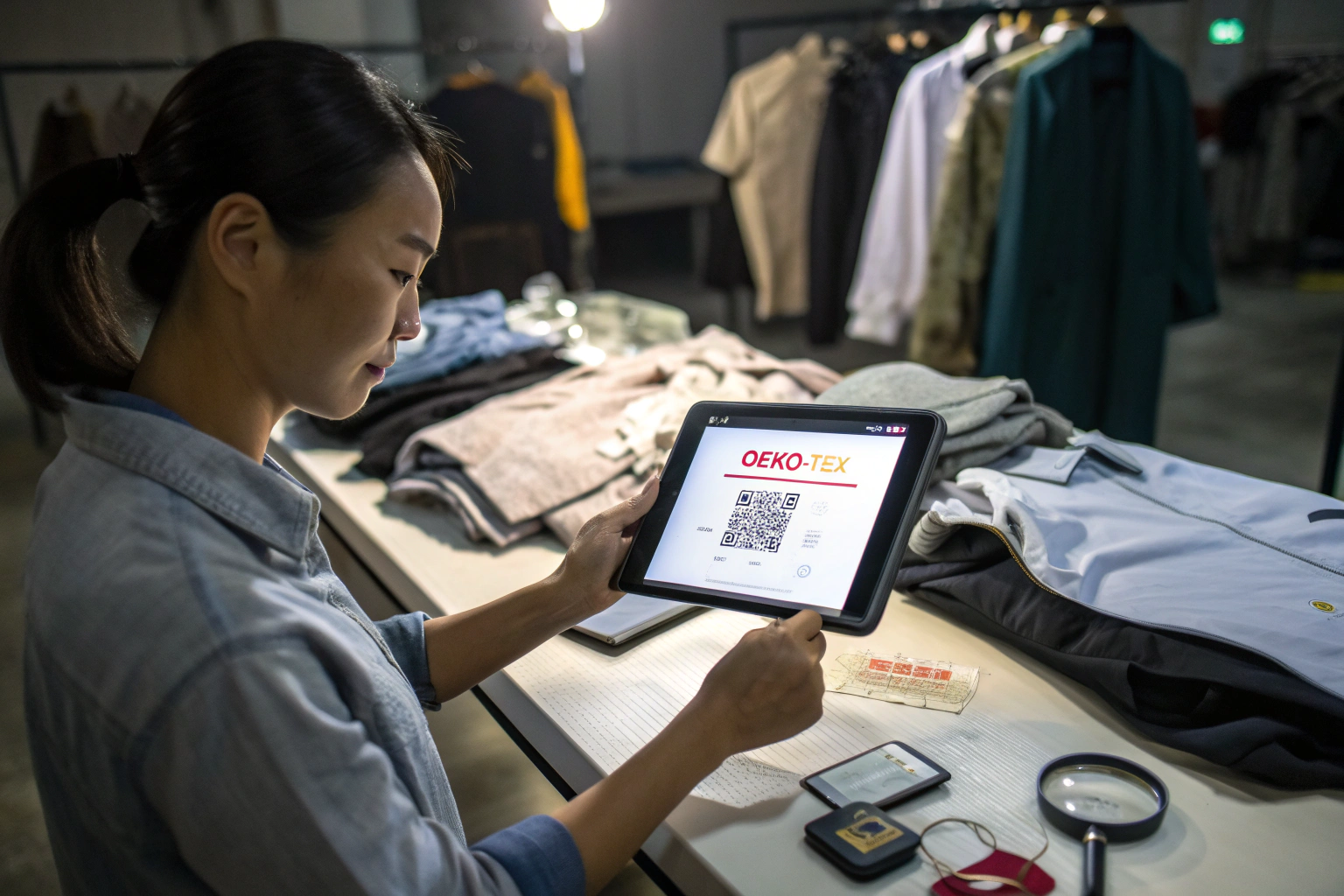
You’ve done the right thing. You’ve asked your supplier for OEKO-TEX certification, and they sent you a PDF with a logo on it. You feel relieved. But here’s the hard truth I’ve learned over 20 years in Keqiao: that PDF might be worthless. In the last quarter alone, three of our new clients came to us after discovering their "certified" garments failed retail audits. The financial losses were staggering. The real question isn’t whether your supplier has a certificate; it’s whether the specific garment you’re receiving is genuinely covered by that certification.
A genuine certification is a legally binding document that links a tested sample to a specific, traceable production batch. A fake or misused one is just expensive paper. The gap between the two is where brands lose money, reputation, and customer trust. This isn’t about small factories cutting corners; we’ve seen even large trading companies play fast and loose with certificates. They might have one valid certificate for a basic white cotton, but use it to sell you a printed, dyed polyester blend. The garment you get is uncertified.
So, how can you be sure? You need to move from trust to verification. Genuine certification requires three pillars: a valid and specific certificate, a transparent supply chain that supports its claims, and a supplier whose systems prevent mix-ups. If your supplier gets defensive when you ask for batch traceability, that’s your first red flag. Let’s turn you into a verification expert.
How to Spot a Fake or Misused OEKO-TEX Certificate in 5 Minutes?
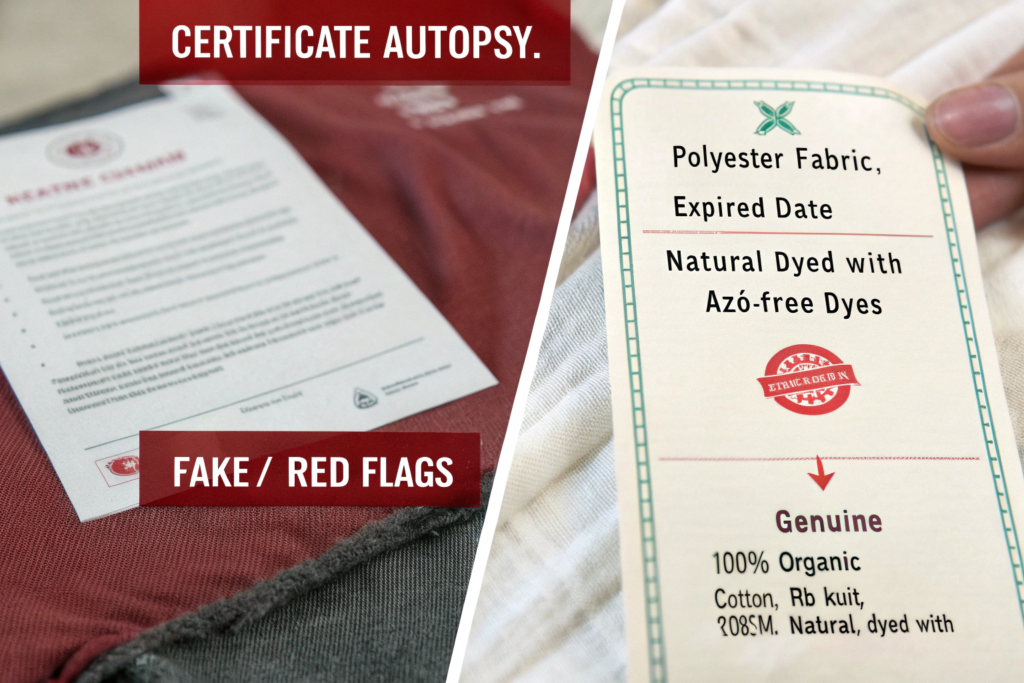
You don’t need to be a lab technician. You just need to know where to look on the document. A genuine OEKO-TEX STANDARD 100 certificate is dense with specific information. Fraudulent ones are often vague, recycled, or contain obvious errors.
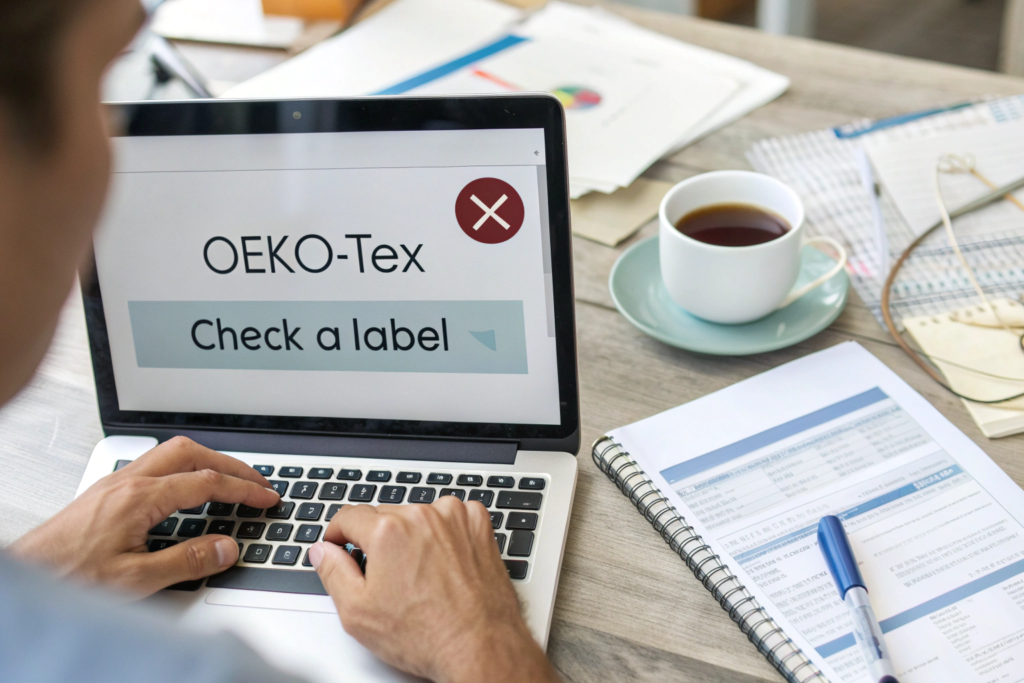
First, go straight to the official source. Don’t just look at the PDF your supplier emailed. Go to the OEKO-TEX® website and use their "Check a Label" tool. Enter the certificate number or the company name. The database will show you the exact current status and details. If the certificate isn’t there, or is listed as "expired" or "revoked," you have your answer immediately. I once saved a startup client €15,000 by doing this simple check. Their supplier’s certificate number was valid but belonged to a completely different company in another province—a clear case of certificate forgery.
What Are the Critical Data Points on a Valid Certificate?
Think of the certificate as a birth certificate for a specific textile product. It must be hyper-specific. Here’s what to audit line by line:
- Applicant and Manufacturer: The "Applicant" is who applied for the test. The "Manufacturer" is where the product was made. Are these your supplier and their actual factory? If you’re buying from "ABC Trading Co.," but the manufacturer is listed as "XYZ Mill," ask for the business relationship proof. If the supplier claims to be the factory but is only listed as the applicant, they might be reselling.
- Article Description: This is the most abused part. It must be incredibly detailed. "Ladies’ Blouse" is not enough. A genuine description looks like: "Article: 100% Cotton, Single Jersey, 180gsm, White, Dyed, Finished." It lists fiber, construction, weight, color, and process. Does this match your garment’s specs exactly? If you’re buying a printed, blue, 150gsm jersey, but the certificate is for a white, 180gsm jersey, it’s invalid for your order.
- Product Class: For garments, it should almost always be Class II (direct skin contact) or Class I for babywear. If it’s Class III (jackets) or Class IV (curtains) for a t-shirt, it’s wrong.
- Validity Period: Certificates expire one year from issue. Check the "Valid until" date. An expired certificate is null and void.
- Testing Institute: The logo and name of an authorized institute (like TESTEX, Hohenstein) must be present. Verify this institute is listed on the OEKO-TEX website.
Can a Supplier Legally Use One Certificate for Multiple Products?
Almost never. This is the biggest misconception. The certificate is issued for one specific "article" as described. You cannot use a certificate for "100% Cotton Jersey" to cover a "95% Cotton 5% Spandex Jersey." The addition of spandex changes the chemical profile. Similarly, a certificate for a dyed fabric does not cover a printed version of that fabric. The printing inks must be tested. This is called "article extension," and it requires the supplier to apply for a new certificate or an extension, providing evidence that the new article uses identical, certified components and processes. A trustworthy supplier like Shanghai Fumao maintains a vast, organized database of certificates for every single article variation we produce, and we never cross-use them.
Does Your Supplier’s Supply Chain Support the Certification Claim?
A certificate is a snapshot of a tested sample. The real challenge is ensuring every single garment in your order matches that snapshot. This is where supply chain transparency becomes non-negotiable. If your supplier cannot trace the certified fabric roll to the cutting order, the certification is just a hopeful piece of paper.
Ask this key question: "Can you show me the batch/lot number of the certified fabric used for my order, and trace it back to the mill’s test report?" A competent supplier will have this. They should use a Fabric Rolling Test Report from the dyeing factory, which includes the OEKO-TEX certificate number. This roll number should then be recorded against your purchase order and cutting ticket. In our operation, we use a digital QR system. Every roll of certified fabric in our warehouse has a unique QR code. When it’s allocated to an order, that code is linked to the customer’s file, providing a digital chain of custody. This is how we caught a potential error last month: the warehouse almost pulled a roll of similar-looking but uncertified fabric for a US client’s order. The system flagged it before it reached the cutting table.
What Happens During Cutting and Sewing? Can Certification Be Contaminated?
Yes, absolutely. This is the "invisible" risk. Let’s say you have a certified fabric. But what about the sewing threads? The interlinings? The elastic waistband? The care label? Every component that makes up over 1% of the total weight needs to be considered. If your factory uses uncertified polyester thread or a non-compliant elastic, the final garment is not OEKO-TEX certified. A credible supplier will provide a Component List with evidence of compliance for all items. For a Swedish workwear brand we supply, we provided a full dossier: fabric certificate, thread certificate, interlining certificate, and even the metal zipper supplier’s compliance statement. This is what full due diligence looks like.
How Do Small vs. Large Order Runs Affect Certification Integrity?
Many suppliers claim, "We only do certification for large orders." This is a half-truth that hides risk. The standard process is: a sample is sent for certification, and upon passing, that specific article is certified. Theoretically, the 10,000th meter should be identical to the tested sample. The risk point is batch variation. Dye lots can differ. A mill might change a chemical softener. A robust supplier manages this by:
- In-house Pre-testing: Running their own quick tests on every incoming fabric batch against OEKO-TEX parameters (like pH, formaldehyde).
- Approved Supplier Lists: Sourcing only from dye houses and mills that are audited and use consistent, certified chemical recipes.
- Batch-specific Documentation: Requiring a test report for each dye lot from the mill.
For small runs, the risk is higher if the supplier is pulling from leftover "grey market" fabric without proper batch control. Our advice? Whether your order is 500 or 50,000 pieces, insist on seeing the test report for the specific fabric batch used for you. Communities like Stylecareer’s forums on production ethics often discuss these granular supply chain challenges.
What Questions Should You Ask Your Supplier to Uncover the Truth?
Turning the tables and asking pointed, technical questions is your most powerful tool. A genuine, professional supplier will welcome these questions as they demonstrate your seriousness. A dodgy one will become evasive, angry, or give vague promises.
Here is your interrogation checklist. Ask them in writing and demand clear evidence:
- "Please provide the OEKO-TEX certificate for the exact article description matching my product, including fiber content, weight, and finish." (Forces specificity)
- "What is the fabric mill’s name and the dyeing factory’s name for this order? Can you share their business license and the fabric’s rolling test report that references the OEKO-TEX number?" (Tests traceability)
- "Can you provide evidence of compliance (certificate or test report) for all secondary components: sewing thread, interlining, elastic, labels, etc.?" (Tests comprehensive control)
- "What is your process for verifying that the fabric batch shipped to the sewing factory is the same as the certified batch?" (Tests internal QC systems)
- "If my order is produced across multiple sewing lines or over several weeks, how do you ensure consistency and prevent mixing with uncertified materials?" (Tests production management)
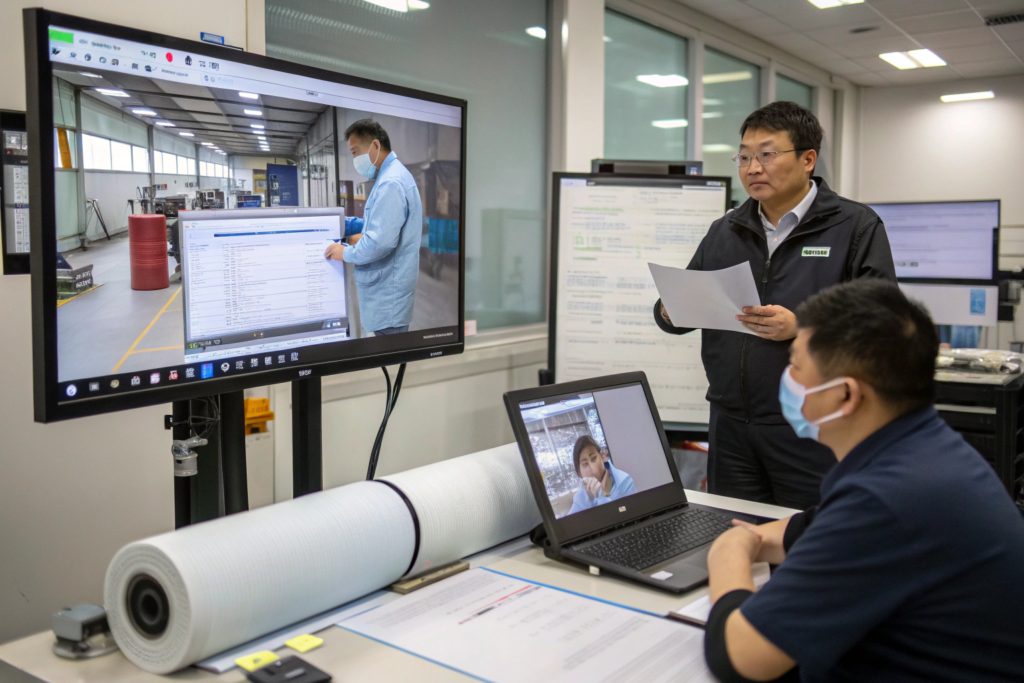
A real case from 2023: A UK brand asked us these questions after their previous supplier failed an audit. We didn’t just answer; we set up a video call with our QC manager who walked them through our digital tracking system in real-time, showing the physical roll and its linked digital certificate. They switched their entire contract to Shanghai Fumao that week. Transparency builds unbreakable trust.
How Should a Supplier Handle Re-orders or Fabric Batch Changes?
This is a critical moment. Let’s say you re-order the same "OEKO-TEX certified black cotton jersey" six months later. The fabric will come from a new dye lot. A professional supplier’s procedure should be:
- Automatic Pre-testing: The new batch is tested in their own lab against the certified parameters.
- Sample Retention: A swatch from the new batch is compared to the certified reference sample on file.
- Disclosure and Documentation: They inform you of the new batch number and provide the mill’s test report for that batch. If any parameter is borderline, they may advise re-submitting for official certification.
If your supplier just says "Yes, it’s the same certified fabric" without any of this process, consider it a major warning sign. The chemistry of textile production is not perfectly repeatable without rigorous control.
What Are the Liabilities if Fake Certification Is Discovered?
The liabilities cascade. For you, the brand:
- Financial: Cost of goods lost, cost of recalls, fines from retailers, legal fees.
- Reputational: Loss of consumer trust, negative media coverage, de-platforming from major retailers.
- Legal: In markets with strict consumer protection laws (EU, USA), you could face lawsuits for false advertising.
Your supplier’s liability is usually limited to the value of the goods, as per your contract—a tiny fraction of your potential loss. This is why verifying before production is your only real protection. Understanding international legal frameworks for product liability is essential for any importer.
What Are the True Costs of Working with a Non-Compliant Supplier?
The initial price from a supplier using fake or misapplied certifications is always lower. That’s the bait. But the true cost is a trap that springs open later. Let’s quantify the risk versus the small premium of working with a verified partner.
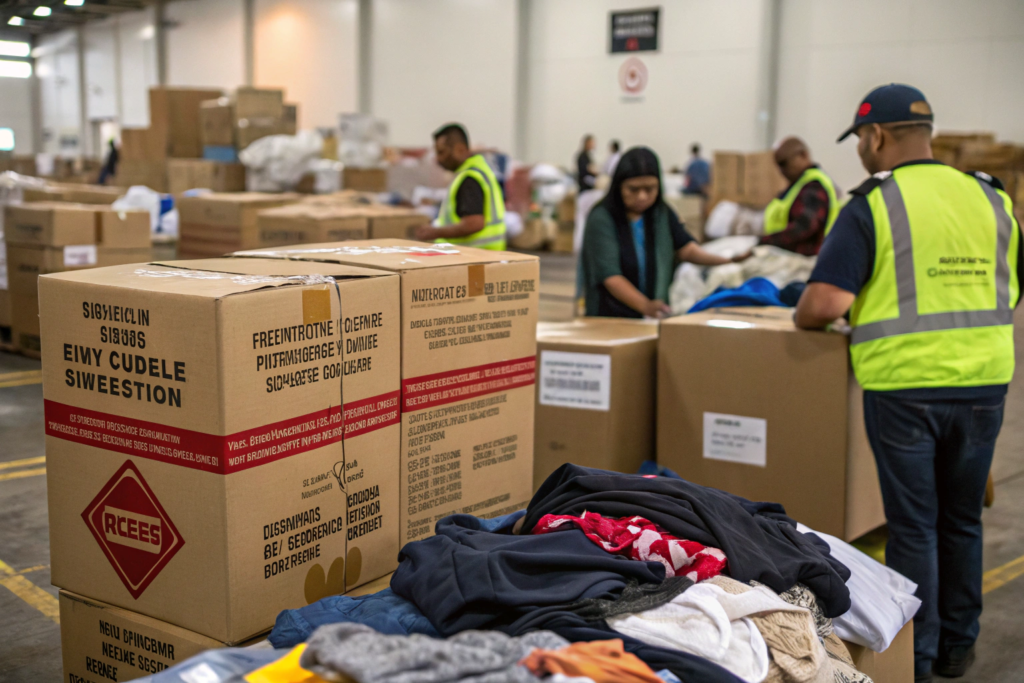
Consider this scenario: You save $0.50 per garment by using a "certified" supplier with dubious practices. You order 10,000 pieces. You "save" $5,000. Then, a random spot-check by a European customs authority or a retailer’s lab finds prohibited substances. The result: a full shipment rejection at port. Now you face: air freight to replace the order ($15,000), lost sales from missing the season ($50,000+), fines from the retailer ($10,000), and the cost of destroying the non-compliant goods ($5,000). Your $5,000 "saving" just triggered an $80,000+ loss. I’ve seen this math play out in reality, not theory.
How Does Non-Compliance Affect Lead Times and Agility?
Catastrophically. A failed test doesn’t happen at the start. It happens at the worst possible moment: when the goods are finished, packed, and ready to ship—or already on the water. Discovering non-compliance then means:
- Production Complete Stoppage: You must find new fabric, produce new garments.
- Missed Shipping Windows: Pushing you from sea freight to exponentially more expensive air freight.
- Missed Sales Windows: Arriving late to market, selling at a discount, or being canceled altogether.
Your entire supply chain agility is destroyed. The "fast" supplier who cut corners just made you six months late. Working with a compliant partner might have a slightly longer initial timeline due to proper testing, but it guarantees on-time delivery of sellable goods. It’s the difference between a slow, steady climb and a fast ride off a cliff.
Can You Recover Your Brand’s Reputation After a Scandal?
It’s incredibly difficult and expensive. Consumers have long memories for scandals involving child safety or toxic products. Rebuilding trust requires massive investment in PR, transparent reporting, and third-party audits—costs that far exceed any initial savings. It’s far cheaper to invest in verification upfront. This is why leading brands now audit not just their Tier 1 supplier, but their Tier 2 (fabric mill) and Tier 3 (chemical suppliers). The industry is moving towards radical transparency, and platforms like Transparentem provide insights into these deep supply chain investigations.
Conclusion
Asking "Is my supplier providing genuine OEKO-TEX garments?" is the most important quality question you can ask today. The answer lies not in faith, but in forensic verification of certificates, relentless questioning of supply chain traceability, and a clear understanding of the catastrophic costs of getting it wrong.
Your relationship with your supplier should be a partnership built on evidence, not evasion. A true partner is proud to show you their systems, their test reports, and their certificates in granular detail. They see your due diligence as a mark of a professional brand they want to work with long-term.
Don’t wait for a failed audit to be your wake-up call. Take action now. Review your current certificates with the checklist provided. Ask your supplier the tough questions. If the answers are unclear or defensive, it’s time to find a partner whose standards match your own. At Shanghai Fumao, we build our business on the kind of verifiable integrity that protects your brand. To have a transparent conversation about your current supply chain or to start a new, fully documented partnership, contact our Business Director, Elaine. Let’s ensure your next order is genuinely safe, from the fiber up. Reach her at elaine@fumaoclothing.com.