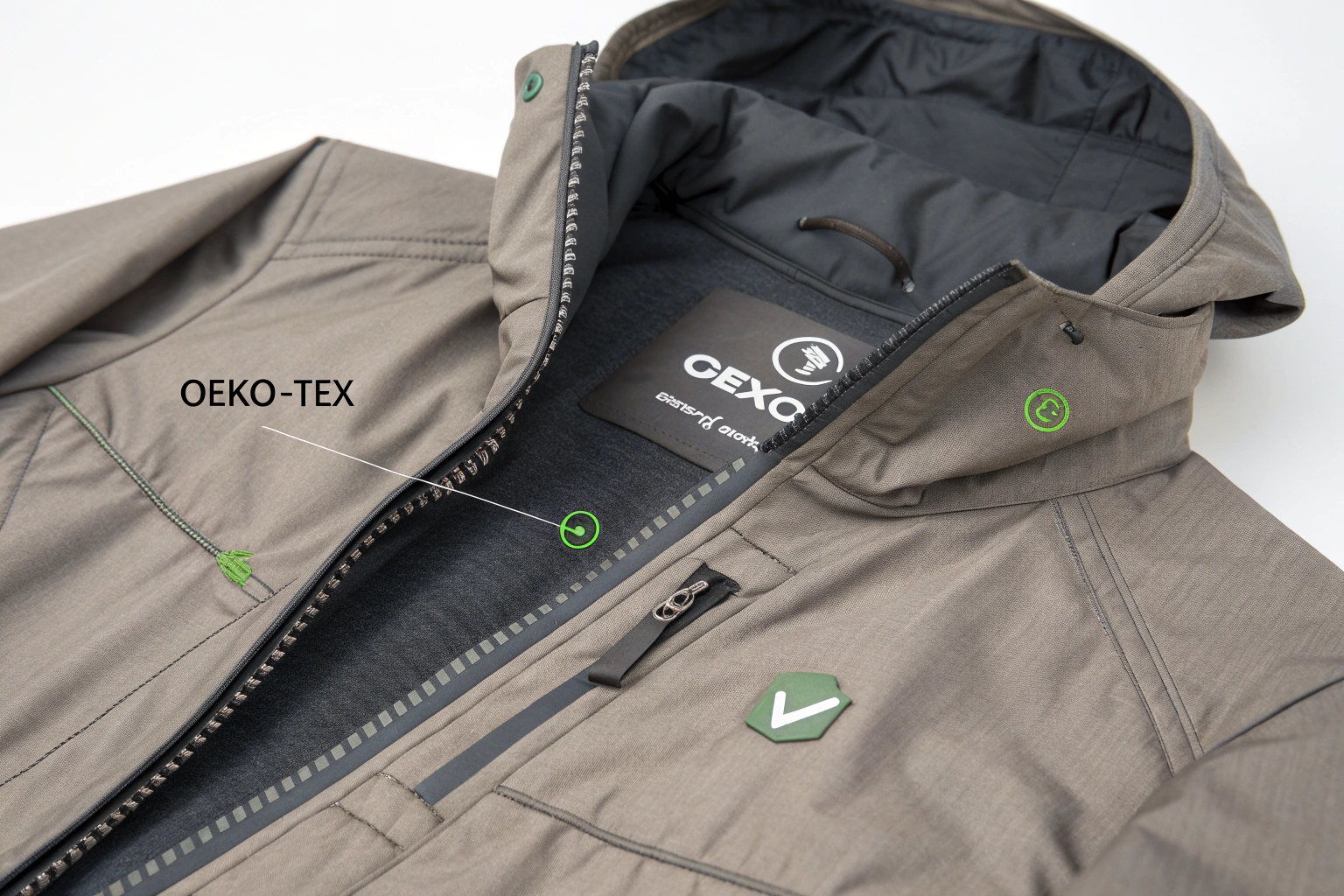
You’ve sourced OEKO-TEX® certified fabric for your new apparel line. The lab dips are perfect, the handfeel is excellent, and the certificate checks out. You feel confident about compliance. But what about the zipper on that jacket? The embroidery thread on that logo? The interlining inside that collar? This is where many brands face a rude awakening: a certified main fabric does not equal a certified finished garment. Overlooking accessories and threads is the single most common compliance gap that turns a "safe" product into a liability.
The short answer is no, OEKO-TEX® certification does not automatically cover all accessories and threads. The complete, legally valid answer is more nuanced: OEKO-TEX® STANDARD 100 certification can and must cover them, but this requires explicit testing and inclusion in the certificate’s scope. If these components are not listed, they represent an untested—and potentially non-compliant—element in your product. A single non-certified plastic button can contaminate an entire batch of otherwise perfect garments.
Understanding this "all-components rule" is critical for brand owners, designers, and sourcing managers. It transforms certification from a simple fabric specification into a holistic materials management system. This article will dissect the OEKO-TEX® requirements for accessories and threads, explain the certification pathways, and reveal the practical steps you must take to ensure your entire product—from the main shell to the smallest snap—is genuinely safe and compliant. Let’s close this dangerous gap in your supply chain.
The Critical Rule: What Does OEKO-TEX® "All Components" Actually Mean?
OEKO-TEX® STANDARD 100 is a product certification. It certifies a finished, ready-to-sell article in its final form. According to the standard’s official provisions, every component of that article that makes up more than 1% of its total weight must be tested and compliant. For components under 1%, they must still not contain any prohibited substances. This means everything is in scope: threads, elastics, zippers, buttons, snaps, interlinings, labels, prints, and even packaging materials that are part of the product (like a fixed garment bag).
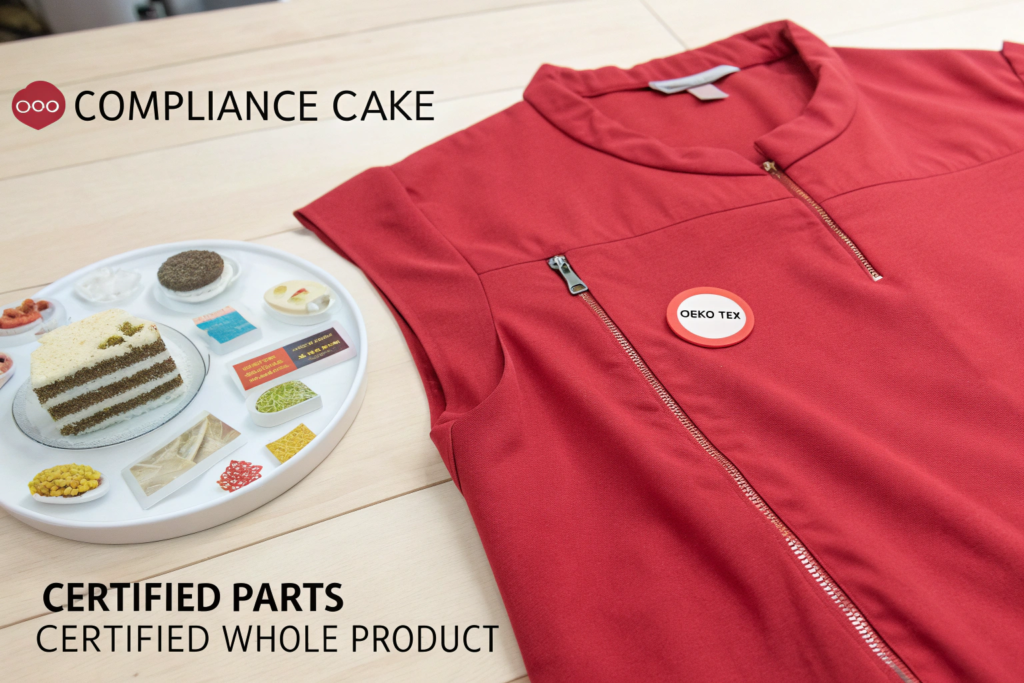
The certification is not additive; it’s holistic. You cannot simply combine a certified fabric with a certified zipper and assume the final garment is certified. The entire assembled product must be submitted for certification, or it must be certified as a "garment" with all components pre-declared and approved. This is a fundamental point of confusion that leads to failed audits. Think of it like a cake: having certified flour and certified sugar doesn’t certify the baked cake; the final cake itself must be tested.
Which specific accessories most often get overlooked?
Based on our QC audits for clients, these are the typical "blind spots":
- Sewing Thread: Often considered part of the "fabric" but sourced separately. Non-certified polyester or cotton thread can introduce banned dyes or heavy metals.
- Interlinings and Fusibles: The glue (resin) in fusible interlinings is a chemical hotspot for formaldehyde and phenols.
- Elastics: Especially in waistbands and cuffs, often contain problematic softeners and dyes.
- Print Inks & Plastisol: Custom prints, logos, and decorative prints are high-risk for phthalates (like DEHP) and heavy metals.
- Metal Trims: Zippers, buttons, snaps, and rivets can contain nickel, lead, or cadmium that exceed limits through abrasion and sweat contact.
- Care Labels & Main Labels: The ink on these labels is frequently non-compliant.
In 2023, we helped a Swedish sportswear brand troubleshoot a failed test. The issue? The silicone gel grip print on the inside of running shorts. The fabric was perfect, but the print paste was never submitted for assessment. The lesson is universal: if you can see it, touch it, or it’s attached, it must be considered. For a comprehensive list of regulated substances, refer to the OEKO-TEX® Restricted Substances List (RSL), which applies to every component.
How do "sewing threads" and "embroidery threads" differ in certification?
This is a key technical distinction:
- Sewing Thread: Used for construction. It is considered an integral part of the garment. For a finished garment certification, the sewing thread is tested as part of the whole. However, if you are a factory certifying a garment, you must ensure your thread supplier can provide compliance data.
- Embroidery Thread & Yarn for Knitting: Often classified as a "yarn" material. They can be certified as standalone products (e.g., "polyester embroidery yarn on cones") under their own OEKO-TEX® certificate. This is the best practice for suppliers like Shanghai Fumao when we provide trim kits: we source threads from mills that hold their own certificates, giving us and our clients verifiable proof.
The safest approach is to demand OEKO-TEX® certificates for all threads as raw materials, simplifying the final garment certification process. Industry forums like Textile School often have threads discussing supplier management for compliant trims.
Pathways to Certification: How Do Accessories Get Certified?
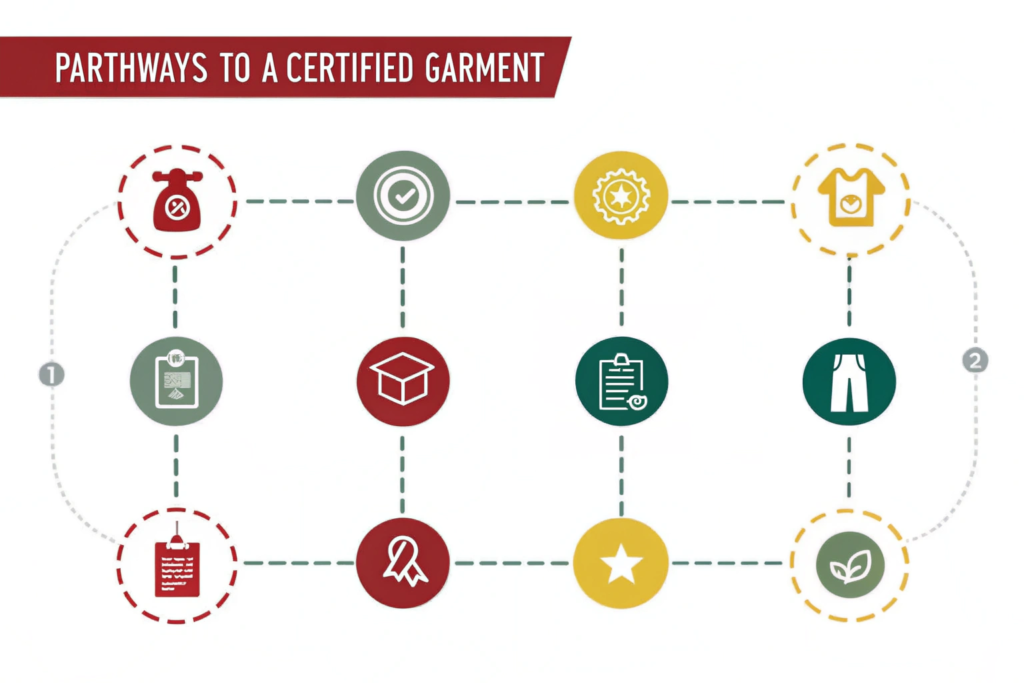
There are two primary pathways to achieving full compliance for accessories, each with different implications for brands and factories.
Pathway A: Component-Level Certification (The Modular Approach)
Individual accessory suppliers obtain their own OEKO-TEX® STANDARD 100 certificates for their products. For example:
- A zipper factory certifies its "polyester tape coil zipper, size 5."
- A button factory certifies its "resin buttons, 4-hole, 18mm."
- A thread mill certifies its "100% polyester core spun thread, Tex 40."
The Brand/Factory’s Role: You must collect all these component certificates and ensure they are valid and match the articles used. When you then apply for certification of the finished garment, you submit these certificates as evidence. This streamlines the final product test, reduces cost, and de-risks the process. This is the method we advocate and facilitate at Shanghai Fumao for our full-package clients.
Pathway B: Finished Product Certification (The Holistic Test)
The garment factory submits the complete, assembled garment (with all its specific components) for testing. The lab will test the entire product, including all accessories. If it passes, the resulting certificate covers that specific garment type with those specific components.
The Caveat: This certificate is only valid for that exact combination. If you change your zipper supplier or button type, you may need a retest or a certificate amendment. This pathway puts the full testing burden and risk on the garment factory.
What are the cost and timeline implications of each pathway?
- Component-Level (Modular):
- Cost: Distributed. Each supplier bears the cost of certifying their own product line. The brand/factory pays a lower fee for the final garment certification, as it’s largely a documentation review.
- Timeline: Faster for production. Once you have certified components, you can proceed with manufacturing. The final certification is administrative.
- Control: Higher. You select from pre-certified components.
- Finished Product (Holistic):
- Cost: Concentrated. The factory/brand pays for the full, expensive test of the complete garment.
- Timeline: Slower. Requires waiting for the full lab test cycle (2-4 weeks) before you can bulk produce.
- Risk: Higher. If one accessory fails, the entire garment fails, and you must restart.
Smart brands use a hybrid: they build a library of pre-certified components (fabrics, threads, standard zippers) and then only require a holistic test for new, unique accessory combinations. This is the efficient model we help clients implement.
How do you verify an accessory supplier’s certificate?
Apply the same rigorous verification process as for fabric:
- Database Check: Use the OEKO-TEX® portal to confirm the certificate number, valid company name, and scope (e.g., "polyester zipper tape, size 3").
- Scope Match: Ensure the certified article description matches the exact product you are buying (material, size, color, finish).
- Lot Traceability: Request a Declaration of Conformity from the accessory supplier linking the shipped batch to the certificate.
Never accept a generic "all our products are certified" claim. Demand the specific certificate for the specific item. This diligence is non-negotiable, as emphasized in guides from organizations like The ZDHC Foundation, which focuses on chemical management across the supply chain.
Common Pitfalls & Red Flags When Sourcing Certified Trims
Even with the best intentions, the path to full accessory compliance is littered with pitfalls. Awareness is your best defense.
Pitfall 1: The "Free Accessory" Trap
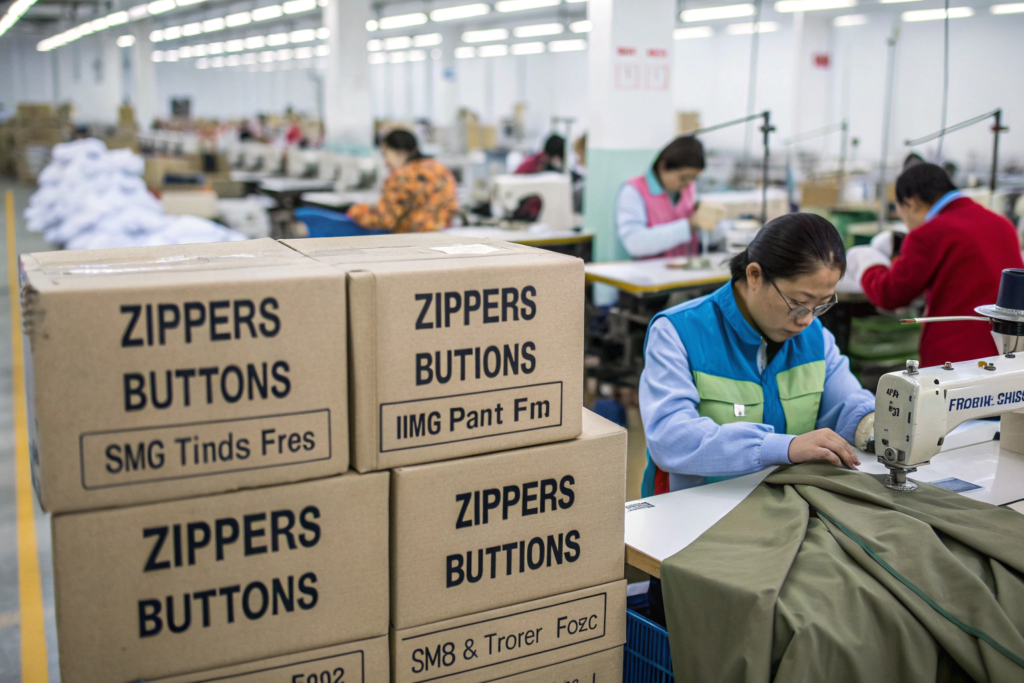
A garment factory offers to "provide all trims for free" as part of the FOB price. This often means they will source the cheapest available zippers, buttons, and threads with zero compliance documentation. This transfers immense hidden risk to you. Always separate the trim cost and specification in your PO. Insist on approving trim suppliers and seeing their certificates before production begins.
Pitfall 2: The "Sample vs. Bulk" Switch
The development sample uses certified components, but the factory switches to uncertified (cheaper) versions for bulk production to save cost. Your countermeasure: Mandate that trim lot numbers be recorded on the cutting ticket or packing list and randomly audit finished goods against these records.
Pitfall 3: The "Assembled Component" Loophole
A zipper may have a certified tape but uncertified slider and puller. The certificate must cover the entire zipper assembly, not just one part. Your verification question must be: "Does this certificate cover the complete zipper as an assembled item, including the slider, teeth/coil, and tape?"
What are the testing risks with prints, coatings, and dyes on accessories?
These surface applications are high-risk zones:
- Metal Trims with Electroplating or Coatings: Can contain nickel, lead, or hexavalent chromium. Abrasion and corrosion tests are part of OEKO-TEX® to simulate wear and sweat.
- Plastic/Resin Trims with Colorants: The pigments used can contain heavy metals or banned dyes.
- Transfers and Prints on Labels/Patches: Same risk as fabric prints (phthalates, heavy metals).
The due diligence question for your factory is: "Can you provide the chemical safety data sheets (MSDS/SDS) for the dyes, coatings, and inks used on all trims?" A professional factory will have this from their trim suppliers. If they don’t, consider it a major red flag. Resources like the AFIRM Group’s RSL provide detailed guidance on restricted substances in trim categories.
How does OEKO-TEX® handle recycled accessory materials?
This is increasingly important. OEKO-TEX® certifies the safety of the final product, not its recycled content. A button made from 100% recycled polyester can be OEKO-TEX® certified if it passes the chemical tests. However, recycled materials can sometimes have higher risks of contaminant carry-over (e.g., legacy chemicals from previous lives). Therefore, testing is even more critical. If a brand also wants to claim recycled content, they need a separate certification like GRS (Global Recycled Standard) alongside OEKO-TEX®. We guide our clients at Shanghai Fumao through this dual-certification process for sustainable lines.
Building a Fail-Safe System: Your Actionable Checklist
Turning knowledge into action requires a system. Here is a practical, step-by-step checklist to ensure no accessory is left behind.
Pre-Production Phase:
- Bill of Materials (BOM) Scrub: List every single component in your tech pack, including sewing thread, interlining, and label ink.
- Supplier Qualification: For each component, identify the supplier and request their valid OEKO-TEX® certificate (or GRS, if recycled). Verify each in the online database.
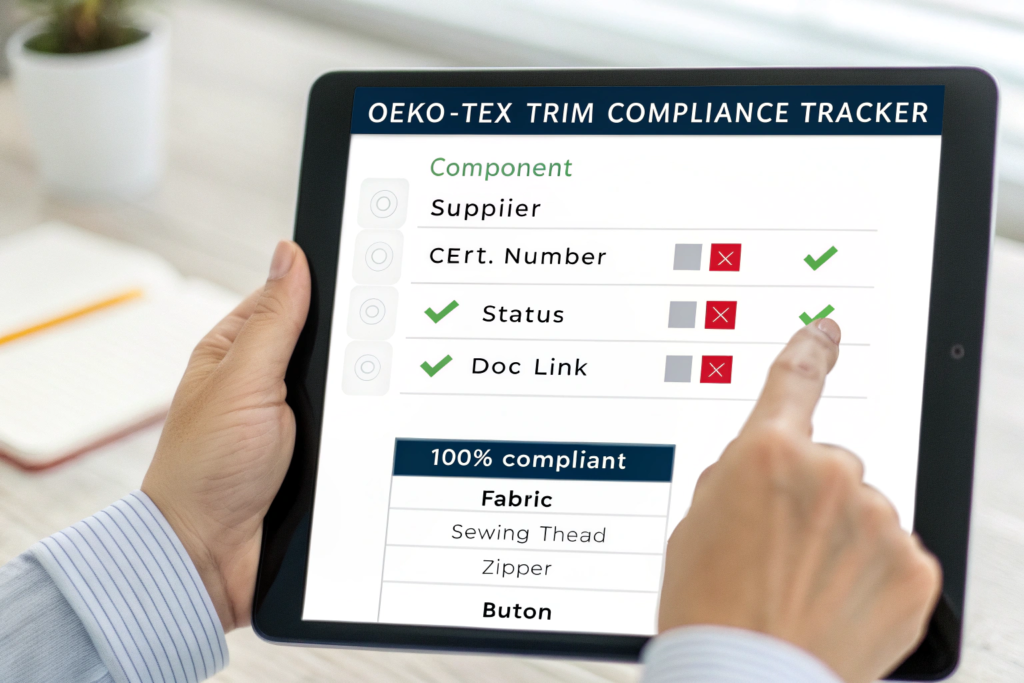
- Documentation Hub: Create a digital folder for the order containing all component certificates, Declarations of Conformity, and SDS sheets.
- Contractual Lock: In your PO/contract with the garment factory, specify exact trim article numbers and their required certification status. Include a clause that voids the order and imposes penalties for unauthorized substitutions.
Production & Delivery Phase:
- Pre-Production Sample Audit: Physically check the pre-production sample against your BOM and verify all components match the approved certified items.
- In-Process QC Check: Have your QC team or a third-party inspector verify trim lot numbers on-site during production.
- Final Shipment Documentation: Ensure the shipment includes a master Declaration of Conformity from the garment factory, listing all component certificates and how they apply to this shipment.
Should you consider OEKO-TEX® STeP certified accessory factories?
Yes, absolutely. Sourcing from a STeP-certified zipper or thread manufacturer provides a higher level of assurance. STeP certification means the factory has a managed chemical and environmental system, making it less likely to have process-related contamination. It indicates a mature, transparent supplier. This is a value-added criterion you can use to tier your trim suppliers. You can verify a supplier’s STeP status alongside their STANDARD 100 status in the OEKO-TEX® database.
What is the final, definitive proof of compliance?
The ultimate proof is a retail-ready finished garment with its own valid OEKO-TEX® STANDARD 100 certificate, where the certificate’s scope explicitly describes the garment and its key components. This is the document that protects you at customs, satisfies retailers, and can be communicated to consumers. Every other certificate (for fabric, thread, zipper) is supporting evidence for achieving this final product certificate.
Building this chain of custody is complex but essential. It is the difference between a product that is claimed to be safe and one that is proven to be safe.
Conclusion
Does OEKO-TEX® certification cover all textile accessories and threads? The definitive answer is: Yes, it must—but only if you, the brand or buyer, explicitly ensure they are included in the certification scope. The responsibility for this holistic compliance rests squarely on your shoulders. You cannot delegate it to the fabric supplier or assume the garment factory has it covered.
Treating accessories as an afterthought is the fastest way to nullify your investment in certified fabrics and expose your brand to severe risk. The solution is systematic: map every component, demand and verify individual certificates, lock specifications contractually, and build a transparent chain of custody from raw material to finished product.
This rigorous approach is what separates compliant, reputable brands from the rest. It transforms OEKO-TEX® from a marketing badge into a genuine management system for product safety. While demanding, it is entirely achievable with the right partners and processes.
Need a partner who understands this complexity from thread to trim? At Shanghai Fumao, we don’t just supply certified fabrics. We operate as your integrated compliance partner, helping you build and source from a network of OEKO-TEX® certified accessory suppliers, managing the documentation trail, and ensuring your finished product meets the true "all components" standard. Let us help you close the compliance gap with confidence. Contact our Business Director, Elaine, at elaine@fumaoclothing.com to build a truly certified supply chain.