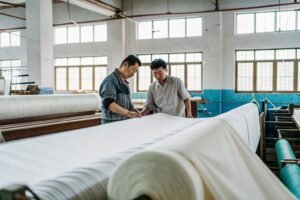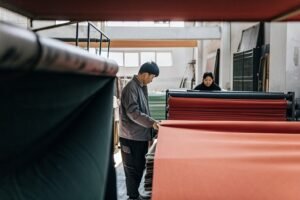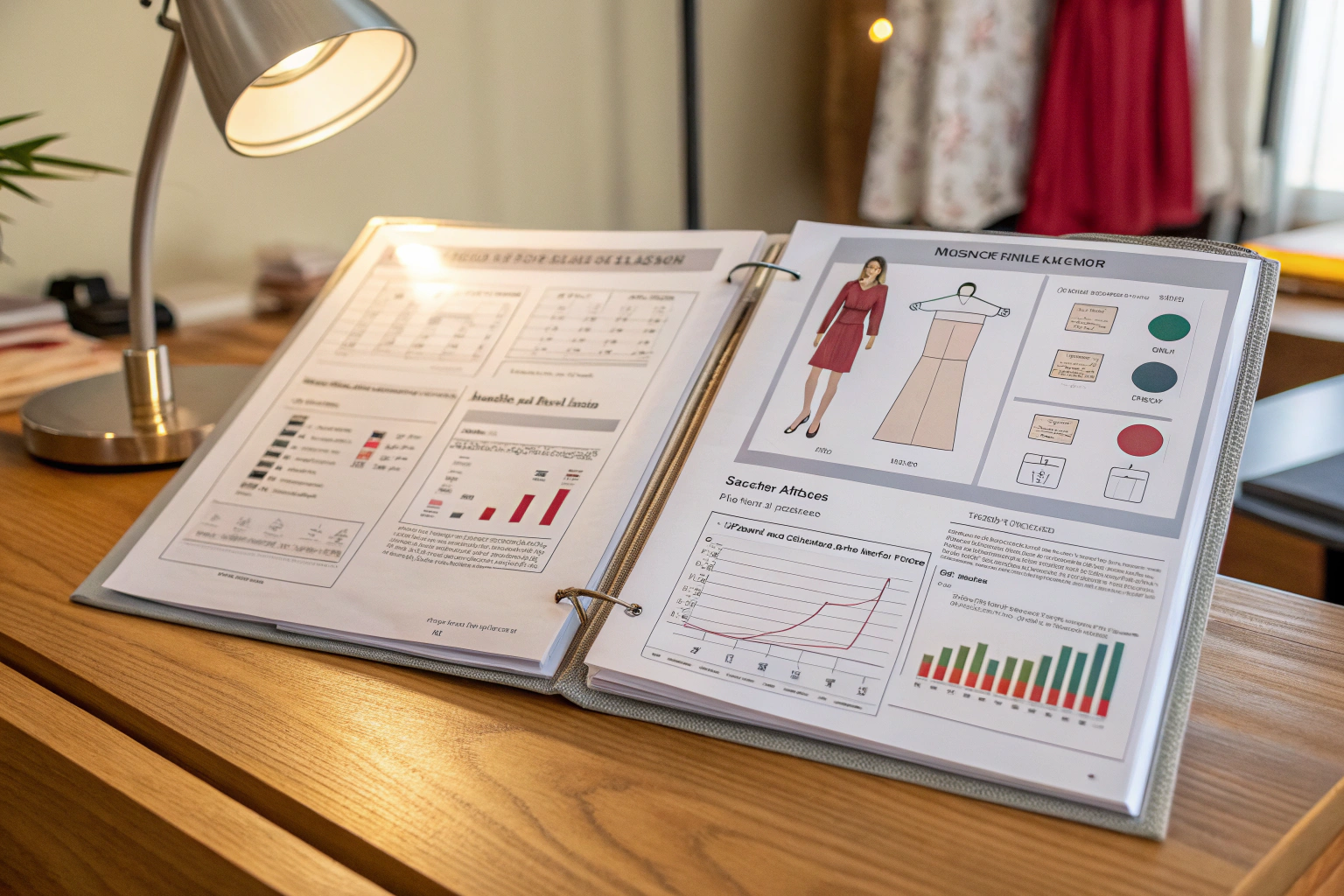
You’ve just received 5,000 units of a new chiffon blouse line. The fabric feels okay, the color looks close. You’re about to approve payment. Then, your first customer washes it—the delicate print cracks, the seams pucker, and the color bleeds into the white trim. The returns flood in, social media lights up with complaints, and your best-selling style becomes a liability nightmare. This didn’t happen at random. It happened because your order shipped without verifiable, batch-specific Quality Assurance (QA) proof. In women’s wear, where fabrics are delicate, fits are precise, and aesthetics are paramount, QA proof isn’t a luxury—it’s your financial and reputational insurance policy. But what does real "proof" look like beyond a factory’s verbal "yes, it’s good"?
Real QA proof is a transparent, data-driven dossier that validates every critical quality parameter before the goods leave the factory. It’s not a single "passed" stamp on a final inspection report. It’s a chain of evidence: from fiber and dye testing, through in-process checks on sewing and finishing, to a statistically valid final inspection. For women’s wear, this proof must address specific vulnerabilities—the stretch recovery of a knit dress, the colorfastness of a printed silk, the seam strength on a tailored blazer. Without this documented evidence, you are gambling on hope, not quality. And in today’s market, hope is not a strategy.
Let’s be brutally honest: many factories operate on a "ship and pray" model. Their goal is to move containers. At Shanghai Fumao, we’ve built our process around the opposite principle: "prove, then move." For a recent order of bias-cut satin nightgowns for a French lingerie brand, our QA proof dossier included over 50 data points: pH balance of the dyed fabric to ensure skin safety, a "drape coefficient" test to guarantee the fluid fall, and a specific test for "snagging resistance" on the delicate surface. This proof wasn’t generated after production; it was the checklist that guided production. When you have this level of proof, you don’t just receive garments; you receive confidence.
What Constitutes "Proof" Beyond a Final Inspection Report?
A final random inspection using AQL (Acceptable Quality Level) is a necessary last step, but it’s a reactive, sampling-based snapshot. It catches some defects in some units. Real QA proof is proactive and comprehensive. It’s a multi-layered system that verifies the inputs and processes that determine final quality long before the inspection stage. Think of it as proof of the recipe and the cooking process, not just a taste test of the final dish.
A comprehensive QA proof system for women’s wear includes three pillars:
- Pre-Production Proof: Validation of all raw materials (fabric, thread, trims) against your specifications. This includes lab test reports for fabric composition, colorfastness, shrinkage, and physical properties.
- In-Process Proof: Documentation from the factory floor during cutting, sewing, and finishing. This includes photos/videos of first-piece assemblies, checks of stitch density and seam allowances, and records of mid-production line audits.
- Final Pre-Shipment Proof: The AQL inspection report (from a reputable third party like SGS, QIMA, or your own team), coupled with retention samples pulled from the bulk shipment and sealed for future verification.
A supplier providing only the final AQL report is showing you the tip of the iceberg—and hiding the dangerous bulk below the waterline.

Why are Pre-Production Material Test Reports Non-Negotiable?
The quality of a garment is locked in at the material stage. You cannot sew a high-quality blouse from low-quality fabric. Pre-production proof must include:
- Fabric Composition Report (ISO 1833): Verifies the claimed fiber percentage (e.g., 97% Viscose, 3% Spandex). Fraudulent blending is common.
- Performance Test Suite: Tailored to the garment’s use.
- For a women’s workout legging: Abrasion resistance (Martindale), moisture-wicking rate, and stretch recovery.
- For a dry-clean-only wool blazer: Dimensional stability to steam and spotting agents.
- Colorfastness Reports (AATCC/ISO): Tests for washing, rubbing (dry & wet), light, and perspiration. This is critical for prints and dark colors.
In 2023, a UK brand discovered their "premium linen" dresses were pilling excessively. Our forensic analysis of their previous supplier’s "proof" showed they had only tested for composition, not for pilling resistance (ISO 12945-2). The proof was incomplete, and the failure was predictable. Learning about key textile tests for garment durability is essential for specifying the right proof.
What is the Value of In-Process Documentation (Photos/Video)?
In-process proof provides a real-time audit trail and prevents mass production of errors. It includes:
- Cutting Layer Verification: Photo showing the fabric is cut according to the marker plan, respecting the grainline.
- First Article Inspection (FAI): A fully assembled garment from the first production batch, photographed from all angles and measured against the tech pack. Any deviation is corrected before full run.
- Line Audit Checklists: Signed sheets from factory QC showing hourly checks on critical operations (e.g., button attachment strength, zipper function).
This allows you to catch a sewing error on Day 1, rather than discovering 5,000 identical errors on Day 20. We provide clients with a secure portal where they can view these in-process checkpoints daily. For complex items like a structured women’s suit, we even share video of the fusing process to ensure temperature and pressure are correct. This is transparency as proof. Industry guides on implementing in-process quality control detail its effectiveness.
How is Quality Proof Tailored for Different Women’s Wear Categories?
Women’s wear is not monolithic. The QA proof for a sturdy denim jacket is useless for a delicate lace bodysuit. Proof must be category-specific, addressing the unique failure modes of each garment type. A generic, one-size-fits-all QA checklist is a sign of a supplier who doesn’t understand the product. Your proof should answer the question: "What are the specific ways this particular garment can fail, and how do we prove they won’t?"
The supplier must demonstrate they know the technical requirements of your category. For example:
- Knitwear (Sweaters, Dresses): Proof must focus on pilling resistance, dimensional stability after washing (to prevent stretching out of shape), and seam elasticity to move with the fabric.
- Woven Tailoring (Blazers, Trousers): Proof centers on dimensional stability to steam (for pressing), seam slippage strength (for structured seams), and fabric wrinkling recovery.
- Lingerie & Swimwear: Proof is dominated by chlorine/salt water colorfastness, elasticity durability after repeated stretch, and fabric strength in a wet state.
- Eveningwear & Delicate Fabrics: Proof emphasizes surface abrasion testing (for beading/sequins), tear strength of chiffons/georgettes, and color transfer of dark linings.

What Proof is Critical for Stretch and Knit Fabrics?
Stretch garments fail when the fabric recovers but the seams don’t, leading to popped stitches. Proof must include:
- Seam Elasticity Test (ISO 17936): Measures how much a sewn seam can stretch before breaking or damaging the fabric. A target of 80-90% of the fabric’s stretch capability is good.
- Growth and Recovery Test: The fabric is stretched to a specified percentage, held, released, and measured for permanent deformation. This predicts if a knit dress will bag out at the knees or elbows.
For a prominent yoga wear brand, we provide a Cycle Fatigue Test Report for their high-stress leggings, simulating 100+ squat cycles and measuring permanent deformation, which must be below 5%. This is definitive proof of longevity. Without it, you’re guessing. Technical resources on testing elastic apparel provide the methodology.
How is Proof Managed for Embellished and Printed Garments?
Embellishments (beads, sequins, prints) have high aesthetic and failure risk. Proof here is visual and mechanical.
- Print Durability: A crockmeter test (for rubbing) and a wash test are minimum. For higher-end, a "dry cleaning durability" test for prints is needed.
- Embellishment Attachment: A pull test on beads/sequins using a calibrated force gauge, specifying a minimum force (e.g., 15 Newtons) they must withstand.
- Visual Alignment Proof: For placed prints or embroideries, photographic evidence of the placement on the first article against the tech pack spec is crucial.
We once saved a client from a disaster on a floral-printed viscose dress. Our pre-production proof included a "crack test" for the print paste flexibility. It failed. We reformulated the print paste and re-tested until it passed, before printing 10,000 meters. The proof prevented 10,000 customer returns. Forums like The Printwear Forum discuss these specific challenges.
Why is Third-Party Verification the Gold Standard?
A factory’s internal QC report is a self-assessment. It has inherent bias—their goal is to ship. Third-party verification introduces objectivity. Hiring an independent inspection company (like SGS, BV, Intertek, or QIMA) to conduct pre-shipment inspections is the industry gold standard for a reason. They are paid to find defects, not to facilitate shipping. Their reports are credible to you, your financiers, and in any dispute. However, not all third-party inspections are equal. The value lies in the specific, agreed-upon protocol.
The key is to define the inspection scope in detail before production starts. Don’t accept their standard checklist. You must specify:
- The AQL Level: For women’s wear, AQL 2.5 for major defects and AQL 4.0 for minor defects is common. For luxury or delicate items, you might specify AQL 1.5.
- Critical Defects: Zero tolerance items (e.g., broken zipper, sizing label error, safety pin left in garment) must be explicitly listed.
- On-site Tests: Mandate that the inspector perform specific tests on-site: measure 5 garments fully against the size spec, check color consistency across rolls with a pantone book, perform a button pull test.
- Retention Sampling: Instruct them to pull and seal physical samples from the inspected lot, to be held in case of a downstream dispute.

How to Ensure Your Third-Party Inspection is Unannounced?
An announced inspection is often a performance. The factory prepares a "golden batch" for inspection. To get true proof, you must mandate an unannounced or very short-notice (e.g., 48-hour) inspection. Reputable inspection agencies have protocols for this. The inspector arrives at the factory warehouse as packing is underway and randomly selects cartons based on the AQL sampling plan from the entire lot. This is the only way to get a statistically valid snapshot of the whole order. We encourage and facilitate unannounced inspections for all our clients—it keeps our own teams sharp and builds ultimate trust. A guide on planning an effective third-party inspection covers these steps.
What is the Role of Laboratory Testing by a Third Party?
The inspection checks workmanship and visuals. Laboratory testing checks intrinsic material properties. For ultimate proof, you should have retention samples from the shipment tested at an accredited third-party lab of your choice. This is the "trust but verify" final step. Test for the 2-3 most critical claims:
- If it’s a colorfast claim, run a wash fastness test.
- If it’s a "100% Cotton" claim, run a fiber composition test.
- If it’s a performance claim (waterproof, UV50+), run the specific test.
The cost is minimal ($200-$500) compared to the risk. The report from, say, SGS or Eurofins is undeniable proof you can use if a claim arises. We even offer to split this cost with new clients as a confidence-building measure. Understanding textile laboratory accreditation (e.g., ISO/IEC 17025) helps you choose a reputable lab.
How Does Digital, Accessible Proof Future-Proof Your Business?
Paper certificates in a filing cabinet are obsolete. They get lost, fade, and are impossible to share instantly with e-commerce platforms, retailers, or customs. The future of QA proof is digital, linked, and accessible in real-time. This means each batch of goods is connected to a digital dossier (a "quality passport") via a unique QR code or RFID tag. This transforms proof from a static record into a dynamic tool for supply chain management, marketing, and compliance.
At Shanghai Fumao, our Fabric Digital Passport works like this: Every fabric roll has a QR code. Scanning it with a phone (with login permissions) opens a secure page showing:
- All Material Test Reports (PDFs from our CNAS lab).
- Certificate of Conformity with batch details.
- Production Milestone Timestamps (weaving, dyeing, finishing dates).
- Third-Party Inspection Report (if conducted).
- Shipping Documents.
This means your warehouse team, your customer service rep handling a return, and your sustainability manager can all access the same, immutable proof instantly. For a German distributor, this system allowed them to instantly verify a fabric’s OEKO-TEX® status for a retailer’s audit via a shared link, saving a 3-day document chase.

How Does Digital Proof Enhance Transparency with End-Consumers?
Increasingly, conscious consumers want proof. Brands are adding QR codes to hangtags that, when scanned, show the product’s journey and quality/sustainability credentials. This turns your QA proof into a direct consumer trust signal. It provides a story: "This dress is made from fabric tested for colorfastness and skin safety (Certificate #XYZ123)." This is powerful marketing and a deterrent against baseless quality complaints. We help brands design these consumer-facing proof portals using our backend data. Case studies on blockchain for fashion traceability explore this frontier, but a simple, secure digital dossier is the practical first step.
Why is a Centralized Proof Portal a Strategic Asset?
For a brand or distributor managing multiple suppliers, a centralized portal where all suppliers upload standardized QA proof is a game-changer. It gives you a dashboard view of quality compliance across your entire supply chain. You can see which suppliers consistently provide full proof and which are lagging. This data becomes strategic for supplier evaluation and negotiation. We are compatible with such platforms and provide data in standardized formats (XML, JSON) for integration. This is how quality management evolves from a reactive firefight to a proactive, data-driven strategy. Reports on digital quality management systems (QMS) highlight the operational benefits.
Conclusion
Asking "Does your women’s wear order have quality assurance proof?" is the most important question you can ask before a single unit is shipped. The answer should not be a vague assurance, but a tangible, multi-layered, and verifiable dossier of evidence that covers materials, processes, and final output. This proof is what separates a predictable, profitable product launch from a costly gamble.
In an era where consumer trust is fragile and competition is fierce, the brands that thrive will be those that can prove their quality, not just claim it. Partnering with suppliers who embed proof-generation into their DNA, like Shanghai Fumao, is how you build that unshakeable foundation. It turns quality from a hopeful outcome into a guaranteed deliverable.
Don’t ship on hope. Ship on proof. Request our "Women’s Wear QA Proof Checklist" and a demo of our digital passport system to see how we document quality every step of the way. Contact our Business Director, Elaine, at elaine@fumaoclothing.com to secure proof with your next order.