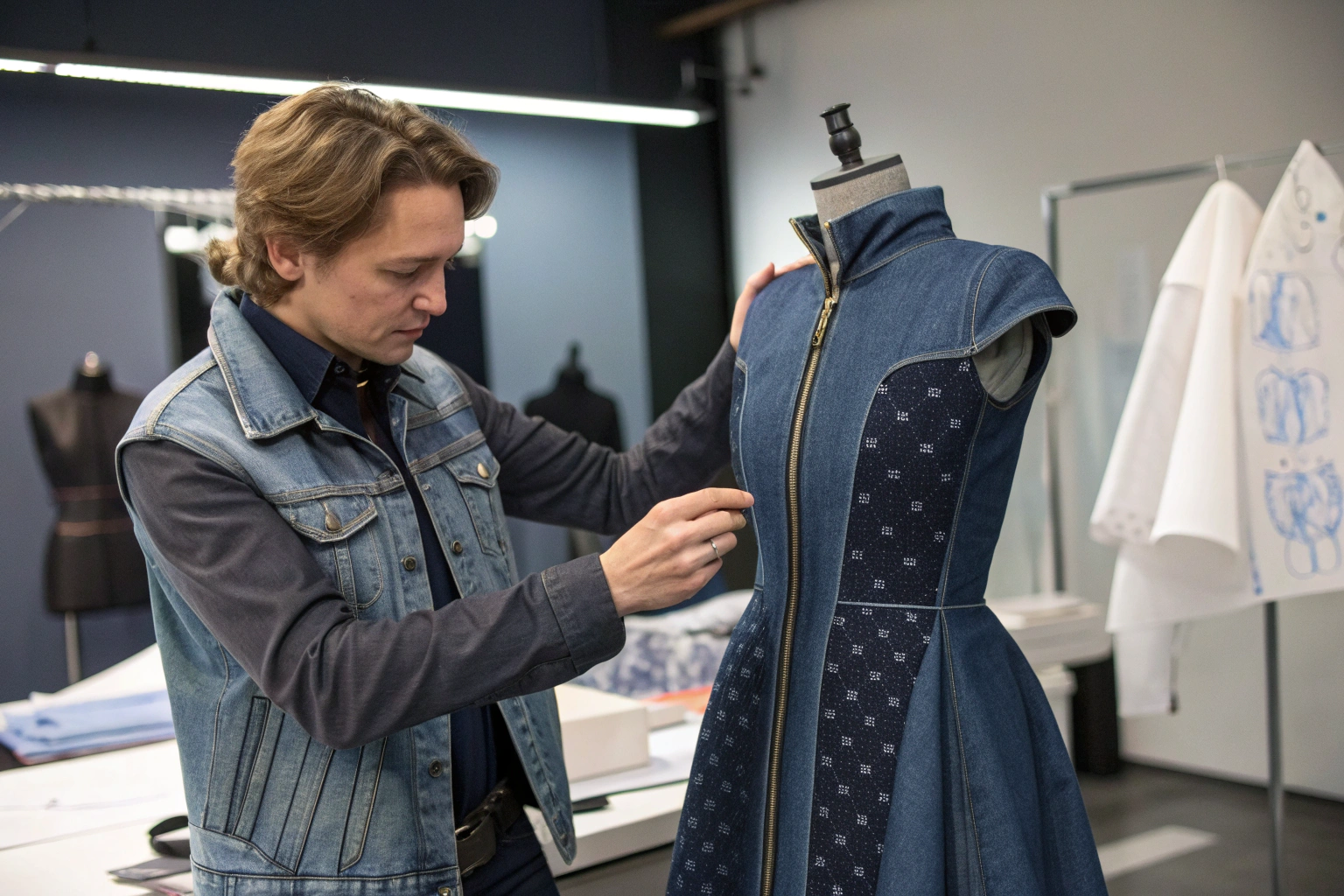
You’ve spent months developing a breakthrough design—a dress with engineered jacquard that tells a story, a performance jacket with seamless welded sections, or a denim line using an ancient indigo technique in a futuristic way. You take it to a mainstream manufacturer, and you get the dreaded response: "Sorry, we can’t do this," or worse, "We can do it," followed by a disappointing prototype that misses the mark completely. Your unique vision gets diluted into something ordinary. This is the moment you realize: standard manufacturing capabilities produce standard products. In a market saturated with sameness, your brand’s survival depends on doing what others can’t. That’s why partnering with a manufacturer possessing rare, specialized style capabilities isn’t a luxury; it’s the most strategic decision you can make for differentiation, value creation, and market leadership.
Choosing a manufacturer with rare capabilities means you’re not just outsourcing production; you’re acquiring a technical R&D partner. It transforms your supply chain from a cost center into an innovation engine. These "rare capabilities" refer to mastery in complex fabric manipulations, proprietary finishing techniques, hybrid constructions, or the integration of cutting-edge technology with artisan craft. Think of it as the difference between a printer and a master printmaker. One applies ink to paper; the other understands how paper texture, ink viscosity, and press pressure interact to create a work of art. This depth of expertise allows you to execute designs that are legally harder to copy and emotionally harder for consumers to abandon, creating what we call "technical moat" around your products.
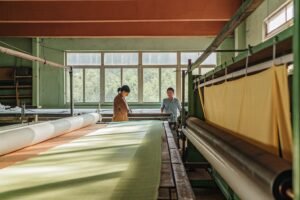
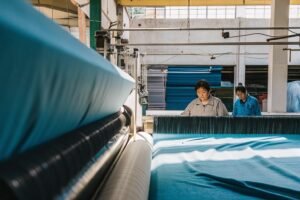
Let me give it to you straight from the factory floor: at Shanghai Fumao, our investment in rare capabilities—like our AI-driven jacquard design system, patented BAMSILK (bamboo silk) spinning technique, and multi-head digital embroidery with 3D foam—is what lets clients like you move faster than the fast-fashion copiers. When a European luxury brand came to us with a concept for a bi-stretch wool coating that needed to hold a precise laser-cut pattern without fraying, our solution (a proprietary resin application pre-laser treatment) wasn’t in any catalog. It existed because we built the capability to invent it. That’s the power you access.
What Defines "Rare Style Capabilities" in Modern Manufacturing?
"Rare capabilities" go far beyond having a large fabric library. They are defined by a factory’s ability to manipulate materials and processes in unconventional ways to solve specific, complex design problems. These are often proprietary, equipment-intensive, or knowledge-driven techniques that cannot be easily replicated by a standard cut-make-trim (CMT) factory. They are the intersection of deep technical knowledge, specialized machinery, and creative problem-solving.
In practical terms, these capabilities often fall into a few key areas:
- Advanced Fabric Engineering: Creating hybrid fabrics (e.g., bonding merino wool to a performance membrane), developing proprietary yarns (like our hollow-core temperature-regulating polyester), or engineering jacquards with photorealistic detail or integrated stretch zones.
- Complex Surface Embellishment: Beyond basic printing, this includes techniques like devoré (burn-out), high-definition silicone printing for textured logos, intricate Schiffli embroidery, or engineered placements that require precise fabric cutting and alignment.
- Innovative Construction & Finishing: Seamless ultrasonic welding, 3D garment knitting (whole garment), laser etching and cutting on delicate fabrics, or vintage washes achieved through enzymatic and ozone processes rather than harsh chemicals.
These capabilities require not just the machine, but the "machine whisperer"—the technician who knows how to adjust 50 parameters to get a perfect result on a fabric that behaves differently every day.

How Do Advanced Jacquard & Weaving Capabilities Create Uncopyable Designs?
Jacquard is where fabric becomes canvas. Standard jacquard capabilities are limited by repeat size and color count. Rare capabilities involve:
- AI-Powered Design Translation: Using software to convert complex artwork into weave structures without losing detail, managing thousands of warp threads independently.
- Extra-Large Repeat & Multi-Layer Weaves: Creating seamless panoramic patterns across an entire coat or weaving two independent fabric layers connected by threads to create a thermal air gap.
- Integrated Functional Zones: Weaving areas of higher stretch or moisture-wicking yarn directly into a structured jacquard for targeted performance.
We worked with an avant-garde brand from New York on a capsule collection where each garment’s jacquard pattern was a unique, algorithm-generated "data portrait." Our AI system could translate the digital file directly to the loom settings, making each piece literally one-of-a-kind and impossible to replicate without the exact same software and technical setup. Exploring the history and technology of computerized jacquard weaving reveals how revolutionary these modern systems are.
Why is Mastery in Specialty Finishing a Game-Changer for Brand Identity?
The finish is the handshake of the fabric—it’s the first thing a customer feels. Rare finishing capabilities allow you to own a sensory signature. This includes:
- Patented Softening Processes: Like our enzyme-based "Peach-Skin" finish for nylon that creates an unprecedented downy hand without compromising durability.
- Custom Vintage & Washed Effects: Using laser technology and ozone washing to create authentic, low-impact vintage looks on denim or twill, with precise control over contrast and wear patterns.
- Functional Finishes with Aesthetics: Applying a durable water repellent (DWR) that also gives a subtle, luxurious matte sheen, or an anti-odor treatment that is molecularly bonded so it doesn’t alter the fabric’s hand.
A Swedish minimalist brand wanted their linen dresses to have the softness of years of wear immediately, but with color consistency. Our "Time-Worn Linen" finish, which uses a controlled mechanical abrasion and enzyme bath, became their exclusive signature. It can’t be copied by a factory just dipping fabric in softener. Forums like The Denim Forum discussions on laser finishing showcase how deep this specialty knowledge goes.
How Do Rare Capabilities Directly Impact Your Speed to Market?
In fashion, speed isn’t just about shipping fast; it’s about developing fast. A manufacturer with rare, integrated capabilities collapses the traditional, linear development timeline. Instead of the endless loop of sourcing a fabric from one place, getting a print sample from another, and then figuring out how to construct it, you have a single partner who can prototype the entire concept in unison. This parallel development process can slash months off your critical path to market, allowing you to chase trends or create them.
The mechanism is simple: reduced handoffs. When the jacquard designer, the dyeing master, and the finishing expert work in the same compound and under the same project management, communication is instant. A problem in sampling can be diagnosed and solved in a real-time meeting, not over weeks of emails across time zones. Furthermore, these factories often have "fast-track" sample lines dedicated to complex prototyping, preventing your innovative project from being queued behind 500 basic t-shirt orders. This agility is a direct competitive advantage.

What Does the "Collapsed Timeline" Actually Look Like?
Let’s compare two scenarios for developing a technical running jacket with reflective printed seams:
- Standard Supply Chain: (1) Source base fabric (2 weeks). (2) Source reflective tape and find a bonding factory (3 weeks). (3) First prototype sewn, bonding fails (2-week delay). (4) Re-prototype (2 weeks). (5) Approve for production. Total: ~11 weeks.
- Integrated, Rare-Capability Manufacturer (like Shanghai Fumao): (1) Engineer base fabric with integrated bonding-ready surface (1 week). (2) Using in-house laser cutting and ultrasonic welding, produce first prototype with bonded seams in 48 hours. (3) Test and refine in the same week. Total: ~2.5 weeks.
This 8.5-week advantage is the difference between catching a season and missing it. A specific case in 2023 involved a client needing a last-minute Olympic-themed collection with metallic heat-transfer patterns on performance fabric. Our in-house digital transfer printing and curing line turned around perfect sales samples in 5 days, securing the order. Resources on accelerated fashion product development cycles highlight this integrated model as the future.
How Does In-House Prototyping Fuel Innovation and Reduce Risk?
When prototyping is external, expensive, and slow, you experiment less. When it’s internal and rapid, you can afford to fail fast and iterate brilliantly. A manufacturer with rare capabilities will have a dedicated sample atelier or tech center. This allows for:
- Material Play: Trying a new fabric finish on three different base cloths in the same day.
- Hybrid Technique Testing: Combining embroidery with a wash to see how the stitches relax.
- Fit and Function Validation: Creating a prototype that is truly representative of the final production’s technical execution, not a rough mock-up.
This environment turns your development process into a creative sandbox. It significantly de-risks the final bulk order because you’ve already solved the technical puzzles at scale. Industry thought leaders often discuss this in pieces like "The Role of the Prototype in Reducing Manufacturing Risk."
What is the Real Cost vs. Value Equation of Specialized Production?
The initial reaction is often, "Specialized capabilities must be more expensive." This is a fundamental misreading of the cost equation. While the unit cost of a complex garment may be higher than a basic one, the total value and effective cost often tell a different story. You must calculate cost beyond the FOB price per piece. Factor in the value of speed to market, the reduced risk of quality failure, the premium price point you can command, and the marketing value of a truly unique product. Specialized production isn’t an expense; it’s an investment with a measurable ROI on your collection’s success.
Consider the cost of failure with a standard factory: delayed launches, unsellable stock due to poor execution, and the brand equity lost to commoditized products. A partner with rare capabilities mitigates these hidden costs. They deliver right-first-time quality on complex items because complexity is their norm. This reliability alone can save 15-25% of the hidden costs associated with managing a problematic supply chain. Furthermore, the unique product they help you create can support a 30-50% higher retail margin, directly improving your profitability.

How Does Superior Execution Justify a Higher FOB Price?
Break down the FOB premium. It pays for:
- Higher Skill Labor: Technicians who operate a €200,000 embroidery machine command higher wages than basic sewing operators.
- Lower Minimum Order Quantities (MOQs): Specialized production lines are often geared for smaller, high-value batches. For a start-up, producing 500 perfect, innovative jackets is far more valuable and cost-effective than being forced to produce 3,000 mediocre ones.
- Integrated R&D: The premium includes the factory’s sunk cost in developing the proprietary technique, saving you from funding that R&D from scratch.
For example, our proprietary digital devoré process on velvet has a higher processing cost than simple printing. However, it allows a client to sell a dress for $400 instead of $150. The client’s margin increase vastly outweighs our added charge. Analyzing cost breakdowns for luxury vs. fast fashion illustrates this principle clearly.
Can Specialized Capabilities Actually Reduce Total Cost?
In many cases, yes, through efficiency and material optimization. A factory skilled in 3D pattern making and laser cutting can nest patterns with extreme precision, reducing fabric waste by 5-10% on expensive materials. A mastery of seamless welding can eliminate the need for multiple stitches and threads, simplifying the bill of materials (BOM) and assembly time. In 2024, we helped a sportswear brand redesign a complex bra top. By using our expertise in engineered knitted panels and replacing 11 separate fabric pieces with 3 seamlessly knitted ones, we reduced their total unit cost by 18% while improving comfort and performance. This is value engineering powered by rare capability. Case studies on lean manufacturing in apparel often reach similar conclusions through simplification.
How Do You Vet a Factory’s Claim of "Rare Capabilities"?
In a world of marketing hype, verifying a factory’s claimed rare capabilities is crucial. Anyone can put photos of amazing products on their website. Your job is to determine if they made it or just ordered it. The vetting process must be evidence-based and relentless. You’re not just buying a product; you’re assessing their intellectual and technical capital.
Move beyond the sales pitch. Demand a Capability Portfolio, not just a product catalog. This should include detailed case studies: "Client had X problem, we used Y proprietary process, achieving Z result." Ask for video evidence of the specific machinery or process in action in their factory. Request a live video tour of the relevant department. Most importantly, commission a paid development sample (PDS). Give them a challenging but small piece of your actual design and pay them to prototype it. This is the ultimate test. Their willingness, speed, communication during the process, and the quality of the sample will tell you everything.

What Questions Separate Real Expertise from Empty Claims?
During your audit, ask technical, process-oriented questions:
- "Walk me through the step-by-step process for creating this 3D silicone print. What are the key failure points, and how do you control for them?"
- "For this bonded fabric, what is the peel strength you guarantee after 20 washes? Can I see the test report from your lab?"
- "What is the MOQ for this digital jacquard development, and what is the lead time from finalized artwork to first sample?"
- "Can you show me the maintenance log for your laser cutting machine? How often do you calibrate it?" (A well-maintained specialist machine indicates real usage).
Genuine experts will delve into the details with enthusiasm. Pretenders will become vague or defensive. When vetting our own multi-head embroidery capabilities, we show clients the software interface where we program the thread jumps and underlays, explaining how it affects durability—a level of detail only a true operator knows.
Why is a Paid Development Sample the Ultimate Litmus Test?
The PDS is a small investment for immense insight. Provide a tech pack for one complex item. Observe:
- Communication: Do they ask intelligent, technical questions?
- Transparency: Do they share in-progress photos/videos of the fabric being woven, printed, or cut?
- Problem-Solving: When (not if) a hurdle appears, how do they communicate and propose solutions?
- Result: Does the sample meet the aesthetic and technical intent?
In 2023, a brand asked us and two other "specialized" factories to produce a sample of a skirt with a photochromatic (color-changing) printed panel. We provided a sample with a documented UV activation threshold and wash durability report. One competitor sent a poorly printed sample with no data. The other declined the PDS. The choice was clear. Platforms like Maker’s Row emphasize the importance of sample testing for this exact reason.
Conclusion
In today’s market, competing on price and basic quality is a race to the bottom. True growth and brand longevity come from competing on innovation, uniqueness, and desirability—all of which are unlocked by manufacturing partners with rare style capabilities. This choice shifts your relationship from transactional sourcing to strategic co-creation. It builds a "technical moat" around your products that fast fashion cannot easily cross and gives your customers a compelling reason to choose you, again and again.
The manufacturers who have invested in these capabilities are not just suppliers; they are enablers of vision. They understand that the future belongs to brands that dare to be different and provide the technical mastery to make that difference a reality.
Stop limiting your designs to standard capabilities. Challenge us with your most ambitious concept. See how our rare style capabilities in fabric engineering, embellishment, and finishing can bring your vision to life with precision and speed. Contact our Business Director, Elaine, at elaine@fumaoclothing.com to initiate a paid development sample and experience the difference true expertise makes.