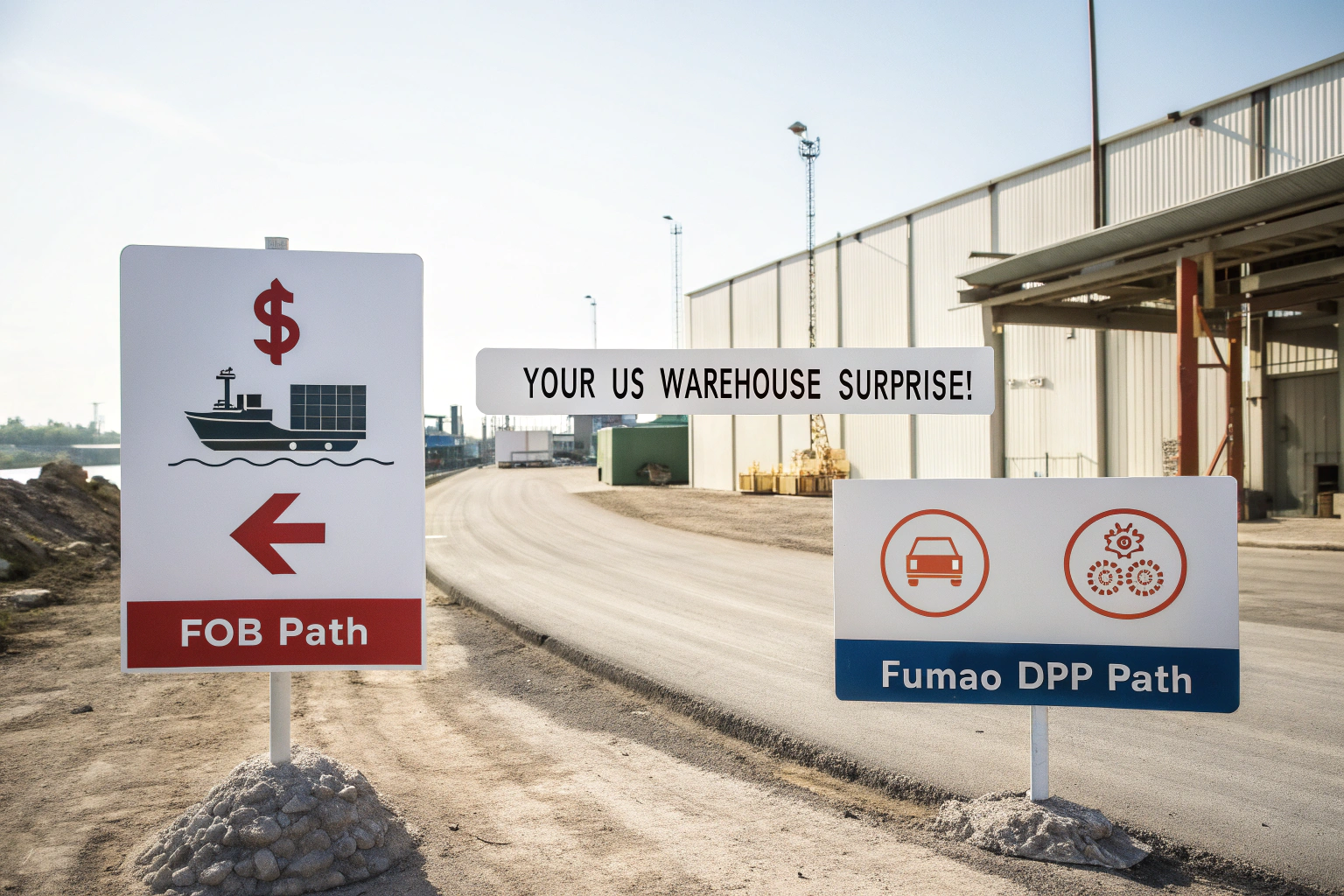
If you‘re importing fabrics or garments from China to the US, you‘ve felt the headache: a quote for “FOB Shanghai“ that seems clean, only for a parade of hidden charges to ambush you later—customs bond fees, customs brokerage, port charges, last-mile trucking, and the ever-looming threat of a surprise customs duty bill. For a confident buyer like Ron who values control but hates cost overruns, this is a constant battle. At Shanghai Fumao, we run our operations differently. We don‘t just sell you fabric FOB and wish you luck; we offer a true DDP (Delivered Duty Paid) service to your US warehouse door. This isn‘t just a shipping term; it‘s a complete shift in risk, responsibility, and predictability that puts you, the importer, firmly in the driver‘s seat of your budget and timeline.
So, why is our DDP model better? It boils down to one word: certainty. With our DDP model, the price we agree on is the final price you pay. We take on all the risks, complexities, and costs of international logistics, customs clearance, and US domestic delivery. This means no more guessing games with landed costs, no more scrambling to find a customs broker, and no more nasty financial surprises that can turn a profitable order into a loss. For US importers, especially those in the competitive fashion and apparel sector where margins are tight and timelines tighter, this certainty is not a luxury; it‘s a strategic necessity.
Let me paint the real picture. The traditional FOB model leaves you, the buyer, responsible for everything after the goods are loaded on the ship in China. You‘re suddenly in the freight forwarding and customs business, whether you like it or not. A storm causes port congestion in LA? Your demurrage fees. Customs picks your shipment for a random intensive exam? Your $800 inspection fee. The trucker has a capacity shortage? Your delayed delivery. With Shanghai Fumao‘s DDP, all of that is our problem to solve and our cost to bear. We quote you a single, all-inclusive price per meter or per garment that covers everything to your dock. Your CFO will love the predictability, and your operations team will love the simplicity.
How Does DDP Eliminate Hidden Costs and Budget Surprises?
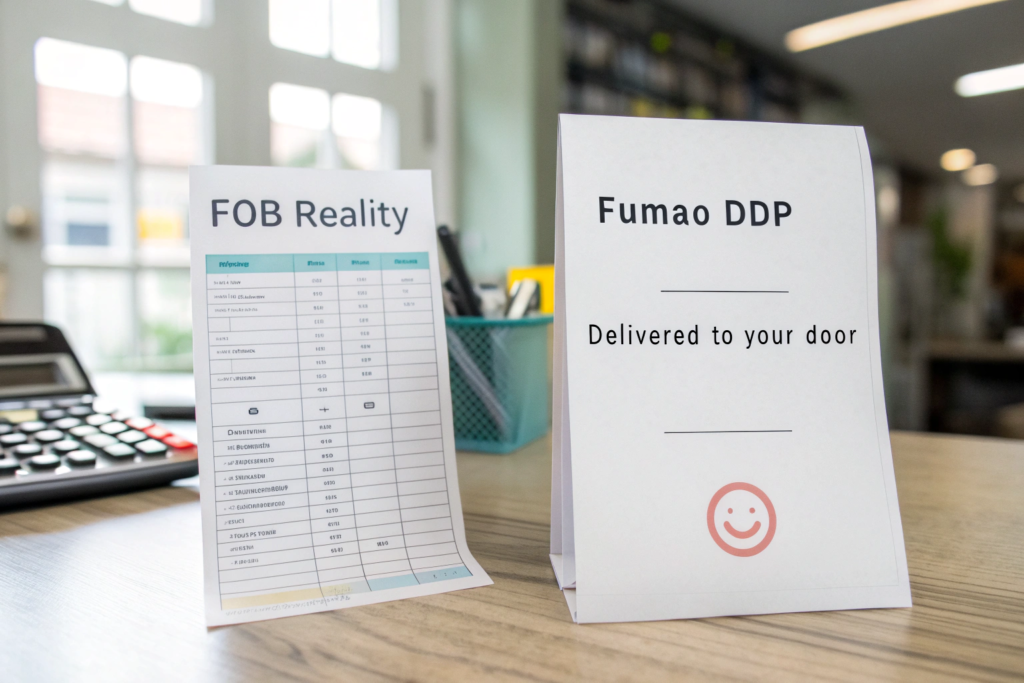
The most immediate benefit of DDP is financial transparency and control. In the FOB world, your landed cost is an estimate, a sum of variables you don‘t fully control: fluctuating ocean freight rates (spot vs. contract), peak season surcharges (PSS), terminal handling charges (THC), and the ever-changing whims of customs valuation. With our DDP model, these variables become our fixed costs, which we manage and absorb.
We calculate our DDP price based on long-term contracts with freight forwarders, fixed brokerage rates, and deep experience in US customs duty classification for textiles. We know the exact HTS code for our “brushed polyester fleece“ or “organic cotton twill“ and have historical data on its duty assessment. This means we can give you a firm, all-in price that will not change. For example, in Q3 2023, when trans-Pacific freight rates spiked unexpectedly due to capacity issues, our DDP clients were completely shielded. They paid the price agreed upon months earlier, while FOB clients saw their shipping costs increase by 40-50%, destroying their margin calculations. That‘s the power of DDP: it turns an import from a speculative venture into a predictable procurement exercise.
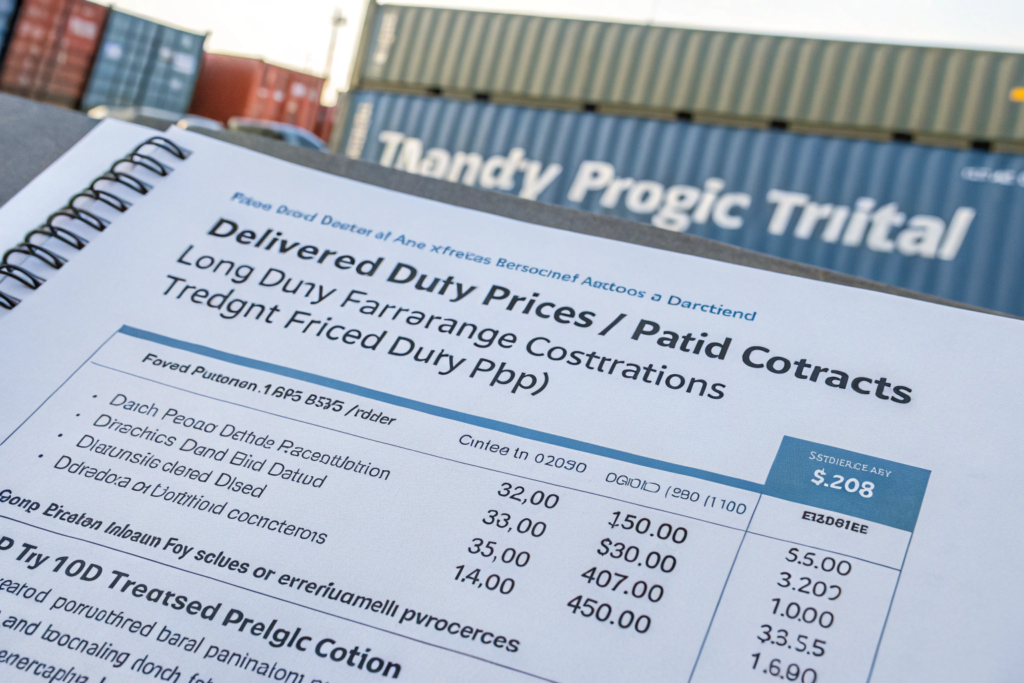
What Specific “Hidden“ Costs Does DDP Cover That FOB Does Not?
A true DDP quote from us includes, but is not limited to:
- International Freight: Ocean or air freight from Chinese port to US port of entry.
- Origin Charges: Export customs clearance, documentation, and port fees in China.
- Destination Charges: US Customs clearance, duties, taxes (like MPF – Merchandise Processing Fee and HMF – Harbor Maintenance Fee).
- Port & Terminal Fees: Pier pass, terminal handling charges (THC) at US port.
- Inland Freight: Trucking from US port to your specified warehouse address.
- Insurance: Cargo insurance for the entire journey (a must-have that many FOB buyers forget).
- Bond Fees: The customs bond required for US import.
Under FOB, you are responsible for every single one of these items from the moment the container is loaded. For a first-time importer, simply finding reputable partners for each step is a daunting task. A community like The National Customs Brokers & Forwarders Association of America (NCBFAA) forum is full of stories about importers learning this the hard way, underscoring the importance of working with a reliable customs broker for textile imports.
Can You Provide a Real Cost Comparison Case Study?
Absolutely. Let‘s take a recent 40‘ container of our performance knit fabric for a sportswear brand in Texas.
- FOB Shanghai Scenario: Our FOB price: $48,000. Client then pays:
- Ocean Freight (spot rate): $3,800
- Customs Duties (8.5%): $4,080
- Customs Brokerage: $350
- MPF/HMF/Other Fees: ~$600
- Port to Dallas Trucking: $2,200
- Total Landed Cost: ~$59,030 (A surprise $11,030 over FOB)
- Fumao DDP to Dallas Scenario: Our all-in DDP quote: $57,500.
The DDP price was agreed upfront, locked in, and ended up being $1,530 cheaper than the realized FOB landed cost, not to mention saving the client 20+ hours of logistics management. This kind of predictability is why savvy brand buyers are switching models.
How Does Fumao‘s DDP Simplify Customs Clearance and Reduce Risk?
US Customs and Border Protection (CBP) is not to be trifled with. Incorrect paperwork, misclassified HTS codes, or undervaluation can lead to delays, fines, seizures, and even a mark on your importer record. With DDP, Shanghai Fumao acts as the “importer of record“ for the logistics leg, leveraging our expertise and partnerships to ensure a smooth, compliant clearance.
We work with seasoned US customs brokers who specialize in textiles and apparel. They pre-file our documentation, using the precise product descriptions and values from our QC and commercial invoices. Because we control the information flow from production to shipment, there‘s no disconnect between what we say the product is and what the documents say—a common source of “customs holds.“ For instance, a key risk area is Section 301 tariffs on Chinese textiles. Our brokers are experts in navigating these regulations, ensuring correct duty application and exploring any applicable exclusions. If CBP flags a shipment for review, our team on the ground in the US handles all communication and resolution. You are notified, but not burdened.
What Are the Biggest Customs Risks for Textile Importers That DDP Mitigates?
- HTS Code Misclassification: Putting “polyester fabric“ under a general code instead of the specific one for “knitted pile fabric“ can change the duty rate. We get it right.
- Valuation Disputes: CBP can challenge the declared value. Our transparent costing and arms-length transaction with you provide a solid defense.
- Transshipment & Country of Origin Fraud: We provide solid Certificates of Origin from the Keqiao Chamber of Commerce, proving the fabric is made in China, avoiding illegal transshipment claims.
- Forced Labor (UFLPA) Concerns: With our vertically integrated supply chain, we can provide mill affidavits and traceability documents to demonstrate compliance, a huge advantage given the increasing scrutiny on supply chains under the Uyghur Forced Labor Prevention Act (UFLPA).
By taking on the “importer of record“ responsibility for the shipment, we absorb these risks. Your company‘s import compliance record remains clean.
How Does Your Vertical Integration Make DDP More Reliable?
Our control over weaving, dyeing, and finishing means we know the exact composition, weight, and construction of the fabric down to the roll. This isn‘t guesswork from a trading company. We generate the packing lists and commercial invoices with 100% accuracy. This precision flows directly into the customs declaration, minimizing the chance of errors that trigger exams. When you buy DDP from a factory like ours, you‘re buying from the source, with no middlemen to blur the data chain.
How Does the DDP Model Improve Supply Chain Visibility and Lead Time?
“Where‘s my stuff?“ The eternal question of every importer. With a patchwork of FOB suppliers, freight forwarders, and brokers, getting a clear answer is like pulling teeth. Our DDP model centralizes communication and tracking. You have one point of contact: us.
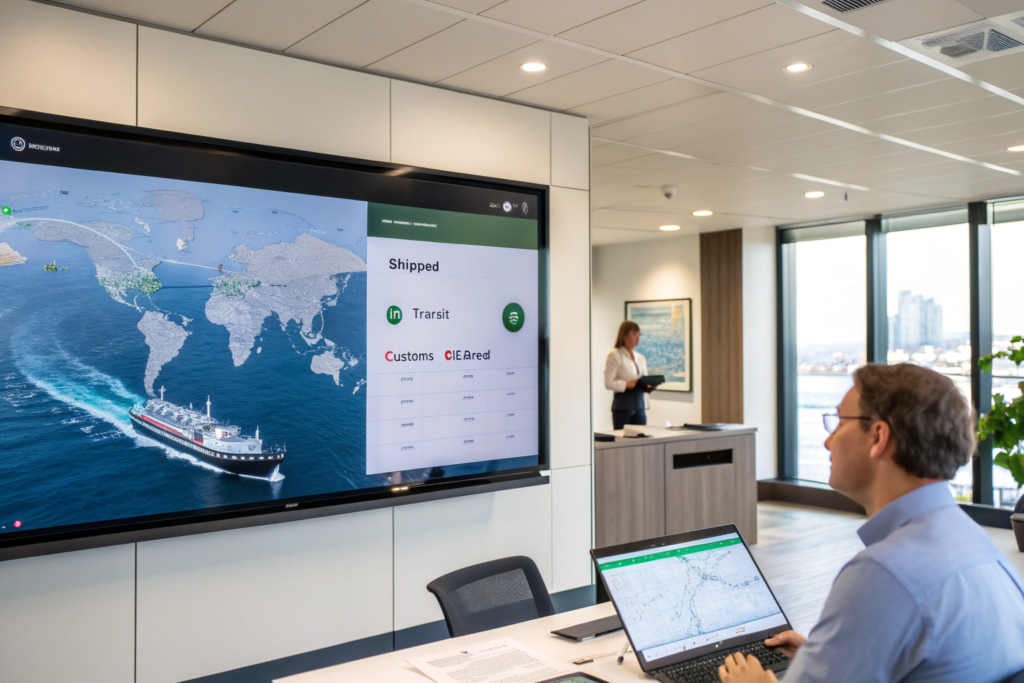
From the moment your container is booked, you receive a dedicated tracking portal login. You can see: vessel name, voyage number, real-time location on the map, estimated arrival at port, customs clearance status, and finally, the trucker‘s details for the final mile. No more calling a forwarder who blames the carrier, who blames the port. We own the entire timeline and are accountable for it. This visibility allows you to plan your warehouse labor, production schedules (if receiving fabric for cut-and-sew), or retail drop dates with much greater confidence. For an e-commerce brand we work with, this meant they could schedule their promotional email blasts and website inventory updates to the exact day of delivery, maximizing sales momentum.
Can DDP Actually Lead to Faster Overall Delivery Times?
In many cases, yes. Because we manage the entire chain, we optimize for total transit time, not just the cheapest sea freight. We have the leverage to secure priority boarding and faster container grounding at destination ports through our partner network. More importantly, we pre-clear customs. Our brokers submit documents days before the ship arrives, so often the container is cleared the moment it hits the pier, avoiding the typical 3-5 day customs clearance queue. This “just-in-time“ efficiency is something an individual importer managing FOB shipments struggles to achieve. A resource like Project44‘s blog on supply chain visibility often discusses how end-to-end shipment tracking reduces delays and improves planning.
How Do You Handle Delays or Disruptions Under DDP?
When delays happen—a typhoon, a port strike, a chassis shortage—they are our problem to solve. Our logistics team‘s job is to find alternate routes, negotiate with carriers, and keep you informed with realistic revised ETAs. The cost of any mitigation (e.g., diverting to another port, expedited trucking) is borne by us under the DDP agreement. Your cost and our obligation to deliver by the contractually agreed latest date remain unchanged. This fundamentally aligns our incentives with yours: we both want the fastest, most reliable route to your door.
Is DDP Suitable for All US Importers and Order Sizes?
A common myth is that DDP is only for massive, container-sized orders. That‘s not true with Shanghai Fumao. We‘ve structured our DDP service to be flexible, catering to the growing wave of agile brands and entrepreneurs.
We offer consolidated DDP (also known as DDP LCL – Less than Container Load). This means multiple clients‘ smaller orders are combined into one container. Each client gets their own DDP price and their goods are shipped directly to their respective addresses upon arrival. This makes DDP accessible for orders as small as 500-1000 kg of fabric. You get all the benefits of cost certainty and hassle-free delivery without needing to fill a full container. For start-ups testing the market or established brands with a just-in-time inventory model, this is a game-changer. It allows you to order smaller, more frequent batches, reducing your capital tied up in inventory and your storage costs.
What Are the Ideal Scenarios for Choosing Fumao‘s DDP Model?
Our DDP is particularly powerful for:
- New Importers: You get a turnkey solution without building a logistics department.
- E-commerce & DTC Brands: Predictable landed costs are critical for calculating net profit per unit and setting retail prices.
- Brands with Tight Margins: Eliminating cost volatility protects your bottom line.
- Companies with Limited Logistics Staff: Frees your team to focus on design, sales, and marketing.
- Any Importer Tired of Logistical Fire-Drills: You want to be a brand builder, not a freight manager.
Are There Any Reasons Not to Choose DDP?
The primary reason to choose FOB is if you have a massive, established in-house logistics team that can achieve lower costs than us at scale, or if you have special shipping relationships (like using a specific NVOCC for all your group‘s imports). For 95% of small to mid-sized apparel and fabric importers, the efficiency, risk mitigation, and time savings of our DDP far outweigh any potential minor cost saving from micromanaging FOB shipments. As one of our clients from Seattle put it: “The mental bandwidth I got back by switching to Fumao‘s DDP is worth more than any theoretical savings.“
Conclusion
In the complex, often opaque world of international textile sourcing, Shanghai Fumao‘s DDP model isn‘t just a shipping option—it‘s a strategic partnership that redefines the importer‘s experience. It replaces uncertainty with predictability, fragmentation with integration, and hidden risk with managed responsibility. For US importers, the benefits are clear and tangible: a single, all-inclusive landed cost, a seamless and compliant customs process, end-to-end supply chain visibility, and the liberation of your team from logistical headaches.
We built this model because we understand that your core business is designing, marketing, and selling great products, not becoming experts in international freight brokerage. By choosing DDP with us, you‘re not just buying fabric; you‘re buying peace of mind, operational efficiency, and a fixed cost basis that lets you compete with confidence. In an era where supply chain resilience is everything, putting the complexity on our shoulders is the smartest move you can make. Ready to experience the difference of a truly worry-free import process? Let‘s calculate your DDP price. Contact our Business Director, Elaine, at elaine@fumaoclothing.com and let us deliver certainty to your door.