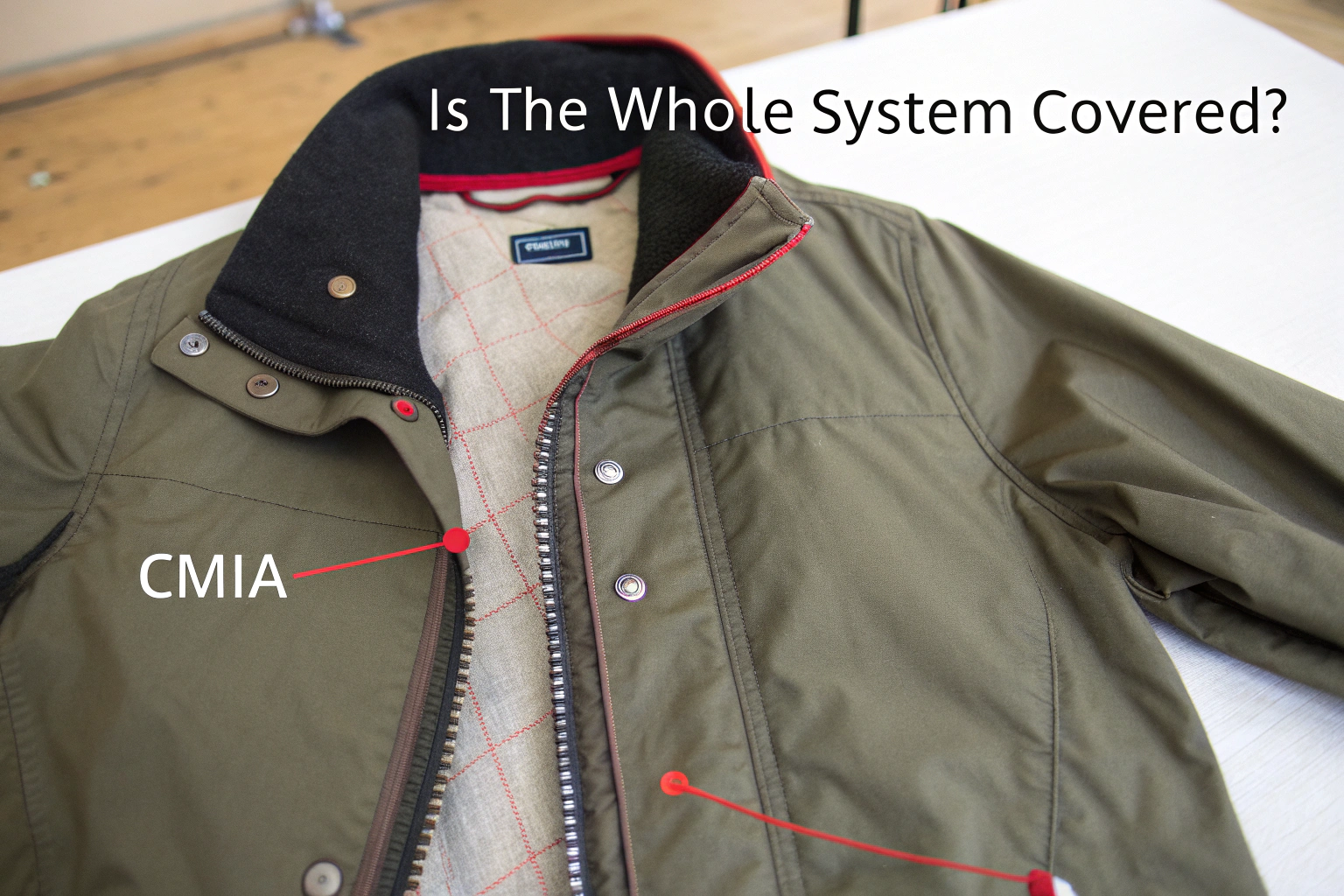
You’re finalizing the tech pack for your new collection. You’ve specified CMIA-certified fabric and chosen a CMIA-certified factory. Then you get to the accessories: zippers, buttons, labels, interlinings, and sewing thread. A crucial question hits you—does the factory’s CMIA certification extend to these often-overlooked components? The short, critical answer is: It depends, but usually not automatically. The CMIA certificate’s scope must explicitly include the management of accessory and trim sourcing, or you must verify them separately. Ignoring this detail is where many "sustainable" garments develop a hidden flaw in their environmental story.
Think of building a "green" house with energy-efficient windows, solar panels, and excellent insulation (the CMIA-certified fabric and factory). But then you use paint with high VOC levels, sealants containing toxic chemicals, and fixtures from a polluting foundry (the uncertified accessories). The core structure is sound, but the overall environmental and health performance is compromised. In garments, accessories can be 5-15% of the product by weight and can involve plastics, metals, and chemicals with their own significant footprints. A CMIA certification focused solely on sewing operations might completely miss the environmental impact of these inputs.
So, let’s move from assumption to clarity. Understanding how CMIA interacts with accessories isn’t about finding loopholes; it’s about ensuring comprehensive supply chain responsibility. Here’s exactly what you need to check and do to close this potential gap.
Decoding the Scope: What Does the Factory’s CMIA Certificate Actually Say?
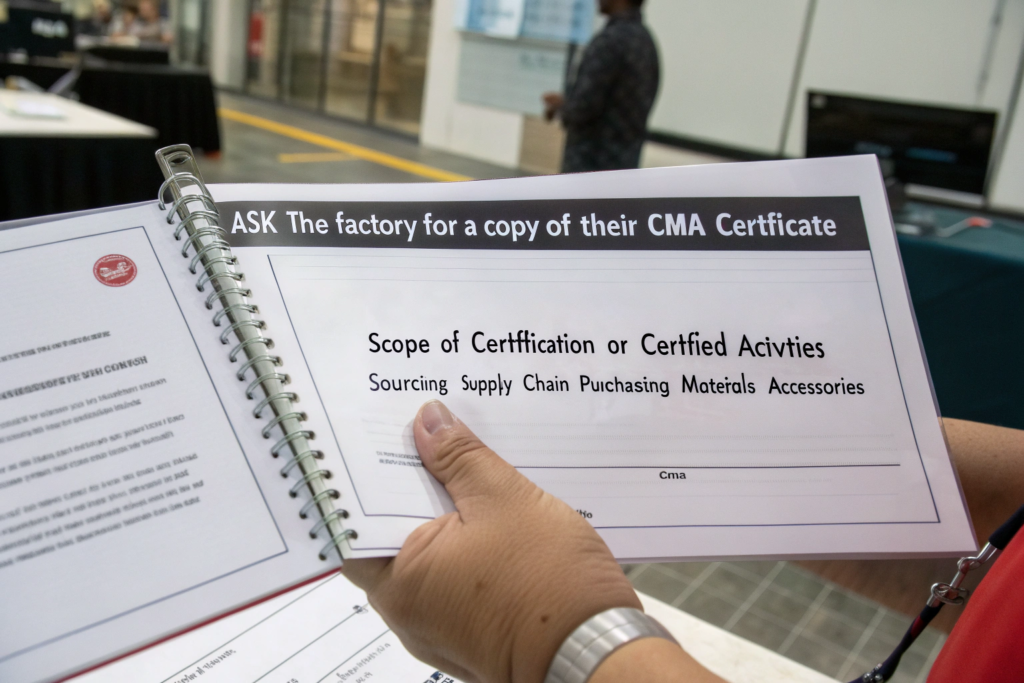
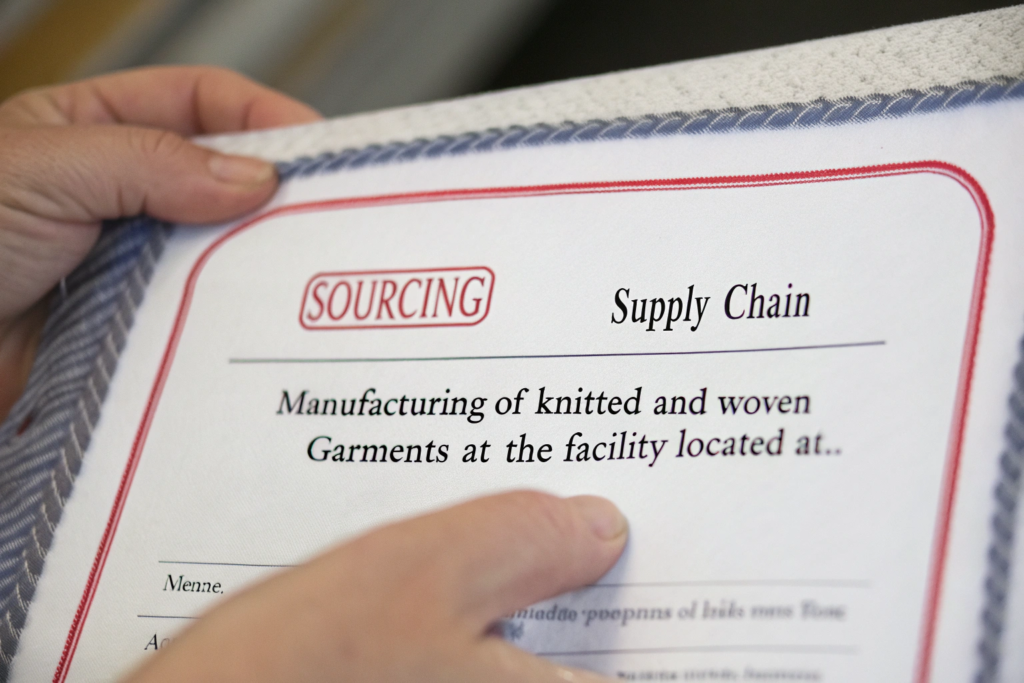
The first and most important step is to read the scope statement on the factory’s CMIA certificate. This is a legally defined section that states what processes and activities the certification covers. It is not a blanket approval of everything that leaves the factory.
Typical Scope Statements and What They Mean for Accessories:
-
"Manufacturing of [Product Type] at [Factory Address]":
- Interpretation: This is the most common and most limited scope. It certifies the environmental management of the manufacturing processes (cutting, sewing, finishing) that happen within the four walls of that specific facility. It generally does NOT cover the environmental impact of purchased materials like zippers, buttons, or thread. The system is audited on how it manages waste from these processes and its own energy use, not on how it selects its inputs.
-
"Design and Manufacturing of [Product Type]…":
- Interpretation: Slightly broader, but "design" here typically refers to garment design, not material specification. Still unlikely to cover upstream supply chain for trims.
-
"Manufacturing of [Product Type], including the sourcing and management of key materials and accessories." OR "Scope includes control of significant environmental aspects in the supply chain."
- Interpretation: This is the gold standard for a brand seeking comprehensive coverage. This scope explicitly states that the factory’s CMIA system includes procedures for evaluating and selecting suppliers of accessories based on environmental criteria (e.g., requesting material composition sheets, recycled content certificates, or the supplier’s own environmental credentials). This is what you need to look for.
How to Get and Read the Scope:
- Ask the factory for a copy of their current CMIA certificate.
- Find the section titled "Scope of Certification" or "Certified Activities."
- Look for keywords: "sourcing," "supply chain," "purchasing," "materials," "accessories." If they are absent, assume the certification is limited to in-house operations.
A Real-World Example: The Duffle Coat Dilemma
A brand producing a recycled polyester duffle coat was proud to use a CMIA-certified factory. However, the scope was "Manufacturing of outerwear." The brand never asked about the heavy-duty plastic zippers and polyester-cotton blend drawcords. The factory, focused on its own efficiency, sourced the cheapest compliant trims. When the brand later conducted a Life Cycle Assessment (LCA), they discovered that the virgin plastic zippers accounted for nearly 20% of the garment’s total carbon footprint, undermining their sustainability story. The CMIA system had managed the energy to sew the zipper in, but not the impact of the zipper itself.
The Auditor’s Focus in a Standard Scope
In an audit with a limited "manufacturing" scope, the auditor will check if the factory has procedures for managing its own waste (e.g., scrap thread, plastic from trim packaging) and energy use. They likely will not ask for proof of recycled content in the buttons or the environmental policy of the zipper supplier. That is considered outside the defined system boundary.
The "Significant Environmental Aspect" Rule and Supply Chain Control
Even if the scope doesn’t explicitly mention sourcing, there is a potential link through the concept of "significant environmental aspects." CMIA requires a factory to identify and control the environmental aspects it can influence.
The Gray Area: Could purchased accessories be a "significant environmental aspect"? Potentially, yes. If the factory uses tons of plastic polybags for packaging or certain metal components with high embedded energy, a rigorous CMIA interpretation might require them to consider this.
- In Practice: Most factories, unless pushed by a client, will define "aspects they can influence" as only those within their direct operational control (their electricity, their water, their waste). They view trims as a "product requirement" provided by the buyer.
- The Buyer’s Leverage: This is where you, as the brand, have power. By specifying environmentally preferred accessories as a contractual requirement, you force these items into the factory’s control sphere. The factory then must find a way to meet your spec, and their CMIA system can be used to document and manage this process.
How a Forward-Thinking CMIA Factory Handles Trims (Even with a Standard Scope):
They might have a supplementary procedure, often driven by client demand. For example:
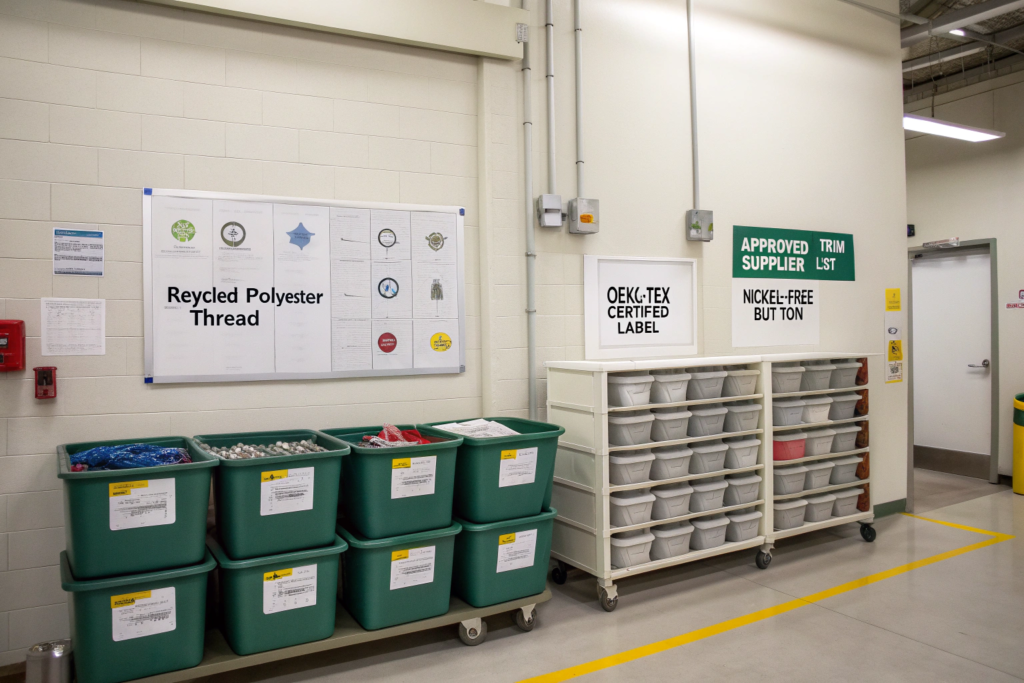
- They maintain an Approved Trim Supplier List that includes suppliers who can provide certain environmental documentation (e.g., GRS certificates for recycled polyester thread, nickel-free declarations for metal parts).
- They request and file Material Safety Data Sheets (MSDS) or test reports (like Oeko-Tex) for all chemical-based trims (e.g., printed labels, certain adhesives in interlining).
- They track and prefer trim suppliers who themselves have environmental certifications.
While this may not be a certified part of their scope, it shows a proactive management culture that aligns with the CMIA mindset. This is a strong positive signal.
Questions to Ask Your CMIA-Certified Factory About Trims:
- "Beyond your own operations, does your CMIA system include any environmental criteria for selecting trim and accessory suppliers?"
- "If we specify recycled or Oeko-Tex certified trims, can your system ensure traceability and document compliance?"
- "Can you provide examples of ‘greener’ trim options you have sourced for other clients?"
Their answers will reveal if their certification is an isolated achievement or part of an integrated responsible sourcing philosophy.
Your Action Plan: Ensuring Full Coverage for Your Collection
As the brand owner, the ultimate responsibility for the product’s environmental claims rests with you. You cannot outsource this due diligence. Here is a step-by-step action plan to ensure accessories are covered.
Step 1: Define Your Own Accessory Specifications.
Before talking to the factory, decide what you require. Common options include:
- Recycled Content: Specify GRS-certified recycled polyester for thread, zipper tape, and labels.
- Metal Safety: Specify nickel-free, lead-free, or REACH-compliant metal components (zipper pulls, buttons, rivets).
- Wood & Natural Materials: Specify FSC-certified wood for buttons or tags.
- Chemical Safety: Require Oeko-Tex Standard 100 certification for any trim that touches skin (like labels) or contains dyes/prints.
- Biodegradability: Consider corozo nut buttons or cellulose-based threads for end-of-life.
Step 2: Integrate These Specs into Your Tech Pack and PO.
Make these requirements contractual. Your Purchase Order should have a section titled "Compliance & Materials" that lists the required certifications for all components, not just the main fabric.
Step 3: Vet the Factory’s Capability (Beyond the CMIA Certificate).
Use the questions above. If their CMIA scope doesn’t cover sourcing, ask: "What is your process to ensure our trim specifications are met? Can you provide the supporting certificates from your trim suppliers?" If they are a strong partner, they will have a process.
Step 4: Request and Verify Documentation.
For every bulk order, request the certificate of compliance for the trims. For recycled polyester thread, this is a GRS Transaction Certificate. For Oeko-Tex labels, it’s the lab report. The factory’s CMIA system, if robust, should make collecting this documentation a routine part of their workflow.
Step 5: Consider the Role of Your Fabric Supplier.
Partners like Shanghai Fumao often have insights into the trim ecosystem. We may be able to recommend sources for compatible, certified trims or connect you with factories that have strong integrated systems for managing them.
The Cost and Complexity Reality
Sourcing certified trims often costs more and has longer lead times. A CMIA-certified factory focused on efficiency might default to the easiest/cheapest trim source unless you, the buyer, drive the alternative. Your commitment is what triggers the supply chain to adapt.
The Ultimate Goal: A Unified Bill of Materials (BOM) with Proof
Your final product’s sustainability dossier should include not just the factory’s CMIA certificate and fabric certifications, but also a file for each major trim component, proving its compliance with your specifications. This is comprehensive due diligence.
Conclusion
Does CMIA certification cover garment accessories and trims? Not by default. Its coverage is determined by the specific scope of the certificate and the factory’s interpretation of its supply chain responsibilities. For most factories, CMIA certifies their internal environmental management, not the pedigree of their purchased inputs.
Therefore, you must be the integrator. Use the factory’s CMIA certification as a strong indicator of their operational discipline and leverage that discipline to manage the accessory supply chain through clear, contractual specifications and document verification. The most successful sustainable brands treat CMIA as the foundational system for how things are made, and then layer on specific material certifications (GRS, Oeko-Tex, FSC) for what things are made of—including every zipper, button, and thread.
Closing this loop is what separates credible, holistic sustainable fashion from marketing that falls apart at the seams. If you are ready to build collections with integrity down to the last stitch, let’s connect. At Shanghai Fumao, we understand the importance of this full-picture approach. Contact our Business Director, Elaine, at elaine@fumaoclothing.com to discuss how to spec and source a truly coherent sustainable product.