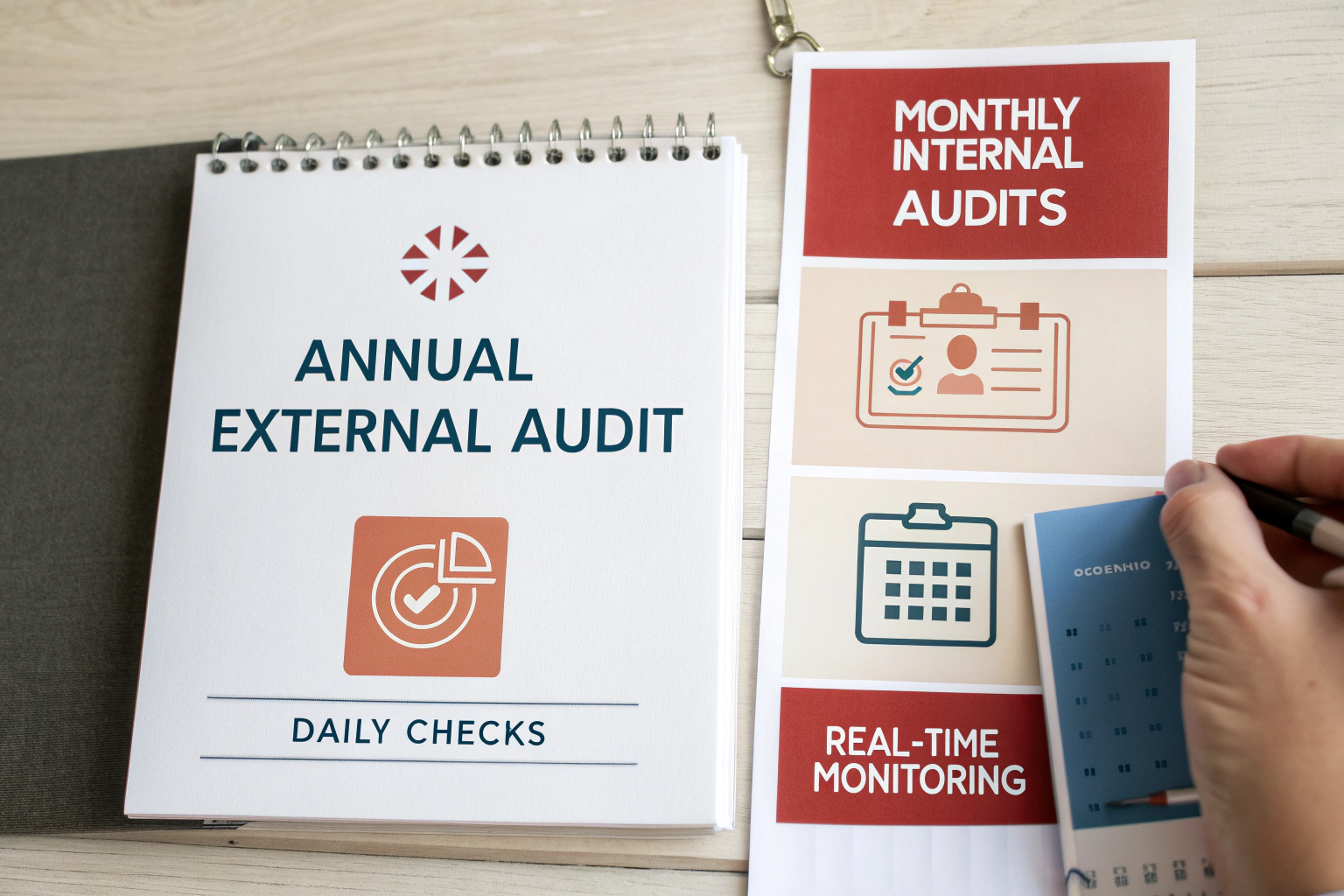
You’ve found a CMIA-certified garment factory for your production. The certificate gives you confidence. But a certificate is a snapshot from an external auditor’s visit—maybe six months ago. What’s happening on the factory floor today? Next week? How do you know the standards are being maintained daily? This is the critical question that separates a true, living management system from a "paper certificate." The answer defines your real risk level as a buyer. Let me give you the insider’s perspective: A genuinely CMIA-certified factory doesn’t just get audited; it has a built-in rhythm of self-auditing. Externally, they face a mandatory surveillance audit every 12 months. Internally, they should be conducting their own audits quarterly, if not monthly. The external check is the "final exam." The internal audits are the "weekly quizzes" that ensure they’re ready.
Think of it like a commercial kitchen with a health department rating posted on the door (the CMIA certificate). That rating is based on an annual inspection. But a well-run kitchen doesn’t just clean up for the inspector. It has daily cleaning checklists, weekly deep cleans, and a manager who walks the line every hour. The internal audits are those daily and weekly routines—the real work that prevents problems. If a factory only "cleans up" for the annual external auditor, your production runs in between are at high risk of inconsistency, inefficiency, and hidden issues.
So, the simple answer to "how often?" is: at least once a year by an external body, and continuously through internal processes. But as a buyer, you need to understand the difference, the purpose of each, and—most importantly—how to verify that this rhythm is actually happening. This is what turns a static certificate into a dynamic guarantee for your orders.
The Mandatory External Audit Cycle: The "Official" Checkpoint
This is the non-negotiable, contractual part of the certification. The CMIA standard follows a typical three-year certification cycle with defined external touchpoints. Understanding this cycle tells you when the factory is under the most scrutiny.
1. Initial Certification Audit (Once, at the start): This is the full, deep dive. An audit team from the Certification Body (CB like SGS, BV) spends several days examining every clause of the standard. They review all documents, interview staff, and inspect the entire facility. Passing this earns the three-year certificate.
2. Annual Surveillance Audits (Every 12 Months, Without Fail): This is the key recurring event. About 9-12 months after the initial certification (and each subsequent surveillance), the CB returns. This audit is shorter and more focused than the initial one. The auditor doesn’t re-examine everything. Instead, they:
- Verify that the management system is still active and effective.
- Review progress on past corrective actions.
- Check performance data and management reviews.
- Deep-dive into specific, high-risk, or previously problematic areas (e.g., one year it might be chemical management, the next it could be energy data verification).
The consequence of missing a surveillance audit is severe: the certificate can be suspended. Therefore, a factory with a valid, current certificate is de facto adhering to this annual external schedule. You can ask them: "When is your next surveillance audit scheduled?" A legitimate factory will know the exact month.
3. Recertification Audit (Every 3 Years): At the end of the three-year cycle, a full re-assessment is conducted, similar in scope to the initial audit. This resets the clock for another three years.
What This Means for Your Order Timing
If you are placing a significant order, it’s savvy to ask about their audit calendar. Placing production to conclude just after a successful surveillance audit can be ideal—the factory’s systems are freshly verified and at peak alertness. Conversely, if their audit is imminent and they seem stressed or disorganized, it could signal underlying issues.
The Limitation of External Audits
An external auditor is there for 2-4 days a year. They see a sample. They cannot guarantee what happens on the other 361 days. This is why the internal audit system is the true heartbeat of a CMIA-certified factory.
The Internal Audit Engine: The True Measure of Operational Health
This is where the rubber meets the road. The CMIA standard requires the factory to plan and conduct internal audits at planned intervals. The frequency is not specified by the standard, but industry best practice—and common sense—dictates at least once per quarter, if not monthly for key processes.
A robust internal audit program looks like this:
- Schedule: An annual internal audit schedule, covering all departments and all requirements of the CMIA standard over the year.
- Trained Auditors: Internal staff (not from the department being audited) are trained to audit against the CMIA checklist. This could be a quality manager auditing the production floor’s energy isolation practices, or an HR manager auditing the chemical storage logs.
- Formal Process: They follow a procedure: plan the audit, conduct it via interviews and observation, record findings (both good and bad), and report to management.
- Corrective Action Loop: Every finding, however minor, must result in a Corrective Action Request (CAR). This CAR must identify the root cause, propose a fix, assign responsibility and a due date, and be verified as closed. This is the closed-loop system that drives improvement.
Why Quarterly/Monthly? Because problems caught within 30 days are contained and cheap to fix. A fabric waste issue spotted in March can be corrected before April’s big order. A broken steam trap leaking energy found in a weekly check can be fixed before it shows up as a spike in the quarterly energy bill—and before your order runs through a section with unstable temperature control.

How to Gauge a Factory’s Internal Audit Rhythm
Don’t ask, "Do you do internal audits?" The answer will always be "yes." Ask these specific questions instead:
- "What is the frequency of your internal audits for the production department?" Listen for "monthly" or "quarterly." "Sometimes" or "as needed" are red flags.
- "Can you show me an example of a closed corrective action from a recent internal audit?" Ask them to blur any confidential names. You want to see the form: the problem found, the root cause analysis, the action taken, and the verification of fix. This one document proves their system is alive.
- "Who is your lead internal auditor? What training have they had?" This shows investment and seriousness.
A real example from a partner denim wash factory: They conduct a focused internal audit on their wastewater treatment system every month because it’s a high-risk environmental aspect. In one audit, they found a logbook wasn’t being initialed by the operator. The CAR wasn’t just "tell him to initial it." The root cause was that the logbook was kept in an inconvenient location. The fix was to move it next to the control panel. The verification was a photo of the new location and a week of perfect logs. This is systemic thinking in action.
The Direct Benefit to You, the Buyer
This internal rhythm means the factory is in a constant state of self-correction. For your order, this translates to:
- Fewer surprises: Issues are found and fixed proactively.
- Consistent quality: Processes are regularly verified, reducing drift.
- Data integrity: The information they give you (e.g., on efficiency or lead times) is more likely to be accurate because it’s constantly being checked.
The Daily Reality: Integrated Monitoring & Managerial Oversight
Beyond formal "audits," a truly integrated CMIA system lives in daily operations. This is about continuous monitoring and management review, which are also requirements of the standard.
Daily/Weekly Monitoring: This isn’t called an audit, but it’s audit-like in purpose.
- Departmental Checks: Line supervisors might have a daily checklist that includes energy-saving measures (turning off idle machines), proper waste sorting, and checking equipment for leaks.
- Data Collection: Meter readings for water and electricity might be taken weekly. Fabric input vs. output (yield) might be calculated per batch or per day.
- Management Walkarounds: Senior managers should regularly walk the floor with an eye for both environmental and operational compliance. Is that compressed air leak still hissing? Is the fabric scrap bin being used correctly?
Management Review (Typically Quarterly): Top management must formally meet to review the outputs of all this monitoring and auditing. They look at:
- Performance data against objectives (e.g., "Did we hit our 5% energy reduction target?").
- Results of internal and external audits.
- Status of corrective actions.
- Customer feedback (which includes your feedback as a buyer).
- Opportunities for improvement.
This meeting forces accountability. It’s where the data from daily checks and internal audits gets turned into strategic decisions and resource allocation. If you want to know if a factory’s CMIA system has teeth, ask: "When was your last management review? What was one improvement action that came out of it?"

The Synergy: How the Layers Protect Your Order
Imagine your order for 5,000 jackets is in production:
- Daily: A supervisor notices a few jackets have inconsistent seam sealing. It’s logged.
- Monthly Internal Audit: The audit of the sewing department finds the log and investigates. The root cause is a fluctuating temperature on one sealing machine due to a faulty thermostat.
- Corrective Action: The thermostat is replaced, and the machine is re-calibrated. All jackets from that machine are 100% rechecked.
- Quarterly Management Review: The data on sealing defects is presented, showing a spike and then a return to normal after the fix. They decide to fund preventive maintenance on all other sealing machines.
- Annual Surveillance Audit: The auditor reviews the CAR for the thermostat, the maintenance records, and the defect data trend, confirming the system worked.
Your order benefited at every stage: a small issue was caught, fixed systemically, and prevented from recurring. This is the power of a multi-layered audit rhythm.
How to Verify This Culture During a Sourcing Trip
On a visit, don’t just look at the machines. Ask to see:
- The daily production meeting minutes.
- A recent management review agenda or summary.
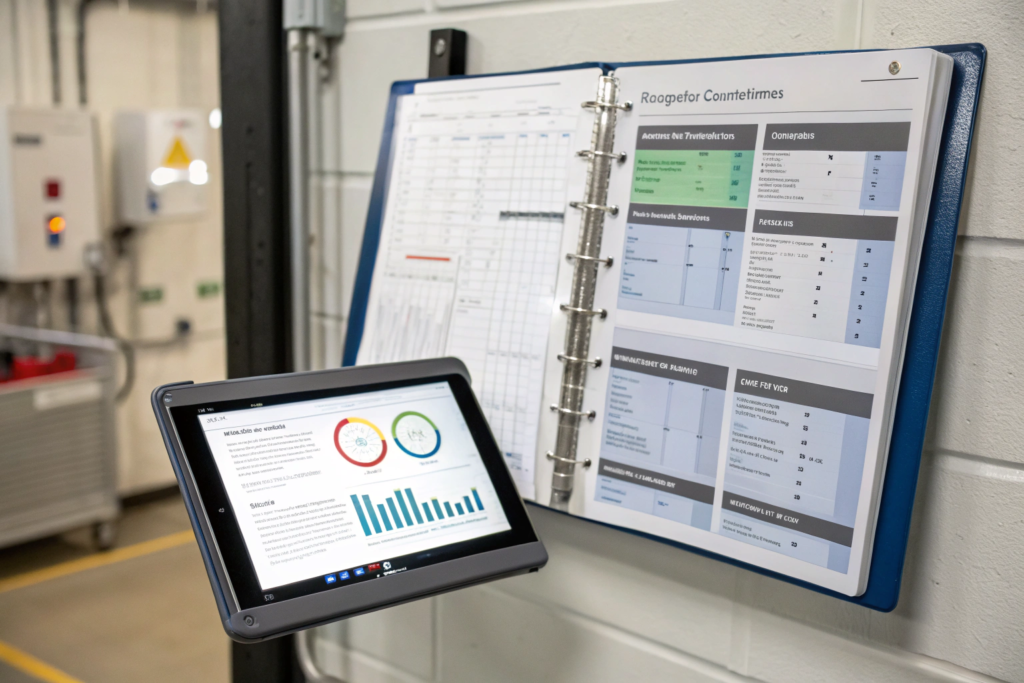
- The control room or board where key performance indicators (like energy use, defect rates) are displayed.
A factory that hesitates or shows blank documents is likely not living the system.
Red Flags: When the Audit Rhythm is Broken
As a buyer, you must be alert to signs that the factory’s audit system is merely for show. Here are critical warnings:
- They Cannot Produce Recent Internal Audit Records: If they fumble or say "the person with that file is out," be skeptical.
- Corrective Actions Are Vague or Missing: If shown a CAR that says "Train the operator" as the root cause and fix for a machine error, it’s superficial. It should ask why the operator wasn’t trained or followed procedure.
- Management is Unaware or Dismissive: If the factory owner or GM cannot speak to the CMIA system’s findings or objectives, it’s likely delegated to a junior person and not a priority.
- No Evidence of Daily Integration: The factory floor shows obvious, persistent issues an internal audit should have caught—like pervasive poor housekeeping, obvious energy waste (lights on in empty rooms), or unlabeled chemical containers.
- The "Just Passed Audit" Syndrome: They proudly state they just passed their surveillance, but their communication and production planning with you remain chaotic and undocumented. This suggests they perform for the auditor, then revert to old habits.
The Ultimate Test: Ask About a Past Problem
Pose this: "Can you tell me about a production or quality problem you had in the last 6 months and how your CMIA system helped you resolve it?" A strong factory will describe a specific incident, the audit or monitoring that caught it, the root cause analysis, and the systemic fix. A weak one will give a generic answer about "improving quality."
Conclusion
A CMIA-certified factory’s audit frequency is not a single event but a layered, rhythmic process: continuous daily monitoring, regular internal audits (at least quarterly), and mandatory annual external surveillance. The external audit validates the certificate; the internal rhythm defines the factory’s actual operational discipline and reliability.
For you, the buyer, understanding this distinction is power. It moves you from passive reliance on a paper certificate to active verification of a living system. Your due diligence should probe the internal engine—the schedules, the records, the closed-loop corrective actions. This is what truly minimizes your risk. A factory that maintains this rigorous rhythm of self-examination is a factory that controls its processes, learns from its mistakes, and delivers consistent, predictable results.
When evaluating a CMIA-certified partner, look beyond the wall plaque. Ask to see the heartbeat. At Shanghai Fumao, we value partners who maintain this discipline, because it aligns with our own commitment to quality and transparency. If you seek a manufacturing partnership defined by proactive control rather than reactive firefighting, let’s connect. Contact our Business Director, Elaine, at elaine@fumaoclothing.com to discuss how to align with factories where the audit is a culture, not just a calendar event.