You’re a factory owner or manager. You’ve seen the writing on the wall: major brands are starting to ask for CMIA certification. You know it’s becoming a key to unlocking better contracts. But before you dive in, the question that keeps you up at night is: "How much is this going to cost me?" It’s a fair and crucial question. As a fabric supplier who has watched dozens of partner factories go through this journey, I can tell you the quotes you might get can range from frighteningly high to suspiciously low. Let’s cut through the noise. The total cost of CMIA certification for a typical garment factory of 300-500 workers isn’t a single number; it’s an investment spread across 12-18 months, with a clear path to ROI. But to give you a direct anchor: for a first-time certification, a realistic total budget is between $25,000 and $50,000 USD. Yes, you read that right. It’s not pocket change. But before you dismiss it, understand that this isn’t just a fee for a piece of paper—it’s the cost of fundamentally upgrading your operational operating system.
Think of it like this. You wouldn’t expect to buy a sophisticated ERP software system for $1,000 and have it run your entire factory flawlessly. CMIA certification is similar. The cost covers the external expertise to install the system (the consultant), the official licensing and audit (the certification body), and your internal labor to make it work. The wide range depends entirely on your starting point. A factory already tracking its energy and waste with some ISO-like procedures will be at the lower end. A factory running on paper tickets and memory will face more foundational work at the higher end. Let’s break down every dollar, so you can see exactly where the money goes and, more importantly, how you get it back.
The Major Cost Components: A Line-by-Line Breakdown
To budget effectively, you must understand the three pillars of cost. Ignoring any one of them leads to surprises and failure.
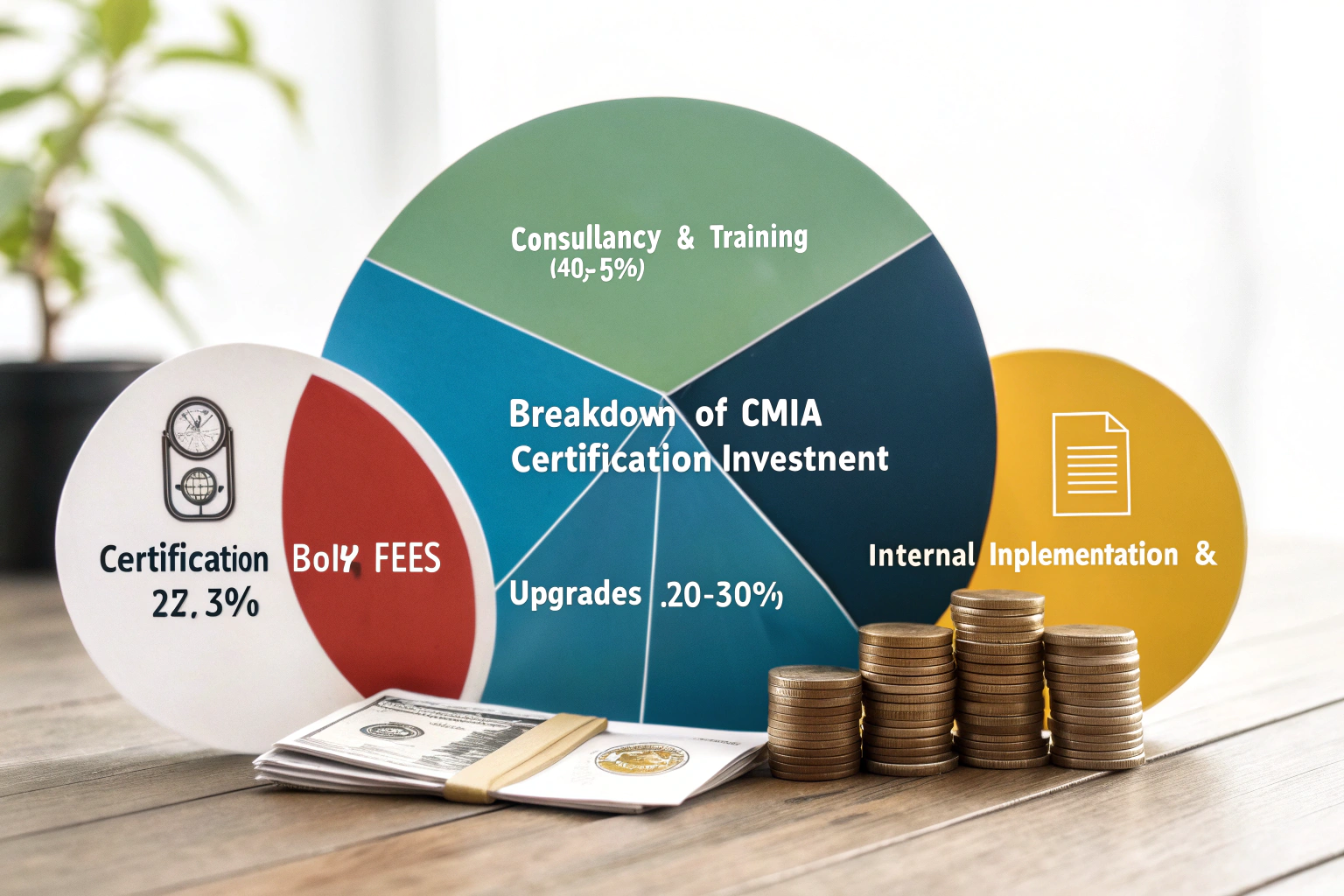
1. Consultancy & Training Fees: ($10,000 – $25,000+)
This is usually the largest variable cost and the most valuable. You are paying for expertise to navigate a complex standard you’ve never dealt with. A good consultant does not just fill out templates; they:
- Conduct a Gap Analysis: They spend a week in your factory identifying what you have and what you lack.
- Develop the Management System: They help you write the mandatory manuals, procedures, and records required by the CMIA standard.
- Train Your Team: They teach your management and staff how the system works, from the factory manager to the person reading the electricity meter.
- Perform Internal Audits & Mock Audits: They simulate the real certification audit to find and fix problems beforehand.
Why the huge range? It depends on the consultant’s reputation, your factory’s complexity (multiple buildings, complex processes), and your existing level of documentation. A consultant who promises to do it for $5,000 is likely selling you a stack of generic documents you won’t understand or be able to maintain—a sure path to audit failure. In 2022, a woven shirt factory in Bangladesh we work with paid $18,000 for a 10-month consultancy package. It included monthly on-site visits and unlimited remote support. It was worth every penny because the consultant became their teacher.
2. Certification Body (CB) Audit Fees: ($8,000 – $15,000)
This is the fee paid directly to the accredited organization (like SGS, Bureau Veritas, TÜV) that will conduct the official audit and issue the certificate. It is non-negotiable and depends on:
- The size of your factory (man-days required for the audit).
- The scope of certification (just sewing? cutting and sewing? including washing/dyeing?).
- The prestige of the CB. A globally recognized name may cost more but carries more weight with international brands.
This fee typically covers the Stage 1 audit (document review) and the Stage 2 audit (on-site assessment). Remember, this is a recurring cost every three years for re-certification, plus smaller annual surveillance audit fees (usually 30-50% of the main audit fee).
3. Internal Implementation & System Costs: ($5,000 – $15,000)
This is your own internal investment, often underestimated. It includes:
- Staff Time: Your management team will spend hundreds of hours in meetings, writing procedures, and collecting data. This is an opportunity cost.
- Potential Equipment Upgrades: You may need to install sub-meters on major energy users (sewing lines, compressors, boilers) to collect the required data. Basic meters can cost a few hundred dollars each.
- Software/IT: You might invest in simple tracking software or upgraded spreadsheets to manage data more efficiently than paper logs.
- Corrective Actions: The audit will find gaps. Fixing them might mean physical changes, like improving waste segregation bins or chemical storage areas.
The Hidden "Cost": Opportunity Cost of Saying No.
While not a line item in your budget, consider the cost of not getting certified. If your competitors get certified and start taking the premium orders from brands you want to work with, what is the cost of that lost business over the next three years? For many, this "cost" far exceeds the investment in certification.

Can I Skip the Consultant and Save Money?
You can try, but I strongly advise against it for your first certification unless you have a staff member who is a former CMIA auditor. The standard is interpretative. Misunderstanding a clause can lead to a failed audit, meaning you lose the entire CB audit fee ($8k-$15k) and have to pay it again to re-audit. A consultant’s fee is essentially risk insurance. They guide you to pass on the first attempt.
Are There Ongoing Costs After Certification?
Yes. Beyond the annual surveillance audit fee, you must maintain the system. This means dedicated staff time for monthly data review, internal audits, and management reviews. Think of it as a new, essential administrative department focused on efficiency and compliance. The good news? This department starts paying for itself through the savings it identifies.
The Return on Investment (ROI): How the Investment Pays Back
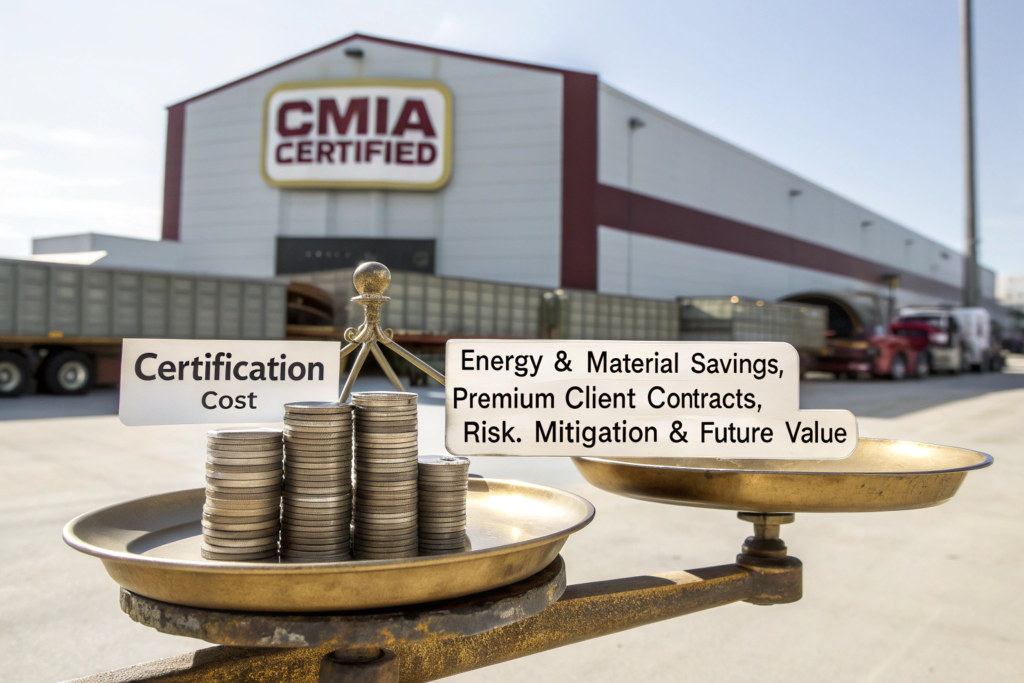
This is where the story changes from cost to investment. Viewing CMIA as an expense is the wrong mindset. View it as a capital investment in operational efficiency and market access. The returns come from multiple streams.
1. Direct Operational Savings (The Quick Win)
The CMIA process forces you to measure what you’ve never measured before. This always reveals waste. Common first-year savings include:
- Energy Savings (5-15%): By identifying idle machines, optimizing compressor use, and switching to LED lighting, factories routinely save thousands on electricity and fuel bills. One of our partner denim mills in Vietnam saved over $12,000 in the first year just from optimizing their boiler and steam system after the initial energy review.
- Material Savings (3-8%): Optimizing fabric cutting markers to reduce waste is a direct CMIA objective (waste reduction). Saving 5% on fabric for a factory using $500,000 of fabric annually is a $25,000 direct profit improvement.
- Reduced Rejection & Rework: A more disciplined process control system leads to fewer quality defects. If your current rework rate is 3% and you cut it to 1.5%, that’s pure cost avoidance.
These savings alone can pay back the total certification investment within 2-3 years, making the certificate itself effectively free.
2. Premium Pricing & Access to Better Clients
This is the strategic return. Brands sourcing sustainably are often less price-sensitive and more relationship-focused. They will pay a 3-8% premium for the assurance and data a CMIA-certified factory provides. More importantly, they offer longer-term contracts. Instead of chasing seasonal orders, you secure a 2-3 year framework agreement. The stability is priceless. A sportswear factory in Indonesia we supply told us that after certification, they landed a single client whose business increased their annual revenue by 15% at a 5% higher margin. The certification cost was recovered from that one client in the first 6 months of the contract.
3. Reduced Risk & Future-Proofing
New regulations like the EU’s Carbon Border Adjustment Mechanism (CBAM) will tax products based on their embedded carbon. As a CMIA-certified factory, you are already measuring this. You can provide your clients with the data they need to minimize this tax, making you an indispensable partner. You also mitigate the risk of being dropped by a major brand that suddenly decides to require certification from all suppliers—a trend we see accelerating.
How to Calculate Your Factory’s Specific ROI Potential
Do a simple exercise:
- Estimate Annual Operational Savings: Look at last year’s utility bills and fabric cost. Can you save 10% on energy ($5,000?) and 5% on fabric ($25,000?).
- Estimate Revenue Upside: Do you have a target client that currently won’t work with you? What would a 3-year contract with them be worth at a 5% higher margin?
- Compare to Total Cost: Weigh the 3-year savings + new revenue against the total 3-year certification cost (initial + annual surveillance).
For most forward-thinking factories, the math is compellingly positive.
What If I’m a Small Factory (Under 100 Workers)?
The cost structure scales down. You might target a total budget of $15,000 – $30,000. The process is similar, but the consultancy and audit man-days are fewer. The ROI argument shifts slightly: you may not land a giant brand, but you can become the go-to sustainable specialist for niche, high-value brands. Your small size can be an advantage in demonstrating tight control and agility, which the CMIA system will help you document and sell.
Navigating the Process: A Phased Investment Approach
You don’t need to write one huge check on day one. A smart factory phases the investment over the project timeline, aligning cash outflows with internal readiness.
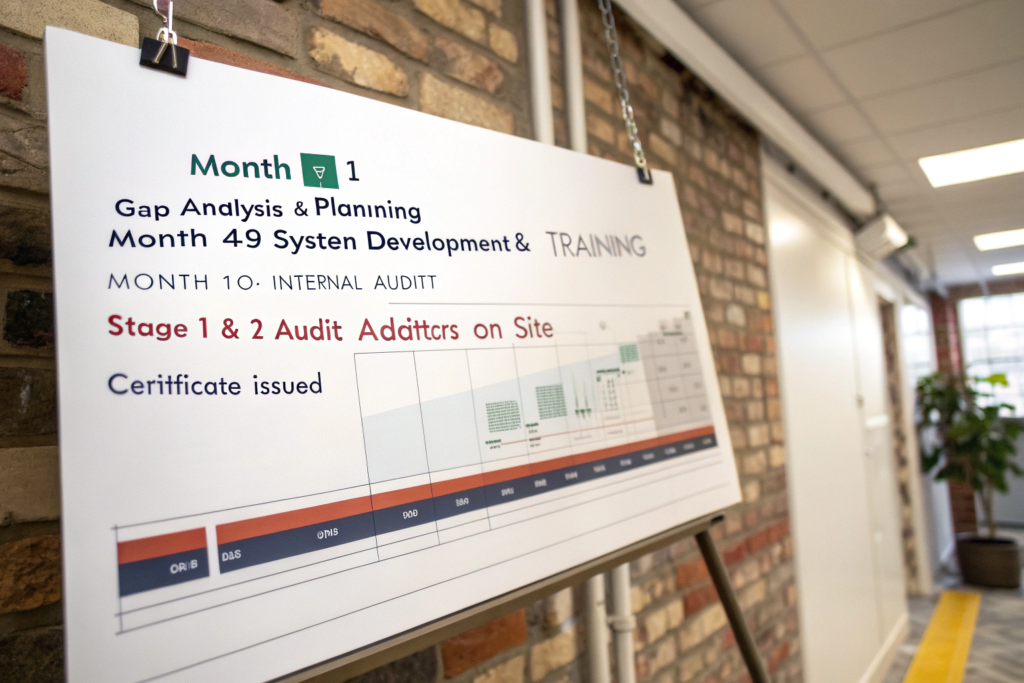
Phase 1: Exploration & Gap Analysis (Months 1-2, Cost: $2,000 – $5,000)
Hire a consultant solely to conduct a detailed gap analysis. This is a diagnostic. They will give you a report listing exactly what you need to do and a realistic project plan. This initial investment is low-risk and informs your final go/no-go decision. You can even use this report to discuss potential cost-sharing with a key client who is pushing you to get certified.
Phase 2: System Development & Training (Months 3-8, Cost: $8,000 – $20,000)
This is the core consultancy period. You pay the consultant in milestones tied to deliverables: procedure manuals completed, training sessions delivered, internal audit conducted. You simultaneously incur your internal labor costs as your team works on the system.
Phase 3: Certification Audit (Months 9-11, Cost: $8,000 – $15,000)
You pay the Certification Body. This is the final, large external payment. By this point, your system should be running, and you should be confident of passing.
Phase 4: Maintenance & Surveillance (Ongoing, Annual Cost: ~$3,000 – $8,000)
The annual surveillance audit fee and ongoing internal labor cost. This is funded by the operational savings you are now generating.
This phased approach manages cash flow and reduces risk by validating progress at each step before committing more funds.
How Can Fabric Suppliers Like Shanghai Fumao Help Reduce Costs?
We can’t pay your audit fee, but we can significantly reduce the complexity and time of your system development. How? By providing you with pre-verified, well-documented materials.
- Certified Fabrics: When you use our GRS-certified recycled polyester or GOTS organic cotton, we provide the transaction certificates and test reports. Your CMIA system can simply reference these verified inputs, saving you hours of supplier validation work.
- Technical Data: Our detailed fabric specs help you accurately calculate material efficiency (yield) and choose the right, less wasteful production processes.
- Network Referrals: We can often recommend reputable consultants and certification bodies we’ve seen work effectively with similar factories, helping you avoid costly mistakes with inexperienced providers.
Partnering with suppliers who understand the certification landscape makes your journey smoother and more efficient.
Key Pitfalls That Inflate Cost (And How to Avoid Them)
- Choosing the Cheapest Consultant: Leads to generic, non-compliant systems and failed audits (double cost).
- Underestimating Internal Effort: The factory manager must lead the project. Delegating it to a junior admin without authority guarantees delays and rework.
- Ignoring Pre-Audit Upgrades: If the auditor finds you lack basic meters, they will issue a major non-conformity. It’s cheaper to install them during the project than to fail and have to do it later under time pressure.
- Failing to Engage Staff: If line workers don’t understand the new waste sorting rules, the system fails. Invest in good training upfront.
Conclusion
So, what is the cost of CMIA certification for a garment factory? It is a significant but calculable investment ranging from the mid-tens to the low-fifties of thousands of US dollars for a typical facility. However, this number is meaningless without the context of return. This is not a compliance tax; it is the purchase price for a new business model.
The factory that sees this as a mere cost will hesitate, look for shortcuts, and likely fail or derive little value. The factory that sees it as an investment in operational excellence, market differentiation, and future resilience will budget for it, execute it well, and reap dividends for years to come. The cost is the entry ticket to a club where contracts are more stable, margins are healthier, and the business is prepared for the demands of tomorrow’s manufacturing landscape.
Your decision ultimately boils down to your vision for your factory. Do you want to compete in the race to the bottom on price, or do you want to build a reputable, efficient, and sustainable enterprise that attracts the best partners? For those choosing the latter path, the investment in CMIA certification is not an option; it’s a necessary and profitable step in that journey.
If you are evaluating this investment and want to understand how it interacts with your fabric sourcing and product mix, we at Shanghai Fumao are here to provide insights from the front lines. We work with certified factories every day and see the tangible benefits. To discuss a strategic approach tailored to your factory, contact our Business Director, Elaine, at elaine@fumaoclothing.com. Let’s talk about building not just a certificate, but a more competitive and profitable future for your business.