You’re sourcing a batch of brightly dyed knitwear or deep-colored activewear. The factory sends over their CMIA certificate, assuring you they’re a sustainable, well-managed partner. Your mind connects the dots: a certified factory should produce superior, consistent quality, right? Especially for something as critical as colorfastness—the fabric’s resistance to fading or bleeding. It seems logical: a factory disciplined enough to measure its carbon footprint must also master its dyeing processes. But here’s the raw truth from inside the industry: No, CMIA certification does not directly guarantee or ensure colorfastness in garment dyeing. It’s a dangerous assumption that can cost you dearly in returns and reputation. CMIA and colorfastness operate in related but fundamentally different spheres of factory management. Confusing them is like assuming a driver with a perfect safety record is also a master mechanic—they’re connected to the car’s performance, but they’re not the same skill.
Let me explain the gap. CMIA (Carbon Management and Innovation Association) certification focuses on the factory’s environmental impact and management system. It asks: "How much energy and water does your dyeing process use? How do you treat your wastewater? How do you track and reduce your overall carbon emissions?" Colorfastness, on the other hand, is a product performance attribute. It asks: "Will this red dye stay red after 20 washes? Will it bleed onto the white logo?" A factory can be highly efficient and environmentally clean (CMIA) but still produce garments with poor colorfastness if their chemical recipe, process control, or fabric pre-treatment is off. Conversely, a factory can achieve excellent colorfastness using highly polluting, unregulated methods that would never pass a CMIA audit.
So, what does a CMIA certificate tell you about dyeing quality? It tells you the factory has process controls and data tracking in place. This indirectly creates a better environment for achieving consistent quality, but it is not a substitute for specific fabric testing and dyeing expertise. Let’s dissect this crucial distinction to protect your next order.
The CMIA Focus: Process Control, Not Product Spec
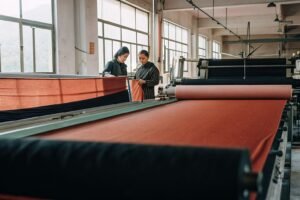
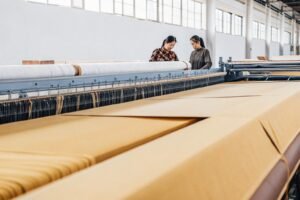
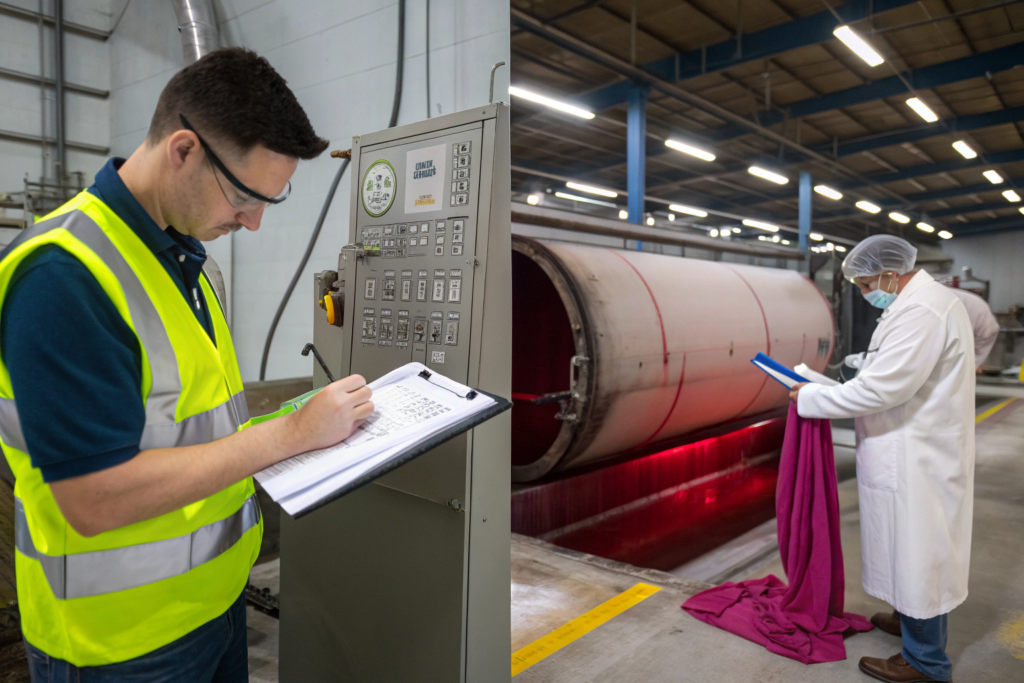
To understand why CMIA doesn’t equal colorfastness, you need to see what an auditor actually examines in the dyeing department. They are not there to rub a wet cloth on the fabric to check for bleeding. They are there to audit the system that manages the environmental aspects of dyeing.
The auditor will check:
- Energy & Water Meters: Are sub-meters installed on dyeing machines to track consumption per batch? Is this data logged and reviewed?
- Chemical Management System: Is there an updated inventory of all dyes and auxiliaries? Are Safety Data Sheets (SDS) available for each? This is for environmental and worker safety compliance, not for judging colorfastness efficacy.
- Wastewater Treatment Records: Does the factory treat its dye effluent before discharge? Can they show the lab test reports proving it meets local standards?
- Process Documentation: Are there standard operating procedures (SOPs) for running the dyeing machines, including parameters like temperature ramp rates? This is for consistency and efficiency, which can influence quality, but the SOP’s goal is repeatability, not a specific colorfastness rating.
In essence, CMIA certifies that the dyeing process is measured, managed, and its environmental footprint is minimized. It does not certify that the output of that process hits a specific AATCC Gray Scale rating of 4-5 for wash fastness. A factory could follow its SOP perfectly, use less water and energy, treat its wastewater beautifully, but if the dye recipe itself is cheap or incompatible with the fabric, the color will still bleed. The system is sound, but the input formula is flawed.
A Real-World Scenario from Our Supply Chain
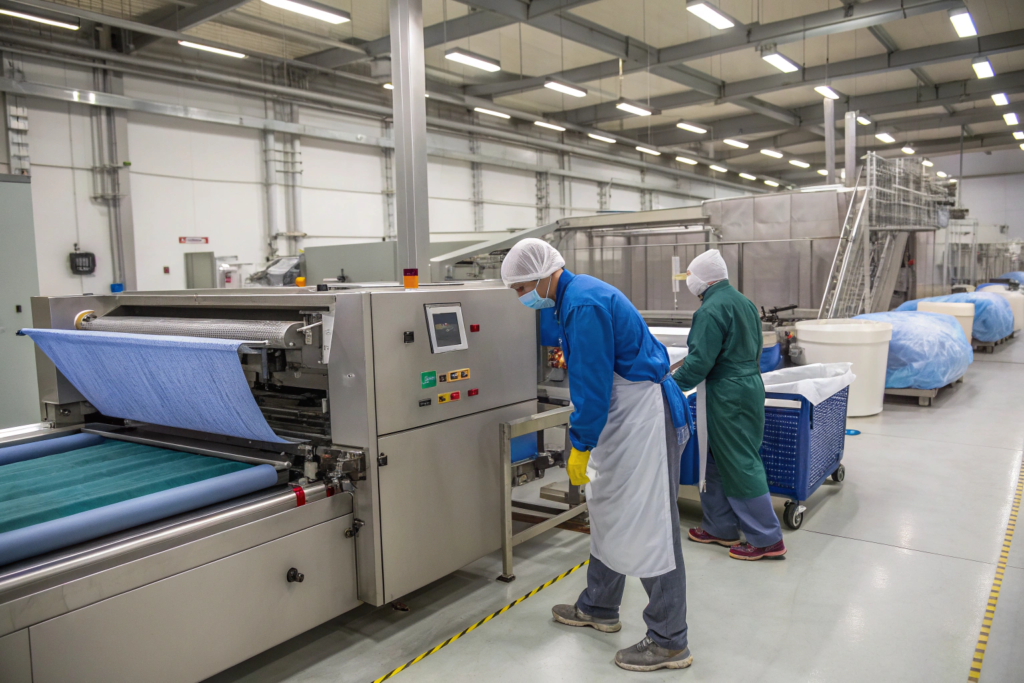
In 2023, a sportswear brand faced a dilemma. They had two potential suppliers for a line of dyed athletic shorts. Factory A was CMIA-certified. Their audit reports showed excellent energy efficiency in their dye house. Factory B was not CMIA certified but had a decades-old dyer known as a "color master." The brand placed a small test order with both, specifying a high-wash-fastness requirement. Factory A’s shorts faded noticeably after 10 home washes. Factory B’s shorts held color perfectly. The issue? Factory A, in its drive to reduce chemical load (an environmental goal), used a low-fixation dye system without the proper post-treatment, compromising fastness. Their system was environmentally lean but technically incomplete for the performance requirement. The brand learned a costly lesson: certifications and product specs must be verified independently.
So, What Value Does CMIA Bring to Dyeing Then?
It brings consistency and traceability. Because a CMIA-certified dye house must document its processes and inputs, if a colorfastness problem does occur, they can far more easily trace it back. Was it a specific dye batch from a certain supplier? Was the temperature in Machine #3 deviating from the SOP on a particular day? The system enables effective root-cause analysis and correction. A non-certified, chaotic dye shop might not even have the records to start the investigation.
The True Guardians of Colorfastness: Fabric, Chemistry, and Expertise
If CMIA doesn’t ensure colorfastness, what does? Three interconnected pillars: 1) The Right Fabric Substrate, 2) The Correct Dye Chemistry & Recipe, and 3) Uncompromising Process Control & Testing. This is where your technical due diligence must focus.
1. The Fabric Substrate is the Canvas. You cannot get good colorfastness on poor fabric. The fiber type (polyester, cotton, nylon) dictates the dye class needed. The fabric construction and pre-treatment (scouring, bleaching) drastically affect dye uptake. For instance, achieving vibrant, fast colors on 100% organic cotton requires a different approach than on standard cotton, as it often has less residual chemical impurities. As a fabric supplier, Shanghai Fumao provides detailed technical data sheets that specify the recommended dye types and processes for our materials. Ignoring this is the first step to failure.
2. The Dye Chemistry is the Heart. This is the "secret sauce." High-wash-fastness reactive dyes for cotton, high-light-fastness disperse dyes for polyester, and the matching auxiliaries (fixing agents, leveling agents) are critical. A CMIA audit checks if these chemicals are stored safely and their SDS are on file—not whether the dyer has chosen the optimal chemical for fastness. This requires a skilled dyer or chemist’s expertise. Are they using premium dyes from reputable suppliers like Archroma, Huntsman, or DyStar? Or are they using cheap, unbranded alternatives to save cost? This single choice has a bigger impact on colorfastness than any management system.
3. Process Control & Testing is the Proof. This is where CMIA’s world and the quality world overlap but have different goals. Both value control. A proper dyeing process must control time, temperature, pH, liquor ratio, and salt concentration with precision. A CMIA system will document these to ensure efficiency. A quality-focused system will control these to ensure the dye bonds permanently. The critical difference is the final verification: comprehensive lab testing against international standards (AATCC, ISO).
The Non-Negotiable Step: Third-Party Lab Reports
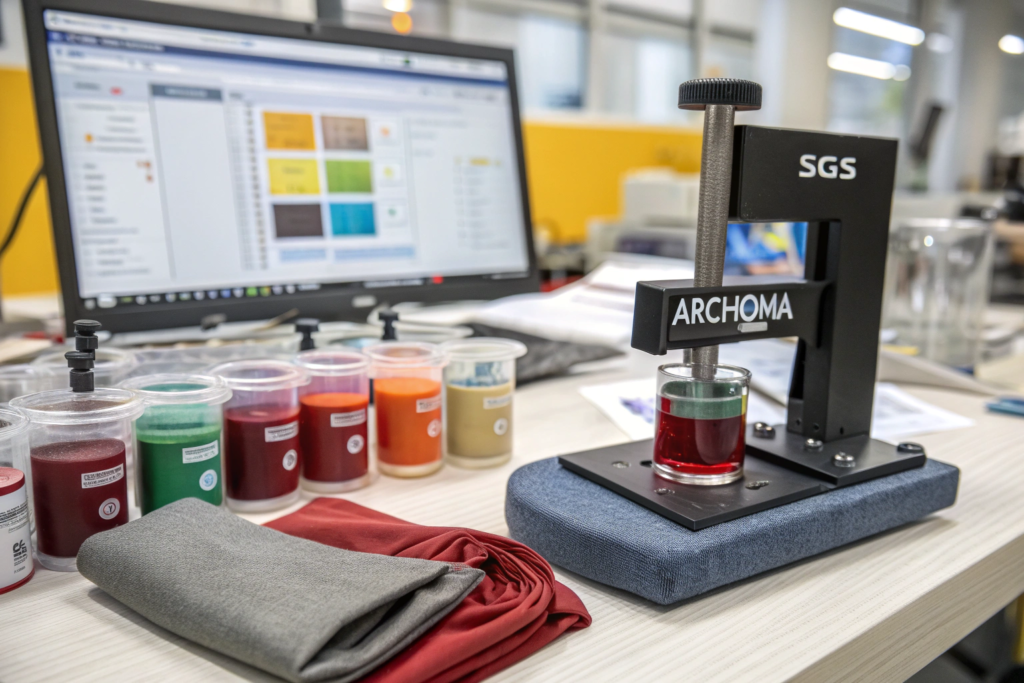
Never, ever rely on a factory’s "in-house" pass/fail test for colorfastness. Always insist on a third-party test report from an accredited lab like SGS, ITS, or BV for your specific fabric batch and color. The report should detail:
- Wash Fastness (AATCC 61): Resistance to fading and bleeding in washing.
- Rub Fastness (Crocking – AATCC 8): Resistance to dry and wet rubbing.
- Light Fastness (AATCC 16): Resistance to fading from sunlight.
- Perspiration Fastness (AATCC 15): Resistance to color change from sweat.
Specify the acceptable rating (e.g., Wash Fastness: Grade 4 minimum for staining and shade change) in your purchase order. This is your only real guarantee.
How to Vet a Dye House’s True Capability?
Ask these direct questions, regardless of their CMIA status:
- “Can you share the technical data sheet and test reports for the base fabric you propose?”
- “Which specific dye brands and chemical suppliers do you use for this fiber type?”
- “What is your standard testing protocol for colorfastness, and can we receive third-party reports for our lab dips and bulk?”
- “Can we visit or have a video tour of your dye lab and see your testing equipment in operation?”
Their answers will reveal more about their commitment to color quality than any environmental certificate.
The Synergy: How a CMIA-Certified Dye House Can Be a Better Partner
While CMIA doesn’t ensure colorfastness, partnering with a dye house that has both CMIA certification and proven color expertise is the gold standard. Here’s why the combination is powerful:
1. Data-Driven Problem Solving. When a colorfastness issue arises, a CMIA-certified facility can cross-reference environmental data with quality data. For example, if wash fastness is failing, they can check: Was the water consumption in that batch unusually low, potentially affecting the chemical ratio? Was the steam pressure inconsistent, affecting temperature control? Their systematic tracking allows for a faster, more scientific diagnosis.
2. Investment in Modern, Efficient Equipment. To reduce energy and water use (CMIA goals), factories often invest in state-of-the-art dyeing machines like low-liquor-ratio jets or automated dosing systems. These machines, by their nature, offer superior process control—precise temperature curves and chemical injection—which is a prerequisite for consistent, high-fastness dyeing. You benefit from their environmental investment through better quality capability.
3. Stability and Long-Term Thinking. A factory investing in a rigorous management system like CMIA is likely to be more stable, with better-trained staff and lower turnover. This means the dyer who perfected your color today is more likely to still be there to replicate it perfectly in six months. Consistency in personnel leads to consistency in output.
A Case in Point: We work with a dyeing and finishing mill in Suzhou that supplies us with finished fabrics. They are CMIA-certified and also hold Oeko-Tex STeP certification, which is more focused on production processes and chemicals. For a recent line of moisture-wicking polyester for a UK brand, their CMIA-driven efficiency allowed them to run at a lower liquor ratio, saving water. Their STeP-mandated chemical management ensured they used eco-friendly, high-fastness dyes. The result was a fabric that passed all stringent colorfastness tests and had a 30% lower water footprint, which became a key selling point for the end brand. The certifications worked in tandem.
The Role of Integrated Suppliers like Shanghai Fumao
Our advantage is seeing the entire chain. When a client comes to us with a colorfastness-critical project, we don’t just sell them fabric. We recommend specific dye houses from our partner network that we know have both the technical dyeing prowess and the management discipline (often evidenced by certifications like CMIA or STeP). We provide the mill with the fabric’s full technical profile to optimize the dyeing process from the start. This integrated approach de-risks the project, marrying the right material with the right processor.
The Buyer’s Action Plan: A Two-Track Verification
- Verify the System (CMIA Track): Do the document checks. Confirm the certification is valid for the specific dyeing facility. Understand their environmental controls.
- Verify the Product (Quality Track): Mandate pre-production lab dips with full third-party fastness testing. Approve the bulk fabric only after receiving passing third-party test reports for the production batch. Conduct your own independent test on pre-shipment samples.
Treat these as parallel, equally important streams of due diligence.
Red Flags: When “CMIA-Certified Dyeing” Is a Misleading Claim
Be wary of suppliers who use their CMIA certification as a blanket guarantee of dyeing quality. Here are specific red flags:
- The Dodge: You ask for colorfastness test reports, and they respond, “We are CMIA certified, so our quality is the best.” This is a deflection. Insist on the data.
- The Vague Promise: “Our colorfastness is 4.5.” Ask: “According to which AATCC test method? Can I see the report from an accredited lab?” If they can’t produce it, the number is meaningless.
- The Scope Mismatch: Verify that the CMIA certificate actually covers the dyeing unit. Sometimes a garment factory is certified for its sewing operations, but they outsource dyeing to an uncertified, subpar unit. The certificate you’re shown may not apply to the most critical step for color.
- Resistance to Testing: If a factory pushes back on your requirement for third-party testing because it’s “too expensive” or “takes too long,” consider it a major warning. A confident, quality-driven processor builds this time and cost into their workflow.
Remember, your leverage is before you place the order. Once the fabric is dyed poorly, your options are terrible: accept defective goods, pay for re-dyeing (which rarely works perfectly), or cancel and start over.
The Ultimate Question to Ask Yourself
Would you rather buy dyed garments from:
- Factory X: CMIA-certified, but cannot provide recent third-party colorfastness reports for similar fabrics, and their dyer has 2 years of experience.
- Factory Y: Not CMIA certified, but can provide a portfolio of impeccable SGS test reports for the last 5 projects, employs a 20-year veteran dyer, and uses only premium dyes.
For sheer quality assurance, Factory Y is the lower-risk choice. For a partnership that balances quality with verifiable environmental responsibility, you would seek a factory that has the strengths of both.
Conclusion
CMIA certification is a significant achievement that indicates a dyeing facility is managed with discipline, transparency, and a focus on reducing its environmental footprint. It creates a framework that is conducive to achieving consistent quality, including colorfastness, by enforcing process controls and data recording. However, it is not a substitute for, nor a direct guarantee of, specific colorfastness performance.
Colorfastness is won or lost in the technical trenches: in the choice of fabric, the selection of dye chemistry, the precision of the dyeing process, and, ultimately, in the verified results of independent laboratory testing. As a buyer, you must conduct separate, rigorous due diligence on these product-specific factors. The most reliable partners are those who can demonstrate excellence on both fronts: the systematic environmental management evidenced by certifications like CMIA, and the proven technical capability evidenced by a history of successful projects and unequivocal test data.
Do not let a single certificate blind you to the multifaceted nature of manufacturing quality. Use CMIA as a filter for operational maturity, but never as a free pass on verifying the physical attributes of the product you are paying for. In an industry where green claims are prevalent, the truly sustainable partner is the one whose environmental care is matched by a relentless commitment to product integrity.
If you are seeking a supply chain partner that understands this critical balance—where fabric excellence, dyeing expertise, and responsible manufacturing systems converge—connect with us at Shanghai Fumao. We bridge the gap between material science and production reality. To discuss how to ensure both the colorfastness and the credibility of your next garment order, contact our Business Director, Elaine, at elaine@fumaoclothing.com. Let’s build color that lasts, on a foundation you can trust.