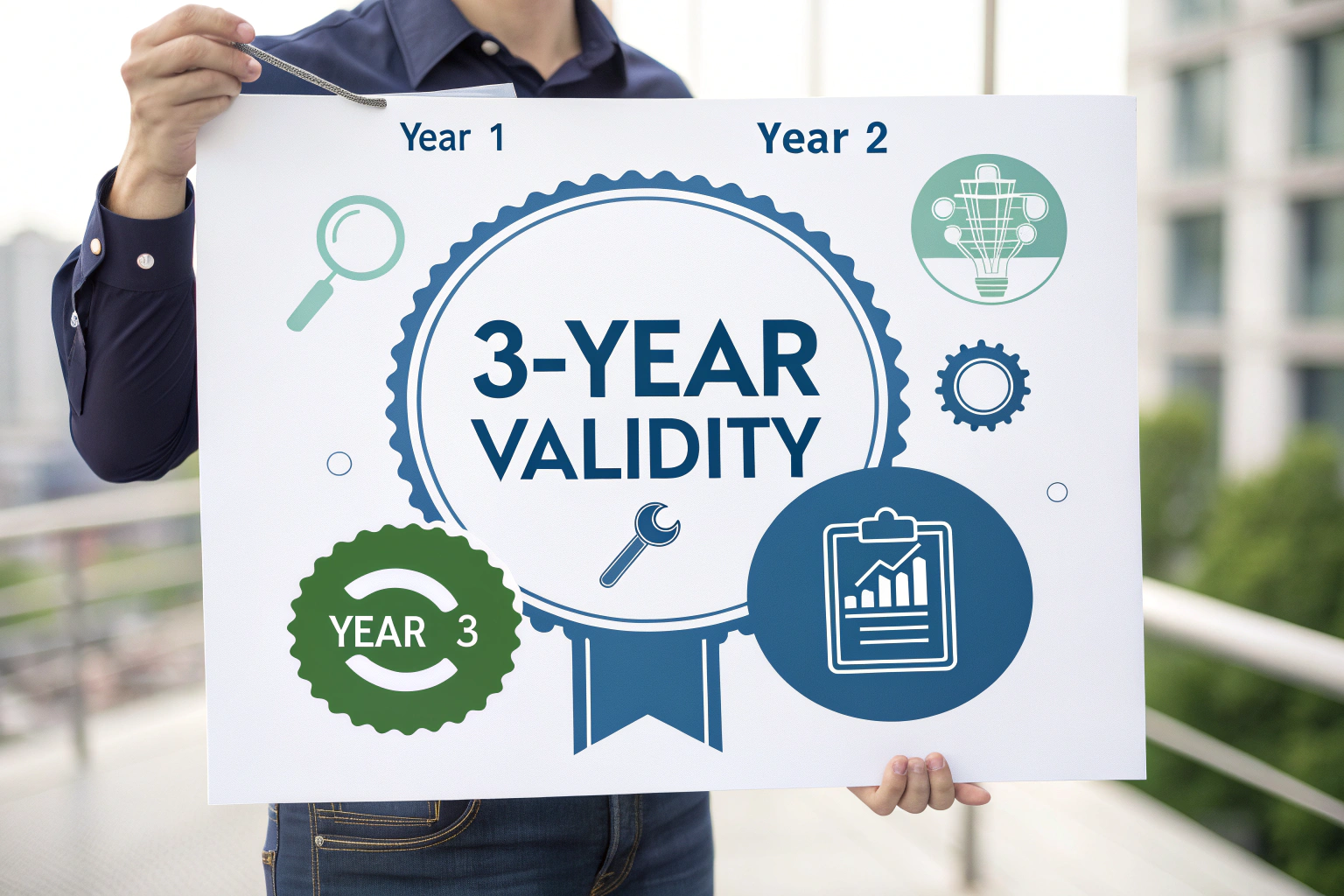
If you’re reading this, your factory has likely just passed its CMIA audit, or you’re deep in the process and wondering, "How long does this hard-earned certification actually last?" It’s a fantastic question, and one that catches many first-timers off guard. From my 20+ years in textiles, supplying everything from basic cotton to high-tech fabrics, I’ve seen the relief on a factory owner’s face when they get the certificate—followed quickly by the panic of "What’s next?" Let me put your mind at ease: unlike some quality certificates that are valid for years, a CMIA certificate has a standard validity period of three years. But—and this is a critical "but"—that’s only part of the story. The three-year certificate isn’t a "get out of jail free" card; it’s more like a renewable driver’s license that requires you to follow the rules and take a refresher test every year.
Think of it this way: the initial certification audit is your driving test. Passing it proves you know the rules of the road. The three-year certificate is your license. But the annual surveillance audits? Those are the traffic cops and the mandatory eye tests, making sure you’re still driving safely and your vision hasn’t deteriorated. The system is designed for continuous improvement, not a one-and-done checkbox. This structure is actually your friend. It forces a discipline that keeps your operations lean, your data clean, and your brand clients confident 365 days a year, not just every three.
So, the simple answer is three years. The real answer is that maintaining a valid, respected CMIA certification is an ongoing, yearly commitment. Sticking with it is what separates the true, sustainable partners from the factories just trying to score a quick contract. Let’s dive into what this cycle really looks like, how to sail through your annual checks, and why this rhythm is the secret to long-term success in today’s market.
What Happens During the Annual Surveillance Audit?
You’ve celebrated the big win, and your certificate is proudly displayed. Then, about 10-11 months later, you get an email scheduling your first annual surveillance audit. Don’t let this cause stress—view it as a strategic health check. The core purpose of this audit isn’t to catch you out; it’s to verify that the management system you built isn’t just sitting in a binder but is alive, functioning, and improving. It’s the system that assures brands you’re a reliable long-term bet.
In practical terms, the surveillance audit is typically shorter and more focused than the initial certification audit. The auditors won’t re-examine every single clause from scratch. Instead, they’ll focus on key areas: Have you been tracking and reviewing your performance data (energy, water, waste) consistently? Did you complete the corrective actions from any minor non-conformities last time? Are you progressing on your annual environmental objectives? And crucially, have there been any significant changes in your operations, like new equipment, expanded production lines, or major shifts in your supply chain? For example, if you’ve started using a new type of fabric with a different environmental profile, they’ll want to see how you’ve integrated that data.
From our experience helping supply-chain partners, the audit often deep-dives into one or two specific areas each year. One year it might be a thorough review of your waste management logistics and contracts. The next, it might be a deep analysis of your energy consumption patterns and the effectiveness of the energy-saving measures you implemented. The goal is to ensure continuous engagement. A factory we work with in Sri Lanka that produces swimwear from our recycled nylon shared that their Year 2 surveillance audit had a strong focus on their chemical management system, given the dyeing processes involved. Because they kept impeccable records and had clear procedures, it was a smooth process.
How Should I Prepare for My Surveillance Audit Throughout the Year?
The worst preparation is a last-minute scramble. The best preparation is your daily routine. Here’s how to make the annual audit a non-event:
- Schedule Monthly Mini-Reviews: Don’t leave data collection for the quarter or year-end. Designate one person (your management representative) to spend one afternoon each month gathering that month’s utility bills, waste logs, and production data. Update your tracking sheets. This turns a mountainous annual task into twelve manageable molehills.
- Conduct Internal Audits: Twice a year, have your internal team do a mock audit. Use the CMIA checklist. Walk the floor, interview employees, and check records. This isn’t about finding "gotchas"; it’s about finding and fixing small gaps before they become audit non-conformities. It keeps your team alert and familiar with the process.
- Maintain an Open Dialogue with Key Suppliers: Your fabric and material suppliers are part of your system. Don’t just file their certificates away. Proactively ask for updates. For instance, when Shanghai Fumao updates the GRS certification for our recycled polyester line, we automatically notify our partner factories. Having this updated documentation ready for your auditor shows proactive supply chain management.
Treat the surveillance audit as a formal opportunity to showcase the health and maturity of your business. A well-prepared audit is a powerful story you get to tell about stability and commitment.
What Are Common Pitfalls That Lead to Non-Conformities in Surveillance?
Even good factories can stumble here. The most common pitfalls aren’t about malice; they’re about oversight and "system drift."
- The Forgotten Objective: You set an objective to "reduce electricity use per unit of production by 3% this year." You install LED lights and hit the target by June. Fantastic! But did you formally review and close out that objective? Did you document the results and set a new one? Auditors will look for this closed loop. An open objective without evidence of review is a common minor finding.
- The Lapsed Document: Your approved chemical list from last year has a solvent on it. This year, you switched to a greener alternative (which is great!). But did you formally add the new MSDS to your list and archive the old one? Or is the old, incorrect list still in the active folder? Outdated controlled documents are a classic trap.
- The Silent Change: You added a new embroidery machine that runs 24/7. It increased your production capacity—and your energy use. Did you review and update your energy baseline and consumption analysis to account for this significant change? If not, your data won’t match reality, raising a red flag.
The theme is documentation and follow-through. The surveillance audit checks that your system is a living, breathing part of your operations, not a fossilized relic from the day you first got certified.
Can the Validity Period Be Shortened or Extended?
The three-year cycle is the standard set by the certification bodies, but it’s not set in stone like a law of physics. It can be adjusted based on performance and risk. Think of the certification body as a bank assessing credit risk. A factory with a flawless track record, exemplary data, and a culture of continuous improvement might be seen as a "low-risk" client. Conversely, a factory with major non-conformities, poor data integrity, or a history of corrective actions not being addressed on time might be seen as "high-risk."
In extreme cases of high risk or critical non-conformities, a certification body can shorten the validity period of the certificate. They may issue a certificate valid for only one year instead of three, requiring another full certification audit sooner. This is rare but serves as a serious warning to get the management system back on track. More commonly, they may increase the duration or intensity of the surveillance audits, perhaps moving from an annual visit to bi-annual checks.
Can it be extended beyond three years? Almost never. The three-year maximum is a cornerstone of the system’s integrity. It ensures that even the best-performing factories undergo a comprehensive re-evaluation periodically to account for changes in standards, regulations, and their own evolving operations. However, for a top-performing "low-risk" factory, the recertification audit at the three-year mark will likely be smoother and more efficient. The auditors will have high confidence in your system, and the process may feel like a more extensive surveillance audit rather than starting from zero.

What Would Cause a Certificate to Be Suspended or Withdrawn Before Expiry?
This is the "nuclear option," but it happens. Suspension or withdrawal is typically triggered by severe failures that break the trust of the certification scheme. Key reasons include:
- Major Non-Conformity Not Addressed: Failure to correct a critical finding within the agreed timeframe (e.g., a serious environmental violation or falsification of data).
- Refusal to Allow Surveillance: Denying the certification body access for a scheduled surveillance audit.
- Significant Breach of Standards: Being found in violation of core environmental laws or regulations that the CMIA standard is designed to uphold.
Suspension is usually temporary, a final warning to fix the issue. Withdrawal is permanent removal of the certificate. The financial and reputational damage from this is severe, often resulting in the immediate loss of certified-status-dependent clients.
How Do Changes in Production Scale or Location Affect Validity?
This is a crucial operational detail. Your CMIA certificate is typically site-specific. It’s granted to your factory at its current address operating at a declared scale and scope.
- If you significantly increase production capacity (e.g., add a new building or floor), you must notify your certification body. This may trigger a special audit to ensure your management system scales effectively to cover the new operations. It won’t automatically invalidate your certificate, but it must be assessed.
- If you move your entire factory to a new location, this is considered a new site. Your current certificate does not transfer. You will need to undergo a substantially new certification process for the new location, though your existing system documentation will give you a massive head start.
- If you change your core product mix (e.g., from sewing woven shirts to knitting acrylic sweaters), the environmental aspects change. This requires a review and update of your aspect analysis and likely a notification to your certifier.
The rule of thumb is: any change that materially alters your environmental aspects and impacts needs to be evaluated and communicated. Transparency with your certification body is always the best policy.
What Is the Recertification Process at the 3-Year Mark?
Approaching the end of your three-year validity period, you’ll initiate the recertification process. This isn’t something to fear; it’s a celebration of your three-year journey and a chance to showcase your maturity. The process is more thorough than an annual surveillance but often less daunting than the initial certification because you’re now a seasoned pro. Typically, you’ll start planning 3-4 months before your certificate expires.
The recertification audit will reassess your entire management system against the current version of the CMIA standard. Yes, they will revisit all clauses. However, the depth of scrutiny will depend heavily on your performance over the previous three years. Auditors will review all past surveillance audit reports, your track record on corrective actions, and your annual performance reviews. They will look for a clear trend of sustained compliance and improvement. For example, a factory that can show a year-on-year reduction in energy intensity (kWh per garment) thanks to documented upgrades has a compelling story.
A key part of the recertification is reviewing the context of your organization. Has the market changed? Have new environmental regulations come into force in your country? Have your brand clients’ expectations evolved? You need to demonstrate that your system has evolved with these external and internal factors. Perhaps you’ve integrated new sustainable fabric sourcing guidelines based on brand requests, which we at Shanghai Fumao often collaborate on with our partners. Documenting this evolution is key.
How Far in Advance Should I Start Preparing for Recertification?
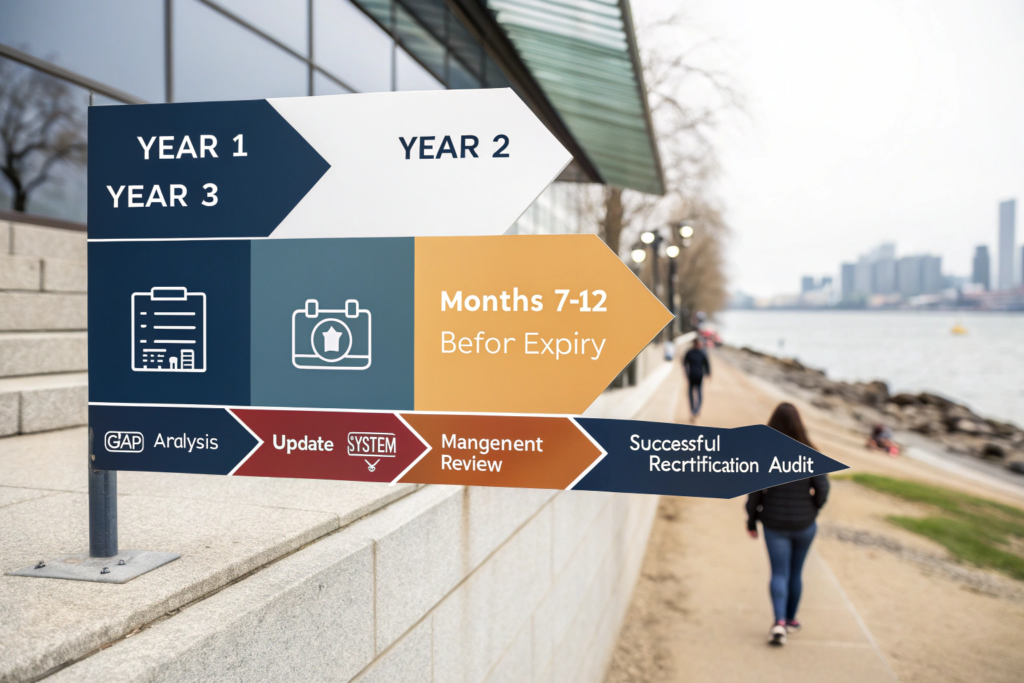
Start your formal preparation 6 months before the audit date. Here’s a timeline:
- Month 1-2 (6 months out): Conduct a full internal gap analysis. Compare all your procedures, records, and performance against the standard. This is your most comprehensive self-check.
- Month 3 (4 months out): Contact your certification body to officially schedule the recertification audit and confirm the scope.
- Month 4 (3 months out): Address all gaps found in your internal analysis. Update any outdated policies or manuals. Ensure all records for the entire 3-year period are organized and accessible.
- Month 5 (1 month out): Conduct a final, rigorous internal audit and management review meeting. This meeting should formally decide to apply for recertification and authorize all necessary documentation.
- Month 6: Execute the recertification audit with confidence.
This proactive approach turns a potential stressful event into a systematic administrative process.
What If the CMIA Standard Has Been Updated During My 3-Year Cycle?
Standards evolve. It’s highly likely that during your three-year certificate period, the CMIA standard itself will have been revised or updated. This is normal. Your recertification audit will be against the newest applicable version of the standard.
You are responsible for being aware of these updates. Your certification body should inform you of major changes, but the onus is on you to obtain the new standard, understand the changes, and adapt your management system accordingly before the recertification audit. This often involves training for your team on new requirements. For instance, if a new version places more emphasis on biodiversity impact in the supply chain, you would need to consider how your raw material sourcing (like cotton or wood-based fibers) addresses this and document your approach. This is another area where a supplier with strong sustainability governance can provide vital support and data.
How Does Certificate Validity Impact My Business with Brands?
This is where the rubber meets the road. For your brand clients, the validity of your certificate—and your clean record of surveillance—is a critical risk management tool. They aren’t just checking a box once every three years. Savvy brands, especially those in Europe and North America, are increasingly asking for evidence of ongoing certification validity. This means they may request copies of your surveillance audit reports or letters of continuation from your certification body as part of their own annual supplier reviews.
A valid, well-maintained CMIA certificate is a powerful commercial asset. It allows you to:
- Command Price Premiums: Brands pay for reduced risk and verified sustainability. Your certification is proof of both.
- Secure Longer-Term Contracts: Brands seeking supply chain stability will lock in partnerships with certified, reliable factories. We’ve seen partners move from seasonal spot orders to 2-3 year framework agreements.
- Become a Preferred Partner: When a brand launches a new sustainable line, they turn first to their already-certified suppliers. A sportswear factory in Vietnam that supplies a major US brand told us that their flawless CMIA track record made them the first choice for the brand’s new carbon-neutral collection, directly because they could provide the necessary audited data.
Conversely, letting your certification lapse or having it suspended is a commercial disaster. It can lead to contracts being put on hold or cancelled immediately. Your name can be removed from a brand’s approved supplier list. In today’s connected industry, word travels fast. The investment in maintaining your certificate is, fundamentally, an investment in your sales pipeline and business continuity.
Should I Communicate My Audit Schedule to Key Clients?
Absolutely. Proactive communication is a sign of a top-tier supplier. Inform your key brand clients about your certification cycle. A simple email update is effective: "Dear [Client], as part of our commitment to transparency, we wanted to inform you that our annual CMIA surveillance audit is scheduled for [Date]. We will share the successful continuation letter once received." This does two things: it reinforces their confidence in you, and it subtly reminds them of the value you bring. It turns a compliance activity into a customer relations tool.
How Can I Leverage My Certification Status in Marketing?
Don’t be shy. Your certification is a hard-earned achievement. Feature the CMIA logo (according to the certification body’s rules of use) on your website, in your email signature, and on your company profile. Create case studies or short blog posts about the improvements you’ve made—like how optimizing lay plans with fabric consumption software reduced waste by X%. Use specific metrics. This content attracts the right kind of clients. At Shanghai Fumao, we actively seek out and promote partnerships with CMIA-certified factories because it aligns with our own commitment to a traceable supply chain, creating a powerful joint story for end brands.
Conclusion
The validity period of a CMIA certificate for an apparel factory is officially three years, but its true lifespan is determined day-by-day through diligent management. It’s a cycle of initial achievement, annual reinforcement, and triennial renewal that, when embraced, transforms your factory from a simple production unit into a resilient, data-driven, and highly desirable business partner. The annual surveillance audits are not hurdles but opportunities to validate your operational excellence and identify new efficiencies.
The discipline required to maintain this certificate pays dividends far beyond compliance. It builds a culture of continuous improvement that cuts costs, engages your workforce, and future-proofs your business against increasingly stringent environmental regulations and brand expectations. In a world where brands are desperate for trustworthy, transparent partners, a valid and actively maintained CMIA certificate is your most credible passport to growth.
If you’re looking to not only achieve but seamlessly maintain your CMIA certification, remember that your choices in the supply chain matter. Partnering with suppliers who understand and support this journey is crucial. Shanghai Fumao provides more than just quality fabrics; we provide the documentation, innovation, and partnership that underpins a robust environmental management system. From certified recycled materials to low-impact processing data, we help you keep your story—and your certification—strong year after year. To discuss how our fabric solutions can support your continuous compliance and market appeal, contact our Business Director, Elaine, at elaine@fumaoclothing.com. Let’s build not just a certificate, but a legacy of sustainable success.