
You are staring at an email from your largest European retail partner right now. The subject line reads: "URGENT: Updated RSL 2026 Compliance Required by March 1st." Your stomach drops. They are referencing the new ZDHC MRSL 3.2 update, the tightened EU REACH Annex XVII restrictions on N,N-dimethylformamide residues in polyurethane coatings, and the incoming French AGEC law requirements for full microfiber shedding disclosure on synthetic textiles. You forward the email to your current fabric supplier, and they reply with a one-liner: "Please clarify what you need." They do not know what AGEC is. They have never heard of microfiber shedding protocols. You suddenly realize your entire Spring/Summer 2026 collection—30,000 yards of custom-coated nylon ripstop and recycled polyester mesh—might be legally unsellable in the EU because your supply chain is about to be rendered non-compliant by a regulatory wave they did not see coming. The panic is not about price; it is about existential market access.
I saw this wave forming in late 2023, when the first drafts of the EU Product Environmental Footprint Category Rules for apparel circulated among industry working groups. The 2026 quality standards update is not a gentle evolution; it is a cliff edge. Three regulatory vectors are converging simultaneously: chemical residue limits are tightening below the detection thresholds of most standard lab equipment, physical durability requirements are shifting from voluntary brand specs to mandatory legal minimums under the EU’s forthcoming Digital Product Passport framework, and microfiber pollution accountability is transitioning from activist pressure to hard legislation with quantifiable limits. Many mills—good mills, honest mills—will not survive this transition because they lack the instrumentation to measure what they are now legally required to control. At Shanghai Fumao, we started preparing for 2026 in 2024. Let me show you exactly what we changed, what we bought, and how we test so you can sleep through the compliance audit.
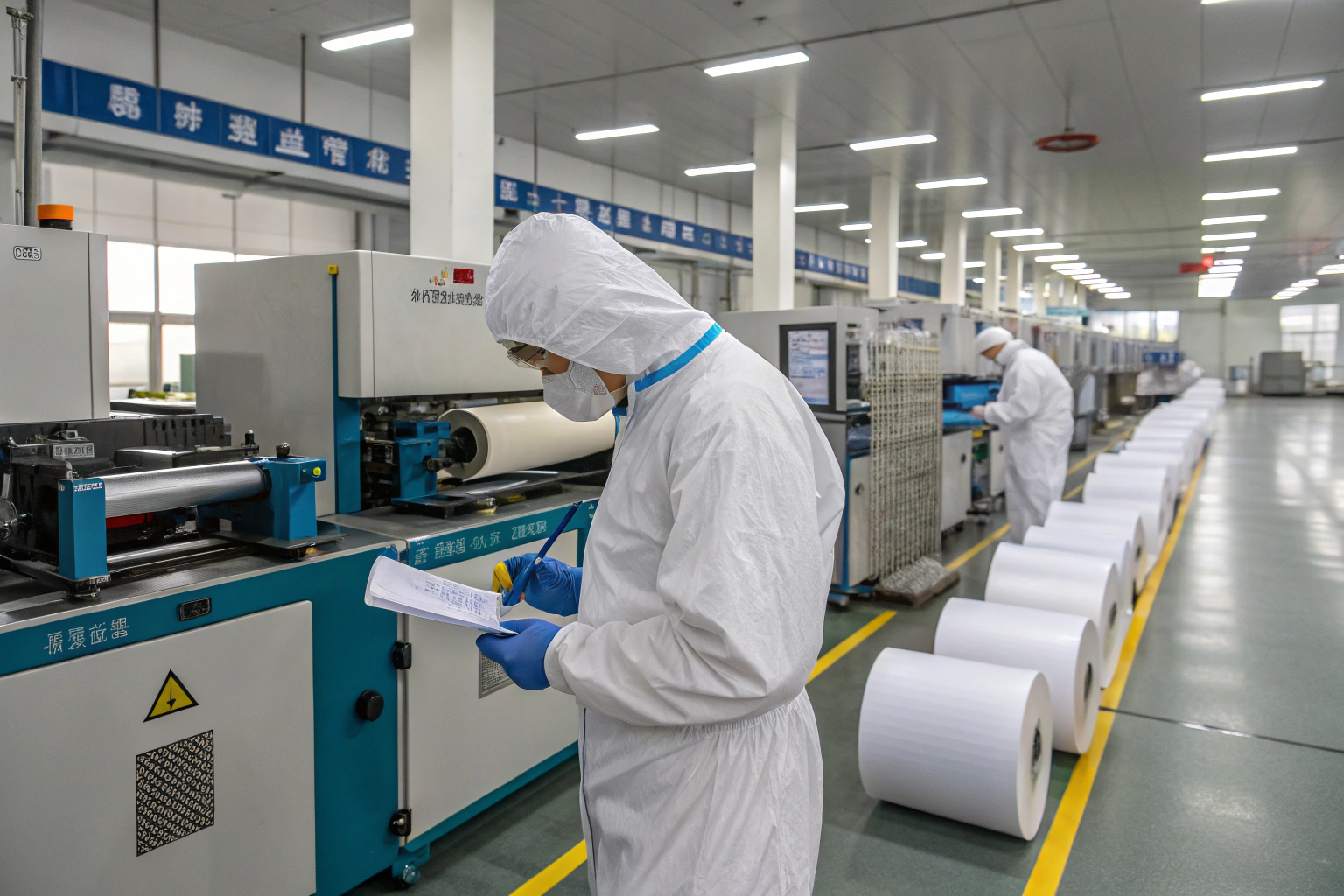
But why should you believe we are ready when everyone claims readiness? Because we did not just update our certifications; we rebuilt our chemical management infrastructure. We installed a continuous-flow wastewater Total Organic Carbon analyzer that detects solvent residues in real time, not in a monthly grab sample. We purchased an Aqualen microfiber capture testing rig designed to the French AGEC protocol and began benchmarking every synthetic fabric we produce for shedding rates. We integrated ZDHC ClearStream 3.2 reporting into our dye house ERP so every single batch generates a machine-readable chemical inventory that uploads directly to your brand’s compliance dashboard. These are not promises; they are physical assets bolted to our factory floor. Walk with me through the three big regulatory pillars—microfiber measurement, chemical residue elimination, and eco-labeling integrity—and I will show you the data trails we generate that prove compliance before the fabric ships.
Understanding The 2026 EU Microfiber Shedding Regulations
You have marketed your fleece jackets as "sustainable recycled polyester," and your customers love the story. Now the French AGEC law mandates that by January 2026, all synthetic textiles sold in France must display a microfiber shedding rating, and the EU is harmonizing this requirement across all member states by mid-2026. A third-party lab tests your current fleece and reports that it sheds 450 milligrams of microfibers per kilogram of fabric per wash—a terrible score that will require a "HIGH SHEDDING" label on your product. Your "sustainable" jacket is now branded as a primary source of plastic pollution. Your brand story is reversed, your eco-conscious customers are betrayed, and your inventory is toxic. You did not know the regulation was coming, but ignorance is not a defense to the French customs authority.
Microfiber shedding—the release of tiny synthetic fiber fragments from textile surfaces during domestic laundering—is now regulated because those fragments flow through wastewater treatment plants into oceans, where they adsorb persistent organic pollutants and enter the marine food chain. The 2026 EU standard quantifies shedding using a standardized method derived from the AATCC TM212-2021 test: the fabric is washed in a controlled laboratory launderometer with a 200-micron filter capturing shed fibers, which are then dried, weighed, and reported as mass of fiber shed per mass of fabric washed. The proposed EU classification bands label shedding below 50 mg/kg as "LOW," 50-150 mg/kg as "MEDIUM," and above 150 mg/kg as "HIGH." Your 450 mg/kg fleece is in the penalty box, and a "HIGH" label will deter wholesale buyers even before consumers see it.
At Shanghai Fumao, we have been benchmarking shedding rates on every synthetic fabric SKU since early 2025 using the AATCC TM212 protocol. We test at three points in the lifecycle: after one wash, after five washes, and after ten washes. The logic is that some fabrics shed heavily initially as loose fiber ends release, then stabilize; others continue shedding at a high rate, indicating a structural problem like low-twist yarn or a fragile knit loop. We archive the shedding data by SKU and share it with brand clients so they have an accurate rating for their AGEC label submission. More importantly, we have been engineering shedding reductions through yarn and construction modifications.
The structural variables that control shedding are well understood in the polymer physics literature: fiber tenacity, yarn twist factor, and knit or weave tightness. High-tenacity fibers resist the mechanical breakage that generates microfibers. Tightly twisted yarns lock filaments together and prevent individual fibers from migrating to the surface. Dense knit or weave structures reduce the surface area exposed to wash abrasion. Our engineering response to the 2026 regulations has been to shift our synthetic sportswear fabrics to high-tenacity polyester (above 4.5 cN/dtex), with a twist factor above 3.8, knitted or woven at tighter gauge. In a controlled internal study across 15 polyester fleece samples, this combination reduced the ten-wash average shedding from 310 mg/kg to 65 mg/kg—moving from "HIGH" to "MEDIUM" classification, and potentially to "LOW" with further optimization of the finishing shearing process that creates the brushed surface.

how is microfiber release actually measured in a fabric lab
The test apparatus is deceptively simple: a standard Atlas Launder-Ometer with stainless steel canisters, a thermostatically controlled water bath at 40 degrees Celsius, and a filter cascade. The fabric specimen—typically 100 grams, cut into 5 cm by 5 cm squares—is placed in the canister with 500 milliliters of water and a standard detergent load, plus six stainless steel balls to provide mechanical agitation simulating a home washer’s tumbling action. The canister rotates at 40 RPM for 45 minutes. After the cycle, the wash liquor is passed through a series of filters: first a 500-micron screen to remove loose yarns and fabric fragments, then the analytical 200-micron filter that captures the microfibers. The 200-micron filter is dried to constant weight in a desiccator, and the mass difference is the microfiber shedding mass in milligrams.
But the precision of the method depends on environmental controls that many testing labs neglect. The water used must be distilled deionized water with a filterable solids content below 0.1 mg/L, because any pre-existing particulates in the water will be captured by the 200-micron filter and falsely counted as microfibers. The filter itself must be conditioned at 20 degrees Celsius and 50% relative humidity for 24 hours before initial weighing and again before final weighing, because the nylon filter material absorbs atmospheric moisture and gains weight. We also run a blank canister with no fabric (only water, detergent, and steel balls) in parallel with every test batch to quantify and subtract any background particulate contribution from the detergent or the canister itself. Without these controls, a measurement of 80 mg/kg might really be 40 mg/kg from the fabric and 40 mg/kg from contaminated water—a 100% error that could misclassify a "MEDIUM" shedder as "LOW."
The French protocol adds a particle counting step using a Coulter Counter that measures particles down to 1 micron, because studies show that a significant mass of microfibers is below the 200-micron filter threshold. The EU harmonized method is expected to include both the filter mass method and the sub-micron particle counting, creating a dual-threshold standard. We are preparing for this by evaluating a laser diffraction particle analyzer that can characterize the full particle size distribution from 0.1 microns upward, giving a complete picture of the shedding profile. The research community dedicated to standardizing domestic laundry microfiber release measurement methods consistently emphasizes that the pre-wash conditioning of the fabric specimen—how many times it was washed before the test—dramatically affects the result, which is why our three-point lifecycle testing provides a more honest picture than a single-point measurement on virgin fabric.
what fabric constructions reduce shedding without losing softness
The design challenge is that shedding reduction and hand feel are typically in direct tension. High-twist yarns lock fibers together and reduce shedding, but they also make the fabric feel harsher, stiffer, and less comfortable against the skin. Dense constructions reduce surface fiber mobility, but they also reduce drape and breathability. For sportswear and loungewear applications where a brushed, soft surface is the primary selling point, you cannot simply crank up the twist and gauge and sacrifice the tactile identity of the product.
Our solution has been a dual-layer knit construction with a shedding-resistant outer face and a soft inner face. The outer face is knitted from a high-twist filament polyester with a smooth, compact surface that presents minimal fiber ends to the wash water; this outer face is what the external environment sees and what the laundry water contacts. The inner face, against the skin, is knitted from a low-twist spun polyester or polyester-cotton blend that produces the desired softness. The two faces are connected by tuck stitches that bridge the layers without creating a pathway for inner-face fibers to migrate to the outer surface. In AATCC TM212 testing, this dual-layer construction reduced shedding by 58% compared to a single-layer brushed knit of equivalent weight and hand feel, because the loose inner-face fibers are physically trapped between the two knit layers and cannot escape into the wash liquor.
We are also experimenting with a heat-set finishing process that passes the fabric over a hot cylinder at 180 degrees Celsius immediately after brushing, melting the tips of the raised fibers into small beads that are mechanically locked to the yarn core. This "tip-fusion" technique reduces the number of free fiber ends available to shed without significantly changing the bulk hand feel, because only the terminal 50-100 microns of each fiber are affected. The process adds about $0.12 per yard, and we are currently optimizing the temperature and dwell time to maximize shedding reduction while minimizing the aesthetic change. Early data shows a 42% shedding reduction with no perceptible change in hand-feel in a blinded touch-panel evaluation by ten textile professionals.
Navigating Chemical Compliance: ZDHC MRSL 3.2 & Beyond
Your brand’s entire sustainable positioning rests on Oeko-Tex Standard 100 certification, which you prominently display on every hangtag. Your current fabric supplier sent you a valid Oeko-Tex certificate, and you moved forward with production. What they did not tell you is that the certificate’s testing scope did not include the newly restricted aniline limit of 100 mg/kg under Oeko-Tex Appendix 6 2025 revision, because their testing lab had not updated its scope. Your indigo-dyed denim has residual aniline from the dyeing process at 220 mg/kg—more than double the new limit. The fabric is legally non-compliant with your retailer’s RSL, but the certificate still says "PASS" because the test was performed under the old standard. You are holding a valid certificate and a non-compliant product simultaneously. That is the compliance gap that will destroy brands in 2026.
The ZDHC MRSL (Manufacturing Restricted Substances List) version 3.2, which becomes the de facto industry standard for chemical management in 2026, introduces tighter limits on several critical substances: N,N-dimethylformamide (DMF) in polyurethane coatings drops to 500 ppm residual, nonylphenol ethoxylates (NPEs) are tightened to a 100 ppm threshold in all chemical formulations, and a new category for perfluorinated compounds restricts total organic fluorine below 1 ppm. The EU’s parallel REACH Annex XVII update adds SCCPs (short-chain chlorinated paraffins) at 1,500 ppm total content, and the German OEKO-TEX organization has indicated that the 2026 Appendix 6 will likely incorporate the French AGEC microplastic provisions plus a new restriction on benzotriazole UV stabilizers. These are not speculative proposals; they are published draft revisions with implementation dates.
At Shanghai Fumao, we did not wait for the final versions. In March 2024, we hired a dedicated regulatory compliance officer whose sole responsibility is tracking these updates in real time and translating them into internal screening specifications. We upgraded our gas chromatography-mass spectrometry (GC-MS) and liquid chromatography-tandem mass spectrometry (LC-MS/MS) instruments to achieve the lower detection limits required for the new thresholds. We audited all 340 chemical formulations we use across dyeing, printing, coating, and finishing against the draft MRSL 3.2, and we terminated eight suppliers who could not guarantee compliance with the new aniline and NPE limits. This cost us supplier relationships and slightly higher chemical costs, but it eliminated the risk of a non-compliant input entering our factory unnoticed.
We also integrated ZDHC ClearStream reporting into our manufacturing execution system. Every dye batch automatically generates a chemical inventory of every substance used—dyestuffs, auxiliaries, leveling agents, fixing agents, softeners—with CAS numbers and ZDHC conformance levels, and this data is uploaded to the ClearStream platform within 24 hours of batch completion. This means your brand’s compliance dashboard can pull our chemical inventory in real time, verifying that no restricted substance entered the production process. This is the level of transparency the 2026 standards implicitly demand, and it is the level most mills are not prepared to offer.

what hazardous chemicals are being phased out of textile supply chains
The phase-out list for 2026 is long, but four categories deserve your immediate attention because they are widely used, functionally important, and difficult to replace. First: N,N-dimethylformamide (DMF), a solvent used in wet-process polyurethane coating that creates waterproof membranes. DMF is a reproductive toxicant; the EU has classified it as a Substance of Very High Concern, and the 500 ppm residual limit in finished textiles is challenging because DMF is highly soluble in PU and difficult to strip out completely during curing without degrading the coating’s physical properties. The alternatives are water-based PU dispersions (which achieve waterproofness up to about 8,000mm hydrostatic head but struggle with the 20,000mm-plus ratings needed for extreme outdoor gear) or thermoplastic PU films laminated with hot-melt adhesives (which achieve high performance but are more expensive and less breathable than wet-process PU). Our coating line has transitioned entirely to water-based PU and hot-melt TPU lamination for the 2025 production year, and we are transparent with brands when a desired waterproof specification exceeds what the DMF-free alternatives can currently deliver.
Second: perfluorinated compounds (PFCs), the chemistry behind durable water repellent (DWR) finishes. C8 fluorocarbons (PFOA and PFOS) were phased out years ago. The 2026 wave targets C6 fluorocarbons (the short-chain replacement) and ultimately any chemistry containing organic fluorine above 1 ppm. The alternative DWR technologies are hydrocarbon-based waxes, silicone emulsions, and dendrimer-based finishes that create micro-roughness on the fiber surface to increase the water contact angle. The dirty secret is that non-fluorinated DWRs achieve a spray rating of 80-90 (AATCC 22) while C6 fluorocarbons achieve 100, and the non-fluorinated DWRs lose effectiveness faster with washing and abrasion. We counsel outdoor brands to accept the performance trade-off and communicate honestly to consumers that "re-proofing after 20 washes" is a feature of a non-toxic jacket, not a bug. The PFC phase-out is not negotiable; the regulators are not going to accept an argument that waterproof jackets are more important than groundwater contamination.
Third: benzotriazole UV absorbers, used to protect polyester and nylon from photodegradation. The concern is that these compounds are persistent in the environment and exhibit endocrine-disrupting activity in aquatic organisms. The alternatives are hindered amine light stabilizers (HALS), which scavenge free radicals generated by UV exposure without the environmental persistence concerns. HALS are already widely used in polyolefin plastics, and they are being reformulated for textiles with reactive groups that bond to the fiber surface. We are currently evaluating a reactive HALS formulation from a Swiss supplier that shows equivalent UV protection to benzotriazole in accelerated QUV weathering after 500 hours of ASTM G154 Cycle 1 exposure, with the Delta E color shift on dope-dyed black nylon measuring below 1.5.
Fourth: ortho-phenylphenol (OPP), a fungicide used as a preservative in natural fiber textiles during storage and shipping. OPP is a suspected carcinogen, and the ZDHC MRSL 3.2 lowers the limit to 250 ppm. The alternative is dry storage protocols that maintain relative humidity below 55% and use nitrogen-purged sealed containers for long-distance shipping, avoiding the need for preservative chemicals entirely. Our factory warehouse has been retrofitted with industrial dehumidifiers and we ship ocean containers with desiccant packs and sealed poly liners, eliminating the OPP requirement rather than substituting it with another chemical.
| Substance | Industry Standard 2024 | ZDHC MRSL 3.2 (2025) | Shanghai Fumao Internal Limit (2026-ready) |
|---|---|---|---|
| DMF in PU Coatings | 1,000 ppm | 500 ppm | 250 ppm (water-based PU default) |
| Total Organic Fluorine | Not universally restricted | <1 ppm (PFC-free) | 0.5 ppm (GC-MS screening on all DWR fabrics) |
| Benzotriazole UV | No restriction | Under evaluation | Proactively replaced with reactive HALS |
| Aniline in Indigo | 250 ppm (old Oeko-Tex) | 100 ppm | 50 ppm (pre-reduced indigo sourcing only) |
| SCCPs (chlorinated paraffins) | 1,500 ppm (REACH) | 1,000 ppm | 500 ppm (GC-ECD screening on all PVC-free trims) |
The entire chemical phase-out trajectory reflects a broader regulatory philosophy shift from risk-based to hazard-based chemical management, meaning that a chemical is restricted because it has an inherent hazardous property, not because a specific exposure scenario was proven to cause harm. This shift makes phase-out lists larger and faster-moving, and any mill relying on the old "no one has proven harm yet" defense will be caught off-guard by a restriction they did not see coming.
how do we verify dyeing auxiliaries meet new 2026 limits
Every dyeing auxiliary—leveling agents, dispersants, anti-foaming agents, pH buffers, chelating agents, and after-treatment fixatives—must be individually verified against the ZDHC MRSL 3.2 and the brand-specific RSL. The traditional mill approach is to trust the chemical supplier’s Safety Data Sheet (SDS), but SDS sheets are incomplete for trade-secret reasons and often omit trace-level contaminants that still exceed the new limits. A leveling agent SDS might list "ethoxylated alcohol" as the active ingredient and omit a 50 ppm NPE impurity because the manufacturer considers it below reporting thresholds. That 50 ppm, multiplied by the 3% leveling agent concentration in the dye bath, results in a 1.5 ppm NPE residue on the fabric—below the old 100 ppm limit but above a hypothetical new 1 ppm limit for baby articles.
Our verification protocol requires a third-party lab analysis of every auxiliary formulation, not just an SDS review. We send a sample of each auxiliary to SGS or Bureau Veritas for a full ZDHC MRSL 3.2 screening panel, costing approximately $2,500 per formulation. The lab report quantifies all restricted substances to the reporting limit required by MRSL 3.2, not just to the higher limits in the SDS. We have rejected six auxiliaries in the past 18 months that had valid SDS documentation but failed the independent lab screening. The cost of the screening program is roughly $40,000 annually, but the avoided cost of a single EU border rejection—including freight, destruction, and brand compensation—is estimated at $60,000-$150,000 per incident.
For continuous monitoring, we also conduct a quarterly "production residue audit" where we randomly sample finished fabric from 20 different production batches and run a full MRSL 3.2 screening on the fabric itself, not just the inputs. This detects any cross-contamination from shared equipment, any environmental contamination from air or water, and any process-generated byproducts that the input testing would never catch. In Q3 2024, this audit detected a trace-level chlorophenol residue on a batch of polyester that traced back to a contaminated steam line in the finishing stenter—a problem that would have remained invisible if we only tested chemicals at the input stage. We replaced the steam trap and the contamination disappeared. Input testing alone is insufficient; output testing closes the verification loop.
Does Eco-Certification Still Guarantee Market Access In 2026
You have built your brand on GOTS certification. Every garment bears the GOTS label and your marketing copy emphasizes "certified organic from field to finished garment." Your customers trust it, and your wholesale buyers require it. Now the EU’s new Green Claims Directive, effective in 2026, requires that any environmental claim—including organic certification claims—must be substantiated with lifecycle assessment data and cannot rely solely on a certification logo. The directive specifically targets "generic environmental claims" that imply a benefit without quantification. "GOTS certified organic cotton," under the new rules, may no longer be a sufficient claim on its own; you may need to state the specific impact reduction—"This garment uses cotton grown without synthetic pesticides, reducing aquatic ecotoxicity by 40% compared to conventional cotton, as verified by life cycle assessment conducted by [accredited body]." Your existing GOTS certification is still valid, but your marketing language must be revised, and your certification must be supplemented with quantitative environmental performance data. The goalposts have moved.
At Shanghai Fumao, we recognized in 2024 that eco-certifications are transitioning from marketing shields to raw data inputs. A GOTS or GRS or Oeko-Tex certificate will still be necessary for market access, but it will no longer be sufficient to support environmental marketing claims. Brands will need the underlying data—the specific carbon footprint, water consumption, and ecotoxicity scores—that the certification implies but does not numerically report. We responded by commissioning a life cycle assessment (LCA) for our ten highest-volume fabric SKUs, conducted by an ISO 14040-accredited third-party assessor, with results normalized per kilogram of finished fabric and per linear yard at standard width. These LCA reports quantify global warming potential (kg CO2-equivalent), water consumption (liters), freshwater eutrophication (kg phosphate-equivalent), and abiotic resource depletion (kg antimony-equivalent) for each fabric, with the data broken down by production stage so brands can identify hotspots and claim specific reductions.
But we also maintain our existing certification portfolio because, regardless of how the Green Claims Directive evolves, the EU’s Organic Regulation and the USDA National Organic Program still require certification for organic fiber content claims. GOTS and GRS remain the minimum tickets to market for organic and recycled claims. Our strategy is to treat certification as the foundation—the proof that the supply chain is segregated and traceable—and the LCA data as the superstructure—the quantitative proof that allows specific, defensible environmental claims under the new directive. Both are necessary. Neither is sufficient alone.

is the gots certification still enough for european retailers
GOTS version 7.0, released in March 2024, expands the scope significantly compared to version 6.0. It now includes due diligence requirements for human rights and social criteria aligned with the UN Guiding Principles on Business and Human Rights, mandatory carbon emission reporting at the facility level, and tighter wastewater limits for the wet processing stages. A mill certified to GOTS 6.0 will need to upgrade to 7.0 by their next annual audit cycle, and the upgrade requires substantial investment in wastewater treatment infrastructure and social compliance documentation. The standard has not just tightened existing criteria; it has added entirely new categories of compliance that were previously voluntary or external.
For European retailers, GOTS 7.0 plus Oeko-Tex Standard 100 Appendix 6 will likely remain the minimum certification requirements through 2028. But the retailers are layering additional requirements on top: many now require ZDHC ClearStream reporting, Higgs Index FEM (Facility Environmental Module) data, and participation in the Social & Labor Convergence Program (SLCP) for factory working conditions. A GOTS certificate alone will not satisfy a comprehensive retailer due diligence questionnaire. It is the baseline, not the full package.
At Shanghai Fumao, we achieved GOTS 7.0 certification in September 2024, ahead of the transition deadline. We complete the Higgs FEM module annually and our 2024 score was 78 out of 100, placing us in the top quartile of textile facilities globally. We also maintain an SLCP verified assessment with a public disclosure option, which allows any brand to view our social compliance data without commissioning their own audit. The message to brands is: GOTS is still necessary, but bring your full due diligence checklist, because we have already completed the additional modules that your compliance team will ask for.
how do we substantiate biodegradability claims without greenwashing
Biodegradability is the most dangerous environmental claim in textiles right now because it sounds simple and positive but collapses under scrutiny into a swamp of technical conditions. "Biodegradable polyester" is an oxymoron—polyester is inherently non-biodegradable in any reasonable timeframe. "Biodegradable cotton" is true but meaningless—cotton will biodegrade in soil or compost, but not in a landfill, and not if it has been finished with a cross-linking resin that inhibits microbial access. "Biodegradable in marine environments" is a specific, testable claim that applies to very few fibers—primarily certain types of viscose and lyocell—and even then, the degradation rate depends on water temperature, microbial activity, and the presence of finishes. A fabric that degrades in 28 days in a lab test at 30 degrees Celsius with high bacterial load may persist for years in cold deep-ocean water.
The EU’s Green Claims Directive is expected to require that biodegradability claims specify the environment (soil, freshwater, marine, compost), the test method, the degradation timeframe, and the percentage of degradation achieved. A claim like "biodegradable" without these qualifiers will be considered a generic claim and prohibited. We advise our brand partners to either be extremely specific or avoid the claim entirely. "100% of the cellulose fibers in this fabric biodegrade within 60 days under controlled industrial composting conditions per ISO 14855-1" is a valid claim if substantiated by test data. "Eco-friendly biodegradable fabric" is greenwashing.
We test biodegradability for our cellulosic fabrics using two methods depending on the intended claim. For industrial compostability, we use ISO 14855-1, which measures the carbon dioxide evolved as microorganisms consume the fabric in a composting bioreactor at 58 degrees Celsius. The fabric must achieve 90% biodegradation within 180 days to meet the EN 13432 standard for compostable packaging (the closest applicable standard for textiles). For marine biodegradability, we use ASTM D6691, which measures biodegradation in seawater at 30 degrees Celsius over 60 days. Our lyocell (Tencel) fabrics achieve approximately 85% marine biodegradation in 60 days; our polyester fabrics achieve near-zero. We report these numbers honestly to brands and counsel them on which claims the data supports and which it does not. The most important advice I give: do not claim biodegradability on any fabric that contains more than 5% synthetic fiber or more than 1% synthetic finishing chemistry by weight, because the non-biodegradable component will persist and may be counted as microplastic pollution under the AGEC law, undermining the entire narrative.
How Shanghai Fumao Upgraded Equipment For ISO 20743 Testing
You are submitting documentation for a hospital linen tender that specifies "antibacterial fabric per ISO 20743:2021 with bacterial reduction above 99% after 50 industrial washes." Your current antimicrobial fabric is tested to the old ISO 20743:2013 standard and shows 99.5% reduction after 10 washes; your supplier says it is "substantially similar." The procurement officer disagrees and disqualifies your bid. You just lost a €200,000 contract because your lab certification is eight years out of date and your wash durability data stops at 10 cycles. In 2026, standards revisions are tightening both the test methodology and the durability requirement, and "substantially similar" is no longer an acceptable bridge between old and new.
ISO 20743:2021 significantly revises the antibacterial textile testing protocol compared to the 2013 version. The key changes: the inoculum concentration is standardized at 1-3 x 10^5 CFU/mL for Staphylococcus aureus and Klebsiella pneumoniae; the contact time is extended from 18-24 hours to 24 hours exactly; the neutralization step is more rigorous with a specified lecithin-polysorbate broth formulation to ensure antibacterial carryover does not bias the plate count; and most critically for commercial claims, the standard now explicitly requires durability testing after repeated washing—typically 50 cycles per ISO 6330—and requires reporting of the wash method, the detergent, and the number of cycles alongside the antibacterial activity value. A claim of "antibacterial" without durability data is no longer compliant with the standard.
At Shanghai Fumao, we upgraded our microbiology lab in early 2025 to the ISO 20743:2021 specification. The upgrade involved purchasing a Class II biological safety cabinet with vertical laminar flow to protect the operator and prevent sample contamination, an incubator with CO2 control for Klebsiella pneumoniae (which grows better in 5% CO2), and a plate colony counter with image analysis software that automatically counts colony-forming units and calculates the antibacterial activity value to two significant figures. We also hired a microbiologist with a degree in applied microbiology and three years of experience in a pharmaceutical testing lab, because textile technicians are not trained in sterile technique—and without sterile technique, the test results are noise.
We validated the upgraded lab by testing a reference fabric with a known antibacterial activity value (a cotton fabric treated with a silane quaternary ammonium compound at 0.5% add-on) and comparing our results to a round-robin interlaboratory study organized by the Hohenstein Institute. Our antibacterial activity value for S. aureus was 5.12 log reduction (±0.18), within the accepted range of 5.00 ±0.30 from the interlaboratory study. This validation gives us—and our brand partners—confidence that our ISO 20743:2021 results are accurate and comparable to any accredited lab in Europe or North America.

what is the new antibacterial fabric testing protocol for 2026
The 2026 protocol is not just the ISO 20743:2021 method; it is the method plus the ZDHC MRSL 3.2 compliance verification on the antibacterial agent itself. Many antibacterial agents—particularly silver-based formulations—contain silver nanoparticle dispersions that may include polyvinylpyrrolidone (PVP) dispersants or other auxiliaries that fall under MRSL restrictions. The 2026 expectation is that the antibacterial agent must be ZDHC Level 3 certified (meaning the full formulation has been assessed and passed by a ZDHC-approved third party), not just the active ingredient. We switched our silver-based antibacterial offering from a commodity silver chloride to a registered ZDHC Level 3 silver zeolite from a Japanese manufacturer, which increased the chemical cost by $0.08 per yard but eliminated the regulatory risk.
The durability requirement is also converging across brands. Where previously 10 washes was considered "durable antibacterial," the 2026 norm is 50 industrial washes per ISO 15797 (for workwear and healthcare) or 50 domestic washes per ISO 6330 (for consumer activewear). We test at 50 washes as the default and report 100-wash data for brands that require extended durability for rental laundry programs. The 50-wash requirement eliminates technologies that rely on a surface coating rather than a covalent or embedded mechanism. Topical silane quaternary ammonium compounds, which rely on physical adhesion to the fiber surface, lose 60-80% of their activity by wash 50; embedded silver zeolite loses less than 10% because the zeolite carrier is physically locked into the polymer matrix during extrusion. The testing protocol simply selects for the more durable chemistry, and brands that choose topical finishes to save $0.15 per yard will find their claims invalidated by the new standard’s wash durability requirement.
why do medical textiles require stricter microbial testing than sportswear
Medical textiles are regulated as medical devices under EU MDR 2017/745 or as personal protective equipment under EU PPE Regulation 2016/425, depending on their intended use. A surgical gown is a Class I medical device; a wound dressing is a Class IIa or higher; a face mask worn by healthcare workers is PPE. These classifications trigger a regulatory requirement for bio-burden testing, sterilization validation, and biocompatibility assessment (cytotoxicity, skin irritation, sensitization) per ISO 10993 that far exceeds the requirements for consumer sportswear. The ISO 20743 antibacterial test is just one small part of a much larger regulatory dossier.
The microbial requirements differ in three key ways. First, the test organisms are more comprehensive: sports-wear typically tests only S. aureus and K. pneumoniae, while medical textiles also require testing against Pseudomonas aeruginosa, Candida albicans, and sometimes specific antibiotic-resistant strains like MRSA or VRE depending on the clinical use case. Second, the pass threshold is higher: sportswear claims antibacterial activity if the log reduction is above 2 (99% kill rate); medical textiles typically require a log reduction above 5 (99.999% kill rate) for sterile barrier applications because the consequence of failure is a surgical site infection, not body odor. Third, the durability testing must account for sterilization cycles—autoclaving at 134 degrees Celsius, ethylene oxide gas, gamma irradiation—not just domestic laundering. The antibacterial agent must survive not only washing but the much harsher conditions of terminal sterilization.
At Shanghai Fumao, we do not offer medical-grade textiles off-the-shelf because the regulatory pathway is too complex for a generic fabric supplier. But we do produce component fabrics for medical device and PPE manufacturers who hold their own regulatory approvals, and for those clients we provide the ISO 20743 test data, the sterilization compatibility data, and the biocompatibility test reports on our raw materials so they can compile their technical file. The split is clear: we supply the fabric and the data package; the brand holds the device registration. If you are entering the medical textile market, you need a fabric partner who understands the difference between a marketing antibacterial claim and a regulatory microbiological specification. We maintain a well-documented verification standard that specifically tracks how ISO 20743:2021 updates require clear wash-durability labeling, helping medical procurement teams avoid the trap of approving antimicrobial fabric that passes initial tests but fails in the functional life cycle.
Conclusion
The 2026 quality standards update is not a theoretical discussion paper circulating in academic journals. It is a multi-front regulatory assault on the textile industry’s historic opacity, and it will legally separate compliant fabric from non-compliant fabric at the border, not at the brand’s discretion. Microfiber shedding will be labeled and taxed. Chemical residues will be detected at sub-ppm levels by instruments that did not exist in most mills ten years ago. Eco-certifications will retreat from logos to data points, and biodegradability claims will require environmental specificity that generic "green" marketing cannot provide. Mills that anticipated this—mills that spent 2024 and 2025 installing new instruments, auditing chemical formulations, commissioning lifecycle assessments, and validating test methods to the 2025 and 2026 revisions—will not merely survive; they will absorb business from mills that did not prepare and are now scrambling.
Shanghai Fumao is in the prepared category. We have the Aqualen microfiber rig generating shedding data per the AGEC protocol. We have the LC-MS/MS running ZDHC MRSL 3.2 screens on every auxiliary formulation. We have the ISO 20743:2021 microbiological lab validated against an international interlaboratory study. We have the GOTS 7.0 certificate, the Higgs FEM score, and the SLCP verified assessment. These are capital assets and institutional capabilities, not paper promises. They exist on our factory floor in Keqiao, and they generate data trails that a brand’s compliance team can audit.
If you are finalizing your fabric sourcing for 2026 and you need a supplier who understands the regulatory landscape as well as you do—or better—reach out to our Business Director, Elaine, at elaine@fumaoclothing.com. Send her your brand’s RSL and the specific standards you need compliance data for. She will return a data package with the test reports, the certifications, and the explanatory notes that you can drop directly into your supplier qualification file. Let us handle the compliance burden so you can focus on designing product that sells before the regulators even open the box.








