Two winters ago, I got a call from a client in Minneapolis who was absolutely livid. Her DDP shipment had arrived. The driver was outside her studio. But he refused to unload the pallet unless she paid a $150 "liftgate fee" in cash, on the spot. She felt ambushed. I felt like I’d broken a promise. Because if "door-to-door" means anything, it means the fabric lands inside your workspace without you touching a checkbook, a credit card, or your phone to make an emergency payment. That day, I realized that "door-to-door" is a phrase that gets thrown around like confetti in this industry, but the actual execution is full of tiny cracks where money, time, and trust leak out.
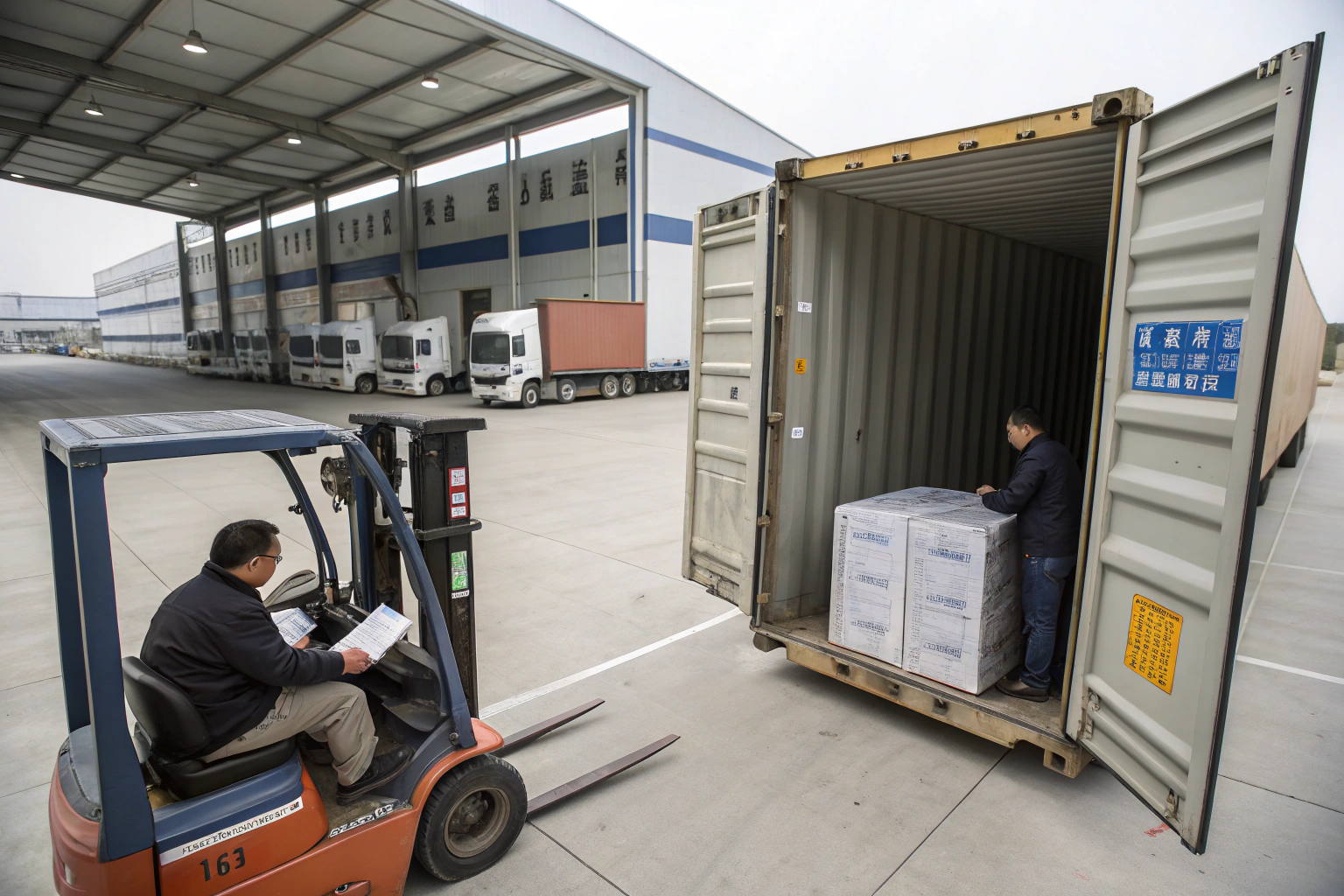
Here’s what our DDP mode actually delivers: Shanghai Fumao takes legal and financial responsibility for your fabric from the moment it leaves our Keqiao dispatch floor until the moment a forklift places it inside your receiving area in any of the lower 48 states. We pay the ocean freight, import duties, customs brokerage, harbor fees, port congestion charges, chassis rental, drayage, fuel surcharges, and residential liftgate delivery if needed. Not a single dollar changes hands at the point of delivery. The driver arrives, unloads, asks for a signature, and leaves. That’s the standard. If anything deviates from that—if a dispatcher demands a separate check, if a warehouse insists you didn’t pay a pallet exchange fee—that’s not a DDP failure. That’s my failure, and I fix it within hours.
But I know you need more than a corporate promise. You need to know where the weak points in a "door-to-door" chain actually hide, how we handle the absurd complexity of the last mile, and what insurance actually covers when a forklift blade pierces a roll of wool coating. Let’s walk through the exact mechanics of what happens after the ship docks, because that’s where most door-to-door claims collapse.
What Does the Final-Mile Delivery Process Actually Involve for DDP?
Most buyers imagine DDP ending at a big commercial cross-dock near the port. They picture a tidy warehouse with 20 loading bays, a team of unionized workers, and a clear process. That might be true for an FCL delivery to a major retailer’s distribution center. But what if your "door" is a third-floor walk-up design studio in Brooklyn? Or an unmarked storage unit in a rural Texas industrial park? The last 20 miles of a shipment are where the true complexity lives. It’s where the promise of "door-to-door" either becomes a flawless, premium experience or a cascade of phone calls, additional invoices, and waiting.
Shanghai Fumao structures our DDP final-mile execution in tiers. We use a network of pre-vetted, bonded final-mile carriers who specialize in textiles. These aren’t random Uber Freight gig workers. They know that fabric rolls can’t be flipped on their sides, that moisture is the enemy, and that "inside delivery" means actually pushing the pallet jack past the threshold, not dumping it in the parking lot. We classify every delivery address during the quoting phase—commercial dock, commercial ground, residential curbside, residential inside—and build that classification directly into the DDP rate. If you tell us your receiving space has a loading dock, you’ll get a lower cost. If you tell us it’s a home garage with a steep gravel driveway, we add a liftgate truck and a pallet jack capable of handling rough terrain. Knowing how we grade addresses prevents any surprise re-classification fees on delivery day.
But the biggest wildcard in the last mile isn’t the terrain. It’s the paperwork that proves the load arrived intact, or that documents the moment it didn’t.

What documentation should American buyers receive upon DDP delivery completion?
You should receive exactly three items at the point of delivery. First, the Delivery Receipt. This isn’t optional. The driver hands you a paper or digital form showing the number of pallets, the total weight, and the condition. You sign it. Do not sign it without reading the condition line. If the shrink wrap is torn or a roll looks crushed, write "DAMAGED – PENDING INSPECTION" in bold letters before you sign. That notation is your insurance claim’s foundation.
Second, you should already have a copy of the CBP Entry Summary (Form 7501) emailed to you within 24 hours of vessel arrival. This proves the duties were actually paid. Third, the final door delivery invoice from us should show a zero balance. No outstanding charges on delivery day. For [what shipment receipts and forms must a US buyer expect from a complete DDP fabric delivery from China], it’s worth printing these out and keeping them in a folder for at least a year. CBP audits can reach back and bite.
How does residential liftgate delivery work without hidden surcharges?
Liftgate delivery is a major hidden friction point. A standard 53-foot semi-trailer cannot unload at a home. It needs a dock-height platform. A residential delivery requires a smaller box truck with a hydraulic liftgate that lowers the pallet from the truck bed to ground level. This liftgate service costs an extra $75 to $200, and it’s rarely included in a generic "door-to-door" quote—unless your DDP supplier specifically bakes it in during quoting.
We include residential liftgate delivery as a line item in our DDP calculation, visible to you at the quote stage. If your address is zoned residential in the carrier’s routing system, the liftgate fee is already paid. When you’re [arranging residential liftgate DDP fabric delivery from China to a US home business address without hidden fees], confirm with your supplier that they’ve actually flagged your address as residential and paid the accessorial up front. Don’t discover it on the driveway.
The physical drop-off is one hurdle. But what happens if the product that drops off is damaged, wet, or completely wrong? That’s when the insurance component of DDP becomes less of a formality and more of a lifeline.
What Insurance Covers Damage or Loss in Fumao Fabric’s DDP Terms?
Nobody wants to think about insurance until a forklift blade goes straight through a $12,000 pallet of silk charmeuse. I’ve seen it happen. The blade pierces the outer wrapping, drags through three layers of fabric, and suddenly 150 yards of beautiful, hand-printed dressweight silk is trash. The question becomes: who pays? Under FOB or CIF terms, the buyer often has to chase the carrier, prove the damage wasn’t pre-existing, negotiate with an adjuster, and wait months for a payout. Under our DDP program, Shanghai Fumao owns the cargo insurance until you sign the delivery receipt.
We carry a blanket marine cargo insurance policy that covers the full commercial invoice value of your shipment from Keqiao to your door. This is "all risk" coverage, which includes not just total loss—like the container falling off the ship—but partial loss, water damage, theft, and rough handling. The coverage is pegged to 110% of the invoice value, which is the standard recommended by the Institute Cargo Clauses to cover incidental expenses associated with a claim. Crucially, because we are the insured party and the seller under DDP INCOTERMS 2020, we have a direct contractual relationship with the insurer and the incentive to resolve claims quickly. You report the damage to me. I report it to the adjuster. I issue your credit or replacement fabric while the claim processes. You don’t navigate a foreign insurance bureaucracy alone.
But "covered" doesn’t mean you can skip the basic steps that transform a denied claim into a paid one. Cargo insurance adjusters look for reasons to reject a claim. Missing one photograph can kill your case.

How does a buyer properly file a claim for damaged DDP cargo upon delivery?
The moment you spot damage, stop. Don’t unpack anything further. Photograph everything: the pallet from all six sides, the torn wrap, the puncture hole, the damaged roll edges. Then, open only the obviously damaged rolls and photograph the fabric damage with a ruler or measuring tape next to the tear for scale. The adjuster needs to see depth and extent.
Write the damage on the delivery receipt. Call me immediately, or email me with the photos before the driver leaves if possible. Under [a step-by-step guide for American importers to file a DDP cargo damage claim on Chinese textile shipments], the golden rule is this: never sign a clean receipt for damaged goods. A "clean receipt" legally declares the shipment arrived in perfect condition. Once you sign it clean, the carrier’s liability evaporates, and the insurer’s willingness to pay drops sharply. A properly noted damaged receipt keeps all doors open.
What does "All Risk" marine cargo insurance actually exclude for fabric shipments?
"All Risk" sounds absolute. It isn’t. There are standard exclusions that every fabric buyer must know. Inherent vice—meaning the fabric self-destructed due to its own nature, like uncoated viscose shrinking from atmospheric humidity—is typically excluded. Insufficient packaging is another common exclusion. If we ship a delicate burnout velvet without rigid corner protectors and it gets crushed, the insurer might argue the packing was inadequate for the journey.
Civil commotion, war, and nuclear hazards are standard exclusions. For [what is not covered by marine all risk cargo insurance for importing fabric from China to America], the biggest practical risk is "mysterious disappearance." If a container arrives with a broken seal and ten rolls are simply missing, but we can’t prove where the theft occurred, the claim gets complicated. This is why our QR-coded roll tracking and high-security bolt seals serve as both a theft deterrent and an evidentiary chain for insurers.
Even with robust insurance, the underlying promise of DDP is that liability never becomes the buyer’s problem. But liability is a legal concept tied to the exact terms written on a purchase order, and many buyers accidentally sign away their DDP protection by accepting a sales contract that contradicts itself.
What Legal Protections Come with Shanghai Fumao’s DDP Contract?
A DDP handshake is not a contract. I learned this lesson a decade ago, when a verbal DDP agreement with a buyer turned into a dispute because the written purchase order said "FOB Shanghai" in the fine print. The buyer assumed DDP. The PO said FOB. Legally, the PO wins. Our relationship survived because I absorbed the extra cost, but it was a $4,000 tuition payment in the school of international trade law.
Today, every DDP shipment we process is governed by a written contract that explicitly states "INCOTERMS 2020 – DDP (Named Place of Destination)." That phrase has a precise legal meaning recognized by courts worldwide. It transfers all costs and risks to the seller until the goods are placed at the disposal of the buyer at the named destination, cleared for import. This means if a container is damaged on a Chicago rail ramp after customs clearance but before final truck delivery, it’s still our problem. The buyer hasn’t taken delivery yet. The INCOTERMS framework creates a bright, unambiguous line that protects the buyer from "grey area" disputes where the supplier tries to claim the shipment was "basically delivered" once it cleared the port.
Our contracts also specify the governing law and dispute resolution mechanism. We default to arbitration through the China International Economic and Trade Arbitration Commission (CIETAC) or a recognized US-based body if preferred by the client. This avoids the nightmare of litigating a $20,000 fabric dispute in two different court systems simultaneously.

How does the uniform commercial code interact with INCOTERMS DDP for fabric transactions?
INCOTERMS govern the risk and cost transfer between seller and buyer, but they don’t override domestic US law for issues like title transfer or security interest. The Uniform Commercial Code (UCC) still applies once the goods are physically located in the US. For example, under UCC Article 2, the buyer has a right to inspect the goods before acceptance, even in a DDP transaction. This right exists independently of the delivery paperwork.
Practically, this means that if you sign for a pallet but discover a hidden defect upon opening the rolls 48 hours later, you may still have the right to reject the non-conforming goods under UCC standards, provided you notify us promptly. The [interplay between INCOTERMS 2020 DDP provisions and US Uniform Commercial Code textile sale rights] creates a dual layer of buyer protection: the international framework ensures risk stays with the seller until delivery, while domestic commercial law preserves your inspection and rejection rights.
What warranties on fabric quality survive the DDP delivery and inspection acceptance?
Here’s a nuance that surprises many buyers. Delivery under DDP means we’ve fulfilled the logistics contract. It doesn’t mean we’ve fulfilled the quality contract. The commercial agreement—the sale of goods—has its own set of warranties that survive delivery. If we shipped 500 yards of "colorfast, 60-inch wide, 100% linen union," and you later discover it fades three shades in the first wash, or the width is actually 57 inches, that’s a breach of the express warranty of conformity.
Our standard contract includes a 30-day post-delivery inspection window for latent defects not discoverable at the dock. If the fabric sits in your warehouse for six months and then you test it, we may still replace it as a gesture of partnership, but legally the window has likely closed. For [what post-delivery fabric quality warranties are enforceable in DDP textile import contracts between Chinese suppliers and US brands], the key is to negotiate and state the latent defect inspection period in writing on the face of the PO before production begins.
All these legal protections assume the shipment is a standard commercial order. But what about the first step in any relationship—the development phase? Samples travel under different rules, and small but critical shipments are often where DDP logic gets confusing.
How Does DDP Apply to Sample Shipments and Small-Trial Orders?
The sample stage is where trust is built or broken. It’s a low-dollar, high-impact phase. A single hanger sample of a custom jacquard might cost $150 to make, but $80 to ship via air courier. If that shipment gets stuck in US customs because the paperwork says "commercial sample" but CBP treats it as dutiable merchandise, the relationship starts with a frustrating email chain and an unexpected bill. That’s the absolute worst way to begin a partnership.
We apply a modified DDP logic to sample shipments. For small, low-value parcels sent via express courier, we ship DDP using the courier’s integrated brokerage service. The cost of duty, tax, and brokerage is billed directly to our account. You receive a box on your doorstep with zero charges due. For larger trial orders—say, 200 yards of fabric that exceeds the $800 de minimis threshold—we treat it as a scaled-down version of our full DDP service, potentially consolidated into a shared container as part of our consolidation program.
The critical difference between sample DDP and bulk DDP is the shipping method. Most samples travel by air because speed matters for development. Air DDP declarations are immediate. The courier broker files the entry electronically while the plane is in the air, and clearance often happens before landing. This speed is perfect for development cycles, but it also means any error in the commercial invoice—a mismatched HS code, a missing country of origin—triggers an immediate hold.

Can express air-courier samples be shipped DDP without a formal customs bond?
Yes, and this is one of the cleanest aspects of sample logistics. Major couriers like DHL and FedEx operate on a "Section 321" or informal entry basis for goods under $800 and on a formal entry with their own aggregated continuous bond for goods between $800 and $2,500. As the DDP shipper, we simply instruct the courier to bill all charges to our account number, which is linked to our trade profile and payment history.
For [how to ship textile development samples DDP from China to US designers using express courier services with no recipient fees], the practical tip is to ensure the commercial invoice clearly states "Samples – No Commercial Value" when the items are true samples that have been mutilated, cut, or marked to render them unsaleable. This keeps the declared value low and the clearance informal. However, if the "sample" is actually a small production run intended for resale, we declare the real transaction value because CBP considers misdeclaring value to be a serious violation.
What value threshold requires a formal entry for a DDP fabric trial order?
The magic number is $800. Below $800, a shipment qualifies for Section 321 de minimis entry, which is informal and duty-free, regardless of whether it’s DDP or not. Between $800 and $2,500, it requires a formal entry but can often clear under simplified procedures via courier. Above $2,500, it becomes a fully formal entry with a surety bond, a 7501 form, and full duty payment.
For a small brand testing a new quality or developing a capsule, the strategic move is often to keep the initial trial order below $800 if the goal is speed and simplicity. But if you need 300 yards of a specific technical fabric for a production test, pushing above $800 and using our DDP service gives you real-world data on the actual landed cost per yard, including duty. This is valuable intelligence. For [understanding the minimum DDP fabric sample and trial order values for US customs formal entry thresholds], consider whether the purpose of the shipment is design validation or commercial testing, and let that purpose guide the order size and shipping strategy.
From a single swatch to a container-load of jersey knit, applying DDP across the entire buyer journey removes a persistent, nagging source of friction. And ultimately, eliminating friction is what good supplier relationships are built on.
Conclusion
DDP from Shanghai Fumao is genuinely door-to-door, but the phrase only carries weight when you see the infrastructure, contracts, insurance policies, and delivery protocols that back it up. We don’t subcontract the responsibility away to a forwarder and wash our hands once the vessel sails. We own the shipment from Keqiao dispatch to American doorstep. The final mile—whether it’s a commercial dock in Vernon, California, or a residential studio in Asheville, North Carolina—is part of the service, not an asterisk in the fine print.
We built this program because we sell trust, not just fabric. The marine cargo insurance covers you through loss or damage. The INCOTERMS 2020 DDP contract language gives you a clear, legally enforceable shield against surprise costs. The small-sample DDP process lets you start the relationship with a clean, friction-free shipment. And the delivery paperwork gives you the documentation you need to defend your commercial interests if something goes wrong.
If you’ve ever had a "door-to-door" promise dissolve into a loading dock argument, it’s time to experience what a factory-direct DDP program actually feels like. I’d welcome the chance to walk you through a specific quote for your next order. Let me, Elaine, send you a single number that covers everything from our factory to your floor. Reach me at elaine@fumaoclothing.com. No liftgate surprises. No customs ransom. No nonsense. Delivered.