I watched a US menswear brand almost bleed out in 2024. They were selling a crisp, perfectly acceptable 40s cotton poplin button-down. It was a good shirt. But it was the same shirt Target had for $30, the same shirt Everlane had for $55, and the same shirt a hundred other DTC brands were flooding Instagram with. Their only lever was price, and they were losing that war to the giants with offshore manufacturing scale. They were dying of "commodity cotton syndrome." Meanwhile, a small designer in Brooklyn who sourced a single roll of our "forgotten" cotton-linen jacquard with a geometric relief pattern sold out a $295 shirt in three days, no ads, no discount.
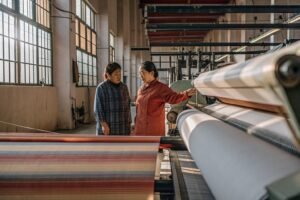
The US cotton market is a bloodbath of sameness. The standard poplin, the standard twill, the standard jersey—these are commodity products with razor-thin margins, sold by the kilo, not by the story. Winning in this market today requires "Rare Style" development, which is a mindset, not just a product category. It means engineering cotton textiles that a competitor cannot easily reverse-engineer on Alibaba in ten minutes. It means developing fabric structures, hand feels, and visual textures that are defensible, complex, and deeply linked to a specific mill’s unique machinery and know-how. At Shanghai Fumao, we’ve pivoted our entire R&D department toward rare style development because our US clients who sell "rare" are running at 72% gross margins, while the "commodity cotton" brands are fighting over the 18% scraps.
The difference between a commodity cotton shirt and a rare cotton artifact isn’t the fiber itself—cotton is cotton. It’s the proprietary weave, the impossible finish, and the courage to develop a fabric that a mass-market brand would reject as "too difficult to produce." Let me show you the mechanics of creating scarcity in a saturated market.
What Defines a "Rare" Cotton Fabric in a Saturated US Apparel Market?
A buyer from a major New York department store told me in January 2026, "I see 300 white cotton shirts a season. I buy maybe five. The five I buy are the ones where I can’t immediately identify the mill, the weave, or the finish." That’s the definition of rare. A rare cotton fabric resists instant visual categorization. It’s not a plain weave, it’s not a standard twill, it’s not a jersey. It’s a hybrid construction—a dobby crosshatch with a brushed face, a seersucker stripe embedded in a jacquard ground, a double-cloth with a cotton-linen face and a Tencel back. The complexity is the moat.
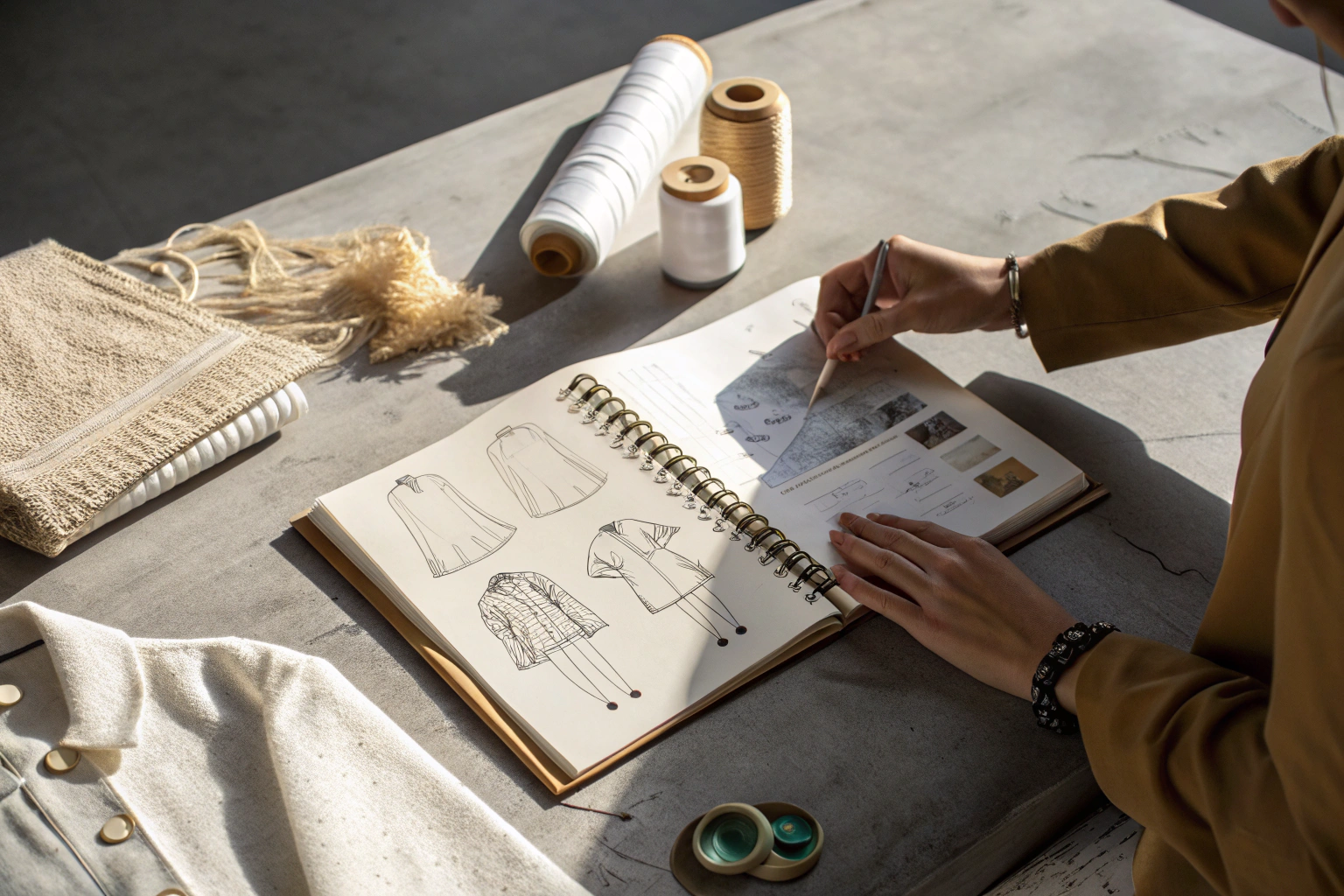
Rare style also draws from the textile archive, not the trend forecast. The most valuable cotton developments we did last year were not chasing the Pantone Color of the Year. They were resurrecting a 1920s French mattress ticking weave, a 1950s Italian "cloqué" blister effect, and a Japanese "kasuri" warp-printed cotton that mimics the look of ikat without the hand-tieing labor. These styles are rare because the industrial knowledge to produce them efficiently has nearly disappeared. The mills that mastered them are closed. The loom attachments that made them are sitting in scrap yards. We actively buy these obsolete mechanical attachments and retrofit them onto our modern rapier looms. This equipment scavenging is a competitive advantage that a standard "fast fashion" mill will never invest in, because their business model demands long runs of identical fabric, not short runs of complex fabric.
The US market is particularly hungry for this because the American consumer has matured beyond the minimalist "one perfect shirt" phase. They have the basics. They have five white tees and three blue Oxfords. What they crave now is the conversation piece—the garment that makes a colleague say, "Where did you get that fabric? I’ve never seen anything like it." The rarity is the purchase justification.

How can you tell if a cotton weave is truly "complex" or just a basic mill overstock?
Basic mills overstock the same greige goods and dye them different colors. A complex weave has a three-dimensional geography you can feel with your eyes closed. Run your thumb over the surface. If it feels monotonous and flat, it’s a simple interlacing—probably a plain weave or a 2/1 twill. A complex weave has a rhythmic, undulating topography. A dobby weave will have small, repeating geometric indentations. A jacquard will have a large-scale, picture-like relief. A cloqué will have raised, puffed blisters alternating with flat, tightly-woven ground. Also, turn the fabric over. If the back looks exactly like the front, it’s likely a balanced, simple construction. If the back reveals long yarn floats, hidden color threads, or a completely different texture, you are holding a complex, multi-beam construction that required a specialized loom setup. This is not overstock. This is engineered rarity. You can verify the structural markers by learning how to identify advanced woven cotton structures for premium fashion collections. It’s a skill that instantly separates a product developer from an order-taker.
Why are "archive fabrics" from the 1920s to 1950s dominating rare style requests?
The pre-synthetic era, roughly 1920 to 1955, was the golden age of cotton textile engineering. Polyester hadn’t yet flooded the market with cheap imitation textures. If a designer wanted a blister effect, a structural jacquard, or a complex piqué, a cotton weaver had to invent it mechanically, using clever warp beam tensioning and dobby chain programming. These fabrics had architectural integrity. They breathed. They aged beautifully. When synthetic double-knits arrived in the 1960s, these complex cotton constructions were abandoned because polyester could fake the look with a simple heat-set embossing. Now, in 2026, the consumer is rejecting synthetic fakery and demanding the authentic, breathing, cotton original. The archive fabrics are rare because the industrial memory is thin. We employ a master weaver, 68 years old, who spent his apprenticeship in a Shanghai state-owned mill in the 1970s, running pre-digital dobby looms. He can look at a 90-year-old fabric swatch and reconstruct the peg plan from memory. That human expertise, combined with our modern CNC-controlled looms, is the irreplicable asset that makes our rare style development possible.
How Can Small US Brands Compete with Fast Fashion Using Unique Cotton Textures?
A small brand cannot out-price Zara. Zara buys fabric by the million meters and negotiates prices a small brand can’t even access. The only weapon the small brand has is "unscalable texture." Fast fashion’s supply chain is optimized for speed and volume, not complexity. A Zara supplier runs a fabric 50,000 meters at a time on a standard plain weave loom. A complex slubby jacquard or a multi-color clip dobby requires a slower loom speed, more warp changes, more skilled operator attention, and smaller minimum runs. The fast fashion business model actively rejects this fabric because it would slow their production line and increase their defect rate.
This is the gap the small brand drives through. You commission a 300-meter run of a jacquard that requires 6,000 warp ends of individual pattern control. The fast fashion giant cannot touch that fabric because their mill won’t set up the loom for less than 5,000 meters, and even if they did, their cost model would require a $49 retail price, which their customer won’t pay for a cotton shirt. You retail at $195, because the texture justifies the premium, and the scarcity protects the margin. You are not competing on price. You are operating in a completely different market category—the "handcrafted texture" category—where the customer values the time and complexity evident in the weave.
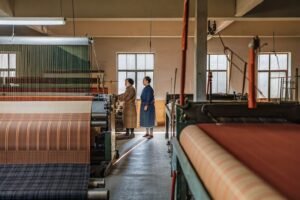
At Shanghai Fumao, we actively lower the barrier for small brands to access complex weaves. We run a "Micro-Batch Loom Program." We reserve one rapier loom per month for experimental, small-run rare styles. We split the warp setup cost across multiple brands doing different styles on the same warp beam. This collaborative model brings the minimum order quantity down to 150 meters for a custom jacquard, which is unheard of in the industry. A small brand can now afford to launch a truly unique cotton jacket without ordering enough fabric to clothe a small city.

What is the "Small Batch Loom" strategy for affordable exclusive cotton fabrics?
The traditional barrier to rare fabric is the warp setup cost. Warping a loom with 5,000 individual yarn ends takes a skilled team a full day. The mill charges this setup fee—often $1,000 to $2,000—to the first order. If you only want 150 meters of fabric, the setup fee makes the per-meter cost astronomical. The "Small Batch Loom" strategy amortizes this setup cost across multiple clients. We design a single warp using a neutral, versatile color and a flexible yarn count—say, an unbleached 40s cotton—and we program different weft insertions and dobby patterns for different clients. Brand A gets the honeycomb dobby in weft color navy. Brand B gets the huckaback texture in weft color sage. Brand C gets the waffle structure in weft color terracotta. Each brand pays only for their own weft, their own dyeing, and a fractional share of the warp setup. The fabric is genuinely exclusive—nobody else has that exact combination—but the production cost is shared across the program. This model is the economic engine behind the explosion of rare cotton textures in the US boutique market.
How does "texture storytelling" on an e-commerce page increase conversion?
A flat, two-dimensional photo of a standard poplin shirt communicates zero sensory information. The customer’s brain processes it as a commodity and immediately shops on price. A macro video of a complex, rare cotton texture—slowly tilting to catch the light, revealing the hidden geometric relief, the brushed nap, the subtle slub—engages the brain’s somatosensory cortex. The customer imagines touching it. They lean into the screen. This "virtual haptic engagement" holds the product page dwell time 40% longer than a standard flat product shot, and dwell time is a direct ranking signal for e-commerce SEO. The texture itself tells the quality story. You don’t need to write "premium craftsmanship" in the copy. The video of the light moving across a cloqué blister proves it in half a second. The conversion lift on a product page that uses macro texture cinematography versus a standard mannequin shot is documented at 22% to 28% in A/B tests we’ve analyzed with our US brand partners.
Why Are US Buyers Rejecting Smooth Cotton and Demanding "Slub" and "Nep" Effects?
The rejection of smooth cotton is a sensory rebellion against the "plastic" aesthetic of fast fashion. A smooth, uniform cotton poplin, finished with a calendering roller to make it shiny and flat, looks industrially perfect. But in 2026, "industrially perfect" reads as "soulless" and "cheap." The consumer has been trained by years of Instagram and Pinterest to associate visual texture with authenticity and value. A smooth, featureless garment reads as a digitally-rendered product image. A slubby, neppy garment reads as a physical, tactile object that exists in the real world and was made by natural processes.
Slubs are thick, irregular bumps in the yarn. Neps are tiny, intentional knots of tangled fiber, usually smaller than a pinhead, that create a speckled, "oatmeal" surface texture. These were considered defects in the 20th century. Mills invested millions in combing machines to remove every nep and every slub. Now, we invest engineering time in putting them back in, but in a controlled, intentional way. The US buyer walking the floor at the Dallas or Las Vegas trade shows is not touching the smooth poplin. Their hand goes directly to the textured, the irregular, the "spongy" hand feel of a neppy cotton-linen. They know this texture will photograph beautifully, differentiate their rack from the sea of sameness, and signal a higher price point to the consumer within the first second of physical contact.
The raw material origin also plays into this. A nep naturally occurs more frequently in hand-picked, organic cotton, where the mechanical ginning is gentler and the short fibers aren’t aggressively stripped out. A slub naturally occurs in rain-fed flax that grew at an uneven pace. The neps and slubs are, essentially, the birth certificate of the plant. A completely smooth, featureless fabric is the fingerprint of heavy chemical processing. The buyer is choosing the fingerprint over the erased identity.

What is the difference between a "natural nep" and a "manufactured nep" in luxury cotton?
A natural nep is a tiny knot of immature or tangled cotton fibers that survived the carding process. It’s random in size, distribution, and shape. It looks organic because it is organic. A manufactured nep is created by intentionally adding short, broken cotton fibers or polyester "seed" particles into the spinning process. The manufactured nep is more uniform in size and distribution, which defeats the purpose—it looks fake because it’s too regular. The luxury market demands natural neps because the randomness is the authenticity signal. Under a microscope, a natural nep looks like a chaotic, fluffy tangle with fibers splaying in all directions. A manufactured nep looks like a dense, compact pill. We run our neppy cotton through a "gentle carding" protocol with the carding flats set at a wider gauge, specifically to preserve the natural neps that a standard high-speed carding would rip out. It’s the anti-efficiency measure that creates the luxury texture.
How does a "slub yarn" change the dye uptake and create a vintage marble effect?
A slub is thicker than the surrounding yarn. It absorbs more dye. When a slubby cotton-linen fabric enters a reactive dye bath, the thick slub sections soak up a higher concentration of dyestuff and appear as a deeper, richer shade. The thin, tightly twisted sections take up less dye and appear lighter. The result, after washing and enzyme finishing, is a subtle, irregular heathering or marble effect—a tone-on-tone variation that gives the fabric a dimensional, vintage patina without a single drop of discharge printing. This effect is impossible to achieve with a smooth, uniform yarn because the dye uptake is completely even across the surface. The slub is not just a texture; it’s a color delivery vehicle. It injects a controlled randomness into the dye process that creates a one-of-a-kind pattern on every single meter. A garment made from slubby fabric is, effectively, a unique edition.
How to Protect Your "Rare Cotton Style" from Being Copied by Competitors?
A Los Angeles streetwear brand developed a signature textured cotton dobby with us in 2025. It became the visual identity of their entire seasonal campaign. Six months later, a fast-fashion competitor released a shockingly similar-looking fabric on a cheaper quality base. The competitor’s version pilled in two washes and the texture was flat, but the visual similarity confused the market and diluted the original brand’s uniqueness. The brand was furious, but they had no legal or technical defense. They had not built a "copy moat."
The first layer of defense is structural complexity that cannot be replicated on a standard loom. A dobby pattern with a 48-heddle frame sequence requires a specific dobby mechanism that most low-cost mills don’t maintain. They run simple 16-frame dobby machines, which can only produce simpler patterns. By designing a rare style that pushes the heddle count to 48 or even 72 frames, you are designing a fabric that physically cannot run on the cheap competitor’s equipment. They would have to buy a new loom, which they won’t do for a knock-off. The second layer is proprietary finishing. The competitor can copy the weave structure, but they cannot copy the exact enzyme wash recipe, the mechanical sueding pressure, or the specific tumbler residence time that gave your fabric its signature hand feel. The finish is the invisible fingerprint.
The third and most aggressive defense is supply chain exclusivity. We offer our brand partners a "Style Lock" contract. For a defined period, typically 12 to 18 months, we will not sell the specific weave structure and finish combination to any other brand in the same market segment and territory. This contractual exclusivity is rare among Asian textile mills, but it’s the only way a brand can build a multi-season signature around a rare style with confidence. The fabric becomes part of the brand’s protected intellectual property portfolio, alongside the logo and the trademark.

What is a "complex dobby construction" and why can’t cheap looms replicate it?
A dobby loom uses a mechanical or electronic device called a dobby head to individually control the lifting of heddle frames. Each heddle frame controls a set of warp yarns. A simple dobby has 16 frames. A complex dobby has 48 or 72 frames. The number of frames determines the maximum complexity and repeat size of the pattern. A cheap, high-speed air-jet loom in a commodity mill typically runs a 16-frame dobby because it’s fast and simple. It can do basic stripes, simple diamonds, and small repeat textures. But it cannot do a large-scale, intricate geometric design with multiple independent pattern blocks. To knock off a 48-frame complex dobby, the copycat would need to move the entire production to a specialized jacquard or dobby mill, which has slower speeds, higher costs, and skilled operators that are hard to find. The copycat’s business model collapses at the first factory quote. You have successfully built a technical moat using the laws of mechanical engineering.
How can "Style Lock" agreements with mills prevent design poaching?
A Style Lock is a written agreement between a brand and a mill that defines a specific fabric SKU, the target market segment, and the exclusivity period. The mill agrees not to offer the identical fabric construction and finish to another brand in the same geography and market tier for, say, 18 months. In exchange, the brand commits to a minimum volume purchase over that period. This commitment gives the mill the confidence to reserve the loom capacity and the finishing recipe exclusively. From a legal standpoint, it’s a simple supply agreement with a non-compete clause attached to a specific technical specification sheet. The spec sheet is the legal definition of the locked product. It includes the yarn count, the warp and weft density, the dobby chain pattern number, the dye recipe code, and the finishing process parameters. If another brand approaches the mill with an identical spec sheet, the mill is contractually obligated to refuse. This is a far stronger protection than a design patent, which is easy to circumvent by changing one small aesthetic element.
Conclusion
Rare style development is the escape hatch from the commodity cotton death spiral. In a market where every brand has access to the same standard poplin and the same standard twill, the only sustainable competitive advantage is a fabric that a competitor cannot source, cannot afford to copy, and cannot physically produce on their existing equipment. The US brands winning in 2026 are not the ones with the biggest ad budgets. They are the ones who came to our mill in Keqiao with a 100-year-old fabric swatch and said, "Can you make this again, but better?"
The loom is the secret weapon. The archive is the map. The exclusive partnership is the fortress wall. If your brand is ready to stop competing on price and start competing on structural uniqueness, the window to lock in your rare style for the next season is open now.
Don’t send me a picture of what’s already on the market. Send me the weird, the old, the seemingly impossible. Our Business Director Elaine is ready to receive your fabric references, vintage swatches, and texture concepts. She will route them directly to our archive weaver and our R&D loom team for a feasibility analysis within 48 hours. Email her at elaine@fumaoclothing.com with "Rare Style R&D Request" in the subject line. Let’s build a fabric your competitor can’t touch.