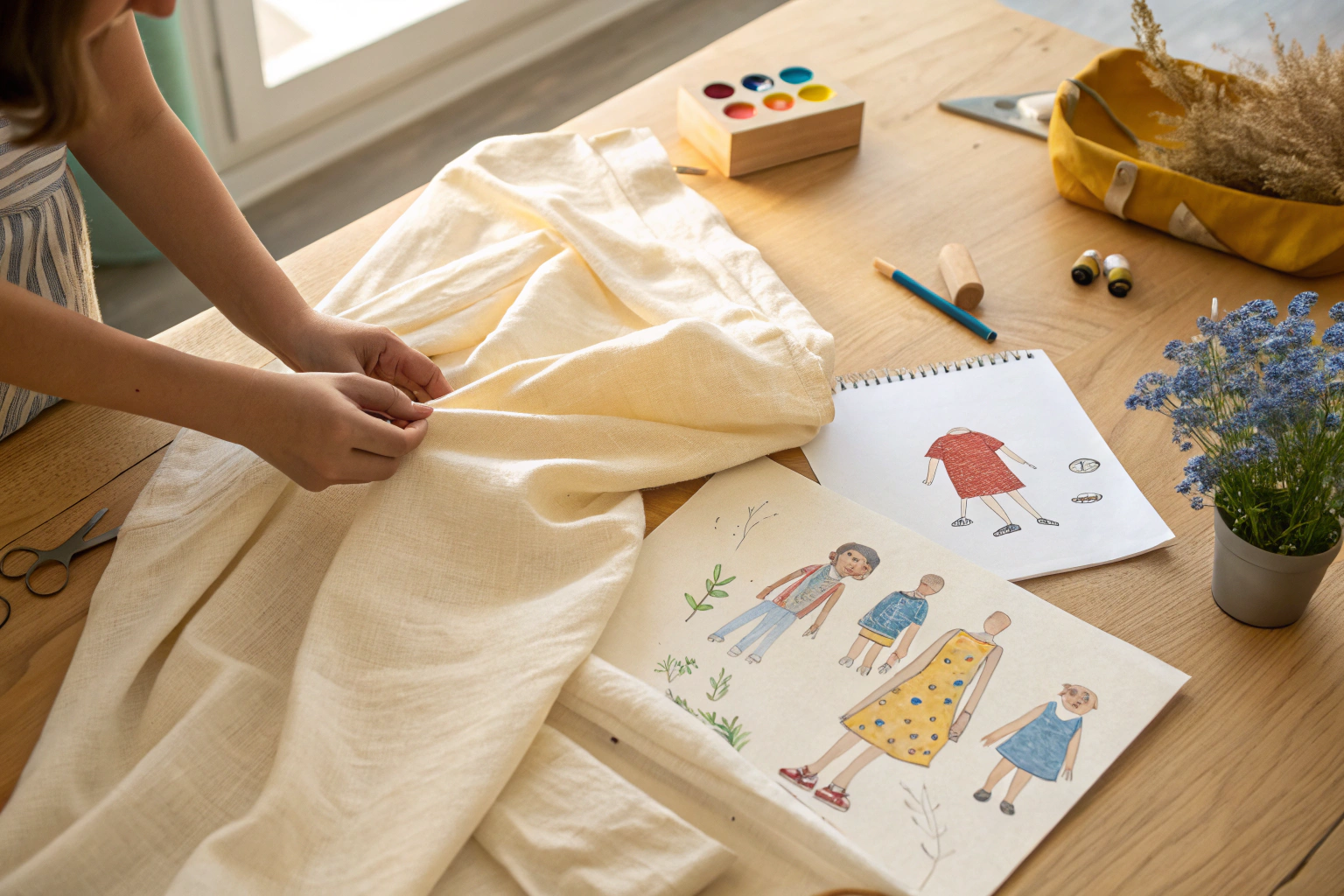
A kidswear founder from Melbourne broke down on a call with me in early 2025. She had built her entire brand around a signature "soft as a cloud" romper using a standard organic cotton jersey. The problem was, after three washes, the rompers pilled up like a cheap teddy bear, and the knees in her crawler sets wore through in weeks. Parents were posting one-star reviews with photos of the shredded fabric. Her return rate hit 22%, and the algorithm started punishing her store. She was terrified that "sustainable and soft" was an impossible promise.
Then she touched our enzyme-washed cotton-linen. Her exact words were, "This feels like a worn-in heirloom, but it’s brand new." That’s the obsession in a nutshell. Parents are exhausted by clothes that look good on a hanger and fall apart in the laundry. They want the impossible: a fabric that is soft enough for a newborn’s eczema-prone skin, yet durable enough to survive a toddler’s concrete-scraping knee slide. Cotton-linen, when finished correctly, delivers that contradiction. The cotton gives the immediate cuddle factor that makes a parent smile at the touch. The linen provides the hidden structural skeleton that keeps the garment from disintegrating in the playground.
But here is the harsh truth most kids’ brands don’t realize: a baby’s skin is not just "sensitive." It’s structurally different from adult skin. It’s thinner, less acidic, and absorbs chemicals far more readily. Selling to the kidswear market isn’t about making smaller versions of adult clothing. It’s about re-engineering your entire finishing chemistry to pass a physiological safety test that no adult garment ever faces. Let me walk you through the biology lesson that changes how you buy fabric.
What Makes a Fabric "Child-Safe" Beyond Just OEKO-TEX Certification?
I sat in a seminar at a textile safety conference in Amsterdam last year where a pediatric dermatologist showed a thermal scan of a baby wearing a polyester fleece onesie. The skin temperature underneath spiked by 3 degrees Celsius in under ten minutes. The baby couldn’t regulate the heat, and the synthetic fibers had created a micro-plastic sauna. The garment had an OEKO-TEX Standard 100 label. It passed the chemical safety test, but it failed the physiological safety test. That’s the gap most brands ignore.
"Child-safe" means three things beyond the standard chemical screen. First, Thermal Conductivity. The fabric must pull heat away from the body. Linen is a natural thermal conductor; it feels instantly cool to the touch because it transfers heat 5 times faster than cotton. For a newborn who lacks a developed sweating mechanism, this cooling effect is not a luxury; it’s a medical necessity to prevent heat rash and overheating. Second, Mechanical Irritation Resistance. A baby’s skin has a neutral pH of around 7, compared to an adult’s acidic 4.5 to 5.5. This weak acid mantle means bacterial enzymes and alkaline detergent residues trapped in cheap cotton can trigger immediate eczema. We finish our kidswear fabric with a weak citric acid buffer to neutralize any residual alkalinity from the dye bath. Third, Seamless Surface Friction. Rough slubs and neps on standard linen can cause micro-abrasions on a baby’s inner thighs and underarms. We mechanically suede the inner face of our cotton-linen to a peach-skin nap, then shear the nap to a uniform 0.5mm height. This preserves the cooling texture on the outside but provides a frictionless glide on the inside.
An OEKO-TEX label checks for formaldehyde and heavy metals. It does not check for thermal behavior or surface friction coefficient. It’s a chemical floor, not a physiological ceiling. Parents who pay a premium for "safe" baby clothes are starting to understand this distinction, and they’re demanding fabric that is biologically, not just chemically, safe.

How does the "acid mantle" of a baby’s skin react to alkaline fabric finishes?
The acid mantle is a thin, protective film of sebum and sweat on the skin’s surface with a pH of around 4.5 to 5.5. It’s the body’s first line of defense against bacteria. A baby’s acid mantle is underdeveloped. Many conventional cotton fabrics have a residual alkaline pH of 8 or 9 because the dyeing process uses caustic soda and the mill doesn’t neutralize it properly. When an alkaline fabric touches a baby’s skin, it raises the skin’s pH, dissolving the acid mantle and stripping the protective oils. The skin becomes dry, cracked, and vulnerable to staphylococcus bacteria. Parents call it "eczema." We call it "pH burn." Our kidswear cotton-linen is finished with a citric acid rinse that brings the surface pH of the fabric to 5.5, matching healthy adult skin, which is far gentler than the alkaline environment most commercial fabrics create. This is a standard test we run on every batch, and it’s data you can show a worried parent on your product page.
Why is "mechanical softness" more critical than chemical softness for infant wear?
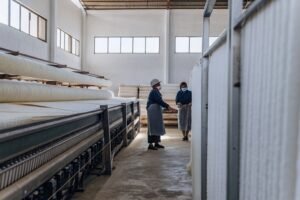
Chemical softeners are a lie we tell our hands. A silicone-based softener coats the linen fibers in a slick, greasy film. It feels amazing on the bolt, but it washes out in three cycles, and it seals the fiber’s natural breathability. The fabric stops breathing, the baby sweats, and the rash blooms. Mechanical softness is permanent because it physically changes the shape of the fiber. We run the fabric through high-speed impact tumblers and sueding rollers that literally beat and sand the stiffness out of the flax without a single drop of silicone. The softness is inside the fiber wall, not painted on the surface. This means the romper actually gets softer with every wash, not stiffer and scratchier. A parent who buys a mechanically-softened garment notices that the 20th wash feels better than the first. That’s the "heirloom quality" signal that drives word-of-mouth obsession.
How to Eliminate the "Prickle Factor" in Cotton Linen for Newborns?
The "prickle factor" is the sensation of tiny needles poking the skin. It’s the number one reason adults associate linen with "scratchy," and it’s a complete dealbreaker for baby skin, which has a nerve density 10 times higher per square centimeter than adult skin. In August 2025, I worked with a Norwegian organic baby brand that tried a standard 100% organic linen for a summer swaddle. The returns were instant, and the reviews were brutal: "My baby screamed when I put this on."
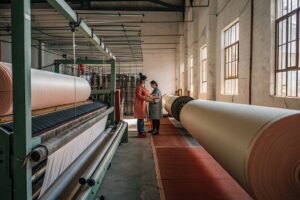
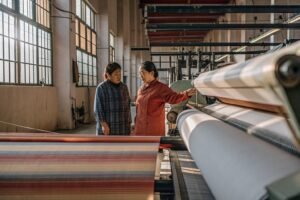
The prickle factor comes from the protruding fiber ends that stick out of the yarn. Flax fibers are long, rigid tubes. When cut, the ends form sharp, needle-like points that trigger the skin’s nociceptors. Our solution is a three-step "Tip Removal" process. First, we singe the greige fabric over a gas flame to burn away the longest, coarsest fiber ends. Second, we run the fabric through an enzyme bath where cellulase proteins specifically nibble away the short, broken microfibrils without touching the strong, long structural fibers. Third, we mechanically beat the fabric in a wet state to split the rigid flax bundles into softer, finer elemental fibers. The result under a microscope is dramatic: a standard linen yarn looks like a barbed wire fence; our finished cotton-linen yarn looks like a smooth, rounded river stone.
The blend ratio is also critical. A 70% linen, 30% cotton fabric will always prickle, regardless of finishing, because the rigid linen fibers are too close together. We cap our newborn-grade fabric at 55% linen maximum, with 45% long-staple organic cotton. The cotton fibers wrap around the linen stalks like a soft blanket, physically separating the linen ends from the baby’s skin. It’s a simple structural trick that makes the difference between a screaming baby and a sleeping one.

What is the "Gas Singeing" process and how does it remove micro-barbs?
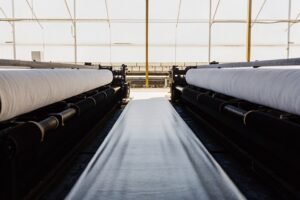
Gas singeing sounds terrifying—passing fabric over an open flame—but it’s the most effective mechanical defuzzing method in textile history. The fabric travels at high speed, roughly 80 to 100 meters per minute, over a row of blue-flame gas burners. The flame only touches the surface; the body of the fabric doesn’t have time to heat up. The microscopic fuzz and protruding barbs ignite instantly and turn to ash, which is vacuumed away. The smooth yarn body remains untouched. Think of it like a chef torching a meringue; the peaks brown and disappear, but the body stays intact. For baby fabric, we run a double singeing—once on the face, once on the inner face that touches the skin. This dual burn creates a perfectly smooth, fuzz-free surface that cannot mechanically irritate even the most sensitive inner elbow or behind-the-knee crease.
How do you test the "Fabric Smoothness Index" for baby skin compatibility?
We don’t guess. We measure. We use a Kawabata Evaluation System surface tester, which drags a tiny, human-hair-thin stylus across the fabric surface and records every peak and valley. The machine calculates a "Surface Roughness" SMD value. Adult clothing typically tolerates an SMD value up to 5.0. Our infant-grade cotton-linen targets an SMD of 2.0 or below—smoother than a standard cotton bedsheet. We also run a "Wet Friction Test." Baby skin is often damp from drool or spills. We soak the fabric in saline solution (simulating sweat) and test the friction coefficient with a weighted sled on a tensile tester. The wet friction of our fabric is actually lower than the dry friction, meaning the fabric gets slipperier when the baby drools on it. That’s intentional. It prevents chafing when the fabric is wet, which is exactly when a baby’s skin is most vulnerable.
Why Do Parents Pay a 60% Premium for "Heirloom Quality" Kidswear?
A marketing director at a premium childrenswear chain told me something that stuck: "Parents don’t buy baby clothes. They buy memories they can hand to their grandchild." That’s the psychology of the heirloom premium. The item isn’t competing against a $10 fast-fashion onesie. It’s competing against the wooden rocking horse and the silver rattle. It’s an artifact of childhood, not a consumable.
The 60% premium is justified by a single, unspoken promise: "This will survive your child." A fast-fashion cotton onesie lasts roughly 8 to 10 washes before the collar bacon-necks, the snaps pull out, and the fabric turns into a gray, pilled rag. It ends up in a landfill, and the parent feels a pang of guilt—not just for the environment, but for losing the physical memory of their baby’s smell and shape. Our cotton-linen, finished with the mechanical processes I’ve described, actually gains tensile strength for the first 5 washes as the fibers fully hydrate and lock together. It does not biodegrade on the child’s body. It passes the "Crawl Test"—a simulated 100-cycle abrasion rub on the knees and elbows that mimics a year of hard play. Parents who buy this fabric pass the garment to a younger sibling, then a cousin, then a charity shop, and it still looks alive. The price per wear drops below the fast-fashion alternative. The premium is not a luxury tax; it’s a durability investment.
The emotional payoff is captured in the resale market. Heirloom-quality kidswear brands hold a 45% higher resale value on platforms like Kidizen and Vestiaire Collective. Parents intuitively calculate this. They know they can recoup a third of the cost by selling the outgrown piece to another family. They can’t recoup anything from a faded, pilled Zara onesie. The brand that communicates this "durability + resale value" story captures the rational and emotional brain of the parent simultaneously.

How does a "100-Wash Guarantee" change the perceived value of a baby romper?
A guarantee is a risk transfer. The parent’s biggest fear is that the expensive, sustainable garment will fall apart like all the others. A "100-Wash Guarantee" says: "We take that risk. If the seams fail, the color fades past a certain Delta E, or the fabric pills above a Grade 3 before 100 washes, we replace it." This guarantee costs the brand very little if the fabric is genuinely durable, but it adds an immediate $10 to $15 in perceived value. It signals an engineering confidence that a box-store brand cannot match. At Shanghai Fumao, we validate this guarantee with our internal Martindale and wash-cycle data, so the brand can offer it without fear of getting buried in claims. The guarantee becomes the headline of the product page, and the rest of the marketing copy just explains the physics of why it’s possible.
What is the "Sibling Pass-Down Rate" and why does it drive brand loyalty?
The Sibling Pass-Down Rate is the percentage of customers who report that a garment was worn by more than one child in the family. It’s the most powerful loyalty metric in kidswear because it proves the product survived the most destructive user on earth—a two-year-old—and came out intact. When a parent dresses their second child in the same romper their first child wore, the brand becomes part of the family’s shared identity. That parent will never switch brands because they have multi-year proof of durability. The emotional barrier to exit is massive. You want to structure your product photography to feature siblings in the same garment, showing the passage of time. You can explore how to build this narrative by studying the power of documenting heirloom textile quality in kidswear brand marketing. It’s a loyalty loop that fast fashion cannot replicate.
How to Design Kidswear Silhouettes That Maximize Cotton Linen’s Breathability?
A London kidswear designer sent me a sample of a beautiful cotton-linen hoodie last autumn. It looked stunning on the hanger—perfect slubby texture, gorgeous natural dye. But it failed on a toddler because she had designed it with a tight, ribbed waistband and snug cuffs. The fabric could breathe, but the silhouette trapped the air inside like a sealed balloon. The kid overheated despite the premium textile. The silhouette had negated the fabric’s superpower.
Maximizing breathability means engineering the garment as an airflow system, not just a static cover. Cotton-linen is a high air-permeability textile. Our standard 55/45 blend allows roughly 180 liters of air per square meter per second to pass through. But a tight, elasticated hem can drop that effective airflow by 70%. The design rule is simple: maximize the "bellows effect." Every time a child runs, jumps, or falls, the garment should pump air in and out. You achieve this with a slightly oversized, A-line body shape, raglan sleeves with wide, open armholes, and minimal ribbing. The neckline should be a simple bound neck, not a restrictive rib collar. The garment acts like a chimney. Body heat rises, exits the wide neckline, and pulls cool, fresh air in through the loose hem and sleeve openings. This passive cooling cycle means the child doesn’t sweat in the first place, which reduces bacterial growth and keeps the garment smelling fresh longer.
The silhouette also needs to accommodate the "in-use stretch" of a playing child. A static fit model of a standing child is useless. You need to fit the garment for the "crouch and reach" position—knees bent, arms extended, spine curved. Our cotton-linen has about 3% mechanical give in the bias direction. We advise cutting key pieces like the back panel on a 45-degree bias to unlock that stretch where the child needs it most, across the shoulder blades and the seat. The bias cut turns a woven fabric’s weakness into a functional flexibility.

Why is the "bellows effect" critical for preventing heat rash in active toddlers?
Heat rash, or miliaria, occurs when sweat glands are blocked and sweat leaks into the surrounding skin tissue, causing inflammation and itching. The trigger is a hot, humid microclimate trapped against the skin. The "bellows effect" prevents that microclimate from forming. Imagine the garment as a pair of lungs. As the child moves, the fabric billows outward, creating a slight negative pressure that sucks ambient air into the garment cavity. That air evaporates sweat directly from the skin’s surface, cooling the skin and keeping the sweat ducts open. A tight, clingy garment has no bellows action; it sits on the skin like a wet towel. A cotton-linen A-line dress or a loose romper with open hems is a natural air conditioner. Parents in humid climates like Florida or Singapore notice this immediately—their child stops getting the angry red rash on the lower back and chest. That’s a functional benefit that drives five-star reviews far more than "cute design" ever will.
What are the best seam constructions for soft, flat interiors on delicate skin?
The inside of a garment matters more than the outside, because that’s what touches the child. A standard overlocked seam is a raised, abrasive ridge. On a sensitive newborn, it can leave red pressure marks within minutes of wearing. We spec a flat-felled seam for all structural vertical lines, like side seams and sleeve seams. In a flat-felled seam, the raw edge is enclosed within a double fold of fabric, and the entire seam allowance lies flat against the garment with a double row of stitching. The interior is completely smooth, with no raw edge. For armholes and necklines where bulk must be minimized, we use a bound seam with a bias strip of the same cotton-linen fabric, not a synthetic rib binding. The binding stretches with the fabric and presents a soft, textile-grade surface, not a shiny, rubbery, chemical-heavy elastic. The care label is a hidden irritant. We advise printing care instructions directly on the inside back panel with a phthalate-free, water-based ink, eliminating the scratchy woven label entirely. The garment is seamless, not just in stitching, but in sensation.
Conclusion
The kidswear obsession with soft cotton-linen is not a fleeting aesthetic trend. It’s a parental revolt against the industrial compromise that forced parents to choose between softness and durability, between chemical safety and thermal comfort. The brands that understand the biology—the baby’s thin skin, the missing acid mantle, the need for a bellows effect—are the ones printing money while the polyester onesie brands fade into irrelevance. You aren’t selling fabric. You’re selling a breathing, cooling, multi-generational safety layer.
If your kidswear label is ready to move beyond the standard "organic cotton" claim and into this new territory of physiologically-engineered softness, I’ll show you the test data that backs up every claim I’ve made here today.
Our Business Director Elaine has assembled a "Kidswear Developer Kit." It contains our infant-grade, double-singed, pH-balanced swatch card, the Kawabata surface roughness report, and the 100-wash tensile strength data. Don’t design another romper until you’ve felt the science. Email Elaine directly at elaine@fumaoclothing.com with the subject "Kidswear Swatch Request." Let’s make the clothes that babies sleep through the night in.