I still remember the call. It was 2016, and a procurement manager from a UK school uniform distributor was on the line, her voice tight with frustration. She had just rejected her third fabric shipment of the month. The pilling on the knees of the trousers was so bad after eight washes that parents were demanding refunds. The white polo shirts had yellowed under the arms after a single summer term. The colors of the blazers from one delivery didn’t match the previous delivery, so returning students looked like a mismatched marching band. She told me, "We don’t need fashion fabric. We need armor. Fabric that survives children, industrial laundries, and furious parents, all while looking identical batch after batch for years." That call turned into a partnership, and that partnership turned into one of our deepest areas of expertise at Shanghai Fumao: producing fabrics specifically engineered for the unique torture test that is a school uniform.
School uniform fabric is not just another textile product. It is a contract. It is a promise to a school, to parents, and to a child that this garment will endure 200 school days a year, 40 industrial wash cycles a term, playground friction, canteen spills, and growth spurts. It must also meet some of the strictest safety, chemical, and performance standards in the entire textile industry—standards that go far beyond what typical fashion fabrics ever face.
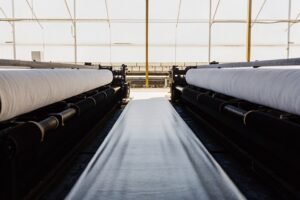
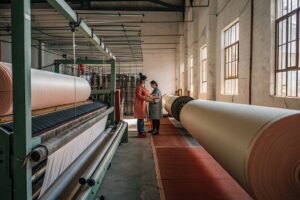
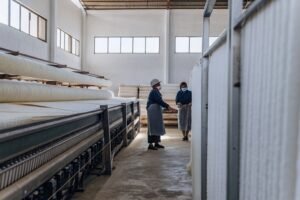
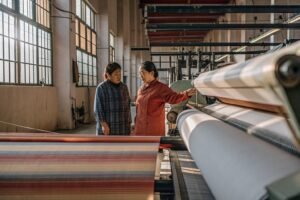
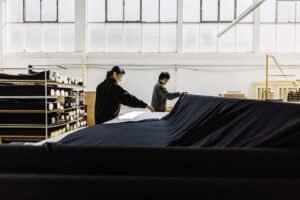
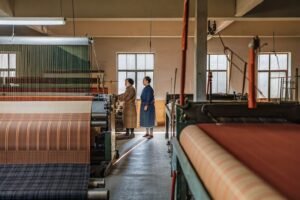
At Shanghai Fumao, we have spent years perfecting this category. Our school uniform fabrics—from crisp cotton-rich shirting to durable polyester-viscose suiting, from pilling-resistant knit polos to UV-blocking summer dresses—are now trusted by distributors and institutions across the UK, Europe, and Australia. The reason we win these contracts isn’t because of a clever sales pitch. It’s because we control the entire supply chain inside Keqiao, turning yarn into finished, lab-tested fabric under one integrated quality system. We make the durability consistent, the color repeatable, and the safety certifications transparent. If you are sourcing fabric for a school uniform program right now, you need a partner who treats this product category with the seriousness it deserves. I will break down the exact performance parameters that matter, the safety standards you must demand, the logistical discipline required for long-term contracts, and the real-world testing methods we use to guarantee that our fabric can survive everything a ten-year-old can throw at it.
What Performance Standards Must School Uniform Fabric Actually Meet?
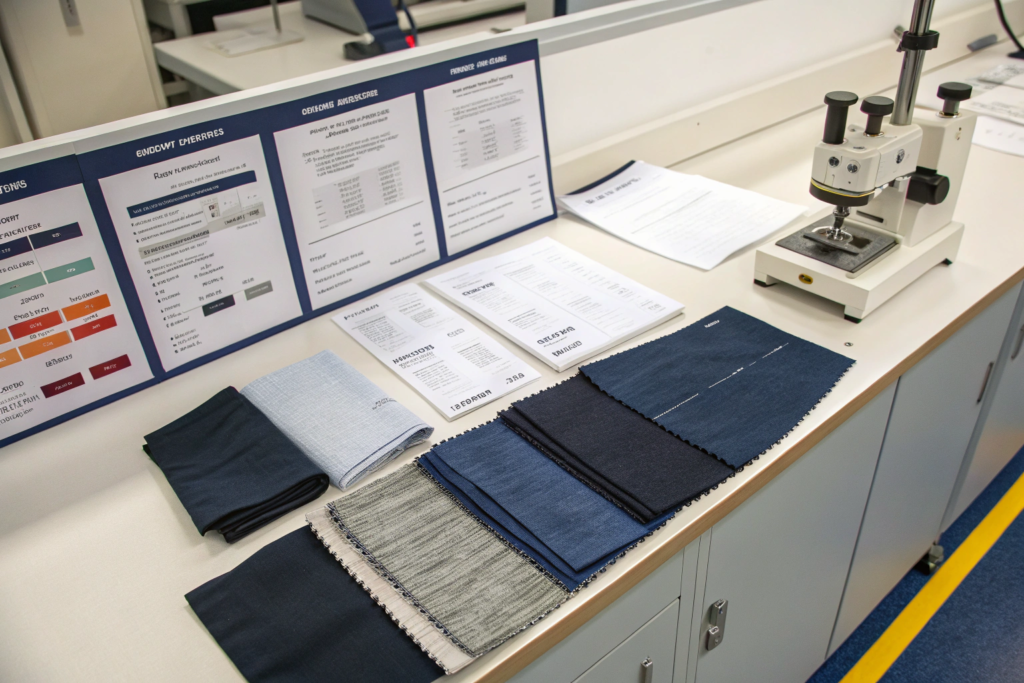
Fashion fabric lives a gentle life. It is worn carefully, washed occasionally, and retired when the trend passes. School uniform fabric lives a brutal life. The performance standards are not marketing bullet points; they are survival requirements drafted by facilities managers who have seen fabric fail spectacularly. The minimum durability benchmark for school uniform suiting fabric is a Martindale abrasion resistance of at least 50,000 rubs under the ISO 12947-2 standard. For comparison, a standard upholstery fabric for a domestic sofa is rated at 25,000 to 30,000 rubs. A school blazer must be nearly twice as tough as your living room couch. The colorfastness requirements are equally severe. You aren’t simply checking if the color transfers to a white cloth; you are checking if the navy blazer bleeds onto the white shirt during a hot wash (ISO 105-C06), if the red trim fades under classroom fluorescent lights (ISO 105-B02), and if the sweat of a child running around a playground chemically reacts with the dye to create unsightly yellow stains (ISO 105-E04). At Shanghai Fumao, we test for all of this.
Pilling resistance is non-negotiable. A school jumper or knit polo that develops those annoying little fiber balls after a month of wear is not just aesthetically unpleasant; it is a tangible signal of low quality to a parent who paid a premium expecting it to last the academic year. We test our knit fabrics to the modified Martindale method (ISO 12945-2), running them for 2,000 cycles and demanding a grade of 4 or better, where 5 represents absolutely no change. Dimensional stability—the fabric’s ability to not shrink into a crop top after a hot wash—is tested repeatedly, cycle after cycle, under the aggressive conditions of domestic laundering (ISO 6330). A 2% shrinkage might be acceptable for a fashion dress worn twice before washing. For a school trouser that is washed twice a week for forty weeks, that 2% compounds into a garment that no longer fits. I learned my lesson about industrial versus home laundry assumptions early on, and I never assume a garment is being washed on a delicate cycle.
Why Do School Uniforms Need Much Higher Abrasion Resistance Than Standard Fashion Fabrics?
Think about the geography of a school uniform day. A child sits on a rough plastic chair for six hours, grinding the seat of their trousers. They kneel on abrasive carpet squares during story time, scuffing the knees. They slide down a concrete ramp during recess, abrading the back of a blazer. These are not occasional incidents; they are a daily, high-friction reality. Standard fashion fabric rarely encounters intense, localized abrasion. A school uniform’s knees, elbows, and seat are high-wear hot spots. To pass our internal tests, a poly-viscose blazer fabric must survive a bare minimum of 50,000 cycles on the Martindale machine before showing threadbare thinning. Even a summer-weight cotton-rich chino shorts fabric must hit at least 25,000 cycles. Material selection is the first critical defense. High-tenacity polyester filament blended into the staple fiber yarn dramatically increases the surface toughness without making the hand feel like plastic. At Shanghai Fumao, we often use a double-ply construction in the warp for trouser and skirt fabrics, literally doubling the thread thickness carrying the tension so that when the surface yarn eventually wears away from that plastic chair friction, a second, intact structural layer is still holding the garment together. This is a design lesson borrowed from military textiles, where a hidden "skeleton" of tough polyester supports a soft cotton-rich skin for comfort.
The abrasive agent itself matters enormously in testing, and standard tests can miss critical failure modes. A standard Martindale test rubs the fabric against a worsted wool abrasive. That simulates a bit of pocket friction but not much else. A child’s knee rubs against tarmac playgrounds coated with sharp grit. To replicate this, we run a "sand-drop" accelerated abrasion test for our premium contract lines, where a controlled stream of fine silica grit drops onto the fabric surface while it rotates slowly, simulating embedded dirt abrasion in a school environment. A standard polyester-cotton trouser fabric that passes a 50,000-cycle Martindale test with a Grade 4 result can fail our sand-drop test in just 10,000 cycles if the fiber is brittle and cracks easily. We engineer our yarns to avoid that early brittle fracture. The polymer grade matters; our yarn suppliers understand that our standard factory-grade polyester won’t cut it for our school uniform stock fabric.
What Specific Colorfastness and Pilling Tests Do Uniform Buyers Demand?
Uniform buyers don’t just want a generic "pass." They demand specific ISO grades for specific real-world attack scenarios. The most common and destructive complaint in school uniforms is "crocking," or color transfer, specifically from a dark blazer or cardigan onto a white shirt, particularly when damp. We test wet crocking under the ISO 105-X12 method exhaustively. For dark colors like navy or burgundy, we won’t ship fabric below a wet rub grade of 3-4, which often requires us to go back to the dye house and apply a specific anti-crocking binder. The wash fastness test needs to simulate the specific horror of a "mixed wash," where parents throw a deep red PE shirt into a 60°C cotton cycle alongside a white rugby shirt. We deliberately test our red and dark fabrics against a multi-fiber witness strip, including a white cotton panel. If the staining on that white cotton exceeds a Grey Scale rating of 4, the dye recipe goes straight back to our chemical supplier for re-formulation.
For pilling, the test standard for knitwear is the visually assessed Martindale pilling test. We run the test out to the full 4,000 cycles, photographing the sample at every 1,000-cycle interval. The failure point is usually not the body fabric but seams and gussets. I pay very close attention to how the fabric pills specifically on the edge of a seam under localized tension. Polyester-cotton blends are critical to get right; they can be much worse for pilling than 100% cotton because the strong polyester fiber anchors the pill and prevents it from falling off. A short-staple cotton will pill and then drop away; a poorly engineered blend forms a permanent pill ball. We counter this by selecting slightly longer-staple cottons for the uniform blends and, where specifications allow, applying a light enzyme bio-polish to pre-digest the surface fibrils, reducing the propensity to form pills in the first place. Another issue I have to catch is edge-pilling that inflames sensory issues for some children, particularly those on the autism spectrum. We address this with a specific yarn spinning method a client from Sydney asked me to develop specifically for their skin-sensitive range.
How Does Shanghai Fumao Guarantee Non-Toxic and Safe Fabric for Children?
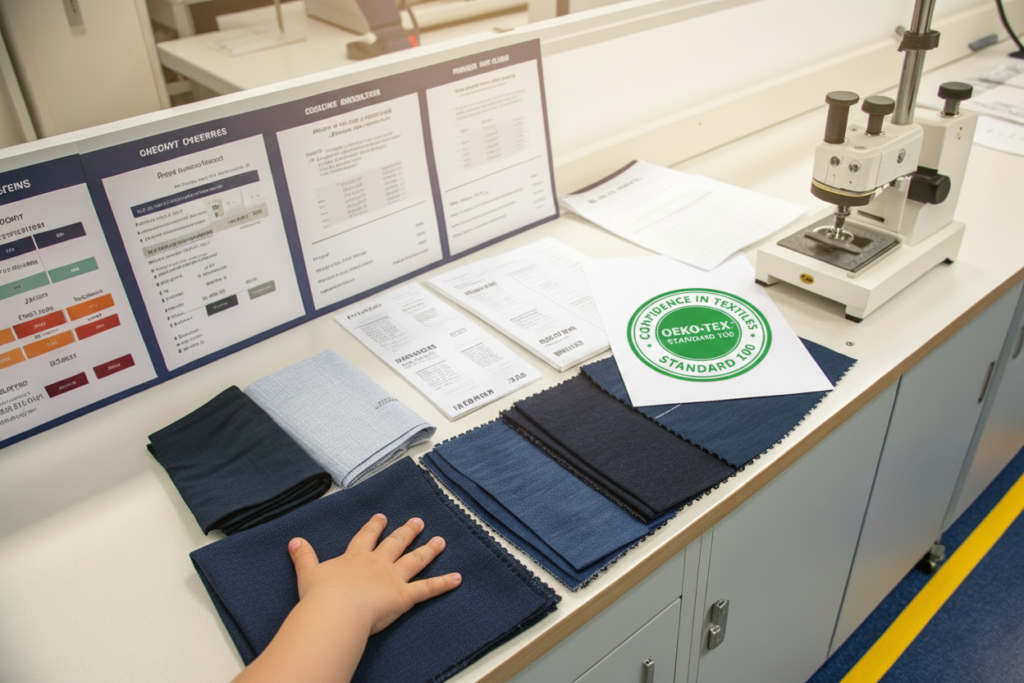
Safety isn’t a "premium add-on" when you are making clothes for a six-year-old. It is the entry ticket. A child’s body is still developing, and their skin is thinner and more permeable than an adult’s. They chew on their cuffs. They sweat more relative to their body mass. If there are heavy metals, formaldehyde, or banned azo dyes sitting on that fabric, they are going straight into that child’s system. We treat every school uniform order, regardless of the price point, as a children’s safety contract. This means certifying to the strictest Class I standard under OEKO-TEX Standard 100—the standard specifically for babies and toddlers, not just standard clothing. We apply this baby-level standard to all our school fabric because we know a branded "school uniform" often gets handed down to a nursery-age sibling.
The biggest chemical risks in uniform fabric come from the dye house. Cheap reactive dyes can contain cleavable azo compounds that break down into carcinogenic aromatic amines when absorbed by the skin. Formaldehyde-based resins are sometimes added to cotton blends to give that crisp, no-iron finish that parents love, but if the resin isn’t fully cured and washed, it off-gasses formaldehyde. Lead and phthalates can hide in cheap plastisol prints on logos and PE kit numbers. Our CNAS-accredited testing center runs a full chemical screening on every single dye lot before it goes to bulk production—not just a random sample, every lot. We screen for 24 specific aromatic amines under the EU REACH regulation, total heavy metal content, and formaldehyde levels to a strict limit of just 16 parts per million, which is undetectable by a human nose. If you are importing school uniforms into the European market, you need to know about the GPSR (General Product Safety Regulation) requirements that came into full effect in December 2024, which necessitate technical documentation for children’s products including detailed chemical safety assessment.
What Certifications Do International Schools Require for Fabric Toxicity?
OEKO-TEX Standard 100 Class I is the universal baseline and the gold standard for fabric toxicity certification globally. If your uniform program serves international schools—British curriculum schools in Dubai, American schools in Singapore, private academies in Switzerland—this is the minimum documentation their procurement departments require. They often go further. Many US and UK school boards insist on a full EU REACH compliance declaration, verifying that the fabric contains none of the Substances of Very High Concern (SVHC) on the current ECHA candidate list, which is updated twice a year. You can’t just provide a three-year-old certificate. The chemical list is a moving target, and you must verify against the latest revision. Nordic school systems require a specific "Nordic Swan Ecolabel" or "EU Ecolabel" textile certification, which goes beyond just the final fabric safety to audit the environmental impact of the entire production chain, from spinning mill water usage to dye house effluent treatment.
A growing requirement I’m seeing in independent school tenders is the "vegan certification." Many school blazers traditionally use wool, and schools with a strong ethical commitment or a diverse student body are moving toward verified animal-free fabrics. We produce high-performance wool-look suiting using spun-dyed acrylic and polyester that holds a crease and "pants press" as well as the worsted wool it replaces. The trick is making it breathable; cheap faux-wool uniforms feel like wearing a black bin bag. Our chemists maintain a positive list of EU-certified chemicals and additives, which allows us to instantly declare that a fabric contains absolutely no traces of animal-derived chemistry like casein-based sizing or stearic acid from tallow used in some spinning lubricants. Our tech packs track this right through production, so we can provide the documentation to back up the ethical claim and support the school’s values.
How Do You Test for Formaldehyde and Heavy Metals in Children’s Textiles?
Formaldehyde testing is done by a spectrophotometric water extraction method, specified under ISO 14184-1. A weighed sample of the fabric is incubated in water at 40°C, and the formaldehyde leaches out of the fibers into the water. The water is then mixed with a chemical reagent—Nash reagent—that reacts with formaldehyde to form a yellow-green colored complex. The intensity of this color, measured by a spectrophotometer, is directly proportional to the formaldehyde concentration. Our standard release limit for school uniform fabric is less than 16 milligrams per kilogram (16 mg/kg), which is effectively non-detectable. If we are producing a "non-iron" or "easy-care" finish where cross-linking resins are used—and these are inherently prone to generating formaldehyde—we hot-cure the fabric, then run it through a post-cure after-wash with a formaldehyde scavenger like urea to chemically bind up the remaining free formaldehyde. We test the fabric cold, after finishing, and then we test it again after a simulated hot storage period to make sure formaldehyde doesn’t regenerate in the container during shipping.
Heavy metals are a different analytical challenge. We use an ICP-OES (Inductively Coupled Plasma Optical Emission Spectrometer) to screen for extractable heavy metals: lead, cadmium, chromium, nickel, arsenic, antimony. This is where cheap dye stuffs reveal their ugly side. Bright neon yellows and certain vivid greens used in PE kit panels are notorious for containing high cadmium or lead levels in low-cost pigment formulations. The standard method is ISO 105-E04 for artificial perspiration extraction. We soak the fabric in an artificial acidic sweat solution—simulating what happens when a child overheats—and then the extract is atomized into a superheated argon plasma flame inside the ICP-OES. The instrument reads the unique light signature of each metal element at parts-per-billion sensitivity. The limits are tiny: less than 1 mg/kg for lead, 0.1 mg/kg for cadmium. This is why I source my dyestuffs from a very short, rigidly audited list of chemical suppliers. I know exactly which dye houses can hit a neon pink without using a cadmium-based pigment.
How Does Vertical Integration Ensure Consistent Color and Supply for Contracts?
A school uniform contract is not a one-time order. It is typically a three- to five-year framework agreement. The school expects that a blazer bought in September 2026 will perfectly match the trousers bought in September 2029. A student who needs a replacement mid-year must receive a garment in the exact same shade of maroon. This is the single biggest headache for procurement managers: color drift across production batches spanning multiple years. In the open market, where you might bounce between traders and different finishing mills, getting a color match is a lottery. At Shanghai Fumao, our vertical integration is the only reason we can confidently guarantee inter-batch color consistency across half a decade. We are not placing a dyeing order with a third party and hoping for the best.
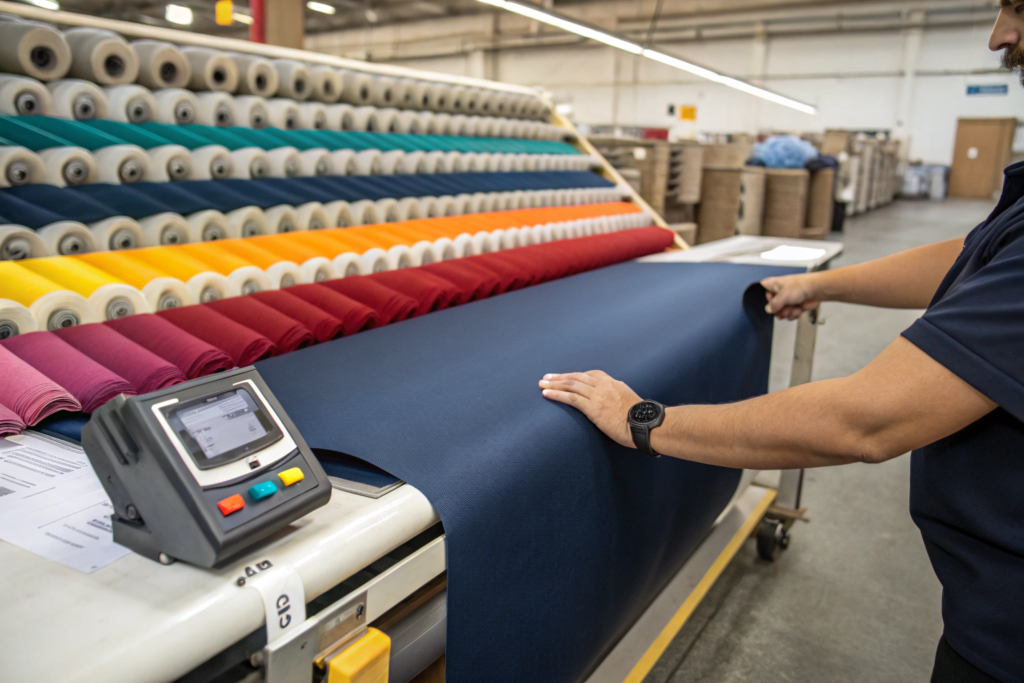
The color continuity system starts the very first time we produce a color for you. We don’t just keep a physical snip of fabric in a file folder, which can fade over time. The color is digitized. A benchtop spectrophotometer takes a reading of the approved lab dip and the first approved bulk production. That data—a unique reflectance curve across the visible spectrum—is stored permanently in our color matching database under your specific account and contract number. It doesn’t matter if the original dyer retires or if the dyestuff manufacturer changes their formulation slightly. The spectro tells us the objective truth of what that color was. Every year, before we re-order the base yarn, we pull that archived spectro recipe, run a fresh lab dip, and match it not just visually by a pair of tired human eyes but against the calibrated Delta E (dE) digital tolerance of the original archived standard. This is the only way to achieve an inter-instrument agreement on color measurement that you can rely on in the dyeing industry.
Sustainability and ethical compliance are now written into every major school contract from the EU and the UK. We run a closed-loop water recycling system on our coating lines and have been audited by multiple social compliance bodies like Amfori BSCI. The waste dye and effluent treatment records are part of the package we hand to school boards. They are increasingly as interested in our chemical management as they are in the fabric’s price. I had a UK academy trust recently send their own environmental auditor to our campus. They walked our water treatment facility and left satisfied that our processed discharge was cleaner than the local river water.
How Does Spectrophotometry Maintain Color Consistency Across Bulk Production Years?
This is the central problem of textile color for school uniforms: protecting the archival standard. A physical swatch of dyed fabric is alive and dying. Light, humidity, and atmospheric pollutants slowly degrade the dye molecules. That perfect maroon swatch from 2026 might be subtly yellower and redder by 2029. If you visually compare a new batch of fabric against a degraded swatch that has been sitting in a file folder by a window for three years, you will approve an incorrect, off-shade color. The core benefit of using a spectrophotometer for archival color is that it doesn’t care. It measures a specific "digital fingerprint" of how the swatch originally reflected light across the visible spectrum. This spectrum doesn’t fade in a computer memory.
When a repeat order comes in three years later, the dyer loads this digital standard into the color matching computer. The system reverse-engineers it using a calibration database of local dyestuffs to predict the exact formulation needed to recreate that curve on today’s base fabric, even if the base yarn might have a slightly different optical brightness. The critical metric is Delta E, the numerical distance between two colors in the CIELAB three-dimensional color space. A Delta E of 1.0 is visible to the human eye only under controlled conditions. A Delta E of 2.5 is a visible mismatch under good lighting. For school uniform core colors—navy, black, burgundy, forest green—we hold ourselves to a tolerance of Delta E less than 1.5 from the archived digital master, which is stringent but near-invisible. This requires calibrating our benchtop spectrophotometer against a green tile daily to a UKAS traceable standard, because the instrument itself can drift. A 1% drift in the flash lamp output creates a false Delta E shift that can make a perfect fabric look like a reject.
How Do You Handle Long-Term Stock Holding and Gradual Logistics for School Contracts?
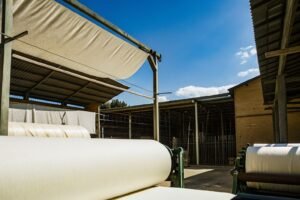
School uniform logistics is a reverse of the fashion calendar. Instead of a frantic drop of stock that sells through and disappears, uniforms require a "phased delivery" model. The bulk of the fabric ships for the peak back-to-school season in June and July. But a significant buffer stock must be held for "breakage"—mid-term replacements for a child who has a growth spurt or rips their trousers. A school contract without a mid-term stock replenishment plan is failed before it starts. At Shanghai Fumao, we operate a "consignment stock" model for our largest school uniform distributors. We run the full annual requirement on our looms in one efficient production campaign to get the best price and absolute color consistency. Then we hold the agreed buffer stock—typically 15% to 20% of the annual volume—in our Keqiao warehouse as greige (un-dyed) fabric. The greige is stable, inert, and won’t gather the odors or dust that a finished white poly-cotton would. When the distributor suddenly needs 2,000 meters of navy fabric in November because a new academy has adopted the uniform, we pull the greige from the shelf, run it through the dye house using the archived spectro recipe, finish it, inspect it, and air-freight it within a three-week window.
This model fundamentally works because of geography and the Keqiao cluster. Our weaving mill, dye house, and warehouse sit inside a very compact radius. There is no long inland trucking leg to add cost and environmental impact to the supply chain. We also offer a Vendor Managed Inventory system where we track the distributor’s stock levels and automatically trigger a re-order when they hit a safety minimum, without them even needing to send a purchase order. We use standard, industry-compatible data formats to share order statuses and logistics milestones with our clients’ ERP systems. This deep integration means the distributor is effectively selling fabric that is already produced and sitting in reserve, and they can promise their school customers virtually zero downtime on uniform supply.
Conclusion
Choosing fabric for school uniforms isn’t a transaction. It is a long-term partnership founded on the ability to survive industrial washing, chemical safety audits, and the merciless feedback of parents. A school blazer that pills, a polo shirt that shrinks, or a blazer that fades doesn’t just cost money; it costs a school’s reputation and a distributor’s contract renewal. At Shanghai Fumao, I have built our entire process philosophy—from greige stock reserving to ISO 105 testing—around the concept of zero-surprise delivery. We don’t treat uniforms as a secondary category. We treat them as the ultimate test of a mill’s technical competence and long-term memory. Our vertical integration inside the Keqiao cluster lets us control the yarn quality, lock digital colors across decades, and hold stock without inflating the price beyond reach.
If you are a school uniform distributor, an academy trust procurement lead, or a brand building a school wear line, I would welcome the chance to walk you through our specific contract-grade fabric specifications. We can send you a full technical pack including our latest OEKO-TEX Class I and REACH compliance data, and we can run a sample lot of your core colors through our archived spectro matching system so you can see the physical evidence. Contact our Business Director, Elaine, at elaine@fumaoclothing.com. Let’s build a uniform fabric program that will still be performing perfectly and matching perfectly through the next five academic years.