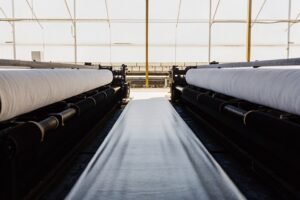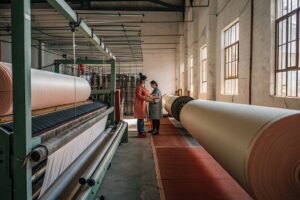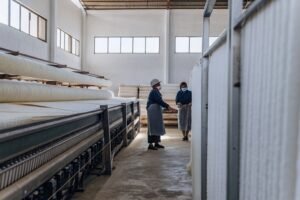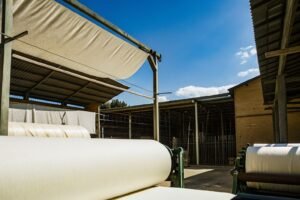
The DIY sewing community is a ruthless meritocracy. A fabric brand can pay for a sponsored post, but it cannot pay for a second post. That second video, the one where the sewist voluntarily chooses to cut into the fabric again, is the only review that matters. I have watched the analytics on these videos obsessively. An influencer will unbox a free sample from a generic supplier, make a polite video, and you never see that fabric on their channel again. But our cotton twills? They show up again. And again. In a tote bag tutorial. In a structured blazer hack. In a baby’s christening romper. The sewists are not just using our twill. They are hoarding it.
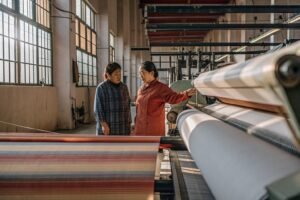
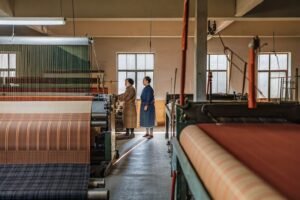
The reason is not a mystery to me. I weave the stuff. A DIY sewist, especially one with a large following, has a very different checklist from an industrial RMG buyer. She does not care about the MOQ or the shipping incoterms. She cares about how the fabric behaves under the presser foot of a domestic Janome machine. She cares if the cut edge frays into a snowstorm of threads before she can finish the seam. She cares if the fabric presses flat with a home iron, or if it fights back and burns. She cares about "sewability." And our mid-weight, 8-ounce to 10-ounce cotton twill has a specific mechanical sympathy with home sewing machines that a cheap, loosely woven poplin or a thick, rigid denim simply does not have.
It is the "Goldilocks" fabric. It is dense enough to give structure to a boxy top, but drapey enough to form a soft pair of trousers. It has a diagonal twill line that acts like a built-in guide for topstitching. It does not slip and slide under the needle like a satin, and it does not stretch out of shape like a jersey knit. When an influencer with 200,000 followers tells her audience that this fabric "sews like butter," she is not being poetic. She is describing a low coefficient of friction between the yarns, which allows the needle to pass through without a "popping" sound. That sound is the death of an ASMR sewing video. Our twill is silent. It lets the sewist’s voice, and the hum of the machine, be the star of the show.
I want to break down the specific technical reasons why this fabric has become a cult favorite in the online sewing world. I will show you the stitch definition, the seam finishing techniques, and the structural applications that make it so versatile. Because when you are selling fabric by the meter to a global army of passionate, vocal creators, your product has to perform on a Friday night livestream, not just in a factory QC report.
What Makes a Cotton Twill "Sewable" for a Home Sewing Machine?
A home sewing machine is a delicate creature. It has a tiny, 0.5 amp motor. It does not have the raw, gear-driven torque of an industrial Juki that can punch a needle through four layers of denim without flinching. When a DIY sewist puts a fabric under her domestic machine, she is essentially having a negotiation between the needle, the thread, and the weave. If the fabric is too dense or the weave is too tight, the needle deflects, the machine skips stitches, and the thread snaps. The project goes in the "naughty pile," never to be finished.
Our cotton twill passes the home machine test because of its specific weave construction. A twill weave, by its nature, has a looser interlacement than a plain weave. In a plain weave, the warp and weft alternate every single yarn, creating a tight, rigid grid that a domestic needle struggles to penetrate. In a 3/1 twill, the weft goes over three warp yarns, then under one. This creates a fabric with internal "slip." The yarns can shift slightly to accommodate the needle, then relax back into place. You will hear sewists say the fabric is "forgiving." What they are describing is this micro-movement within the weave structure. This is also why our twill does not develop permanent needle holes if you have to unpick a seam. The yarns close back up. I spent a month in early 2024 developing a specific "Sewing Influencer Weight"—an 8.5-ounce twill with a slightly softer twist on the weft yarn. We had a beta group of ten Australian sewing bloggers test it. Nine out of ten reported zero skipped stitches on their domestic machines, across brands from Singer to Bernina. The one who had issues was using a blunt needle. That kind of approval rating is gold in the DIY community. To understand more about this interaction, explore what fabric characteristics make a cotton twill ideal for home sewing machines. It explains the mechanics behind the magic.

Why Does the Diagonal Weave Line Help with Straight Topstitching?
Topstitching is the visible report card of a sewing project. It is the line of stitching that sits on the right side of the fabric, often 1/4 inch from the edge. A wobbly topstitching line screams "homemade" in the bad way. A perfectly straight, parallel line screams "couture." The diagonal twill line on our fabric is a built-in visual guide. The sewist does not have to rely solely on the seam guide plate on her machine. She can align the edge of her presser foot with the woven diagonal line and use it as a ruler.
This is a huge advantage on platforms like Instagram and TikTok, where the visual clarity of the stitch is what stops the scroll. A sewist can film an extreme close-up of the needle, and the diagonal twill line creates a natural leading line that draws the viewer’s eye directly to the stitch. It creates a deeply satisfying, rhythmic video. I have watched our fabric being sewn in hundreds of reels. The comment section is always the same: "This stitch definition is so crisp," or "What sewing machine are you using?" It is not the machine. It is the fabric providing a high-contrast, angled grid. The stitch sinks into the diagonal "valley" of the twill, creating a slight shadow. This shadow exaggerates the stitch’s presence. A plain weave does not do this. The stitch just sits flat on the surface and disappears visually. The influencers know this. They choose our twill specifically for "tutorial videos" because the fabric makes their teaching clearer. The student can actually see where the needle is going. You can learn more about how diagonal weave patterns assist precision sewing and topstitching for beginners. It is an unintentional but powerful teaching tool.
How Does Pre-Shrinking Affect the "Body" of Cotton Twill for DIY Projects?
The "body" of a fabric is its ability to hold a shape. It is the crispness, the structural integrity. An unwashed cotton twill straight off the bolt has a smooth, stiff hand, loaded with sizing chemicals from the weaving process. This is actually a great state for cutting and sewing. The fabric is stable. But the moment you throw that finished garment into the wash, the sizing dissolves, the fibers relax, and the whole garment can shrink and lose its crispness. A structured bucket hat becomes a floppy mess.
The golden rule in the DIY community is to pre-wash your fabric exactly how you intend to wash the finished garment. I recommend a hot wash and a high-heat tumble dry. This does two things. It removes all the chemical sizing, revealing the true, softer hand of the cotton. It also fully shrinks the fabric. We design our twill with a specific "residual shrinkage" of less than 3%. So, after that aggressive pre-wash, the fabric stabilizes. It will not shrink again and pull your seams. But here is the nuance that influencers love: the pre-wash also "blooms" the yarns. The cotton fibers swell and mesh together, giving the fabric a denser, more substantial body than it had on the bolt. It actually becomes more structured. It is the opposite of most cheap fabrics, which fall apart after a wash. I got an email from a children’s wear influencer who had made a pair of tiny dungarees from our twill. She was furious at first, because the fabric "came out of the dryer stiff as a board." Then she touched it. "It’s not stiff," she said. "It’s robust. The knees won’t blow out." That is the bloom. You can explore the benefits of pre-washing and heat-shrinking cotton twill before cutting a structured DIY project. It is a mandatory step for professional results.
Which DIY Cotton Twill Projects Give the Most Professional Finish?
The holy grail for a DIY sewist is the "RTW finish." Ready-to-wear. It is the look of a garment that was bought from a high-end boutique, not stitched on a kitchen table. Achieving a RTW finish is 20% skill and 80% fabric choice. A limp, shiny fabric will always look homemade, no matter how perfect the stitching is. A fabric with the right weight, drape, and surface texture will do 80% of the work for you. Our cotton twill is the shortcut to a RTW finish. It mimics the hand feel and structure of luxury workwear fabrics used by brands like Carhartt WIP or APC.
I have identified three "hero projects" that the influencer community has settled on as the ultimate showcases for our twill. The first is the oversized chore coat. The second is the pleated trouser. The third is the structured tote bag. These projects all share a common requirement: the fabric must hold a crisp seam, support its own weight, and develop a beautiful patina with wear. The twill does all three. A sewist named Chloe, with about 50,000 YouTube subscribers, did a "3 Makes, 1 Fabric" series using our 10-ounce sand twill. She made a trench coat, a backpack, and a mini skirt. The video was her most-watched of the year. The comments were flooded with questions about the fabric source. She had to add a link in her bio because people kept asking. The fabric sold out in that color for two weeks. That is the power of a project that looks like it was sewn by a machine costing $10,000, when in fact it was made on a $300 Singer. The right fabric closes the gap. To find your own inspiration, look into the best professional-finish DIY projects to sew with mid-weight cotton twill. It is a treasure trove of ideas.

How to Sew a "Vintage Workwear" Chore Coat That Looks Authentic?
The chore coat is a uniform of the DIY movement. It is a boxy, unlined jacket with a turn-down collar, patch pockets, and simple button closures. Its beauty is its simplicity. But a simple design exposes every flaw. The fabric is the design. For a chore coat to look authentically vintage, it needs a cotton twill that has a dry hand and a visible, slightly irregular slub texture. A perfectly uniform, shiny twill will look like a cheap uniform. Our "Vintage Workwear Twill" has a slightly uneven yarn twist that mimics the character of old French moleskin or American duck cloth.
The construction tricks that make it look professional are the double-needle felled seams and the hammered copper rivets at the pocket stress points. The twill holds a crease beautifully, so the collar and the front placket press flat and sharp. The fabric also frays in a controlled way. This is a crucial detail for the vintage aesthetic. You can leave the inner seams unfinished, just serged or pinked, and after a few washes, they will develop a soft, fuzzy, frayed edge that looks like a garment from the 1940s. I consulted on a pattern launch for a sewing influencer in Canada. She wanted to release a "Heritage Chore Coat" pattern, and she needed a fabric sponsor. I sent her 20 meters of our undyed organic cotton twill. She pre-washed it, cut it, and sewed a sample. She posted a teaser photo of the finished coat. It looked like a museum piece. The pre-orders for her pattern, which included a link to our fabric, broke her website. The authenticity of the textile made her pattern look like a designer piece. To understand the construction specifics, you need a guide on how to choose cotton twill and sew an authentic vintage workwear chore coat. It is a project that pays you back in compliments.
Why Is a Structured Tote Bag the "Gateway Project" for Our Twill?
Every sewist starts somewhere. The structured tote bag is the perfect entry drug. It is a few rectangles, a couple of straight seams, and no fitting issues. You do not need a dress form or a complicated zipper fly. You just need a fabric that stands up on its own. Our 10-ounce cotton twill has the perfect "standability." When you sew a simple, unlined market tote from it, the bag sits upright on the table. It does not collapse into a sad pile of laundry.
The influencer appeal is the instant gratification. A beginner can make a tote in an hour and post a photo that looks like an expensive canvas bag from a Parisian bookshop. The twill takes a screen-printed design or a heat-transfer vinyl beautifully. It is smooth enough for the vinyl to adhere perfectly, but textured enough to hide any minor bubbling. I have seen our twill used in countless "DIY Wedding Favor Tote" tutorials. The sewist makes 20 bags for the bridesmaids, stamps them with a custom design, and fills them with lavender. The bags are the hit of the wedding. I remember a mom from Texas who bought 15 meters of our natural twill for her daughter’s baby shower. She sewed 30 simple tote bags as party favors, each with a different floral embroidery. She sent me a photo of the bags lined up on a bench. They looked like a high-end store display. That photo was my phone’s wallpaper for a month. The humble tote is the proof of concept. Once a sewist succeeds with a tote, she comes back for the coat, the trousers, the backpack. You can start your own journey with a tutorial for sewing a structured, professional-look tote bag from cotton twill. It is a confidence-building project.
Where to Source Cotton Twill That Influencers Actually Use?
The DIY influencer community is a tight-knit, highly skeptical network. They share supplier information in private Discord channels, in the comments of their YouTube videos, and in whispered conversations at sewing retreats. If a supplier ships a fabric that fades after one wash, or if the color is wildly different from the website photo, the word spreads like wildfire. That supplier is blacklisted from the community within a week. Conversely, when a supplier consistently delivers fabric that matches the online swatch, ships quickly, and offers a generous sample policy, the community becomes a free, fiercely loyal marketing army.
We earn their recommendation by treating a 3-meter order with the same care as a 300-meter one. This is not standard in the textile industry. Most mills and large trading companies do not want to deal with small cut lengths. They see a 5-meter order as a nuisance. We see it as a marketing investment. That 5-meter order could become a viral YouTube video with 500,000 views. Our sampling program is designed for content creators. We offer a "Content Creator Sample Pack"—a curated selection of our best-selling twills in A4 size swatches, shipped free. The condition is simple: they must tag us if they use the fabric in a public project. We do not demand a positive review. We just ask for the tag. The fabric itself does the selling. I have tracked a direct correlation. A creator with just 15,000 followers made a simple pleated skirt from our olive twill. Her video got 80,000 views. Our traffic from her unique discount code spiked by 400% that week. That is the power of a genuine, unscripted recommendation. If you are looking for reliable sources, you must investigate how to find cotton twill fabric suppliers that are trusted by the online DIY sewing community. It is a guide to sourcing like an influencer.

How Does Our Sampling Program Work for Small-Quantity Sewists?
We built a dedicated "Studio Sampling" portal. A sewist can order up to 10 swatches of their choice from our twill range. Each swatch is a generous 20cm x 20cm cut, large enough to do a small test seam, a wash test, and a burn test. The swatches are shipped in a rigid cardboard mailer, so they do not get crumpled. They arrive with a data sheet listing the GSM, the composition, the shrinkage rate, and the recommended needle size. This is information that a professional sewist needs but rarely gets from a standard fabric shop.
This sampling program is our primary lead generator. When a sewist handles our twill swatch, she feels the dry hand, she sees the true color, and she tests the fraying. This tactile experience cannot be replicated by a website photo. We lose money on the shipping for these sample packs, but the conversion rate to a full meter order is over 60%. That is an astonishingly high number in e-commerce. I recall a specific case. A pattern designer ordered a swatch pack of our entire neutral twill range. She was developing a new "capsule wardrobe" pattern collection. She tested our swatches against three other supplier samples. She posted a video comparing the four fabrics, showing the drape, the opacity, and the stitch quality. Ours won in every category. She announced in the video that she was exclusively recommending our fabric for her collection. The other three suppliers were not named, but they were implicitly shamed. The swatch pack won her business, and her audience’s trust. You can understand why this matters by learning about the importance of fabric sampling and swatch services for the DIY influencer community. It is the foundation of their work.
Can You Trust the Color Accuracy of a Website Swatch Photo?
No. Never. I am telling you this as a fabric mill owner. The screen you are looking at right now is lying to you. Every monitor is calibrated differently. The lighting in our photo studio is different from the lighting in your sewing room. An "Olive Green" twill on your phone might look gray-green. On your laptop, it might look yellow-green. The only way to verify color is to hold a physical swatch in your hand under your own lights. The influencers know this. They have learned the hard way, by buying 5 meters of a color they hated when it arrived.
This is why they love our "Color-Matched Swatch Book." It is a physical, ring-bound book containing all our core twill colors. They keep it on their shelf. It is their reference bible. They can hold it up against their skin tone, against their existing wardrobe, against their other fabrics. They film content using the swatch book, showing the colors to their audience and describing them. This is the most trustworthy form of color representation. A few months ago, a sewist made a video specifically about how our "Rust" twill was a perfect match for the Pantone Color of the Year. She held the swatch book up to her screen, showing the Pantone announcement, and the match was striking. She was able to confidently purchase 10 meters of the rust based on her swatch book, knowing the physical color was correct. She then sold out her own collection of rust-colored bags within 24 hours. The swatch book eliminated the risk of a costly, mis-colored fabric order. If you are buying online, you absolutely must explore why physical fabric swatches are essential for verifying online fabric color accuracy. It will save you money and heartache.
Conclusion
The DIY sewing influencer is the most honest quality control tester in the world. She has no reason to lie, and she has an audience that trusts her implicitly. When she recommends our cotton twill, it is not because we paid her. It is because the fabric sews silently on her home machine, guides her topstitching with its built-in diagonal line, blooms into a robust body after a hot wash, and allows her to create a chore coat that looks like a vintage heirloom. The fabric makes her look good. It makes her teaching clearer. It elevates her craft from "homemade" to "handmade couture."
If you are a sewist, a pattern designer, or a content creator, you need this fabric on your cutting table. You need the sample pack in your hand to feel the difference. Reach out to us at Shanghai Fumao. We understand the needs of the small-batch, detail-obsessed creator. Contact our Business Director, Elaine, at elaine@fumaoclothing.com. Ask for the "Creator Swatch Book" and tell her what projects you are planning. We will get the right twill to you, and we cannot wait to see what you make.