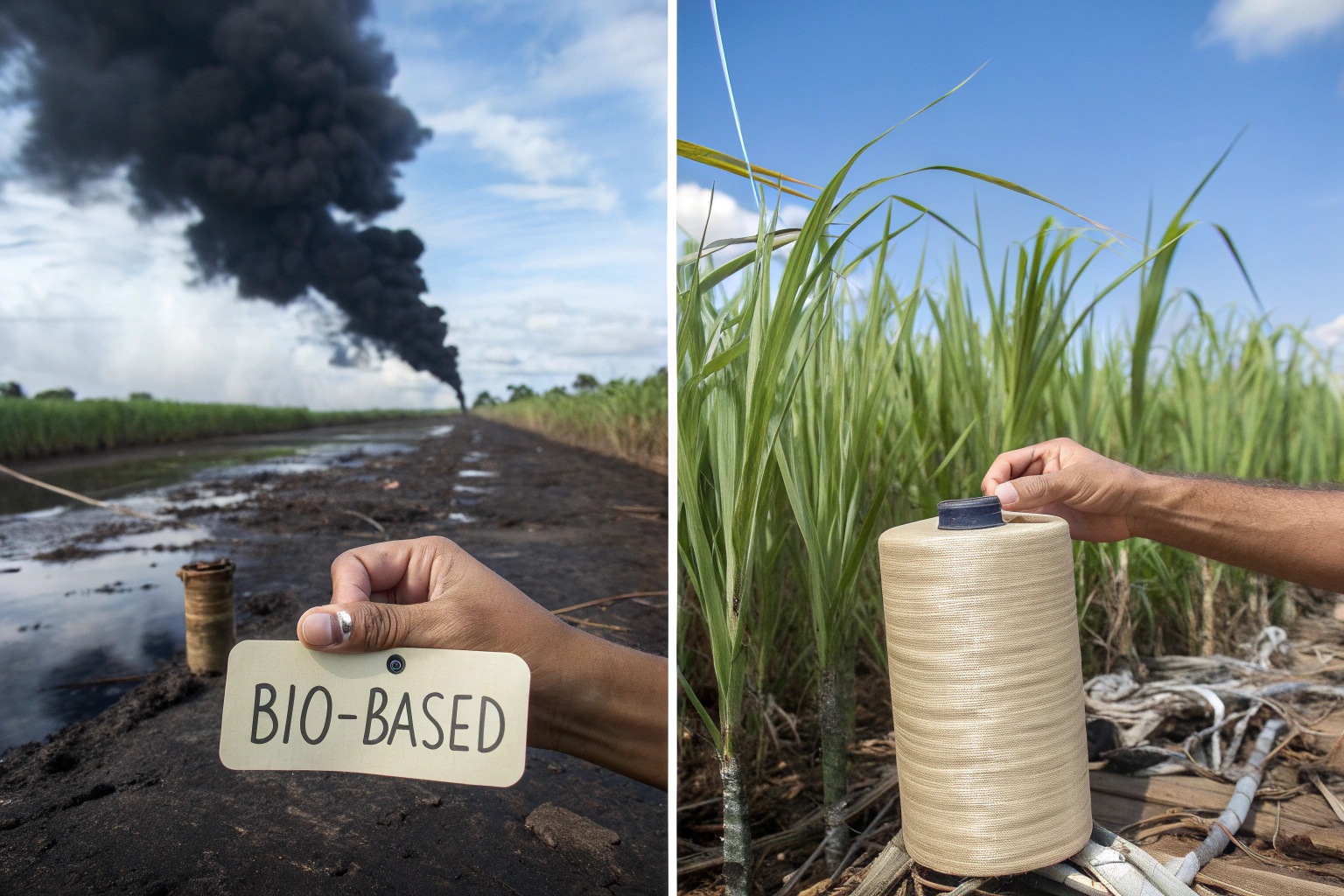
I’m going to be honest with you. For twenty years I’ve made a lot of money selling Virgin Polyester . It’s cheap. It’s strong. It holds color like a dream. It’s the workhorse of the global apparel industry. And I’ve watched it slowly become Public Enemy Number One .
The tide has turned. And it hasn’t turned because of government regulations or because of activist pressure. It’s turned because of the Consumer . The 25-year-old woman buying activewear on Instagram doesn’t just want a pair of leggings. She wants a pair of leggings that didn’t come from a Drill Hole in the Ground . She has been educated on Microplastics . She knows that every time she washes a polyester fleece tiny bits of plastic flow into the ocean. She feels guilty wearing it.
Brands are moving to Bio-Polyester not because they want to save the planet (though that’s a nice bonus) but because they want to Save Their Margins . They see the writing on the wall. The brands that cling to virgin petroleum-based synthetics will be the "Bad Guys" of the next decade. They will face carbon taxes greenwashing lawsuits and consumer boycotts.
At Shanghai Fumao we’ve been transitioning our synthetic inventory for the past three years. We now stock Bio-Based PET alongside our conventional PET. In this article I want to cut through the greenwashing and explain exactly what Bio-Polyester is how it performs and why it’s a smart business decision not just a moral one.
What Is the Raw Material Source for Bio-Based Polyester
Let’s clear up the biggest misconception right now. Bio-Polyester is NOT Biodegradable. I repeat. It will not rot in a landfill. It is chemically Identical to conventional polyester. It is Polyethylene Terephthalate (PET) . The same stuff water bottles are made of.
The only difference is Where the Carbon Comes From .
Conventional Polyester: The raw material is Ethylene Glycol and Purified Terephthalic Acid (PTA) . Both are derived from Crude Oil . It’s ancient carbon locked underground for millions of years. When you burn it or it degrades you release New CO2 into the atmosphere.
Bio-Based Polyester: The raw material is Bio-Ethylene Glycol . This is derived from Sugarcane Molasses or Corn Starch . These plants grew recently pulling Existing CO2 out of the atmosphere. The carbon in the fabric is "Modern Carbon."
This is a crucial distinction for marketing. You cannot say "Biodegradable." You can say "Plant-Based Raw Materials" or "Reduced Fossil Fuel Dependency."
The most common bio-polyester on the market is Sorona (by DuPont) which uses 37% Plant-Based Content (Bio-PDO instead of Petro-PDO). There are also 100% Bio-PET fibers where the MEG component is plant-based (about 30% of the total molecule weight).
How Does Sugarcane Ethylene Compare to Petroleum Ethylene
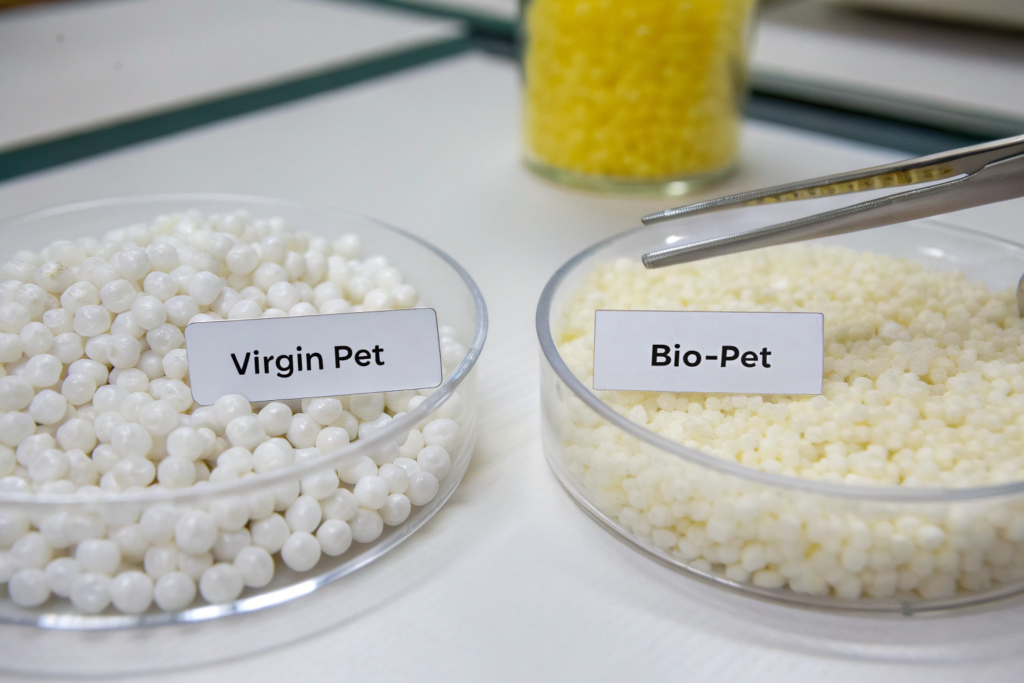
Chemically they are Identical . The polymer chain is exactly the same length. The melting point is the same (260°C). The dye uptake is the same.
The difference is in the Trace Impurities .
Petroleum-derived MEG often contains trace amounts of Heavy Metals and Aldehydes from the cracking process. These can cause Yellowing over time especially in white fabrics.
Bio-derived MEG from sugarcane is Purer . It has fewer catalyst residues. As a result Bio-Polyester is Often Whiter and Brighter than conventional polyester. It has better Optical Brightness .
This is a huge advantage for activewear and shirting. You get a crisper white without needing as much Optical Brightener Agent (OBA) chemicals.
What Is the Difference Between Bio-Based and Biodegradable Polyester
This is where the greenwashing happens. Some brands use "Bio-Polyester" and hope the consumer confuses it with "Biodegradable."
Bio-Based (Bio-PET): Same plastic different carbon source. Persists in the environment for 500+ years. Solves the Carbon Origin Problem . Does Not solve the Microplastic Problem .
Biodegradable Polyester (PBS PBAT PLA): These are completely different polymers (often Aliphatic Polyesters). They Break Down under specific industrial composting conditions (high heat moisture microbes). They do Not break down in the ocean or in a home compost pile. They are Weaker and Less Durable than PET. They are not suitable for durable apparel (yet).
Be very specific in your sourcing. If you want biodegradability you need PLA or PBS . If you want performance and recyclability with a better carbon story you want Bio-PET .
How Does Bio-Polyester Compare to Virgin PET in Durability
This is the question that keeps production managers up at night. "Will this new ‘green’ fabric fall apart in the wash?"
The answer is No. It Performs Identically.
Because the polymer chain length (Intrinsic Viscosity ) is the same the physical properties are indistinguishable from virgin PET.
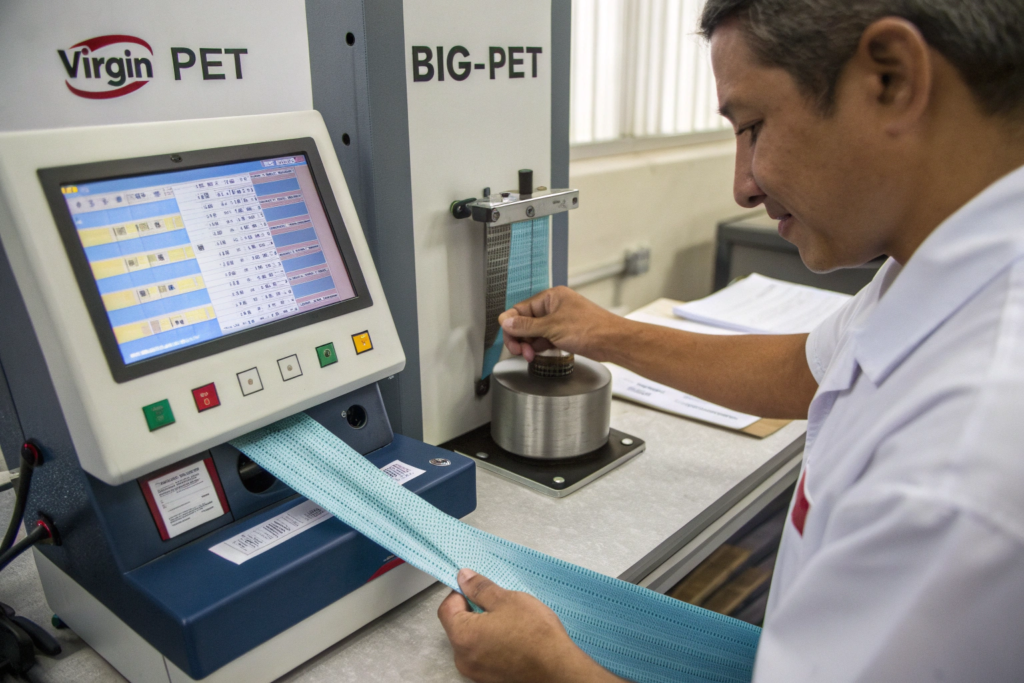
Tensile Strength: Bio-PET matches Virgin PET. You can weave it into a 20D ultralight ripstop and it will hold up to trail abuse.
Abrasion Resistance: In our Martindale tests Bio-PET scores within the Margin of Error of Virgin PET. It will not pill faster.
Color Fastness: Because the polymer is pure Bio-PET often has Better Wash Fastness for dark colors. There are fewer impurities for the dye to compete with.
The only difference we see in the mill is Slightly Better Moisture Management . Bio-PET seems to have a marginally higher Surface Energy right out of the extruder. It wets out faster in the dye bath and it wicks sweat slightly better in the finished garment. It’s a small difference but it’s a real one.
At Shanghai Fumao we guarantee the same performance specs for our Bio-PET fabrics as we do for our Virgin PET fabrics. We use the same weaving and finishing protocols.
Are There Any Drawbacks to Dyeing Bio-Based Polyester
The only drawback is Consistency of Supply not quality of dyeing.
Because the raw material is agricultural the Base Color of the Polymer can vary Slightly from harvest to harvest. A batch from a wet sugarcane season might be a shade more Creamy than a batch from a dry season.
This affects Pastel Colors the most. A very pale Mint Green or Baby Pink might have a tiny shift in undertone.
We compensate for this with Spectrophotometer Matching . We adjust the dye recipe by fractions of a gram to hit the exact Pantone standard. It requires a more skilled lab technician but the end result is identical.
How Does Bio-PET Perform in Mechanical Recycling Systems
This is the Circular Economy advantage.
Bio-PET is "Drop-In" Compatible with the existing PET recycling stream. You can throw a Bio-PET shirt into the same recycling bin as a Virgin PET water bottle. They melt together and become Recycled Polyester (rPET) .
This is not true for PLA (Polylactic Acid). PLA is a Contaminant in the PET recycling stream. It melts at a lower temperature and ruins the batch. Sorting facilities hate PLA.
If you are a brand with a Take-Back Program Bio-PET is the smarter choice. It can be recycled back into fiber infinitely (in theory).
What Are the Real Carbon Savings of Switching to Bio-Polyester
This is where the business case gets compelling. Carbon is becoming a Financial Liability .
The European Union’s Carbon Border Adjustment Mechanism (CBAM) and various Extended Producer Responsibility (EPR) schemes are starting to put a price on embedded carbon. A fabric with a high carbon footprint will soon cost more to import and sell.
Virgin Polyester: Carbon Footprint is roughly 5.5 kg CO2e per kg of fiber .
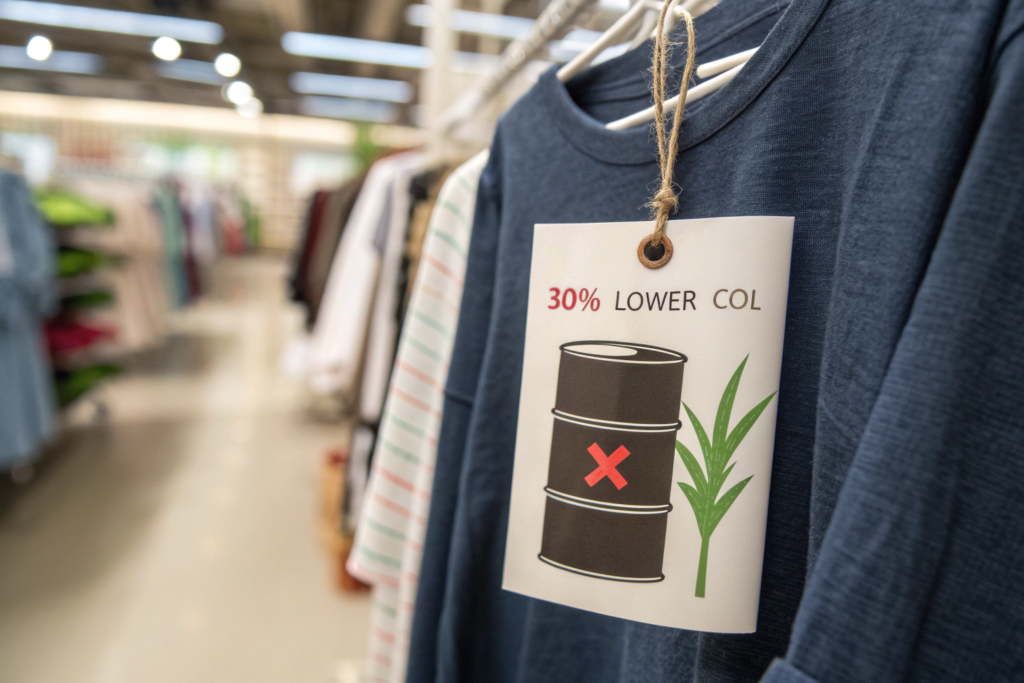
Bio-Based Polyester (Partial): Carbon Footprint is roughly 3.5 kg CO2e per kg of fiber . A 30-40% Reduction .
Where does the saving come from?
- Feedstock: Sugarcane absorbs CO2 as it grows.
- Energy: Bio-MEG production is less energy-intensive than Petro-MEG cracking.
This carbon saving is Real Auditable and Certifiable . You can use it in your corporate sustainability reports. You can use it to offset other parts of your supply chain.
For a brand making 100,000 units of activewear switching to Bio-PET is equivalent to taking Dozens of Cars Off the Road for a year. That’s a tangible marketing story.
How to Verify Bio-Based Content Claims with ASTM D6866
Just like GRS for recycled content there is a forensic test for bio-based content.
ASTM D6866 uses Carbon-14 Dating . It measures the ratio of Modern Carbon (C14) to Fossil Carbon (C12) in the fabric.
If the fabric is 100% Virgin Petro-PET the C14 level is Zero . It’s dead carbon.
If the fabric is 30% Bio-Based the C14 level is 30% of Modern Reference .
You can send a fabric swatch to a lab like Beta Analytic and they will give you a Percentage of Biobased Carbon . This is the gold standard proof. It prevents fraud.
If a supplier claims "Bio-Based" ask for the ASTM D6866 Certificate . If they don’t have one they are guessing or lying.
What Is the Price Premium for Bio-Polyester in 2026
Let’s talk money. This is the barrier to entry.
Conventional PET Staple Fiber: $1.20 – $1.50 per kg.
Bio-Based PET Staple Fiber: $1.80 – $2.20 per kg.
The premium is 40-60% at the fiber level .
But as you move down the supply chain that premium Dilutes .
Fiber to Yarn: The cost of spinning is the same. Premium drops to 20-30% .
Yarn to Fabric: The cost of weaving is the same. Premium drops to 10-15% .
Fabric to Garment: The cost of Cut/Sew is the same. Premium is <5% of Retail Price .
On a $60 retail activewear top the Actual Cost Difference between Virgin PET and Bio-PET is about $0.80 .
For Eighty Cents the brand gets a powerful sustainability story and future-proofs against carbon taxes. That’s a No-Brainer ROI .
How to Market Bio-Polyester Without Greenwashing
The biggest risk with Bio-Polyester is Overselling . If you say "Eco-Friendly Plastic-Free Sustainable" you will get called out by watchdog groups and you will deserve it.
The only defensible marketing position is "Better Than Conventional." Not "Perfect."
Approved Language (Safe):
- "Made with Plant-Based Materials"
- "Reduces Reliance on Fossil Fuels"
- "Lower Carbon Footprint vs. Virgin Polyester"
- "Identical Performance Recyclable Quality"
Forbidden Language (Dangerous):
- "Biodegradable"
- "Plastic-Free"
- "Eco-Friendly" (Too vague)
- "Compostable"
I advise my clients to use a "Progress Not Perfection" narrative. Be transparent about the limitations. "This garment is made from 37% plant-based materials. It performs like traditional activewear but with a smaller carbon footprint. It is not biodegradable and should be recycled at end of life."
This honesty builds Trust . Consumers are savvy. They appreciate a brand that doesn’t talk down to them.
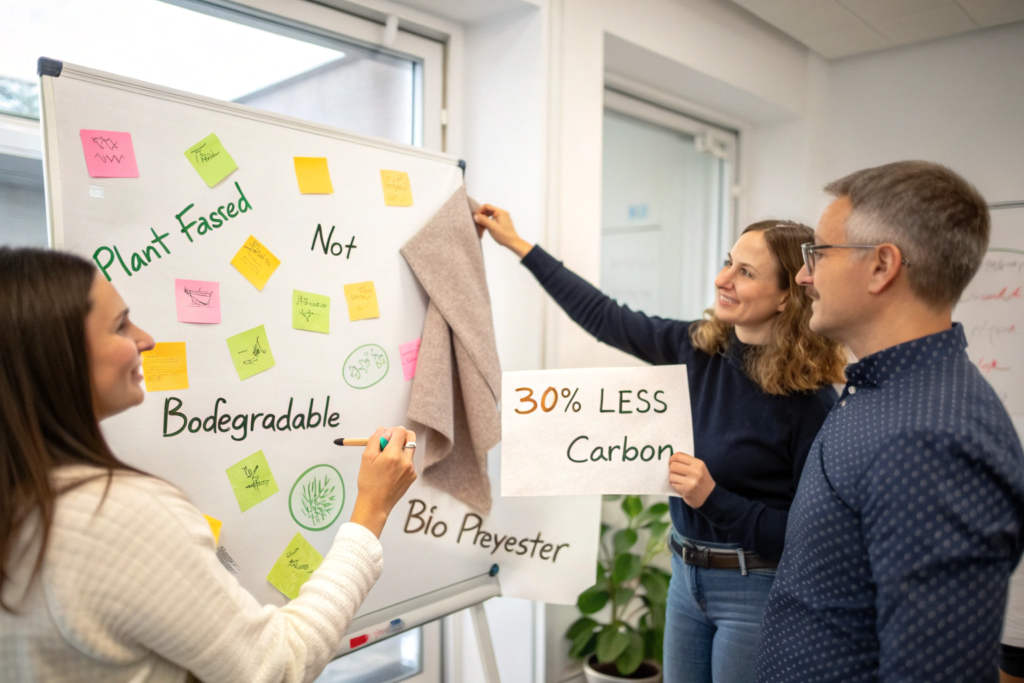
How to Educate Consumers on the Difference Between Bio and Virgin
The average consumer thinks "Polyester = Bad. Natural = Good." You have to re-educate them.
Use Visual Storytelling . Show the Sugarcane field. Show the white pellets. Show the fabric. Show the garment.
Create a simple Comparison Graphic :
| Feature | Virgin Polyester | Our Bio-Polyester |
|---|---|---|
| Raw Material | Petroleum | Sugarcane |
| Carbon Footprint | Higher | 30% Lower |
| Feel | Soft Tech | Softer |
| Recyclable | Yes | Yes |
This simple table on a hang tag or a product page does the heavy lifting of education.
What Certifications Should You Look for in Bio-Based Fabrics
Don’t rely on a supplier’s word. Look for Third-Party Verification .
- USDA BioPreferred: Certifies the Percentage of Bio-Based Content . This is the US Government standard.
- OK Biobased (TÜV Austria): A European certification with a star rating (1-4 stars) based on bio-based content.
- ISCC Plus: Certifies the Sustainability of the Biomass Feedstock (e.g., no deforestation no food competition).
A fabric with both USDA BioPreferred and ISCC Plus is the gold standard. It means the plant source is sustainable and the product contains verified bio-content.
Conclusion
Brands are moving away from conventional polyester to bio-polyester because it is a pragmatic step forward in a complex sustainability landscape. It is not a silver bullet. It does not solve the microfiber pollution problem. But it does address the Fossil Fuel Dependency and Carbon Footprint of the most widely used fiber in the apparel industry.
For a business the switch makes financial sense. The cost premium is marginal at the retail level but the marketing value and the regulatory protection against carbon pricing are substantial. Bio-polyester allows a brand to keep the performance characteristics that customers love stretch recovery durability while shedding the negative stigma of petroleum-based synthetics.
At Shanghai Fumao we are committed to helping our clients navigate this transition. We offer a growing range of Bio-PET fabrics that meet the same rigorous performance standards as our conventional synthetics. We provide the documentation the certifications and the transparent pricing to make the switch easy.
If you are evaluating bio-based alternatives for your synthetic program and want to see swatches and cost comparisons please contact our Business Director Elaine. She can provide our latest Bio-Polyester line sheet and walk you through the certification documents.
Contact Elaine at: elaine@fumaoclothing.com