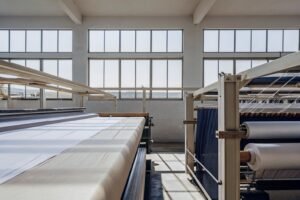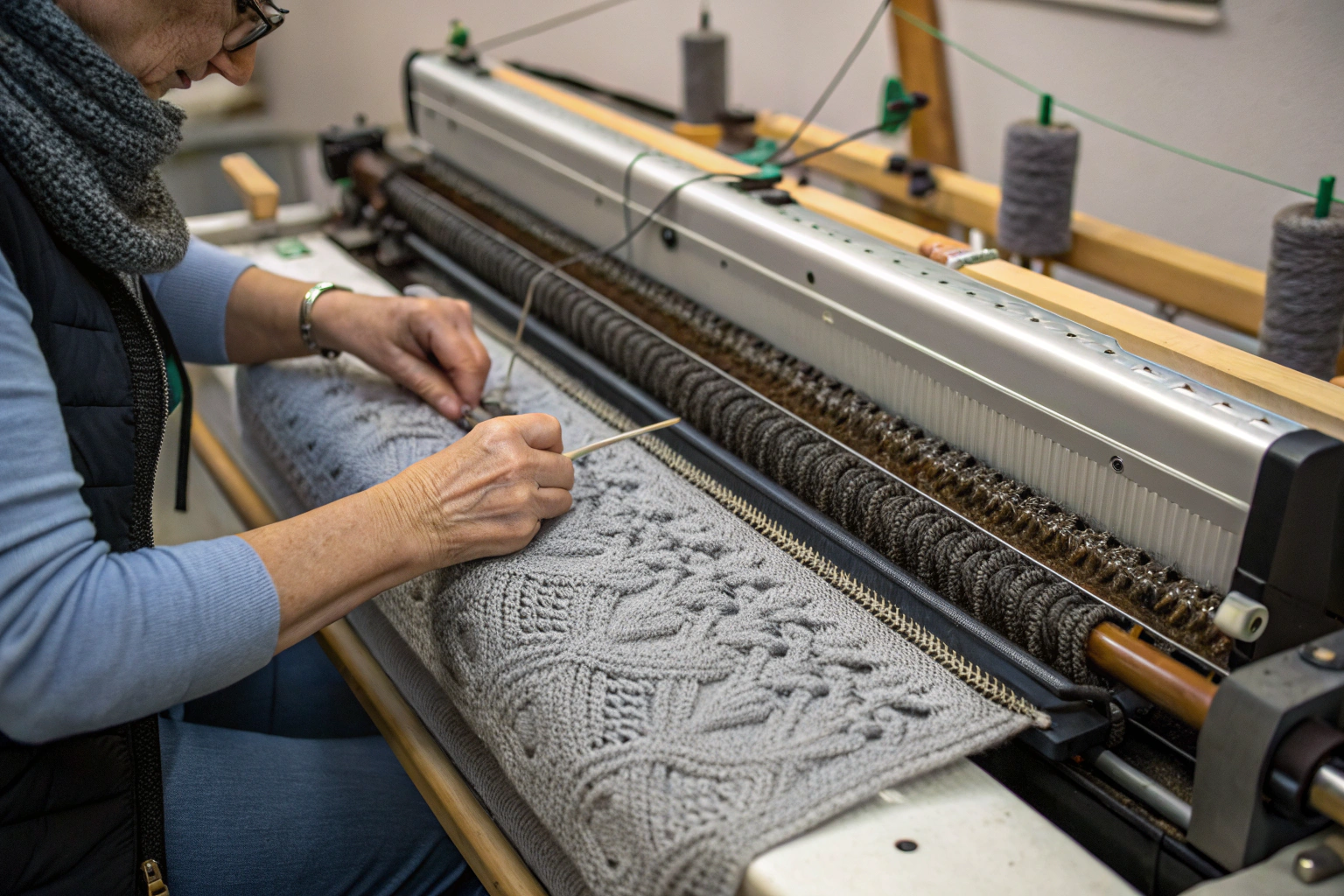
I’m going to tell you something that most sourcing agents won’t admit. Finding a good factory is easy. Finding a rare factory is a treasure hunt. Any mill with 50 circular knitting machines can make you a basic 180 GSM cotton jersey. They’re a dime a dozen. But if you want Intarsia ? If you want Milanese ? If you want a Fully Fashioned Collar knit in one piece without seams? You’re looking for a unicorn.
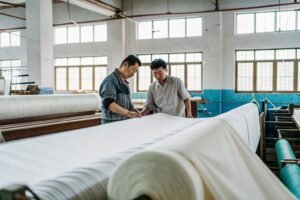
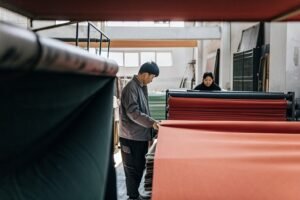
These factories don’t have big flashy booths at the trade shows. They don’t have SEO-optimized websites. They are often Small Family-Owned Workshops tucked away in the backstreets of industrial districts. The owner is the head mechanic. The head mechanic is the quality control manager. They have One Specific Machine that does One Specific Thing better than anyone else in the world. And they are usually Booked Solid .
I’ve spent twenty years building relationships with these kinds of knitters. I’ve had to prove myself to them just as much as they had to prove themselves to me. They don’t trust big talkers. They trust people who speak the language of Gauge and Tension .
At Shanghai Fumao we act as a bridge to these specialized workshops. We handle the logistics the financing and the quality assurance so these artisans can focus on what they do best. In this article I’m going to show you how to find these hidden gems how to speak their language and how to convince them to take a chance on your small brand.
What Defines a Rare or Specialty Knit Construction
Before you can find the factory you have to know exactly what you’re asking for. "Rare Knit" is a vague term. In the mill we define it by Machine Capability .
A Commodity Knit is made on a High-Speed Circular Knitting Machine . Single Jersey Interlock Rib. These machines pump out 100kg of fabric per day. They are efficient but they are Limited in Pattern .
A Rare Knit is made on a Flatbed Knitting Machine or a Specialty Circular Machine . These are the categories that separate the pros from the amateurs.
- Intarsia: This is the holy grail. It’s a technique where blocks of color are knitted in without the yarn floating across the back. It’s Clean on Both Sides . It requires a Special Intarsia Carriage on the knitting machine. Very few factories have this setup and those that do charge a premium.
- Milanese Knit: A warp knit that creates a Diagonal Lightweight Mesh . It’s incredibly stable and was used for high-end gloves and lingerie. Only a handful of antique machines still produce this in Italy and Japan.
- Fully Fashioned Knitting: The garment pieces are knitted To Shape on the machine. There is no cutting waste. The edges are finished as they are knit. This requires Shaping Software and skilled operators who understand Fashioning Marks .
- Pointelle and Lace Knits: These use Transfer Stitches to create holes and patterns. They are fragile and Slow to Knit . Many mills won’t touch them because the Machine Efficiency is low (under 60%).

Why Is Intarsia Knitting So Difficult to Source Reliably
Intarsia is the white whale. Every designer wants it. Almost no one wants to make it.
Here is the problem from the factory floor. A standard flatbed machine can knit a plain sweater in 20 Minutes . The same machine knitting an intarsia pattern might take 2 Hours .
The machine head has to stop. The carriage has to select a specific needle. The yarn feeder has to drop one color and pick up another. This is Mechanical Complexity . More complexity means more Downtime and more Defects .
A factory that specializes in intarsia has to charge 3-4 Times the Knitting Cost of a plain sweater just to make the same profit per machine hour. Most brands don’t understand this math. They want Intarsia at Plain Sweater prices. When the factory quotes the real price the brand walks away. So the factory stops offering it. They just make plain sweaters because it’s easier and more profitable.
To find a true Intarsia specialist look for a factory that Only Does Intarsia . They have optimized their entire workflow around this slow technique. They are often in the Hawick region of Scotland or the Prato region of Italy or specific workshops in Nantong China .
How Does Gauge Affect the Availability of Specialty Machines
Gauge is the number of needles per inch. It dictates the Fineness of the knit.
- Coarse Gauge (3G 5G 7G) : Chunky sweaters. These machines are Durable and common.
- Mid Gauge (10G 12G 14G) : Standard menswear and womenswear. Very Common .
- Fine Gauge (16G 18G 21G) : Lightweight refined knits. Less Common .
- Ultra-Fine Gauge (24G+) : Silk and cashmere "Second Skin" knits. Extremely Rare .
Finding a 21G Intarsia machine is like finding a vintage Ferrari. They exist but they are owned by collectors and specialists. The needles are so fine they break if you look at them wrong. The setup takes a master technician.
If you are designing a fine-gauge rare knit you Must find a factory that specializes in that exact gauge. A factory that runs 12G all day will Struggle with 18G. The tension settings are different. The yarn requirements are different. They will ruin your expensive yarn.
How to Use Technical Language to Vet Knitting Mills
You cannot fake expertise with a rare knit mill. If you walk in and say "I want a soft sweater" they will smile nod and quote you a high price for a basic jersey because they don’t trust you.
If you walk in and say "I’m looking for a 12gg 3-color Intarsia on a Compact Spun Geelong Wool with a Tubular Selvage " they will pull up a chair and offer you tea. You have spoken the Secret Handshake . You have proven you know the cost and complexity of what you’re asking for.
Here are the specific terms you need to drop into the conversation.
- "What is your maximum Intarsia color count per row?" (Standard is 4-6 colors. More than that is specialized.)
- "Do you use a Split Stitch or a Bind-Off at the intarsia join?" (Split stitch is cleaner but slower.)
- "Can you show me a Fashioning Mark sample?" (This proves they do fully fashioned knitting.)
- "What is your Waste Percentage on this yarn?" (Rare knits have higher waste. A good mill tracks this.)
When you use this language the mill owner knows you are Serious . They know you won’t complain about the price or the lead time. They will be more willing to open up their capacity for you.

What Questions to Ask About a Factory’s Yarn Feeding Systems
This is a deep technical dive that separates real knitters from fabric traders.
For a rare knit like intarsia or jacquard the Yarn Feeding System is critical. Ask:
"Are you running Mechanical or Electronic Yarn Feeders?"
- Mechanical Feeders: Old school. Reliable. Great for solid colors. Terrible for complex patterns.
- Electronic Feeders: Modern. They can Vary the Tension on the fly for each color. This is Essential for Intarsia to prevent the fabric from puckering where colors join.
"Do you have Plating Capability on your flatbeds?"
- Plating means feeding two yarns at once (e.g., Cashmere on the face Cotton on the back). This is a premium technique. Not all machines can do it well.
The answer to these questions tells you immediately if you are talking to a Knitting Specialist or a Salesman .
How to Interpret a Factory’s Defect Rate for Complex Stitches
Every factory has defects. The question is How Many and What Kind?
For a standard jersey a Defect Rate of 2-3% is acceptable. For a complex intarsia or pointelle a Defect Rate of 8-10% is Normal .
A dishonest factory will hide this. They will just knit extra panels and absorb the cost into the price. A Honest Specialist will tell you upfront: "This design has a lot of transfer stitches. We expect 10% waste. We’ll factor that into the yarn order."
Ask to see their Internal Mending Report . Rare knits often require Hand Mending . A tiny hole from a broken needle is fixed by a skilled woman with a latch needle. This is Artisan Work . It’s part of the process.
If a factory claims they can knit a complex intarsia with "Zero Defects" they are Lying or they have Never Done It Before . Both are red flags.
Where Are the Hidden Hubs for Vintage and Specialty Knits
The internet has flattened the world for commodity goods. But for rare knits Geography Still Matters . Skills cluster in specific regions due to history water quality and the availability of Machine Mechanics .
Region 1: Hawick Scotland. This is the spiritual home of Fine Gauge Cashmere Intarsia . The water in the River Teviot is incredibly soft ideal for washing delicate wool. The town is full of retired machine techs who can fix a 40-year-old Bentley knitting machine with a paperclip and a prayer. If you want Argyle Sweaters or Pringle-Style Classics you come here.
Region 2: Prato Italy. This is the capital of Regenerated Wool and Textured Novelty Knits . The Pratese have mastered the art of taking old rags and turning them into beautiful Bouclé and Slub Yarns . They also have a high concentration of Flatbed Jacquard machines.
Region 3: Nantong and Zhangjiagang China. While known for volume these regions have developed deep pockets of Specialization . Specific villages in Zhangjiagang Only Do Woolen Cashmere Scarves . Specific factories in Nantong Only Do 14gg Cotton Intarsia for Japanese Brands . You have to know the local "Champion" factory in each niche.
At Shanghai Fumao we have spent years mapping this geography. We know which village to go to for Milanese Mesh and which one to avoid for Pointelle .

Why Are Some Knitting Techniques Region-Specific
This is a story of Industrial Heritage and Machine Migration .
In the 1980s and 1990s as textile manufacturing declined in the West thousands of Second-Hand Knitting Machines were sold to Asia. Entire factories in Scotland were disassembled bolt by bolt and shipped to Mauritius and China .
But the Knowledge didn’t always travel with the machines. The Scottish technician who knew the quirks of that specific 1972 Stoll machine stayed in Scotland.
In some places like Nantong the local engineers became Obsessive Experts . They reverse-engineered the machines. They learned to fabricate replacement parts. They became the new masters. But they only mastered the specific machine type that arrived in that specific town.
That’s why you find Flatbed Jacquard clustered in one area and Sinker Knits clustered in another. It’s an accident of history.
How to Vet a Small Family-Owned Knitting Workshop
When you find one of these hidden gems you have to approach them differently than a big corporate mill.
- Respect the Hierarchy: The Nonno (Grandfather) is the boss even if his son runs the sales. Greet him first.
- Don’t Ask for a Catalog: They don’t have one. They make what they make. Bring a Physical Swatch or a Vintage Garment . Say "Can you make this?" That’s how they work.
- Be Patient with Communication: They might not answer emails for three days. They are on the factory floor fixing a machine. Use WhatsApp and send voice notes. It’s more personal.
The reward for this patience is a Lifetime Supply Partner . Once a small family workshop trusts you they will bend over backwards to meet your deadlines. They will run a small 50-piece order for you at cost just to keep the relationship warm. This is the old way of doing business and it’s still the best way.
How to Navigate High Minimums for Rare Yarn Blends
Finding the factory is half the battle. The other half is Feeding the Beast . Rare knit factories need Rare Yarn . And rare yarn comes with Brutal MOQs .
If you want a custom color in a 100% Baby Alpaca yarn the spinning mill might require 200kg per color . For a lightweight fine-gauge sweater that’s 500-600 Sweaters worth of yarn. If you only need 100 sweaters you have a problem.
Strategy 1: Stock Service Yarn. Just like fabric we work with yarn spinners who keep Greige Yarn in stock. You can dye as little as 20kg in a custom color. The color range is limited but it solves the MOQ problem.
Strategy 2: Piggyback on Mill Orders. We ask the knitting mill "What are you spinning this month?" If they are running a Navy Merino for another client we can often add our Navy Merino order to the same batch. We just use their yarn.
Strategy 3: Blend Down. Instead of 100% Cashmere use 50% Cashmere / 50% Merino . The Merino is easier to source in small batches and the handfeel is still luxurious.
At Shanghai Fumao we manage a Yarn Bank . We aggregate orders from multiple small brands to meet the spinner’s minimums. We take the inventory risk so you don’t have to.

What Is the Cost Differential for Small Batch Yarn Dyeing
Let’s talk real numbers. The math of Skein Dyeing vs Cone Dyeing .
Cone Dyeing (Bulk): The yarn is on a plastic cone. The dye liquor flows through it under pressure. Efficient and cheap. Cost: $2-3 per kg . MOQ: 100kg .
Skein Dyeing (Small Batch): The yarn is wound into a loose hank. It’s dyed in an open vat. It’s gentler on the fiber (better for cashmere) but it’s Labor Intensive . Cost: $8-12 per kg . MOQ: 5kg .
For a small brand the Per Unit Cost of skein dyeing is higher but the Total Cash Outlay is lower. You pay $100 to dye 10kg of yarn instead of $300 to dye 100kg of yarn you don’t need. Cash Flow is King .
How to Calculate Yarn Waste for Complex Intarsia Patterns
This is a line item that destroys margins if you’re not prepared.
In a plain sweater the Yarn Waste is about 3-5% (just the trimmings and cones ends).
In an Intarsia Sweater the Yarn Waste can be 15-25% .
Why? Yarn Joins . Every time the machine changes color it leaves a Tail . Those tails are trimmed off and thrown away. If you have a sweater with 50 small color blocks you have 50 tails. That’s a lot of expensive cashmere in the trash bin.
You must factor this waste into your Landed Cost Calculation . A good factory will provide a Yarn Consumption Estimate that breaks this down for you.
Conclusion
Finding a factory that specializes in rare knits is a journey into the deep craft of textile manufacturing. It requires you to leave the well-lit aisles of the big trade shows and venture into the backstreets of industrial towns. It requires you to learn a new language of gauges feeders and fashioning marks. And it requires the patience to build a relationship based on mutual respect rather than transactional emails.
The reward is access to a level of product differentiation that is impossible to achieve with commodity jersey. Intarsia pointelle and fully fashioned knits create a visual and tactile signature that defines luxury. They are the garments that customers keep for decades and pass down to their children.
At Shanghai Fumao we serve as a bridge between creative brands and these specialized artisans. We understand the capabilities and limitations of the niche knitting workshops in our network. We can help you navigate the technical specifications the yarn sourcing and the minimum order quantities to bring your knitwear vision to life.
If you’re ready to explore the world of specialty knits and need a partner who speaks the language please reach out to our Business Director Elaine. She can discuss your design concepts and connect you with the right craftsperson for the job.
Contact Elaine at: elaine@fumaoclothing.com