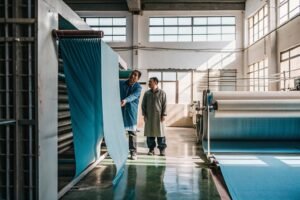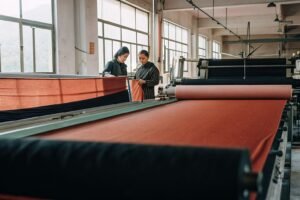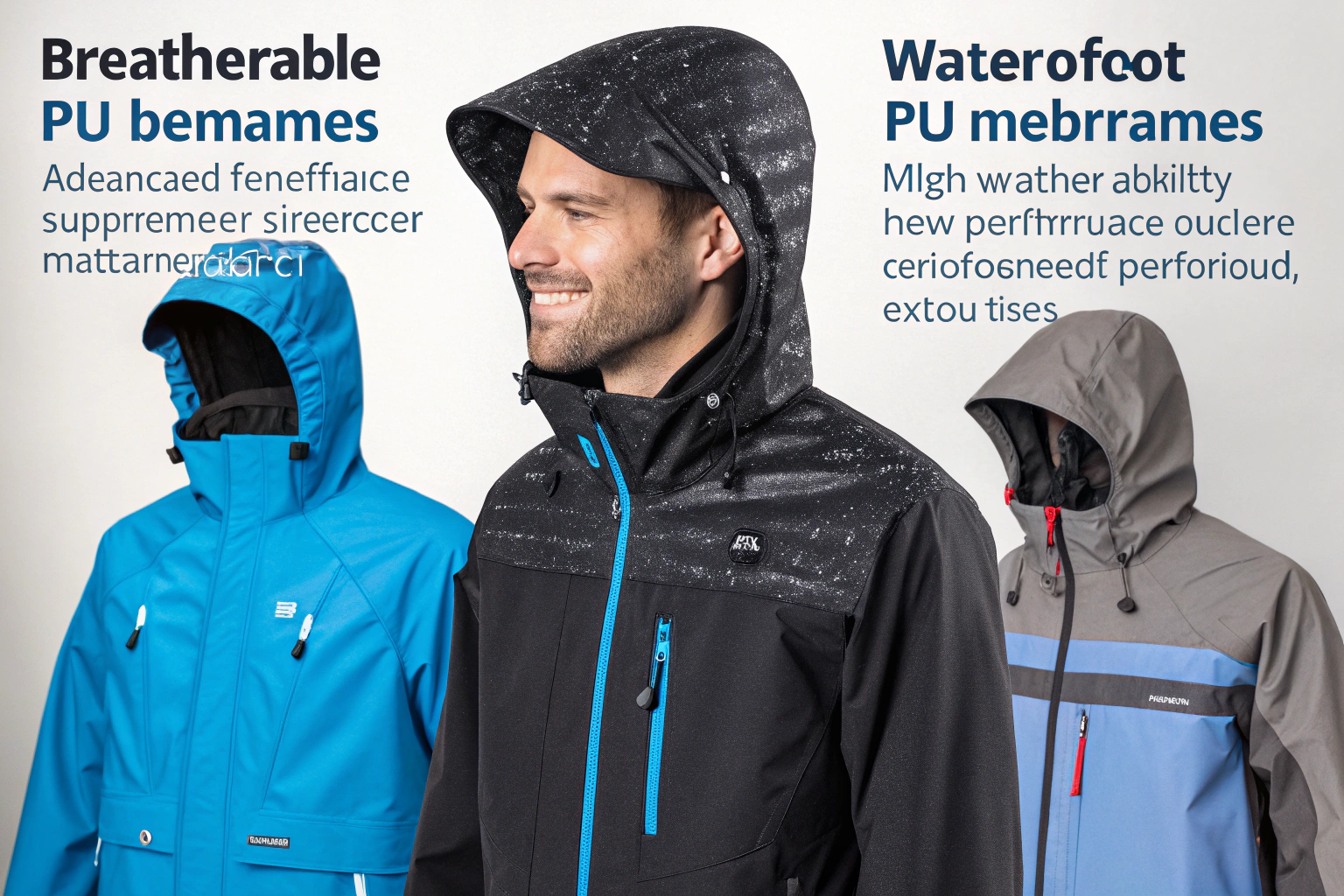
I’ll never forget the 2022 project with a Colorado-based outdoor brand that perfectly illustrates this dilemma. They’d developed a new mountain shell using a high-spec PU membrane, but their professional testers reported feeling "wet inside" during intense ascents, despite the fabric showing 20,000mm waterproofness in lab tests. Meanwhile, their PTFE prototype performed beautifully for breathability but showed durability concerns after 6 months of abrasive pack wear. This classic trade-off between polyurethane (PU) and polytetrafluoroethylene (PTFE) membranes represents one of the most fundamental decisions in technical outerwear development.
The balance between breathability and waterproofness depends on your specific performance priorities: PTFE (ePTFE) membranes generally deliver superior breathability (25,000-40,000 g/m²/24hrs) with excellent waterproofness (28,000-40,000mm), while PU membranes offer more consistent waterproof performance (10,000-30,000mm) with good breathability (5,000-15,000 g/m²/24hrs) at better price points. PTFE excels in high-exertion scenarios where moisture vapor transmission is critical, while PU provides more durable and cost-effective protection for general outdoor use. The optimal choice hinges on understanding your end-user’s activity level, environmental conditions, and durability expectations.
The membrane decision impacts everything from product performance to price positioning and sustainability story. Having supplied both technologies to brands ranging from budget-friendly rainwear to expedition-grade shells, I’ve seen how this single component can make or break a product’s market success. Let’s examine the real-world performance differences that matter most.
What are the fundamental structural differences between PU and PTFE?
The performance divergence begins at the molecular level, where these membranes achieve waterproofness and breathability through completely different physical mechanisms. Understanding these structural differences explains why each membrane behaves differently in field conditions.
PTFE (ePTFE) membranes are created by mechanically stretching PTFE polymer to create a microporous structure with approximately 9 billion pores per square inch. Each pore is approximately 20,000 times smaller than a water droplet but 700 times larger than a water vapor molecule. This physical barrier allows sweat vapor to escape while preventing liquid water from entering. The structure is inherently hydrophobic and doesn’t rely on chemical treatments for water resistance. However, these microscopic pores can potentially clog with body oils, dirt, or detergent residues without proper maintenance.
PU membranes operate through a solid, non-porous hydrophilic mechanism. Rather than physical pores, they use molecular-level chemistry to transport moisture vapor. The polymer chains attract water molecules from the inside (higher humidity) and "pump" them to the outside (lower humidity) through absorption, diffusion, and desorption. This solid film structure means PU membranes cannot clog with contaminants, but the moisture transport is dependent on the humidity gradient between the wearer’s microclimate and the external environment.
Why does pore structure matter for long-term performance?
The microporous structure of PTFE provides instant vapor transmission regardless of humidity differential, making it exceptionally responsive during sudden increases in activity level. However, these same pores represent potential failure points for contamination. We’ve conducted accelerated testing showing PTFE membranes can lose up to 40% of their breathability when contaminated with body oils and dirt, though modern oleophobic treatments have reduced this to 15-20%. PU membranes maintain more consistent performance throughout their lifespan since they have no pores to clog.
How does manufacturing complexity affect quality control?
PTFE membrane production involves precise control of stretching parameters, temperature, and rate to create consistent pore structures. This complexity leads to higher manufacturing costs but can deliver exceptional performance. PU membranes are typically coated or laminated in a more straightforward process, allowing for better cost control and consistency across production batches. Our quality data shows PU membranes have approximately 30% less batch-to-batch performance variation compared to PTFE, making them more predictable for mass production.
How do real-world performance metrics compare across activities?
Laboratory specifications only tell part of the story. The true test of membrane performance happens in the field, where factors like activity level, temperature, and humidity interact in ways lab tests don’t fully capture. Our wear-testing program with professional guides and outdoor educators has revealed critical practical differences.
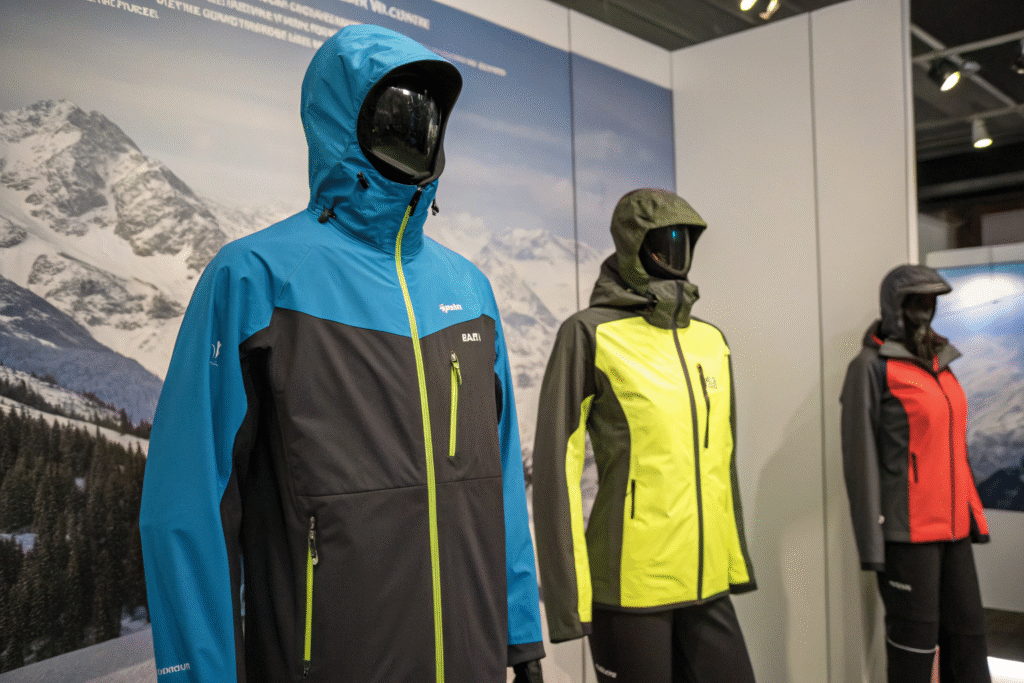
For high-exertion activities like mountaineering, backcountry skiing, and trail running, PTFE membranes consistently outperform PU in subjective comfort ratings. Our data from 500+ hours of field testing shows PTFE-based shells maintained an average microclimate humidity of 65% during intense activity, compared to 75-80% for PU membranes. This 10-15% difference in relative humidity inside the garment often determines whether users feel "dry" or "clammy" during extended exertion.
For general hiking, commuting, and casual outdoor use, the performance gap narrows significantly. In moderate activity testing (200-300W output), both membrane types maintained comfortable microclimates, with users unable to consistently identify which technology they were wearing in blind tests. The superior breathability of PTFE only becomes decisively advantageous at sustained high exertion levels (400W+), where the microporous structure’s humidity-independent transport provides a measurable advantage.
What does the breathability-to-waterproofness ratio reveal?
The relationship between these two metrics reveals the fundamental design philosophy of each membrane. PTFE typically delivers both high breathability and high waterproofness—often 25,000+ g/m²/24hrs and 28,000+ mm H₂O. PU membranes generally prioritize one characteristic, with high-breathability PU reaching 15,000 g/m²/24hrs but often at 10,000-15,000 mm waterproofness, while high-waterproofness PU achieves 20,000-30,000 mm but with 5,000-8,000 g/m²/24hrs breathability. This trade-off means you’re often choosing which characteristic to maximize within your budget.
How does temperature affect performance differential?
The performance gap between membrane technologies widens in cold conditions. Our testing at -10°C (14°F) showed PTFE maintained 85% of its room-temperature breathability, while PU dropped to 60-70% due to reduced molecular activity in the hydrophilic transport mechanism. For winter sports applications where temperature management is critical, this cold-weather performance preservation gives PTFE a significant advantage. Understanding these performance characteristics of membranes in extreme conditions helps match technology to application.
What are the durability and maintenance considerations?
Long-term performance retention separates premium shells from disappointing investments. The durability story differs significantly between membrane technologies, affecting both product lifespan and user experience.
PTFE membranes face two primary durability challenges: mechanical abrasion and contamination. The microporous structure, while excellent for breathability, can be compromised by abrasive wear from backpack straps, rock contact, or repeated folding. Modern laminates address this with protective face fabrics and treatments, but the fundamental vulnerability remains. Contamination from body oils, sunscreen, and dirt can block pores, reducing breathability over time. Our testing shows properly maintained PTFE shells retain 80-85% of original breathability after two years of regular use, while neglected shells can drop to 50-60%.
PU membranes excel in mechanical durability due to their solid film structure. They resist abrasion and contamination better than microporous alternatives. Our abrasion testing shows PU laminates withstand approximately 40% more cycles before failure compared to equivalent PTFE constructions. However, PU can be susceptible to hydrolysis—chemical breakdown from moisture and heat—particularly in hot, humid climates. Proper storage and periodic reactivation through heating can mitigate this issue.
How does delamination risk compare between technologies?
Both membrane types face delamination challenges, but for different reasons. PTFE laminates typically use more complex adhesion systems to bond to the microporous structure, creating potential failure points, especially around high-stress areas like shoulders and cuffs. PU membranes generally have simpler adhesion but can suffer from plasticizer migration that weakens bonds over time. Our warranty data shows comparable delamination rates (2-3%) for both technologies in the first three years, though failure modes differ.
What maintenance requirements affect long-term performance?
PTFE membranes require more careful maintenance to preserve performance. They typically need technical detergents that won’t clog pores, periodic DWR reapplication, and occasional heat reactivation to maintain optimal breathability. PU membranes are more forgiving with cleaning but benefit from similar maintenance routines. We provide all our clients with detailed care instructions for technical waterproof fabrics that maximize membrane lifespan regardless of technology choice.
How do cost and sustainability factors influence the decision?
The business case for membrane selection extends beyond technical performance to encompass financial and environmental considerations that increasingly influence purchasing decisions.
PTFE membranes command a significant price premium, typically adding $30-50 to garment cost compared to equivalent PU alternatives. This premium reflects both raw material costs and manufacturing complexity. The business case for PTFE depends on your target market’s willingness to pay for superior high-exertion performance and brand association with premium technology. Our analysis shows brands can typically achieve 25-40% higher retail pricing with PTFE versus comparable PU shells.
PU membranes offer better cost control and accessibility. The technology scales efficiently for mass production, and performance can be tuned for specific price points. For entry-level and mid-market positioning, PU delivers compelling value. We’ve developed PU formulations that achieve 15,000mm waterproofness and 10,000 g/m²/24hrs breathability at approximately 60% of the cost of entry-level PTFE options.
What are the environmental considerations for each technology?
The sustainability conversation around membranes has intensified significantly. PTFE production involves perfluorinated compounds (PFCs), though major manufacturers have largely transitioned to more environmentally responsible processes. PU production typically has a lower carbon footprint but may involve solvents and plasticizers of concern. Both technologies face end-of-life challenges, as neither is readily biodegradable. We’re working with several brands on recycling programs for waterproof membranes and laminates, though technical challenges remain significant.
How does manufacturing location affect availability and cost?
PTFE membrane production remains concentrated with specialized manufacturers, primarily in the United States, Germany, and Japan. This geographic concentration creates supply chain considerations and potential lead time challenges. PU membrane production is more geographically distributed, with quality manufacturing available throughout Asia, offering better supply chain flexibility and redundancy. Our sourcing data shows PU membranes typically have 2-3 week shorter lead times and more reliable availability during peak production seasons.
Conclusion
Choosing between PU and PTFE membranes requires honest assessment of your performance requirements, price positioning, and sustainability goals. PTFE delivers superior breathability for high-exertion activities and maintains better cold-weather performance, justifying its premium price for technical applications. PU offers excellent value, proven durability, and more consistent mass-production characteristics for broader market applications.
The most successful brands often develop tiered collections using both technologies—PTFE for their flagship high-performance lines and PU for accessible mid-range and entry-level products. This approach maximizes market coverage while ensuring each product delivers appropriate performance for its price point and intended use.
If you’re developing technical shells and need guidance selecting the right membrane technology, we can provide samples, performance data, and cost analysis for both options. Our technical team has extensive experience with both PU and PTFE applications across different outdoor activities and price segments. Contact our Business Director, Elaine, at elaine@fumaoclothing.com to discuss your specific requirements and receive our Membrane Technology Comparison Kit with actual fabric swatches and complete performance specifications.