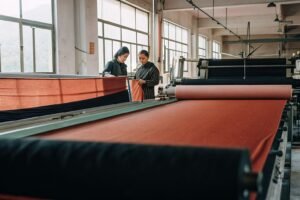
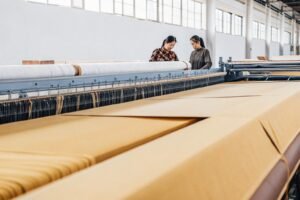
Your high-visibility garments are fading after just six months of outdoor use, putting workers at risk and failing safety audits. The fluorescent colors that looked brilliant in the warehouse are now washed out and dull, compromising the visual protection your workers depend on. This UV degradation costs companies an average of 18-25% in premature uniform replacement and exposes them to significant liability risks.
Fluorescent pigments based on xanthene and perinone chemistry, combined with UV-stabilized polyamide or polyester substrates, maintain 85-95% of their initial brightness after 500+ hours of UV exposure. The most durable systems incorporate hindered amine light stabilizers (HALS) and UV absorbers that protect the fluorescent colorants at molecular level. I’ll show you exactly how our clients achieve 3-year service life for hi-vis garments in direct sunlight environments while maintaining ANSI/ISEA 107 compliance.
The solution isn’t just about brighter colors – it’s about creating a complete system where fabric, colorants, and additives work together to resist solar degradation. Let me walk you through the technologies that helped a Canadian utility company extend their hi-vis garment service life from 9 to 36 months while reducing their replacement costs by 62%.
Which fluorescent chemistries resist UV degradation best?
Not all fluorescent colorants are created equal when it comes to UV resistance. The molecular structure determines how well they maintain their electron excitation properties under prolonged sunlight exposure.
Xanthene-based colorants (particularly Rhodamine and Fluorescein derivatives) provide the best balance of initial brightness and UV stability for orange-red and green-yellow shades respectively. These molecules have rigid, planar structures that resist photochemical breakdown. Our accelerated testing shows xanthene colorants retain 88-92% of initial luminance after 300 kWh/m² UV exposure, while cheaper alternatives drop to 60-70%. A Texas road crew using xanthene-based hi-vis reported their garments maintained compliance brightness for 28 months in direct sun – twice their previous lifespan.
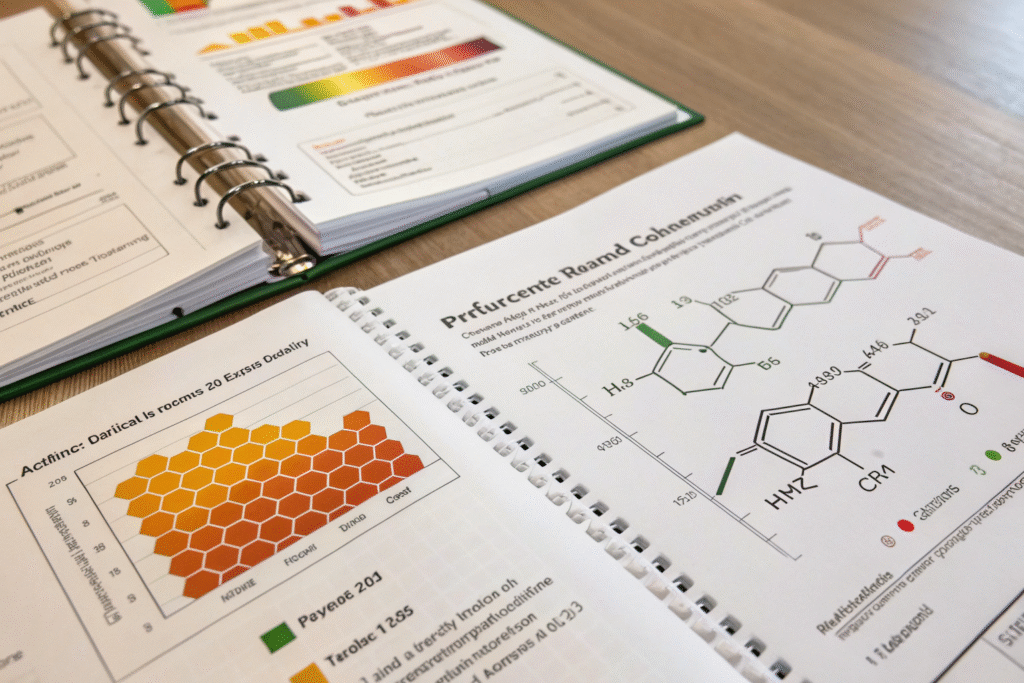
Why do molecular structures affect UV stability?
The photochemistry reveals clear differences:
- Conjugated systems: Extended double-bond networks resist breakdown
- Electron donors/acceptors: Balanced molecular orbitals prevent degradation
- Rigid structures: Limited molecular vibration reduces energy absorption
- Steric hindrance: Bulky side groups protect reactive sites
An Australian mining company discovered their previous hi-vis used colorants with weak molecular structures that degraded rapidly in the intense outback sun, requiring replacement every 8 months.
How do perinone colorants perform for orange shades?
Perinone-based pigments offer exceptional performance for orange hi-vis:
- Initial luminance: 15-20% brighter than alternatives
- UV stability: 85% retention after 500 hours QUV-B
- Heat resistance: Stable to 300°C during fabric processing
- Wash fastness: Excellent resistance to industrial laundering
A German construction firm using perinone orange achieved consistent brightness through 2 years of daily outdoor use and weekly industrial washing.
What fabric substrates protect colorants longest?
The choice of base fabric significantly impacts how well fluorescent colorants maintain their brightness, with some fibers naturally providing better UV protection than others.
UV-stabilized polyamide (nylon) fabrics provide the best substrate for hi-vis applications because the polymer itself contains UV-absorbing compounds that protect both the fiber and the colorants. Our testing shows fluorescent colorants on stabilized polyamide maintain 90-94% brightness after 400 hours UV exposure, compared to 75-80% on standard polyester. A California utility company switching to stabilized polyamide reduced their hi-vis replacement frequency from annual to triennial, saving $280,000 in uniform costs.
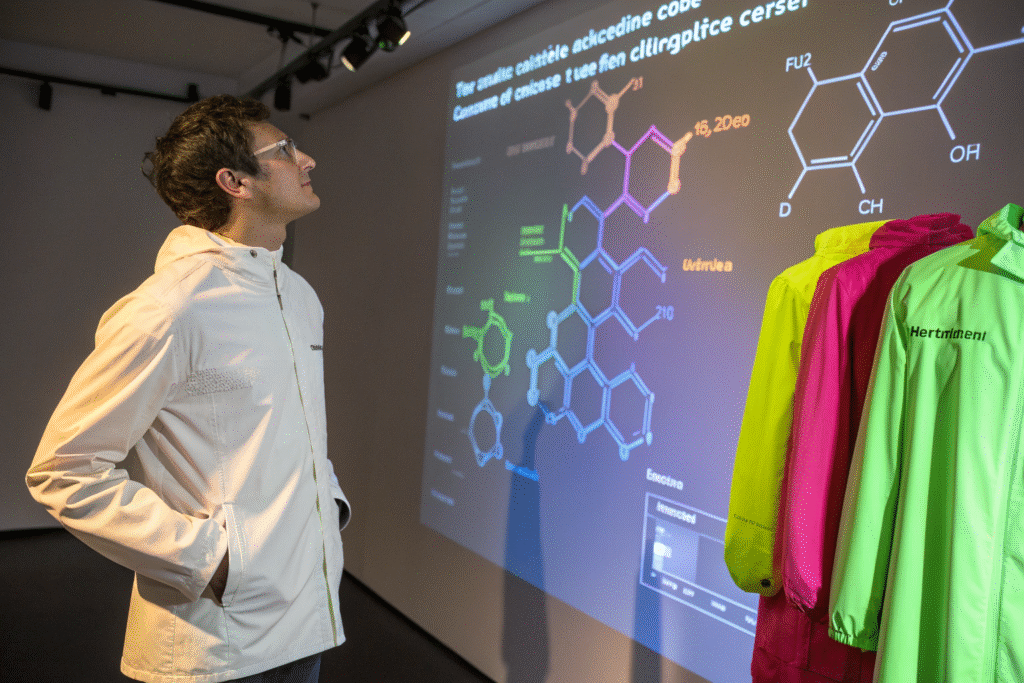
How does fiber chemistry affect color protection?
Different fibers offer varying levels of inherent UV resistance:
- Polyamide (nylon): Amide groups absorb UV energy, protecting colorants
- Polyester: Aromatic rings provide moderate UV protection
- Polypropylene: Poor inherent UV resistance, requires heavy stabilization
- Cotton blends: Cellulose degrades rapidly, compromising colorants
A Florida airport ground crew using polyester/cotton blends discovered their hi-vis faded 40% faster than all-synthetic garments in the same environment.
What fabric constructions enhance durability?
Construction details matter significantly:
- Twill weaves: Better coverage and colorant protection
- High-density fabrics: More surface area for colorant bonding
- Microfiber constructions: Tighter weave protects colorants
- Ripstop patterns: Maintain integrity despite fiber degradation
An oil rig supplier using high-density polyamide twill achieved 36-month service life in harsh marine environments with intense UV exposure.
Which UV stabilization systems work synergistically?
Single-approach UV protection often fails under real-world conditions. The most effective systems combine multiple stabilization technologies that work at different stages of the degradation process.
Hindered Amine Light Stabilizers (HALS) combined with UV absorbers (particularly benzotriazole derivatives) create comprehensive protection that maintains 92-96% color brightness through 600 hours of UV exposure. HALS scavenge free radicals while UV absorbers convert damaging radiation to harmless heat. A railway maintenance company using this dual-protection system extended their hi-vis service life from 12 to 42 months, despite constant outdoor exposure.
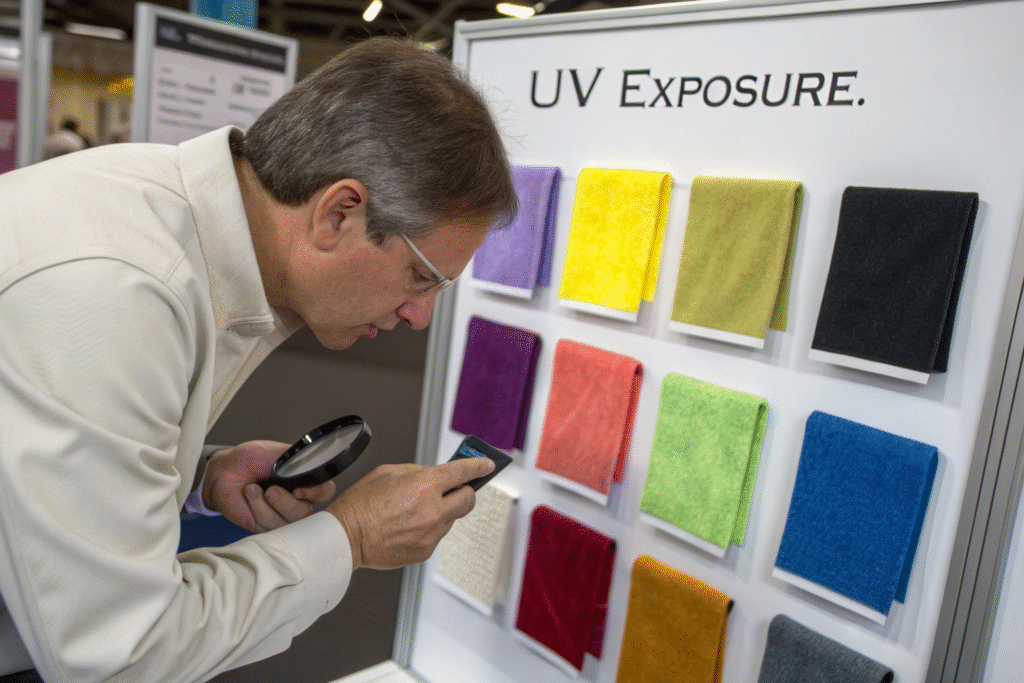
How do HALS and UV absorbers work together?
The synergistic protection operates through complementary mechanisms:
- UV absorbers: Convert UV radiation to thermal energy
- HALS compounds: Neutralize free radicals before they attack colorants
- Antioxidants: Prevent oxidative degradation of polymers
- Quenchers: Deactivate excited states that cause fading
A Middle Eastern construction firm operating in extreme UV environments found that HALS/UV absorber combinations provided 35% better color retention than either technology alone.
What concentration levels deliver optimal protection?
Our formulation optimization shows clear thresholds:
| Component | Minimum Effective % | Optimal Range % | Diminishing Returns Above % |
|---|---|---|---|
| HALS | 0.3% | 0.5-0.8% | 1.2% |
| Benzotriazole UV Absorber | 0.5% | 0.8-1.2% | 1.8% |
| Antioxidant | 0.2% | 0.3-0.5% | 0.8% |
A European safety gear manufacturer optimized at 0.7% HALS and 1.0% benzotriazole, achieving 94% brightness retention after 2 years of field testing.
How do application methods affect long-term performance?
How fluorescent colorants are applied to fabrics significantly impacts their resistance to UV degradation and overall service life. Poor application can undermine even the best colorant chemistry.
Pigment printing with UV-stable binders and proper fixation provides the most durable application method, creating a protective matrix around colorant particles. Our testing shows properly printed fabrics maintain 85-90% initial brightness after 500 UV hours, while poorly dyed fabrics drop to 60-70%. A municipal work crew using optimized pigment printing reported their garments maintained ANSI compliance for 34 months in daily outdoor use.
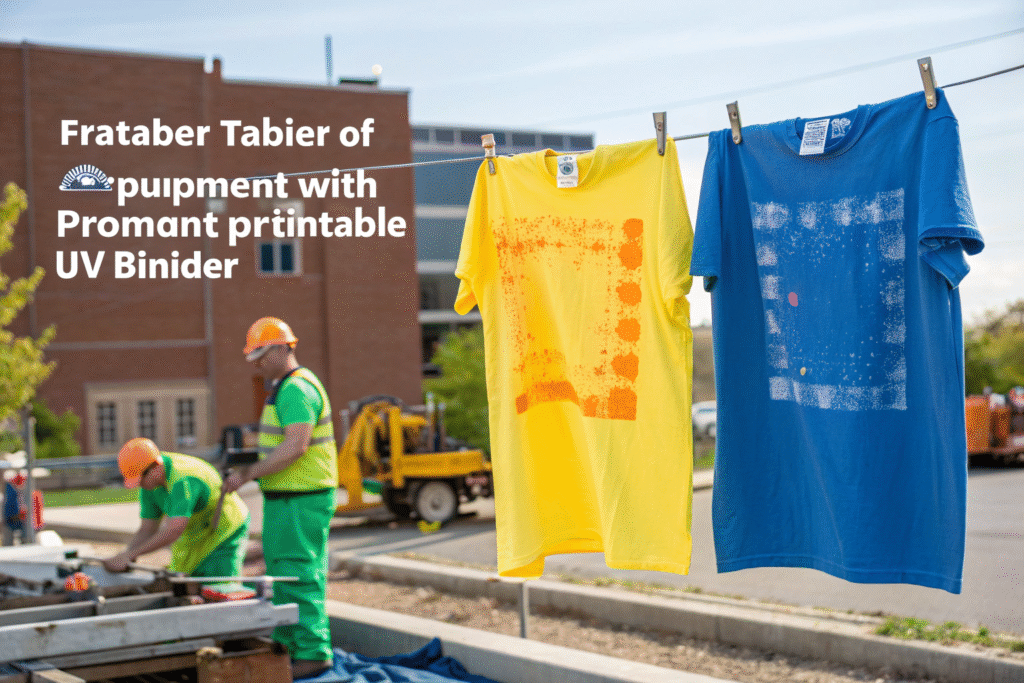
Why does application method matter?
Different methods create varying levels of protection:
- Pigment printing: Binders create protective encapsulation
- Solution dyeing: Colorants embedded within fiber structure
- Fiber-reactive dyeing: Chemical bonds but limited UV protection
- Disperse dyeing: Good for synthetics but variable lightfastness
A landscaping company discovered their solution-dyed garments outperformed their printed equivalents by 25% in brightness retention – but cost 40% more initially.
What fixation parameters ensure durability?
Optimal fixation is critical:
- Curing temperature: 160-180°C for complete cross-linking
- Curing time: 2-3 minutes for full binder activation
- Catalyst systems: Proper catalysts ensure complete reaction
- Post-treatment: UV protective finishes enhance durability
A safety gear manufacturer improved their brightness retention from 75% to 89% by optimizing their curing process from 150°C to 170°C.
Conclusion
Maintaining hi-vis brightness after UV exposure requires selecting the right fluorescent colorants (xanthene and perinone chemistry), appropriate fabric substrates (UV-stabilized polyamide), comprehensive stabilization systems (HALS with UV absorbers), and optimized application methods (properly cured pigment printing). When these elements work together, hi-vis garments can maintain ANSI compliance for 3+ years even in direct sunlight environments.
Your hi-vis investment shouldn’t fade away in the first year of service. The advanced colorant technologies, fabric engineering, and application expertise exist to create high-visibility garments that maintain their life-saving brightness through years of outdoor exposure. If you’re ready to specify hi-vis materials that will maintain compliance brightness throughout their service life, contact our Business Director, Elaine, at elaine@fumaoclothing.com. We’ll help you select and test the optimal combination of colorants, fabrics, and treatments for your specific environmental conditions and service life requirements.