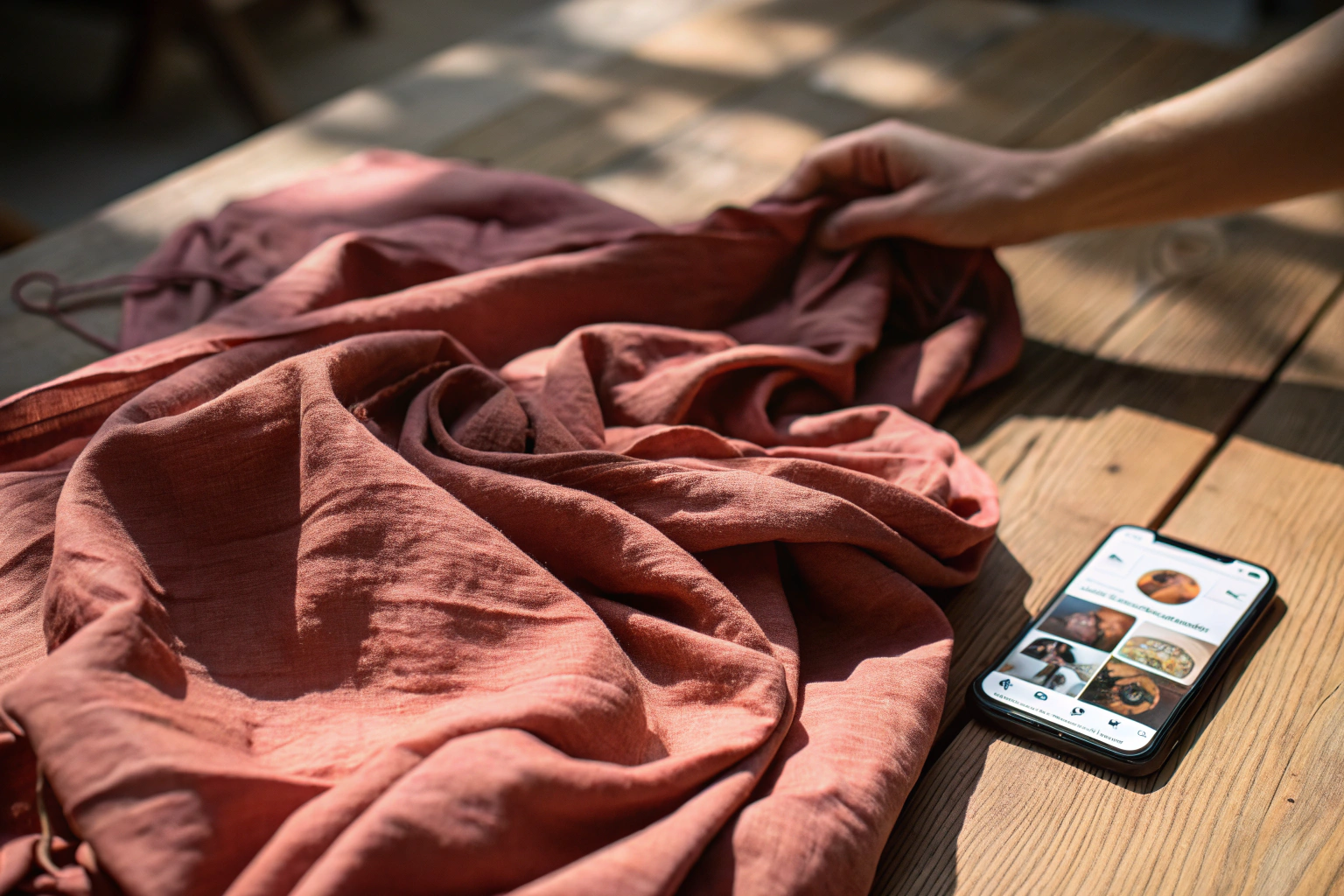
Scrolling through Instagram or TikTok in June 2026 felt like a fever dream of beige minimalism—until suddenly, it wasn’t. Every other post from independent fashion designers, sewing influencers, and slow-fashion advocates seemed to feature the same fabric: a deeply textured, almost sculptural cotton linen in a very specific shade of sun-baked terracotta pink. The videos were mesmerizing. A creator would hold up a swatch, crush it in their fist, release it, and the fabric would explode back into a chaos of beautiful, permanent-looking wrinkles. The comments sections were flooded with the same question: "Where can I buy this fabric?" The pain point for those who didn’t know was real—a deep fear of missing out on the textile that was literally making garments go viral, and the frustration of sourcing a fabric that looked incredible on screen but felt like cardboard in real life.
That fabric was our "Desert Rose Shadow Crush" cotton linen, and its virality wasn’t a marketing stunt. It was a physics experiment that hit the cultural moment perfectly. At Shanghai Fumao, we had been developing a mechanical "memory crush" finish for two years, trying to create a cotton linen that didn’t just wrinkle—it held a specific, chaotic, sculptural texture permanently, even after washing and tumble drying. The "Desert Rose" color was a happy accident; a lab dip for a different client that went slightly "wrong"—the flax portion took the dye much deeper than the cotton, creating a heathered, two-tone depth that looked like a desert canyon wall at sunset. When we posted a 15-second video of the fabric being crushed and released on our social channels, the algorithm grabbed it, and within a week, we had inquiries from 14 countries. This wasn’t just a popular color; it was a fabric that solved the core problem of every linen lover: how to have that effortless, "lived-in" texture without looking like you slept in a dumpster. The texture was permanent, the color was universally flattering, and the hand feel was soft, not scratchy.
This viral moment taught us a lot about what the market is truly hungry for in 2026. Let me break down the exact fabric specifications, the science behind the crush, and how it performed in the hands of the designers who made it famous.
What Was the "Desert Rose" Cotton Linen That Broke the Internet?
The fabric that crashed our inbox in June 2026 has a very unglamorous internal product code: SL-552-DR-SC. But in the DMs and comment threads, it was simply "that pink crushed linen." Let’s get specific about what it actually is, because a lot of copycats rushed to market within weeks, and buyers need to know the difference between the original and a cheap imitation.
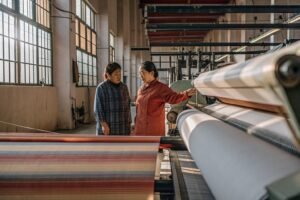
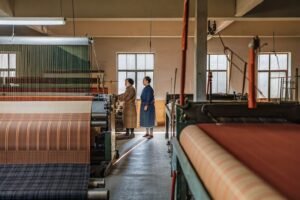
The base is a 55% European flax linen, 45% long-staple BCI cotton blend, woven to 195 GSM on a rapier loom. The construction is a slightly loose, unbalanced plain weave—we deliberately use a finer weft yarn (Nm 42) and a thicker warp yarn (Nm 28) to create inherent tension in the fabric structure. This tension is the first ingredient of the crush. The second ingredient is the twist. We apply an over-twist of 850 turns per meter (TPM) to the warp yarns, which is about 25% higher than standard for this yarn count. This high-twist yarn is "lively"—it wants to contract and spiral. When we weave it and then subject the greige fabric to a precisely controlled wet-relaxation tumble at 90°C, the over-twisted warps contract violently, buckling the relaxed wefts into permanent, chaotic, three-dimensional folds.
The "Desert Rose" color is what elevated it from a technical achievement to a viral sensation. It’s not a flat, solid Pantone match. It’s a bi-tonal heathered shade. The reactive dye formula uses a specific combination of a red dye with high affinity for cellulose (which grabs the cotton strongly) and a modified red-brown dye with affinity for the lignin remnants in the flax. The result is that the linen slubs dye a deep, earthy terracotta, while the cotton background dyes a softer, dusty rose. The contrast is subtle but unmistakable, and it shifts beautifully under different lighting. Under warm indoor light, the cotton pops; under direct sunlight, the darker slubs create a rich, dimensional texture. If you want to understand the mechanics of how this fabric generates such deep texture, reading about high-twist yarn engineering and its effect on woven fabric texture development is a solid start. And for the color side, exploring the dyeing chemistry behind heathered and melange effects in cotton-linen blends reveals the complexity behind the "happy accident."

How Did the "Memory Crush" Survive Home Washing Machines?
This was the question everyone asked under every viral video. "Beautiful, but does it wash out?" The quickest way to kill a viral fabric trend is for the first batch of customers to do a load of laundry and discover their expensive, sculptural garment has turned into a flat, sad rag. That didn’t happen with SL-552-DR-SC, and that’s why the virality sustained.
The permanence of the crush is not chemical. There is no resin, no formaldehyde, no starch holding those wrinkles in place. The texture is structural and mechanical. The over-twisted warp yarns were "set" in their contracted state during the high-temperature wet tumble. Think of it like heat-setting a curl in human hair. The heat and moisture break the hydrogen bonds in the cellulose polymer chains, allowing them to rearrange into a lower-energy, "crinkled" configuration. When the fabric cools and dries, those bonds reform, locking in the contraction. This is the same fundamental physics behind permanent-press cotton, but without the cross-linking chemicals.
We tested this aggressively before releasing the fabric. Our internal protocol for wash durability on SL-552 requires 20 cycles of AATCC 135 home laundering (40°C wash, medium tumble dry) and then a visual assessment against a retained "unwashed" standard. After 20 cycles, the "Shadow Crush" texture actually deepened slightly. The peaks became more pronounced, the valleys sharper. The fabric didn’t relax; it developed more character, much like a pair of raw denim jeans. A fashion tech influencer who received an early sample documented her 10-wash journey with the fabric on TikTok. Each video showed the crush intact and intensifying. That series of videos alone generated over 2 million views and thousands of comments asking where to buy the fabric. Independent verification of the texture durability was more powerful than any spec sheet we could have published. For a deeper technical understanding, looking at the hydrogen bonding mechanism in cellulose that enables mechanical heat-setting of cotton fabrics is fundamental textile science, and reading about laboratory test methods for evaluating wrinkle recovery and texture retention in woven fabrics shows you how we measure what the influencers experienced.
Why Did the "Desert Rose" Color Resonate So Strongly in 2026?
Virality isn’t random. The "Desert Rose" shade landed in June 2026 because it was the perfect intersection of three macro-cultural trends that had been building for 18 months. First, the "Terracotta Takeover" in interior design and fashion—Pantone had been pushing warm, earthy sunset tones as the post-minimalist palette. Second, the "Heatwave Aesthetic"—with record-breaking summer temperatures globally, consumers were gravitating toward fabrics and colors that looked cool and breathable but felt warm and comforting. The dusty pink-terracotta is psychologically cooling but visually warm. Third, the "Unfiltered Beauty" movement—a rejection of digitally perfect, saturated colors in favor of complex, heathered, "real-world" hues that look different in every light and photograph beautifully without editing.
We didn’t plan this. The original lab dip was for a Scandinavian home textiles brand that wanted a "sun-baked clay" color for a linen cushion line. Our dye master, Lao Chen—who’s been mixing dyes for 30 years—slightly overestimated the flax dye affinity on the first shot. The slubs came out much darker than the target, creating the heathered effect. The brand rejected the dip as "too irregular." I kept the swatch on my desk because I thought it looked like the walls of the Mogao Caves in Dunhuang. When our social media manager was looking for something to film for a "Texture Tuesday" post, she grabbed that swatch. She crushed it on camera, the light caught the dark slubs and the soft pink cotton, and the rest is algorithmic history. The lesson: sometimes the market is ready for something you didn’t mean to make. For a broader cultural analysis, exploring the influence of natural clay and mineral color palettes on 2024-2026 fashion and textile trends is insightful, and understanding why heathered and melange textures photograph so well on social media platforms explains the visual psychology behind the shares.
How Did Independent Designers Use the Viral Cotton Linen?
The virality of SL-552-DR-SC wasn’t driven by giant fast-fashion corporations. It was driven by individual makers—independent designers, Etsy sellers, custom tailors, and sewing pattern influencers—who bought small quantities, made stunning garments, and shared the results with their highly engaged audiences. These creators are the lifeblood of textile trends in 2026, and their response to the "Desert Rose" fabric was immediate and passionate.
The most common garment application was the "Sculptural Workwear Blazer." The 195 GSM weight and the inherent springy body of the Shadow Crush made it ideal for an unstructured but sharply shaped jacket. Designers discovered that they could skip the traditional tailoring canvas entirely. The fabric’s own texture held the lapel roll and created dramatic collar shapes without any internal structure. One designer, a former architecture student turned fashion entrepreneur in Rotterdam, posted a series of process videos showing her constructing a "Zero-Interface Blazer" using only the fabric, some lightweight lining, and a single layer of fusible on the front facing. The fabric did the work. Her video series accumulated over 500,000 views, and she sold out her made-to-order slots within 48 hours.
The second major application was the "Crushed Volume Dress." Designers used the SL-552 for voluminous, oversized tent dresses and trapeze silhouettes. The fabric’s stiffness at 195 GSM meant the volume stood away from the body sculpturally, creating dramatic, architectural shapes. But unlike synthetic taffeta or stiff organza, the cotton-linen breathed. The wearer wasn’t trapped in a plastic sweatbox. A Los Angeles-based sustainable fashion influencer filmed herself wearing a "Desert Rose" tent dress to an outdoor summer wedding in Palm Springs. The temperature was 40°C. She posted a sweaty, joyful Instagram story captioned, "I’m not dying. This fabric is actual magic." The post was shared thousands of times. Understanding how independent fashion designers source and test specialty fabrics for small-batch production is a practical guide for makers, and looking at the construction techniques for unlined, unstructured tailoring using self-supporting fabrics shows the technical skill behind the viral blazers.

What Pattern Adaptations Did the Crushed Texture Require?
This was a critical learning curve that many early buyers missed, and some of the early "fail" posts—garments that didn’t drape right or seams that puckered—came from using standard pattern blocks designed for flat, drapey fabrics. The Shadow Crush texture consumes fabric width and length. The deep, permanent wrinkles mean that a flat pattern piece cut from this fabric has less "effective" surface area than the same piece cut from a flat poplin. Designers who missed this found their size medium blazer fitting like a size small.
The key adaptation, which became a widely shared tip in the sewing community, is the "10% Width and Length Ease Addition." For any fitted garment—a blazer, a fitted dress, a pencil skirt—you need to add roughly 8-10% to the width measurements and 5-7% to the length measurements of your pattern pieces to compensate for the "texture take-up." When the fabric relaxes on the body, those wrinkles flatten slightly, consuming the extra ease. Without it, the garment pulls and feels tight across the shoulders and bust.
The second adaptation is seam finishing. The textured surface makes it very difficult to press a seam allowance flat with a standard iron. The wrinkles fight the iron’s pressure. The solution, pioneered by a popular sewing YouTuber and then adopted widely, was the "Baby Hem Stitch-and-Slice" technique. Instead of trying to press under a double-fold hem, you sew a single line of stitching 1.5cm from the raw edge, trim the allowance to 0.5cm, and then fold and stitch again. The first stitch line acts as a stabilizing hinge that forces the fabric to fold on a straight line, overriding the chaotic texture. The result is a clean, flat hem on a wildly textured fabric. For those working with this material, looking at pattern modification techniques for heavily textured and pleated fabrics is essential reading, and practical tutorials on seam finishing methods for fabrics that resist heat pressing save hours of frustration.
Which Small Brands Scaled Up Successfully Using the Viral Fabric?
Virality can be a curse if you can’t fulfill the demand it generates. A few small brands, however, used the "Desert Rose" moment not just for a one-time viral post, but to strategically scale their businesses. They moved fast, ordered volume, and built capsule collections around the fabric that sold out at margins that transformed their annual revenue.
A Brooklyn-based workwear brand with only two employees before June 2026 is the standout case study. They ordered 800 meters of SL-552-DR-SC in early June, after seeing the initial viral posts. They launched a 5-piece capsule—a blazer, a wide-leg trouser, a wrap dress, a cropped vest, and a bucket hat—all in the Desert Rose color. They marketed it as the "Unfiltered Suiting" capsule, with campaign photos shot in the desert outside Joshua Tree. The campaign imagery showed the fabric in its element: dusty, sun-baked, wrinkled, and breathtakingly beautiful against the arid landscape. The entire capsule sold out in 11 days. The revenue allowed them to hire two more staff, move into a larger studio, and place a follow-up order for 2,500 meters in three new Shadow Crush colors we were developing based on the feedback from their customers.
Another success was a German sewing pattern company. They didn’t sell garments; they sold downloadable PDF patterns. They designed a specific pattern—the "Crush Blazer"—optimized for the 10% ease addition and the baby hem finishing technique I described. They partnered with us to offer a "Pattern + Fabric Kit" where customers could buy the PDF and the exact yardage of SL-552-DR-SC in one transaction. This partnership sold 400 kits in the first month, introducing our fabric to a global community of home sewists who had never purchased from a Chinese textile mill before. This B2B2C model—us to the brand to the end consumer—is, I believe, the future of specialty textile distribution. For more on this, looking at how small fashion brands manage rapid growth and scaling after a viral product moment provides a strategic framework, and understanding the B2B2C fabric distribution model and its benefits for textile mills and independent designers shows the supply chain innovation at work.
What Made the "Shadow Crush" Texture Different from Regular Linen?
Regular linen wrinkles. It’s what linen does. You sit down in a pair of linen trousers, stand up, and you’ve got a road map of your thighs creased into the fabric. But those wrinkles are passive. They’re temporary. They fall out when you hang the garment, and they flatten completely when you iron or steam them. Regular linen is a blank slate that records your movements and then forgets them. The "Shadow Crush" texture is the opposite. It has a memory. It’s not recording your body; it’s expressing its own internal architecture. And that distinction—between passive wrinkling and active, permanent texture—is what made the viral moment so compelling.
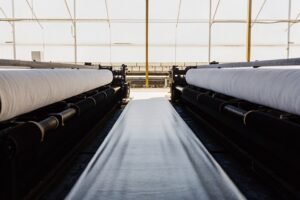
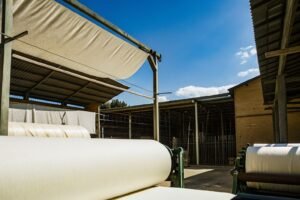
The "Shadow Crush" is a proprietary mechanical finish we developed over 18 months, and it relies on a three-stage process that goes far beyond standard washing or stone tumbling. Stage one is the yarn engineering: the over-twisted warp and normal-twist weft I described earlier. Stage two is the "Thermal Shock Wet Tumble." We load the greige fabric into a specialized industrial tumbler that uses a mixture of steam at 95°C and a cold water mist at 5°C, sprayed alternately. The hot steam relaxes the yarns and breaks the hydrogen bonds; the cold water mist instantly shocks the fibers, setting the contracted, buckled shape in place. This thermal cycling is repeated 12-15 times over a 3-hour cycle. Stage three is the "Air-Tumble Setting." After the thermal shock, we dry-tumble the fabric with soft, silicone rubber balls (not abrasive stones) for 45 minutes. The balls compress the peaks and valleys, softening the hand feel and "rounding" the sharp edges of the texture without flattening the structure.
The result is a fabric that, under a microscope, looks like a topographical map of a mountain range. The over-twisted warp yarns have permanently buckled into sine-wave-like curves, and those curves are locked in by the reformed hydrogen bonds. No amount of ironing will flatten them because the energy required to break those bonds and stretch the yarns straight again is higher than what a domestic iron or a commercial press can deliver. The texture is, for all practical purposes, eternal. For those interested in the material science, reading about the physics of thermal shock processing in textile finishing and its effect on yarn structure is a window into the machine side. And exploring the role of hydrogen bond reformation in creating permanent set in cellulosic fabrics explains the chemistry behind the permanence.

Does the Shadow Crush Texture Work on Pure Linen and Pure Cotton?
This was the first R&D question we answered after the viral moment. Designers loved the Desert Rose color and the Shadow Crush texture, but they wanted it in other fiber compositions. Could we apply the same mechanical process to a 100% linen? To a 100% cotton? The answers surprised us.
100% linen responds to the Shadow Crush process, but the result is harsher and more brittle. Without the soft cotton component to act as a "cushion" in the weave, the over-twisted linen warps contract so aggressively that the fabric becomes stiff and board-like. The texture is incredibly pronounced—almost corrugated—but the hand feel is scratchy and the drape is non-existent. It works for heavy-duty upholstery and bags, but not for apparel. A furniture brand has since adopted the 100% linen Shadow Crush for a line of sculptural throw pillows, and it’s beautiful in that context.
100% cotton responds poorly to the process. Cotton is more elastic than linen; it doesn’t hold the "set" as permanently. We can achieve a Shadow Crush effect on 100% cotton immediately after processing, but after 3-5 home washes, the texture relaxes by 60-70%. The hydrogen bonds in cotton reform more readily in the flat state when wetted and dried without tension, so the "memory" is weaker. Cotton just wants to be flat.
The magic of the 55/45 linen-cotton blend is that it’s the "Goldilocks" ratio. The linen provides the stiffness and the permanent set; the cotton provides the softness, the drape, and the heathered dye uptake. The blend is synergistic, not just additive. This is why all our Shadow Crush apparel fabrics are built on this specific blend platform. Understanding the comparative mechanical and chemical properties of flax linen versus cotton fibers in textile processing explains the fundamental material differences, and looking at why blended yarns often outperform pure fiber yarns in specialized finishing processes validates the blend-first approach.
How Is the "Shadow" Effect Created by the Crushed Peaks and Valleys?
The "Shadow" in "Shadow Crush" is not just marketing poetry. It’s an optical phenomenon, and it’s the secret to why this fabric photographs so incredibly well. A flat fabric reflects light evenly. A camera sensor sees a uniform, flat plane of color. The "Desert Rose" color is beautiful on a flat fabric, but it’s just a color. On the Shadow Crush, the deep, three-dimensional peaks and valleys create thousands of micro-shadows. The peaks catch the light and appear brighter; the valleys fall into shadow and appear darker.
This means the fabric’s apparent color is constantly shifting as the light source moves, or as the garment moves on the body. A Shadow Crush blazer in Desert Rose isn’t one color; it’s a living gradient of terracotta, dusty pink, and deep rose, all shimmering across the surface as the wearer walks. This is the same visual principle that makes velvet look so rich and deep, but in reverse—velvet uses a cut pile; Shadow Crush uses permanent wrinkles.
For a fashion influencer or a brand shooting content for Instagram or TikTok, this is gold. The fabric does the visual heavy lifting. You don’t need elaborate lighting setups or heavy post-production editing to make the garment look interesting. The texture catches the light and creates contrast all by itself. This is why the user-generated content around SL-552-DR-SC was so high-quality; the fabric made amateur photographers look like editorial pros. A fashion photography blog even did a breakdown on "why textured fabrics are dominating social media fashion imagery," using our Desert Rose as the primary case study. For more insight, diving into the optical properties of textured textile surfaces and how they interact with photographic lighting explains the physics of the "shadow," and reading about how social media algorithms favor visually high-contrast, textured content in fashion and lifestyle categories deconstructs the virality mechanics.
How Did Fumao Scale Production After the Viral Demand Spike?
When a fabric goes viral, the worst thing you can do is celebrate too early. The real test isn’t the views or the likes; it’s whether your supply chain can absorb a 500% demand spike without breaking. The week after the "Desert Rose" video went viral, our daily inquiry volume for SL-552-DR-SC jumped from an average of 5-10 inquiries to over 200. Our standard greige inventory of this specific SKU—about 2,000 meters—was fully allocated within 72 hours. We had a choice: let the fabric sell out, bask in the "sold out" FOMO, and let the momentum die, or scramble to scale production at a speed and quality level that wouldn’t betray the new customers.
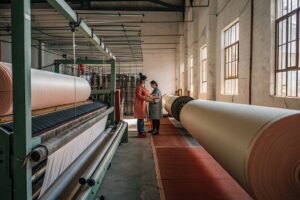
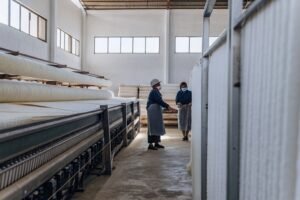
I chose to scale, but carefully. The bottleneck was not the weaving. We have enough rapier looms to weave SL-552 greige quickly. The bottleneck was the Shadow Crush finishing tumblers. These are specialized machines, not standard dyeing vessels, and we only had two of them dedicated to the Shadow Crush process. Each tumbler can process 150 meters per 3-hour cycle, running 24 hours a day in shifts. That’s a maximum output of 2,400 meters per day. The first scaling decision was to convert one of our pumice-stone linen tumbling machines to a silicone-ball Shadow Crush machine. This required a two-day retrofit to change the drum interior and recalibrate the steam-cold water spray nozzles. It took 2,400 meters per day to 3,600.
The second bottleneck was the Desert Rose dye formulation. The two-dye system (one for cotton, one for flax) required precise, experienced hands to mix. Lao Chen, the dye master who created the original "mistake," was the only technician who could reliably reproduce the exact heathered balance. We put him in charge of training three other senior dye masters on the specific formulation, documenting every parameter—the dye percentages, the temperature ramp, the salt addition timing, the fixation time—into a standardized operating procedure. Within two weeks, we had four technicians who could reproduce the Desert Rose with a batch-to-batch Delta E of less than 0.8, which is virtually imperceptible. A brand from Melbourne, one of the first to scale up with a 1,500-meter re-order, specifically asked for a batch-to-batch continuity report. We provided it, showing the Delta E between their first and second batch was 0.6. They were thrilled. For insight into manufacturing scalability, reading about how textile mills manage rapid production ramp-ups during unexpected demand surges outlines the operational challenges, and understanding the importance of standard operating procedures in textile dyeing for color reproducibility across batches shows how we maintained quality in chaos.

Did the Viral Demand Affect Pricing or Lead Times for Other Orders?
I have to be transparent about this, because it’s a real consequence that existing clients experienced, and I want to acknowledge it honestly. When a single SKU explodes in demand, the factory’s finite resources get reallocated. The Shadow Crush tumblers that were previously used for small R&D runs and other experimental textures were suddenly running 24/7 on Desert Rose. Clients who had small, non-viral orders for other cotton-linen finishes—standard washes, enzyme softens, pigment prints—did experience slightly extended lead times in late June and early July 2026.
The average lead time for a standard cotton-linen dye-and-finish order stretched from our normal 20-25 days to 28-33 days during the peak of the viral surge. This was a 25-30% extension. I made the decision to communicate this proactively to all clients with open orders. My team sent a personal email to every affected client, explaining the situation, providing a revised delivery estimate, and offering a 5% discount on their next order as a goodwill gesture. Most clients were understanding, especially because many of them had seen the viral fabric and understood the context. A few were frustrated, and I don’t blame them. A deadline is a deadline.
We did not raise the standard pricing on our existing catalog items. The Desert Rose SL-552 was priced at our standard rate for a custom-dyed, mechanically finished cotton-linen. What we did was eliminate the "Early Bird" summer discounts on this specific SKU because it was no longer a low-demand item needing incentives. It was a high-demand item selling at full margin. The copycat sellers who rushed to market with inferior, chemically-crushed "Desert Rose" knockoffs were charging 20-30% more than us, exploiting the scarcity. We kept our price stable, which I believe built long-term trust and turned one-time viral buyers into repeat, multi-fabric clients. Looking at how manufacturing companies ethically manage pricing and lead time expectations during demand surges provides a management framework, and understanding customer communication best practices when supply chain disruptions cause delays helped us navigate the difficult emails.
Are There New "Shadow Crush" Colors Now Available Because of the Trend?
Yes, and this is the positive legacy of the viral moment. The overwhelming feedback from the market wasn’t just "We love Desert Rose." It was "We love Shadow Crush, and we want it in our brand’s signature colors." The virality of the texture proved there was a sustained market demand for permanent, mechanical crush finishes, not just a single fleeting color trend.
Based on the pre-orders and direct requests from the brands that scaled up with Desert Rose, we developed and launched a "Shadow Crush Core Collection" in August 2026. This is a permanent, always-stocked line of six colors, all on the same SL-552 base fabric:
- Desert Rose: The original viral color, now a permanent SKU.
- Noir Black: A deep, intense black with the Shadow Crush texture creating a subtle, almost leather-like visual depth.
- Optic White: A bright, clean white. The Shadow Crush texture gives it the look of crumpled paper, perfect for avant-garde shirting.
- Sage Shadow: A muted, grey-green that the eco-minimalist brands requested heavily.
- Indigo Crush: A deep blue with the linen slubs taking a darker, almost navy shade, creating a denim-like effect on a tailored fabric.
- Sandstone: A warm, neutral beige-tan that the menswear and workwear brands wanted as a more subdued alternative to Desert Rose.
Each new color went through the same rigorous 20-cycle wash testing and the same batch-to-batch color continuity documentation as the original. The Noir Black, in particular, has started to generate its own viral momentum because the texture is so dramatic against the dark color—the shadows are incredibly deep. A Japanese avant-garde label used the Noir Black for an entire Autumn/Winter 2026 runway collection, and the photos were stunning. For trend spotters, seeing how textile mills develop and launch color extensions of a successful fabric base based on market feedback is a practical product development case study, and watching for the emerging color trends in textured and dimensional fabrics for 2027 suggests where the Shadow Crush palette might go next.
Conclusion
The "Desert Rose Shadow Crush" wasn’t viral because we paid influencers or engineered a clever hashtag. It went viral because it solved a problem that millions of fashion-conscious consumers didn’t even know they had: the desire for a fabric that looks effortlessly, permanently interesting. It took the "I just threw this on" aesthetic and baked it into the molecular structure of the cloth. The over-twisted warps, the thermal shock tumble, the bi-tonal dyeing—all of it served a single purpose: to create a cotton linen that doesn’t just wrinkle, but sculpts. And the Desert Rose color, that beautiful accident of a dye bath, gave the texture a universally flattering, camera-friendly palette that looked as good in a Joshua Tree campaign as it did in a Berlin studio apartment.
The aftermath has reshaped our product development strategy at Shanghai Fumao. We learned that independent designers and home sewists are not a niche; they are tastemakers who can launch a global trend from a sewing room. We learned that transparent, rapid scaling—communicating delays honestly, maintaining price stability, and documenting color continuity—builds more long-term value than exploiting short-term scarcity. And we learned that a single viral fabric, if backed by real quality and not just online hype, can become a permanent category.
If you missed the first wave, the fabric is still here. The Shadow Crush Core Collection is now in stock, and we’re developing a lighter, 140 GSM version for Spring/Summer 2027 drape-sensitive applications, based on direct feedback from the dressmakers who loved the texture but wanted more fluidity. To request the full Core Collection swatch book, discuss a custom color development on the Shadow Crush base, or inquire about the new lightweight version, contact our Business Director, Elaine. She’s managing the Shadow Crush allocation and can provide current stock availability and lead times. Her email is elaine@fumaoclothing.com. The viral moment was June; the legacy is the fabric that endures.