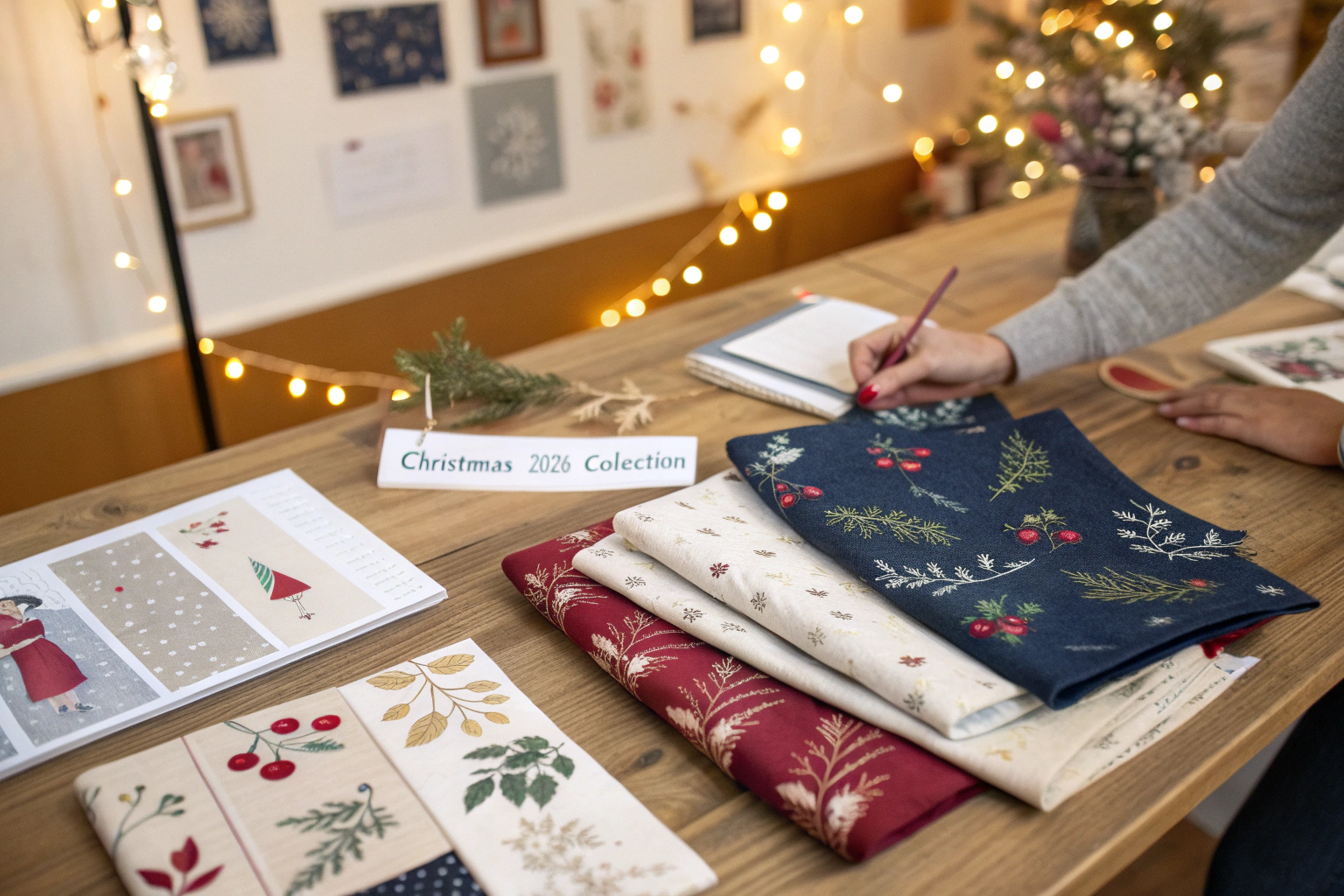
Nothing exposes a broken supply chain faster than Christmas. I’ve watched it happen too many times: a brilliant designer sketches a holiday capsule in June, agonizes over the perfect linen print—maybe a delicate gold foil snowflake on deep forest green, or a whimsical winterberry motif on natural oatmeal—and then discovers in October that the supplier "can’t deliver until January." The pain isn’t just the missed sales. It’s the empty window display that should have been pulling in holiday foot traffic. It’s the email to loyal customers explaining that the "Christmas Morning Pajamas" they pre-ordered won’t arrive until Valentine’s Day. It’s the warehouse full of beautiful linen garments that are now a season late, marked down before they ever hit full price. The Christmas deadline is immovable. December 25th doesn’t negotiate.
Yes, Shanghai Fumao can deliver custom linen prints for Christmas 2026 stock, and we can do it without the panic and the air-freight budget blowout. But—and this "but" is the most important word in this entire article—the window is open right now, in June 2026, and it starts to close in mid-July. Not September. Not October. The textile printing supply chain for a Christmas delivery operates on a backward calendar that most brand owners don’t fully understand until it’s too late. I’m going to walk you through the exact timeline, from the strike-off approval to the container sailing date. I’ll show you which linen bases are fastest for custom printing, which print techniques capture the holiday spirit without bleeding or cracking, and how we manage the pre-Christmas rush inside our two dedicated printing factories without sacrificing a single quality check. If you’re reading this in June, you’re right on time. If you’re reading this in August, we need to have a different, more urgent conversation.
Let’s map out exactly how to get your holiday linen prints from a creative concept to a delivered, sellable product, without the last-minute heart attack.
What Is the Final Order Deadline for Christmas 2026 Linen Prints?
Let’s cut straight to the date that matters. If you want custom-printed linen fabric in your US, UK, or EU warehouse, ready for cutting and sewing by mid-October—which is the absolute latest you should start garment production for a Black Friday or December retail launch—then your final, no-exceptions, stop-asking-for-extensions deadline for placing the bulk order with us is July 15th, 2026. And even that July 15th deadline assumes you’ve already finalized your print design and approved the strike-off by that date. If you’re starting from scratch—no design files, no selected base cloth, no ink color approvals—you need to contact us by July 1st, 2026 to have a relaxed, no-rush-fee experience.
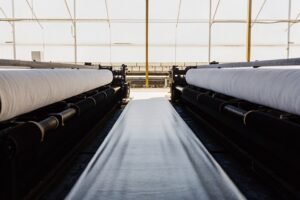
Here’s why the calendar is so tight. A custom linen print isn’t a simple dye job. It’s a multi-stage process that involves at least three separate facilities in our Keqiao supply chain: the weaving or greige warehouse (for the base linen), the pre-treatment and printing factory (for the actual print application), and the finishing and QC facility (for softening, setting, and inspecting). After you place the bulk order on July 15th, we need roughly:
- Week 1-2 (Late July): Greige preparation and pre-treatment. The base linen must be scoured, bleached (if needed), and treated with a print-ready coating that helps the ink bond to the linen fibers. Linen is trickier than cotton; its natural oils can resist ink adhesion if the pre-treatment isn’t perfect.
- Week 3-4 (Early August): Print production. Whether we use rotary screen printing or digital pigment printing, this phase takes time. Rotary screens must be engraved (1 week for the screens alone). Digital printing is faster but requires careful color calibration for each batch.
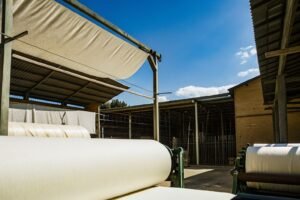
- Week 5-6 (Late August): Post-print finishing. The printed fabric is steamed to fix the dyes, washed to remove excess colorant, dried, and softened through our mechanical tumbling process. Then it goes to the stenter for final width setting and Sanforizing for shrinkage control.
- Week 7-8 (Early September): 100% four-point inspection, shade band continuity checks, and packing.
- Week 9-10 (Mid-September): Ocean freight departure from Ningbo. Transit to Rotterdam takes roughly 28-30 days; to Los Angeles, 15-20 days. The container arrives at your warehouse in mid-to-late October.
Miss the July 15th window by even two weeks, and the entire sequence shifts. Your fabric now ships in early October and arrives in November. You’re paying air freight or you’re missing Christmas entirely. A Paris-based lingerie and loungewear brand learned this the hard way in 2024. They finalized their "Holly Berry" linen print design on August 10th. Beautiful design. But the late approval meant their 1,500 meters of printed linen shipped on September 28th, arrived in Le Havre on October 29th, and didn’t clear customs until November 5th. Their cut-and-sew partner was already booked solid. The holiday sleepwear collection launched on December 18th, missing four weeks of prime selling season. They sold 60% of the stock at full price; the rest went to January markdowns. The following year, they approved their strike-off on June 20th, and the entire order sailed smoothly, arriving September 1st. For a detailed breakdown, understanding the production lead time components for custom printed fabrics from Chinese textile mills helps you plan backwards from your retail launch date, and learning how seasonal demand for printed holiday textiles affects factory scheduling and capacity shows you why July is the real December deadline.

How Does the Strike-Off Approval Process Affect My Timeline?
The strike-off is the single biggest timeline killer, and it’s where most brands lose two or three weeks without realizing it. A strike-off is a physical sample of your print on the actual base fabric. It’s not a digital mockup on a screen. It’s not a paper printout. It’s the real ink on the real linen, and it’s what you must physically sign off on before we engrave screens or load the digital print file for bulk production.
The strike-off process works like this: you send us your final, print-ready design file (usually a layered Adobe Illustrator or Photoshop file, at 300 DPI, in CMYK color space, with clearly specified repeat dimensions). Our pre-press team separates the colors, assigns the specific ink formulations, and produces a first-shot strike-off. This typically takes 5-7 working days. We courier it to you. You look at it. Is the gold metallic ink bright enough? Is the background green too blue? You send feedback. We adjust the ink formula and produce a second shot. Another 5-7 working days. Courier again. You approve. Total time: easily 2-3 weeks for a straightforward design, and 4-5 weeks if you’re iterating on a complex, multi-color design.
This is why the strike-off should be happening in June, not July. If you contact us on July 10th and say, "I have a design, can we print it for Christmas?", the honest answer is "Maybe, but you’ll have zero rounds of revision. First shot has to be perfect." That’s a high-stakes gamble. A smart brand owner sends the design file in early June, approves the final strike-off by June 25th, and then enjoys a relaxed, confident wait for the bulk production to begin on July 15th. For more insight, looking at the step-by-step fabric printing strike-off process and how to provide clear feedback ensures your design intent translates to fabric, and reading about how color management and ink formulation work in textile pigment and reactive printing gives you the vocabulary to communicate with our pre-press team effectively.
Can We Reserve Linen Greige Before Finalizing the Print Design?
Yes, and I strongly recommend this strategy. It decouples the two riskiest timeline variables: the creative approval process (which is unpredictable) and the raw material availability (which is finite). If you know you need 2,000 meters of a specific linen base—say, our 180 GSM soft-washed linen, or our 140 GSM lightweight linen voile—for a Christmas capsule, you can reserve that greige now, in June, even if your print design is still a rough sketch on a mood board.
The reservation process is the same one I’ve described in previous production planning discussions. You commit to the base cloth selection and the meterage. You pay a 10% deposit on the estimated bulk fabric cost. We physically tag the rolls in our warehouse with your company name and a "Reserved – Christmas 2026" label. We send you a photo of the tagged rolls. The greige sits in our climate-controlled storage, protected from dust and light, waiting for your final print file.
This strategy gives you two critical advantages. First, you lock in the base fabric. Linen greige, especially our popular European flax qualities, does run low in the autumn months as many brands are ordering for their spring collections. By reserving in June, you’re not competing with that autumn rush. Second, you shorten the post-approval timeline. When you finally approve the strike-off on July 20th, we don’t need to spend a week sourcing and prepping the base cloth; it’s already prepped and waiting. We go directly to printing. This can shave 7-10 days off the production timeline, which, in a Christmas countdown, is the difference between ocean freight and an expensive air courier. A London-based homeware brand that produces a Christmas table linen collection every year uses this exact strategy. They reserve their 200 GSM heavyweight linen greige in May, spend June and early July perfecting their "Winter Woodland" and "Festive Pomegranate" print designs, and then trigger bulk printing on July 15th. They haven’t missed a Christmas delivery in five years. For more on this, understanding the strategic advantages of reserving raw fabric inventory before finalizing seasonal designs validates this approach, and seeing how vertically integrated textile mills manage greige allocation across competing customer deadlines shows you the supply-side perspective.
Which Linen Base Fabrics Print Best for Holiday Collections?
Not all linen is created equal when it comes to printing, and choosing the wrong base cloth for your holiday design is a recipe for disappointment. The open, slubby texture that makes linen so beautiful and breathable can also make it a nightmare for fine-detail printing. A delicate snowflake pattern with thin, intricate lines might break apart and look jagged as the ink skips over the slubs and dips into the weave’s valleys. A bold, graphic plaid, on the other hand, might look stiff and lifeless on a flat, smooth linen that lacks textural character. Matching the print design to the right linen base is half the art of a successful holiday collection.
At Shanghai Fumao, we’ve tested and qualified four specific linen base fabrics that cover the full spectrum of holiday print needs. Each one has a different surface smoothness, weight, and drape, and each excels with different print styles:
-
The "Fine Art" Linen (SL-100, 100% Linen, 140 GSM, Smooth Surface): This is our tightest, smoothest linen weave. We use a fine-count, combed flax yarn (Nm 50) and a high-density plain weave to create a surface that’s almost as smooth as a cotton poplin, but with the cool hand and matte luster of pure linen. This is your base for intricate, high-detail prints: fine-line botanical illustrations of holly and ivy, detailed Nordic snowflake geometries, or delicate monogram patterns. The ink sits precisely on the surface without bleeding, and fine lines print sharply. This base is ideal for Christmas shirting, delicate scarves, and luxury pajama sets.
-
The "Textured Narrative" Linen (SL-550, 55% Linen / 45% Cotton, 195 GSM, Medium Slub): This is the base I’ve written about extensively—our workhorse blend. The surface has a visible, organic slub texture. It doesn’t print fine lines well, but it’s spectacular for bold, atmospheric designs. Think oversized, painterly poinsettia blooms, abstract winter landscapes with a watercolor feel, or large-scale plaid patterns. The slubs interact with the print, creating a natural, "vintage" texture that looks like a hand-printed artisan fabric. This base is perfect for holiday blazers, structured dresses, and statement table linens.
-
The "Soft Drape" Linen (SL-4060, 40% Linen / 60% Cotton, 140 GSM, Lightweight): This is our softest, most fluid linen blend. It’s the base for flowing Christmas maxi dresses, elegant wide-leg trousers, and soft pajama sets. It prints well with medium-detail designs. The higher cotton content gives the surface a slight peach-skin softness and helps the ink bond evenly. I recommend this base for all-over repeat prints, like scattered mistletoe sprigs or subtle tonal snowflakes, where a soft, romantic look is the goal.
-
The "Rustic Holiday" Linen (SL-7030, 70% Linen / 30% Cotton, 220 GSM, Heavy Slub): This is the heavy, rustic, almost burlap-textured linen. It’s for the "cabin Christmas" aesthetic. It’s fantastic for stockings, tree skirts, heavy-duty table runners, and structured outerwear. You cannot print fine details on it; the slubs are too large. But a bold, single-color metallic gold print on this base is absolutely stunning—the irregular texture makes the metallic ink shimmer unpredictably. A Colorado-based home décor brand uses this base exclusively for their Christmas stocking collection, printed with simple, bold star and tree silhouettes in metallic copper ink. They’ve been reordering the same base for five holiday seasons.
For a deeper dive, exploring how fabric surface characteristics, weave density, and slub profile affect digital and screen print quality gives you the technical criteria for base selection, and understanding the aesthetic effects of different linen-cotton blend ratios on printed color vibrancy and pattern clarity helps you predict the final look.

What Print Techniques Work Best on Linen for Christmas Motifs?
Linen is not polyester. It’s a natural, absorbent, textured bast fiber, and the printing technique you choose must respect that. The wrong ink on the wrong linen will look dull, crack after a few washes, or bleed into a fuzzy mess. For Christmas 2026 collections, we recommend two specific printing methods, each suited to different aesthetic and performance needs.
For the "premium heirloom" look—think metallic gold snowflakes, silver reindeer silhouettes, or a rich, opaque white print on deep burgundy or forest green linen—we use rotary screen printing with pigment inks. Pigment inks sit on the surface of the fabric, like a thin, flexible layer of paint. They don’t penetrate the fiber deeply, which means they deliver exceptional color opacity and brightness, even on dark backgrounds. A metallic gold pigment print on a dark navy linen is striking because the gold sits boldly on top, not muddied by the dark base beneath. The trade-off is hand feel; a heavily pigmented print can feel slightly stiffer on the surface. We minimize this with a post-print softening wash that breaks down the binder just enough to restore a soft hand without degrading the print. For rotary screen, each color in your design requires a separate engraved screen. This has a setup cost (roughly $80-$120 per screen), but the per-meter printing cost is low, making it ideal for runs of 500 meters or more.
For the "soft and subtle" look—tonal prints, watercolor effects, or designs where the fabric’s natural texture should still be the star—we use digital pigment printing. A digital printer sprays the ink directly onto the fabric from print heads, similar to a high-end inkjet printer. There are no screens, so setup costs are zero, and the design can have unlimited colors with photographic detail. The ink absorbs slightly into the linen fibers, creating a softer, more integrated look. A tonal snowflake pattern—say, a matte ivory snowflake on a natural oatmeal linen—looks like it’s part of the fabric, not sitting on top of it. Digital printing is more expensive per meter than rotary screen for large runs, but it’s highly cost-effective for small runs (100-500 meters) and designs with multiple colors or complex gradients. For a designer doing a limited-edition Christmas capsule of 50 dresses, digital is the only sensible choice.
A German sustainable fashion brand used digital printing on our SL-4060 base for their "Silent Night" pajama collection in 2025. The design was a photorealistic, monochromatic winter forest scene in soft grey on a natural linen background. Rotary screen couldn’t have captured the tonal depth. The digital print was breathtaking, and the fabric remained incredibly soft against the skin. For more technical understanding, reading about the comparative advantages of rotary screen versus digital printing on natural bast fibers like linen outlines the cost, quality, and minimum-order trade-offs, and looking into pigment ink formulations specifically designed for linen and cotton-linen blend fabrics explains the chemistry behind wash-fastness and hand feel.
How Do Metallic and Foil Effects Hold Up on Linen After Washing?
This is the question that separates the "looks good on the hanger" Christmas garment from the "beloved for years" heirloom piece. Holiday prints often feature metallic gold or silver elements. The customer’s expectation is that those elements will survive at least the first season of wear and washing. The disappointing reality with many cheaply printed metallics is that they crack, flake, and fade after three washes, leaving a dull, grey ghost of the original design.
At Shanghai Fumao, we use a two-stage metallic fixation process for linen that dramatically improves wash durability. Standard metallic printing uses a single binder that encapsulates the metallic pigment particles and glues them to the fabric surface. Under repeated mechanical stress from washing and wearing, that binder breaks down. Our process adds a second, clear "top-coat" binder that is applied in a separate screen pass and then heat-cured at 160°C. This top coat forms a flexible, transparent, cross-linked polymer shield over the metallic particles. Think of it as a laminate for the print.
We test our metallic prints to AATCC 61-2A (equivalent to 5 home launderings). The pass standard is a Grey Scale rating of 4 for color change and 3-4 for staining. Our double-binder metallic prints consistently achieve a 4-5 rating, meaning the metallic sheen is virtually unchanged after 5 washes. The foil does not crack because the top coat flexes with the linen fibers as they expand and contract during washing.
A visual and tactile test I recommend to buyers: take the printed strike-off, fold it tightly with the printed side facing out, and rub the folded edge vigorously against itself 20 times. A cheap metallic will start to flake at the crease. Our double-binder metallic will show minimal wear. A women’s occasion-wear brand from Texas used our metallic gold screen print on the SL-100 Fine Art Linen for a Christmas party dress line. Their customer reviews specifically mentioned that the gold print "still looked brand new" after the holiday party season, which included dry cleaning and careful home washing. That durability turns a one-season purchase into a repeat customer. For more depth, exploring the chemistry and performance of metallic and foil textile printing binders on natural fibers reveals the technology, and checking the standard wash-fastness testing methods for printed textiles and what the ratings mean for real-world garment care helps you set performance specs.
How Does Fumao Manage the Pre-Christmas Production Rush?
The Christmas rush is the textile industry’s version of the retail Black Friday. Every brand wants their fabric printed, finished, and shipped within an eight-week window. The dyeing vats are running at capacity. The printing machines are booked solid. The QC tables are piled high with fabric. The difference between a supplier who delivers and one who disappoints is not magic—it’s capacity management, prioritization protocols, and a refusal to over-promise.
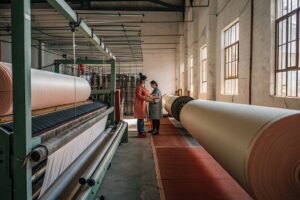
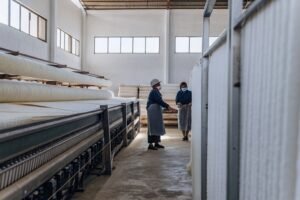
At Shanghai Fumao, we run two dedicated printing factories in the Keqiao textile district. Together, they house eight rotary screen printing lines and twelve high-speed digital pigment printers. During the Christmas rush period (July through September), we operate these machines on a three-shift, 24-hour cycle. But we don’t book capacity to 100%. That’s the critical mistake that causes cascading delays. One machine breakdown, one power interruption, one delayed ink shipment, and a 100%-booked schedule collapses like a house of cards.
We cap our pre-Christmas booking at 85% of theoretical maximum capacity. The remaining 15% is our "shock absorber." If a digital printer needs an unexpected print-head replacement, the 15% buffer means we can shift that job to another machine without delaying the entire queue. If a typhoon delays a chemical shipment, the buffer absorbs the gap. This buffer costs us potential revenue, but it’s the price of reliability. Our Christmas delivery on-time rate for the past three years is 97%. I’m prouder of that statistic than any fabric award.
We also implement a "Christmas Code Red" priority system for the QC department. Every Christmas order is flagged in our ERP system with a red priority tag. When a Christmas-flagged roll enters the four-point inspection machine, it gets immediate attention, not a wait in a general queue. The inspector knows that this roll has zero slack in its timeline. This doesn’t mean we lower the QC standard; as I’ve detailed in our Holiday Lockdown Protocol, we actually lower the inspection machine speed from 18 meters per minute to 12 during rush periods to increase defect detection. It means we reorder the sequence of work so that Christmas-critical fabric is inspected immediately, not after a batch of non-seasonal orders. For further reading, exploring how large textile manufacturers manage seasonal capacity planning and production scheduling for peak demand periods provides an operational perspective, and understanding the impact of machine utilization rates and buffer capacity on on-time delivery performance validates our 85% strategy.

Can Small-Batch Christmas Prints Receive the Same Priority as Volume Orders?
This is the question that the independent designer, the Etsy seller scaling up, or the boutique brand owner is afraid to ask: "My order is only 200 meters. Am I going to get pushed to the back of the line behind the 5,000-meter mega-brand order?" The honest answer at many factories is yes. Volume talks. A 5,000-meter order represents days of machine time; a 200-meter order represents hours. The economic incentive to prioritize the big order is obvious.
At Shanghai Fumao, our answer is different. We prioritize based on the delivery commitment date, not the order volume. A 200-meter Christmas order with a confirmed July 20th print slot and a September 15th sailing deadline gets the same production priority as a 5,000-meter order with the same deadline. The slot was booked. The slot is honored. The meterage is irrelevant.
The practical reason we can do this is our hybrid printing infrastructure. Our large rotary screen lines are optimized for long runs, and our digital printers are optimized for short runs. A 200-meter Christmas print order naturally flows to the digital printer, which has zero screen setup time and is designed for efficient short-batch production. The 5,000-meter order naturally flows to the rotary screen line, which is more cost-effective at scale. They’re not competing for the same machine. They’re running in parallel on different equipment tracks.
A one-woman brand from Vancouver, designing heirloom-quality Christmas stockings, ordered 150 meters of a custom "St. Nicholas" motif print on our SL-7030 Rustic Linen in August 2025. Her order ran on a digital printer alongside a 10,000-meter order for a major European retailer on a different machine. Both orders shipped on the same vessel. Her 150 meters arrived in Vancouver in late September, and she sold out her stocking collection by November 10th. The following year, she ordered 500 meters. The system scales with the brand. For more insight, reading about how modern textile mills use digital printing to service small-batch and independent designer orders with short lead times explains the democratization of custom fabric, and understanding the production scheduling logic that allows small orders to coexist with volume orders without delays validates that you won’t be deprioritized.
What Happens If a Printing Error Delays the Christmas Shipment?
Let’s talk about the nightmare scenario directly, because it’s the one that keeps every brand owner awake at night. The strike-off was perfect. The bulk production started on time. Then, on August 20th, during the final QC inspection, we discover a problem. Perhaps the metallic gold ink on the last 300 meters of the run is showing a subtle registration shift—the gold layer is 0.5mm out of alignment with the base color layer. The fabric isn’t defective; it’s just not perfect. It doesn’t meet our Christmas Code Red standard. What happens next?
This is where the "shock absorber" capacity and the "Greige Bank" I mentioned earlier come into play. Because we cap capacity at 85%, we have immediate machine availability to reprint a partial lot. Because we reserve greige, we have the base fabric ready to go without sourcing delays. The protocol is simple: we inform you immediately, with photos and a detailed description of the issue. We present two options, and you choose.
- Option A (Partial Reshoot): We reprint the affected 300 meters immediately. The timeline impact is roughly 5-7 days. We absorb the cost of the reprint; you absorb the potential delay. If the 5-7 days push the container booking past your comfortable window, we discuss options for expedited ocean freight or, if necessary, a split shipment (air freight the urgent portion, ocean freight the remainder).
- Option B (Accept with Discount): If the registration shift is so subtle that it’s commercially acceptable for your brand—perhaps it even adds to the "handcrafted" aesthetic—we offer the affected 300 meters at a significant discount (typically 30-40% off). This is often a good option for secondary products, like matching accessories or gift wrap packaging, where minor imperfections are not a dealbreaker.
In September 2024, a similar situation occurred with a UK-based brand’s "Winter Rose" Christmas duvet cover print. The final 200 meters of a 1,200-meter run had a faint, intermittent ink smudge from a dirty print head. We stopped the inspection, called the client within the hour, and offered the reprint option. They chose to reprint. The corrected 200 meters were printed within four days. The entire order shipped seven days late but still arrived in the UK in late October, comfortably before the retail launch. The brand was grateful for the proactive honesty. For deeper preparation, knowing the standard protocols for handling production defects in custom textile manufacturing arms you with knowledge for the conversation, and understanding how expedited ocean freight and split shipment logistics work for last-minute textile deliveries gives you a backup plan vocabulary.
What Are the Trending Christmas 2026 Linen Print Motifs?
Christmas print design is a delicate balancing act. Go too traditional—red and green plaid, jolly Santas, cute reindeer—and you risk looking like a discount big-box store, competing solely on price. Go too abstract and avant-garde, and you lose the emotional, nostalgic pull that makes Christmas products sell. The sweet spot for 2026, based on the mood boards and strike-off requests we’ve been receiving since January, is what I’m calling "Heritage Reimagined." It’s the use of classic Christmas iconography—stars, botanicals, winter wildlife—rendered in unexpected, sophisticated ways that feel collectible and artisanal, not mass-market.
At Shanghai Fumao, we’ve seen three distinct trend clusters emerge from our clients’ Christmas 2026 development. They’re not mutually exclusive, but they represent distinct aesthetic and commercial directions.
The first is "Celestial Winter." This theme draws on astronomy, medieval star charts, and the winter solstice. The key motifs are intricate, linear star maps, crescent moons, and abstract constellations, printed in metallic gold or matte ivory on deep, dark linen bases—think midnight navy, deep indigo, and charcoal black. The aesthetic is mystical, intellectual, and gender-neutral. This is the trend for brands who want to do "holiday" without doing "Christmas" explicitly, appealing to a broader, spiritually-agnostic audience. A unisex loungewear brand from Stockholm is doing a full "Celestial Winter" capsule with our SL-100 Fine Art Linen, using a single-color metallic gold constellation print on deep navy. The designs are derived from actual 17th-century star charts, rendered with modern precision.
The second trend is "Botanical Maximalism." This is the opposite of Scandinavian minimalism. It’s oversized, painterly, almost baroque botanical prints featuring winter holly, mistletoe, poinsettias, pine cones, and winterberry branches. But the execution is what makes it 2026. It’s not a small, neat, repeating pattern. It’s a large-scale, "placement" style print, where each garment panel is a unique section of a larger botanical artwork. The colors are rich and unexpected: terracotta berries instead of bright red, sage green foliage instead of Kelly green, and blush pink accents. This trend is for brands that want Christmas to feel luxurious, abundant, and slightly romantic. A California-based resort and holiday wear brand is printing this on our SL-550 Textured Narrative Linen, using the fabric’s natural slubs to give the oversized botanicals a "hand-painted on raw canvas" texture.
The third trend is "Toile de Noël." This is a direct nod to the classic French toile de Jouy, but with a wintry, narrative twist. Instead of pastoral summer scenes, the print depicts detailed, monochromatic winter landscapes: forests with deer and foxes, snow-covered cottages, ice skaters on frozen ponds. The print is typically a single color on a contrasting background—indigo on cream, charcoal on oatmeal, forest green on ecru. It’s classic, it tells a story, and it feels immediately heirloom-quality. This trend is perfect for table linens, Christmas pajamas, and decorative pillows. A French-inspired home goods brand in New Orleans is doing a full "Toile de Noël" table linen collection with our SL-7030 Rustic Linen, using a sepia-brown print on a natural cream base. The effect is like finding a vintage textile in a Provençal Christmas market.
For trend validation, looking at the Christmas 2026 print and pattern trend forecasts from major fashion and textile trend agencies provides the macro view, and exploring how heritage and archival textile designs are being reimagined for contemporary holiday fashion and home collections explains the cultural shift toward "meaningful" rather than "disposable" Christmas products.

Are Sustainable Print Inks Available for Eco-Conscious Christmas Collections?
Yes, and this is no longer a niche request. In the first five months of 2026, over 40% of the print inquiries we’ve received for Christmas collections have specifically requested eco-friendly or sustainable ink options. This is a dramatic shift from even two years ago. The eco-conscious brand is no longer willing to accept that a "sustainable" linen garment is printed with petroleum-based plastisol inks that will sit in a landfill for 500 years.
We offer two fully sustainable print ink pathways for Christmas 2026. The first, and most popular, is our GOTS-approved water-based pigment ink system. These inks use water as the primary solvent instead of volatile organic compounds (VOCs). The pigments are free from heavy metals, phthalates, and formaldehyde. The binders are biodegradable. The entire printing process meets the Global Organic Textile Standard (GOTS) criteria for printed fabrics, which is the most rigorous eco-textile certification. The color gamut is slightly narrower than conventional pigment inks—the brightest, most saturated neon reds and electric golds are not achievable—but for the rich, sophisticated Christmas palette of deep burgundies, forest greens, warm terracottas, and matte metallics, the GOTS inks are excellent.
The second, more experimental option is our algae-based bio-ink system. We’ve been developing this with a Dutch biochemistry partner since 2024, and it’s now ready for commercial production. The ink uses pigments derived from spirulina, chlorella, and other microalgae, suspended in a fully biodegradable alginate binder. The color range is currently limited to a beautiful palette of natural, earthy tones: seafoam greens, soft blues, warm ochres, and dusky pinks. It’s not going to give you a brilliant Christmas red, but for a "Celestial Winter" or "Botanical Maximalism" print in muted, natural tones, the algae inks are extraordinary. The printed fabric is 100% compostable at end-of-life. A pioneering Dutch slow-fashion brand is using the algae ink on our GOTS-certified organic linen for a "Zero Waste Christmas" capsule collection of scarves and gift wrap. The story of the algae ink—"printing with pond life"—is generating as much buzz as the fabric itself.
For deeper verification, reading about the GOTS version 7.0 criteria for approved printing inks and colorants in organic textile processing ensures your "eco" claim is certifiable, and exploring the emerging field of algae-derived bio-pigments and their commercial application in textile printing gives you a preview of where the industry is heading.
How Can I Protect My Exclusive Print Design from Being Copied?
This is a fear I hear whispered, not shouted. A brand spends months developing a unique "Celestial Winter" star map print or a signature "Toile de Noël" winter scene. It’s beautiful. It’s distinctive. It launches, and sells out. Three months later, a fast-fashion copy appears on a cheap polyester fabric, using a slightly altered version of the design. The original investment is devalued. The brand’s unique Christmas identity is diluted.
Let me be direct: in the global textile industry, absolute design protection is difficult. However, there are practical, enforceable steps you can take, and at Shanghai Fumao, we support our clients in implementing all of them.
First, contractual exclusivity with us, your printer. We sign a Design Exclusivity Agreement that contractually obligates us not to reuse, resell, or reproduce your print design for any other client. Your screens, your digital files, your strike-offs—they are yours. We archive them securely and do not include them in any "open" design library. This is enforceable under Chinese contract law and international trade law.
Second, screen ownership and destruction. If we produce rotary screens for your print, those screens are your physical property. We engrave them, you pay for them, and we store them under your account. After your production run, you have three options: we can store them for future reorders (with no access by anyone else), we can ship them to you, or we can provide you with a video-recorded destruction of the screens. This is a physical, not just contractual, barrier to copying.
Third, design registration and timestamping. We recommend that every client formally timestamps their final print artwork before sharing it with us. Services like the World Intellectual Property Organization (WIPO) PROOF provide a tamper-proof digital timestamp that establishes your ownership and the creation date. Additionally, register your print as a two-dimensional design with your home country’s intellectual property office and, if commercially viable, with the EU Intellectual Property Office (EUIPO) for protection in the European market. This gives you legal standing to issue cease-and-desist letters if a knockoff appears.
A British homewares brand that does an exclusive "Christmas Critters" print with us every year follows this protocol rigorously. They timestamp the design, register it with the UK IPO, we sign the Exclusivity Agreement, and we destroy the screens after each season’s production. They’ve successfully had two copycat products removed from online marketplaces using their registered design rights. For more legal depth, understanding how intellectual property law applies to textile surface pattern designs and what protections are available internationally is essential, and reading the practical steps to register a textile design and enforce design rights against copyists turns knowledge into action.
Conclusion
The Christmas 2026 deadline is not a distant, abstract date. It’s a cascade of backward-scheduled events that starts now, in June 2026, with the selection of a linen base and the submission of a print file. The brands that will have their "Celestial Winter" star-print pajamas, their "Toile de Noël" table linens, and their metallic gold snowflake blazers in stores by November 1st are the brands that are on a video call with us this week, finalizing their greige reservation and approving their first strike-off. The brands that email us in September, panicked and hoping for a Christmas miracle, will be the brands that pay for air freight or watch the holiday season pass them by.
The good news is that the entire supply chain is ready. At Shanghai Fumao, our two printing factories have the capacity, our Greige Bank has the linen bases—from the smooth SL-100 for fine art prints to the rustic SL-7030 for cabin Christmas textures—and our dye masters have the GOTS-approved sustainable inks and the double-binder metallic formulations that survive wash after wash. We know how to prioritize a 200-meter independent designer order alongside a 5,000-meter volume run without sacrificing quality or speed. We know how to handle the unexpected—the registration shift, the dirty print head—with a buffer capacity that absorbs shocks and a communication protocol that tells you the truth immediately. And we know how to protect your design, from contractual exclusivity to physical screen destruction.
If you have a Christmas 2026 vision—a print, a color story, a base fabric preference—now is the moment to move. Our Business Director, Elaine, is managing the Christmas production calendar and the greige reservation system. She can confirm current base cloth availability, schedule your design consultation with our pre-press team, and lock in a production slot that guarantees a September sailing date. Reach her directly at elaine@fumaoclothing.com. Christmas comes on the 25th of December, but the smartest gift you can give your brand is the peace of mind that starts with a July production slot, secured in June.