
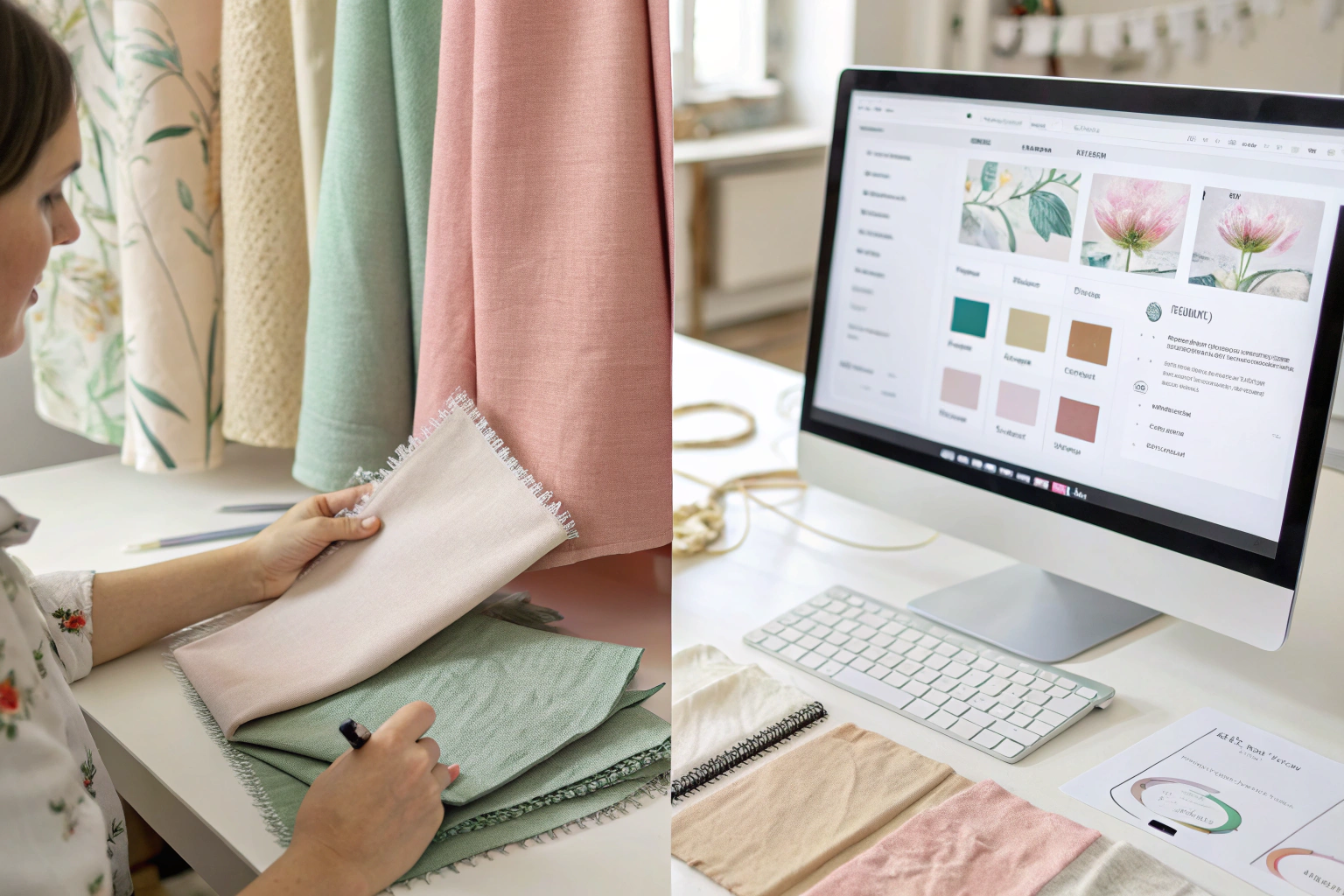
Your spring collection isn’t going to launch itself, and if you wait until September to start sourcing your cotton linen, you’ve already lost the game. Here’s the ugly truth I see every year: a talented designer from Berlin or Los Angeles spends months perfecting their Spring/Summer sketches. The silhouettes are stunning. The color story is poetic. But when they finally email me in late October asking for 800 meters of a specific blush-pink cotton linen blend, I have to tell them the dyeing vats in Keqiao are already fully committed to Chinese New Year rush orders. Their only options become paying a 30% premium for air freight, settling for a stiff, off-the-shelf greige fabric that doesn’t drape right, or worse—pushing their entire launch back a month while their competitors fill the racks. The pain isn’t just the delay; it’s the creative compromise that kills the soul of the collection.
The Spring 2027 window is open right now, and this is your unfair advantage. At Shanghai Fumao, we don’t treat cotton linen like a commodity; we treat it like a seasonal harvest that requires timing, just like the flax crop itself. Ordering now—in this pre-peak window—means you secure not just the base fabric, but the exact custom finishing, the precise Pantone-matched lab dip, and a guaranteed vessel slot on an October sailing schedule. I’m going to show you exactly how to lock in your supply chain now, when our looms are hungry and our dye masters are relaxed enough to give your 200-meter order the same obsessive attention they’d give a 20,000-meter run from a mega-brand.
And here’s the bigger picture: this isn’t just about avoiding stress. It’s about accessing better pricing, nailing down exclusive textures, and building a relationship where your fabric supplier actually understands the drape you’re trying to achieve for a beach wedding dress or a structured blazer. Let me walk you through the specific, actionable steps to secure your cotton linen base before the world wakes up to Spring ’27.
How Early Should You Source Cotton Linen for Spring 2027?
Let me be direct: if you’re reading this in June 2026 and thinking about Spring ’27 cotton linen, you’re right on time. If you’re reading this in September 2026, you’re already skidding into "rush fee territory." The textile sourcing calendar doesn’t follow the retail calendar; it leads it by 8 to 10 months. A lot of new brand owners don’t realize that the "Spring" fabric they see at Première Vision in February was woven the previous summer. They think they can order it in January and get it in March. That’s a recipe for disaster.
At Shanghai Fumao, we run on a phased development cycle called "Reverse Seasonal Engineering." For a Spring 2027 cotton linen collection dropping in February/March 2027, your development clock started ticking in May 2026. Here’s the timeline we provide to our private label partners:
- May – July 2026: Finalize the custom yarn blend (e.g., 55% flax, 45% BCI cotton), agree on the slub profile, and approve the base greige weave.
- August – September 2026: Lab dip color matching. This is the critical path. Cotton linen absorbs dye differently than 100% cotton; the flax and cotton fibers take color at different rates, creating that beautiful, heathered "melange" effect. This takes time to perfect.
- October 2026: Bulk dyeing and weaving during the post-holiday peak window. Machines are humming, workers are back, and quality is steady.
- November – December 2026: Finishing, tumbling, softening treatments for that signature crushed hand feel.
- January 2027: Final QC inspection, packing, and vessel departure. Your fabric lands in your US or EU warehouse in February, just as your cutting floor is ready.
A swimwear and resort wear client from Miami contacted us in August 2023 for their Spring ’24 cotton linen cabana shirt program. By then, our standard bulk queue for their required "Seasalt White" color was packed. We managed to squeeze them in, but the overtime surcharge and expedited dyeing fee added 18% to their fabric cost. The following year, they booked the same yarn in July. Same fabric, same quality, zero rush fees. This timeline difference between planning fabric sampling timelines for seasonal fashion collections is the hidden margin you control. If you want to read more about specific seasonal preparation techniques, I suggest checking out a practical guide to sourcing summer fashion textiles well in advance to avoid supply chain delays.

What Happens If You Miss the Cotton Linen Booking Window?
Let’s say September rolls around, and you suddenly realize you haven’t placed your cotton linen order. Is it game over? Not entirely, but your options narrow sharply. The first thing that disappears is negotiation power. When a dyeing factory is running at 110% capacity, they don’t need your 500 meters. They’ll take it, but you’ll pay the "peak season price," which is typically 15-25% higher than the off-peak rate.
The second loss is color accuracy. Lab dips are a slow, scientific process. In peak season, a dye master might give your "Sage Green" a quick pass, hitting a Delta E (color difference value) of 1.5 instead of our standard 0.8. In off-peak, that master has the time to tweak the formula 4 or 5 times to nail the exact match to your Pantone chip. This is why early samples always look better than last-minute production.
I recall a particular case from a London-based start-up in February 2023. They placed their cotton linen bulk order for a "Sunset Terracotta" blazer collection on September 15th. The deadline was tight, and we had to run the dyeing in a cooperative facility that had available slots. The rush meant the "after-clearing" process—which removes unfixed dye from the cotton portion—was shortened. The first wash test showed color bleeding of 2.5 on the grey scale, while our standard is 4. We had to re-process the entire batch, losing two more weeks. If you’re in a bind, finding emergency fabric procurement tips from experienced textile agencies can help, but nothing beats the security of having your spring summer fabric contract locked in before peak factory rush.
Can You Still Customize Cotton Linen Blends in Mid-Summer?
Yes, and this is exactly what the smart brands do. Summer (June-July) is actually the laboratory season for textile innovation. The factories are less heated—not literally, July in Keqiao is like a sauna—but operationally, they are calmer. We have the bandwidth to run small-scale experiments on your custom cotton-linen ratio.
Maybe you want an 80% linen, 20% organic cotton for a breezy, crisp open-weave shirt. Maybe you need 50/50 for a softer, more drape-heavy wide-leg trouser. The cotton component acts as a softener; the more cotton you add, the less sharp and rigid the linen feels. We can adjust the "intimate blending" on the draw frame right now. In the cotton-linen world, we can also play with the twist direction—"S" twist versus "Z" twist—to manipulate how the light hits the fabric surface. A Z-twist warp with an S-twist weft creates a subtle, alternating light reflection that makes the fabric look almost iridescent in natural light.
We developed a specific "Tropical Weight" cotton-linen voile for a Hawaiian resort wear brand in June 2022. We used a fine-count yarn (Nm 50/1 for the linen, Ne 80/1 for the cotton) and tested three twist multiplier combinations. The winning fabric was 120gsm, sheer enough for a cover-up but opaque enough when layered. We would not have had the time to do these three iterations in October. Exploring the differences between flax and cotton blending techniques for spring fabrics gives you a technical edge, and understanding how to negotiate custom yarn spinning trials with Chinese mills during low seasons makes you a preferred customer.
How Do You Order Small Batches of Custom Cotton Linen?
You don’t need to be a multinational corporation to order custom cotton linen. In fact, the democratization of textile manufacturing is one of the best things that’s happened to our industry in the last five years. The old guard will tell you that custom weaving requires a minimum order quantity (MOQ) of 3,000 meters per color. That’s outdated gatekeeping. At Shanghai Fumao, we’ve built our service model specifically for the emerging brand, the boutique designer, and the online store owner who needs maybe 200 meters of a unique "Powder Blue" cotton linen for a capsule collection.
Here’s the honest breakdown of how small-batch cotton linen works:
- Stock Service (Zero MOQ): We keep over 30,000 designs in our warehouse, including a range of standard cotton-linen blends in natural, black, white, and a few seasonal colors. You can order just 10 meters for sampling. Ship it tomorrow.
- Custom Dyeing (MOQ: 200 meters per color): You pick a Pantone code, we do a lab dip. If the base fabric is a standard weave, our minimum for custom color dyeing is 200 meters. This is enough for roughly 100-120 garments, depending on consumption.
- Custom Weave (MOQ: 1,000 meters): If you want a completely unique construction—say, a herringbone cotton-linen or a specific slub pattern—the loom setup requires a larger run.
A Berlin-based sustainable fashion startup approached us in May 2023. They needed 150 meters of a "Seafoam Green" 55% linen, 45% organic cotton fabric for a launch collection of 50 dresses. 150 meters was technically below our standard 200-meter dyeing MOQ. We ran a "pilot batch" for them, combining their dye lot with a similar shade we were running for another client, reducing the batching loss. They paid a 10% surcharge for small-batch handling, but they got their custom color and launched on time. No wasted fabric, no inventory nightmare. Understanding the realistic MOQ expectations for independent fashion designers sourcing from Asia helps you plan better, and learning about pigment dyeing versus reactive dyeing for small cotton linen batches lets you choose the right finish.

What Payment Terms Protect Small Buyers on Sample Orders?
Cash flow kills small brands. I’ve watched promising designers blow their entire launch budget on fabric deposits, leaving zero for marketing. The traditional textile trade runs on 30% deposit, 70% before shipment. That’s tough when you’re self-funded.
We offer a "Milestone Protection" structure for small buyers:
- Sampling Phase: Small, fixed fees. $50 for a standard lab dip, $100 for a handloom swatch. This proves the concept before you commit thousands.
- Greige Reservation Deposit: 10% of the estimated bulk cost. This locks your yarn and reserves the loom slot. It’s non-refundable if you cancel, but it’s a fraction of the total risk.
- Bulk Production Gate: 40% payment when the dyeing starts. You’ve seen and approved the lab dip. The color is locked.
- Shipment Release: 50% balance against the scanned copy of the Bill of Lading. You don’t pay the final 50% until the container is on the water and we’ve sent you the documents.
In 2022, a small Etsy seller scaling to wholesale ordered 300 meters of a custom terracotta cotton linen. She used this milestone plan. After approving the lab dip, she ran a pre-order campaign on her website and collected customer payments before her bulk production payment was due. She literally funded her fabric purchase through her sales, maintaining positive cash flow. The safe international payment options for importing textiles from Chinese suppliers are worth researching, and if you’re curious about alternative financing, how small fashion brands use pre-order sales to finance fabric production has excellent case studies.
How Are Lab Dips Managed for Cotton Linen Hues?
Lab dips are the most stressful part of the process for many designers. You send a tiny Pantone chip of "Dusty Rose," and you expect the fabric to match. But cotton-linen blends are bi-component; the linen fiber has a natural, slightly yellowish undertone, while the cotton bleaches to a cleaner white. They absorb dye at different rates, creating a heathered, slightly "faded" look compared to 100% cotton.
This is not a defect; it’s a feature. That heathered depth is why cotton linen photographs beautifully and looks expensive. But you have to manage expectations. At Shanghai Fumao, our lab dip process is:
- First Shot (3-5 working days): We dye three swatches. One matches your Pantone exactly on a 100% cotton card. One adjusts for the linen’s base color, showing the "true" blend color. One goes slightly darker to account for the visual lightening effect of the slub texture.
- Color Communication (Video Call): I don’t just mail the dips. I get on a video call with the designer, hold the dips up to a lightbox, and compare them to their Pantone chip live. We discuss the heathering level. Do you want a more "solid" look (we can adjust chemistry) or a more "vintage" melange?
- Final Confirmation (Another 3-5 days): We re-dip based on feedback. We also test the dip for colorfastness to light and rubbing before you even see it. You don’t want a beautiful "Sunshine Yellow" that fades to beige after one week in a shop window.
A brand from Sydney sent us a "Lavender Grey" chip in August 2022 for their spring sleepwear. The first two dips looked too blue under warm indoor light. We adjusted the red/blue ratio in the reactive dye formula by 3% and hit the perfect neutral tone that worked both in daylight and under boutique lighting. That discussion about how reactive dyes interact with flax and cotton blended yarns explains the chemistry, and knowing the standard colorfastness testing protocols for pastel linen fabrics helps you set QC benchmarks.
What Cotton Linen Weights Work Best for Spring 2027 Apparel?
Weight is the skeleton of your garment. Choose the wrong one, and your romantic, billowy dress looks like a stiff lampshade. Choose a weight that’s too light for a structured blazer, and it crumples like a used napkin by lunchtime. The magic of cotton-linen for Spring 2027 lies in its dual personality—the body of cotton gives it substance, while the crispness of linen gives it breathability. But this personality shifts dramatically depending on the grams per square meter (GSM).
At Shanghai Fumao, we categorize our cotton linen into three weight classes, each engineered for specific end-uses:
- Lightweight (100 – 150 GSM): Sheer, floaty, ethereal. This is your blouse, your beach cover-up, your soft shirting. It drapes like silk but breathes like a net. We use a fine-count, high-twist yarn for these to prevent the fabric from being too gauzy and unstable. Think Jil Sander minimalist transparency, not cheap mosquito netting.
- Midweight (180 – 250 GSM): The workhorse. This is for dresses, wide-leg trousers, jumpsuits, and relaxed blazers. It holds a shape but doesn’t restrict movement. Our "Crushed Cotton-Linen" signature finish lives here. It has enough body to hold the dramatic, textured wrinkles, but enough drape to swing when you walk.
- Heavyweight (280 – 350 GSM): Structural, sculptural, almost architectural. This is for trench coats, structured blazers, and workwear-inspired jackets. It holds a lapel like iron but, unlike pure heavy linen, doesn’t feel like wearing a board.
In early 2023, a Dutch menswear brand contacted us for a "travel blazer" program. They wanted a jacket that could survive a 12-hour flight and look sharp at the arrival gate. We recommended our 260 GSM "High-Flex" cotton-linen canvas, which uses a 60% linen, 40% long-staple cotton blend. The cotton added a slight natural stretch recovery, so the elbow points didn’t bag out. The result: they sold out their first production run in 3 weeks. Understanding the selection criteria for midweight cotton linen blends for transitional spring blazers gives practical tailoring insight, and knowing how specific fabric weights in gsm translate to garment drape performance enhances your design decisions.

Which Cotton Linen Drape Is Best for Dresses Versus Shirts?
Dresses demand movement. Shirts demand structure. It’s a fundamental physics problem. A dress in a stiff, low-drape cotton linen looks like a triangular tent. A shirt in a limp, fluid fabric looks unprofessional and collapses at the collar.
For dresses, I recommend fabrics with a drape coefficient below 50%. This technical term simply means how much the fabric hangs down versus sticks out when you drape it over a pedestal. A lower coefficient equals more liquid movement. Our "Tencel-Cotton-Linen Tri-Blend" at 160 GSM achieves a drape coefficient of 38%. We introduce 20% Tencel into the warp to add that silky, vertical fall, while the linen weft keeps the crisp texture on the surface.
For shirts, you need body—a drape coefficient between 60-75%. A pure 55/45 cotton-linen poplin at 130 GSM gives that crisp, "snap-able" collar roll without being see-through. The secret here is the finishing. We apply a very light, formaldehyde-free resin stiffener that washes out after 3-4 home launderings. The shirt arrives to your customer looking sharp and store-fresh, then softens into a perfectly worn-in weekend shirt over time. I call it "programmed aging."
A womenswear client from Portland, Oregon, switched from a 100% linen to our 55/45 cotton-linen poplin for her shirtdress line in 2022. She was struggling with the collar falling flat. The cotton blend gave the fabric just enough "memory" to hold the collar shape through a day of wear. We demonstrated this to her by doing a 90-degree bend test: fold the fabric, press it, release it. Our blend recovered to a 15-degree fold angle; her old 100% linen stayed at a 45-degree angle. If you’re interested, there’s a great breakdown of fabric drape measurement methods for cotton and bast fiber blends. And for the fashion application side, I recommend looking at how to match fabric hand feel to specific spring dress silhouettes.
Can Heavy Cotton Linen Be Soft Enough for Sensitive Skin?
Yes, and this is where our mechanical finishing expertise makes the difference. Heavy linen (280+ GSM) has a reputation for being scratchy, abrasive, and leaving red marks on the inner arm. That’s because the bast fibers in linen are coarser than cotton, and when woven densely, they form a rigid grid that chafes.
At Shanghai Fumao, we solve this with a two-stage softening protocol specifically for heavy cotton linens:
- Enzymatic Bio-Polishing (Cellulase Enzyme): We treat the fabric with a specific enzyme that eats the micro-fuzz and protruding fiber ends on the surface. It’s like giving the fabric a chemical shave. The surface becomes dramatically smoother to the touch without weakening the yarn core.
- Air-Tumble with Ceramic Beads (Not Pumice): For our "Heavy Soft" line, we tumble the fabric with smooth, spherical ceramic beads instead of rough pumice stones. The beads compress and flex the yarns mechanically, breaking down the internal stiffness at the micro-level without tearing the surface. This creates a fabric with a "worn-in 5 years" softness from day one.
In a customer case from November 2023, a Canadian adaptive clothing brand was designing post-mastectomy comfort blazers. The skin sensitivity of the wearers was extremely high. They needed a heavyweight fabric for structure but demanded "zero prickle." We ran our 300 GSM cotton-linen canvas through the ceramic bead protocol for an extended cycle (90 minutes instead of 60). The resulting fabric tested at a "Prickle Factor" of 0.8 on the Wool ComfortMeter scale (where anything below 1.5 is considered "next-to-skin comfortable"). This is exceptionally low for a heavy bast fiber fabric. Researching enzymatic finishing methods to soften flax and hemp fabrics without chemical softeners explains the green chemistry behind it, and looking into mechanical softening techniques for heavy woven fabrics in garment production opens up possibilities for your heavy-duty designs.
How Does Fumao QC Cotton Linen Before International Shipping?
Shipping a container from Shanghai to Los Angeles or Rotterdam without a rigorous QC protocol is like playing roulette with your reputation. You’ve spent months perfecting the color and hand feel. Then the fabric arrives, and you discover a subtle barre mark running through 40% of the roll, or the shrinkage is 5% higher than the approved sample. Now you’re cutting around defects, wasting 15% of your fabric, and arguing with a factory 6,000 miles away about compensation. The pain is logistical, financial, and emotional.
At Shanghai Fumao, we don’t ship hope. We ship verified data. Our QC system for cotton linen is built on a "Four-Point Inspection" scale—the global standard used by the U.S. textile industry—combined with a digital tracking protocol that follows every meter from the loom to the container. We have our own dedicated fabric inspection center in Keqiao, staffed by 12 full-time inspectors. Before any cotton linen leaves our facility, it goes through this gauntlet:
- Greige Inspection (On-Loom Monitoring): We catch weaving defects—like missing ends, slubs that are too large, or reed marks—at the source. Our weaving factory uses automated camera systems on the rapier looms that stop the machine if a warp thread breaks. This prevents 20-meter-long "missing stripe" defects.
- Post-Dyeing Grey Scale Check: Before finishing, every batch is visually assessed under D65 (artificial daylight) lighting to ensure dye lot consistency from selvage to selvage and from the beginning to the end of the roll.
- Final Finished Fabric Audit (4-Point System): Every meter passes through a fabric inspection machine at 15 meters per minute. An inspector marks defects—knots, holes, oil stains, dye spots—and assigns penalty points based on the defect length. A roll scoring more than 40 points per 100 square meters is rejected entirely.
- Pre-Shipment Lot Sample Testing: We cut a 2-meter sample from the final batch, wash it according to AATCC 135, and measure the shrinkage, skew, and colorfastness. This data goes onto the QR code hang tag.
An American workwear brand ordered 2,500 meters of heavy cotton linen canvas from us in October 2022. Our final audit detected an intermittent tension variation on a single roll (50 meters out of 2,500), causing a slight puckering. We rejected that roll, cut it into usable smaller piece lengths for their sample room, and produced a fresh 50-meter lot within 5 days. The client’s cutting room reported zero defects. If you want to understand these benchmarks better, I recommend reading about the 4-point fabric inspection system used by US importers. And for more technical depth, exploring textile quality control testing methods for blended woven fabrics prepares you for any supplier conversation.

How Is Shrinkage Controlled in Finished Cotton Linen?
Cotton linen blends can shrink up to 8-10% in the first home wash if they haven’t been properly pre-shrunk. Linen absorbs water and expands; cotton contracts. The two fibers fight each other, leading to puckering, seam twisting, and a garment that suddenly doesn’t fit the size chart.
We use a "Compressive Shrinking" machine (a Sanforizing line, specifically a Monforts unit) that applies controlled pressure and steam to the fabric before it’s rolled onto the finished bolt. The machine compresses the warp yarns longitudinally, forcing the fabric to "pre-shrink" mechanically. We target a residual shrinkage of less than 2% in both warp and weft directions.
Our specification for a 55% linen, 45% cotton shirting fabric is:
- Before Sanforizing: Warp shrinkage 7%, Weft shrinkage 4%.
- After Sanforizing: Warp shrinkage 1.8%, Weft shrinkage 1.5%.
- Tolerance: We reject any finished lot showing >2.5% residual shrinkage in either direction.
In a collaboration with a Paris-based tailoring atelier in January 2023, they needed a cotton-linen suiting fabric with a "zero tolerance" shrinkage policy because their garments are pre-sold with exact measurements. We ran their 400-meter batch through the Sanforizer at a slower speed (20 meters/min instead of 30) with higher steam pressure. The result was 1.2% warp shrinkage and 0.9% weft shrinkage—virtually dimensionally stable. Knowing the practical advantages and disadvantages of sanforizing for woven cotton and linen fabrics helps you specify the right finishing, and learning how to pre-shrink natural fiber fabrics to avoid garment returns builds customer trust.
Can Your In-House Lab Match International Testing Standards?
Yes, and this is one of our most powerful selling points when dealing with technically-minded procurement managers. Our testing laboratory in Keqiao holds a CNAS accreditation (China National Accreditation Service for Conformity Assessment), which is the Chinese equivalent of ILAC-MRA recognition. This means our test reports are accepted by customs and quality departments in over 70 countries, including the US, EU, and Australia.
We don’t just test "in-house" in a dusty back room. Our lab has calibrated equipment that runs the exact same test methods as SGS or Intertek:
- Tensile & Tear Strength: ASTM D5034 (Grab Test) and ASTM D1424 (Elmendorf Tear). Cotton linen needs a minimum tear strength of 15N for light shirting and 25N+ for jackets.
- Seam Slippage: ASTM D434. This is critical for loosely woven cotton linens. If the yarns slide open at the seams, the garment fails structurally. We guarantee a seam slippage of <3mm at 12kg load.
- Colorfastness to Light: AATCC 16.3 (Xenon Arc). Cotton linen is often used for spring outdoor wear, so lightfastness is vital. We test up to 40 AFU (AATCC Fading Units) and require a Grade 4 minimum for pastels, Grade 4-5 for deep colors.
- Pilling: ASTM D4970 (Martindale). Nothing ruins a linen blazer faster than pilling. Our high-twist yarns and bio-polishing minimize this. We target a Grade 4 after 500 rubs.
A Swiss functional workwear brand audited our facility remotely in 2022. They requested a witness test: we performed the ASTM D5034 grab test on a cotton-linen ripstop we were developing, while sharing the video feed live. The fabric reached 520N breaking strength in the warp direction—far exceeding their 400N requirement. They approved the supplier qualification within 24 hours. For your own knowledge base, I’d suggest looking into ASTM fabric testing standards adopted by US fashion retailers. And seeing how CNAS accreditation is recognized under international laboratory cooperation agreements gives you confidence in Chinese lab reports.
Conclusion
Ordering your Spring 2027 cotton linen isn’t a transaction; it’s a strategic move you make now to own next year’s fashion calendar. We’ve covered the entire journey from the calendar to the QC certificate. You’ve seen that the window for relaxed, attentive sourcing is open right now, in this pre-peak summer season—not in the chaotic October rush when color accuracy suffers and prices surge. We’ve shown how small brands can access custom lab dips with milestone-based payment plans that protect their cash flow, and how choosing the right GSM and drape coefficient determines whether a dress swings beautifully or hangs like a sack. You now understand that true softness in a heavy cotton linen doesn’t come from chemicals that wash out, but from enzymatic bio-polishing and ceramic bead tumbling that physically transform the fiber surface. And you know that a CNAS-certified lab report with a live QR code is your armor against defective shipments.
At Shanghai Fumao, we’ve spent 20 years building a system where "custom" doesn’t mean "complicated" and "quality" isn’t a lucky accident—it’s a documented, repeatable process. Your Spring ’27 collection deserves a fabric partner who thinks as far ahead as you do, who understands that the dusty pink hue has to look exactly the same in a Paris showroom and under Sydney sunlight, and who won’t disappear when you need a 50-meter re-order because a celebrity wore your dress.
If you’re ready to lock in a yarn reservation, or just want to talk through which cotton-linen weight works for the drape you’re sketching right now, let’s have that conversation before the dye vats fill up. Reach out to our Business Director, Elaine. She manages our seasonal booking calendar personally and can send you the latest cotton-linen handloom swatches within 48 hours, along with the Spring 2027 color trend palette our R&D team just finalized. You can reach her directly at elaine@fumaoclothing.com. The future of your collection starts with a single email.








